Planning a ghost town road trip to Oakland, Vermont means embracing roads less traveled, where rusted gas pumps, weathered facades, and cellar holes dot the backcountry landscape. You’ll want sturdy boots, offline maps, and a fully charged phone before heading out. Hit the trail in fall or winter, when bare trees and low-angle light expose hidden ruins that summer conceals. There’s far more waiting along this forgotten route than you’d expect.
Key Takeaways
- Oakland, Vermont’s ghost town atmosphere stems from collapsed industries, departed residents, and preserved buildings with rusted relics and weathered facades left largely untouched.
- Notable stops include Burlington’s Old Power Plant, Woodbury’s rusted gas pumps, and Montgomery’s abandoned farmhouse linked to Brianna Maitland’s unsolved case.
- Fall and winter are ideal travel seasons, as bare trees and snow reveal hidden ruins, kilns, and structures otherwise obscured by foliage.
- Pack sturdy boots, headlamps, gloves, dust masks, offline maps, water, and a first aid kit before exploring any abandoned sites.
- Secure landowner permissions and Vermont Division for Historic Preservation approvals beforehand to avoid trespassing charges and respect local property rights.
Why Vermont’s Forgotten Towns Still Look Frozen in Time
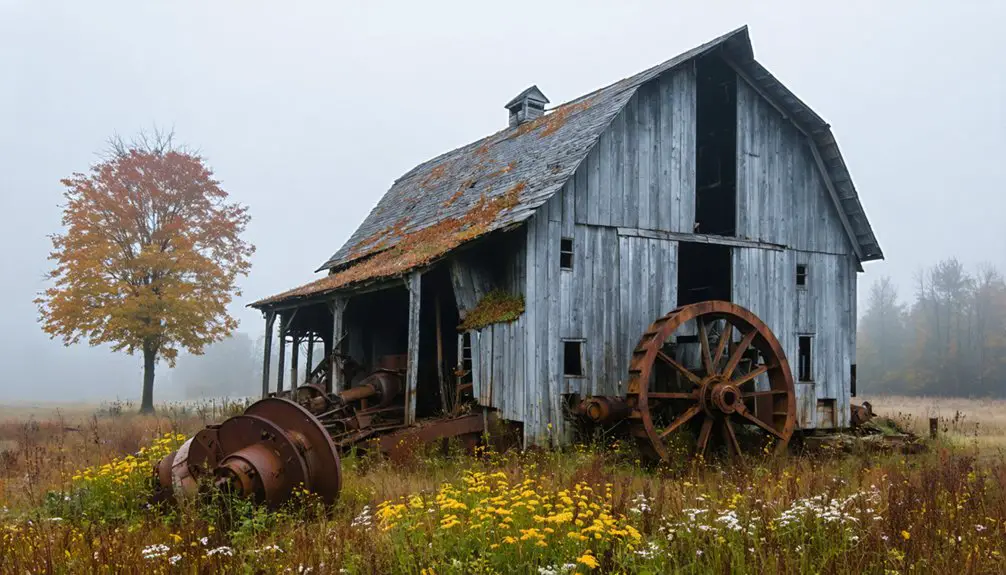
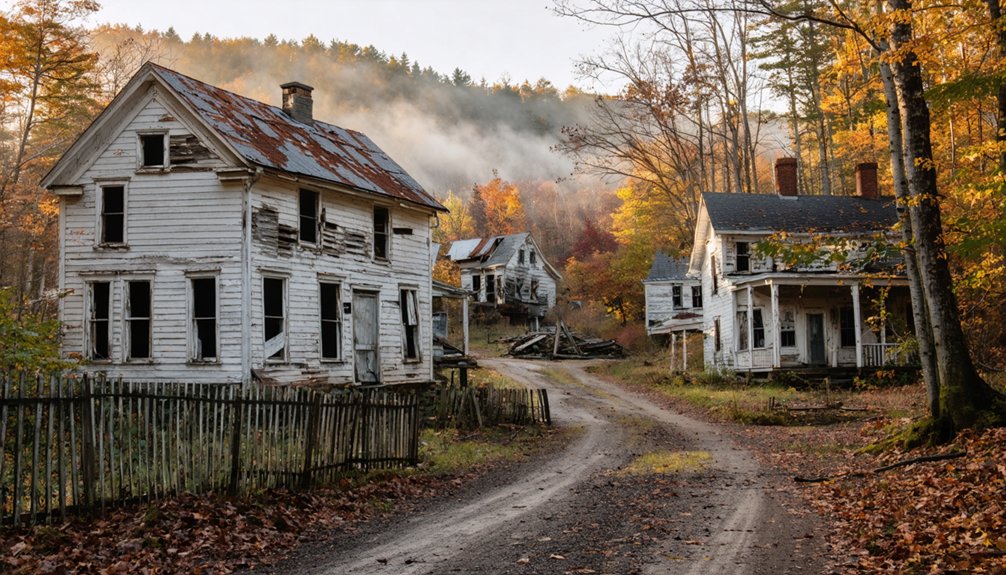
Vermont’s forgotten towns look frozen in time because nature moves slowly here, and so does change. When industries collapsed and residents left, buildings didn’t get bulldozed — they just stayed.
Vermont’s rural isolation protected these places from redevelopment, leaving rusty gas pumps, crumbling facades, and weathered shutters exactly where someone left them decades ago.
Rural isolation kept the wrecking ball away, leaving Vermont’s forgotten corners perfectly, stubbornly preserved.
You’ll find that local legends grew around these silences. Haunted legends attached themselves to empty farmhouses and shuttered storefronts, giving abandoned structures a second life in storytelling.
Communities like Woodbury kept their ghost town atmosphere intact simply because nobody rushed in to erase it.
That’s your freedom here — wandering through places that refuse to modernize, where every peeling wall tells you something real about what Vermont once was.
The Dark History Behind Vermont’s Most Abandoned Spaces
Behind the frozen facades and rusting relics, there’s something darker holding these places together — history that didn’t just quietly fade but broke apart under pressure.
Take the Bennington Triangle, where hikers simply vanished between 1945 and 1950, leaving behind haunted legends of big hairy monsters, cursed stones, and UFOs that locals still can’t explain.
Or consider Montgomery’s abandoned farmhouse, where Brianna Maitland’s car was discovered — a cryptic symbol of unresolved mystery etched permanently into Vermont’s landscape.
Colonial settlers once detected strange odors, unexplained sounds, and mysterious lights drifting through southern Vermont’s darkness.
These weren’t just spooky stories — they were real disruptions that fractured communities and emptied buildings.
When you walk through these spaces, you’re stepping directly into histories that refused to resolve themselves cleanly.
Which Abandoned Sites in Vermont Are Worth the Detour?
Not every abandoned site justifies the gas money, but Vermont’s hidden ruins reward those who choose wisely. Burlington’s Old Power Plant stands as the coolest industrial relic on the waterfront, carrying haunted legends of a city’s fading industrial soul.
St. Johnsbury’s grain elevator factory offers something genuinely rare — you won’t find this structure anywhere else.
Montgomery pulls you in with real urban legends surrounding Brianna Maitland’s abandoned car, blending historical mystery with eerie atmosphere.
Skip the Pownal tire house unless you’re deeply committed to oddity.
Hyde Manor in Sudbury captivates despite its decay, while Woodbury’s rusty gas pumps deliver authentic ghost town energy.
Prioritize sites with layered stories — places where history, mystery, and atmosphere converge make every detour completely worth it.
Hidden Ruins and Kilns You Can Still Find on Foot
If you’re up for a hike, you can still track down hidden kilns tucked away in Vermont’s backcountry.
At the forks, take a right instead of going left over the brook, then head up the mountain while staying parallel to the river.
Once you’re high enough, look down and you’ll spot the kilns — partially destroyed, but worth every step it took to find them.
Deep in Vermont’s backcountry, you’ll find remnants of kilns that once fueled local industry—but reaching them takes careful navigation. When you hit the forks, take a right instead of going left over the brook.
Follow the hidden pathways up the mountain, staying parallel to the river as you climb. Keep your eyes open for secret markers along the route—miss them, and you’ll walk right past history.
As you gain elevation, glance down toward the valley below. That’s where the kilns reveal themselves, partially destroyed but unmistakably present among the overgrowth.
What remains won’t last forever. These crumbling structures are slowly surrendering to the landscape, making your visit feel genuinely rare.
Take your time, navigate deliberately, and you’ll experience something most travelers never discover.
Remnants Worth Exploring
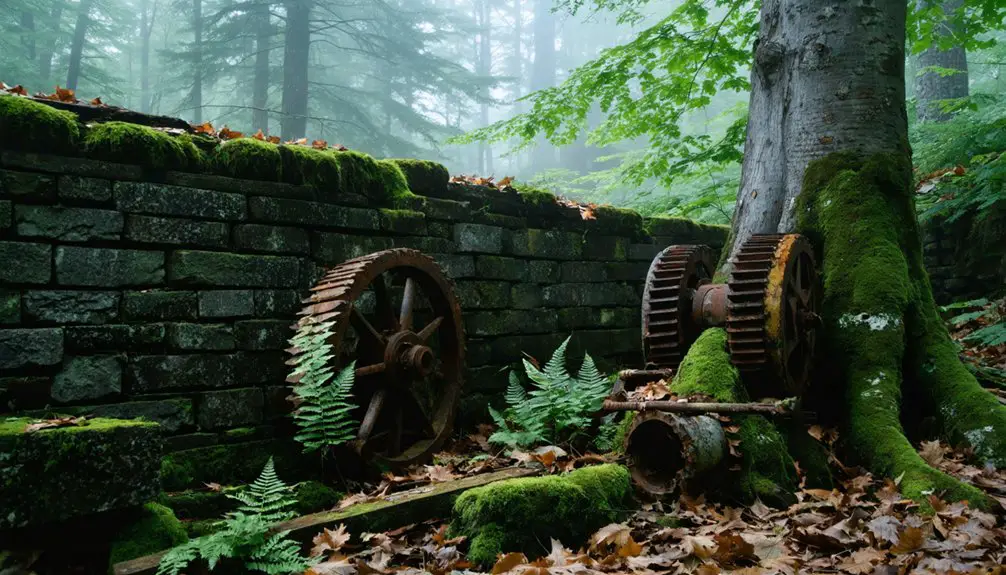
Though the kilns steal most of the attention, Vermont’s backcountry hides other remnants worth hunting down on foot. You’ll find partially collapsed stone walls, forgotten cellar holes, and rusted equipment scattered across wooded hillsides — hidden artifacts that most visitors never notice. These sites carry their own urban legends, whispered among locals who’ve stumbled across foundations with no clear origin story.
Push past the obvious trails and look downhill toward river valleys, where early industries once clustered. Copper mines, abandoned homesteads, and crumbling mill sites reward those willing to navigate carefully. Bring a topographic map, watch your footing on loose terrain, and resist the urge to disturb anything you find.
The real thrill isn’t just discovering these places — it’s piecing together what life once looked like here.
Which Nearby Ghost Towns Should You Add to Your Route?
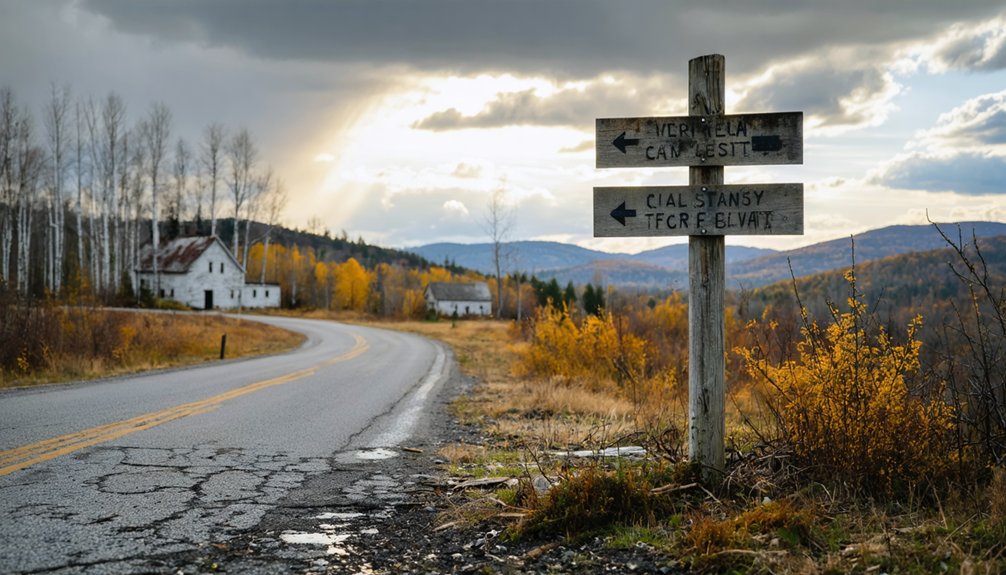
While Oakland, Vermont makes for a compelling destination, you’ll want to extend your route to include some of the state’s other eerily forgotten corners. Head south toward Bennington, where local legends and urban legends collide — hikers vanished mysteriously between 1945 and 1950, and the region earned its chilling nickname, “The Bennington Triangle,” in 1992.
Swing through Woodbury to photograph rusty gas pumps outside the abandoned country store, then drive to Montgomery, where Brianna Maitland’s discovery site adds haunting historical weight.
St. Johnsbury’s grain elevator factory rewards curious explorers with industrial architecture rarely seen elsewhere. Each stop layers a different texture onto your journey — some atmospheric, some historically significant, some just plain strange.
Vermont’s forgotten places reward those bold enough to seek them out.
Knowing where to go is only half the challenge — actually getting there requires a sharper kind of attention. Vermont’s forgotten corners don’t announce themselves.
At trail forks, take the right path over the brook instead of the left, then climb parallel to the river until the kilns appear below. You’ll miss them completely if you’re moving fast.
Local legends thrive in these pockets of wilderness, so talk to people before you drive. Eerie legends cluster around specific landmarks — ask locals which roads feel wrong after dark.
Download offline maps because cell service disappears fast in Vermont’s hills. Bring a flashlight, wear sturdy boots, and never assume a structure is stable.
The most rewarding discoveries belong to travelers who stay alert and move deliberately.
Gear, Permits, and Safety Rules for Exploring Abandoned Vermont
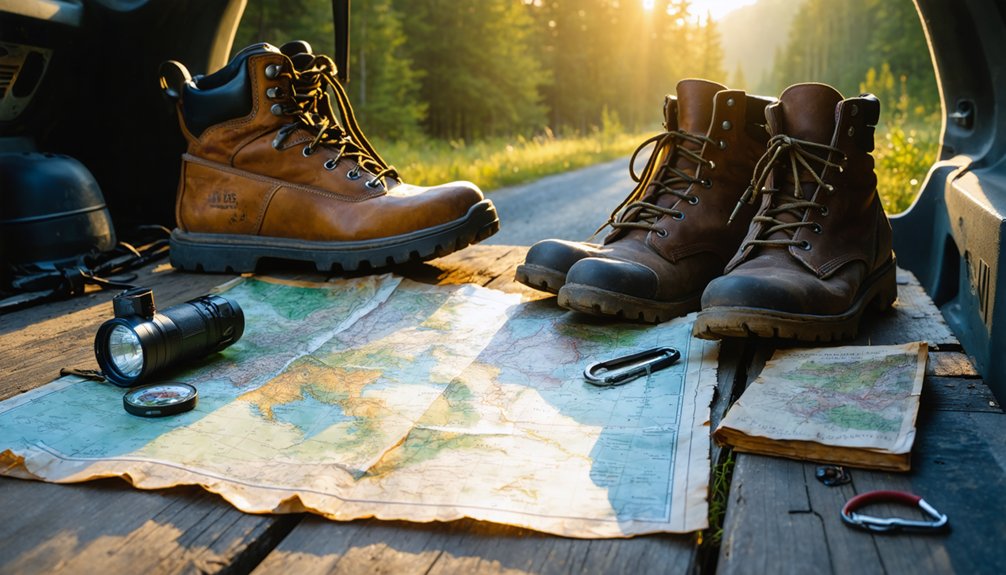
Before you set foot inside any crumbling structure, you’ll want a solid kit: sturdy boots, a headlamp, gloves, a first aid kit, and a dust mask to handle decades of debris.
Some sites on Vermont’s forgotten landscape sit on private property, so you’ll need to research ownership and secure written permission before exploring.
Always tell someone your exact route and expected return time, since these isolated locations won’t offer you any cell service or quick rescue if something goes wrong.
Essential Gear Checklist
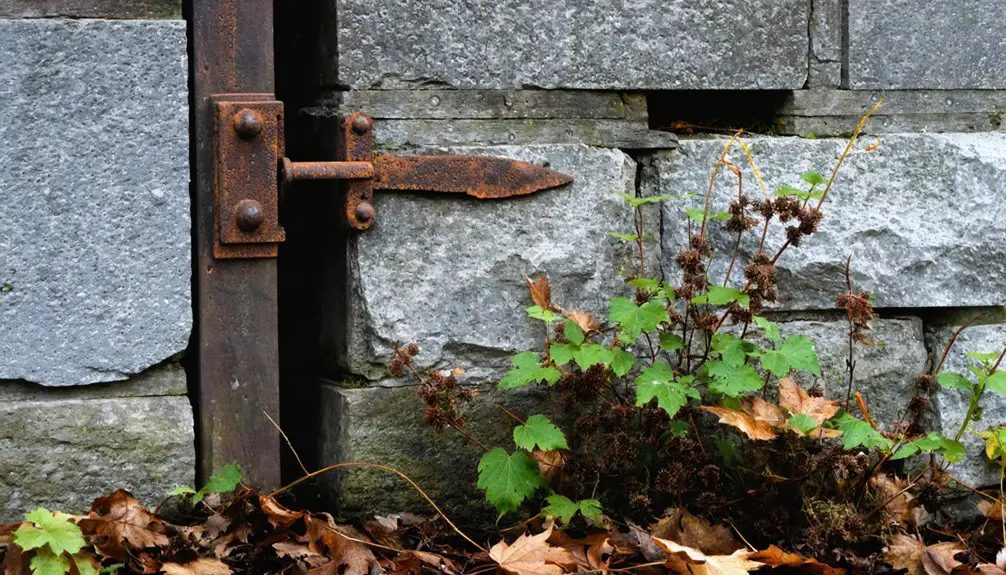
Exploring abandoned sites like the crumbling Hyde Manor in Sudbury or the eerie grain elevator factory in St. Johnsbury demands proper preparation. You’ll want sturdy boots, a quality flashlight with extra batteries, and thick gloves for handling rusty surfaces like those shuttered doors in St. Albans.
Pack a first-aid kit, dust mask, and hard hat — crumbling ceilings don’t care about your schedule.
Haunted legends and mysterious sightings add atmosphere, but they won’t protect you from unstable floors. Bring a fully charged phone with offline maps downloaded, since rural Vermont signal drops fast.
Carry water, energy bars, and a paper map as backup.
Document everything with a camera. Wear layered clothing for Vermont’s unpredictable weather.
Freedom means being prepared enough to explore confidently without cutting corners on safety.
Safety Permits Required
Permits aren’t glamorous, but they’ll save you from fines, trespassing charges, or worse — getting escorted off a site like the old power plant in Burlington before you’ve snapped a single shot.
Many of Vermont’s urban decay hotspots sit on private land or fall under historical preservation protections. Before you explore, contact the Vermont Division for Historic Preservation to confirm access rules.
Some sites require written landowner permission, while others tied to historical preservation efforts need formal entry permits. Check municipal offices in towns like St. Johnsbury or Burlington for site-specific regulations.
Carry printed copies of any approvals — digital versions can fail when you’re off the grid. Respecting these boundaries keeps sites accessible for future explorers and protects you legally every step of the way.
Why Fall and Winter Reveal Vermont’s Abandoned Sites Best
When the leaves drop and the snow creeps in, Vermont’s abandoned sites shed their camouflage and reveal themselves in ways they simply can’t in warmer months. Seasonal decay strips overgrown vegetation, exposing crumbling foundations and forgotten structures. Winter silence amplifies every creak and echo, making places like Woodbury Country Store feel genuinely haunted.
Here’s why you’ll want to time your road trip for colder months:
- Bare trees expose hidden ruins and kilns tucked deep into hillsides
- Snow outlines architectural details on rusty doors and collapsed rooflines
- Fewer visitors mean you’ll experience sites like St. Albans’ abandoned house completely alone
- Low-angle winter light creates dramatic shadows that summer’s canopy destroys
You’ll see Vermont’s forgotten places more honestly when nature stops hiding them.
Frequently Asked Questions
Is the Woodbury Country Store Accessible to Visitors With Mobility Limitations?
The knowledge doesn’t confirm Woodbury Country Store’s mobility accommodations or accessibility features. You’ll want to contact them directly before visiting. The rusty gas pumps and ghost town atmosphere await, so don’t let uncertainty hold you back!
Are There Guided Tours Available for Vermont’s Haunted Highway Lodging Packages?
Like ancient town criers spreading news, Vermont’s Haunted Highways offers haunted lodging packages statewide, but you’ll find guided tours aren’t explicitly mentioned. You can explore supernatural sites independently, embracing your freedom to roam Vermont’s mysteriously charged highways.
What Photography Equipment Works Best for Capturing Abandoned Vermont Structures?
For capturing Vermont’s eerie abandoned structures, you’ll want vintage lenses to embrace that haunting, timeworn aesthetic. Don’t overlook drone photography—it’s perfect for revealing forgotten rooftops, rusty doors, and decaying industrial giants from breathtaking, unrestricted angles.
Can the Bennington Triangle Sites Be Visited Safely During Nighttime Hours?
Sure, challenge those paranormal activity risks at night—what’s the worst that could happen? You can visit Bennington Triangle sites, but prioritize nighttime safety by bringing companions, lights, and awareness of Vermont’s notoriously unpredictable wilderness conditions.
Are Abandoned Gold and Copper Mines in Vermont Open for Public Exploration?
Vermont’s abandoned gold and copper mines aren’t confirmed open for public exploration. You’ll want to research access permissions carefully, as historic preservation laws protect these mining history sites, ensuring you’re exploring them legally and safely.
References
- https://www.roamingnearandfar.com/coolidge-ghost-town-road-trip/
- https://www.reddit.com/r/roadtrip/comments/1fblvhm/ghost_towns_or_weird_stops/
- https://www.youtube.com/watch?v=FEiWdlOSoiw
- https://obscurevermont.com/tag/ghost-town/
- https://www.onlyinyourstate.com/trip-ideas/vermont/abandoned-places-road-trip-vt
- https://gadling.com/2012/10/08/a-spooky-road-trip-on-vermonts-haunted-highways/