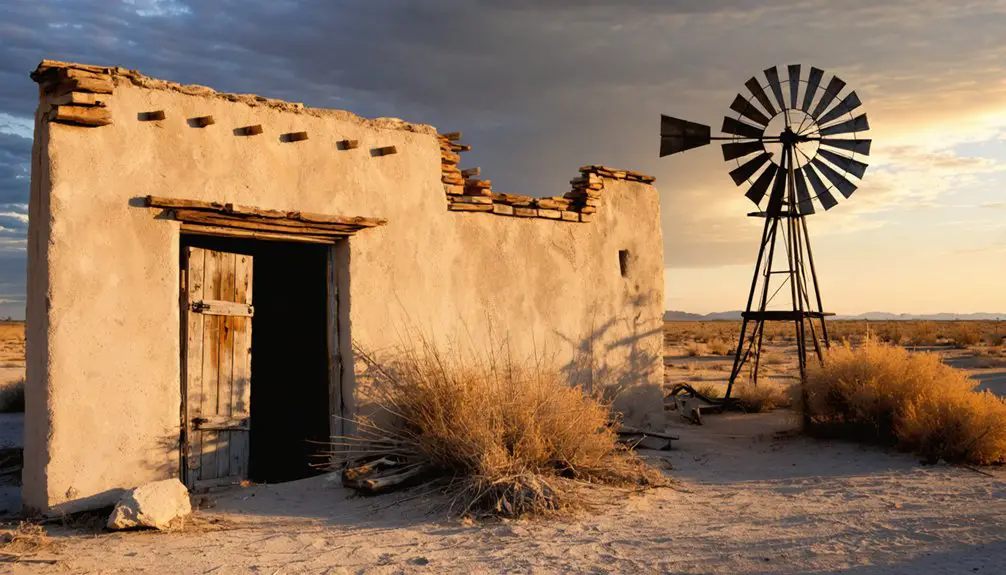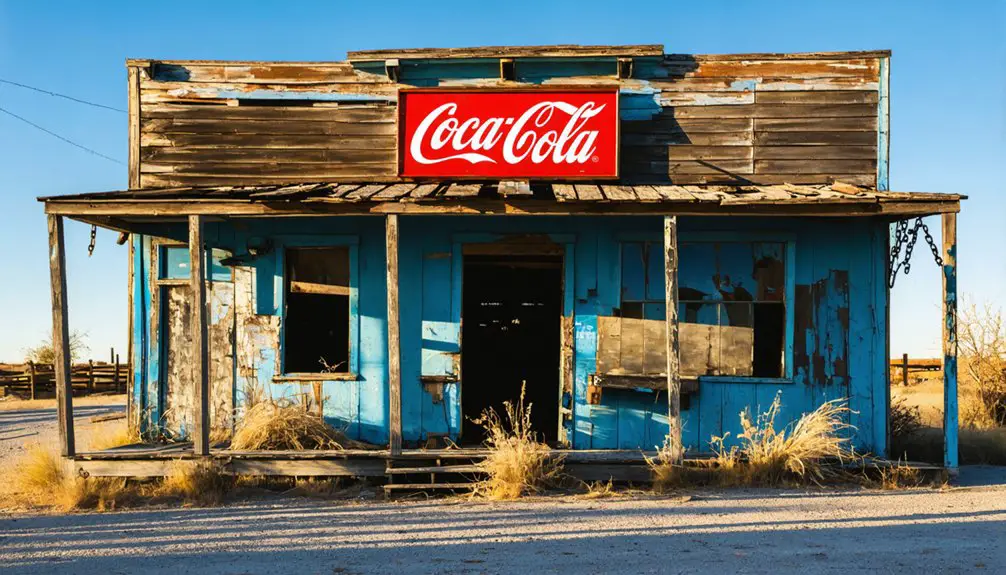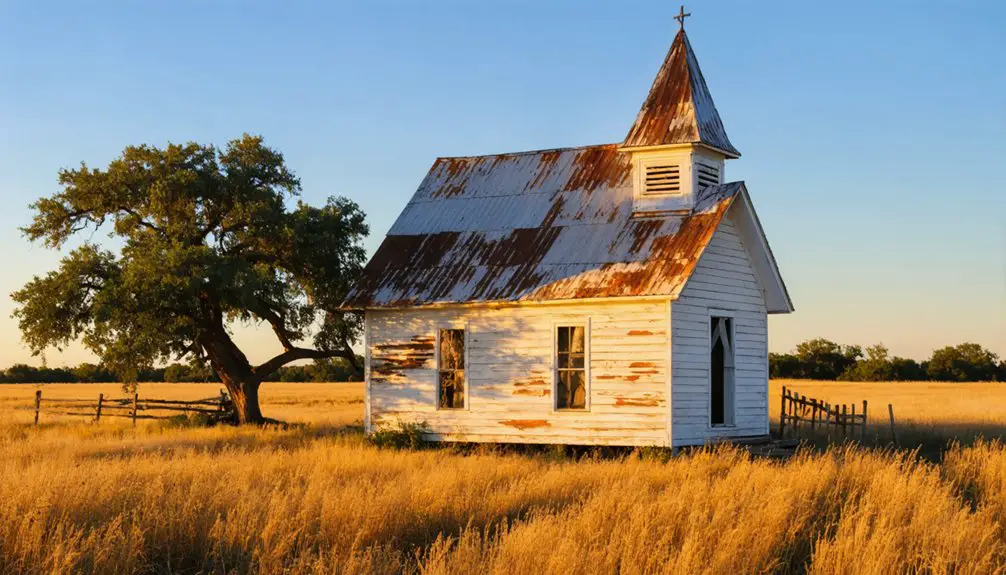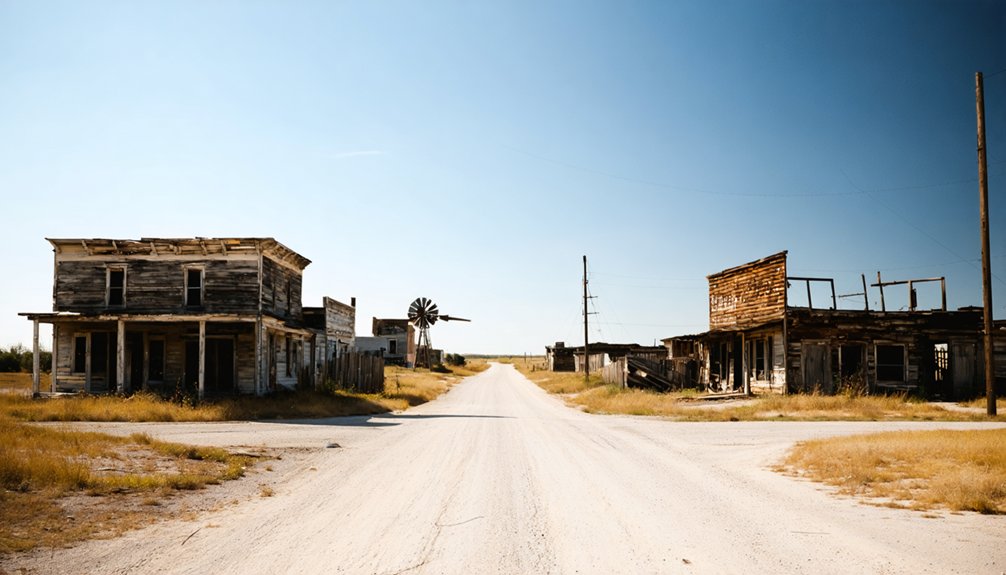
Planning a ghost town road trip to Slide, Texas starts with a 13-mile drive southwest of Lubbock along Farm Roads 1730 and 41. You won’t find tourist shops or roadside attractions—just open sky, flat farmland, and scattered remnants of a community that literally picked up and moved in 1903. Pack water, bring a paper map, and go in spring or fall for the best experience. There’s far more to this story than meets the eye.
Key Takeaways
- Slide, Texas lies 13 miles southwest of Lubbock via Farm Roads 1730 and 41, making it an easy half-day trip.
- The town earned its name when the entire community physically relocated buildings westward after a 1903 land resurvey error.
- Expect no tourist attractions—only open farmland, scattered residences, and an authentic, quiet ghost town atmosphere.
- Visit during spring or fall for mild weather; pack water, snacks, a camera, and a paper map due to weak cell signals.
- Keep your fuel tank full and drive slowly to explore unmarked back roads and nearby historic stops like Ropesville.
What Is Slide, Texas and Why Visit?
Tucked 13 miles southwest of Lubbock along Farm Roads 1730 and 41, Slide, Texas is one of those blink-and-you’ll-miss-it ghost towns that carries a surprisingly rich backstory beneath its quiet exterior. You’re looking at Lubbock County’s second oldest community, a place where historical preservation isn’t just a concept — it’s embedded in the land itself.
The name alone tells you everything. In 1903, a resurvey revealed settlers had built two miles off their correct land sections, so they literally slid their buildings west to fix it. That quirky act of problem-solving became the town’s identity forever.
Visiting Slide means stepping into genuine community stories that most road-trippers completely overlook. It’s raw, unpolished Texas history — exactly the kind of freedom-seeking adventure worth chasing.
The Strange True Story Behind the Name Slide
Before it earned its quirky name, this community went by the forgettable label of Block Twenty back in the 1890s.
In 1903, surveyor W.R. Standefer discovered that settlers had been living two miles off their correct land sections, so everyone literally slid their buildings west to sit on the right spots.
That mass relocation gave the town its permanent name, making Slide one of the few places in Texas where you can trace its identity back to a single, bizarre moment in history.
Original Name Block Twenty
Back in the 1890s, this quiet stretch of Lubbock County went by the far less colorful name of Block Twenty. It’s a straightforward historical naming rooted in the grid-based land surveying common across West Texas at the time. Nothing memorable, nothing romantic — just a practical label stamped onto the rolling plains.
That all changed in 1903 when surveyor W.R. Standefer conducted a land resurveying of the area and made a startling discovery. Settlers had been living two full miles off their correct land sections.
The solution? Everyone picked up and moved their buildings westward to the proper locations. That collective “slide” across the Texas plains gave the community an identity no map grid could ever manufacture — and a name that’s stuck for well over a century.
The Great Land Slide
Few place names in Texas carry as much literal truth as Slide — because that’s exactly what happened here. In 1903, surveyor W.R.. Standefer discovered that settlers had been living two miles off their correct land sections.
Rather than abandon their community, residents physically moved their buildings west to sit on the proper plots. That collective act of determination became the town’s identity.
The name “Slide” isn’t folklore — it’s historical preservation in its purest form, a living record of pioneer practicality etched into the Texas map. When you drive out here today, you’re traveling through community nostalgia made real.
Those early settlers didn’t quit; they literally slid over and started again. That spirit still lingers along these quiet Lubbock County roads.
Buildings Move West
Picture the moment when a surveyor rides into your community and tells you everything’s in the wrong place. That’s exactly what happened in 1903 when W.R. Standefer’s resurvey revealed settlers had built two miles off their actual land sections.
Faced with this historical land shift, residents made a bold decision — they moved.
Rather than abandoning their investments, the community organized a remarkable relocation effort, physically dragging buildings westward to their correct positions. This community relocation wasn’t chaotic; it was collective action driven by practical necessity and frontier determination.
The name Slide wasn’t assigned by officials or mapmakers. Residents earned it themselves, commemorating the moment they literally slid their homes and businesses across the Texas plains to where they rightfully belonged.
How to Get to Slide, Texas From Lubbock
Starting from downtown Lubbock, you’ll head southwest on Slide Road until you reach the intersection of FM 1730 and FM 41, about 13 miles out.
The drive is straightforward, cutting through flat West Texas farmland that stretches as far as you can see.
Keep an eye out for the 194th Street marker near FM 41, which signals you’re closing in on what remains of this quietly faded community.
Starting Point In Lubbock
Tucked just 13 miles southwest of Lubbock, Slide is an easy half-day escape that begins right in the heart of the city. Start your journey from downtown Lubbock and head southwest on Slide Road toward FM 41 and Farm Road 1730. You’ll cover roughly 21 kilometers before reaching this quiet, unincorporated community steeped in historical anecdotes dating back to the 1890s.
The drive itself sets the tone — wide open skies, flat Texas terrain, and a sense that you’re leaving the modern world behind. Community preservation efforts keep Slide’s story alive, even without businesses or formal landmarks.
Pack water, charge your camera, and embrace the freedom of an uncrowded backroad adventure. The whole trip fits comfortably into a morning or afternoon.
Key Roads To Take
Once you’re ready to leave Lubbock behind, the route to Slide is straightforward. Head southwest on Slide Road until you reach 194th Street near FM 41. From there, Farm Roads 1730 and 41 intersect at the heart of this quiet community, roughly 13 miles from Lubbock’s city center.
These roads carry more than asphalt — they hold community stories dating back to 1903, when settlers literally slid their buildings westward after a resurvey revealed they’d built on the wrong land sections. That historical anecdote gave Slide its unforgettable name.
The drive itself feels open and unhurried, cutting through flat southern Lubbock County farmland. You’ll sense the freedom of wide horizons long before you arrive at what remains of this resilient, quietly fading Texas community.
Landmarks Along The Way
Leaving Lubbock’s city limits, you’ll pass through the kind of flat, expansive farmland that defines southern Lubbock County — wide open stretches of cotton fields and caliche roads that set the tone for the quieter world ahead.
Watch for these landmarks as you close in on Slide:
- FM 1730 intersection — your clearest signal you’re entering community preservation territory
- FM 41 junction — where Slide Road meets history at 194th Street
- Open cotton fields — living historical anecdotes of West Texas agricultural identity
- Ropesville direction signs — confirms you’re traveling the correct southwestern corridor
- Scattered rural homesteads — quiet reminders that forty-four people once called this stretch home
Each marker strips away modern noise, pulling you closer to one of Lubbock County’s most overlooked stories.
What Will You Actually See in Slide, Texas?
Slide doesn’t offer much in the way of traditional tourist attractions, but that’s exactly the point. You’re not coming here for souvenir shops or guided tours.
Slide skips the souvenir shops. Come for something better — open sky, honest land, and nothing to sell you.
You’ll find open West Texas sky, flat farmland stretching endlessly, and the quiet intersection of Farm Roads 1730 and 41 marking the community’s heart.
There aren’t standing historical landmarks screaming for your attention, but locals carry stories — local legends about the 1903 resurveying that literally moved an entire community westward. That’s the history living in this land.
You’ll see scattered residences, agricultural fields, and honest rural Texas. No businesses, no crowds, just raw geography and a powerful sense of place.
For travelers chasing freedom over convenience, Slide delivers something most destinations can’t — authentic, unfiltered stillness.
When Is the Best Time to Drive Out to Slide?
Now that you know what’s waiting at Slide, timing your visit makes all the difference. Spring and fall offer the best conditions for exploring this corner of southern Lubbock County, where Historical Preservation meets wide-open Texas skies.
- Spring (March–May): Mild temperatures, clear skies, ideal for photography
- Fall (September–November): Cool air, golden light, perfect road trip weather
- Weekday mornings: Less traffic on Farm Roads 1730 and 41
- Avoid summer midday: West Texas heat hits hard with zero shade
- Sunset drives: Local Legends feel more alive when long shadows stretch across the flatlands
You’re chasing history, not crowds. Pick a quiet Tuesday morning in October, load up the truck, and head 13 miles southwest of Lubbock on your own terms.
What to Pack for Your Slide, Texas Day Trip
Before you head out on Slide Road toward FM 41, packing smart turns a simple drive into a comfortable, rewarding experience. West Texas weather shifts fast, so layer your clothing and toss in a light jacket regardless of the forecast.
These packing essentials will keep you self-sufficient across Lubbock County’s open terrain:
- Water – Carry more than you think you’ll need
- Snacks – No businesses operate in Slide today
- Charged phone – GPS and emergency contact access matter here
- Camera – Capture the quiet, wide-open atmosphere
- Paper map – Cell signals thin out near FM 1730
These travel tips reflect the freedom this remote drive offers. You’re heading somewhere few bother exploring, so arrive prepared and leave nothing behind.
Nearby Towns Worth Adding to Your Slide Texas Route
Once you’ve explored the quiet roads around Slide, adding a stop in Ropesville makes easy sense — it sits just 21.7 kilometers east and rounds out your southern Lubbock County loop nicely. Both towns carry local history and community stories worth chasing.
- Ropesville offers small-town charm with deeper agricultural roots.
- Lubbock city center sits 21 kilometers northeast for food and fuel.
- Farm Roads 1730 and 41 connect multiple communities efficiently.
- Southern Lubbock County rewards slow, curious driving between stops.
- Local diners and community landmarks reveal stories no guidebook captures.
String these stops together and you’ll build a route that feels genuinely lived-in rather than touristy. You’re not just passing through — you’re reading the landscape on your own terms.
Other Lubbock County Ghost Towns Worth the Drive
Lubbock County holds more than just Slide if you’re willing to follow the back roads. Several forgotten communities dot this stretch of the Texas South Plains, each carrying its own community stories worth chasing down.
Ropesville sits just 21 kilometers east of Slide and offers a glimpse into early agricultural settlement life. These small stops often reward curious travelers with historical artifacts tucked into local cemeteries, abandoned foundations, and roadside markers that most people drive past without a second glance.
You’ll find the real Texas out here, far from the interstate noise. Bring a paper map, keep your tank full, and give yourself permission to turn down unmarked roads. The High Plains doesn’t hide its history — it just waits for someone willing to look.
Frequently Asked Questions
Is Slide, Texas Still an Officially Recognized Unincorporated Community Today?
Yes, Slide, Texas remains an officially recognized unincorporated community today! You’ll discover this historical ghost town’s abandoned landmarks still exist in Lubbock County, sitting quietly 13 miles southwest of Lubbock, waiting for your adventurous exploration.
Which School District Currently Serves Children Living in Slide, Texas?
Lubbock-Cooper Independent School District serves Slide’s kids today! As you’re exploring ghost town attractions, you’ll appreciate knowing travel safety tips, like confirming local routes before venturing into this remote, fascinating unincorporated community southwest of Lubbock.
How Long Did Slide’s Post Office Operate Before Permanently Closing?
Like a flickering flame, Slide’s post office burned for 23 years total — operating from 1904–1915, then reopening 1917–1929. You’ll find this ghost town attraction among Slide’s most enthralling historical landmarks worth exploring on your road trip.
What Was Slide, Texas Originally Called Before Receiving Its Current Name?
You’ll love this historical name origin story — Slide was originally called Block Twenty in the 1890s. Its town naming story transformed in 1903 when residents literally “slid” their buildings west to correct land survey mistakes!
How Many Residents Does Slide, Texas Have According to Official Records?
Like a forgotten whisper, Slide’s official records show you’ll find just 44 residents there. When exploring these ghost town attractions, remember your travel safety tips — it’s as quiet and free as open Texas skies.
References
- https://authentictexas.com/texas-ghost-towns/
- https://www.youtube.com/watch?v=g9Kd5TDMGyw
- https://www.myhighplains.com/news/texas/you-might-have-lived-in-a-texas-ghost-town-without-realizing-it-heres-where-they-are-and-why/
- https://www.facebook.com/petechristykcbd/posts/texas-town-history-37-slide-texas-slide-is-actually-located-on-slide-road-at-194/1043637003800618/
- https://www.tshaonline.org/handbook/entries/slide-tx
- https://en.wikipedia.org/wiki/Slide
- https://kids.kiddle.co/List_of_ghost_towns_in_Texas