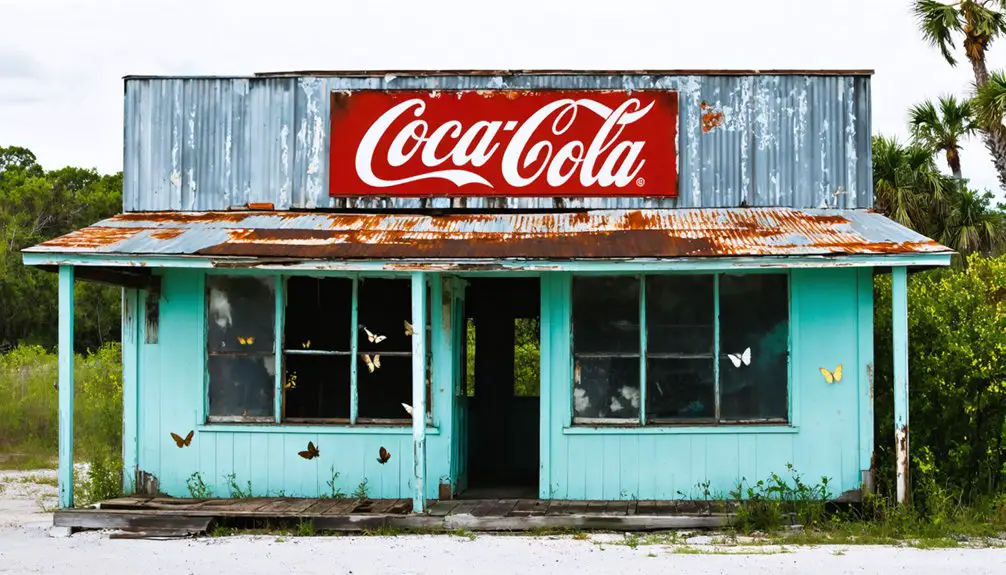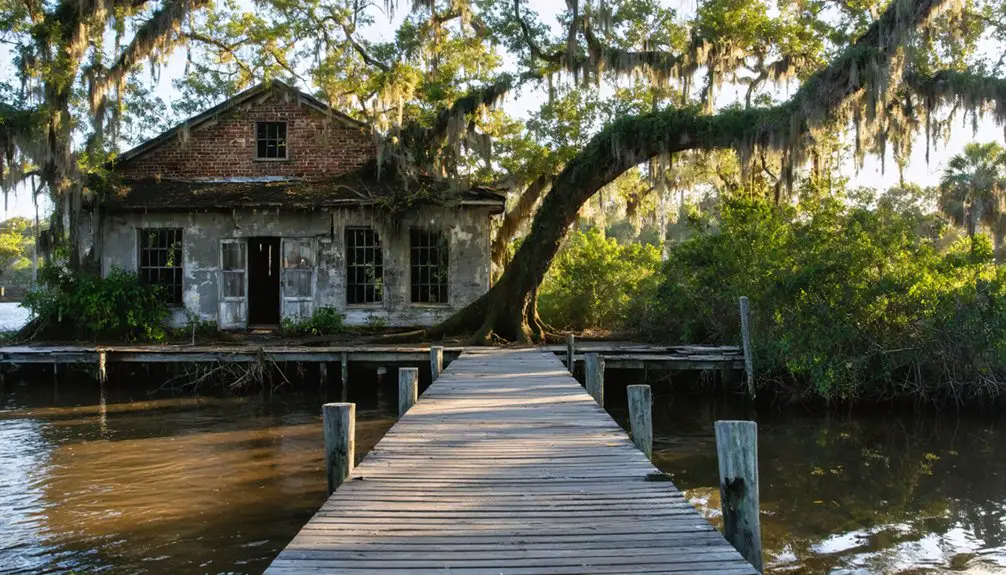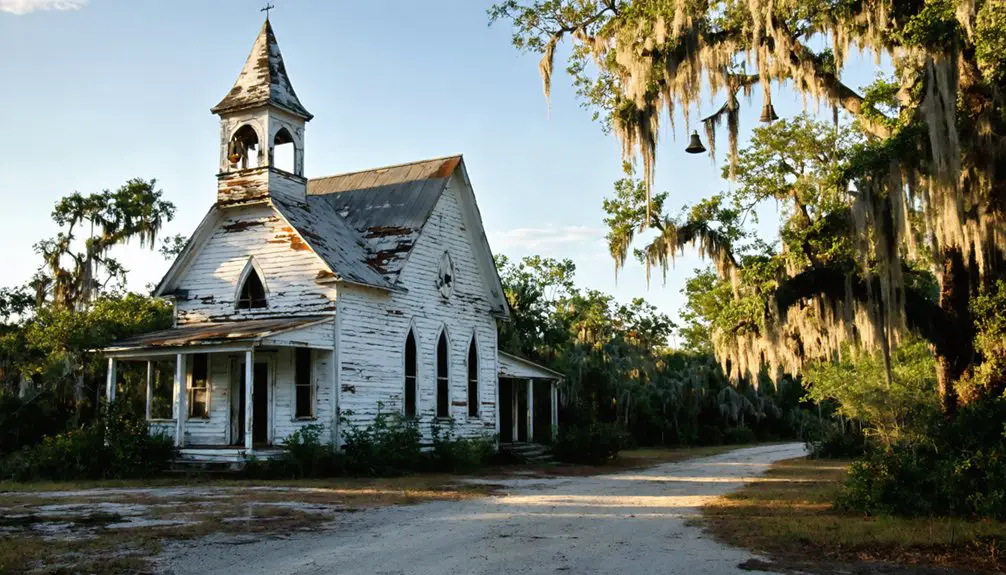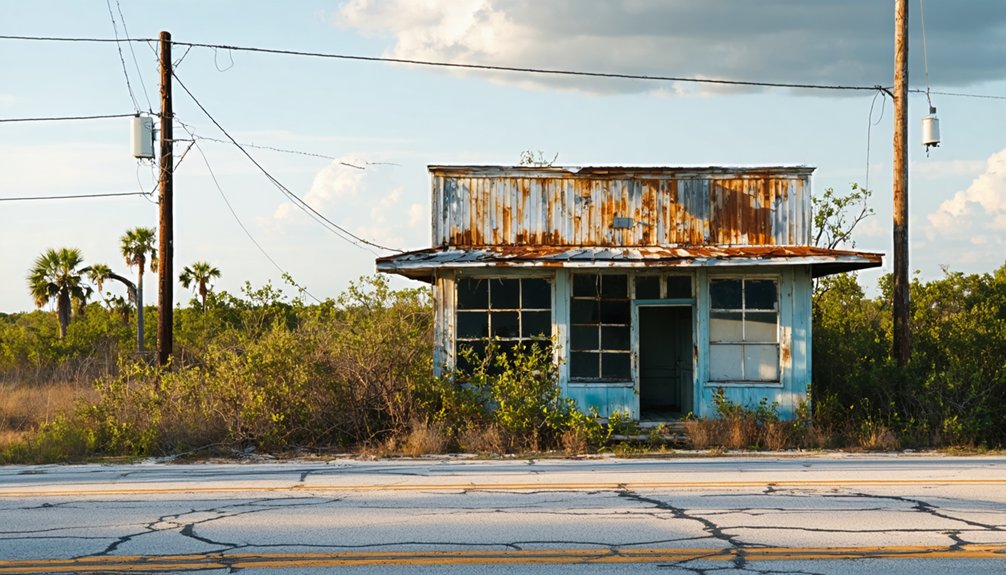
Planning your ghost town road trip to Old California, Florida means embracing a destination that exists more in county records and local memory than on any tourist map. You won’t find dramatic ruins here—just subtle landscape clues, weathered boundaries, and quiet roads that reward patient exploration. Visit in winter or early spring, pack water, carry a paper map, and approach from US-27 through Highlands County. There’s far more layered history waiting to reveal itself.
Key Takeaways
- Old California, Florida, is a forgotten, understudied settlement offering layered history covering land-use shifts, transportation collapse, and social upheaval.
- Physical remnants are scarce; explore land boundaries, neglected lots, and landscape features rather than expecting standing structures or ruins.
- Visit in winter or early spring to avoid heat and humidity, arriving early for quiet mornings and optimal lighting.
- Approach via US-27 through Highlands County using GPS coordinates, and carry a paper map due to unreliable cell signals.
- Pack ample water, sturdy footwear, sunscreen, and a wide-brim hat, as the remote location demands complete self-sufficiency.
What Is Old California, Florida?
Though California’s ghost towns often conjure images of the Gold Rush West, Old California is actually a forgotten community in Florida—a small, unassuming settlement that time and shifting development patterns quietly erased from the map. You won’t find it on most modern itineraries, yet its cultural significance runs deeper than its obscurity suggests.
Like many Florida ghost towns, Old California didn’t fade from mining collapse or reservoir flooding. Development changes and evolving land-use patterns simply bypassed it, leaving little behind for historical preservation efforts to anchor.
Florida’s ghost-town record remains incomplete, meaning communities like this one exist in a kind of documentary limbo—acknowledged but understudied. For travelers who value freedom over curated tourism, that ambiguity makes Old California worth seeking out on your own terms.
How Old California, Florida Was Abandoned
Like so many Florida ghost towns, Old California didn’t vanish overnight—development shifts and changing land-use patterns gradually drained it of its purpose, leaving residents little reason to stay.
Several forces sealed its fate:
- Land-use shifts redirected economic activity away from the settlement’s core.
- Railroad history played a quiet role—when rail lines bypassed smaller communities, commerce followed the tracks elsewhere.
- County boundary changes redrawn across Florida erased civic identities overnight.
- Development pressures absorbed outlying settlements into broader regional growth patterns.
Unlike Western sites defined by mining ruins, Old California left no dramatic physical wreckage behind. Its abandonment was quieter—bureaucratic, almost invisible.
You won’t find collapsed shafts or rusted headframes here, just a name on an old map and the open road ahead.
What Still Stands in Old California Today
Most ghost towns leave you something to hold onto—a crumbling storefront, a rusted hinge, a foundation swallowed by weeds. Old California, Florida offers a quieter kind of remnant. County records and local memory preserve its outline more than standing structures do.
You’ll find scattered traces if you look carefully—old land boundaries, neglected lots, and the kind of silence that feeds haunted legends among longtime residents. Hidden treasures here aren’t necessarily buried gold; they’re fragments of context, the kind that reward patient, independent travelers willing to read a landscape rather than a marker.
You’re free to explore what development and time left behind, but arrive with realistic expectations. What stands today is mostly historical record, not restored architecture—and that honesty makes the visit more meaningful.
Why Travelers Keep Returning to Old California
You return to Old California not simply for ruins, but because each preserved site layers mining-era economics, transportation collapse, and social upheaval into a tangible, walkable record. Places like Calico and Shasta State Historic Park reward close attention, offering interpretive depth that casual photographs can’t capture.
The road connecting these stops earns its own respect, threading through landscapes that explain, almost geographically, why towns rose and vanished where they did.
History Draws Visitors Back
There’s something that keeps drawing travelers back to California’s ghost towns — not the ruins themselves, but the stories fossilized within them. Ghost town legends outlast the structures that inspired them, and mining relics anchor those legends to real ground.
You’ll find history layered across every stop:
- Gold Rush collapse reshaped entire communities almost overnight
- Silver strikes built boomtowns like Calico, home to 500 mines
- Transportation shifts bypassed towns, freezing them in time
- Flooding and fire erased settlements that once held thousands
Each cause tells a distinct chapter of California’s restless ambition. You’re not just driving through abandoned places — you’re tracing decisions, disasters, and determination that built a state and then quietly unmade parts of it.
Preserved Sites Offer Depth
Preserved ghost towns reward repeat visits in ways that raw ruins simply can’t — because what survives here isn’t just wood and stone, but curated context.
Historical preservation transforms fragile remnants into legible stories you can actually walk through. At Calico Ghost Town, that means riding the Calico & Odessa Railroad, stepping into the Mystery Shack, and raising a glass at Lil’s Saloon — tourist attractions layered atop California’s largest silver strike, backed by 500 mines.
Shasta State Historic Park anchors the northern end of this journey with similar interpretive care. You’re not just witnessing decay; you’re reading a landscape that’s been deliberately saved for you to understand.
That distinction makes preserved sites worth returning to, season after season.
The Road Itself Rewards
Beyond any single ruin or restored saloon, the drive itself becomes the destination — a 770-mile arc through California’s boom-and-bust geography that stitches together mining camps, flooded settlements, and bypassed highway towns into something larger than any one stop. You’ll find the journey rewards careful attention:
- Historic architecture surfaces unexpectedly between long desert stretches, grounding abstract history in tangible form.
- Local legends accumulate at each stop, layering oral tradition onto documented record.
- Landscape shifts — from northern forests to Mojave flats — mirror the economic shifts that created abandonment.
- Each bypassed road recalls a transportation decision that erased one town and built another.
You’re not chasing ruins. You’re reading a living document of ambition, failure, and reinvention written across open road.
When to Visit Old California, Florida
Old California sits in Florida’s subtropical climate zone, so timing your visit matters more than you might expect. Winter and early spring, from November through March, offer cooler temperatures and lower humidity, making outdoor exploration of historic remnants far more comfortable.
Summer heat and afternoon storms can turn a thoughtful walk through sites tied to mining history or transportation shifts into an uncomfortable ordeal. Crowds thin considerably on weekdays, giving you quieter moments to absorb what’s left standing.
Spring wildflowers briefly restore a kind of faded beauty to the landscape, rewarding those who arrive in late February or March. Whatever season you choose, arrive early in the morning, when the light is sharp and the air still carries something of the old world’s quiet.
How to Drive to Old California, Florida
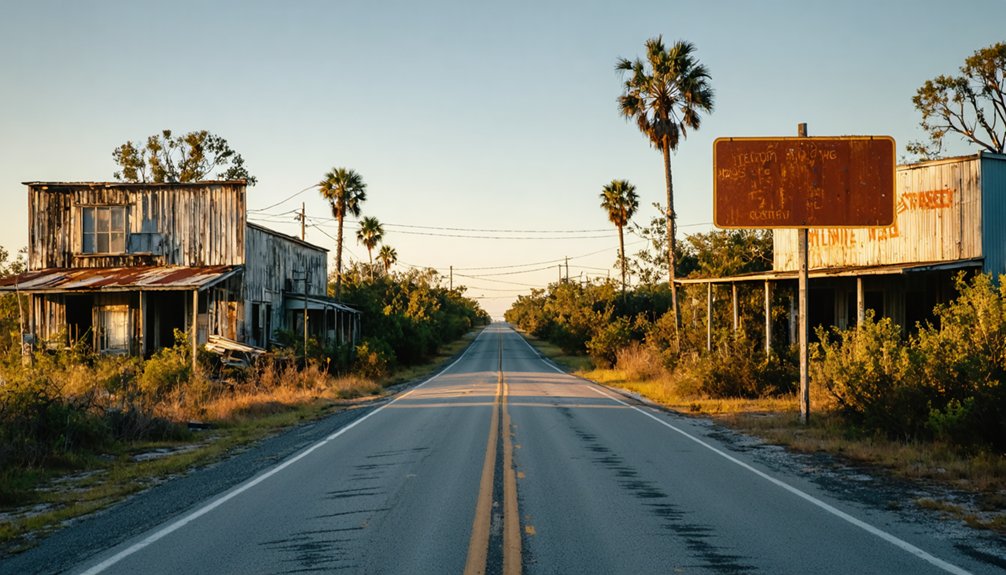
Getting to Old California, Florida, requires a sense of direction that’s equal parts practical and historical, since you’re steering toward a place that time has largely passed by. Unlike destinations framed by desert flora or crumbling historic architecture, this small community demands intentional navigation.
Getting to Old California means navigating with equal parts compass and curiosity — this is a place you uncover, not simply arrive at.
- Approach from US-27 heading south through Highlands County for the most direct rural corridor.
- Use GPS coordinates rather than street names, as signage remains sparse.
- Allow buffer time — surrounding roads reward slow driving and quiet observation.
- Avoid peak summer heat by scheduling arrival during morning hours.
You’re not following a tourist corridor here. You’re tracing a path that development largely forgot, which makes arriving feel less like reaching a destination and more like uncovering one.
What to Bring for a Day Trip to Old California
Since Old California sits well outside any commercial corridor, you’ll want to pack as though the nearest convenience store is an hour away — because it likely is. Carry more water than you think you need, especially in the Mojave-adjacent stretches where heat turns miscalculation into genuine risk.
Skip the local cuisine hunt until you’ve reached a proper resupply town like Barstow. Pack sturdy footwear for uneven terrain, a wide-brim hat, sunscreen, and a paper map — cell signals fail regularly here.
A camera earns its weight at the scenic viewpoints overlooking weathered storefronts and mine-scarred ridgelines. Bring a notebook too; ghost towns reward the observant.
Your independence here is real, but it demands preparation. Romanticize the ruins all you want — just don’t romanticize your self-sufficiency.
Frequently Asked Questions
Are Pets Allowed to Visit Old California, Florida?
The knowledge base doesn’t confirm pet restrictions or pet safety policies for Old California, Florida. You’d want to contact the site directly to verify you’re free to explore with your companion by your side.
Is Old California, Florida Accessible for Visitors With Mobility Limitations?
Specific details about wheelchair accessibility and wheelchair-friendly pathways at Old California, Florida aren’t available right now. You’d want to contact the site directly to guarantee your journey through history unfolds comfortably and freely for everyone.
Are Guided Tours Available at Old California, Florida?
Guided tour availability at Old California, Florida isn’t confirmed in current records. You’d want to contact local authorities directly, as historical reenactments and photography opportunities may vary seasonally, rewarding your independent spirit of exploration and discovery.
Is There an Entrance Fee to Visit Old California, Florida?
Like an open gate to the past, you won’t find entrance fee barriers or ticket prices blocking your path — Old California, Florida’s ghost town lets you roam freely without any admission cost.
Can You Camp Overnight Near Old California, Florida?
I don’t have specific details on camping regulations or overnight accommodations near Old California, Florida. You’ll want to contact local authorities directly to explore your freedom to camp beneath those history-laden skies.
References
- https://en.wikipedia.org/wiki/List_of_ghost_towns_in_California
- https://en.wikipedia.org/wiki/List_of_ghost_towns_in_Florida
- https://www.tripadvisor.com/Attractions-g28926-Activities-c47-t14-California.html
- https://www.visitcalifornia.com/road-trips/ghost-towns/
- https://en.wikipedia.org/wiki/Lists_of_ghost_towns_in_the_United_States
- https://maps.apple.com/guides?curated=7683917705499014961&_provider=9902
- https://www.ghosttowns.com/states/ca/caalpha.html
- https://www.wikiwand.com/en/articles/List_of_ghost_towns_in_California
- https://www.youtube.com/watch?v=ZtBc0thPiyE
- https://patch.com/california/banning-beaumont/13-ghost-towns-explore-california