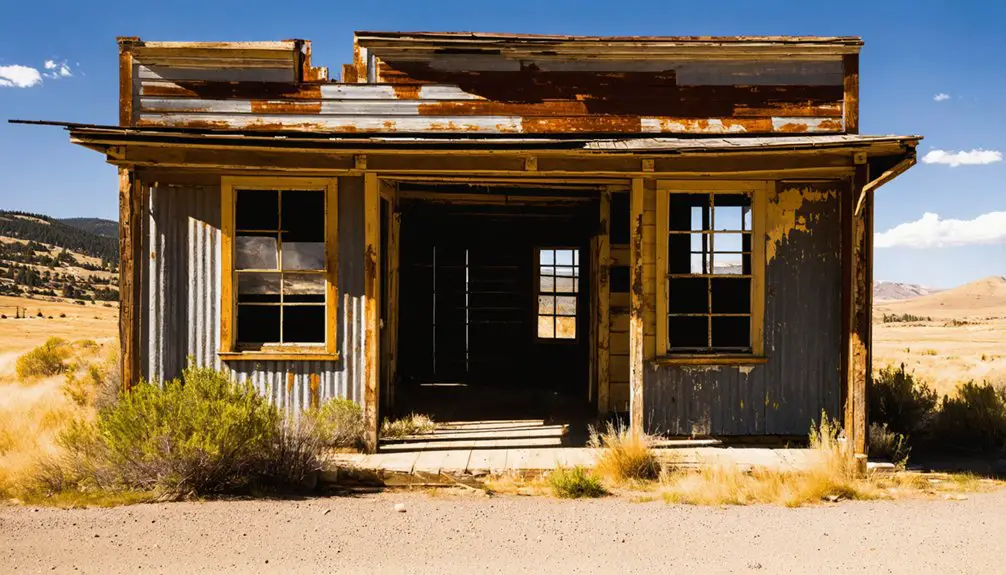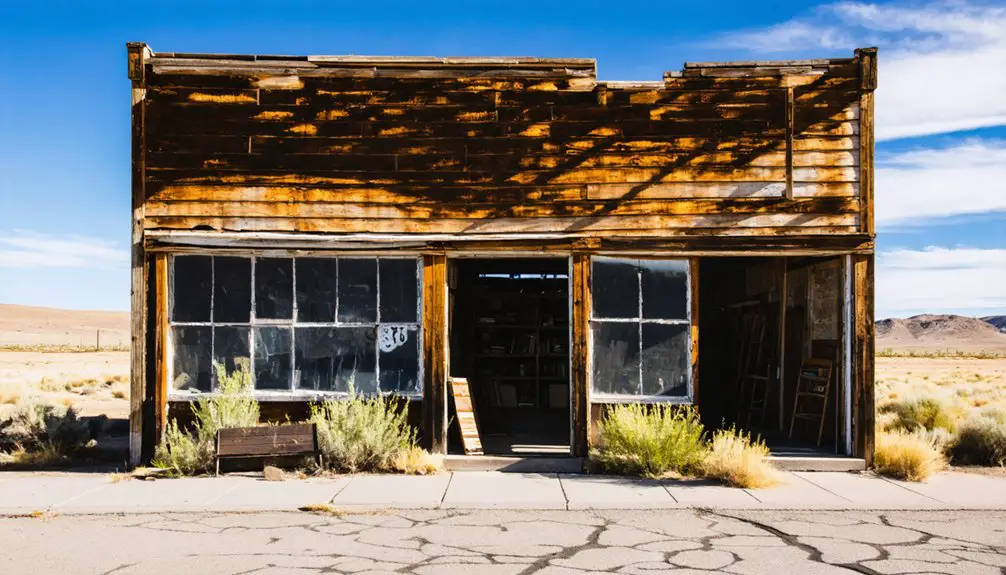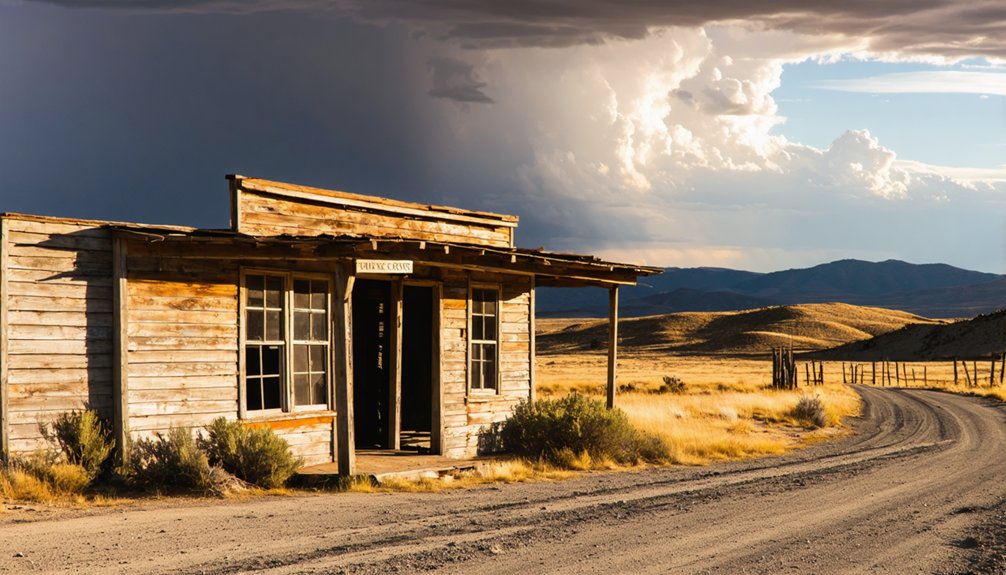
Flora, Oregon is a hauntingly beautiful ghost town tucked into the highlands of Wallowa County at 4,350 feet. You’ll find weathered homes, rusting farm relics, a historic cemetery, and the restored 1915 schoolhouse that still stands proud. Start your drive from Joseph or Enterprise along OR-82 and OR-3, and arrive self-sufficient since there’s no gas or food available. There’s far more to this forgotten town’s story than meets the eye.
Key Takeaways
- Flora, Oregon, sits at 4,350 feet in Wallowa County, roughly 35 miles from Enterprise via OR-82 W and OR-3.
- Arrive self-sufficient with water, fuel, and a camera, as no visitor center, café, or gas station exists on-site.
- Late spring through early fall offers the most reliable driving conditions, clear views, and vibrant scenery.
- Key sites include the 1915 Flora School Education Center, weathered houses, a blacksmith shop, and the 1891 cemetery.
- Respect private property boundaries and preserve the quiet atmosphere when exploring Flora’s remaining historical structures.
What Is Flora, Oregon and Why Visit?
Tucked into the high grasslands of Wallowa County at 4,350 feet, Flora, Oregon is an unincorporated ghost town that once supported around 200 residents, an eight-room school, and a post office that ran for over 75 years.
Today, scattered houses, a blacksmith shop, and weathered farm relics mark what historians call the most substantial town to fail in Northeast Oregon. You’ll find no crowds, no gift shops, just open land and quiet history.
Scattered houses and weathered relics remain — no crowds, no gift shops, just open land and quiet history.
Local legends and ghost stories add an intriguing layer to your visit, giving the crumbling structures a lived-in weight that photographs can’t fully capture.
If you’re chasing wide skies, pioneer history, and the kind of freedom that only empty roads deliver, Flora rewards the curious traveler willing to seek it out.
How Flora Went From Boomtown to Ghost Town
By 1910, Flora had around 200 residents, an eight-room school, and the kind of civic energy that made it look like a permanent fixture on the Oregon frontier.
But improved roads quietly worked against small towns like Flora, making it easy for families to travel to larger centers rather than depend on local businesses and institutions.
Farm consolidation then did the rest, absorbing small homesteads into larger agricultural operations and steadily draining the population that once gave Flora its life.
Peak Population and Prosperity
At its peak around 1910, Flora bustled with nearly 200 residents, an eight-room schoolhouse, and the kind of civic energy that made it the most substantial town in the region. Farmers, families, and tradespeople built real lives here, supported by a post office, a Methodist church, and a blacksmith shop that kept the community running.
By 1915, a newly constructed school replaced the original, signaling continued ambition. Today, these remnants serve as the town’s most compelling tourist attractions, drawing visitors curious about pioneer resilience and local legends tied to northeastern Oregon’s homesteading era.
Walking through Flora, you’re stepping into a moment frozen in time — a thriving rural hub that once defied isolation before roads, consolidation, and shifting populations quietly pulled it apart.
Roads, Farms, and Decline
Flora’s fall from boomtown to ghost town wasn’t dramatic — it was gradual, driven by the same forces that quietly hollowed out dozens of rural communities across the American West. Better roads made distant towns more accessible, pulling residents away from local businesses.
Wartime population shifts thinned the community further, and mid-century farm consolidation swallowed small homesteads into larger agricultural operations, leaving fewer families rooted to the land. The post office closed in 1966, the school followed by 1977, and Flora’s civic heartbeat went silent.
Local legends still echo through the remaining structures — weathered houses, a blacksmith shop, scattered farm implements. Fortunately, preservation efforts saved the 1915 schoolhouse, giving you a tangible connection to what Flora once was before the roads and economics quietly won.
Getting to Flora From Joseph or Enterprise
Whether you’re starting from Joseph or Enterprise, reaching Flora is a straightforward drive through some of Northeast Oregon’s most open, rolling countryside. You’ll pass through sparsely timbered grasslands ideal for wildlife spotting, with hawks and deer frequently visible along the roadside.
The drive to Flora winds through Northeast Oregon’s open, rolling countryside — prime territory for hawks, deer, and wide-open skies.
There’s little local cuisine available near Flora itself, so fuel up before you leave town.
Follow these steps from Joseph:
- Take OR-82 W toward Enterprise, merging onto the main corridor heading northwest.
- Turn north onto OR-3, climbing into open wheat farm country for roughly 35 miles.
- Watch for Flora Lane and Church Street, which guide you directly into the town site.
Flora sits at 4,350 feet, so expect cooler temperatures and wide, unobstructed views stretching toward the Washington state border.
What You’ll See in Flora Today
When you arrive in Flora, the restored Flora School Education Center stands as the town’s most striking survivor, saved from decay and repurposed as a pioneer arts education space listed on the National Register of Historic Places.
You’ll also spot scattered remnants of early 1900s life — houses, a blacksmith shop, and rusting farm implements that paint a vivid picture of what this 200-person community once was.
Before you leave, walk the small, overgrown Flora Cemetery, where headstones dating to 1891 quietly mark the town’s earliest roots.
Flora School Education Center
Standing at the center of what remains of Flora, the Flora School Education Center is the town’s most restored and recognizable landmark. Built in 1915 and listed on the National Register of Historic Places, it’s a direct result of dedicated preservation efforts that saved it from the same fate as Flora’s other crumbling structures.
Local legends surrounding the school’s pioneer-era community give the site a living historical weight you’ll genuinely feel when you arrive.
Here’s what makes the schoolhouse worth your stop:
- It’s been restored as a pioneer arts education center
- It anchors the broader ghost town experience with tangible history
- It represents Flora’s peak — when 200 residents and an eight-room school defined the community
Nothing else in Flora matches its condition or context.
Historic Remnants And Structures
Beyond the schoolhouse, Flora’s remaining structures tell a quieter, more weathered story. You’ll wander past scattered houses frozen mid-decay, a blacksmith shop still holding its shape against the elements, and rusting farm implements that locals say carry their own local legends. These aren’t curated exhibits — they’re raw, unfiltered remnants of lives once fully lived.
The Flora Cemetery, dating to 1891, sits small and overgrown nearby. Walking through it, you’ll feel the weight of the place, the kind that fuels ghost stories and quiet reflection equally.
The surrounding grasslands and wheat farms stretch wide, framing everything in an open, unhurried silence. Flora doesn’t perform for visitors — it simply stands, weathered and honest, waiting for those willing to look closely.
Flora Cemetery Today
The cemetery pulls you further into Flora’s story. Tucked into the landscape, this small, overgrown burial ground dates to 1891 and carries local legends tied to the earliest homesteaders who shaped this region. It’s raw, unpolished, and honest — exactly what a ghost town road trip should feel like.
Current preservation efforts remain minimal, so expect a site that nature is slowly reclaiming. Here’s what you’ll notice:
- Weathered headstones with faded inscriptions marking pioneer families
- Overgrown vegetation that reinforces the town’s abandoned character
- A quiet, isolated atmosphere that makes the history feel immediate and personal
You won’t find manicured paths or interpretive signs. What you’ll find is an unfiltered connection to Flora’s forgotten past.
What Flora Lost: Church, Post Office, and Community
Flora’s decline didn’t happen overnight — it unfolded through a series of losses that slowly stripped the town of its civic identity. The post office closed in 1966, severing a thread that had connected residents since 1890.
The school followed, consolidating into a larger district by 1977. Then, in 2023, the original Flora Methodist Church — a landmark tied to local legends and the town’s founding generation — was lost entirely.
Each closure quietly erased another reason for people to stay. What remains reflects both the weight of that decline and the quiet determination behind preservation efforts like the restored Flora School Education Center.
When you visit, you’re not just seeing a ghost town — you’re standing inside a story of community, erosion, and resilience.
The Flora School’s Surprising Second Life
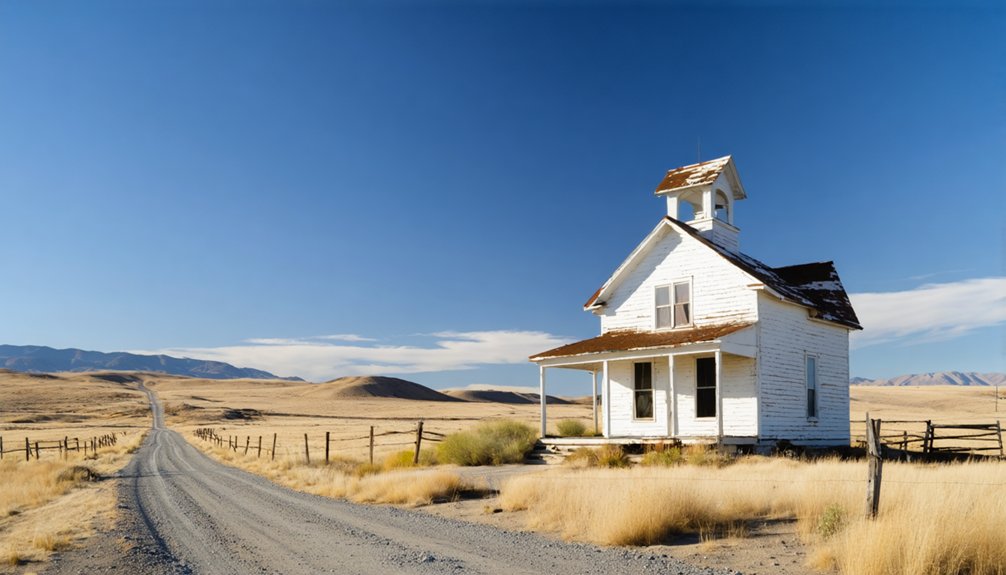
While much of Flora has quietly faded into the landscape, its 1915 schoolhouse didn’t follow the same path. Listed on the National Register of Historic Places, this building stands as a symbol of the area’s historical significance and serious preservation efforts.
Flora may have faded, but its 1915 schoolhouse still stands — preserved, purposeful, and listed on the National Register.
Instead of collapsing into memory, it became the Flora School Education Center — a restored pioneer arts education space that still draws visitors today.
When you stop here, you’ll find more than old walls:
- A fully restored historic schoolhouse anchoring the town site
- Pioneer arts programming that keeps the building purposeful
- A tangible connection to what rural Oregon looked like over a century ago
You don’t need a full itinerary to appreciate it — just pull off OR-3 and look around.
Best Time to Visit Flora and What to Know Before You Go
Since Flora sits at 4,350 feet in the Wallowa County highlands, late spring through early fall gives you the most reliable driving conditions and the clearest views across the surrounding wheat farms and grasslands. Snow can linger well into spring, so plan accordingly if you’re heading up Oregon Route 3 from Enterprise.
There’s no visitor center, no café, and no gas station waiting for you, so arrive self-sufficient. Bring water, a full tank, and a camera.
The local flora blooms vibrantly through summer, adding unexpected color against the weathered structures. Ghost town preservation efforts have stabilized the Flora School, making it the most reliable point of interest.
Walk the grounds respectfully, stay aware of private property boundaries, and let the quiet do what guidebooks can’t.
Frequently Asked Questions
What County Does Flora, Oregon Officially Belong To?
You’ll find Flora officially belongs to Wallowa County, Oregon! It’s a freedom-seeker’s paradise where you can explore incredible historical landmarks and savor local cuisine while uncovering this ghost town’s rich, untamed pioneer heritage.
When Was Flora Officially Platted as a Town?
Like a seed taking root, Flora was officially platted on April 7, 1897. You’ll find its historic landmarks whispering local legends of a thriving past — it’s a timestamp worth remembering on your ghost town adventure!
How Far Is Flora From the Washington State Border?
You’re just about 9 miles from Washington’s border when you reach Flora’s historical landmarks and scenic overlooks, making it an ideal stop as you chase freedom along Oregon Route 3’s stunning northern stretch.
What Is the Elevation of Flora, Oregon?
You’ll find Flora, Oregon sitting at 4,350 feet elevation, where historical landmarks rise against wide open skies. It’s a freeing, high-country escape steeped in local legends, inviting you to explore pioneer history on your own terms.
When Did the Flora Cemetery First Originate?
You’ll find Flora’s cemetery origins trace back to 1891, giving you a direct connection to its ghost town history. It’s small and overgrown, but these cemetery origins whisper tales of pioneer life you won’t want to miss.
References
- https://en.wikipedia.org/wiki/Flora
- http://arshumate.blogspot.com/2008/07/flora-oregon-ghost-town.html
- https://www.daytripnorthwest.com/post/flora-oregon
- https://www.youtube.com/watch?v=o26bxeOofrw
- https://www.youtube.com/watch?v=WpekoOVhLN0
- https://www.youtube.com/watch?v=aHMgAllBfX4
- https://www.facebook.com/groups/ForgottenOregon/posts/2792131421054778/
- https://en.wikipedia.org/wiki/List_of_ghost_towns_in_Oregon
- https://heritagedata.prd.state.or.us/historic/index.cfm?do=main.loadFile&load=NR_Noms/97000579.pdf