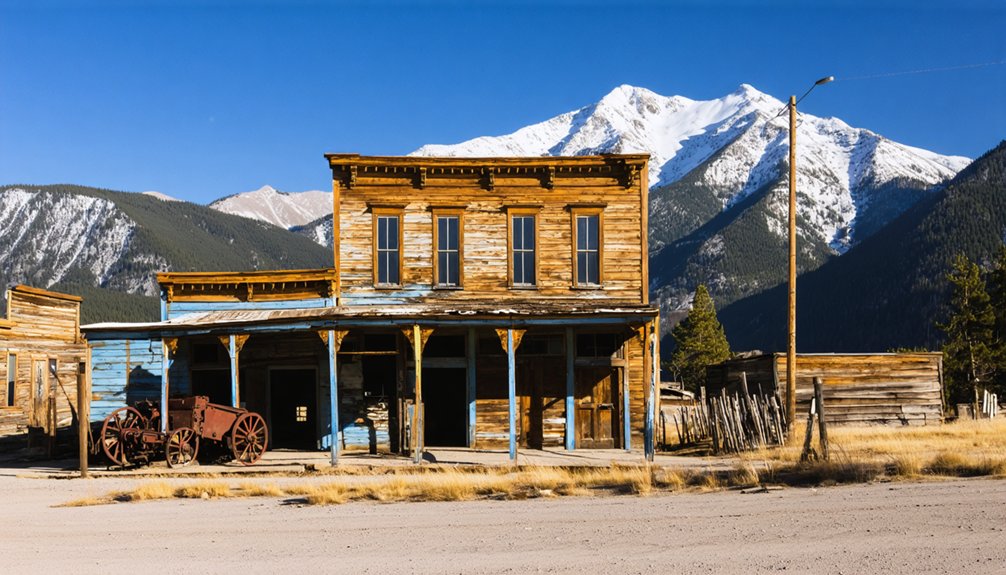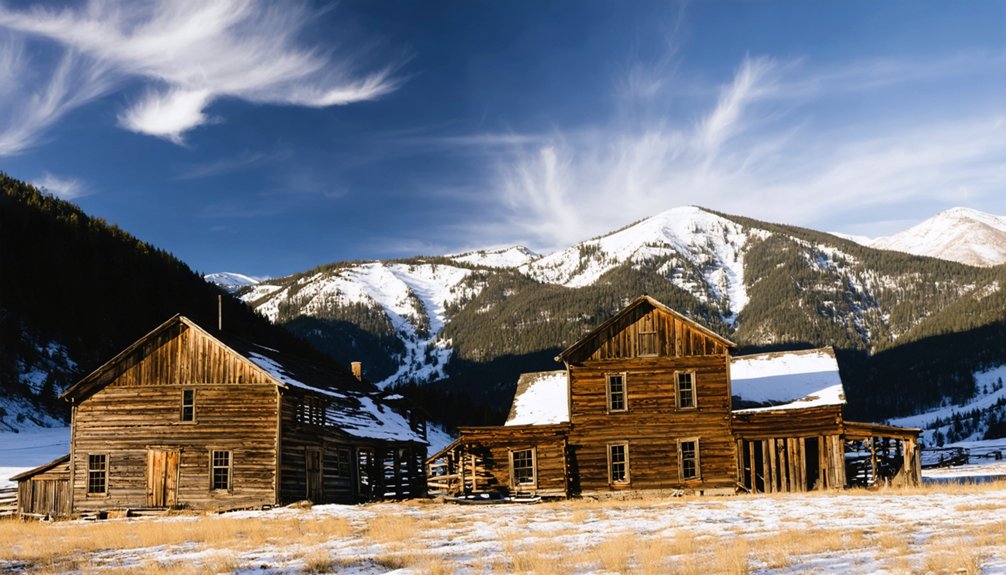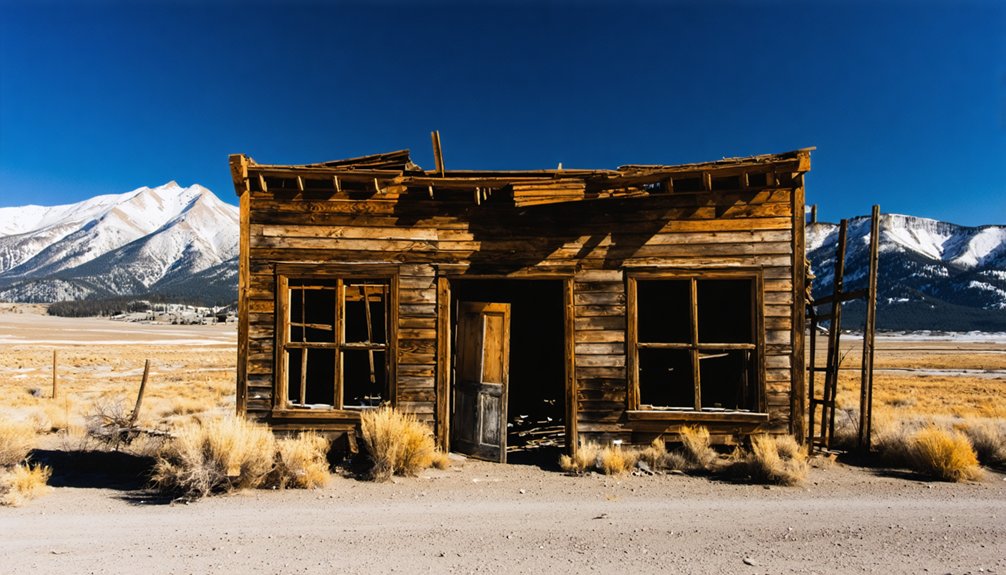
Planning a ghost town road trip to Pearl, Colorado means venturing 19 miles down a graded dirt road from Cowdrey into Jackson County’s remote high country. You’ll find smelter foundations, boardwalk fragments, and street traces frozen in time at 8,406 feet elevation. Pearl’s copper boom collapsed under falling prices and brutal isolation, leaving behind haunting ruins on open range. Pack navigation tools, emergency gear, and a reliable vehicle — everything you need to explore one of Colorado’s most forgotten towns is waiting ahead.
Key Takeaways
- Pearl, Colorado sits 19 miles from Cowdrey via graded dirt road, reaching 8,406 feet elevation with ruins, smelter foundations, and street traces still visible.
- Download offline maps, carry a paper topographic map, and bring a handheld GPS unit due to unreliable cell service in Jackson County.
- Visit late spring through early fall; bring water, a spare tire, and flexibility for unpredictable seasonal road conditions.
- Pack emergency essentials including jumper cables, a tow strap, first-aid kit, satellite communicator, and extra food and water before leaving Cowdrey.
- Base yourself in Walden for amenities, or camp on national forest land; reserve lodging early during peak summer tourism season.
How Much of Pearl, Colorado Actually Survived?
When Pearl’s copper boom finally collapsed, time and weather did the rest — and today, very little is left standing. By the 1970s, ghost-town historian Robert Brown counted only four original structures still upright. That number has continued shrinking.
What you’ll find now are smelter foundations, boardwalk fragments, and scattered log-and-frame house remains — historical artifacts that hint at a town that once held 60 houses, two hotels, and its own newspaper. Some platted street traces are still readable across the landscape.
Town preservation efforts have kept a few restored buildings seasonally occupied, so the site isn’t entirely abandoned. The Wolverine Mine ruins remain the most recognizable landmark. Don’t expect a walkable downtown — expect quiet ruins, open range, and a story told mostly through foundations and silence.
How to Get to Pearl From Cowdrey
Getting to Pearl is straightforward: head about 19 miles from Cowdrey on a good graded dirt road, following the route toward Big Creek Lake in North Park. The drive itself sets the mood — wide open high country, distant ridgelines, and the kind of silence that reminds you why remote places still matter.
You’ll arrive at roughly 8,406 feet, where remnants of town architecture break through the landscape — log-and-frame structures, smelter foundations, and traced street grids that once defined a copper boom community. Take your time walking the site.
Historical artifacts surface in unexpected ways here, from boardwalk fragments to mine ruins. No paved roads, no crowds, no guardrails on the experience. Just bring a reliable vehicle, check seasonal conditions beforehand, and go explore it yourself.
The Copper Boom That Built Pearl
Pearl didn’t exist before copper — the discovery of ore in 1894–1895 is what pulled settlers, speculators, and miners into this remote corner of Jackson County. That mining history moved fast.
Charles Knapp bought the deposit, formed the Pearl Mining & Smelting Co., and by 1903 you’d have found 12 active mines pulling copper sulfides, silver, and gold from the earth. The Wolverine Mine led production, and a smelter went up on the hillside south of town by 1905.
At its peak, Pearl had 60 houses, four stores, two hotels, and its own newspaper. But town decline came swiftly when copper prices dropped and transportation costs made extraction unworkable. What copper built in a decade, economics dismantled just as quickly.
Why Pearl Died and Never Came Back
When copper prices collapsed in the early 1900s, Pearl’s economy had nowhere to turn. You can imagine the blow — a town built almost entirely on copper mining suddenly couldn’t cover the steep costs of extracting and hauling ore out of such a remote corner of Colorado.
Without a railroad and with no alternative industry to fall back on, Pearl simply couldn’t recover.
Copper Prices Collapsed
Copper prices collapsed, and Pearl never recovered. The town’s entire economy rested on a single commodity, and when global markets shifted, the math stopped working.
Extraction costs were high, transportation was brutal, and the smelter built with such ambition reportedly never even fired up. You can still see its foundations today — silent evidence of mining technology that arrived too late to matter.
What brought Pearl down came fast:
- Falling copper prices erased profit margins overnight
- Remote location made shipping ore economically impossible
- The smelter’s failure left historical architecture with no industrial purpose
Isolation Hindered Recovery
Even if copper prices had rebounded, Pearl’s geography made a comeback nearly impossible. Sitting nearly 8,400 feet up in a remote corner of Jackson County, the town had no railroad connection, and hauling ore out cost more than the ore was worth. You’d have needed serious infrastructure investment just to break even.
That isolation also slowed any chance of historical preservation efforts taking root early enough to matter. By the time outside interest arrived, most structures had already collapsed or vanished.
Local legends kept Pearl’s story alive in North Park communities, but legends don’t rebuild economies. The same rugged terrain that once attracted independent-minded miners ultimately sealed the town’s fate. Pearl didn’t fade — it got stranded, too far from progress to survive on anything but memory.
Smelter Ruins, Mine Remains, and What’s Left Standing
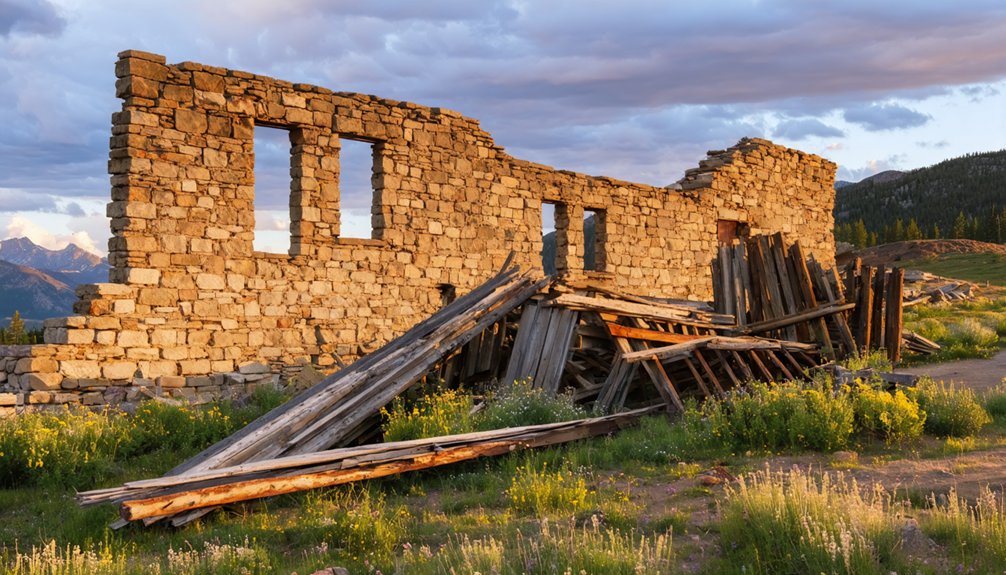
When you walk the site today, you’ll find smelter foundations still jutting from the hillside south of town, silent reminders of machinery that was installed but, according to some sources, never actually fired up.
The Wolverine Mine ruins stand as the district’s most recognizable landmark, marking where Pearl’s largest and most productive operation once pulled copper sulfides, silver, and gold from the ground.
Look closely and you’ll also spot boardwalk fragments, log-and-frame house remains, and faint traces of platted streets cutting across the landscape.
Smelter Foundations Still Visible
Though Pearl’s boom years are long gone, the landscape still holds physical evidence of what was once a copper-mining operation with real ambitions. The smelter foundations sitting on the hillside south of town represent both historical architecture and early mining technology — built in 1901, completed by 1905, yet reportedly never fully operational.
When you walk the site, you’ll notice:
- Stone foundation outlines marking where the smelter once stood
- Scattered structural remnants hinting at the scale of industrial ambition
- Hillside positioning that reveals how engineers planned ore processing logistics
You’re reading the landscape like a map here. These foundations don’t just mark failure — they mark a moment when investors genuinely believed Pearl would become something permanent and profitable.
Wolverine Mine Landmark Remains
What remains of the Wolverine Mine stands as Pearl’s most recognizable landmark — the largest and most productive operation in the district during the boom years. When you walk the site today, you’ll find structural remnants that speak directly to the scale of mining technology once deployed here.
The Wolverine drove Pearl’s copper, silver, and gold output through the early 1900s, anchoring the district’s economic identity.
Historical preservation efforts have kept portions of the ruins intact, giving you a tangible connection to that industrial past. You’re not reading about it from a distance — you’re standing inside it.
The crumbling framework and scattered foundations tell a raw, unfiltered story of ambition, extraction, and eventual abandonment that no museum exhibit can fully replicate.
Best Time of Year to Visit Pearl, Colorado
Since Pearl sits at over 8,400 feet in the remote northwest corner of North Park, timing your visit matters. Winters hit hard here, burying the dirt road and cutting off access entirely. Your best window runs from late spring through early fall.
- June through August offers the most reliable road conditions for the 19-mile drive from Cowdrey.
- September brings stunning fall color, fewer visitors, and crisp air perfect for exploring historical artifacts and smelter ruins.
- Avoid late October through May unless you’re equipped for serious backcountry conditions.
Locals and longtime visitors carry local legends about Pearl’s copper boom days, so striking up conversation adds depth to any trip.
Come prepared with water, a spare tire, and a flexible schedule — Pearl rewards the self-sufficient traveler.
What to Bring for the Drive to Pearl
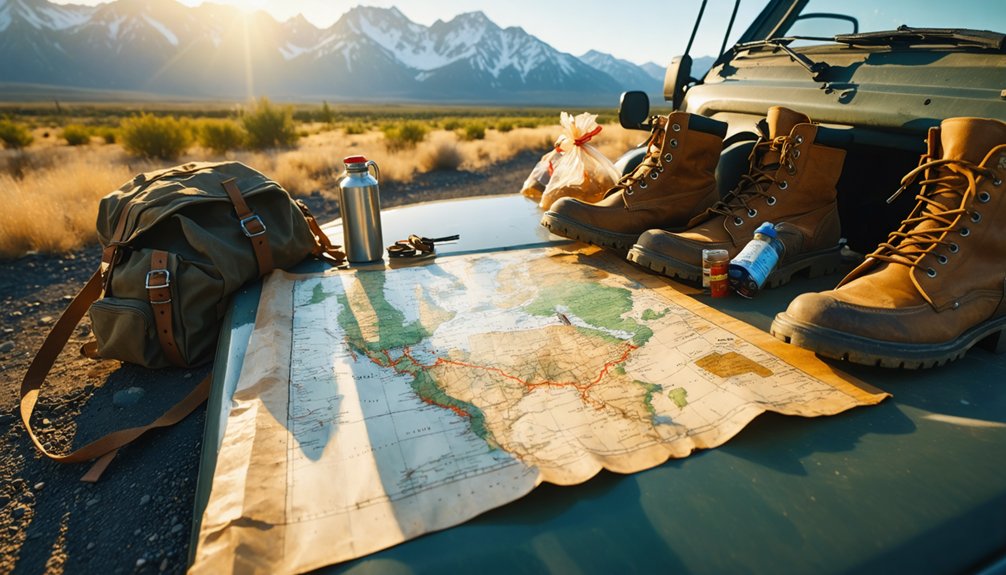
Since Pearl sits about 19 miles from Cowdrey on a remote dirt road with no services nearby, you’ll want to pack your navigation tools, emergency gear, and plenty of food and water before you leave.
Don’t rely solely on your phone’s GPS—download an offline map or bring a paper backup, since cell coverage in Jackson County’s high country is unreliable.
Toss some extra snacks, a full water supply, a spare tire, and a basic first-aid kit in the vehicle, and you’ll be set for whatever the road throws at you.
Essential Navigation Tools
Because Pearl sits deep in Jackson County’s remote high country, you’ll want to pack reliable navigation tools before you leave pavement behind. Cell service disappears fast out here, and the 19-mile dirt road from Cowdrey offers no room for guesswork.
Smart navigation keeps you free to focus on local legends and historical artifacts rather than getting turned around.
- Download offline maps through Google Maps or OnX before departing
- Carry a paper topographic map covering the North Park and Big Creek Lake area
- Bring a handheld GPS unit as a backup to any phone-based navigation
These tools work together to keep your route clear across seasonal road conditions. Pearl rewards the prepared traveler, so don’t let a dead signal cut your adventure short.
Road Trip Safety Gear
Solid navigation tools get you pointed in the right direction, but the 19-mile dirt road to Pearl demands more than a good map. Pack a full-size spare tire, jumper cables, a tow strap, and a basic tool kit before leaving Cowdrey.
Carry extra water, food, and a first-aid kit since no services exist once you’re rolling toward the high country. A flashlight helps when you’re poking around smelter foundations or tracing platted street remnants after sunset.
Cell service disappears fast out here, so a satellite communicator keeps you connected in emergencies. Bring a camera to document historical artifacts and capture the landscape tied to local legends of copper booms and busts.
Preparation separates a memorable adventure from a dangerous situation on this remote stretch.
Snacks And Hydration
The 19-mile dirt road to Pearl offers zero services, so you’ll want to pack smart before leaving Cowdrey. You’re heading into remote high country at 8,406 feet, where dry air and physical exploration drain your energy fast. Chasing historical artifacts and tracing local legends across Pearl’s ruins demands more fuel than you’d expect.
Pack these essentials before you roll out:
- Water – carry at least two liters per person; elevation dehydrates you quickly
- High-energy snacks – nuts, jerky, and energy bars sustain you through extended site exploration
- Extra supplies – seasonal conditions shift fast, so pack backup food for unexpected delays
Smart provisioning keeps your focus on Pearl’s story rather than your stomach, letting you explore freely and stay sharp.
Ghost Towns Near Pearl Worth Visiting on the Same Trip
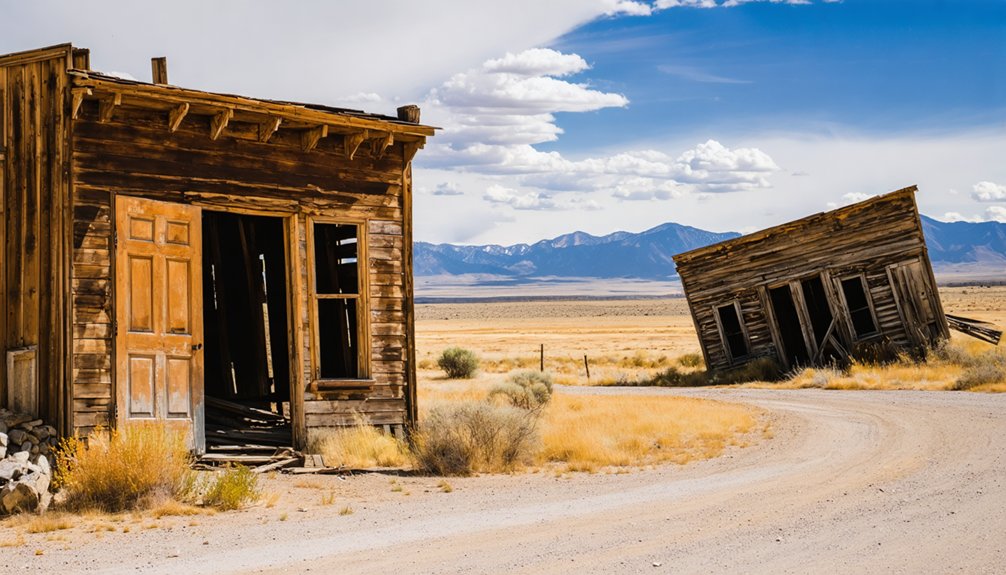
Since you’re already making the trek out to Pearl in Jackson County, it makes sense to plan a few more ghost town stops along the way — North Park and the surrounding region of northwest Colorado hold several abandoned settlements worth exploring on the same road trip.
Teller City, once a silver boomtown near Steamboat Springs, rewards curious visitors with scattered historical artifacts and quiet preservation efforts protecting what little remains.
Rand, another North Park settlement, sits close enough to fold naturally into your route.
Each stop adds depth to your understanding of Colorado’s mining era without demanding major detours.
Map your route in advance, check seasonal road conditions, and give yourself enough daylight to explore each site without rushing through the details.
Where to Stay Near Pearl, Colorado
Pearl sits deep in Jackson County’s remote high country, so you’ll want to plan your overnight accommodations well before you hit the road. The nearest town services cluster around Walden, roughly the closest hub with real visitor amenities.
Pearl hides deep in remote high country — plan your accommodations early and anchor your base in Walden.
Historical preservation efforts in the area attract seasonal travelers, so book early during summer months.
Your best lodging options near Pearl include:
- Walden, Colorado – small motels and rental cabins anchor your base camp here
- Dispersed camping – national forest land surrounding North Park allows free primitive camping with flexibility
- Cowdrey area ranches – some local operations offer guest stays about 19 miles from Pearl
Pack supplies before leaving Walden. Services thin out dramatically as you push northwest toward Pearl’s rugged, rewarding landscape.
Is Pearl, Colorado Worth the Drive?
For ghost town enthusiasts and high-country explorers, Pearl, Colorado delivers a genuinely rewarding detour. You’ll find real historical significance here — smelter foundations, Wolverine Mine ruins, boardwalk fragments, and platted street traces that paint a vivid picture of a copper-boom town that peaked around 1903. That history doesn’t feel manufactured or curated; it feels honest and raw.
Pearl’s tourism potential remains largely untapped, which works in your favor. You’re not fighting crowds — you’re reading a landscape on your own terms.
The 19-mile graded dirt road from Cowdrey is manageable, and the drive through North Park rewards you long before you arrive. If you value wide-open spaces, genuine frontier history, and the freedom to explore without guardrails, Pearl is absolutely worth the drive.
Frequently Asked Questions
Who Was Pearl Wheeler and Why Is She Historically Significant?
Pearl Wheeler was Pearl’s first postmistress in 1889–1890, and you’ll find her place in local legends undeniable—she’s credited with naming the town, making her essential to historical preservation and Colorado’s frontier identity.
How Many Mines Were Actively Operating During Pearl’s Peak Boom Years?
Strike while the iron’s hot — by 1903, you’ll find 12 mines actively driving Pearl’s mining history, producing copper, silver, and gold. That peak boom fuels today’s ghost town preservation efforts worth exploring firsthand.
Did the Pearl Smelter Ever Actually Process Copper Ore Successfully?
You’ll find conflicting accounts on whether it ever did! Despite its 1905 construction, one historic source says the smelter never successfully tackled copper ore processing using historic mining techniques — leaving its hilltop foundations as a mysterious, freedom-evoking ghost-town enigma.
What County Is Pearl, Colorado Located in Today?
You’ll find Pearl nestled in Jackson County, Colorado, where historic architecture whispers local legends of copper boom dreams. It’s a remote, free-spirited destination waiting to fuel your ghost town adventure in the rugged northwest corner of North Park.
How High in Elevation Is the Ghost Town of Pearl, Colorado?
Like Shangri-La hidden in the Rockies, you’ll find Pearl’s ghost town preservation and mining history waiting at 8,406 feet elevation — where freedom-seekers breathe thin mountain air and wander its storied, copper-rich past.
References
- https://www.reporterherald.com/2019/11/16/colorado-history-pearl-was-based-on-copper-mining/
- https://en.wikipedia.org/wiki/Pearl
- https://www.visitnorthparkco.com/ghost-towns-of-jackson-county/
- https://en.wikipedia.org/wiki/List_of_ghost_towns_in_Colorado
- https://www.colorado.com/articles/colorado-ghost-towns
- https://gem.idgenweb.org/history-pearl.html
- https://sah-archipedia.org/buildings/CO-01-JC06
- https://www.denver7.com/news/local-news/colorado-ghost-towns-their-past-present-and-future-in-the-rocky-mountains
- https://www.uncovercolorado.com/ghost-towns/
- https://www.facebook.com/groups/397526214154529/posts/1439960333244440/