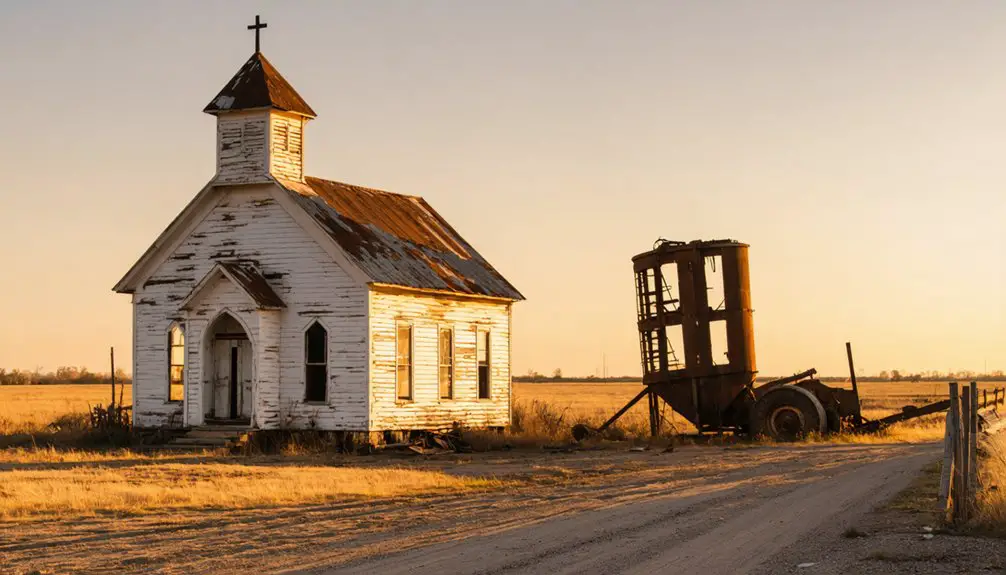
Planning a ghost town road trip to Provine, Oklahoma means heading out on US-69 through northeastern Oklahoma, where a once-thriving lead and zinc mining community now sits abandoned and scarred. You’ll find crumbling foundations, rusted frameworks, and contaminated soil telling a haunting story of industrial ambition gone wrong. Visit between September and October for the best light and conditions. Pack protective gear, offline maps, and plenty of water—there’s far more to discover ahead.
Key Takeaways
- Visit Provine between September and October for golden light, crisp air, and optimal photography conditions while avoiding summer heat and winter road hazards.
- Access Provine via US-69 through northeastern Oklahoma, using offline maps and packing water, fuel, and a GPS due to poor rural cell coverage.
- Wear protective gear including N95 respirators, nitrile gloves, and steel-toed boots to safely navigate toxic soil and unstable structures throughout the site.
- Stay in Ardmore, approximately eight miles west, choosing from Hampton Inn, independent motels, or historic bed-and-breakfasts along Highway 70 for convenient early-morning access.
- Extend your road trip by visiting nearby ghost towns including Picher, Alona, Woodruff, Foss, and Reliance, each offering unique historical and environmental features.
Provine, Oklahoma: The Ghost Town’s Mining History and Collapse
Tucked away in the rolling plains of Oklahoma, Provine stands as a haunting reminder of how quickly a booming mining town can collapse under the weight of its own industry. Once fueled by lead and zinc extraction, this forgotten settlement thrived on its mining legacy before environmental hazards brought everything crashing down.
Toxic tailings poisoned the soil, contaminating the land beyond recovery and forcing residents to abandon the lives they’d built. Federal buyouts sealed the town’s fate, and demolition crews erased most of what remained.
Today, you’ll find crumbling foundations and scarred earth where a community once stood. Visiting Provine means confronting the raw consequences of unchecked industrial ambition — a powerful, unfiltered history lesson that no museum can replicate.
The Drive to Provine: Best Routes and Access Points
Planning your drive to Provine starts with mapping a route along US-69, which cuts through northeastern Oklahoma and connects you to the region’s most compelling ghost town corridors.
You’ll find that OK-82 serves as a reliable secondary access road, offering scenic stretches that pass through small rural communities worth a quick stop.
Before you hit the road, mark nearby landmarks like Quail Creek State Park as anchor points to orient your journey and break up the drive.
Starting Your Route Planning
Whether you’re starting from Tulsa, Oklahoma City, or somewhere in between, mapping your route to Provine takes some thoughtful preparation since the area sits off the beaten path of major highways. Don’t expect polished tourist infrastructure here — that’s precisely the appeal. You’re chasing raw, unfiltered history, not a curated experience.
From Tulsa, head southwest along US-75 before shifting to county roads that cut through quiet Oklahoma countryside.
From Oklahoma City, US-270 east gets you closer before local routes take over.
Download offline maps because cell coverage thins out fast in rural stretches.
Historical preservation efforts in the region remain minimal, so arrive expecting authenticity over amenities.
Pack water, fuel up before leaving town, and give yourself extra time — freedom-seeking road trips rarely follow a tight schedule.
Key Access Roads
Getting to Provine means steering through a network of rural county roads that most GPS systems handle poorly, so preparation matters before you leave pavement behind.
US-69 serves as your primary spine through northeastern Oklahoma, connecting you to the smaller arteries feeding into this historical mining corridor. From there, OK-82 branches westward, cutting through terrain that carries visible reminders of industrial extraction.
Download offline maps before departure because cell coverage drops sharply once you push beyond main highways. Watch for unmarked turnoffs — locals rarely bother signposting roads leading toward abandoned sites.
Environmental hazards in this region aren’t theoretical warnings; degraded shoulders and unstable ground near old mine areas can strand vehicles unexpectedly.
Travel with a printed county road map, and always inform someone of your planned route before heading out.
Nearby Landmark Stops
Quail Creek State Park makes a natural anchor for your route, sitting close enough to the old mining corridor to serve as both a rest point and a visual contrast to the industrial decay you’ll encounter further along. The park delivers genuine wildlife encounters — white-tailed deer, wild turkey, and migratory waterfowl move through regularly, giving you breathing room between abandoned structures and scarred landscapes.
For photography tips, shoot the park’s tree lines during golden hour, then use that same low light when you approach Provine’s remnants — shadows deepen texture and tell a more honest story. You’ll also find pull-offs near the US-69 corridor worth marking on your map. These spots frame the changeover from Oklahoma’s natural beauty directly into its forgotten industrial past.
Abandoned Structures and Landmarks Still Standing in Provine
Although Provine’s abandoned landscape tells a quiet story of decline, a handful of structures and landmarks still stand as weathered reminders of what this Oklahoma community once was. You’ll encounter urban decay at nearly every turn — collapsed storefronts, rusted metal frameworks, and crumbling foundations reclaimed by native grasses.
These historic ruins speak volumes about a town that once hummed with daily life before economic pressures slowly drained its population. Walk carefully through what remains of the old commercial district, where faded paint and broken windows frame ghostly interiors.
Foundations of former homes dot the surrounding fields, giving you tangible proof of former neighborhood streets. Bring a camera, because every cracked wall and overgrown lot tells a story worth capturing before time erases what little remains.
How to Stay Safe at Provine’s Contaminated and Abandoned Sites
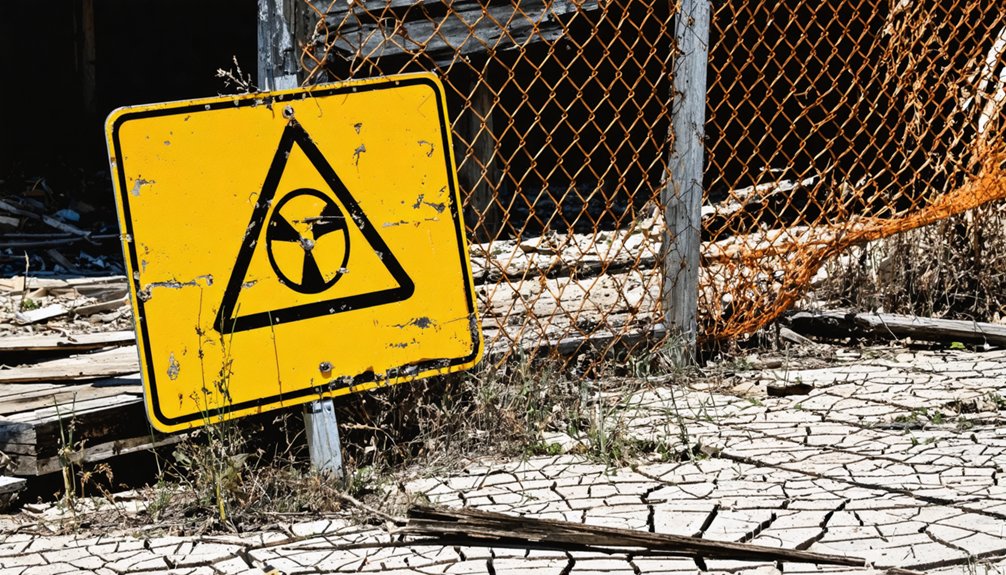
Before you step foot in Provine’s abandoned zones, you need to recognize the environmental hazard markers that signal contaminated soil, unstable structures, and toxic residue from decades of industrial neglect.
You’ll spot warning signs in discolored earth, crumbling foundations, and posted regulatory notices — all of which demand you keep your distance until you’ve assessed the risk.
Pack essential protective gear, including N95 respirators, nitrile gloves, and steel-toed boots, because cutting corners on safety at a site like this can turn an adventure into a serious health emergency.
Recognizing Environmental Hazard Zones
Exploring abandoned sites like Provine means you’ll encounter more than just crumbling structures and faded history — you’ll potentially walk into invisible dangers that can cause serious, long-term harm. Toxic hazards don’t announce themselves, so you’ll need to recognize environmental hazard zones before stepping foot on contaminated ground.
Without proper awareness, you risk exposure to dangerous substances that linger long after environmental cleanup efforts begin.
Watch for these critical warning signs:
- Posted signs indicating restricted access or contamination warnings
- Discolored soil appearing orange, white, or chalky — signs of chemical contamination
- Dead vegetation in isolated patches despite surrounding plant life
- Strong chemical odors suggesting underground leakage or surface runoff
- Abandoned industrial equipment near soil disturbances indicating former toxic operations
Stay alert — your freedom to explore depends on your ability to recognize danger.
Essential Protective Gear Tips
Once you’ve identified the hazard zones at Provine’s abandoned sites, your next line of defense is the gear you wear. Protecting yourself lets you explore freely while honoring the site’s historical preservation without causing further disturbance.
Start with an N95 respirator or better — disturbed dust at abandoned sites carries real risks. Wear nitrile gloves when touching surfaces, and choose sturdy, closed-toe boots with thick soles. Long sleeves and pants minimize skin exposure to contaminated debris.
Bring a headlamp for dark interior spaces and a first aid kit for unexpected cuts. Local folklore suggests these sites hold stories worth uncovering — but you’ll only hear them if you stay healthy enough to keep exploring.
Gear up smart, then move confidently through Provine’s haunted landscape.
The Best Season for a Provine Ghost Town Visit
- Spring (April–May): Wildflowers contrast dramatically against abandoned structures.
- Fall (September–October): Crisp air and golden light create stunning photography opportunities.
- Avoid summer: Extreme Oklahoma heat amplifies exposure risks near contaminated sites.
- Skip winter: Ice and mud restrict access to remote areas.
- Weekdays are ideal: Fewer visitors mean a more authentic, solitary exploration experience.
Timing your trip strategically transforms a simple road trip into an unforgettable adventure.
What to Pack for Provine’s Toxic and Remote Terrain

Knowing *when* to visit Provine sets the stage, but what you bring determines whether you stay safe or cut the trip short. This terrain demands respect — pack an N95 respirator to guard against disturbed soil particles, and wear heavy boots with thick socks to protect against rough ground. Gloves matter for historical preservation work, especially if you’re documenting structures or handling aged materials.
Carry binoculars for wildlife observation, since remote Oklahoma terrain hosts hawks, coyotes, and white-tailed deer worth noting. Bring two gallons of water per person, a first-aid kit, a paper map, and a charged GPS device — cell service disappears fast.
A vehicle emergency kit, extra fuel, and sun protection complete your loadout. Go prepared or don’t go.
Nearby Ghost Towns Within 50 Miles of Provine
Provine sits within striking distance of several forgotten Oklahoma settlements worth adding to your itinerary. Each stop tells a raw story of boom, bust, and survival — perfect for road trippers chasing authentic history without guardrails.
- Picher — Ottawa County’s toxic mining ghost town; environmental cleanup efforts are ongoing, so visit responsibly.
- Alona — Beaver County’s abandoned railroad stop, quietly reclaimed by prairie.
- Woodruff — Custer County’s vanished settlement with virtually no ruins remaining.
- Foss — Wagoner County town lost to drought and economic collapse.
- Reliance — McIntosh County’s former townsite, now dissolving into farmland.
Historical preservation varies wildly between these sites. Some have advocates fighting for recognition; others are simply fading. Pack curiosity, respect the land, and you’ll leave with stories worth telling.
Where to Stay Near Provine Ghost Town
Since Provine itself offers no lodging — ghost towns rarely do — you’ll want to anchor your stay in a nearby town that balances convenience with comfort. Ardmore, roughly eight miles west, delivers solid visitor amenities including hotels, local diners, and fuel stops that make day-tripping straightforward. Chain options like Hampton Inn or independent motels along Highway 70 give you flexibility without locking you into a rigid itinerary.
If historical preservation matters to you, consider staying in a restored bed-and-breakfast in the Ardmore historic district — you’ll sleep inside living history rather than just passing through it.
Carter County’s surrounding landscape rewards early risers, so choose lodging that gets you on the road before mid-morning light fades from the abandoned structures you’ve come to photograph.
More Oklahoma Ghost Towns Worth Adding to Your Itinerary
Once you’ve secured your base in Ardmore, it makes sense to stretch your itinerary beyond Provine and pull in a few more Oklahoma ghost towns that reward the extra miles. Each site carries real cultural significance, and preservation challenges mean some won’t stay accessible forever.
- Picher – A toxic mining ghost town in Ottawa County; approach cautiously due to environmental hazards.
- Alona – A forgotten railroad stop in Beaver County with genuine frontier atmosphere.
- Woodruff – A vanished Custer County settlement where history lives underground.
- Foss – A Wagoner County casualty of drought and economic collapse.
- Reliance – A McIntosh County townsite now reclaimed by farmland.
Hit these stops while you still can — Oklahoma’s ghost towns are disappearing faster than they’re being documented.
Frequently Asked Questions
Is Photography Legally Permitted at Provine’s Abandoned Mining Sites?
Provine doesn’t exist, so you’re free from legal restrictions there! For real Oklahoma ghost towns, you’ll need photography permits at certain sites — always check local regulations before capturing your visual memories.
Are Guided Ghost Town Tours Available for Provine and Surrounding Areas?
You won’t find guided tours for Provine, as it doesn’t exist. Instead, explore nearby Picher, Oklahoma, where local legends thrive and historical preservation groups occasionally offer supervised access to this hauntingly abandoned mining ghost town.
Can Children Safely Accompany Adults on a Provine Ghost Town Visit?
You shouldn’t bring children to this area, as family safety is a serious concern. Active child supervision can’t prevent exposure to toxic lead-contaminated soil, making it an unsafe destination for young visitors.
Does Provine Have Any Documented Paranormal Activity or Haunting Reports?
You won’t find documented paranormal activity or haunting reports for Provine, as it doesn’t exist. Instead, explore Picher, Oklahoma’s verified historical legends and local legends surrounding its toxic, abandoned mining ruins that’ll genuinely captivate you.
Are There Entry Fees or Permits Required to Access Provine’s Ghost Town?
You don’t need entry fees or permits to explore Oklahoma’s ghost towns, but check local historical preservation guidelines first. You’ll find minimal visitor facilities, so pack essentials and embrace the freedom of open, unrestricted exploration.
References
- https://en.wikipedia.org/wiki/Picher
- https://en.wikipedia.org/wiki/Provence