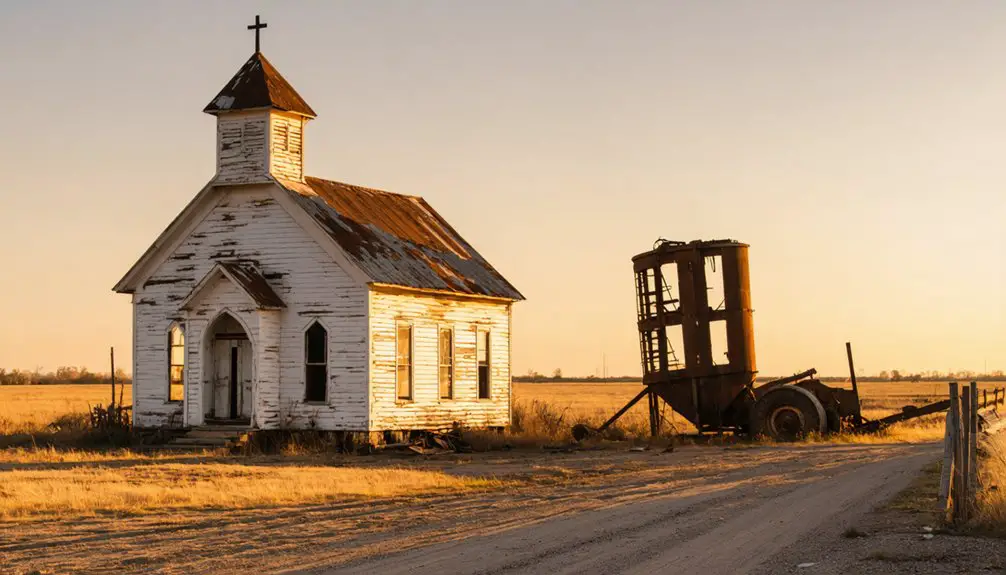
Planning a ghost town road trip to Reno City, Oklahoma means tracing the rise and fall of a once-thriving 1,500-person settlement that virtually vanished overnight. Founded during the 1889 Land Run, Reno City collapsed after town leaders refused to pay a railroad bonus, sending the tracks—and all the commerce—straight to nearby El Reno instead. Today, almost nothing remains except a historical marker near Highway 81. Keep going to uncover everything you need to make this drive unforgettable.
Key Takeaways
- Reno City is accessible via Highway 81, with a historical marker near Darlington School providing context about the ghost town’s origins.
- No formal tourist infrastructure exists; plan a respectful drive-by rather than an exploratory walk, as the site sits on private land.
- Combine your visit with nearby Fort Reno and El Reno downtown to create a richer, fuller historical road trip experience.
- Visit during spring or fall for mild weather, arriving during daylight hours to safely navigate the rural roadside location.
- Extend your trip by including nearby ghost towns like Ingalls and Dollarhide, which share similar railroad-driven boom-and-bust histories.
What Was Reno City, Oklahoma?
Before El Reno ever appeared on a map, Reno City was already alive with ambition. Founded on April 22, 1889, during the Oklahoma Land Run, this settlement near Fort Reno and the North Canadian River grew fast.
At its peak, you’d have found roughly 1,500 residents, along with stores, churches, saloons, schools, and newspapers shaping daily life.
Local legends paint a vivid picture of a boomtown full of energy and possibility. But that momentum didn’t last.
The town faded quickly once railroads bypassed it, pulling people and commerce toward El Reno instead.
Today, preservation efforts have kept the story alive, even if the town itself is nearly gone. Knowing this history makes your road trip feel less like sightseeing and more like witnessing something real.
Why the Railroad Killed Reno City Almost Overnight
What killed Reno City wasn’t a flood, a fire, or a feud — it was a decision about train tracks. When town leaders refused to pay the Rock Island Railway’s bonus, the line bypassed them entirely. A second rail route ran south of the Canadian River, sealing the deal.
Commerce followed the tracks straight to El Reno, and residents had little reason to stay.
You can see this pattern repeated across the American West — urban decay setting in almost overnight once economic momentum shifts. Without rail access, Reno City couldn’t compete. Businesses relocated, neighbors left, and the post office closed in 1902.
Historic preservation saved only the old school building. That swift collapse is exactly what makes Reno City such a compelling stop for anyone who values raw, unfiltered history.
What’s Left to See at the Reno City Site Today
When you visit the Reno City site today, you’ll find almost nothing left of the boomtown that once housed 1,500 residents. The original school building is the lone surviving structure, and it now serves as a private residence rather than a public landmark.
You can locate the general area north of modern El Reno near the historic Fort Reno corridor, where a historical marker near Highway 81 by Darlington School gives you a tangible reference point.
The Surviving School Building
Though Reno City once bustled with 1,500 residents, stores, saloons, and newspapers, almost nothing remains to mark where it stood. The original school building is the sole survivor, and its ghost town preservation makes it a meaningful stop for history-driven travelers.
Its historic building significance lies in what it represents — an entire community that vanished within a generation.
When you visit, keep these details in mind:
- The school is now a private residence, so respect boundaries
- It stands near the historic Fort Reno area, north of El Reno
- No signage marks the exact townsite
- A historical marker near Highway 81 by Darlington School adds context
- Pair this stop with Fort Reno for a fuller picture of the era
Locating The Historic Site
Finding Reno City today takes some patience, but the search itself becomes part of the experience. The ghost town’s former footprint sits north of modern El Reno, near the historic Fort Reno area along the North Canadian River. There’s no formal entrance or tourist infrastructure waiting for you here.
A historical marker near Highway 81 by Darlington School gives you a tangible reference point worth stopping at first. From there, you’ll piece together the landscape where a thriving settlement once stood before the railroad bypass sealed its fate.
The converted school building serves as your clearest visual anchor, though it’s now a private residence, so respect those boundaries. Approach this site as a living history detour rather than a polished destination, and it’ll reward your curiosity completely.
How to Get to Reno City, Oklahoma
Since Reno City no longer exists as a functioning town, you’ll navigate to its former location north of El Reno, Oklahoma, near the historic Fort Reno area. The drive is straightforward and connects you to layers of cultural significance tied to Oklahoma’s Land Run era.
Use these navigation points to plan your approach:
- Head north from El Reno on Highway 81
- Watch for the historical marker near Darlington School
- Use Fort Reno as your primary landmark anchor
- Keep the North Canadian River on your mental map heading in
- Check Canadian County historical resources before you go
Preservation efforts remain minimal here, so don’t expect signage or developed parking. You’re driving into open history, which is exactly the kind of freedom this ghost town road trip promises.
The Best Time to Visit Reno City on a Ghost Town Drive
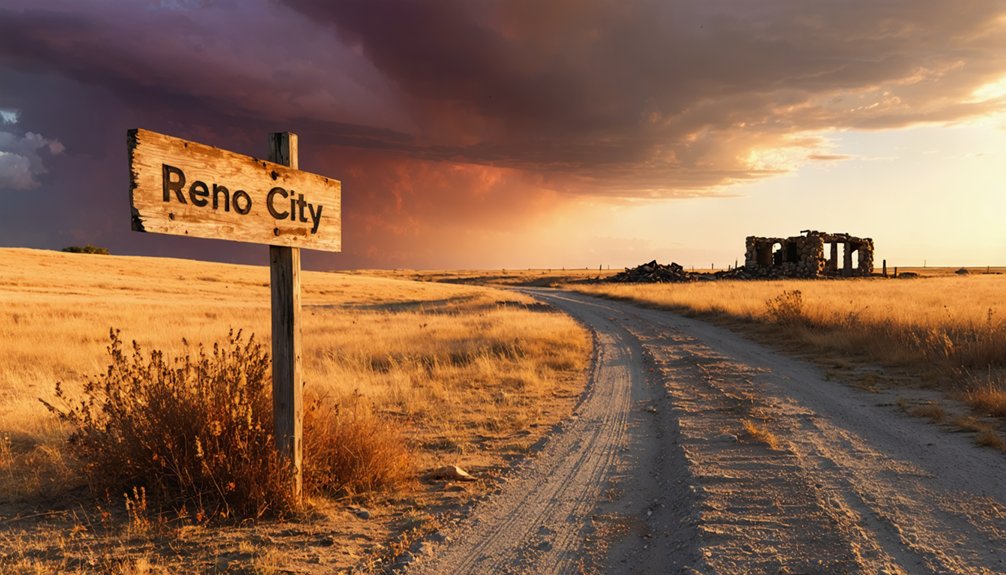
Timing your visit to Reno City makes a real difference when you’re exploring an undeveloped site with no facilities, markers, or maintained paths. Spring and fall offer the most comfortable conditions, with mild temperatures and manageable vegetation.
Summer heat in Oklahoma can make walking exposed terrain exhausting, and overgrown areas limit your view of the landscape’s cultural significance.
Winter visits work well on clear days when leafless surroundings open up sightlines across the historic townsite.
You’ll want to arrive during daylight hours since there’s no lighting at the location.
Weekday visits tend to feel more reflective and unhurried.
While preservation efforts remain minimal here, treating the site with care guarantees others can connect with this overlooked piece of Oklahoma’s Land Run history.
Fort Reno and El Reno: The Closest History Stops
Once you’ve taken in the ghost town atmosphere of Reno City, Fort Reno sits just a short drive west, offering a direct window into the Indian Wars era and the military presence that shaped this entire region from 1874 to 1948.
From there, you can trace how El Reno grew directly from Reno City’s collapse, absorbing its residents and businesses after the railroad chose to run its tracks through the newer settlement instead.
Together, these three stops form a tight historical circuit that moves from military outpost to railroad boomtown to abandoned ghost town, giving your road trip a clear and compelling narrative arc.
Fort Reno’s Historical Role
Just a short drive west of El Reno, Fort Reno stands as one of Oklahoma’s most historically layered sites, operating from 1874 to 1948 and playing a direct role in shaping the region you’ve been exploring. Its cultural significance reaches across multiple eras of American history:
- It anchored military operations during the Indian Wars
- It supported cattle drives along the Chisholm Trail corridor
- It housed German and Italian POWs during World War II
- It later served as a USDA research station
Preservation efforts continue to maintain its buildings and cemetery. When you walk the grounds, you’re moving through overlapping chapters of frontier, conflict, and agriculture. Fort Reno isn’t a polished attraction, and that rawness makes it worth every mile you add to your route.
El Reno’s Railroad Origins
While Reno City was fading from the map, El Reno was cementing its future by planting itself directly on the Rock Island Railway line. That single decision changed everything.
Railroad expansion brought merchants, travelers, and commerce rushing toward El Reno, pulling residents away from Reno City almost overnight.
Unlike towns built on mining history or agricultural promise alone, El Reno’s identity locked itself to the rail corridor, giving it a structural advantage that smaller nearby settlements simply couldn’t match. Businesses followed the tracks, and the population followed the businesses.
When you drive through El Reno today, you’re moving through a town that fundamentally inherited Reno City’s ambitions. The railroad didn’t just shape El Reno’s economy — it determined which town survived and which one disappeared.
Connecting The Historical Circuit
Fort Reno sits less than two miles west of El Reno, making it the most natural extension of any Reno City road trip. Active from 1874 to 1948, it’s deeply tied to local legends and ongoing preservation efforts that keep its history alive.
Your historical circuit connects cleanly across this stretch of Canadian County:
- Reno City – the railroad-bypassed boomtown that started it all
- Fort Reno – frontier military post with ghost-tour lore and preserved grounds
- El Reno downtown – where Reno City’s displaced residents rebuilt commerce
- Route 66 corridor – adds roadside Americana layered over earlier settlement history
- Historical marker near Highway 81 – anchors the Reno City site geographically
You’re tracing Oklahoma’s full settlement arc in a single afternoon drive.
Other Oklahoma Ghost Towns Worth Pairing With This Drive
Oklahoma’s ghost town circuit doesn’t have to end at Reno City. If railroad bypass impact interests you, head toward Ingalls or Dollarhide, where similar patterns of economic abandonment played out across Canadian and Payne counties.
Each site tells a version of the same story — commerce shifting, people following, towns hollowing out. Ghost town preservation efforts vary widely here, so some sites offer markers while others give you nothing but open land and instinct.
Scattered foundations, overgrown lots, and the occasional surviving structure reward the curious traveler willing to do a little research before leaving home. Pairing these stops with your Reno City drive builds a fuller picture of how quickly Oklahoma’s early boomtowns rose and collapsed when the railroads made their decisions.
Is the Reno City Site Accessible to the Public?
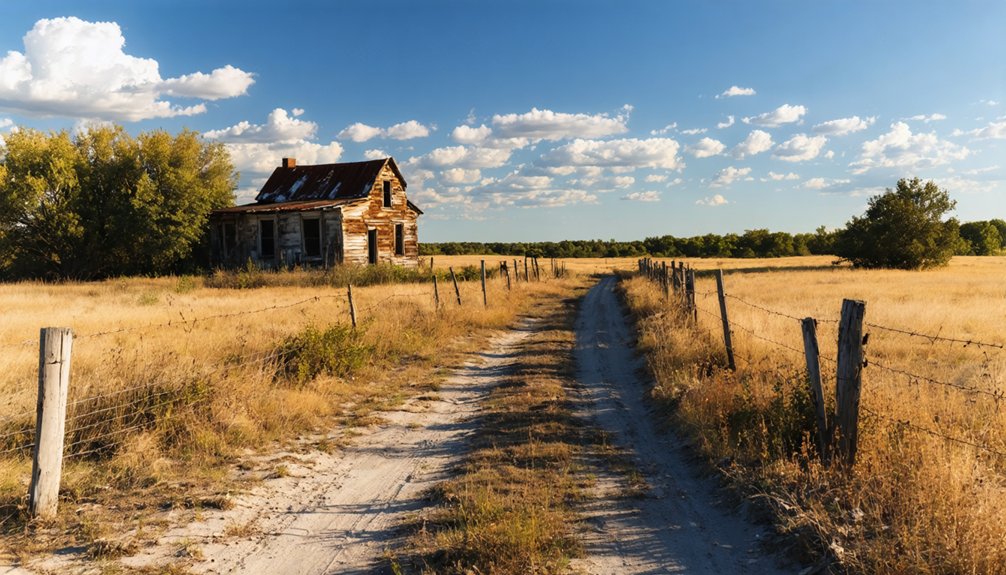
Shifting from broader ghost town routes back to Reno City itself raises a practical question most travelers eventually ask — can you actually get close to the site? Access is limited, and urban decay has quietly erased most visible traces. Preservation challenges mean there’s no maintained public entrance or visitor infrastructure.
Access is limited, and urban decay has quietly erased most visible traces of Reno City.
Here’s what you should know before heading out:
- The former townsite sits on private land north of El Reno
- The surviving school building now functions as a private residence
- No formal trails, parking areas, or public access points exist
- A historical marker near Highway 81 by Darlington School offers the most accessible reference point
- Respectful roadside viewing is your best option
Plan accordingly, and treat this stop as a contemplative drive-by rather than a walkable destination.
Frequently Asked Questions
Was Reno City Ever Considered as a Potential State Capital?
No records suggest Reno City was ever considered a state capital. With only 1,500 peak residents, it couldn’t compete. You won’t find historical redevelopment ties there, but modern day tourism keeps its fascinating story alive.
Are There Any Descendants of Original Reno City Founders Still Living Nearby?
No records confirm it, but you’ll likely find historic family ties to Reno City’s founders through local descendant communities in El Reno. Explore Canadian County historical societies — they’re your best gateway to uncovering those living connections.
Did Reno City Have a Cemetery, and Does It Still Exist?
Records don’t confirm a dedicated Reno City cemetery, but you’ll want to investigate locally, as many Oklahoma boomtowns left behind historic burial sites and abandoned graveyards that aren’t always documented in mainstream historical records.
Are Any Artifacts From Reno City Preserved in Local Museums?
Reno City thrived, then vanished—but you can still uncover its story. Check local museum exhibits at the Canadian County Historical Museum, where ancient artifacts and records may connect you to this forgotten boomtown’s remarkable past.
Has Reno City Ever Been Featured in Oklahoma Ghost Town Publications?
Reno City likely appears in Oklahoma ghost town tourism guides, though confirmed titles aren’t documented here. You’ll find it’s a compelling historic site preservation story that deserves a spot in any serious Oklahoma ghost town publication.
References
- https://www.elrenook.gov/203/About-the-City-of-El-Reno
- https://www.theroute-66.com/el-reno.html
- https://www.nps.gov/articles/000/fort-reno-park-a-brief-history-of-reno-city.htm
- http://blogoklahoma.us/place/486/canadian/reno-city-oklahoma-territory
- https://www.onlyinyourstate.com/trip-ideas/oklahoma/haunted-fort-reno-ok
- https://www.405magazine.com/looking-back-the-history-of-a-ghostly-oklahoma-town/
- https://okgenweb.net/books/other/ghost.htm
- https://usghostadventures.com/reno-ghost-tour/
- https://www.reddit.com/r/Reno/comments/i76zi6/ghost_towns/
- https://www.okhistory.org/publications/enc/entry?entry=CA038