Scotia, Pennsylvania is Andrew Carnegie’s forgotten iron town, and you can walk through its crumbling ruins today. It’s tucked inside State Game Lands #176 in Centre County, accessible via Scotia Road. Park behind the gate, follow the Scotia Barrens Trail’s left forks, and you’ll reach the 1892 ore washer and ghostly foundations in minutes. Pack sturdy boots, layers, and a camera. There’s far more to this haunted industrial relic than meets the eye.
Key Takeaways
- Scotia is located in State Game Lands #176, Patton Township, Centre County, PA, accessible via Scotia Road with GPS coordinates 40.800420°N, 77.946291°W.
- Park behind the gate on Scotia Range Road, follow the 1.4-mile Scotia Barrens Trail, and take every left fork to reach the ruins.
- Key highlights include an 1892 Carnegie ore washer, concrete foundations, iron ore pits, railroad grades, and wildlife reclaiming the abandoned landscape.
- Pack layered clothing, sturdy boots, water, snacks, and a downloaded GPS map, as cell service is unreliable throughout the area.
- Visit in late April to align with the Black Ghost legend’s murder anniversary, or in winter when bare trees reveal hidden structures.
Scotia, Pennsylvania: Carnegie’s Iron Town Frozen in Time
Tucked within State Game Lands #176 in Patton Township, Centre County, Scotia is a ghost town that time has quietly swallowed whole. Once a thriving iron mining operation, Andrew Carnegie acquired this land in 1880, naming it Scotia to honor his Scottish roots.
He built a self-contained company town complete with housing, rail lines, and an ore washing plant spanning over 500 acres.
How Scotia Went From Carnegie’s Iron Town to Ghost Town
When Andrew Carnegie acquired over 500 acres here in 1880, he transformed the land into a full-scale industrial operation, complete with housing, rail lines, and an ore washing plant that fed iron to Centre Furnace.
You can still see the bones of that ambition in the crumbling stone structures scattered across the site today.
But by 1909–1911, the mines had exhausted their viability, the workers left, and Scotia’s brief industrial glory quietly collapsed into silence.
Carnegie’s Iron Mining Legacy
How did a thriving iron town built by one of America’s most powerful industrialists fade into silent ruins? When Andrew Carnegie acquired over 500 acres here in 1880, he built Scotia into a self-contained company town complete with housing, rail lines, and an ore washing plant.
He even named it to honor his Scottish roots.
Scotia’s Industrial Decline
By 1909, the iron ore had run dry, and Scotia’s days as a thriving company town were numbered. Carnegie’s operation shuttered between 1909 and 1911, leaving behind industrial pollution, crumbling infrastructure, and an economic decline that erased an entire community from the map.
Workers abandoned their homes, and Scotia’s eleven houses, store, and library slowly surrendered to the forest.
One final attempt at revival came during World War II, when miners returned hoping to extract usable ore. That effort failed quickly — the ore quality simply wasn’t worth the trouble.
Once operations ceased permanently, nature reclaimed what industry left behind.
Today, you can walk through what remains and witness exactly how completely a once-productive town can vanish when its economic purpose disappears. Scotia never recovered, and that’s precisely what makes it unforgettable.
How to Get to Scotia, Pennsylvania
Finding Scotia requires steering to State Game Lands #176 in Patton Township, Centre County, just west of State College. Your best entry point is Scotia Road, cutting through the northern reaches of the game lands.
Drive 0.6 miles to Scotia Range Road, park behind the gate, and you’re five minutes on foot from the ruins. The 1.4-mile Scotia Barrens Trail guides you directly there — take every left fork and you won’t lose your way.
Stay alert for wildlife encounters along the trail; deer and wild turkey frequent these woods. Photographers, arrive early when soft morning light filters through the overgrowth, dramatically illuminating crumbling stone structures.
GPS coordinates 40.800420°N, 77.946291°W pinpoint the gate, so load them before you leave home.
What to Bring for a Day Trip to Scotia Barrens
Before you set out for Scotia Barrens, packing smart will make or break your experience. The trails are rugged, the microclimate runs colder than expected, and the ruins reward those who come prepared.
Packing smart isn’t optional at Scotia Barrens — the rugged trails and cold microclimate demand it.
Here’s what you shouldn’t leave behind:
- Layered clothing and sturdy boots – the barrens stay noticeably chilly, so dress accordingly
- A camera with a wide-angle lens – photography tips for this site include shooting the 1892 Carnegie ore washer in golden-hour light for dramatic contrast
- Binoculars and a wildlife log – wildlife sightings are common throughout State Game Lands #176, so stay alert
You’ll also want water, snacks, and a downloaded GPS map since cell service is unreliable.
Go prepared, and Scotia will genuinely deliver.
How to Hike the Scotia Barrens Trail to the Ghost Town
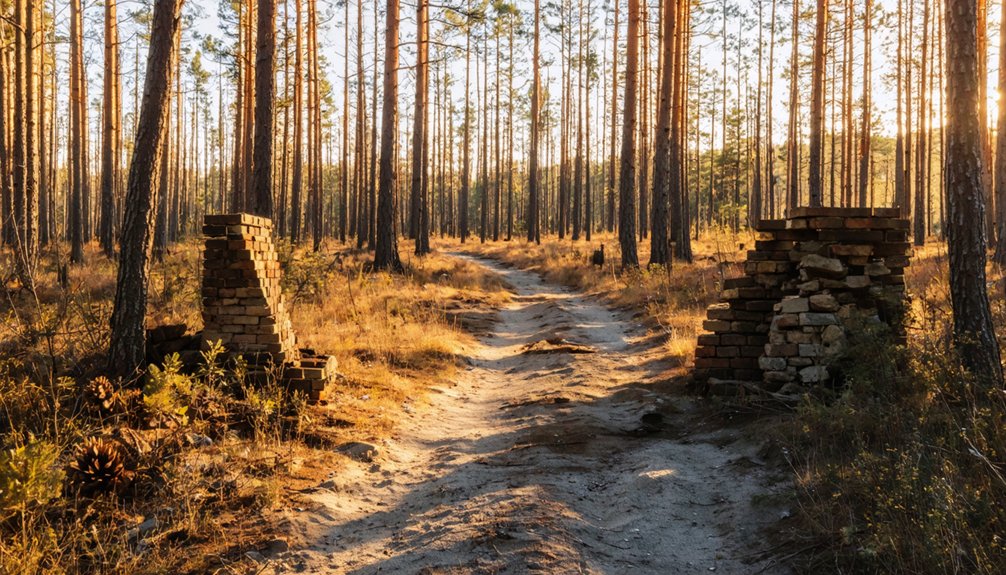
Once you’ve parked behind the gate off Scotia Range Road, you’re just a 5-minute walk from one of Pennsylvania’s most hauntingly compelling historical sites. Follow the 1.4-mile Scotia Barrens Trail, and at every split, take the left path to reach the ruins efficiently.
You’ll soon encounter the 1892 Carnegie ore washer, concrete foundations, and tailing piles — remarkable historical artifacts hiding beneath layers of dense overgrowth. The microclimate here runs noticeably colder than surrounding areas, so you’ll appreciate those extra layers.
For trail safety, stay on marked paths since hidden pit mines and unstable ruins dot the landscape. Watch your footing near crumbling stone structures.
The forest has largely reclaimed Scotia, making exploration feel genuinely adventurous — like uncovering secrets history nearly swallowed whole.
Why Scotia Barrens Stays Colder Than Everything Around It
When you step into Scotia Barrens, you’ll notice the temperature drops in a way that feels almost unnatural compared to the surrounding landscape. The area sits within a geological basin where cold air drains downward and pools, creating a persistent chill that defies the season.
Pennsylvania officially recognizes Scotia Barrens as one of its most geologically unique regions, and that distinction isn’t just about history — it’s written into the very ground beneath your feet.
Scotia’s Unique Microclimate Explained
Why does Scotia Barrens feel like nature cranked the air conditioning while the rest of Centre County basks in warmth? The answer lies in fascinating microclimate phenomena shaping this geologically rare landscape.
Cold air, denser than warm air, drains into Scotia’s low-lying terrain and gets trapped through temperature inversion, creating a persistent chill you’ll notice the moment you arrive. This isn’t just atmospheric quirk — it’s nature asserting its independence.
Expect these distinctive conditions when you visit:
- Dense forest canopy blocking sunlight and locking in cool air
- Low elevation pockets collecting cold drainage from surrounding ridges
- Minimal wind circulation allowing temperature layers to remain undisturbed
You’re not imagining that jacket-worthy chill. Scotia Barrens operates by its own rules, indifferent to the warmth surrounding it.
Cold Air Drainage Effects
Cold air drainage is the hidden engine behind Scotia Barrens’ persistent chill, and understanding it makes that jacket-worthy cold feel less mysterious.
As night falls, dense cold air flows downhill and settles into the barrens’ low-lying terrain, creating a temperature inversion that traps frigid air beneath warmer layers above.
Normal air circulation gets disrupted, preventing the mixing that typically moderates temperatures elsewhere.
You’ll notice the shift almost immediately as you hike in — the air turns sharp, the woods grow quiet, and the cold feels deliberate.
The dense tree canopy blocks solar warming, reinforcing the effect throughout the day.
Pack layers regardless of the season, because Scotia doesn’t follow the same thermal rules as the roads and fields you left behind.
Geological Factors Behind Chill
Scotia Barrens’ persistent chill isn’t just about cold air pooling at night — the geology itself is actively working against warmth. The region’s unique rock composition and open-pit mining legacy create powerful microclimate effects that trap cold and resist solar heating.
Here’s what the landscape is doing beneath your feet:
- Stripped terrain from historic iron ore excavation exposes dense rock that absorbs minimal heat
- Thermal inversion layers form easily here, locking cold air beneath warmer air above and refusing to mix
- Porous, sandy barrens soil drains heat rapidly, leaving surface temperatures consistently lower than surrounding forested areas
You’ll feel this the moment you step past the gate. It’s not your imagination — it’s geology reminding you who’s actually in charge out here.
What You’ll See at the Scotia Ghost Town Ruins
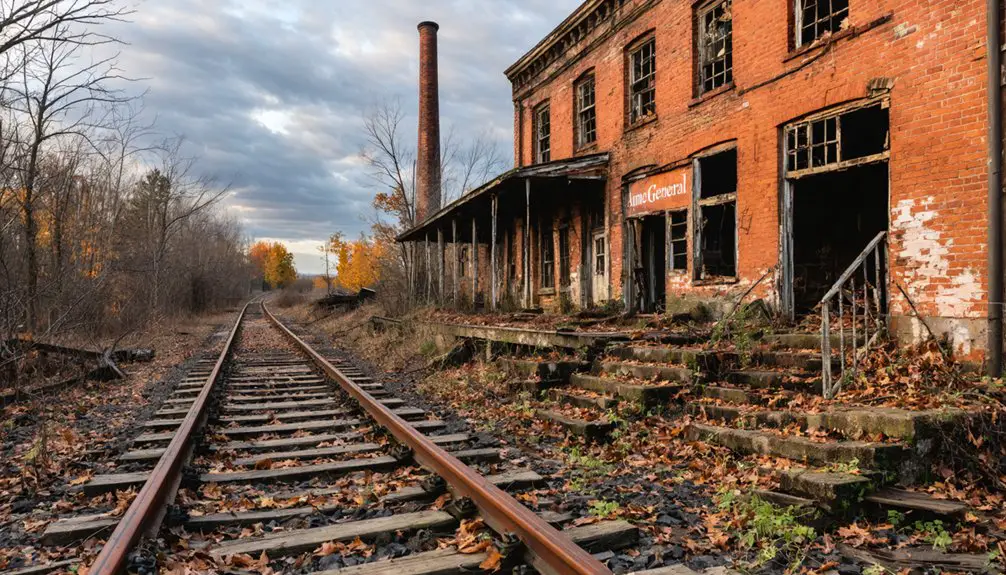
Once you push past the gate and make your way down the trail, the ruins of Scotia reveal themselves through layers of dense overgrowth and creeping forest. You’ll spot the 1892 Carnegie ore washer standing to your left, its crumbling stonework a demonstration of industrial ambition long surrendered to nature.
Nearby, a WWII-era ore washing station offers additional historical artifacts worth examining up close. Concrete foundations mark where eleven homes, a store, and a library once shaped everyday life.
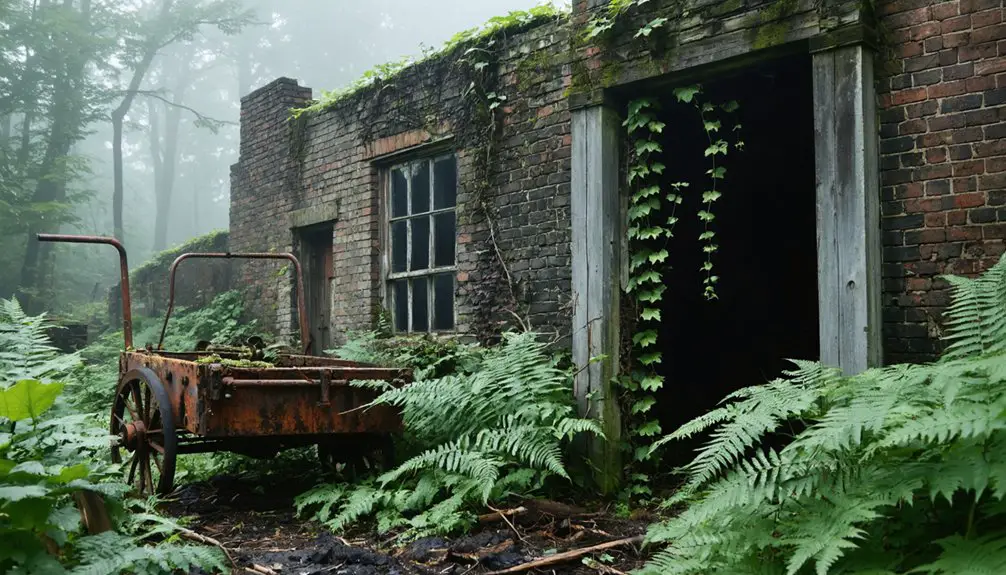
Iron ore pits, railroad grades, and tailing piles scatter across the landscape, rewarding curious explorers who wander off the main path. Wildlife sightings are common here, as deer and birds have reclaimed what miners left behind.
Scotia doesn’t just show you history — it immerses you in it.
The Dark Legend Behind the Black Ghost of Scotia
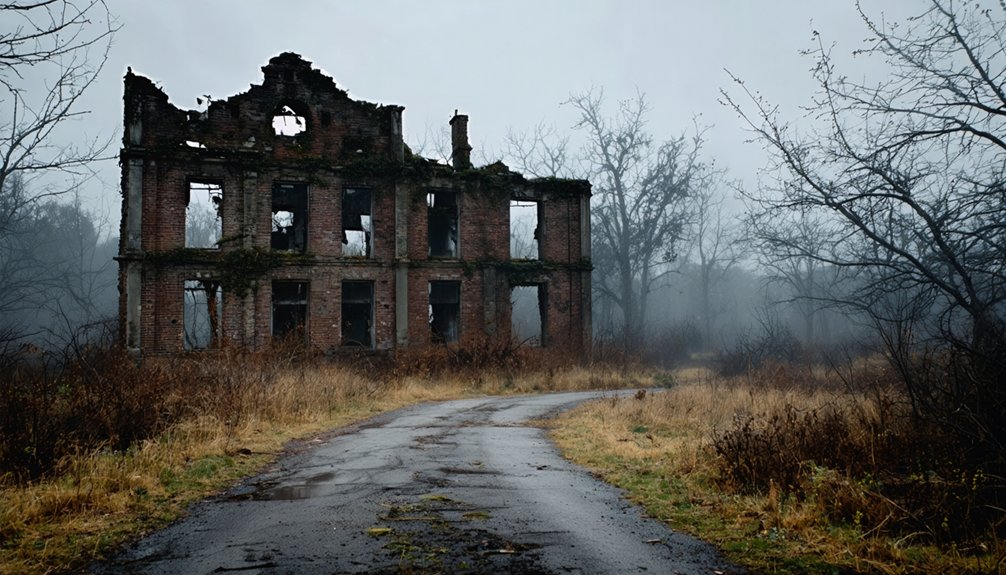
Beyond the crumbling stonework and silent foundations, Scotia carries something heavier than history — a legend that’s kept locals talking for over a century.
Miner folklore from the 1910s tells of a laborer who murdered his former boss’s widow near the abandoned site. Since then, spectral sightings have fueled a chilling local legend — the Black Ghost of Scotia.
Here’s what the legend claims:
- A large, human-shaped black figure roams the barrens near April 25, the alleged murder anniversary.
- Visitors report an unsettling presence among the ruins, even in daylight.
- The ghost story has circulated for generations, deeply woven into Centre County’s local culture.
If you’re exploring Scotia around late April, you might find the silence feels a little less empty than expected.
Best Times of Year to Visit Scotia
Whether you’re chasing history or hoping to catch a glimpse of the Black Ghost, timing your visit to Scotia can make all the difference. Spring and fall offer the best conditions — mild temperatures, manageable trails, and stunning natural light perfect for photography tips like capturing the moss-covered stone ruins against colorful foliage.
Summer brings dense overgrowth that conceals foundations, adding mystery but reducing visibility. Winter strips the trees bare, revealing hidden structures and offering crisp, dramatic photography opportunities.
Visit around April 25 if the legend intrigues you. Wildlife encounters peak during dawn and dusk in spring, when deer and native birds move freely through the barrens.
Whatever season calls you, Scotia rewards explorers who arrive prepared, curious, and ready to read the land’s layered history.
Frequently Asked Questions
Is There a Fee to Access State Game Lands 176 at Scotia?
You don’t pay a fee to access State Game Lands 176 at Scotia! You’re free to explore its historical preservation wonders, but you’ll want to respect wildlife regulations while roaming these fascinating, hauntingly beautiful grounds.
Are Dogs Allowed on the Scotia Barrens Trail?
The knowledge doesn’t confirm dog policies, so check with Pennsylvania Game Commission before you go. If permitted, follow dog leash regulations, pack water, and use these pet friendly trail tips to keep your adventure safe!
Is the Scotia Ghost Town Suitable for Young Children or Strollers?
Scotia’s ruins aren’t stroller accessible — you’ll navigate rugged, uneven trails through dense woods. It’s adventurous for older kids who love exploring history, but child-friendly activities are limited, making it better suited for independent, trail-ready explorers.
Are There Restrooms or Facilities Available Near the Scotia Trailhead?
Nature calls on its own terms here — restroom availability is nonexistent, and facility locations are absent near the Scotia trailhead. You’ll embrace the wild freely, so plan ahead and answer nature’s call before you arrive.
Is It Legal to Take Artifacts or Souvenirs From the Scotia Ruins?
You shouldn’t take anything from Scotia’s ruins. Artifact preservation laws protect this historic site, and souvenir regulations within State Game Lands #176 prohibit removing objects. Leave everything untouched so future explorers can experience the same haunting, authentic atmosphere you’re enjoying now.
References
- https://en.wikipedia.org/wiki/Scotia
- https://www.youtube.com/watch?v=-LCCSaZe3lk
- https://www.statecollege.com/articles/local-news/discovering-the-ghost-town-of-centre-county/
- https://www.onlyinyourstate.com/experiences/pennsylvania/abandoned-eerie-place-pa
- https://www.youtube.com/watch?v=fBuLoYQC5h8
- https://www.youtube.com/watch?v=isRTfPKPsNo
- https://www.centredaily.com/news/local/article315202952.html
- https://uncoveringpa.com/scotia-barrens
- https://www.youtube.com/watch?v=R4Wp2JHd5tE
- https://uncoveringpa.com/ghost-towns-in-pa