If you explore Minnesota’s Iron Range, you’ll find dozens of towns that rose and fell with the ore. Places like Elcor and Manganese boomed quickly, then collapsed once mines closed, rail lines rerouted, or open-pit expansion swallowed the land whole. No single event erased them — decline was gradual and compounded. Today, most sites are overgrown foundations, flooded pits, or simply nothing. There’s far more to uncover about what these vanished communities left behind.
Key Takeaways
- Minnesota’s mining ghost towns are concentrated in the Mesabi Iron Range, Cuyuna Iron Range, and the Arrowhead region near Lake Superior.
- Towns like Elcor, Manganese, Sparta, and Penobscot vanished due to mine closures, ore depletion, and expanding open-pit operations.
- Decline was rarely sudden; each shaft closure, railroad rerouting, or family departure compounded abandonment over time.
- Most former town sites show only foundations, concrete slabs, flooded mine pits, or no visible remains at all.
- Nature has largely reclaimed these sites, replacing industrial infrastructure with overgrown streets and wildlife habitats.
Why Minnesota Mining Towns Became Ghost Towns
Several forces combined to hollow out Minnesota’s mining towns, and understanding them reveals a clear pattern of industrial dependency. When ore bodies ran dry, you’d see immediate population shifts as workers left for active sites. Mine closures stripped towns of their economic foundation almost overnight.
When ore ran dry, workers left and economic foundations collapsed — almost overnight.
Mining technology also reshaped settlement patterns. Open-pit expansion sometimes swallowed entire communities when land held more value than the people living on it. Company failures left waterlogged test holes and abandoned infrastructure rather than sustainable industry.
Railroad rerouting cut towns off from markets, accelerating decline. You’ll notice that no single event erased these places. Instead, each loss — a closed shaft, a rerouted line, a departed family — compounded until only foundations remained.
Industrial dependency made these towns efficient but ultimately fragile.
The Most Notable Ghost Towns on the Iron Range
Those structural pressures played out differently across specific communities, and the Iron Range produced some of the most documented cases of mining abandonment in Minnesota’s history. Elcor existed from 1897 to 1956 before expanding mining operations physically removed it when the land held more value than the settlement.
Manganese, on the Cuyuna Iron Range, tracked mineral deposits closely, peaking at nearly 600 residents in 1919 before World War I demand collapsed, triggering population shifts that dropped its count to 183 by 1920. Taconite Harbor declined after its processing plant closed in the 1980s.
Sparta and Penobscot left almost no physical remnants. Each town followed a recognizable pattern: extraction drove settlement, changing industrial conditions withdrew support, and communities dissolved once the economic rationale disappeared.
Where These Abandoned Minnesota Mining Towns Once Stood
Most of Minnesota’s abandoned mining towns cluster within three distinct regional belts: the Mesabi Iron Range, the Cuyuna Iron Range, and the broader Arrowhead country near Lake Superior. Each belt reflects how mining technology shaped settlement patterns—open-pit operations on the Mesabi displaced entire communities when ore extraction expanded.
While Cuyuna towns like Manganese rose and collapsed alongside shifting industrial demand, you’ll find these former locations marked by overgrown foundations, faint rail traces, or nothing at all. Population migration followed ore bodies directly, meaning towns appeared quickly near productive mines and vanished just as fast when yields dropped.
Stable communities like Eveleth and Gilbert survived because they diversified beyond single mines, while isolated locations lacked that economic flexibility and simply disappeared into the northern Minnesota landscape.
What Remains at Minnesota’s Ghost Town Sites Today
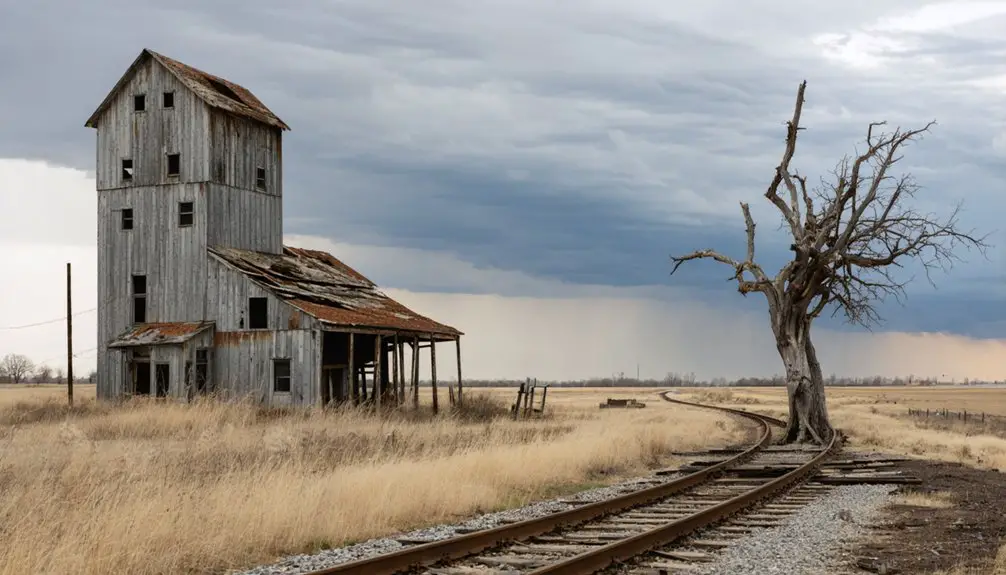
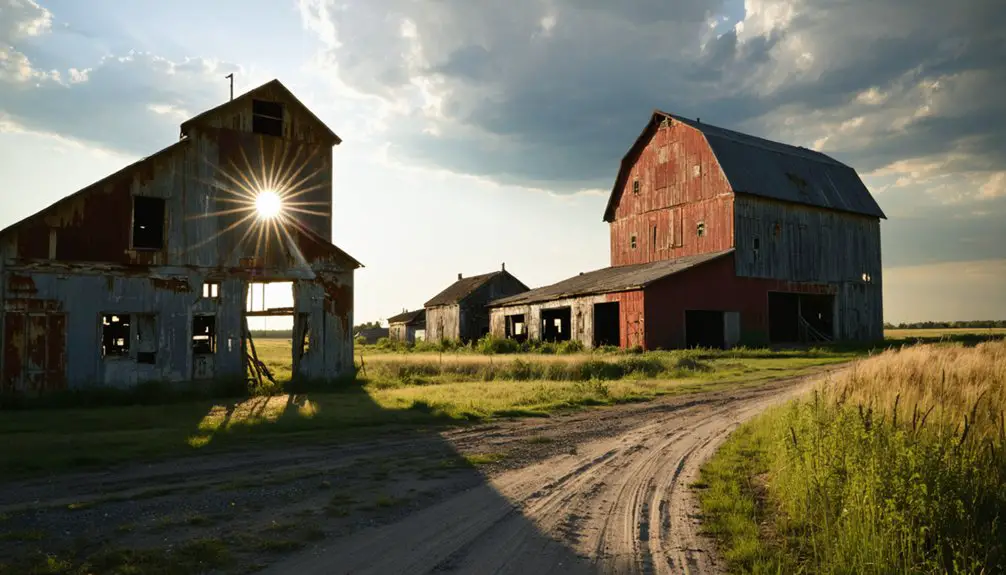
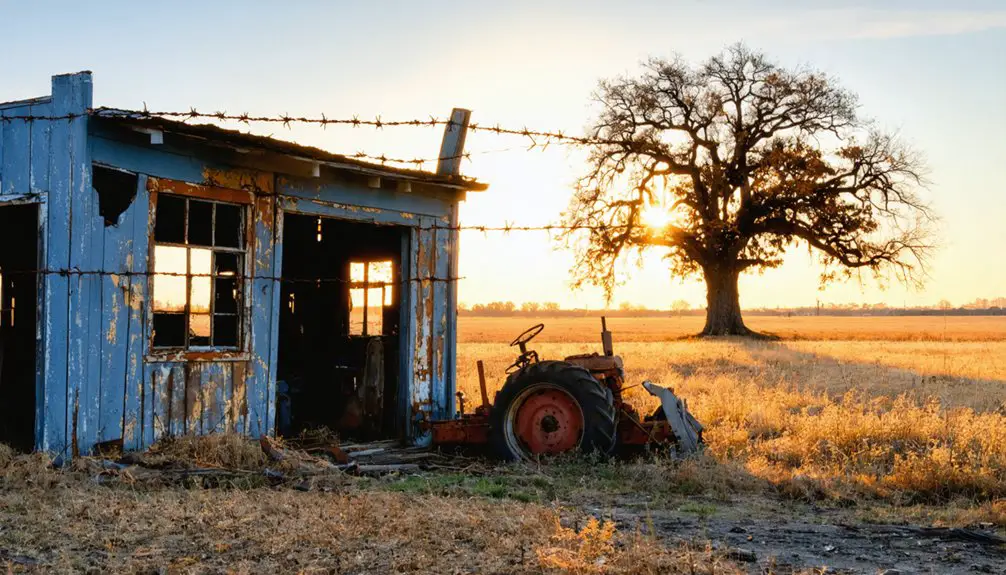
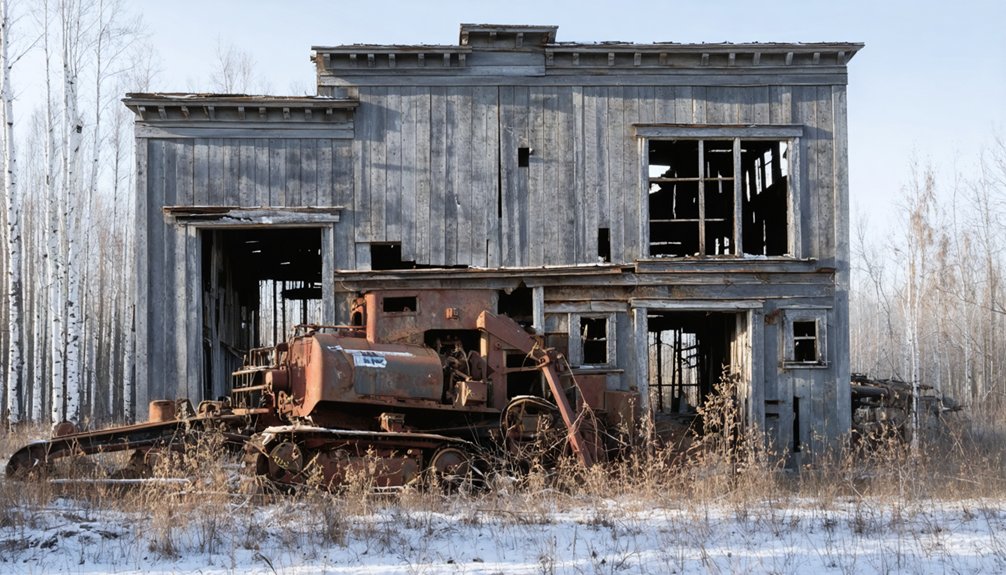
When you visit former mining town sites across northern Minnesota today, you’ll find a fragmented record rather than preserved history. Urban decay has reduced most structures to foundations, scattered debris, and rusted equipment. Overgrown streets vanish beneath decades of regrowth, and rail traces disappear into tree lines.
In many cases, expanding mining operations erased entire town layouts, leaving no physical boundary to identify.
Nature has reclaimed these sites efficiently. Wildlife habitats now occupy land where company housing and industrial buildings once stood. You can identify former locations through depressions marking collapsed structures, isolated concrete slabs, or flooded mine pits. Some sites carry no visible remains at all.
What survives functions less as monument and more as evidence — quiet, scattered, and requiring deliberate interpretation to understand.
How Mining Ghost Towns Shaped Minnesota’s History
Though they no longer appear on most maps, Minnesota’s mining ghost towns shaped the state’s economic and demographic foundation in ways that still hold today. Population migration into northern Minnesota during the late 19th and early 20th centuries built entire communities around extraction. Workers arrived, towns formed, and regional infrastructure expanded to support them.
Minnesota’s vanished mining towns built the economic and demographic foundation that still shapes the state today.
Mining technology drove these changes, determining where settlements rose and when they collapsed. Open-pit operations on the Mesabi Iron Range displaced company towns as efficiency replaced community.
When mines closed, populations dispersed, leaving transportation corridors, housing patterns, and commercial networks that later towns inherited.
You can trace Minnesota’s industrial identity directly through these vanished places. They reveal how resource extraction once dictated human settlement and how quickly economic shifts erased what communities built.
Frequently Asked Questions
Which Minnesota Mining Ghost Towns Are Open for Public Tours Today?
The knowledge doesn’t confirm which towns offer public tours today. You’ll find remnants of mining equipment and town architecture at sites like Elcor and Manganese, but you’d need local sources to verify current tour availability.
Did Any Ghost Town Residents Receive Compensation When Their Towns Were Demolished?
The records don’t confirm residents’ compensation during demolition disputes. When companies removed towns like Elcor, you’d find corporate interests dominated decisions, leaving former residents with little documented recourse or financial remedy for their displaced communities.
Are There Any Laws Protecting Minnesota’s Mining Ghost Town Historical Sites?
Like a fading photograph, these sites aren’t fully shielded—you’ll find legal protections remain limited. However, preservation efforts do exist through state historical programs that can help you advocate for protecting Minnesota’s mining ghost town heritage.
How Many People Total Lived in Minnesota Mining Ghost Towns Historically?
You can’t pinpoint an exact total, but mineral extraction drew thousands to northern Minnesota’s short-lived settlements. Population decline hit hard after booms ended—Manganese alone peaked near 600 residents before rapidly losing hundreds within a single year.
Did Any Minnesota Mining Ghost Towns Ever Attempt to Revive After Closure?
Like embers refusing to die, some towns tried to revive. You’ll find that mining equipment and town legends kept interest alive, with certain locations pivoting to tourism and recreation after industrial closure transformed their identities.
References
- https://www.youtube.com/watch?v=3xo3aX6pdL4
- https://en.wikipedia.org/wiki/Manganese
- https://freepages.rootsweb.com/~gtusa/history/usa/mn.htm
- https://www.lrl.mn.gov/docs/pre2003/other/781145.pdf
- https://www.youtube.com/watch?v=O5o19MoARvo
- https://www.worldatlas.com/cities/7-old-timey-mining-towns-in-minnesota.html
- https://storage.googleapis.com/mnhs-org-support/mn_history_articles/34/v34i05p177-184.pdf
- https://www.lrl.mn.gov/docs/pre2003/other/810118.pdf
- https://raregoldnuggets.com/?p=3959
- https://www.touristsecrets.com/destinations/united-states/minnesota/hidden-stories-of-minnesotas-abandoned-iron-range-towns/