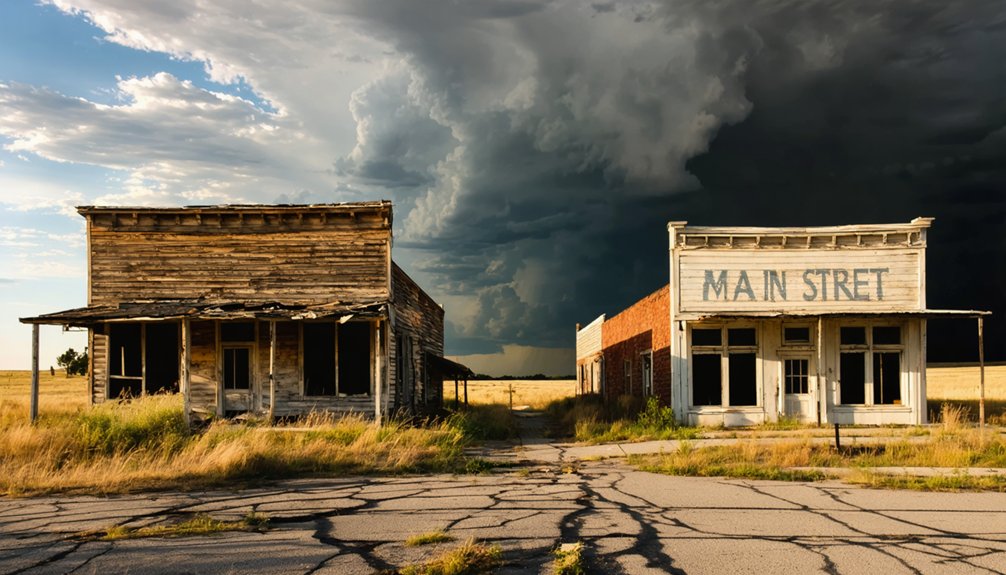
Planning a ghost town road trip to Shipton, Kansas means heading into Kiowa County’s remote western prairie, where a crumbling general store and historic wagon trail crossroads wait roughly 15 miles north of the Arkansas border. Download your GPS coordinates before you lose cell service, pack sturdy boots and a windproof jacket, and aim for late September when the weather’s ideal. There’s far more to uncover about traveling, packing, and building your full route.
Key Takeaways
- Shipton, Kansas, located in Kiowa County, sits at 3,400 feet elevation surrounded by open prairie, accessible only via gravel roads resembling ranch tracks.
- The town declined after railroads bypassed it in the late 1800s, leaving behind foundation remnants and partially standing general store ruins.
- Download GPS coordinates and carry printed topo maps before departing, as cell service is unreliable in the surrounding area.
- Visit in late September for the best balance of mild temperatures, clear skies, and accessible gravel road conditions.
- Nearby abandoned towns Greensburg and Haviland offer additional stops for building a layered ghost town road trip route.
Why Shipton, Kansas Is the Best Ghost Town in Kiowa County
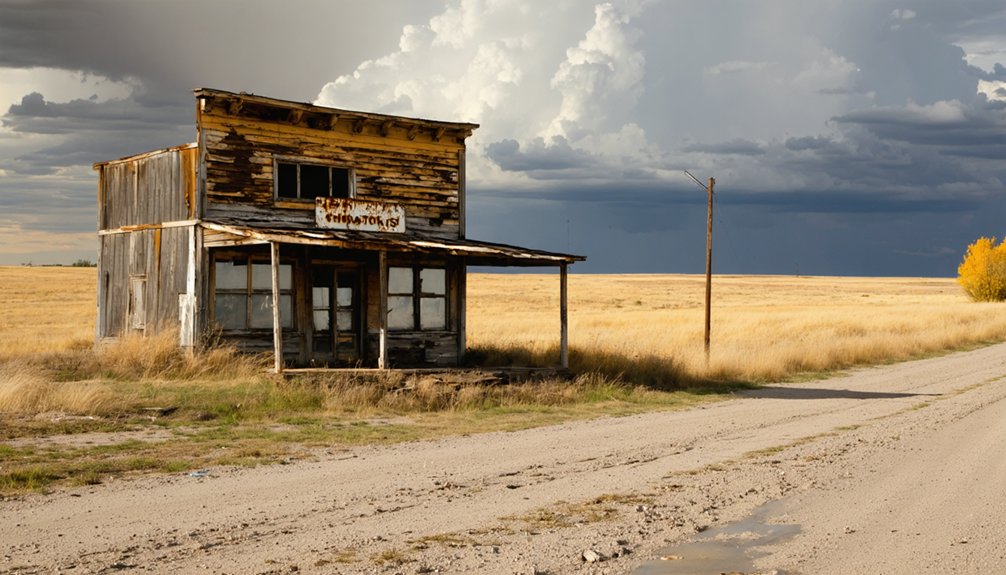
When you’re hunting for the most compelling ghost town experience in Kiowa County, Shipton rises above the rest. Its historical significance runs deep — established in the late 1800s, this frontier settlement once served wagon trails crossing the western Kansas plains. You’ll walk ground where a general store stood, where travelers rested before pushing further west.
What sets Shipton apart is its raw, unfiltered visitor experience. No crowds, no admission fees, no curated exhibits — just open pastureland, scattered foundation remnants, and the standing ruins of that original general store.
The flat prairie stretches endlessly around you, and a small creek runs quietly along the eastern edge of the site. You’re not observing history here. You’re standing directly inside it.
Where Exactly Is Shipton, Kansas?
Tucked into the flat, open expanse of western Kansas, Shipton sits within Kiowa County at a latitude of 38.2 degrees — roughly 15 miles north of the Arkansas border and about 3,400 feet above sea level.
Shipton rests quietly in western Kansas — 3,400 feet up, 15 miles from Arkansas, and firmly rooted in Kiowa County.
The geographic features here are stark and memorable. A small creek runs near the eastern edge of the townsite, while rolling prairie stretches endlessly in every direction.
Shipton’s historical significance stems from its position at a crossroads of frontier wagon trails.
Here’s what defines this location:
- Flat terrain with minimal elevation changes
- A small creek marking the eastern boundary
- Open pastureland surrounding the ruins
- Historic wagon trail crossroads
- Scattered foundation remnants outlining the original settlement
You’re stepping into real frontier history when you visit this remote, unincorporated site.
The Railroad Decision That Killed Shipton
When you study Shipton’s collapse, you’ll find one turning point that sealed its fate: the railroad never came.
Rail companies chose routes that bypassed the settlement entirely, cutting off the economic lifeline that frontier communities depended on for survival.
Once the rails passed Shipton by, residents followed the opportunity elsewhere, and the population dropped so rapidly that the town never recovered.
Rails Bypassed Shipton
The railroad didn’t just pass Shipton by—it delivered a death sentence. When rail lines bypassed the settlement, commerce collapsed overnight. You can almost feel the abandonment walking those grounds today.
What the railroad’s absence meant for Shipton:
- Wagon trail traffic dried up completely, killing the general store’s customer base
- Settlers relocated toward railroad towns offering real economic opportunity
- No formal charter meant zero political leverage to attract rail investment
- Historical preservation efforts struggle without community engagement from permanent residents
- Foundations and ruins became the only evidence anyone ever called this home
Without rails, Shipton had nothing binding people to the prairie. The freedom settlers originally sought here became the very thing that scattered them—open land with no economic lifeline left behind only silence.
Population Declined Rapidly
Once the railroad bypassed Shipton, population didn’t trickle away—it collapsed. Families who’d built their lives around wagon trail commerce suddenly had no economic lifeline. Businesses shuttered, homesteads emptied, and the prairie quietly reclaimed what settlers had carved out.
Within years, Shipton transformed from a functioning frontier community into an abandoned crossroads. Local legends suggest entire families packed overnight, leaving behind furniture, tools, and unfinished lives. That rawness is exactly what makes Shipton compelling for independent travelers today.
Historical preservation efforts remain minimal here, which paradoxically keeps the site authentic. You’re not walking through a curated museum—you’re standing inside a real collapse. The ruins, the silence, the windswept grass tell an unfiltered story about how quickly freedom-seeking frontier dreams could dissolve without infrastructure support.
What’s Left Standing at the Shipton Site Today
Although time and the elements have taken their toll on Shipton, you’ll still find remnants worth exploring when you arrive at the site. The open prairie surrounds you with wildflower blooms and prairie wildlife, making the experience feel alive despite the town’s silence.
Time and the elements have taken their toll on Shipton, yet the surrounding prairie still feels remarkably alive.
Here’s what you can expect to see:
- Ruins of the original general store, partially standing and weathered
- Scattered foundation remnants marking where buildings once stood
- A small creek running near the eastern edge of the site
- Historic crossroads where wagon trails once intersected
- Open pastureland views stretching across the flat Kansas horizon
You’re fundamentally walking through frozen history here, where crumbling walls tell stories that no living resident remains to share.
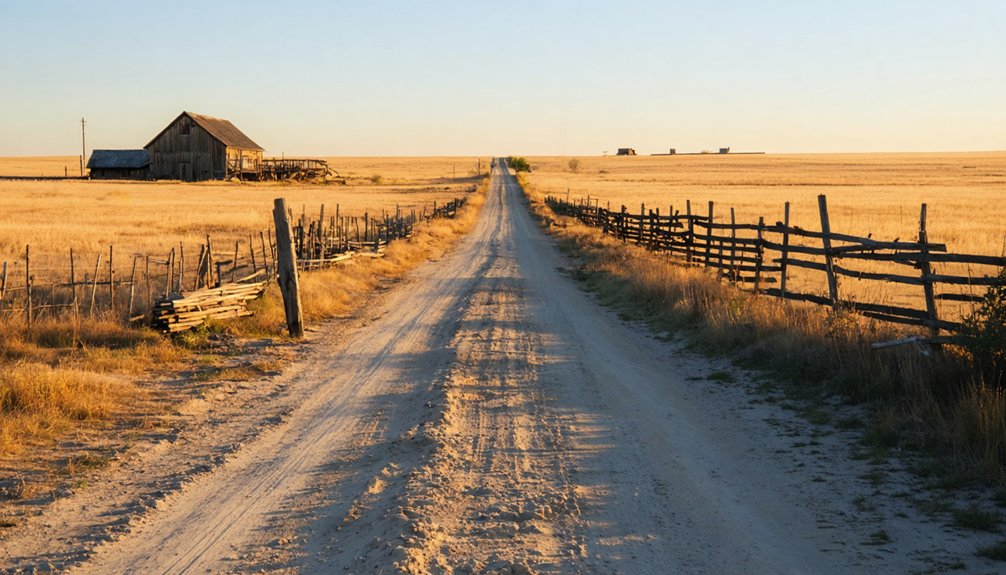
Before you head out, download Shipton’s GPS coordinates to your device, since cell signals across Kiowa County’s western stretches are notoriously unreliable.
You’ll also want to grab printed topo maps of the area as a backup, because gravel roads out here aren’t always marked clearly and conditions can shift after rain.
Take the gravel approaches slowly, watch for soft shoulders, and stay oriented to the crossroads where the old wagon trails once converged on the townsite.
Printed Topo Maps Essential
Plotting Shipton’s gravel road approaches isn’t something you’ll want to leave to chance, so you’ll need a printed Kiowa County topo map before you head out. Cell signals drop fast in western Kansas, making map reading your most reliable skill out here.
Trail markers are sparse, and unmarked intersections will test your confidence without a physical backup.
Pack your printed map alongside your GPS for these reasons:
- Gravel road names rarely appear on digital apps
- Trail markers fade or disappear entirely in open prairie
- Map reading lets you cross-reference creek positions near the eastern site edge
- Intersections look identical across flat terrain without elevation reference
- Paper maps survive dead batteries and signal blackouts
Freedom means being prepared, not dependent on technology that fails you at the worst moment.
GPS Coordinates Downloaded
Downloading Shipton’s GPS coordinates before you leave cell range isn’t optional—it’s the single step that keeps you moving confidently once gravel roads replace pavement and signal bars disappear.
Western Kansas gravel routes all look identical without a reliable waypoint guiding you toward the townsite. Load coordinates for the eastern creek landmark and the crossroads intersection—both anchor your approach from any direction.
Historical preservation efforts depend on visitors actually reaching these fragile sites rather than wandering and inadvertently disturbing surrounding pastureland. Tourism development in ghost town exploration thrives when travelers arrive prepared, informed, and self-sufficient.
Your downloaded route lets you navigate Kiowa County’s grid roads decisively, spend maximum time examining the general store ruins, and exit before weather shifts. Preparation earns your freedom out here.
Gravel Road Access Tips
Gravel roads in western Kansas look deceptively uniform, so you’ll want your downloaded coordinates actively running before you leave the last paved stretch. The routes approaching Shipton’s historic architecture and local legends feel identical to dead-end ranch tracks, and wrong turns cost real time.
- Slow down on loose gravel to protect your tires and steering
- Watch for cattle gates that may block seasonal access routes
- Note distinctive landmarks like fence lines or creek crossings as checkpoints
- Keep your topo map visible alongside your GPS as backup confirmation
- Pull completely off the track if ranch vehicles need to pass
Kiowa County’s gravel network shifts after heavy rain, so treat every intersection as a decision point requiring verification against your coordinates.
What to Pack for a Remote Shipton Prairie Visit

Since Shipton sits deep in remote western Kansas with no permanent facilities, you’ll want to pack carefully before heading out. Signal drops fast on these plains, so download GPS coordinates before you leave and toss a printed Kiowa County topo map in your bag.
Sturdy boots handle uneven foundation remnants and rough prairie terrain well, while a windproof jacket fights the relentless Kansas wind. Bring a first-aid kit since you’re miles from help, and pack a flashlight for exploring shadowed ruins where historical artifacts still quietly rest.
Water and snacks are non-negotiable with no services nearby. A notebook helps you document local legends tied to the site’s frontier past. Pack light, pack smart, and you’ll move freely across this forgotten landscape.
The Best Time of Year to Visit Shipton, Kansas
Once you’ve got your pack sorted, picking the right season makes just as big a difference as what you bring. Shipton’s open prairie sits at 3,400 feet, meaning weather shifts fast and hits hard.
- Spring (April–May): Mild temps make exploring historical artifacts and foundation ruins comfortable.
- Early Fall (September–October): Clear skies and cool air sharpen visibility across the flat terrain.
- Summer: Intense heat and wind batter the site; bring extra water if you go.
- Winter: Brutal prairie cold limits your time investigating local legends tied to the settlement.
- Avoid storm season: Western Kansas thunderstorms develop quickly with zero shelter nearby.
Late September hits the sweet spot — you’ll move freely, see clearly, and connect deeply with Shipton’s abandoned frontier story without fighting extreme conditions.
Other Abandoned Towns Near Shipton Worth the Detour
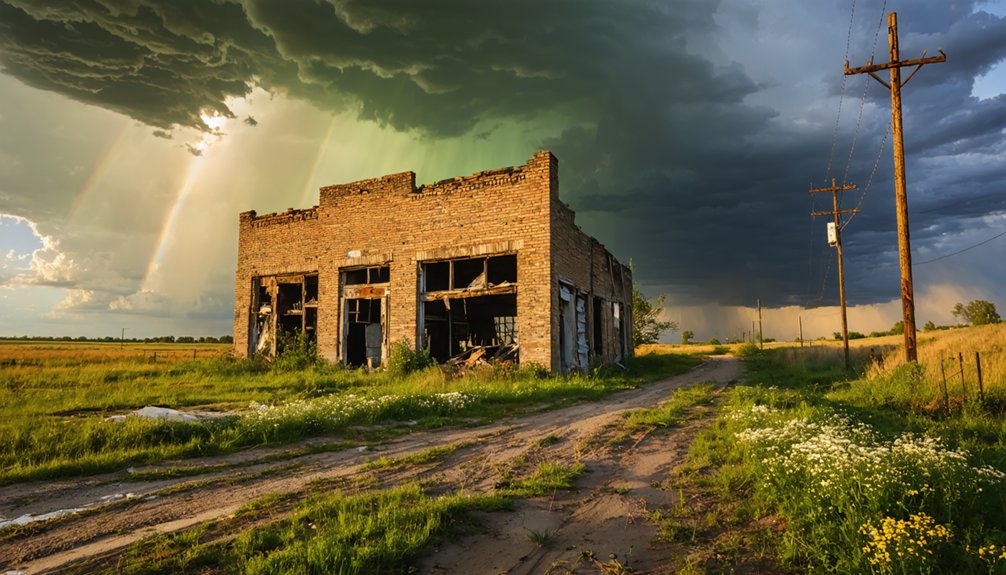
Kiowa County rewards curious explorers because Shipton isn’t the only ghost town worth tracking down on your western Kansas road trip. The surrounding prairie holds several forgotten settlements where urban decay tells stories railroad bypasses wrote generations ago.
Greensburg sits close enough for a meaningful detour, offering glimpses of historic preservation efforts alongside crumbling structures that define frontier collapse.
Haviland delivers another layer of abandoned Kansas history within comfortable driving distance. Each stop deepens your understanding of how western settlement patterns rose and fell against unforgiving geography.
You’ll find foundations, remnants, and silence that no curated museum replicates. Bring your downloaded GPS coordinates, your topo maps, and that windproof jacket.
Freedom means chasing these forgotten places on your own terms, at your own pace.
How to Build a Full Ghost Town Route Through Shipton, Kansas
Building a full ghost town route through Shipton means treating western Kansas like a layered puzzle you solve mile by mile. You’ll connect forgotten stops, honor historical preservation efforts, and chase local legends across open prairie.
Structure your route around these essentials:
- Start at Shipton’s general store ruins as your anchor point
- Download GPS coordinates before you lose signal on gravel roads
- Schedule stops at nearby abandoned townsites you researched from [PREVIOUS SUBTOPIC]
- Pack topo maps to cross-reference wagon trail crossroads accurately
- Allow flexible drive time since gravel roads shift your pace unexpectedly
You’re not just driving through Kiowa County — you’re stitching together a vanished world. Each ruin adds context, each local legend deepens the story, and each mile earned makes the freedom feel real.
Frequently Asked Questions
Is There Any Cell Phone Signal Available at the Shipton Site?
You’ll practically fall off the grid entirely at Shipton! Cell signal is nearly nonexistent, so you’ll want downloaded GPS coordinates and backup communication options ready before you venture into this beautifully remote, untamed Kansas wilderness.
Are There Any Entry Fees or Permits Required to Visit Shipton?
You don’t need entry fees or permits to explore Shipton’s historical preservation site freely. No local guided tours operate there either, so you’ll roam the abandoned frontier ruins and open pastureland completely on your own terms.
Can Visitors Legally Access and Walk Around the Shipton Ruins?
You can freely explore Shipton’s ruins, walking among foundations that carry deep historical significance. Respect any preservation efforts by not disturbing remnants, letting you soak in this frontier ghost town’s raw, untamed spirit without restriction.
Is the Shipton Site Accessible by Standard Passenger Vehicles?
Sure, bring your luxury limousine! You’ll reach Shipton’s historical preservation ruins via gravel roads in your standard passenger vehicle, though wildlife habitats surround the remote trail, so you’ll want sturdy tires for freedom’s unpaved path.
Are Overnight Camping Stays Permitted Near the Shipton Townsite?
The knowledge doesn’t confirm overnight camping permits near Shipton, but you’ll want to check local regulations first. Respecting historical preservation protects local legends alive in these ruins, letting freedom-seekers like you explore responsibly and authentically.
References
- https://www.youtube.com/watch?v=LNAm0sZuNyw
- https://www.youtube.com/watch?v=_DLl0NgdIPo
- https://ghost-towns.close-to-me.com/states/kansas/
- https://books.google.com/books/about/Ghost_towns_of_Kansas.html?id=UwslAAAAMAAJ
- https://33travels.com/ghost-towns-in-kansas/
- https://www.youtube.com/watch?v=0wTaBKVg3dk
- https://www.onlyinyourstate.com/trip-ideas/kansas/haunted-kansas-road-trip
- https://legendsofkansas.com/saline-county-kansas-extinct-towns/
- https://www.youtube.com/watch?v=NaR0lWdXLss
- https://www.kcur.org/arts-life/2022-04-09/ghost-towns-are-all-around-kansas-city-if-you-know-where-to-look