Silver Palm isn’t your typical ghost town — it’s a living community of 4,400+ residents about 20 miles southwest of Miami, where genuine 1900s history still stands alongside everyday life. You’ll find the original 1904 schoolhouse and Anderson’s general store preserved without the usual tourist polish. Visit between November and April for the most comfortable experience exploring these rural roads. There’s far more to this authentic slice of old Florida than first meets the eye.
Key Takeaways
- Silver Palm is not a ghost town but a living community of 4,400+ residents in unincorporated Miami-Dade County, about 20 miles southwest of Miami.
- Two original historic structures remain: the 1904 Silver Palm Schoolhouse and William Anderson’s general store, now a private residence.
- Reach Silver Palm via US-1 or Krome Avenue, using a screenshot map since GPS can be unreliable in this rural area.
- Visit between November and April for milder conditions; summer visitors should arrive early and prepare for 90°F heat and afternoon thunderstorms.
- Nearby attractions include Coral Castle, Redland Fruit & Spice Park, Homestead Historic Downtown, Biscayne, and Everglades National Parks.
Is Silver Palm Really a Ghost Town?
While Silver Palm might sound like a forgotten relic of Florida’s past, it’s actually a living, breathing community with over 4,400 residents calling it home. Don’t let the ghost town label fool you — this unincorporated Miami-Dade community escaped the urban decay that swallowed many of Florida’s early settlements.
You’ll find no abandoned storefronts or crumbling streets here. Instead, Silver Palm balances its early 1900s heritage against modern development, preserving two original structures while maintaining a rural, agricultural identity.
The old schoolhouse and former general store still stand, now serving as private residences.
What you’re visiting isn’t a ghost town — it’s a historic community that chose roots over reinvention, offering you a rare glimpse into old Florida without the decay.
Where Exactly Is Silver Palm, Florida?
Tucked about 20 miles southwest of Miami, Silver Palm sits quietly within Miami-Dade County‘s unincorporated landscape at coordinates 25°33’N, 80°27’W — a modest 10 feet above sea level. You’ll find it nestled within the Redland community, sandwicched between US-1 and Krome Avenue (SR-997), with 157th Avenue and 232nd Street marking its heart.
The local climate runs hot in summer and warm year-round, so you can plan your visit on your own timeline without seasonal restrictions.
The area stretches roughly four miles by four miles, covering rural residential and agricultural land that’s stayed invigoratingly unchanged.
Community events here are few, reflecting its unincorporated, small-town character.
Standard 2WD roads make access easy, so you’re free to explore without needing a specialized vehicle.
Best Time to Visit Silver Palm
You can visit Silver Palm any time of year since the community’s historic landmarks sit outdoors and remain accessible in all seasons. Florida’s summer heat runs intense and humid, so you’ll want to pack water and plan your walk around the schoolhouse and historic marker for early morning hours.
If you prefer milder conditions, the cooler months from November through April offer the most comfortable temperatures for exploring the old neighborhood on foot.
Year-Round Visiting Conditions
Silver Palm welcomes visitors year-round, thanks to Florida’s reliably warm climate that keeps the historic district accessible in every season. Climate variations between summer and the cooler months are mild, so you won’t face harsh conditions that shut down access roads or obscure the historic marker near 232nd Street and SW 157th Avenue.
Summers run hot and humid, but seasonal activities like exploring the 1904 schoolhouse and walking the rural landscape feel rewarding even under the Florida sun. Non-summer months offer slightly cooler, drier conditions that make outdoor exploration more comfortable.
The 2WD roads remain passable regardless of season, meaning your standard vehicle handles the trip easily. Whenever your schedule allows, Silver Palm’s quiet agricultural surroundings and weathered historic remnants are ready to receive you.
Summer Heat Considerations
Though Florida’s summer heat can feel relentless, visiting Silver Palm between June and September rewards you with an uncrowded, authentically rural experience that cooler-season crowds rarely witness. Climate challenges are real here — temperatures routinely climb past 90°F with humidity that thickens the air like warm cloth. You’ll want to arrive early morning, carry plenty of water, and wear lightweight, breathable clothing.
Seasonal planning makes all the difference. Afternoon thunderstorms sweep through quickly, so time your exploration of the 1904 schoolhouse and historic marker before midday. The reward? You’ll walk those quiet agricultural roads largely alone, surrounded by the same rural landscape settlers once navigated.
Summer strips Silver Palm down to its honest, unhurried essence — and that freedom is worth every degree.
Ideal Travel Seasons
When should you plan your visit to Silver Palm? Honestly, you’ve got flexibility here. Silver Palm’s location in south Miami-Dade means you’re dealing with two primary realities: hot, humid summers and warm, drier winters.
For seasonal travel comfort, the cooler months between November and April offer the most pleasant weather considerations. Temperatures stay manageable, humidity drops noticeably, and you can actually walk the historic grounds without wilting. You’ll explore the old schoolhouse site and historic marker feeling like a true road tripper rather than a survivor.
Summer visits remain possible — the community doesn’t shut down — but expect intense heat and afternoon thunderstorms.
Whatever season calls you, Silver Palm’s quiet rural roads and lingering history wait patiently, indifferent to the calendar.
The Silver Palm Schoolhouse and Anderson’s Store Explained
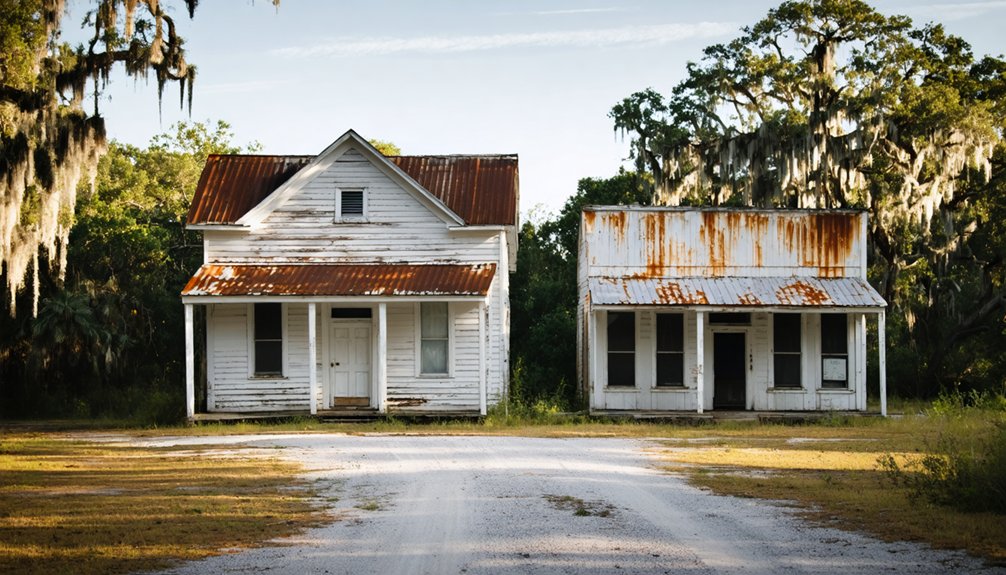
When you visit Silver Palm, you’ll find the 1904 Silver Palm Schoolhouse standing as a two-story frame vernacular building that has endured for over a century.
William Anderson’s general store once anchored the community’s daily life before closing in 1930, leaving behind a legacy tied to Silver Palm’s early growth between Perrine and Florida City.
Today, both the schoolhouse and the former store site serve as private residences, giving these historic structures a quiet second life.
Schoolhouse History And Construction
Built in 1904, the Silver Palm Schoolhouse stands as a two-story frame vernacular structure that’s survived well over a century of Florida’s history. When you visit, you’re looking at one of South Florida’s earliest examples of practical construction techniques — simple, functional, and built to last.
The architectural styles of the era favored straightforward wood-frame methods, relying on local materials and craftsmen who understood Florida’s demanding climate. Unlike ornate Victorian buildings of the same period, this schoolhouse embraced utility over decoration.
Today, it functions as a private residence, so you can appreciate its exterior from the road without disturbing its occupants. Its survival alone makes it remarkable — most structures from that era didn’t make it past a few decades of humidity, storms, and time.
Anderson’s Store Legacy
Anderson’s Store once anchored the Silver Palm community as its social and commercial hub, serving residents across a stretch of rural south Dade for decades before closing in 1930. William Anderson ran this general store near Silver Palm Drive and Newton Road, making it a gathering point where local legends were born and neighbors exchanged more than just goods.
Today, the site survives as a private residence, quietly holding onto its past. You won’t find a grand monument here, but preservation efforts have kept the location’s identity alive through historical recognition and community memory.
When you visit, look for the historic marker near 232nd Street and SW 157th Avenue — it connects you directly to Silver Palm’s commercial roots and reminds you how ordinary places shape extraordinary histories.
Current Uses Today
Both surviving structures from Silver Palm’s past have found new life as private residences, blending quietly into the rural landscape while carrying the weight of the community’s early history. The 1904 schoolhouse and Anderson’s Store site stand as testaments to land preservation, quietly anchoring the local community to its agricultural roots.
When you visit, you’ll spot the historic marker near 232nd Street and SW 157th Avenue, offering a rare moment of reflection without disturbing the residents who now call these landmarks home. The structures aren’t museums or tourist attractions — they’re lived-in spaces that breathe authenticity.
That raw, unpolished quality is exactly what makes Silver Palm worth the detour. You’re not looking at restoration; you’re witnessing genuine continuity between past and present.
What You’ll See at the Historic Marker on 232nd Street
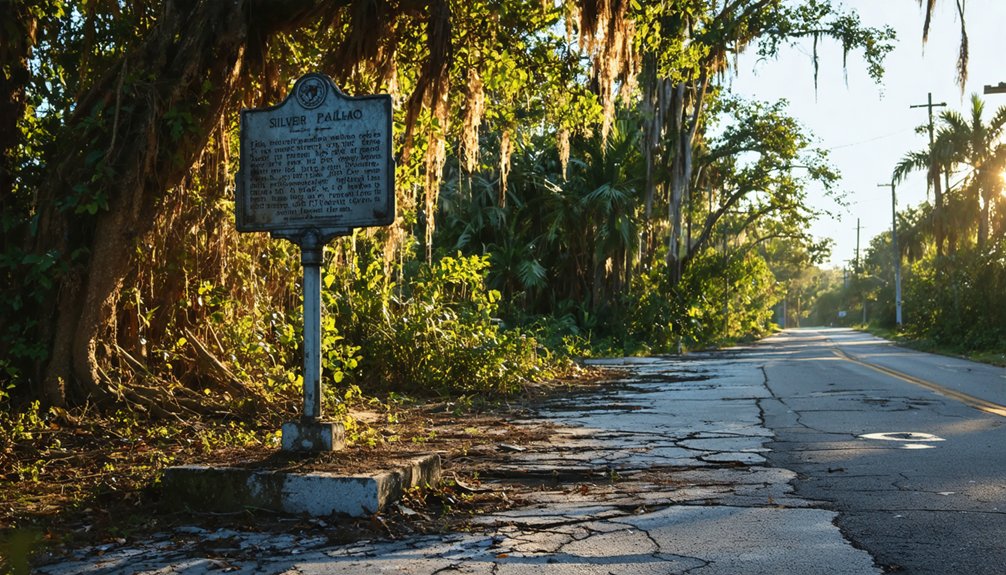
When you arrive at the intersection of 232nd Street and SW 157th Avenue, you’ll find a historic marker that anchors Silver Palm’s past to its present landscape. It tells the story of a community that once thrived around William Anderson’s general store and the 1904 schoolhouse nearby.
You’ll read about early settlers who shaped this rural corner of Miami-Dade County, building lives between US-1 and Krome Avenue. After exploring the marker, you can pair your visit with local cuisine from surrounding Redland farms and roadside stands.
The area’s outdoor activities, including cycling and wildlife watching, make the stop worthwhile beyond history alone. It’s a quiet, grounding moment that connects you to Silver Palm’s origins without requiring more than a short drive down a standard 2WD road.
How to Drive to Silver Palm Without Getting Lost
Getting to Silver Palm is straightforward once you know your anchors. You’re heading roughly 20 miles southwest of Miami, tucking into the rural stretch between US-1 and Krome Avenue (SR-997). These two roads frame your corridor perfectly.
For navigational tips, lock onto SW 157th Avenue and 232nd Street as your crossroads. That intersection puts you at the heart of historic Silver Palm. Your GPS may hesitate out here, so screenshot a map before you leave cell range.
Local road conditions are 2WD-friendly, meaning your standard passenger vehicle handles everything without trouble. No off-roading required.
The landscape shifts noticeably as Miami’s density fades into open agricultural land, signaling you’re close. Trust that progression — it means Silver Palm is just ahead.
Other Historic Sites Near Silver Palm Worth Visiting
Since Silver Palm sits within the Redland historic district, you’ve already positioned yourself near one of South Florida’s most quietly fascinating rural corridors. Explore beyond the schoolhouse and discover authentic history, local cuisine, and outdoor activities waiting nearby.
- Redland Fruit & Spice Park – A 37-acre tropical grove offering guided tours and fresh local produce
- Coral Castle – A mysterious hand-carved limestone structure built by one man over decades
- Homestead Historic Downtown – Walkable streets lined with old Florida architecture and local cuisine stops
- Biscayne National Park – Pristine coastal waters ideal for outdoor activities like kayaking and snorkeling
- Everglades National Park entrance (Ernest Coe) – Gateway to unmatched wilderness and natural freedom
You won’t run out of reasons to linger in this corridor.
Why Silver Palm Matters to South Florida’s Rural History
Few communities in South Florida carry the quiet historical weight that Silver Palm does. When you walk this land, you’re standing where early settlers built schools, ran general stores, and carved out lives from raw Florida wilderness. That story matters.
Silver Palm represents rural development at its most honest — no grand infrastructure, just people establishing roots along dusty roads between US-1 and Krome Avenue.
The 1904 schoolhouse still standing today symbolizes a community’s commitment to education long before Miami became the metropolis you know now.
Cultural preservation efforts here remind you that South Florida wasn’t always highways and high-rises. It was farmland, silver palms, and tight-knit neighbors.
Recognizing Silver Palm means honoring the rural backbone that quietly shaped everything surrounding it.
Frequently Asked Questions
What Percentage of Silver Palm Residents Are of Working Age?
Back in ye olden census days, you’ll find that 59.3% of Silver Palm’s residents are of working age. These demographic trends and employment statistics reveal a vibrant, freedom-loving community thriving between 18 and 64 years old.
How Many People Lived in Silver Palm According to the 2010 Census?
When you explore Silver Palm’s historical landmarks, you’ll discover 4,401 people called it home in the 2010 Census. Local legends thrive among these residents, painting a nostalgic portrait of a free-spirited, rural community steeped in timeless Florida heritage.
Can Standard Passenger Vehicles Access Silver Palm’s Roads Easily?
Like a smooth river flowing freely, you’ll navigate Silver Palm’s roads effortlessly. Standard passenger vehicles handle them easily — check road condition updates before heading out, and these vehicle accessibility tips guarantee your adventurous spirit roams without restriction.
What Is the Elevation of Silver Palm Above Sea Level?
You’ll find Silver Palm sits at just 10 feet above sea level, where historical landmarks whisper local legends of early settlers. It’s a humble, flat terrain that’ll make you feel wonderfully free exploring its nostalgic rural charm.
How Large Was Silver Palm at Its Maximum Historical Size?
Like a forgotten frontier, Silver Palm’s ghost town history once stretched 4 miles by 4 miles—a vast 16-square area centered on Anderson’s Store, where abandoned structures and rural life defined your ancestors’ free-spirited Florida landscape.
References
- https://www.ghosttowns.com/states/fl/silverpalm.html
- https://en.wikipedia.org/wiki/List_of_ghost_towns_in_Florida
- https://www.ghosttowns.com/states/fl/fl.html
- https://giscloud.fiu.edu/wp_etap_new/wp-content/uploads/2024/09/Silver-Palm-CBR-Final-Draft.pdf
- https://www.miami-history.com/p/life-on-the-southeast-florida-frontier
- https://npgallery.nps.gov/NRHP/GetAsset/NRHP/87000581_text
- https://www.nvexpeditions.com/esmeralda/palmetto.php
- https://en.wikipedia.org/wiki/Silver_Palm
- https://en.wikipedia.org/wiki/Lists_of_ghost_towns_in_the_United_States
- https://www.youtube.com/watch?v=WelMnQ1t0Uc