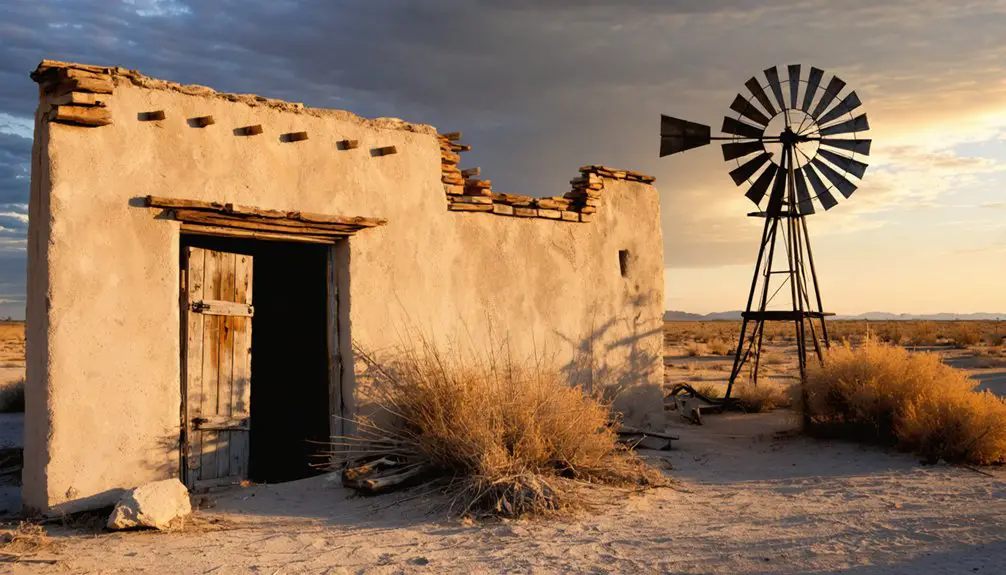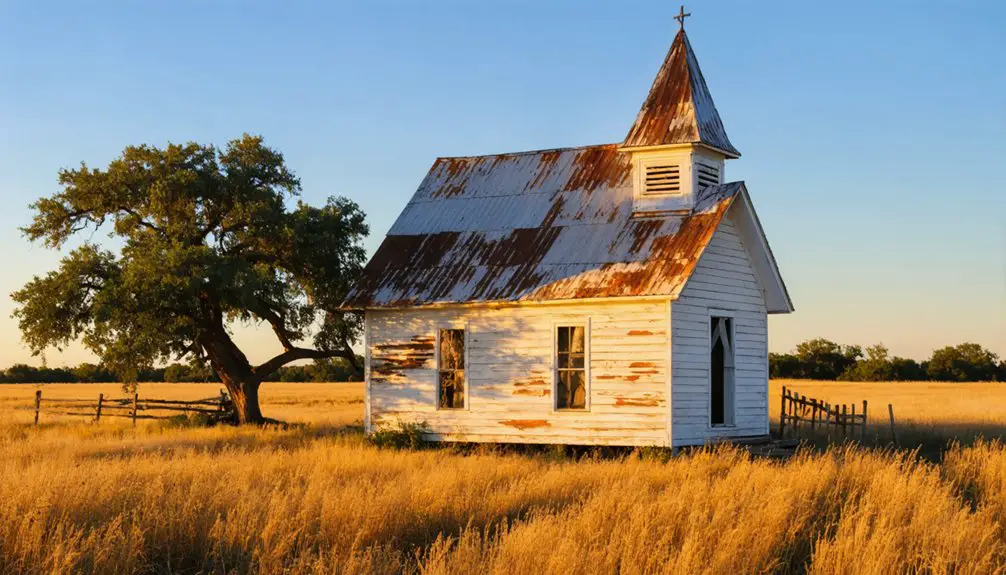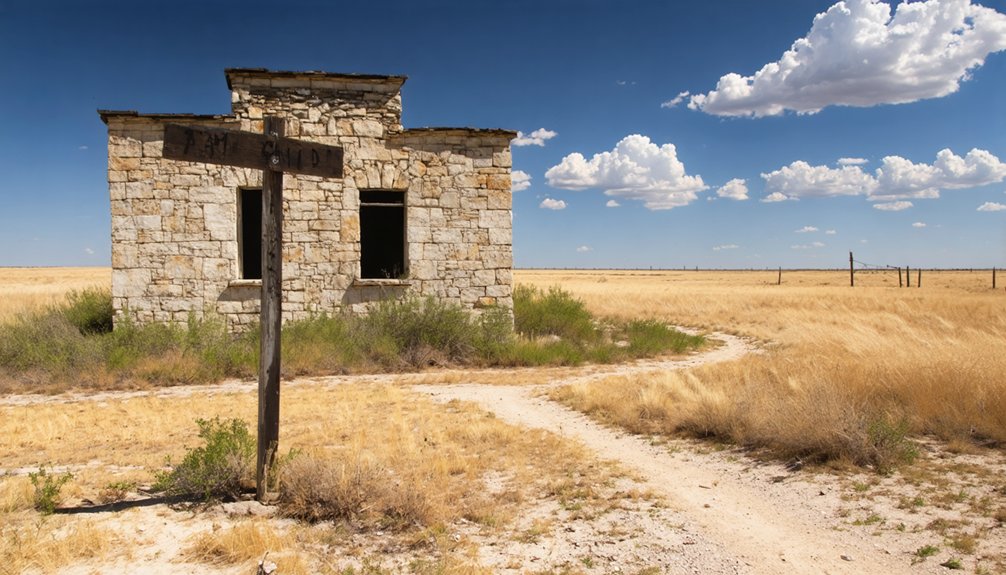
Planning a ghost town road trip to Bomarton, Texas means heading to southwestern Baylor County, where a forgotten railroad town sits frozen in time. You’ll reach it about 15 miles north of Seymour via U.S. Highway 277. Spring and fall offer the most comfortable conditions for exploring weathered landmarks like St. Johns Catholic Church and an intact 1870s settler house. Come prepared to move carefully, respect fragile structures, and soak in a history that runs far deeper than it first appears.
Key Takeaways
- Bomarton is located in Baylor County, accessible via U.S. Highway 277 from Seymour, approximately 15 miles north.
- Visit in spring or fall for mild weather; avoid midsummer due to extreme Texas heat.
- Key landmarks include a 1930s St. Johns Catholic Church and an intact 1870s settler house.
- Respect the site by staying on accessible paths, avoiding artifact removal, and leaving no trace.
- Enhance your trip using resources like the Portal to Texas History and Great Western Trail Association.
What Makes Bomarton, Texas Worth the Drive?
If you’re chasing the kind of history that textbooks skip over, Bomarton, Texas delivers it in spades. This ghost town sits at the southwestern edge of Baylor County, offering raw, unfiltered glimpses into a vanished way of life.
You’ll find the abandoned St. Johns Catholic Church, an 1870s house that hints at farmstead restoration possibilities, and fading railroad tracks that once carried an entire community’s livelihood.
Local legends tied to Native American spiritual traditions add another layer worth exploring. Bomarton once served travelers along the Great Western Trail, and that heritage still echoes through its crumbling structures.
You won’t find tourist traps or crowds here — just open road, honest history, and the freedom to experience Texas exactly as it was.
The History Behind This Forgotten Texas Railroad Town
When you roll into Bomarton, you’re stepping into a place that once thrived as a late 19th-century railroad town and agricultural hub, serving travelers and merchants along the Great Western Trail.
Economic decline eventually stripped the town of its liveliness, leaving behind only silence and scattered ruins that earned it official ghost town status in the early 21st century.
Yet you’ll still find remarkable remnants standing against time, including the abandoned St. Johns Catholic Church from the 1930s and a preserved 1870s house that anchors the town’s fading story.
Railroad Origins And Growth
Bomarton didn’t always wear the quiet, crumbling face it shows today — it once hummed with the energy of a thriving railroad town built on ambition and agricultural promise. Railroad development transformed this small Texas settlement into a legitimate hub, connecting farmers, merchants, and travelers moving goods and livestock across the region.
The Great Western Trail ran nearby, drawing steady traffic and economic activity that kept the community alive and growing. Businesses flourished, families settled, and Bomarton carved out a real identity on the Texas frontier.
But that momentum was fragile. As transportation routes shifted and agricultural markets changed, town decline became inevitable. The railroad that once fueled Bomarton’s rise eventually abandoned it, leaving behind empty buildings and fading tracks that you can still explore today.
Economic Decline And Abandonment
Once the railroad pulled out, Bomarton’s economic foundation collapsed almost overnight. Businesses that once thrived on railroad traffic lost their customers, and families packed up and left for more promising towns.
You can trace this pattern across Texas’s economic history — when the rails moved, so did prosperity.
Urban decay crept in slowly but relentlessly. Storefronts emptied, homes fell silent, and the community that once buzzed with agricultural trade simply faded.
By the early 21st century, officials formally recognized Bomarton as a ghost town, cementing what locals had known for decades.
Walking through today, you’ll feel that absence deeply. The town didn’t die dramatically — it just quietly let go, surrendering to time, economic shifts, and the unstoppable movement of progress leaving it behind.
Notable Historical Landmarks Remaining
Despite the silence that now blankets Bomarton, a handful of landmarks still stand as quiet witnesses to the town’s former life. You’ll find the abandoned St. John’s Catholic Church, built in the 1930s, its weathered walls holding local legends of community gatherings long forgotten.
Nearby, an 1870s house remains remarkably intact, offering a raw glimpse into early settler life on the Texas plains.
Preservation efforts have kept these structures visible, allowing you to walk among genuine remnants of a railroad town’s rise and fall. Monuments marking the Great Western Trail path remind you that countless travelers once moved through this very ground.
Each crumbling wall and faded structure tells a story worth discovering firsthand, making Bomarton far more than just another forgotten Texas crossroads.
How the Great Western Trail Put Bomarton on the Map
Before the railroad towns of Texas faded into dust, trails like the Great Western carved their names into the land—and Bomarton was no exception. When you walk near the town center today, you’re standing where travelers, merchants, and cattle drivers once pushed westward along this iconic route.
The Great Western Trail made Bomarton a legitimate stop, drawing people who needed rest, local cuisine, and community connection. Seasonal community festivals once celebrated this vibrant crossroads culture, reflecting the energy of a town built on movement and commerce.
Monuments along the trail path still mark this legacy, giving you a tangible link to that restless pioneer spirit. If freedom and open roads call to you, Bomarton’s Great Western Trail history makes it worth every mile you’ll drive to get there.
Best Times of Year to Visit Bomarton
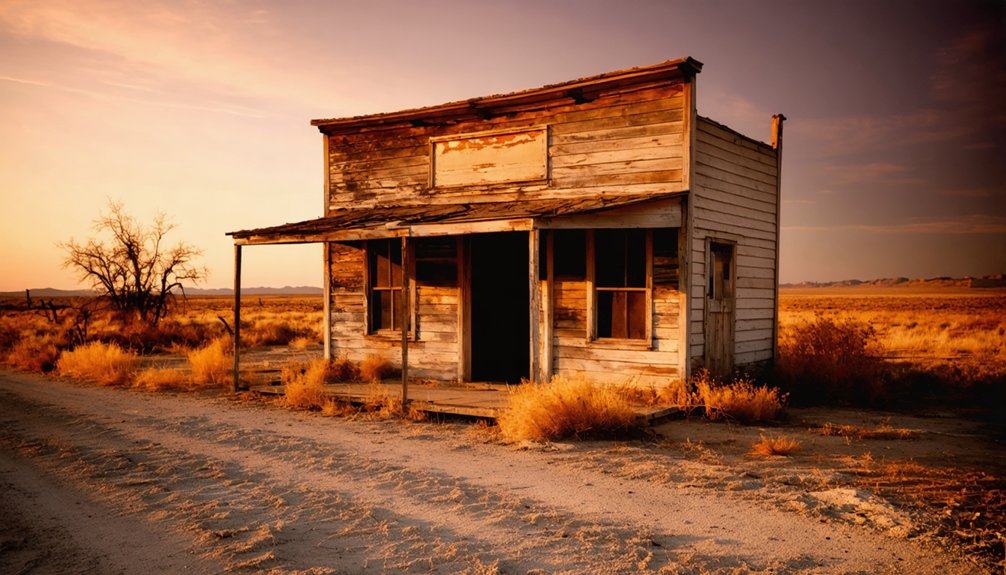
Knowing when to visit makes the difference between a memorable road trip and a frustrating one. Bomarton rewards travelers who plan smart, so consider these prime windows:
Timing your Bomarton visit isn’t luck — it’s strategy. Plan smart, and the road delivers something unforgettable.
- Spring (March–May): Mild temperatures make exploring abandoned structures comfortable, and wildflowers brighten the landscape for photography and wildlife observation along rural roads.
- Fall (September–November): Cooler air returns, crowds stay minimal, and nearby Seymour offers local cuisine worth sampling before or after your ghost town exploration.
- Winter (December–February): Stark, quiet scenery creates an eerie atmosphere perfect for ghost hunters seeking authenticity without summer heat.
Avoid midsummer visits if you can — Texas heat turns outdoor exploration brutal fast. You’re chasing freedom and discovery here, so time your trip when the open road actually invites you forward.
How to Reach Bomarton From Seymour
Reaching Bomarton from Seymour is straightforward — you’ll head north on U.S. Highway 277 for approximately 15 miles. The drive is quick, yet rewarding, as the open Texas landscape unfolds around you.
Keep your eyes sharp for wildlife sightings along the rural roadside — deer, hawks, and wild turkey frequently appear near the brush and grasslands bordering the highway.
Before departing Seymour, consider fueling up on local cuisine at one of the town’s diners, since Bomarton offers nothing in the way of food or services.
Once you spot Farm to Market Road 1152, you’ve arrived. The intersection marks the heart of this ghost town.
Approach slowly, respect the terrain, and embrace the raw freedom of exploring a place time has quietly left behind.
What the Site Actually Looks Like Today
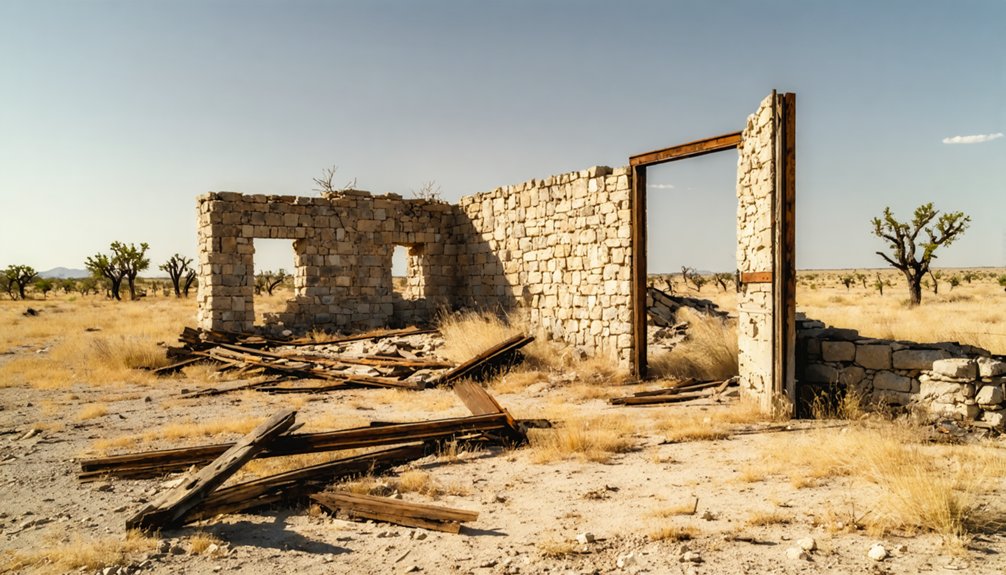
When you pull up to Bomarton today, the silence hits you before anything else. Weathered structures lean against the Texas sky, and local flora has slowly reclaimed what people left behind. Surrounding wildlife moves freely through the area, unbothered by human presence.
Here’s what you’ll actually encounter on-site:
- St. Johns Catholic Church – Its aging walls still stand, offering a striking window into 1930s rural architecture.
- The 1870s house – A preserved structure that feels frozen in time, surrounded by overgrown brush.
- Fading railroad remnants – Rusted tracks partially buried beneath decades of dirt and vegetation.
Nothing here is manicured or curated. It’s raw, honest, and completely open. You’re free to explore it exactly as history left it.
St. Johns Catholic Church and the 1870s House Up Close
Standing just off U.S. Highway 277, St. Johns Catholic Church rises as one of Bomarton’s most striking examples of historical architecture. Built in the 1930s, its weathered walls and empty windows tell a story of community faith that slowly faded alongside the town itself. You can walk its perimeter, studying the craftsmanship that once drew local families together every Sunday.
Nearby, the 1870s house offers an entirely different chapter. This structure predates the church by decades, standing on land that carries deeper roots tied to Native American spirituality and pre-colonial significance. Running your hand along its aged wood, you’ll feel the weight of generations.
Both landmarks reward patient visitors who appreciate raw, unpolished history rather than curated tourist experiences. Bring a camera and take your time.
Visiting Bomarton Without Disturbing What’s Left
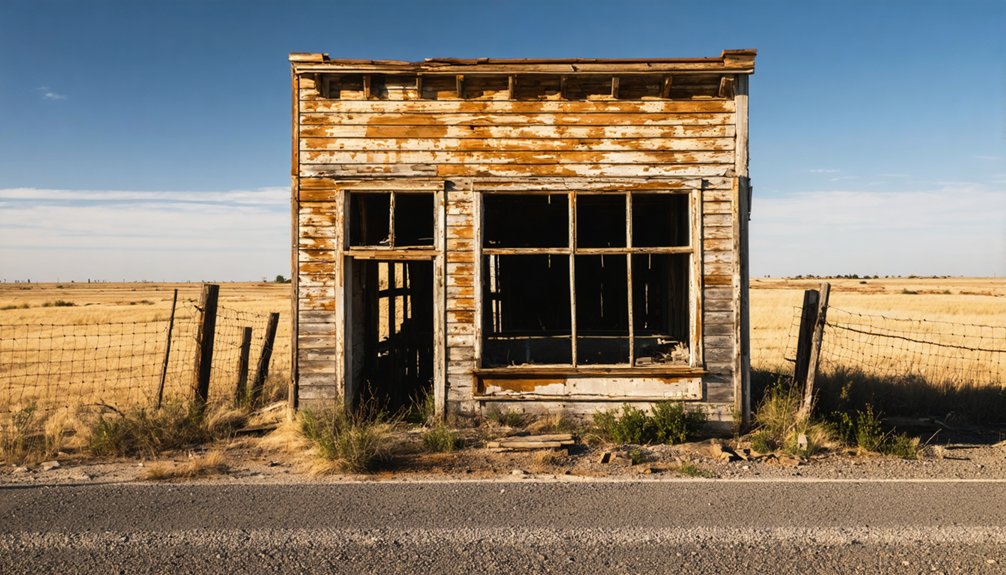
Bomarton asks nothing of you except respect, and that’s the least you can give it. You’re free to explore, chase local legends, and absorb ghost stories that linger around every crumbling wall. But freedom comes with responsibility.
Follow these three rules before you visit:
- Don’t touch or remove artifacts — decaying structures and remnants belong to history, not your collection.
- Stay on accessible paths — unstable buildings can collapse without warning, so keep your distance.
- Leave no trace — pack out everything you bring in and avoid vandalism.
Bomarton’s silence is its greatest asset. You’re walking through real history, not a theme park. Treat every abandoned corner with the same care you’d want shown to something irreplaceable.
Where to Learn More About Bomarton’s History
After you’ve walked Bomarton’s quiet streets and absorbed what’s left standing, you’ll likely want to fill in the gaps that crumbling walls can’t explain. Texas Highways magazine and the Portal to Texas History archives both offer documented records, photographs, and local legends that bring the town’s railroad past to life.
Baylor County historical records can point you toward preservation efforts tied to landmarks like St. Johns Catholic Church and the 1870s house. The Great Western Trail Association also maintains resources connecting Bomarton’s role in early Texas travel routes.
For deeper dives, visit your nearest university library with a Texas history collection. Digital archives let you explore census data, land surveys, and settler accounts from the comfort of wherever your next road trip begins.
Frequently Asked Questions
Was Bomarton Ever Officially Incorporated as a Texas Municipality?
No, Bomarton never became an official Texas municipality. Historical records confirm it’s always been unincorporated, meaning you’ll find no town governance structure here—just raw, untamed freedom echoing through its abandoned streets and forgotten landmarks.
Are There Any Nearby Towns With Hotels for Overnight Stays?
You’ll find hotel options and nearby accommodations in Seymour, Texas, just 15 miles south of Bomarton. It’s your perfect basecamp — rest comfortably there, then freely explore Bomarton’s haunting, historical landscape at your own adventurous pace!
Is a Permit Required to Photograph Inside the Abandoned Church?
When in doubt, check it out — no confirmed permit’s required, but you’ll want to respect the space. Prioritize photography safety tips exploring abandoned church architecture, and you’ll capture stunning shots without stepping on anyone’s toes.
Did Bomarton Ever Have a Post Office During Its Active Years?
The provided knowledge doesn’t confirm if Bomarton had a post office, but you’ll find its historic landmarks and local legends fascinating as you explore this ghost town’s active years of vibrant railroad and agricultural community life!
Are Restroom Facilities Available Anywhere Near the Bomarton Site?
Don’t count your chickens—restroom facilities aren’t available at Bomarton. You’ll find no nearby amenities in this ghost town, so plan ahead! Bring supplies, stop in Seymour before heading out, and embrace the rugged freedom of the open road.
References
- https://www.youtube.com/watch?v=NdZOFY-u2AQ
- https://texashighways.com/travel-news/ghost-hunting-at-the-abandoned-bomarton-church/
- https://kids.kiddle.co/Bomarton
- https://www.youtube.com/watch?v=WxQ3KEFChvo
- https://fr.wikipedia.org/wiki/Bomarton
- https://stevenmaier.com/ghost-town-bomarton-tx/
- https://www.facebook.com/groups/887609526617652/posts/1075433427835260/
- https://www.texasescapes.com/TexasTowns/Bomarton-Texas.htm
- https://texashistory.unt.edu/ark:/67531/metapth429414/m1/44/
- https://en.wikipedia.org/wiki/List_of_ghost_towns_in_Texas