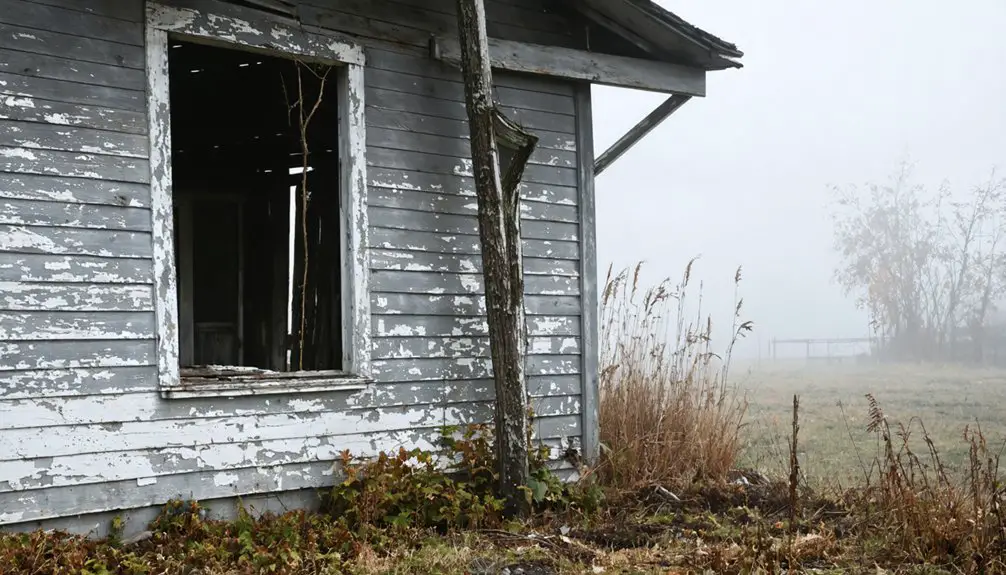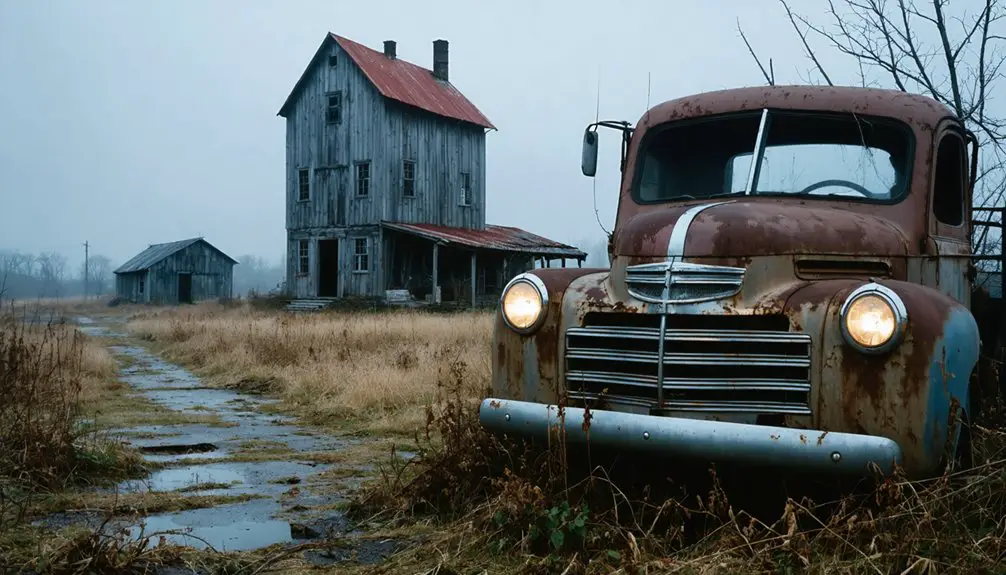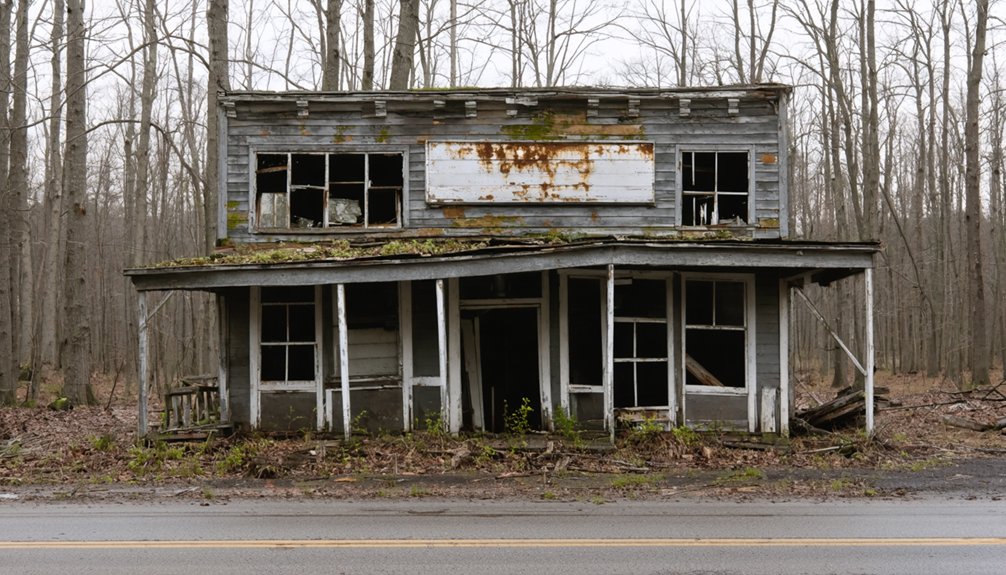
Stratford, Michigan is a forgotten lumber town that vanished almost overnight after the pine ran out in 1908. You won’t find guided tours or polished landmarks here — just a wooden sign, a commemorative plaque, and dense forest swallowing what’s left. It’s tucked in Missaukee County near N. 13 Mile Road, and it’s absolutely worth the drive if you love raw, unfiltered history. Stick around to uncover everything you need to plan the perfect visit.
Key Takeaways
- Stratford is located in Norwich Township, Missaukee County, near N. 13 Mile Road; park at the ORV trailhead lot a quarter mile away.
- Bring sturdy boots, bug spray, water, a compass, and a printed map, as the site doesn’t appear on digital search engines.
- The best seasons to visit are summer and fall, offering dry trails, longer daylight, and better visibility through vegetation.
- Key landmarks include a wooden sign and commemorative plaque; dense overgrowth covers former streets, foundations, and buildings.
- Nearby ghost towns like Deward and Vogel Center, plus Higgins Lake State Park, make ideal stops for a multi-destination road trip.
What Was Stratford, Michigan?
Once a thriving lumber town deep in the forests of Missaukee County, Stratford, Michigan was founded in 1897 by the Thayer Lumber Company to support logging operations across roughly 13,400 acres of virgin red and white pine.
At its peak, the town supported around 1,200 residents, complete with a hotel, saloons, a sawmill, and a post office.
The railroad stopped six days a week for 12 years hauling timber statewide.
By 1908, the pine was gone, and everyone left.
Michigan purchased the site in 1937, demolished what remained, and nature reclaimed the rest.
Today, historical preservation efforts are minimal — just a wooden sign and a plaque marking what once stood.
Keep tourist safety in mind when exploring; dense brush and uneven ground make navigation genuinely challenging.
How Stratford Went From Boomtown to Ghost Town
Stratford’s rise was fast, but its fall was even faster. By 1908, the surrounding pine forests were completely stripped bare, and businesses shuttered almost overnight. Workers packed up and left, chasing jobs elsewhere.
Stratford’s pine forests vanished by 1908, and the town followed — businesses gone, workers scattered, silence left behind.
By 1910, the town was entirely empty. The railroad ripped out its own tracks, erasing the last lifeline connecting Stratford to the outside world.
When Michigan purchased the site in 1937, historical preservation wasn’t a priority. Officials demolished every remaining structure, letting nature reclaim what lumber barons once built.
Today, dense vegetation swallows former streets and sawmill foundations.
If you explore the overgrown site, visitor safety matters — watch your footing through thick brush and uneven ground. Stratford moved fast in life, and it disappeared just as quickly.
Is Stratford Ghost Town Worth the Drive?
Whether Stratford ghost town is worth the drive depends entirely on what you’re looking for. If you’re passionate about historical preservation and urban exploration, this forgotten lumber village delivers a raw, unfiltered experience. You won’t find polished museums or guided tours here — just wooden signs, scattered foundations buried beneath weeds, and dense forest reclaiming what once housed 1,200 people.
That untamed authenticity is exactly what makes Stratford compelling. You’re free to wander, imagine the sawmill humming, and piece together a vanished world on your own terms. The site rewards curious, self-directed travelers willing to bushwhack a little.
However, if you expect visible structures or dramatic ruins, you’ll leave disappointed. Come prepared with good directions, sturdy shoes, and an appreciation for Michigan’s overlooked lumber history.
How to Find the Stratford Ghost Town Site
Finding Stratford ghost town takes a little detective work, but the journey itself sets the mood. Head to Norwich Township in Missaukee County and follow N. 13 Mile Road, roughly five miles west of Higgins Lake. Look for a wooden sign and commemorative plaque marking the site — they’re your clearest landmarks.
Once you arrive, you’ll notice the environmental impact of decades of vegetation reclaiming what civilization left behind. Trees, weeds, and dense brush have swallowed the streets, sawmill, and foundations whole. Don’t expect historical artifacts sitting out in the open — nature’s buried most of them.
Park at the ORV trailhead lot about a quarter mile down the road, then explore on foot. Wear sturdy shoes, bring curiosity, and you’ll find scattered foundations hiding beneath the overgrowth.
What You’ll Actually See at Stratford Today
When you arrive at Stratford, you’ll find a wooden sign on N. 13 Mile Road and a commemorative plaque marking where the once-bustling lumber village stood.
Beyond the signage, dense vegetation has swallowed nearly everything — weeds, grass, and trees now blanket the former streets, worker housing, and sawmill locations.
If you’re willing to push through the overgrowth, you might uncover scattered foundations that hint at the 1,200 lives once lived here.
The Commemorative Signs Remain
Although Stratford has long since vanished from maps and search engines, a wooden sign on N. 13 Mile Road still marks where the town once stood. You’ll also find a commemorative plaque honoring the former lumber village, along with sign posts indicating where specific businesses once operated near Grass Lake.
These modest preservation efforts represent the only formal acknowledgment of Stratford’s historical significance. The state demolished every standing structure after purchasing the site in 1937, leaving these markers as the sole human-made remnants. They’re easy to miss if you’re not paying attention, so slow down as you travel along N. 13 Mile Road.
Despite their simplicity, these signs connect you directly to a vanished world — one that thrived, exhausted itself, and quietly disappeared within a single generation.
Dense Vegetation Covers Everything
Beyond those weathered signs, nature has reclaimed Stratford completely. Dense weeds, grass, and mature trees now blanket what were once bustling streets, a sawmill, and worker housing. You won’t find manicured historical preservation here — instead, you’ll encounter raw environmental impact in its most honest form.
If you’re brave enough to push through the brush, scattered foundations might reward your exploration. Former business locations hide beneath decades of unchecked growth, requiring genuine effort to locate. The state’s 1937 demolition eliminated most structural evidence, leaving vegetation to finish the job.
Bring sturdy footwear and expect resistance from the overgrowth. Stratford doesn’t reveal itself easily, but that untamed quality makes visiting feel like genuine discovery rather than a sanitized tourist experience.
Freedom seekers will appreciate the authenticity.
Scattered Foundations Await Discovery
Stratford won’t hand you a polished historical experience — you’ll earn every discovery here. Push through the brush and you’ll find scattered foundations hiding beneath decades of overgrowth.
Historical preservation never happened here, so nature reclaimed everything on its own terms. That raw authenticity is exactly what makes Stratford worth exploring.
What you’ll actually uncover:
- Concrete and stone foundation remnants peeking through thick undergrowth where the sawmill and worker housing once stood
- Wildlife observation opportunities around every corner, as deer, birds, and small mammals now inhabit these former industrial grounds
- Faint depressions and clearings suggesting old roadbeds and building footprints that reward patient, observant visitors
Bring boots, patience, and a sharp eye. Stratford reveals itself only to those willing to look hard enough.
The Best Time of Year to Visit Stratford
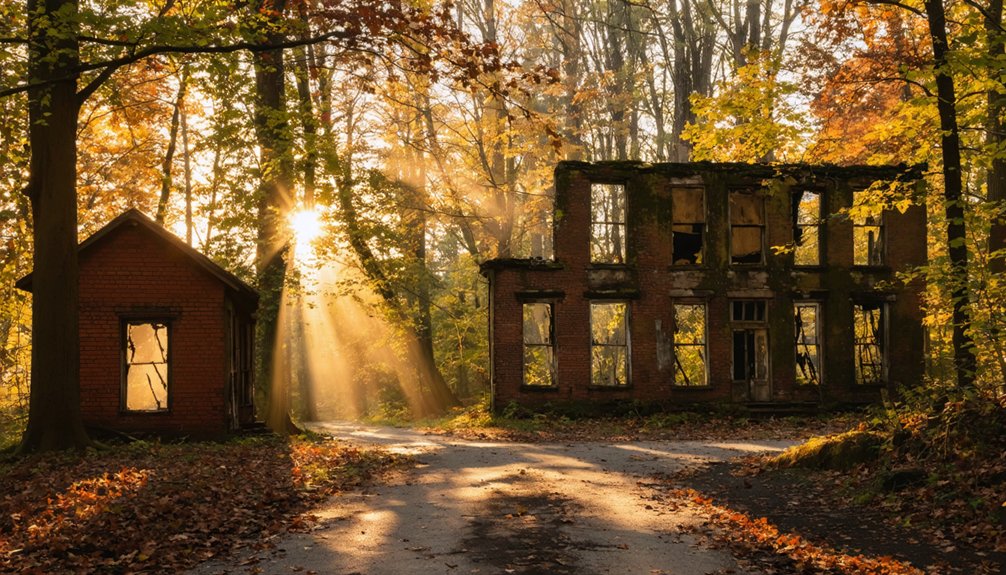
Summer’s your best bet for exploring Stratford, as dry trails and longer daylight hours make it easier to navigate the overgrown foundations and scattered remnants hiding beneath the brush.
Fall transforms the surrounding Missaukee County landscape into a stunning backdrop of color, adding a hauntingly beautiful atmosphere to your ghost town adventure.
Winter, however, buries the site under snow and ice, making the already-difficult terrain nearly impossible to explore safely.
Summer Offers Clear Trails
When’s the best time to visit Stratford? Summer delivers the clearest trails and most rewarding exploration. You’ll navigate the overgrown streets and scattered foundations with greater ease, making historical preservation efforts feel more personal as you uncover what nature’s reclaimed.
Summer transforms this ghost town into a living wilderness experience:
- Wildlife observation peaks during warmer months, with deer, birds, and small mammals actively moving through former building sites
- Longer daylight hours give you maximum time to locate foundation remnants hidden beneath dense vegetation
- Dry trail conditions make the quarter-mile walk from the ORV trailhead parking lot far more manageable
You’ll wander freely through what was once a thriving 1,200-person lumber town, connecting with Michigan’s raw, forgotten history on your own terms.
Fall Foliage Enhances Exploration
Fall edges out summer as the single best time to visit Stratford, and the reason is simple: Michigan’s hardwoods ignite the landscape in amber, crimson, and gold, turning an already atmospheric ghost town into something genuinely breathtaking.
The cooler temperatures make pushing through dense brush far more manageable, and the thinning undergrowth actually improves your chances of spotting scattered foundations hidden beneath decades of overgrowth.
Historical preservation becomes personal here — you’re witnessing nature’s quiet reclamation of a town that vanished almost overnight.
Wildlife encounters are frequent in autumn, with deer and migratory birds moving actively through the site.
The crowds that occasionally wander summer trails disappear entirely, leaving you with nothing but rustling leaves, eerie silence, and the raw freedom of exploring Michigan’s forgotten past completely on your own terms.
Winter Limits Site Access
Winter transforms Stratford into something genuinely hostile to exploration. Snow buries scattered foundations, ice glazes overgrown paths, and bitter Michigan cold makes bushwhacking through dense vegetation genuinely dangerous.
Historical preservation becomes nearly impossible when you can’t safely navigate the site.
That said, winter does offer unexpected wildlife photography opportunities — deer tracks cross former streets, and bare trees reveal structural outlines hidden by summer growth.
Before you venture out, consider these winter realities:
- Snowdrifts can completely conceal foundation remnants and signage along N. 13 Mile Road
- Road conditions in Missaukee County’s Norwich Township turn unpredictable and potentially impassable
- Daylight hours shrink dramatically, cutting your exploration window dangerously short
Save Stratford for warmer months — the ghost town rewards patience.
What to Bring to Stratford Ghost Town

Since Stratford has been completely reclaimed by nature, you’ll want to come prepared before venturing into the overgrown site. Thick brush, uneven terrain, and dense vegetation make sturdy boots and long pants essential. Bring bug spray, especially during warmer months when insects thrive in the tall weeds surrounding former building foundations.
A camera helps document any historical artifacts you discover, though preservation challenges mean fragile remnants deserve respect rather than disturbance. Pack water, a compass, and a printed map since the ghost town doesn’t appear on digital search engines.
Wear layers if you’re visiting during transitional seasons when temperatures shift unexpectedly. A walking stick helps navigate tangled undergrowth where streets and the old sawmill once stood, giving you the freedom to explore confidently.
Other Abandoned Towns Near Stratford Worth Seeing
If you’re already making the trek to Stratford, Michigan’s ghost town landscape rewards those who plan ahead and explore beyond a single site. The region surrounding Missaukee County holds several other abandoned settlements where you can walk streets that once hummed with life, discover crumbling foundations, and piece together Michigan’s lost lumber era.
Mapping out a multi-town adventure lets you experience the full story of boom-and-bust communities that vanished almost as quickly as they appeared.
Nearby Ghost Towns Explored
While you’re already making the trek out to Stratford, Michigan’s ghost town trail doesn’t have to end there. Missaukee County harbors several forgotten settlements waiting for your exploration, each offering unique historical preservation opportunities and stunning wildlife observation along the way.
- Vogel Center – A quiet remnant community where old foundations peek through thick vegetation, rewarding curious explorers willing to look closely.
- Moorestown – Another lumber-era casualty sitting in Norwich Township, where nature has aggressively reclaimed what workers once built.
- Falmouth – A partially surviving settlement featuring aging structures that whisper stories of Michigan’s booming timber economy.
Pack your camera, wear durable boots, and embrace the freedom of wandering through Michigan’s forgotten corridors. These sites collectively paint a vivid portrait of an industry that shaped and ultimately abandoned an entire region.
Abandoned Sites Worth Visiting
Beyond Stratford, three abandoned sites within driving distance deserve a spot on your ghost town itinerary. Each location offers a raw, unfiltered glimpse into Michigan’s forgotten past, though tourist safety remains your responsibility when exploring unstable structures and overgrown terrain.
Fife Lake once bustled as a railroad hub before economic decline hollowed it out.
Deward, another depleted lumber town in Kalkaska County, features scattered foundations worth photographing.
Vogel Center in Missaukee County quietly faded after its agricultural economy collapsed.
Historical preservation efforts vary across these sites — some receive minimal signage while others remain completely unmarked.
Bring sturdy boots, navigation tools, and a detailed county map. These locations reward curious, self-reliant explorers willing to push through brush and reclaim stories that mainstream tourism ignores entirely.
Planning Multi-Town Adventures
Why stop at Stratford when northern Michigan’s ghost town circuit rewards explorers willing to push a little further down rural roads? The region holds several forgotten communities where urban decay has quietly swallowed entire histories, and historical preservation efforts remain minimal at best.
Pair your Stratford visit with these nearby abandoned stops:
- Deward – A Kalkaska County lumber town that vanished around 1912, leaving scattered foundations along the Boardman River.
- Pierson – A small Clare County settlement where crumbling structures hint at a once-active community.
- Falmouth – A Missaukee County village offering weathered remnants and quiet roads perfect for independent exploration.
Each location rewards curiosity differently. Pack your maps, fuel your tank, and let northern Michigan’s forgotten landscapes tell their own unfiltered stories.
What to Know Before Exploring Any Abandoned Michigan Site
Before you venture out to Stratford or any other abandoned Michigan site, you’ll want to brush up on a few key guidelines that keep both you and the land protected.
Michigan’s ghost towns sit on state-owned land, meaning you’re free to explore but not to take anything. Historical artifacts, no matter how weathered or forgotten they seem, aren’t yours to pocket. Preservation efforts depend on visitors like you leaving everything exactly as you found it.
Leave everything exactly as you found it — Michigan’s ghost towns belong to history, not your pockets.
Stick to marked trails when they exist, and watch your step around hidden foundations buried beneath thick brush and weeds. Let someone know your plans before heading out, since many of these sites lack cell service.
Respect the land, and it’ll reward you with an unforgettable experience.
Where to Stop Near Stratford on Your Way Back
After you’ve finished picking your way through Stratford’s overgrown foundations and soaked in the quiet strangeness of a town that vanished almost overnight, the drive back gives you a solid chance to explore what this part of Michigan still has to offer.
- Higgins Lake State Park – Just five miles east, it delivers stunning clear water and wildlife observation opportunities along wooded shoreline trails.
- Missaukee County Historical Society – Stop in for genuine historical preservation efforts that document the lumber era Stratford represents.
- Mason Tract Pathway – A quiet Au Sable River corridor perfect for anyone craving solitude, wildlife sightings, and unfiltered northern Michigan wilderness.
You’ve already walked ground most people don’t know exists. These stops reward that same curious, independent spirit that sent you searching for Stratford in the first place.
Frequently Asked Questions
Was Stratford, Michigan Ever Considered for Historical Landmark Status?
No, Stratford never received historical landmark status. When Michigan’s state officials purchased it in 1937, they ignored its significance, demolished everything, and let urban decay swallow it—leaving ghost town preservation entirely up to your imagination.
Did Any Former Stratford Residents Ever Return to Visit the Site?
Like echoes fading into silence, no documented accounts confirm former residents returned. You’ll find only haunted legends and local ghost stories whispering through overgrown foundations, where memories drift like shadows across Stratford’s forgotten, reclaimed landscape.
Were Any Artifacts From Stratford Preserved in Michigan Museums?
Unfortunately, you won’t find Stratford’s artifacts preservation efforts reflected in Michigan museum collections. The state demolished everything after purchasing the site in 1937, leaving you with only overgrown foundations, scattered memories, and a simple roadside marker.
How Many Lumber Companies Operated in Michigan Alongside the Thayer Company?
Oh, the lumber industry’s crowded dance floor! The knowledge only mentions the Manistee Lumber Company alongside Thayer. You’d need deeper historical significance research to uncover exactly how many other companies operated throughout Michigan.
Did Stratford Have Any Schools or Churches During Its Peak Years?
The knowledge doesn’t confirm schools or churches in Stratford’s peak years. You’ll find ghost town preservation records highlight its hotel, saloons, and sawmill as historically significant structures, leaving educational and religious institutions undocumented in this fascinating Michigan lumber community.
References
- https://99wfmk.com/stratford-ghost-town-missaukee-county/
- https://lostinmichigan.net/the-ghost-town-of-stratford/
- https://99wfmk.com/stratford-michigan-ghost-town-gone/
- https://www.thepernateam.com/blog/singapore-michigan-the-ghost-town-buried-beneath-lake-michigans-sand/
- https://www.geocaching.com/geocache/GC3MKX1
- https://en.wikipedia.org/wiki/Norwich_Township
- https://en.wikipedia.org/wiki/List_of_ghost_towns_in_Michigan