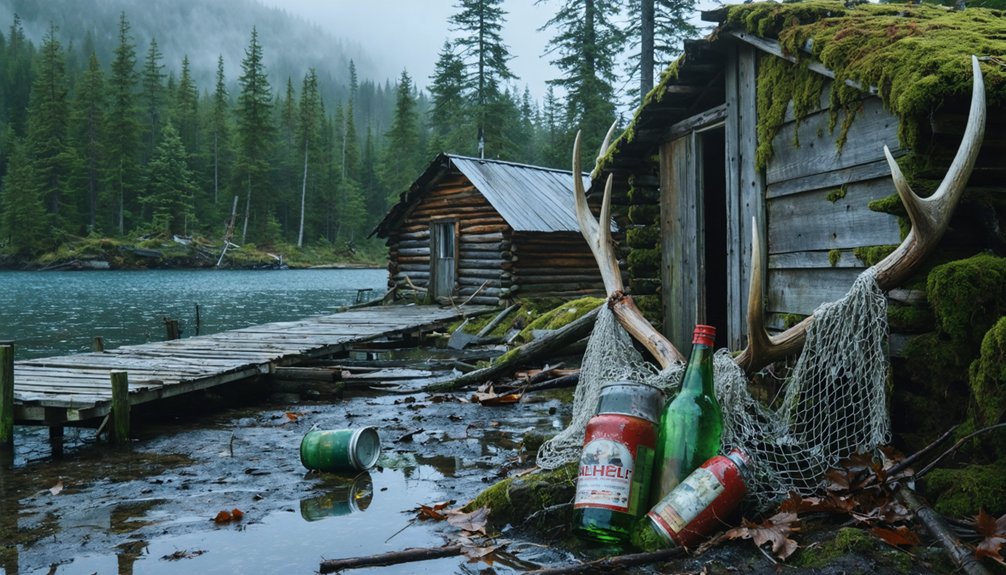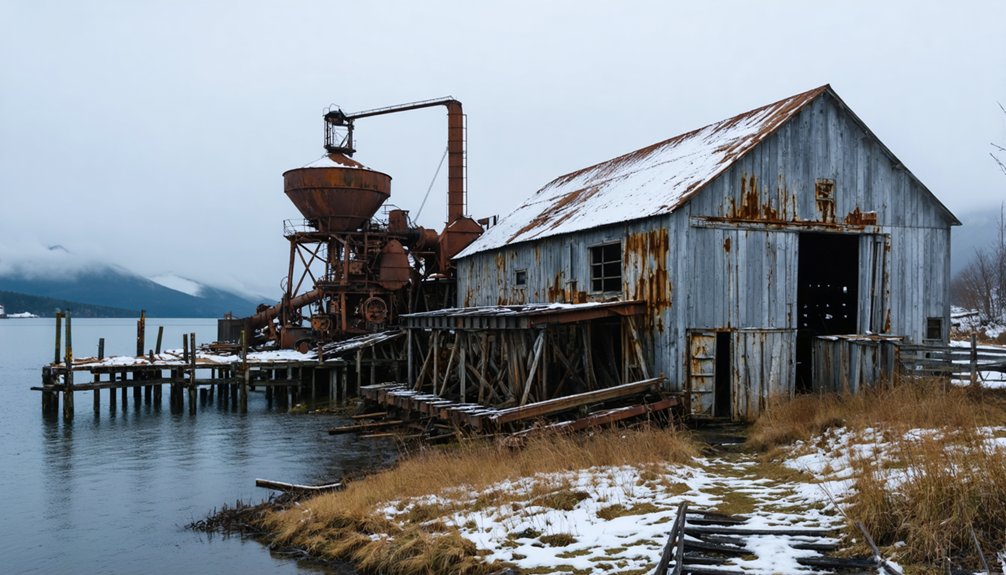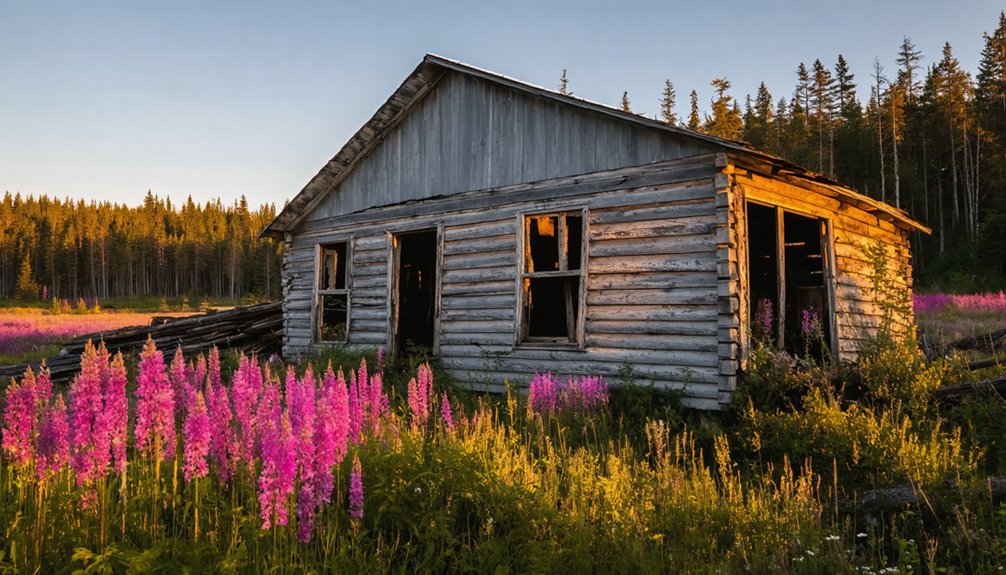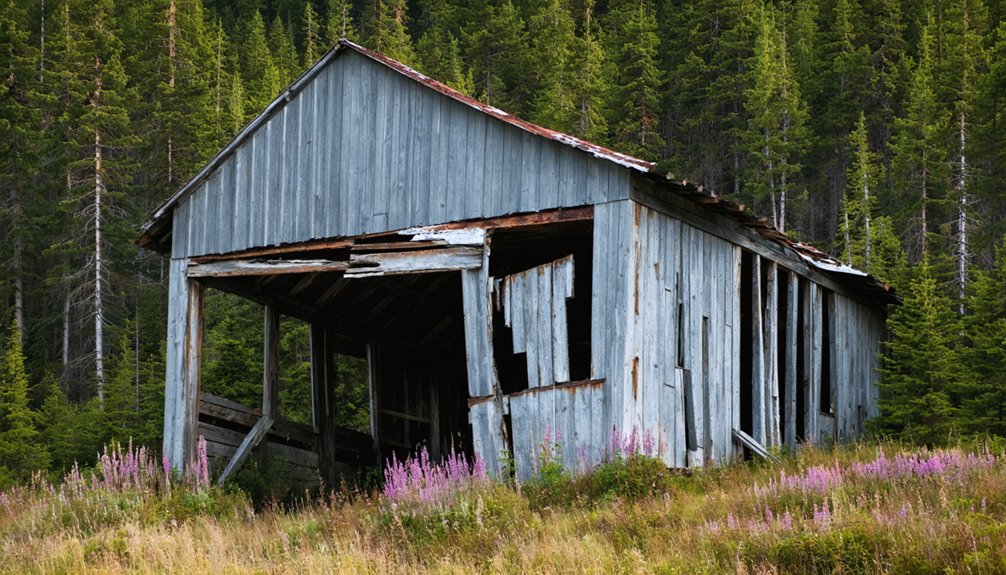
Planning a ghost town road trip to Sulzer, Alaska won’t work the way you’d expect—there are no roads connecting this remote settlement on Prince of Wales Island. Instead, you’ll charter a boat from Ketchikan, hop on an Alaska Marine Highway ferry, or fly into Klawock or Craig and transfer by water. Your best window is June through August, when long daylight hours and calmer weather make exploration possible. There’s far more to this story than you’d imagine.
Key Takeaways
- Sulzer, Alaska, is inaccessible by road; reaching it requires chartering a boat or plane from Ketchikan or nearby airports.
- The best time to visit is June through August, offering favorable weather, long daylight hours, and optimal site visibility.
- Sulzer was a thriving copper mining town founded in 1897 but was abandoned after copper prices collapsed following World War I.
- The site features scattered artifacts, structural foundations, and an overgrown tramway corridor offering glimpses into Alaska’s industrial mining heritage.
- Pack survival gear, waterproof clothing, navigation tools, and satellite communication devices, as Sulzer is extremely remote and weather is unpredictable.
The Ghost Town No One Can Drive To: Sulzer, Alaska
Unlike most ghost towns you can stumble upon during a casual road trip, Sulzer, Alaska demands a serious commitment before you even set foot on its grounds. There are no roads connecting this remote settlement on Prince of Wales Island — you’ll need a boat or plane just to reach it.
Tucked within Tongass National Forest along Hetta Inlet’s northern shore, Sulzer sits at coordinates 55°17′20″N, 132°37′15″W, roughly 115 feet above sea level.
Its mining heritage traces back to an 1897 copper discovery that eventually spawned one of Alaska’s most productive operations. Today, ghost town preservation efforts remain minimal, leaving only scattered remnants behind.
That raw, untouched isolation is precisely what makes Sulzer unforgettable for those craving genuine adventure beyond paved roads.
What Made Sulzer, Alaska a Boomtown in 1907
Once you make it to Sulzer, the silence hits hard — but a little over a century ago, this remote inlet was anything but quiet. In 1907, William Sulzer transformed Aaron Shellhouse’s 1897 copper discovery into the Jumbo Mine, and the Alaska Consolidated Mining and Smelting Company turned it into a full-scale operation.
The mining technology here was impressive — an 8,500-foot aerial tramway hauled 800-pound ore buckets straight down to Hetta Inlet, processing 400 tons of copper ore daily. That kind of output demanded serious community infrastructure: worker housing, waterfront storage facilities, and supply networks all took shape around the operation.
At its peak, Sulzer wasn’t just surviving — it was thriving as Southeast Alaska’s second-largest copper producer, pulling copper, silver, and gold from Jumbo Mountain.
How the Jumbo Mine Turned Copper Into a Community
When a mine produces 400 tons of copper ore daily, it doesn’t just extract metal — it builds a world. The Jumbo Mine‘s impressive mining technology made that world possible.
An 8,500-foot aerial tramway carried 800-pound ore buckets down Jumbo Mountain directly to Hetta Inlet, connecting mountain to waterfront with industrial precision.
An 8,500-foot tramway. Eight-hundred-pound buckets. Mountain to inlet — copper moving with mechanical certainty.
That infrastructure demanded workers, and workers demanded homes, stores, and streets. Sulzer answered. Families settled, routines formed, and community legends grew around the rhythms of copper extraction.
You’d have heard the tramway humming from nearly anywhere in town.
But this world belonged entirely to copper prices. When World War I ended and markets collapsed in 1918, that humming stopped. The community the mine built, it ultimately dismantled just as quickly.
400 Tons a Day: Sulzer’s Mining Operation at Its Peak
Imagine standing at the base of Jumbo Mountain in 1910, watching 800-pound buckets of copper ore glide overhead along 8,500 feet of aerial tramway, descending steadily toward Hetta Inlet below. You’re witnessing mining techniques that pushed Alaska’s industrial frontier forward.
The Jumbo Mine churned out 400 tons of high-grade copper ore daily at its peak, making it Southeast Alaska’s second-largest copper producer.
That scale of extraction left a real environmental impact on the surrounding Tongass National Forest landscape. The operation yielded copper, silver, and gold, fueling a community of families, workers, and commerce.
You can almost hear the mechanical hum still echoing through the trees. Today, very little remains visible, but the mountain itself silently testifies to what raw ambition once accomplished here.
Why the Jumbo Mine Shut Down and Sulzer Emptied Overnight
When World War I ended in 1918, copper prices crashed hard, and the Jumbo Mine shut down almost immediately, leaving Sulzer without a heartbeat.
You’d have watched families pack up and flee primarily to Ketchikan, emptying streets that had once buzzed with 400 tons of daily ore production.
The town tried reinventing itself as a fishing and cannery site, but that effort eventually collapsed too, sealing Sulzer’s fate as a ghost town.
Copper Prices Collapsed Suddenly
After World War I ended in 1918, copper prices collapsed almost overnight, and the Jumbo Mine’s fate was sealed. The wartime demand that had kept Sulzer thriving simply vanished, pulling the economic foundation out from under the entire settlement.
You can imagine the shock — one moment, 400 tons of high-grade ore moved daily through that 8,500-foot tramway, and the next, silence.
This economic collapse mirrors a pattern you’ll recognize throughout Alaska’s mining history: boom, then bust, with little warning. Families packed quickly and relocated mostly to Ketchikan, leaving behind everything they’d built.
The town briefly reinvented itself as a cannery and fishing site, but even that couldn’t sustain it. Sulzer became another casualty of commodity markets deciding the fate of remote communities.
Families Fled to Ketchikan
The Jumbo Mine’s closure in 1918 didn’t give Sulzer’s families much of a choice — copper prices had cratered, and the paychecks stopped. Workers packed their belongings and headed primarily to Ketchikan, leaving behind the mining heritage they’d built over a decade. Streets that once buzzed with activity fell silent almost overnight.
When you explore ghost town stories like Sulzer’s, you realize how quickly a resource-dependent community can unravel. Families didn’t linger — they followed opportunity, just as they’d when copper first drew them north.
Ketchikan offered port access, fishing industry jobs, and a functioning economy. Sulzer offered neither. The town briefly pivoted to cannery operations, but even that couldn’t sustain it. Eventually, the last residents walked away for good.
Fishing Failed Sulzer Too
Even after copper abandoned Sulzer, residents attempted one last economic lifeline — fishing and cannery operations. You can imagine the determination it took to rebuild after watching a thriving mining hub collapse overnight.
Ghost town archaeology reveals that cannery infrastructure replaced mine equipment along Hetta Inlet’s northern shore, showing how communities adapt under pressure.
But the fish didn’t save them either. Market conditions and geographic isolation made sustainable cannery operations nearly impossible on remote Prince of Wales Island. Without road access, every supply run demanded a boat or plane.
Eventually, even fishing failed, and Sulzer emptied completely. The mining history embedded in this landscape tells you something powerful — resource-dependent towns live and die by commodity cycles.
Sulzer’s story is Alaska’s boom-and-bust cycle written in abandoned timber and silence.
What Remains at the Sulzer Ghost Town Site Today
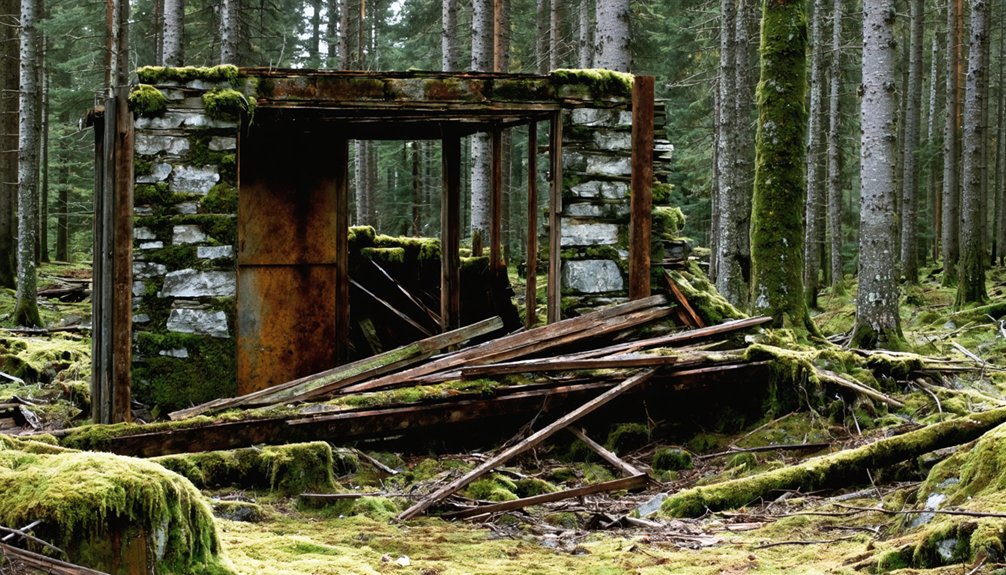
Once a bustling copper mining headquarters, Sulzer has left very few physical traces for modern visitors to discover. The boom-and-bust cycle stripped this remote Prince of Wales Island site nearly clean, but you’ll still find traces of its remarkable past.
Here’s what you can expect to encounter:
- Historical artifacts — Scattered remnants hint at the town’s copper mining legacy, including structural foundations and equipment fragments.
- Environmental impact — The land still bears subtle scars from industrial-scale mining operations, including the former 8,500-foot aerial tramway corridor.
- Wilderness reclamation — Tongass National Forest has dramatically reclaimed the settlement, blanketing former structures beneath dense Southeast Alaskan vegetation.
You’ll need a boat or plane to reach this hauntingly beautiful, nearly erased chapter of Alaska’s mining history.
How to Reach Sulzer, Alaska by Boat or Plane
Since Sulzer sits on Prince of Wales Island in Southeast Alaska, you’ll need either a boat or a plane to get there — no roads connect this remote ghost town to the mainland.
If you’re traveling by water, you can navigate Hetta Inlet directly to the site’s northern shore, giving you an up-close approach to the same waterfront where copper ore once arrived by tramway.
Alternatively, you can fly into one of the nearby communities on Prince of Wales Island and arrange local boat transport to reach the Sulzer site within Tongass National Forest.
Boat Access Routes
Because Sulzer sits on Prince of Wales Island in Southeast Alaska, you’ll need to arrive by boat or plane—there’s no road connecting the island to the mainland.
Boat access gives you the most freedom to explore at your own pace, letting you soak in Southeast Alaska’s dramatic coastal scenery along the way.
Here are three practical boat access options:
- Charter a private vessel from Ketchikan, the closest major hub, roughly 40 nautical miles away.
- Use the Alaska Marine Highway System, which services Prince of Wales Island with regular ferry runs.
- Rent a skiff locally for shorter, flexible trips into Hetta Inlet.
Arriving by water also maximizes your chances of wildlife encounters and spotting historical artifacts along the shoreline before you even step ashore.
Plane Travel Options
Flying into the area cuts your travel time dramatically, making it the preferred choice for visitors with tight schedules or those who’d rather skip the open-water crossing.
Small regional carriers connect Ketchikan to Prince of Wales Island, landing at Klawock or Craig airports. From there, you’ll still need a boat to reach Sulzer’s remote shoreline on Hetta Inlet.
Private charters give you the most flexibility, letting you set your own schedule and avoid commercial airline safety constraints that limit remote landings.
Float planes offer the most direct option, touching down closer to the site itself.
Book your charter early since demand runs high during summer months. Confirm your pilot’s familiarity with Southeast Alaska’s unpredictable weather before committing to any departure date.
The Best Time of Year to Visit Sulzer
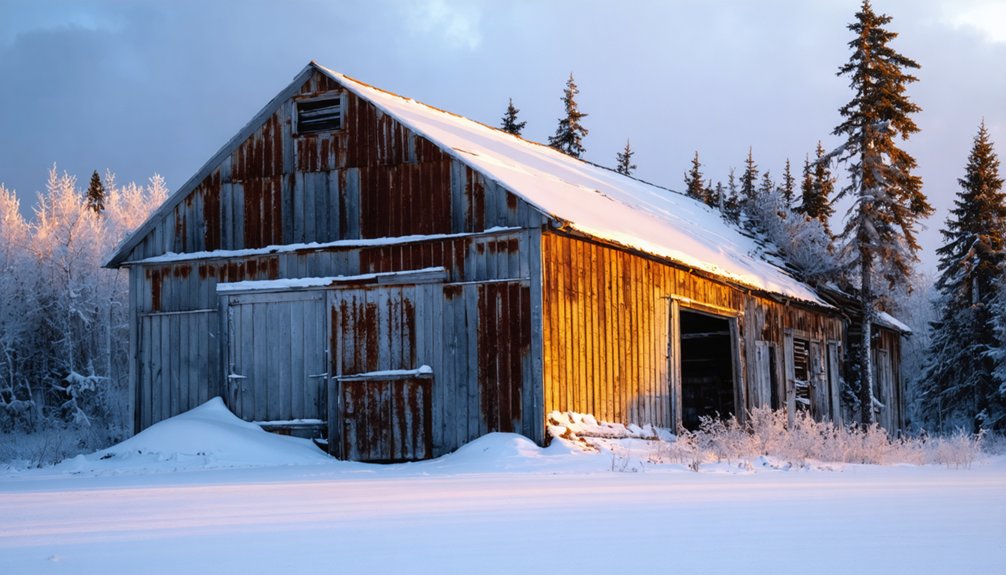
Although Sulzer’s remote location in Southeast Alaska means it’s accessible year-round by boat or plane, summer months from June through August offer the most favorable conditions for exploration. You’ll navigate the site’s remnants of town architecture and mining technology with greater ease when daylight stretches past 17 hours.
Plan your visit around these seasonal advantages:
- June–August: Long daylight hours maximize your exploration time, revealing structural remnants and tramway foundations clearly.
- May and September: Shoulder seasons offer fewer visitors and mild temperatures, though rain increases significantly.
- Winter: Avoid December through February unless you’re experienced with extreme conditions, as temperatures can plunge to -40°F in remote Southeast Alaska camps.
Summer gives you the freedom to thoroughly document Sulzer’s fascinating boom-and-bust legacy without weather cutting your adventure short.
What to Pack for a Remote Sulzer Ghost Town Expedition
Packing for a remote expedition to Sulzer means you’ll need essential survival gear like a first aid kit, emergency shelter, fire-starting tools, and enough food and water for unexpected delays.
Since the island has no infrastructure, you’ll want reliable navigation tools—a GPS device, topographic maps, and a satellite communicator for emergencies—because cell service won’t reach you there.
Layer your clothing strategically, choosing moisture-wicking base layers, insulating mid-layers, and a waterproof outer shell to handle Southeast Alaska’s unpredictable weather shifts.
Essential Survival Gear
Because Sulzer sits in a remote corner of Tongass National Forest with no roads, no services, and no inhabitants, you’ll need to pack as if civilization doesn’t exist—because out there, it doesn’t.
You’re exploring historical artifacts and crumbling mining equipment in true wilderness, so preparation isn’t optional—it’s survival.
- Navigation tools – Carry a waterproof topographic map and compass. GPS batteries die; paper doesn’t.
- Emergency shelter – Pack a lightweight bivy sack or emergency tarp. Southeast Alaska’s weather shifts violently without warning.
- First aid and signaling kit – Include a whistle, mirror, and fully stocked medical kit. The nearest help requires a boat or plane ride away.
Pack smart, move confidently, and respect the island’s unforgiving terrain.
Navigation And Communication Tools
Survival gear gets you through the wilderness, but knowing where you are—and being able to call for help—keeps you alive in it. Prince of Wales Island’s dense Tongass National Forest swallows cell signals completely, so don’t count on your smartphone.
Bring dedicated satellite navigation tools—a GPS device with downloaded topographic maps of the island’s rugged terrain gives you reliable positioning when trails disappear. Pair that with satellite communication devices like a Garmin inReach or SPOT tracker.
These tools let you send emergency signals and two-way messages from anywhere on the island. File a detailed trip plan with someone onshore before you depart. Knowing your exact coordinates matters when the nearest help requires a boat or plane to reach you.
Weather-Appropriate Clothing Layers
Weather in Southeast Alaska doesn’t negotiate, and the Tongass National Forest surrounding Sulzer will test every layer you bring. Rain arrives without warning, temperatures drop fast, and wet brush soaks clothing instantly.
Pack strategically using this three-layer system:
- Moisture-wicking base layer — keeps sweat away from your skin during hikes toward historical artifacts scattered across the overgrown settlement.
- Insulating mid-layer — a fleece or down jacket maintains warmth during slow wildlife observation moments when you’re standing still watching eagles or deer.
- Waterproof shell jacket and pants — blocks rain and wind completely, protecting you during extended exploration.
Waterproof boots with ankle support are non-negotiable. Sulzer’s terrain combines mud, uneven ground, and dense vegetation. You’re buying yourself freedom to explore longer by dressing correctly.
Other Abandoned Mining Sites Near Sulzer on Prince of Wales Island
Sulzer wasn’t the only mining settlement that rose and fell on Prince of Wales Island during Alaska’s copper rush. During the 1906 peak, ten regional mines collectively produced $920,000, leaving behind scattered remnants of historical architecture and mining technology across the island’s rugged terrain.
You’ll find traces of tramway systems, collapsed structures, and ore storage facilities if you explore beyond Sulzer’s boundaries. These sites tell connected stories of ambition, extraction, and abandonment that shaped Southeast Alaska’s identity.
Each location reveals how quickly communities could assemble and dissolve around commodity prices. Accessing these remote spots requires a boat or plane, but the freedom of discovering forgotten corners of Alaska’s industrial past makes the effort genuinely worthwhile for curious, independent travelers.
Frequently Asked Questions
Is Camping Permitted Overnight at the Sulzer Ghost Town Site?
Camping regulations and overnight permits aren’t clearly confirmed for Sulzer’s secluded site. You’ll want to contact Tongass National Forest authorities before you venture out, since you can only access this remote, remarkable ruin by boat or plane.
Are Guided Tours Available for Visiting Sulzer on Prince of Wales Island?
No official guided tours exist for Sulzer, but you’ll discover the ghost town’s historical significance independently. Explore its ghost town preservation remnants freely by arranging your own boat or plane access to Prince of Wales Island’s remote wilderness.
Can Children Safely Explore the Abandoned Sulzer Ghost Town Area?
You’ll want to exercise caution with child safety around Sulzer’s abandoned structures, as they’re unpredictable and potentially dangerous. Supervise kids closely, embrace the adventure responsibly, and you’ll create unforgettable memories exploring this remote Alaskan ghost town together.
Is Photography Restricted Within the Tongass National Forest Near Sulzer?
You don’t need photography permits for personal use in Tongass National Forest near Sulzer! However, you’ll want to respect wildlife regulations to protect the ecosystem while capturing stunning shots of this haunting ghost town.
Did Sulzer Ever Have a School or Church During Its Peak?
The historical records don’t confirm a school or church, but you’ll find community remnants that hint at Sulzer’s vibrant past. Historical buildings once supported hundreds of miners, suggesting a well-developed community beyond just copper production.
References
- https://en.wikipedia.org/wiki/Sulzer
- https://getlostinamerica.com/alaska-ghost-towns/
- https://live.laborstats.alaska.gov/sites/default/files/trends/may24art2_0.pdf
- https://www.youtube.com/watch?v=GNjMpM6b58o
- https://www.reddit.com/r/Cryptozoology/comments/ztewsq/the_true_and_frightening_story_of_portlock_alaska/
- https://alaskamininghalloffame.org/inductees/sulzer.php
- https://kids.kiddle.co/Sulzer
- https://thealaskafrontier.com/ghost-towns-in-alaska/