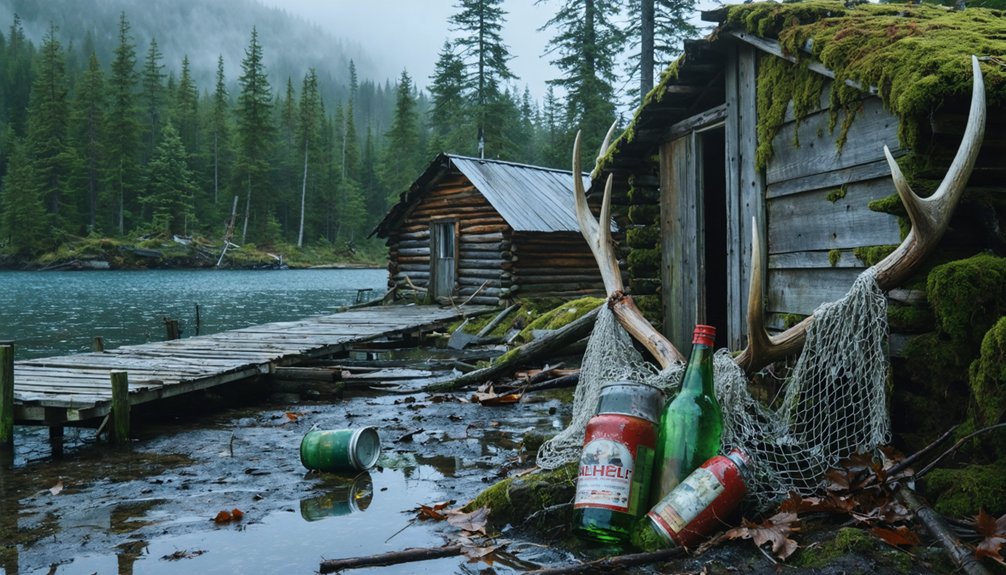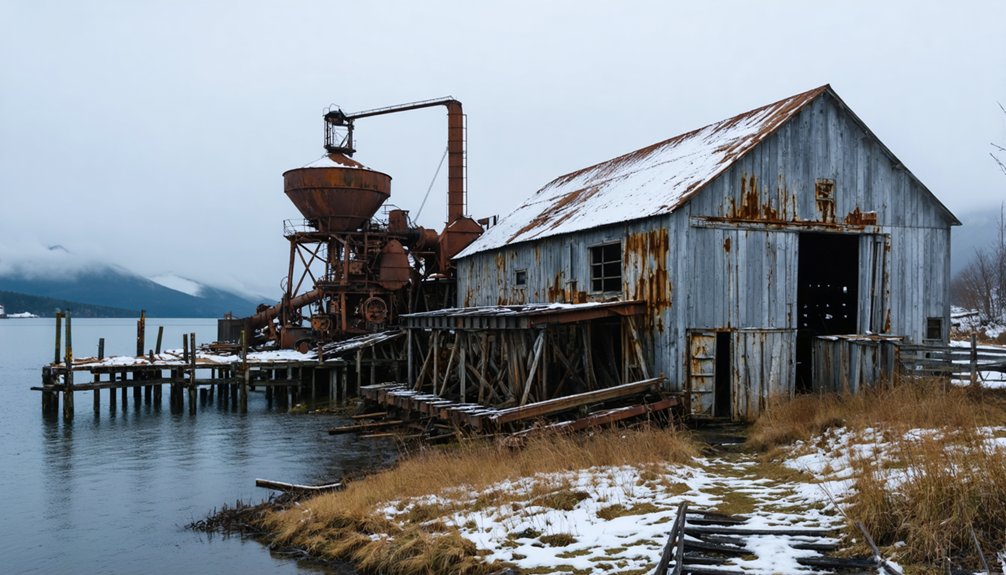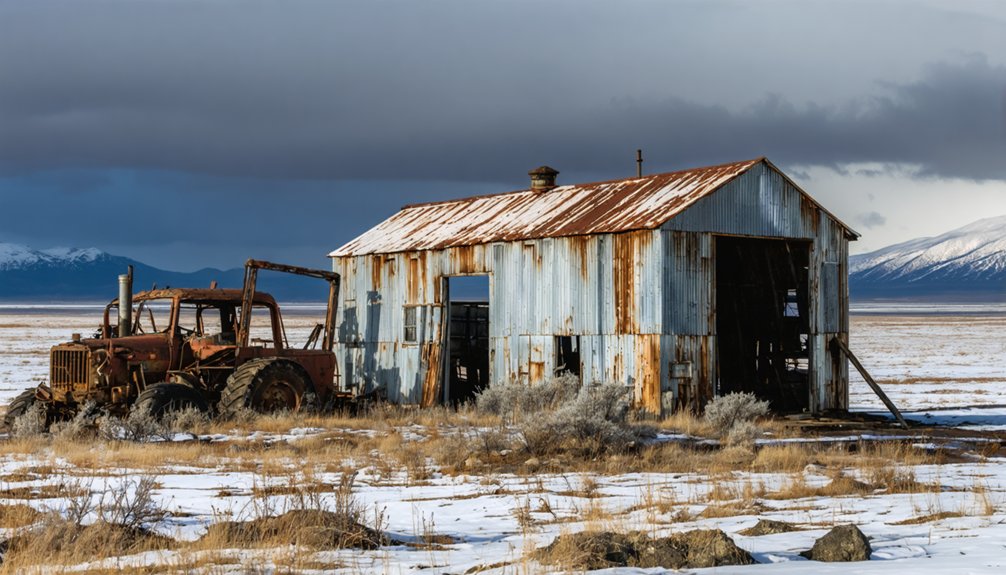
Planning a ghost town road trip to Tin City, Alaska means venturing 90 to 103 miles northwest of Nome to a windswept stretch of Bering Sea coastline where century-old tin mining ruins meet Cold War radar towers. You’ll travel rugged, unpaved terrain across the Seward Peninsula, so late June through August is your best window for passable roads and favorable weather. It’s remote, layered with history, and worth every mile — and there’s far more to uncover ahead.
Key Takeaways
- Tin City sits on Alaska’s Seward Peninsula, roughly 90-103 miles northwest of Nome, accessible only via charter transport and rugged dirt roads.
- Fly into Nome first, then arrange specialized charter transport, as no paved roads lead directly to this largely abandoned remote site.
- Visit between late June and August when dirt roads from nearby Wales become passable and weather conditions are most favorable.
- Pack layered cold-weather gear, navigation tools, offline maps, binoculars, and safety supplies, as the remote location demands complete self-sufficiency.
- The site preserves layered history, featuring 1902 mining-era ruins alongside Cold War NORAD radar installations still maintained by civilian contractors today.
Where Is Tin City, Alaska?
Tucked along the Bering Sea coast at the mouth of Cape Creek, Tin City sits on Alaska’s remote Seward Peninsula, roughly 90 to 103 miles northwest of Nome and just 5 miles southeast of Cape Prince of Wales.
You’ll find it near Cape Mountain, a landmark central to both the area’s mining past and its Cold War radar history.
The surrounding tundra and coastline offer raw, unfiltered wilderness, where wildlife encounters with arctic foxes, migratory birds, and marine mammals are genuinely possible.
Local legends tied to the old mining rush still echo through the landscape, adding a layer of mystery to your exploration.
The nearby community of Wales sits about 5 to 6 miles away, connected by a dirt road that serves as your primary access point.
Why Tin City Is Worth the Drive From Nome
When you make the roughly 90-mile drive northwest from Nome to Tin City, you’re chasing more than a ghost town — you’re stepping into a layered history that stretches from a tin mining rush in the early 1900s to a Cold War radar post that once watched for threats crossing the Bering Strait.
You’ll find the remains of that military legacy still standing at the Tin City LRRS, one of North America’s original NORAD early warning sites.
The reward for the rugged journey isn’t just history, though — the raw, windswept views of the Bering Strait from the Seward Peninsula coastline make the drive unforgettable on their own.
Remote History Awaits
Few ghost towns in America sit as far off the beaten path as Tin City, Alaska, yet the roughly 90-mile drive northwest from Nome rewards you with layers of history that stretch from a tin ore rush in 1902 to a Cold War radar station that once watched the Bering Strait for incoming threats.
Miners carved a working camp out of tundra by 1903, and by 1914 they’d pulled roughly 536 tons of metallic tin from Cape Mountain. Local legends about those early prospectors still drift through the coastal air.
The military later transformed the site into a critical NORAD early-warning post, adding another chapter to its story.
Along the way, wildlife encounters on the Seward Peninsula remind you that this land answers to no one but itself.
Cold War Radar Legacy
During the Cold War, Tin City earned a role far bigger than its ghost town reputation suggests—it became one of ten original radar surveillance sites built for the DEW Line and NORAD defense network, tasked with scanning the Bering Strait for Soviet threats just miles from Russian territory.
Today, civilian contractors maintain the Tin City LRRS, and you can still feel the weight of that history standing near the installation. Between spotting historical artifacts scattered across the tundra and catching wildlife viewing opportunities along the Bering Sea coastline, you’ll find the site rewards curious, independent travelers.
A dirt road connects nearby Wales to the radar facility, making access possible if you’re prepared for remote, unforgiving terrain and Alaska’s notorious coastal weather.
Bering Strait Scenic Views
Beyond the radar towers and Cold War history, Tin City rewards you with something simpler but just as striking—raw, unobstructed views of the Bering Strait, where Alaska and Russia sit roughly 55 miles apart across open water. Standing on this remote Seward Peninsula coastline, you’ll feel the full weight of that distance and isolation.
The strait also delivers remarkable wildlife encounters. Watch for migrating seabirds, marine mammals, and passing walrus near the shoreline.
Local legends tie Cape Mountain to Indigenous stories stretching back generations, adding cultural depth to what you’re seeing.
You’re not just looking at water—you’re standing at a geographic crossroads between two continents. That perspective alone makes the long drive northwest from Nome entirely worth the effort.
How to Get to Tin City From Nome?
Getting to Tin City from Nome isn’t a simple drive — it’s a remote expedition spanning roughly 90 to 103 miles northwest across the Seward Peninsula’s rugged tundra terrain.
Forget urban development and modern amenities; this journey demands serious preparation and flexibility.
No paved road connects Nome directly to Tin City, so you’ll typically fly into Nome first, then arrange charter flights or specialized transport.
Some travelers access the site via Wales, a small community roughly 5.5 to 6 miles away, connected to Tin City LRRS by a dirt road.
The Tin City LRRS Airport primarily serves radar installation personnel, so civilian access remains limited.
Plan your logistics carefully, secure proper permissions where needed, and respect the extreme remoteness that makes this ghost town road trip genuinely unforgettable.
What’s Left of Tin City’s Old Mining Town?
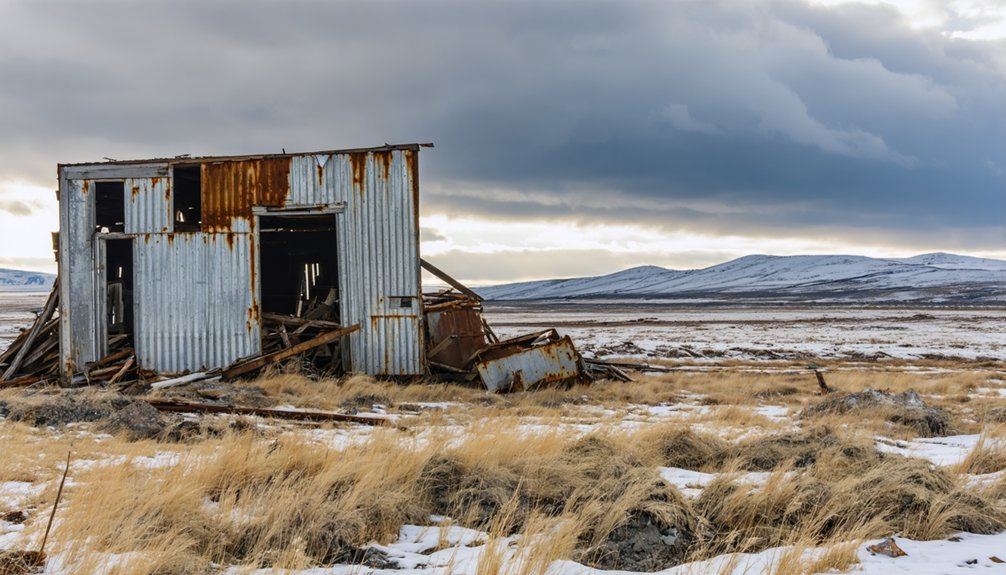
When you arrive at Tin City, you’ll find a landscape where scattered structures still break the tundra skyline, silent reminders of the mining camp that sprang up here in 1903.
The boom didn’t last long, and by 1907 only a few widely scattered houses and two operating companies remained, so what you’ll see today reflects that rapid decline.
You can still spot mining-era remnants across the site, giving you a raw, unfiltered look at what Alaska’s early tin rush actually left behind.
Scattered Structures Still Standing
Though the mining boom that built Tin City faded fast, a few scattered structures still dot the tundra, offering ghostly reminders of the settlement that once bustled here in the early 1900s. Abandoned structures and historical artifacts speak volumes about the hardships early miners faced.
Here’s what you’ll likely encounter:
- Weathered building remnants from the 1903 mining camp era
- Rusted equipment fragments left behind after operations ceased
- Isolated foundations scattered across the coastal tundra
- Cold War-era installations contrasting sharply with the older mining ruins
You’re standing where tin ore discovery in 1902 sparked an entire community’s rise and fall. That freedom to explore raw, unfiltered history makes Tin City unlike any ghost town you’ll visit elsewhere.
Mining Era Remnants Remain
Beyond those scattered remnants lies a deeper story etched into the tundra itself — one tied directly to the mining rush that put Tin City on the map. When tin ore was discovered on Cape Mountain in July 1902, prospectors flooded in, establishing a full mining camp by 1903.
By 1914, operations had yielded roughly 536 tons of metallic tin — no small feat in such brutal terrain.
Today, you’ll find historical artifacts and mining relics scattered across the landscape, silent proof of that ambitious era. Rusted equipment, deteriorating structures, and remnants of old workings still mark the ground where two companies once competed for tin.
Walking through this remote stretch of the Seward Peninsula, you’re fundamentally stepping through an open-air museum that most travelers never get to experience.
What Is the Tin City Cold War Radar Station?
During the Cold War, Tin City transformed from a quiet mining ghost town into one of North America’s most strategically essential air defense outposts. Standing near historical artifacts from both eras, you’ll feel the weight of Cold War operations that once watched Soviet airspace across the Bering Strait.
Here’s what defined this remote radar station:
- Original purpose – One of ten initial radar surveillance sites built for NORAD’s early warning network
- Location advantage – Positioned near the Bering Strait, making it ideal for monitoring incoming threats
- Civilian shift – Eventually maintained by civilian contract staff rather than active military personnel
- Airport access – Tin City LRRS Airport still supports ongoing radar installation needs
This isolated outpost reminds you that freedom has always demanded vigilance.
When Should You Visit Tin City?
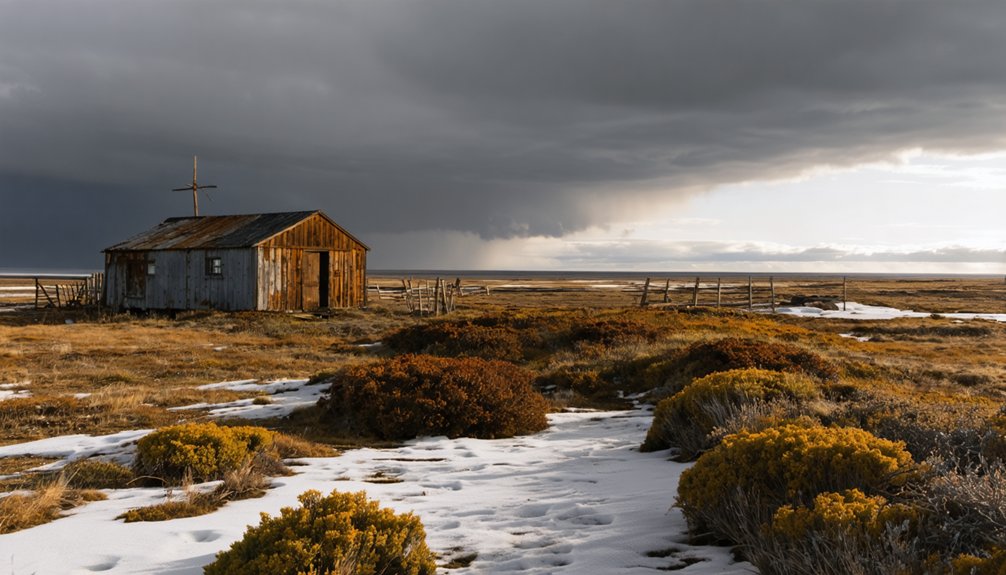
Timing your visit to Tin City matters more than almost anywhere else you’ll plan to explore, because this Bering Sea ghost town punishes the unprepared with brutal winters, icebound coastlines, and near-zero access for much of the year. Your best window runs from late June through August, when the tundra thaws, the dirt road from Wales becomes passable, and local wildlife — including migratory seabirds and marine mammals along the Bering Strait — rewards patient observers.
Precipitation peaks in August, so pack accordingly. If you’re eyeing Nome as your base, check seasonal festivals there during summer, which anchor your trip with cultural context before you push northwest toward Tin City.
Avoid early winter entirely; heavy snowfall and Arctic cold make the journey genuinely dangerous.
What to Pack for the Tin City Road Trip?
Once you’ve locked in your travel window, what you carry to Tin City will determine whether you actually enjoy the trip or simply endure it. The Bering Sea coast is unforgiving, and preparedness equals freedom out here.
Preparation isn’t optional in Tin City — what you pack determines whether you thrive or merely survive.
Pack smart with these four essentials:
- Layered cold-weather gear — tundra winds cut deep regardless of the season
- Binoculars and a camera — wildlife observation opportunities are exceptional along this remote coastline
- Navigation tools and offline maps — cell service doesn’t exist this far out
- Historical preservation mindset — carry nothing out except memories; disturbing remnants is both disrespectful and illegal
You’re visiting a raw, largely abandoned site where self-sufficiency isn’t optional. Pack light, pack right, and respect everything the land offers you.
What Else Is Near Tin City on the Seward Peninsula?
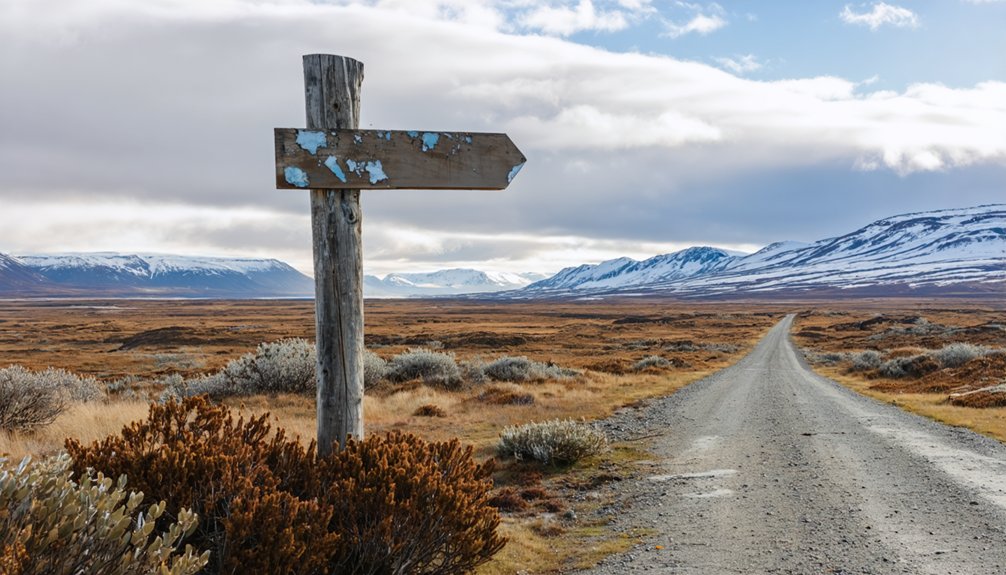
Tin City doesn’t exist in isolation — the surrounding Seward Peninsula packs serious historical and cultural weight into a stretch of coastline most travelers never see.
Just five miles northwest sits Wales, one of the oldest continuously inhabited Native villages in Alaska, carrying local legends stretching back thousands of years.
Cape Mountain looms nearby, where tin ore discovery in 1902 sparked the entire settlement.
The Bering Strait coastline offers raw wildlife encounters — expect walrus, arctic foxes, migratory seabirds, and occasional polar bears moving through the tundra terrain.
Nome, roughly 90 miles southeast, serves as your practical base for supplies, history museums, and deeper storytelling about Alaska’s gold rush era.
You’re not just visiting a ghost town; you’re standing inside a corridor of living, layered Alaskan history.
Frequently Asked Questions
Can Visitors Access the Tin City Radar Station Without Military Authorization?
You can’t access Tin City’s radar station without proper military access credentials. Security restrictions protect this active defense site, so you’ll want to respect these boundaries and explore the surrounding ghost town areas freely instead.
Is There Any Accommodation Available Near Tin City for Overnight Stays?
You won’t find local lodging near Tin City, but you’ve got rugged camping options on the surrounding tundra. Embrace the freedom of remote wilderness camping, though you’ll need to prepare thoroughly for Alaska’s harsh, unforgiving conditions.
Were Any Significant Tin Mining Artifacts Preserved From Tin City’s Early Days?
You won’t find many formally preserved mining artifacts from Tin City’s early days. Historical preservation efforts were minimal, leaving scattered remnants across the tundra. You’ll discover raw, untouched mining artifacts that echo the site’s fascinating 1902 tin discovery.
How Much Tin Ore Was Actually Produced During Tin City’s Mining Peak?
You’ll find that Tin City’s historical mining techniques yielded about 536 tons of metallic tin by 1914. These early tin ore extraction methods delivered impressive results, proving the site’s rich, adventurous mining legacy worth exploring today.
Is the Dirt Road From Wales to Tin City Passable Year-Round?
The dirt road isn’t guaranteed year-round—winter’s icy grip can shut it down fast. Your off-road adventure demands timing, as scenic detours vanish under snow. You’ll want to plan your Wales departure carefully.
References
- https://kids.kiddle.co/Tin_City
- https://en.wikipedia.org/wiki/Tin_City
- https://www.miningnewsnorth.com/story/2019/08/01/northern-mining-history/the-hope-of-a-nation-within-tin-city/5847.html
- https://coastview.org/2024/08/21/tin-city-seward-peninsula/
- https://alaska.guide/village/tin-city
- https://en.wikipedia.org/wiki/List_of_ghost_towns_in_Alaska
- https://www.nytimes.com/1962/02/25/archives/icebound-radar-post-in-alaska-scans-air-activities-in-siberia-tin.html
- https://thealaskafrontier.com/ghost-towns-in-alaska/
- http://wikimapia.org/2635909/Tin-City-Alaska
- https://apps.dtic.mil/sti/tr/pdf/ADA313494.pdf