Planning a ghost town road trip to Fact, Kansas means trading GPS reliability for county plat maps and a sense of adventure. This vanished railroad settlement left behind crumbling foundations, an overgrown cemetery, and skeletal grain elevators standing against open prairie skies. Pack a first aid kit, water, and a wide-angle lens. Nearby towns like Larned and Hoisington offer fuel, food, and stories. There’s far more to this forgotten corner of Kansas than you’d expect.
Key Takeaways
- Fact, Kansas, a ghost town that declined after railroad rerouting, offers crumbling foundations, a cemetery, and skeletal grain elevators to explore.
- GPS won’t recognize Fact; use county plat maps, gazetteers, or local archives for reliable navigation to this remote location.
- Pack a first aid kit, water, spare tire, emergency communication devices, and use a high-clearance vehicle for unmarked roads.
- Stop in nearby Larned or Hoisington for fuel, supplies, and oral histories that enrich your understanding of regional Kansas history.
- Extend your route to include ghost towns Garfield, Burdett, and Rozel for a fuller picture of Central Kansas’ decline.
What Fact, Kansas Is: and Why It Vanished
Tucked somewhere into the windswept expanse of Central Kansas, Fact is one of those places that’s easier to feel than to find. It likely emerged as a railroad settlement or post office town in the late 19th century, drawing settlers hungry for farmland and fresh starts.
Local legends suggest it once hummed with daily commerce and community life.
At its peak, Fact buzzed with merchants, neighbors, and the ordinary rhythms of a town fully alive.
Then the railroads rerouted. Agricultural mechanization replaced entire workforces. Families packed up and followed opportunity toward larger cities, leaving behind little more than historical artifacts, crumbling foundations, and silence.
Natural disasters may have accelerated what economics began. What was once a living township gradually surrendered to the prairie.
Today, Fact exists somewhere between memory and landscape, a place the modern map forgot but the land still quietly remembers.
Why Fact, Kansas Became a Kansas Ghost Town
The story of Fact’s disappearance isn’t a single dramatic collapse — it’s a slow unraveling stitched together by forces that dismantled hundreds of Kansas towns just like it.
Historical trade routes shifted, railroad decline pulled economic lifelines away, and modern agriculture eliminated the need for dense rural communities.
You’re looking at a town erased by momentum, not malice.
Three forces sealed Fact’s fate:
- Railroad decline rerouted commerce away from small depots, starving local businesses of customers overnight.
- Agricultural mechanization replaced dozens of farm laborers with single operators managing massive acreage alone.
- Urban migration pulled remaining residents toward larger cities offering jobs, schools, and opportunity.
Fact didn’t die suddenly. It simply became unnecessary — and Kansas moved on without it.
What’s Left to See at Fact, Kansas Today
When you arrive at Fact, Kansas, you’ll likely find little more than crumbling foundations, a weathered cemetery, or the skeletal frame of an old grain elevator marking where a community once stood.
Some ghost towns in this region have surrendered everything to time, leaving only a creek or open prairie as proof that people once built lives there.
Bring your camera, watch your step around unstable structures, and let the natural landscape tell you what the missing buildings no longer can.
Physical Remnants Still Standing
Arriving at Fact, Kansas, you’ll find that silence does most of the talking. Historical architecture barely whispers through crumbling foundations and weathered stone, yet local legends insist the land still holds stories worth chasing.
Here’s what you might still discover:
- Abandoned cemetery – Overgrown headstones mark lives once woven into this community’s fabric, offering a raw, unfiltered connection to the past.
- Crumbling foundations – Stone and brick remnants outline where buildings once stood, letting your imagination reconstruct the town’s former energy.
- Grain elevator ruins – These skeletal structures served as the heartbeat of agricultural life, now standing as lonely monuments against an open Kansas sky.
You’re free to explore, document, and carry these quiet stories forward before nature reclaims what little remains.
Natural Landmarks Remaining Today
Beyond the crumbling foundations and silent grain elevators, nature has quietly reclaimed Fact, Kansas, leaving behind a landscape that speaks louder than any standing structure ever could. The creek that likely drew original settlers still winds through the area, carrying cultural significance as both a survival resource and a silent witness to the town’s entire arc of life and death.
You’ll find the surrounding plains unmarked and wide open, exactly the kind of freedom that once lured homesteaders west. Local legends suggest certain natural features served as gathering points for early residents, giving the land a layered meaning beyond its appearance.
When you stand there, scanning the flat horizon in every direction, you’re reading a story written entirely in grass, water, and wind.
Before you head out to Fact, Kansas, you’ll want to ditch your reliance on GPS apps since modern navigation systems simply won’t find it—print physical county road maps and cross-reference them with historical Kansas gazetteers instead.
Pack essential safety gear including a first-aid kit, extra water, a spare tire, and a charged emergency communication device, because you’ll be miles from the nearest town with no guarantee of cell service.
Bring a camera with a wide-angle lens to capture the stark, open landscape and any crumbling foundations or weathered structures that still whisper the town’s forgotten story.
Navigation Tools And Maps
Since GPS navigation systems often fail to locate forgotten places like Fact, Kansas, you’ll want to pack a reliable combination of old-school and modern tools before heading out. Digital maps won’t always show you what’s waiting down a rural county road, so come prepared to navigate independently.
- Kansas county plat maps and historical gazetteers — These historical records reveal exact township boundaries and forgotten settlement locations that modern apps overlook.
- A compass and printed topographic maps — Essential when cell service vanishes and your screen goes dark.
- Local legends and community archives — Regional historical societies often hold handwritten notes and photographs pointing toward exact site locations.
Freedom means leaving the beaten path. The right navigation tools ensure you find Fact without losing yourself in the process.
Essential Safety Equipment
Once you’ve sorted your navigation tools, packing the right safety gear becomes your next critical step before pointing your vehicle down an unmarked county road toward Fact, Kansas.
Carry a first aid kit, jumper cables, a spare tire, and emergency water — services between here and Larned are sparse. Cell coverage drops fast in Central Kansas, so bring a battery-powered radio and a physical emergency contact list.
Crumbling foundations and near-abandoned cemeteries carry real physical hazards, so wear sturdy boots and watch your step near any historical artifacts you encounter. These remnants hold genuine cultural significance, deserving respect rather than reckless exploration.
Pack a flashlight, a multi-tool, and a reflective emergency blanket. Freedom on the open road means preparing for what the road won’t tell you in advance.
How to Get to Fact, Kansas by Rural Road
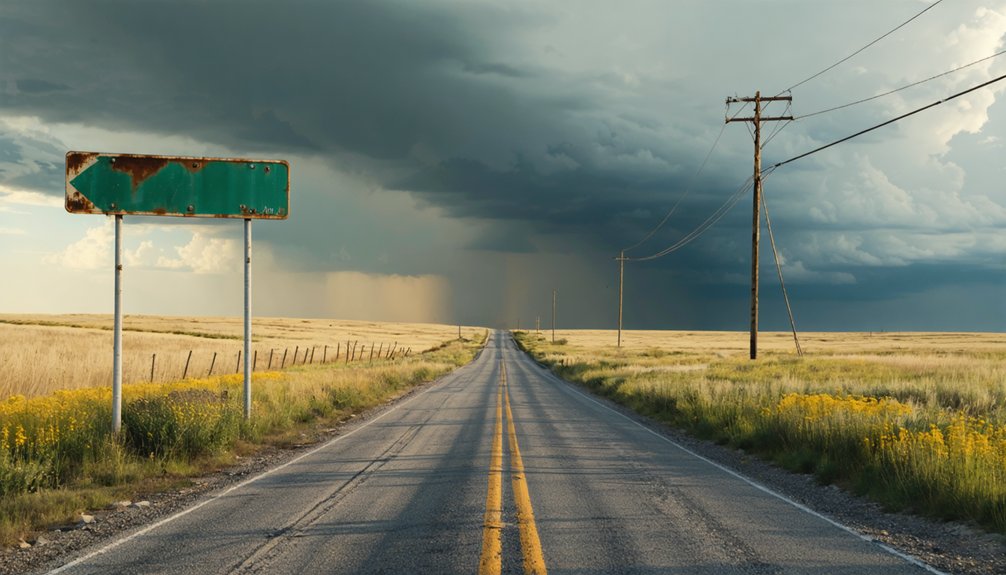
Reaching Fact, Kansas means leaving the comfort of maintained highways behind and committing to a network of rural county roads that cut through Central Kansas farmland. GPS won’t save you here — modern wayfinding systems no longer recognize Fact, so you’ll need historical documentation like county plat maps or regional gazetteers to plot your route accurately.
Forget GPS — reaching Fact, Kansas demands old maps, rural instincts, and a willingness to get beautifully lost.
Before you venture out, follow these three steps:
- Stock up in Larned or Hoisington — these towns offer your last reliable fuel and food stops.
- Download offline maps and cross-reference local legends about the town’s original railroad corridor position.
- Drive a high-clearance vehicle — unmaintained county roads demand it.
Embrace the freedom of exploring uncharted territory. That uncertainty is exactly what makes the journey worthwhile.
Which Nearby Towns Are Worth a Stop Along the Way?
While you’re steering the rural backroads toward Fact, Kansas, the surrounding towns of Larned and Hoisington aren’t just logistical pit stops — they’re living chapters of the same regional story that once gave Fact its brief moment of relevance.
Larned anchors itself around Fort Larned National Historic Site, where historical artifacts from the Santa Fe Trail era sit preserved and accessible. You’ll find fuel, food, and local legends worth hearing from longtime residents who still remember when surrounding communities actually hummed with activity.
Hoisington offers a grittier, more practical stop — a small city holding on with quiet determination. Tank up, grab supplies, and ask around.
Locals carry oral histories that no highway marker captures. These towns don’t just support your trip; they contextualize it.
Kansas Ghost Towns Near Fact Worth Adding to Your Route
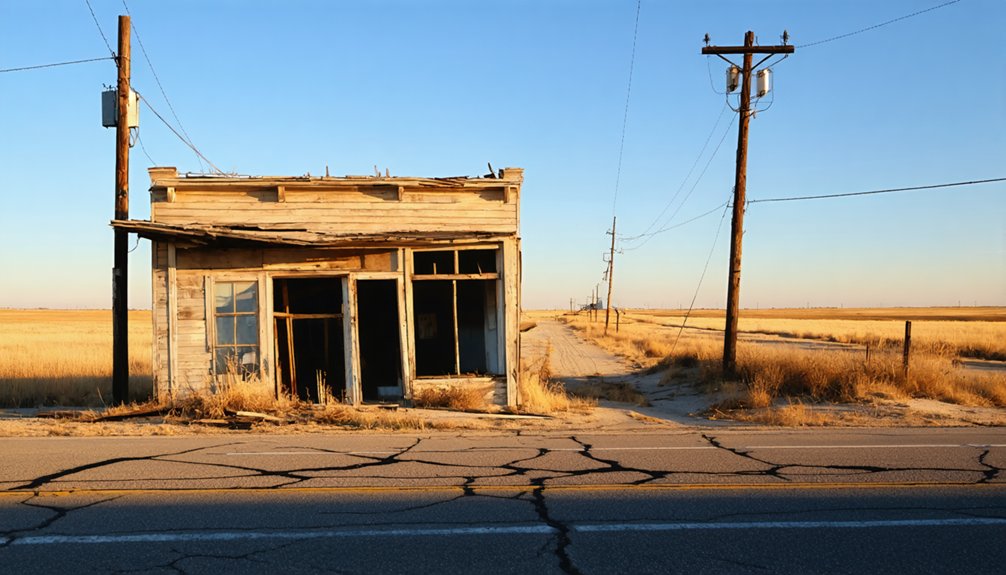
Fact doesn’t stand alone in its silence — Central Kansas scatters dozens of similarly forgotten settlements across its flattened grid, and routing your drive to include a few makes the trip exponentially richer.
Historical trade routes like the Santa Fe Trail stitched these communities together, and agricultural decline unraveled them just as systematically.
Consider adding these stops:
- Garfield, Kansas — A near-vanished railroad town where crumbling foundations still outline what ambition once built.
- Burdett, Kansas — A shrinking community that illustrates how mechanized farming hollowed out once-thriving townships.
- Rozel, Kansas — Sitting close to historical trade routes, this quiet remnant carries visible echoes of its busier past.
Each stop deepens your understanding of how entire worlds quietly disappeared from the Kansas map.
Frequently Asked Questions
Is There a Fee or Permit Required to Visit Fact, Kansas?
Why limit your freedom? You don’t need a fee or permit to visit Fact, Kansas. However, respect historical preservation efforts and check local regulations, as private landowners may restrict access to remnants.
What Is the Best Time of Year to Visit Fact, Kansas?
Spring and fall offer you ideal conditions to explore Fact’s historical preservation sites and uncover local legends. You’ll enjoy mild temperatures, clear skies, and roads that won’t trap your adventurous spirit in summer’s heat or winter’s grip.
Are There Any Guided Tours Available for Fact, Kansas Ghost Town?
You won’t find formal guided tours for Fact, Kansas, but you’re free to explore its historical landmarks independently. Seek out locals who’ll share haunting local legends that breathe life into this forgotten, windswept ghost town.
Can You Legally Enter or Photograph Structures at Fact, Kansas?
Congratulations, you’re free! But verify land ownership before entering structures at Fact for historical preservation purposes. You can photograph openly, though respect private property boundaries and enjoy wildlife observation along the way.
Is Fact, Kansas Accessible for Visitors With Mobility Limitations?
Fact, Kansas offers minimal accessibility options and no visitor facilities. You’ll navigate unpaved rural roads on uneven terrain, making mobility-limited travel challenging. Embrace the wild spirit of exploration, but plan carefully for this remote, rugged destination.
References
- https://www.youtube.com/watch?v=YQHVP21sYC8
- https://en.wikipedia.org/wiki/List_of_ghost_towns_in_Kansas
- https://www.youtube.com/watch?v=jmGOQurOWv0
- https://legendsofkansas.com/kansas-ghost-town-list/
- https://www.onlyinyourstate.com/trip-ideas/kansas/haunted-kansas-road-trip