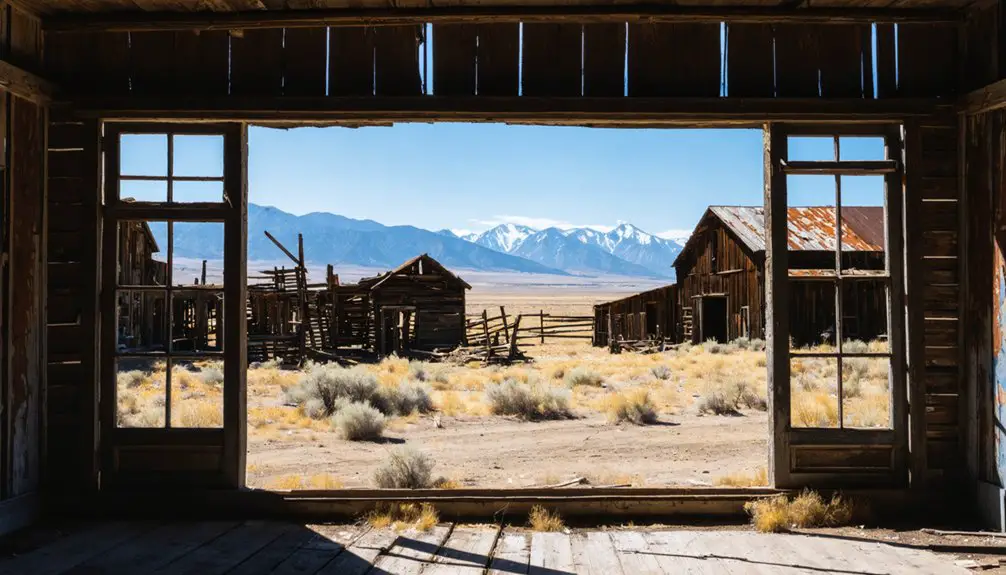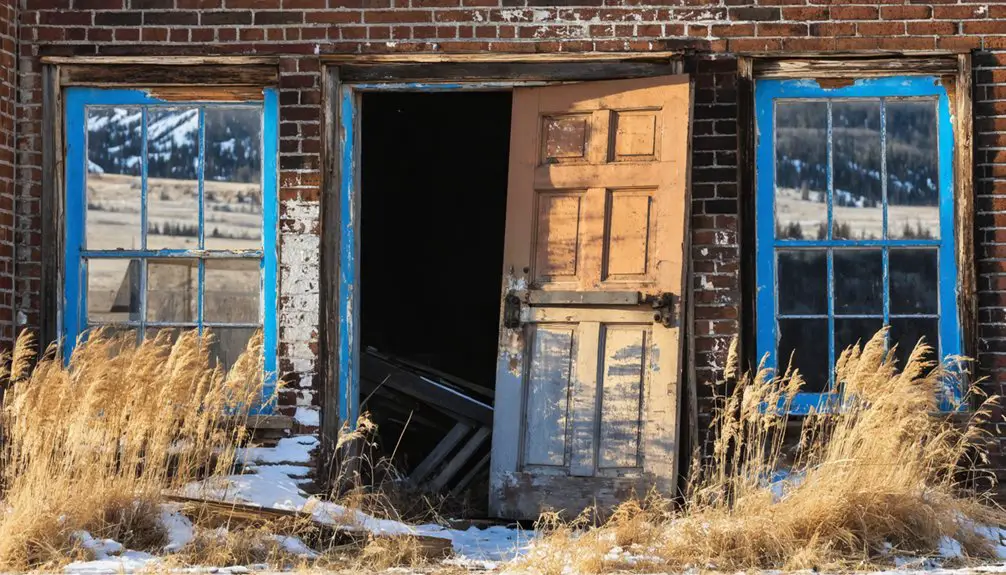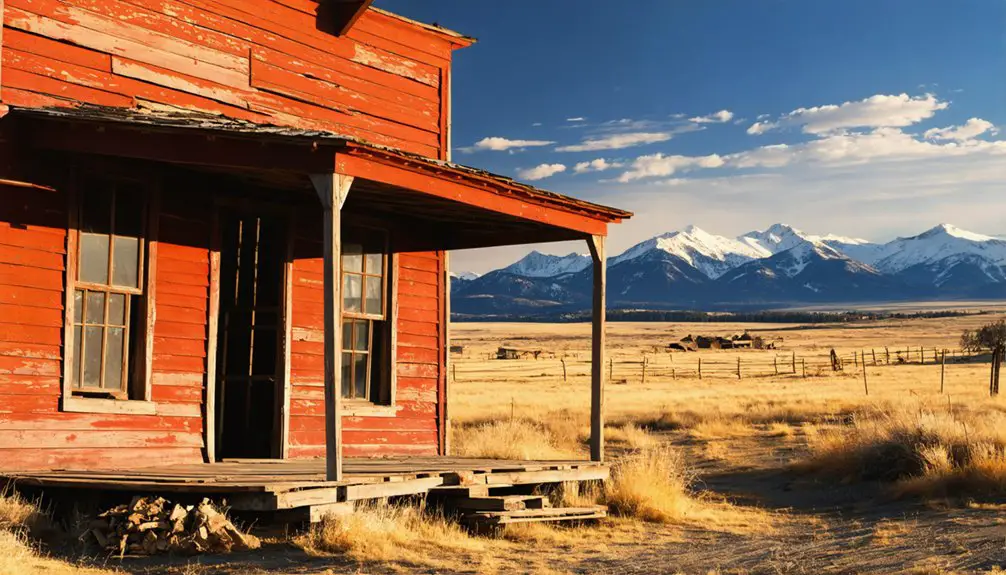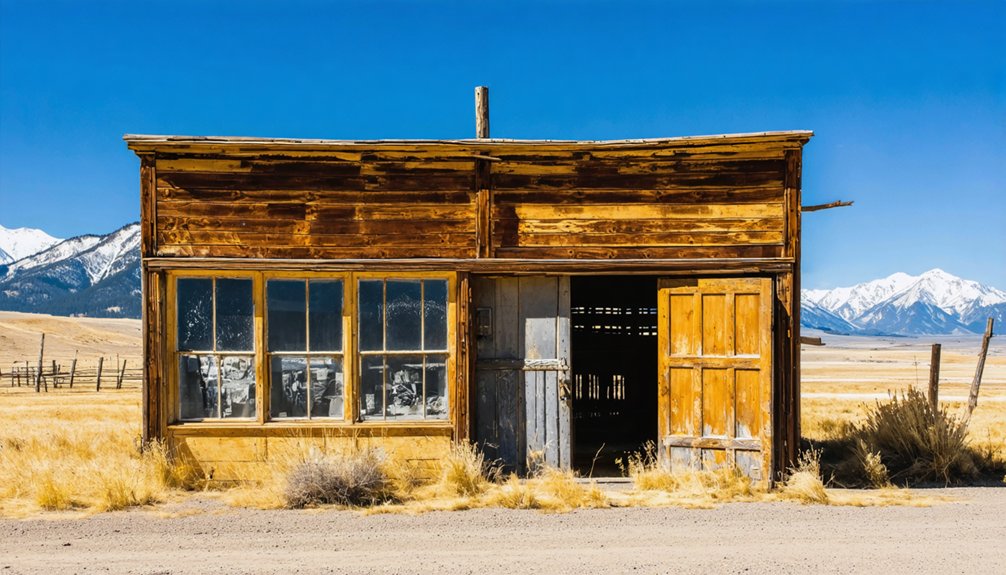
Planning a ghost town road trip through Montana means exploring three distinct destinations: Bannack, Garnet, and Virginia City. You’ll drive gravel and dirt roads to reach weathered cabins, preserved storefronts, and historic gallows from Montana’s gold rush era. Each site offers a different experience, from abandoned wilderness settings to living history exhibits. Pack your essentials, keep your fuel tank full, and arrive early—there’s far more to discover than you’d expect.
Key Takeaways
- Montana’s top ghost towns include Bannack, Garnet, and Virginia City, each offering unique historical experiences for road trip travelers.
- Garnet requires navigating 11 miles of rough dirt road from Missoula, so prepare your vehicle accordingly.
- Bannack State Park is easily reached via a well-marked gravel road near Dillon, featuring preserved hotels, churches, and gallows.
- Summer and fall are ideal visit times, offering accessible roads, mild weather, and excellent photography conditions.
- Pack essentials, keep your fuel tank full, and budget 2–3 hours per ghost town for thorough exploration.
Montana’s Best Ghost Towns: Bannack, Garnet, and Virginia City
Montana hides some of the American West’s most hauntingly preserved ghost towns, and three stand out above the rest: Bannack, Garnet, and Virginia City.
You’ll find Bannack history stretching back to Montana’s first major gold strike in 1862, where weathered cabins and a crumbling gallows still tell dark, violent stories.
Garnet legends draw you deeper into the wilderness, where miners’ shacks cling to a mountainside as if frozen mid-abandonment.
Virginia City pulses with the most visible preservation efforts of the three, offering restored storefronts and living history that put you directly inside the 1860s gold rush era.
Each town rewards curious, independent travelers who crave raw authenticity over polished tourism.
Pack your camera, fuel your tank, and let Montana’s forgotten past reshape how you see the American frontier.
What Each Ghost Town Has Preserved (And What’s Gone)
Each ghost town draws a different line between what time spares and what it swallows whole.
At Bannack, you’ll walk through preserved structures including a hotel, church, and gallows — all standing as stark reminders of frontier justice.
Bannack’s preserved hotel, church, and gallows stand silent — frontier justice frozen in weathered wood and shadow.
Garnet keeps its weathered cabins and mining equipment intact, offering raw, unfiltered historical artifacts that serious explorers love.
Virginia City leans more restored than frozen, but its boardwalks and storefronts still carry genuine ghost town legends rooted in gold rush chaos.
What’s gone? Entire neighborhoods, voices, and the daily rhythms of people who believed these towns would last forever.
Your visitor experiences across all three sites will feel distinctly different — one abandoned, one crumbling, one partially revived — but each one demands your full attention.
How Do You Actually Get to Each Site?
Getting to Montana’s ghost towns requires some planning, as many sites sit far off the beaten path on unpaved roads that demand a capable vehicle and a cautious speed.
To reach Garnet Ghost Town, you’ll head east of Missoula on I-90, then navigate roughly 11 miles of rough dirt road that can turn treacherous in wet or winter conditions.
Bannack State Park offers slightly easier access via a well-marked gravel road outside Dillon, but you’ll still want to check seasonal road conditions before you go.
Driving Routes To Sites
How you reach these ghost town sites depends entirely on your starting point, but the most well-traveled route begins in Mammoth, California, heading north on Highway 395N past the striking shores of Mono Lake.
Then turning onto Highway 270E for the final stretch to Bodie State Historic Park. These Mammoth routes offer raw, open landscapes before Bodie access narrows to unpaved roads.
- Turquoise Mono Lake reflecting volcanic islands against a vast sky
- Sagebrush flatlands stretching endlessly toward distant mountain ridgelines
- Dusty, unsurfaced road winding through sun-baked terrain for the final 3 miles
- Abandoned wooden structures emerging through dry desert haze
- Wide-open highway corridors with minimal traffic, offering true road freedom
Drive slowly on that final unpaved stretch — your vehicle and the road demand it.
Road Conditions And Access
Two distinct road conditions define your journey to Bodie State Historic Park: the smooth, open stretch of Highway 395N past Mono Lake, and the final 3 miles of unsurfaced road that demand you slow down and stay alert.
Road safety on that unpaved stretch isn’t optional — loose gravel and uneven terrain can damage your vehicle if you rush it.
Seasonal conditions greatly affect your access. Summer and fall keep roads open and manageable, while winter snow can completely block entry by car, forcing you onto snowmobiles or skis.
Bodie also shifts to winter hours — 9am to 4pm — reducing your exploration window considerably.
Check road conditions before you leave Mammoth, California. A little preparation keeps your adventure moving forward instead of stalling it.
Entry Fees, Hours, and Visitor Rules at Each Location
Before you head out on your ghost town adventure, it’s smart to know what to expect at the gate. Bodie State Historic Park keeps entry fees reasonable so you can roam freely without breaking the bank. Visitor rules protect the site’s authenticity, so leave everything exactly as you find it.
- Adults pay $8 entry fees; children pay $5
- Summer hours run 9am–6pm, Memorial Day through September 30
- Winter hours shift to 9am–4pm, October through Memorial Day Weekend
- Visitor rules strictly prohibit removing artifacts, rocks, or debris
- Snow can block winter car access, requiring snowshoes or a snowmobile
Plan your arrival early to maximize exploration time inside the weathered buildings and across the open, windswept grounds that define Bodie’s raw, untamed character.
Best Time of Year to Visit Montana Ghost Towns
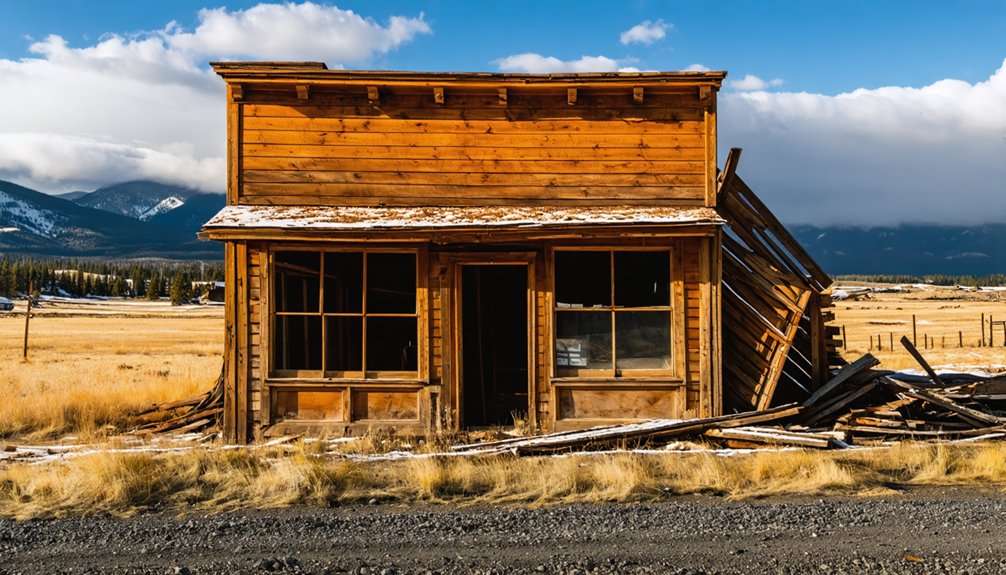
Timing your visit to Montana’s ghost towns can make or break the experience. Summer offers the most freedom, with warm temperatures, fully accessible roads, and extended daylight to explore sites like Bannack and Garnet.
Summer unlocks Montana’s ghost towns, offering warm temps, open roads, and endless daylight to wander Bannack and Garnet freely.
You’ll also catch local festivals celebrating Montana’s mining heritage during these months, adding cultural depth to your adventure.
Spring brings fewer crowds and stunning wildflower landscapes, though muddy roads can challenge even rugged vehicles.
Fall delivers crisp air and vivid colors, creating dramatic backdrops for photography enthusiasts.
Avoid winter if you’re planning a standard road trip. Seasonal weather turns brutal, burying access roads under heavy snow and limiting exploration considerably.
If you crave solitude and don’t mind snowshoeing in, winter visits offer a haunting, isolated atmosphere unlike any other season.
How to Build a Montana Ghost Town Road Trip Itinerary
Once you’ve settled on the right season, you’ll want to map out a route that maximizes your time at each site. Montana’s ghost towns like Bannack, Garnet, and Virginia City reward travelers who plan deliberately.
Use these itinerary tips to shape a road trip that feels adventurous yet structured:
- Pack travel essentials: water, snacks, paper maps, and a spare tire for remote dirt roads
- Arrive at each ghost town early to catch golden morning light on weathered wooden structures
- Budget 2–3 hours per site to wander crumbling buildings and read historical markers
- Keep your fuel tank full between isolated stretches of Montana highway
- Photograph decaying storefronts, rusted mining equipment, and overgrown cemeteries for lasting memories
Flexibility is your greatest asset — let curiosity guide each turn.
Frequently Asked Questions
Are There Guided Ghost Town Tours Available in Montana?
You’ll find guided tours exploring ghost town history at Montana’s Bannack, Garnet, and Virginia City! These tours let you roam freely through preserved ruins, uncovering fascinating stories of pioneer life with knowledgeable guides leading your adventure.
Can You Camp Overnight Near Montana’s Ghost Town Sites?
You can camp near Montana’s ghost towns like Bannack and Garnet! Follow camping regulations by booking designated sites nearby, and respect ghost town etiquette—don’t disturb artifacts. You’ll experience unforgettable, starlit freedom beside these hauntingly beautiful historic landscapes.
Is Mammoth, Montana Actually a Real Ghost Town Destination?
You won’t find verified Mammoth history or ghost town legends in Montana — it’s not a real destination. You’re actually thinking of Mammoth, California, where Bodie State Historic Park awaits your adventurous exploration instead!
What Should I Pack for a Montana Ghost Town Road Trip?
For your Montana ghost town road trip, you’ll want these packing essentials: sturdy boots, layered clothing, water, snacks, a camera, and maps. These road trip tips guarantee you’re ready for unpredictable terrain and weather!
Are Montana Ghost Towns Suitable for Young Children to Visit?
Montana ghost towns are great for young children! You’ll find engaging activities like exploring preserved buildings and learning history. Follow safety tips: supervise kids closely, watch uneven terrain, and you’ll create unforgettable family adventure memories together.
References
- https://yourtravelflamingo.com/day-trip-bodie-ghost-town/
- https://www.youtube.com/watch?v=xZzVQ-Ayv-U
- https://visitmt.com/trip-ideas/ghost-town-route
- https://southwestmt.com/itineraries/yellowstone-to-glacier/gardiner-to-glacier/
- https://www.visitmammoth.com/trip-ideas/bodie-ghost-town-mono-lake-june-lake-loop-full-day-itinerary/
- https://www.youtube.com/watch?v=cEdfgquJ8MQ
- https://maps.roadtrippers.com/trips/10498525
- https://www.roamingnearandfar.com/coolidge-ghost-town-road-trip/
- https://www.reddit.com/r/overlanding/comments/18m4qdq/going_the_long_way_around_to_an_old_ghost_town/
- https://www.monocounty.org/places-to-go/bodie/