Planning a ghost town road trip to Pioneer, Montana means stepping into the birthplace of Montana’s gold rush, where Francois Finlay made the first placer strike on Gold Creek back in 1852. You won’t find a polished townsite—just rusted dredging machinery, collapsed frontier structures, and rippling tailings fields that scar the valley floor. Base yourself off Interstate 90, confirm private land access beforehand, and visit late spring through early fall. There’s far more to uncover here than first meets the eye.
Key Takeaways
- Pioneer, Montana, established in 1852, was the state’s first gold camp and sparked Montana’s broader gold rush and mining history.
- The site features dredge tailings, rusted machinery, and weathered structures, offering raw, unfiltered history across a reshaped landscape.
- Pioneer sits on private land; confirm access permissions and plan visits between late spring and early fall.
- Access via Interstate 90 and 2WD-friendly secondary roads makes Pioneer easy to reach without specialized vehicles.
- Combine Pioneer with nearby Bannack, Virginia City, Coolidge, and Glendale via the Pioneer Scenic Byway for a fuller trip.
What Made Pioneer Montana’s First Gold Camp?
When you trace Montana’s gold rush back to its origins, you land at Pioneer—the state’s first gold camp, born from a single placer discovery on Gold Creek in 1852. Francois Finlay, known as Benetsee, made that first strike, but serious mining techniques didn’t reshape the valley until 1862, when John White and James Stuart led prospectors back to work the creek in earnest.
The historical significance of what followed is hard to overstate. Pioneer grew fast—hotels, saloons, breweries, and stores all feeding a population that peaked near 500.
You’re looking at the spark that lit Montana’s broader gold rush. Every major camp that followed owes something to what prospectors first proved possible along Gold Creek.
What Will You Actually See at Pioneer Today?
When you pull up to Pioneer today, you won’t find a preserved townsite waiting for you — you’ll find ruins, rust, and a valley reshaped by a century of industrial ambition.
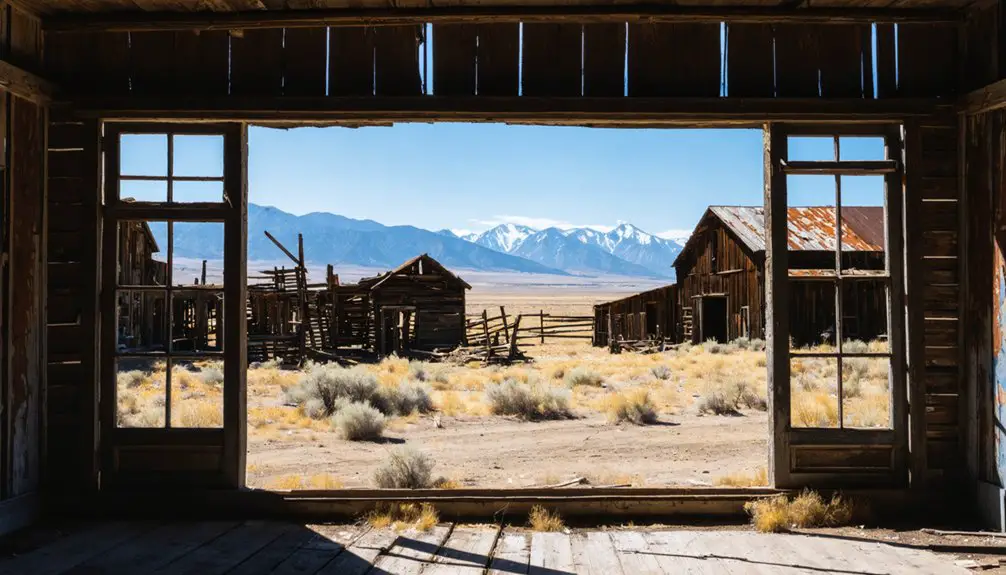
A handful of weathered log and frame structures still stand, but the dredge tailings stretching along Gold Creek tell the louder story, row after row of rock and gravel piles that dwarf whatever’s left of the town itself.
Rusting twentieth-century dredging machinery sits where Pat Wells’ operation ran through the valley, turning Gold Creek’s landscape into something that looks less like a ghost town and more like a stripped battlefield.
Ruined Structures Still Standing
Though Pioneer once buzzed with four breweries, six saloons, and a peak population of 500, you’ll find a quieter, rougher scene today.
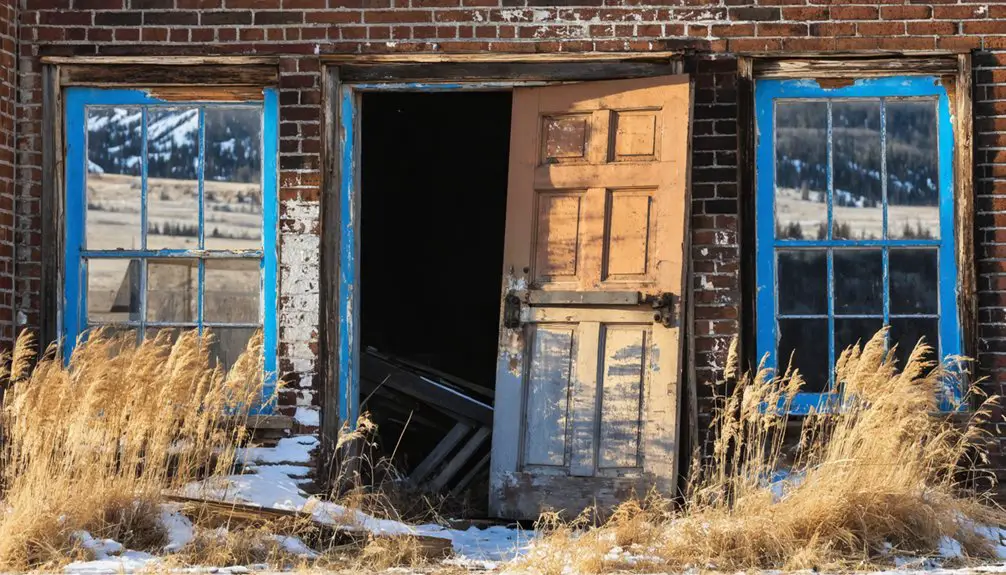
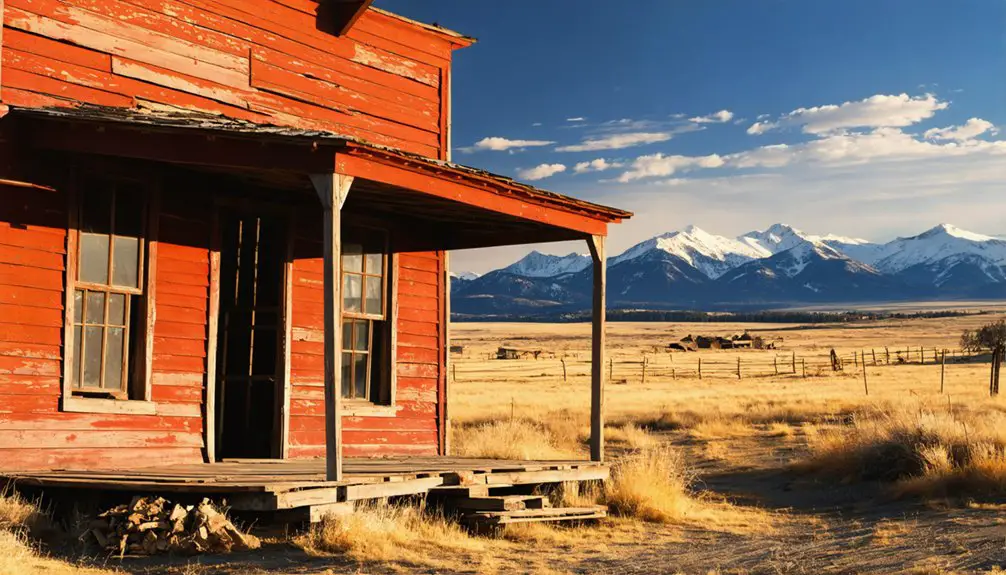
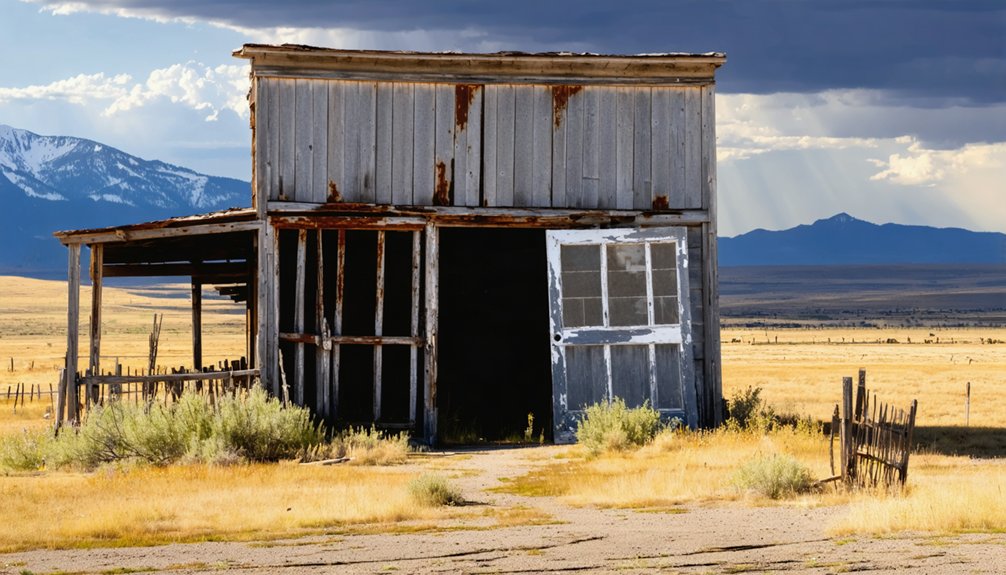
What remains are fragmentary structures — leaning log walls, collapsed frames, and weathered timber slowly surrendering to the Montana elements.
You’ll also encounter abandoned machinery from twentieth-century dredging operations, rusting in place like industrial fossils.
These remnants don’t offer the tidy preservation of Bannack or Virginia City. Instead, they hand you raw history — unfiltered and unapologetic.
Wander the site and you’re reading the landscape itself.
Each crumbling wall marks where someone once poured a drink, stocked a shelf, or slept after a long shift on the creek.
It’s fragmented, yes — but that’s exactly what makes it feel real.
Dredge Tailings And Machinery
Beyond the crumbling structures, the landscape itself tells Pioneer’s loudest story. Massive tailings piles stretch across the Gold Creek valley, ridge after ridge of displaced rock and gravel that dredges churned up through decades of twentieth-century operations.
You’ll recognize them immediately — unnatural, rippled terrain that looks almost lunar against Montana’s open sky.
Walk the site and you’ll also encounter rusting mining machinery left where it stopped working, frozen mid-operation like industrial fossils.
Pat Wells recognized Gold Creek’s dredging potential back in 1929, and the equipment his operations left behind still punctuates the landscape today.
These tailings piles aren’t just debris — they’re a raw, honest record of extraction on an enormous scale.
You’re standing inside a working chapter of American mining history.
Altered Gold Creek Valley
What you’ll find at Pioneer today isn’t a preserved townsite — it’s a reshaped valley that mining remade from the ground up. Successive mining techniques — from hand-worked placer claims to industrial dredging — stripped, sorted, and rearranged the Gold Creek valley over decades.
The landscape carries every scar. Rock piles stretch across the valley floor in long, uneven rows, and the creek itself runs through a corridor that human hands fundamentally altered.
Historic preservation never really took hold here, so what remains is raw and unfiltered. That’s actually the draw. You’re reading the land itself like a document, tracing each wave of extraction through the terrain it left behind.
Few ghost towns hand you that kind of unmediated history so directly.
How to Read the Tailings, Dredges, and Ruins at Pioneer
Walking through Pioneer, you’re not just looking at decay — you’re reading a layered record of how hard people worked this valley and how completely the land absorbed their effort. Each element tells a different chapter. The ruined log and frame structures mark town development from the 1860s, when 500 residents supported six saloons, four breweries, and two hotels built around nearby claims.
The tailings fields represent a separate story — mining technology advancing from hand-placer work into twentieth-century mechanical dredging. Rusting machinery scattered across the site shows where Pat Wells recognized dredging potential in 1929 and pushed extraction into a new era.
Walk the ridgelines of gravel slowly. Let the scale register. Pioneer didn’t fade quietly — it got worked until almost nothing remained worth keeping.
How to Get to Pioneer, Montana
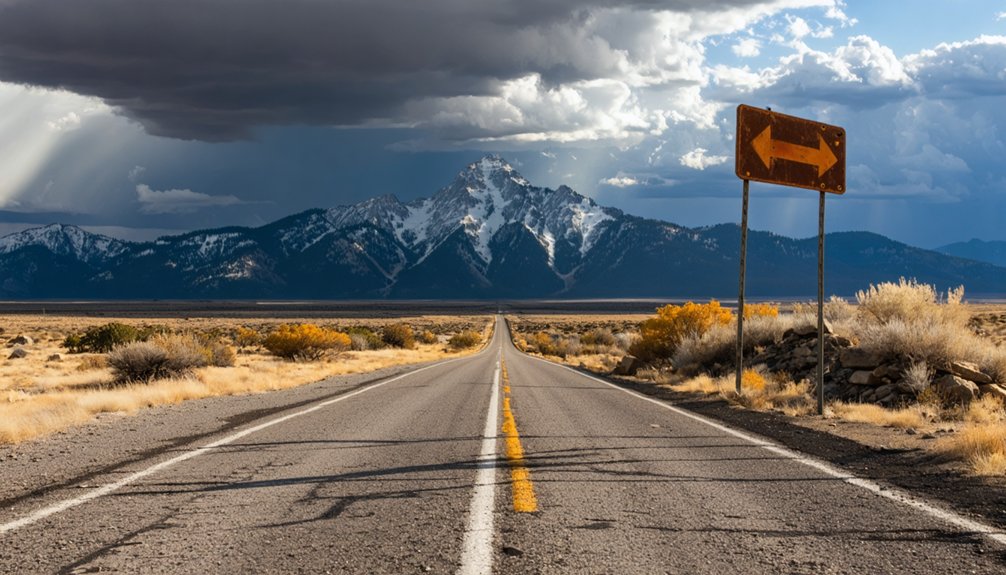
Getting to Pioneer is straightforward, which makes the contrast between easy access and hard history feel all the more striking. Take Interstate 90 to the Gold Creek area in Powell County, then follow secondary roads toward the creek valley. Your standard 2WD vehicle handles the route without trouble.
That ease of access shouldn’t lower your guard, though. Pioneer sits on private land, so confirm landowner permission before you wander. Ghost town preservation here is informal at best, meaning conditions shift and boundaries matter.
What awaits you rewards the effort. You’re driving into genuine mining history, toward a valley reshaped by over a century of extraction. The tailings fields, rusting machinery, and fragmentary structures won’t greet you with a welcome sign. They’ll just stand there, quietly demanding your attention.
Pioneer Sits on Private Land: What That Means for Your Visit
Private land status changes everything about how you approach Pioneer. You can’t simply roll in, wander the ruins, and pocket the experience like a souvenir. The land is privately owned, which means access depends entirely on landowner permission — no assumptions, no shortcuts.
This matters because what remains holds genuine mining history. The ruined structures, dredge machinery, and tailings fields aren’t just scenery; they’re historical artifacts tied to Montana’s earliest gold rush. Trespassing risks both legal trouble and the goodwill that keeps sites like this accessible at all.
Before you go, contact local authorities or Powell County resources to clarify current access conditions. Treat the site with respect, and you’ll walk away with a richer connection to the ground beneath your boots.
The Best Time to Visit Pioneer, Montana
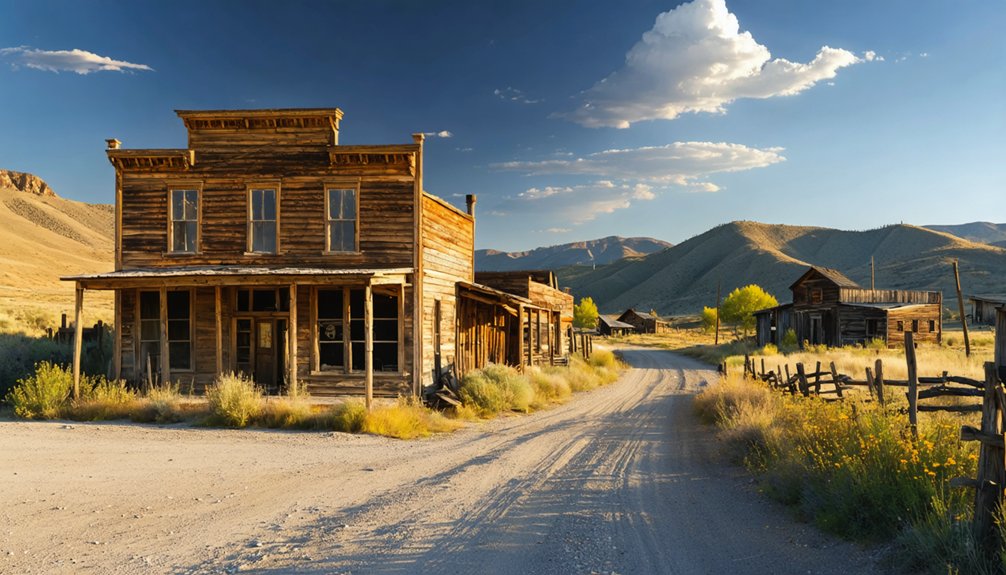
Timing your visit to Pioneer can mean the difference between a rewarding road trip and a frustrating one. Seasonal considerations matter here, especially given Montana’s punishing winters and unpredictable shoulder seasons.
Timing your Pioneer visit matters — Montana’s winters punish the unprepared and shoulder seasons rarely play fair.
- Late spring through early fall offers the clearest roads and best visibility of tailings fields and dredge remains.
- Midsummer lets you fully absorb the cultural significance of Gold Creek’s valley, where Montana’s earliest gold rush reshaped an entire landscape.
- Avoid winter months — snow closes secondary roads and buries the very ruins you’ve come to find.
You’re chasing history on open ground, so plan smart. Check road conditions before heading out, confirm landowner access, and pack layers. Pioneer rewards the prepared traveler, not the impulsive one.
Other Ghost Towns Worth Adding to Your Route
Once you’ve walked Gold Creek’s tailings fields, you’ll find that Montana’s ghost-town circuit has plenty more to offer.
Head south toward Bannack, where historical context runs deep — it was Montana’s first territorial capital and still holds some of the best-preserved frontier structures in the West.
Nevada City and Virginia City sit close together and reward visitors with restored buildings and rich placer-mining history.
If dredging and hard-rock mining techniques fascinate you, swing through Coolidge along the Pioneer Scenic Byway, then explore Glendale’s charcoal kilns and the Elkhorn Mine Complex nearby.
Each stop layers a different chapter onto Montana’s gold-rush story.
String these sites together and you’ve got a road trip that trades comfort for discovery — exactly the kind of freedom this landscape demands.
How to Plan a Pioneer Mountains Ghost Town Road Trip
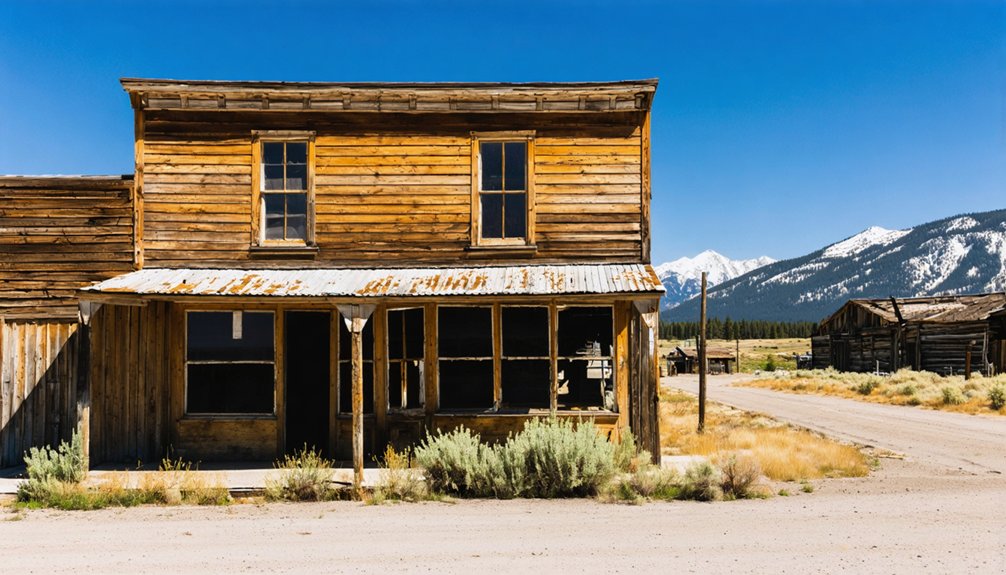
If you’re already making the drive to Pioneer, you’d be foolish not to extend your trip through the Pioneer Mountains and pick up Coolidge, Glendale, and the Elkhorn Mine Complex along the way.
The Pioneer Scenic Byway connects several of these sites, and most roads are manageable in a standard 2WD vehicle.
Keep in mind that Pioneer itself sits on private land, so confirm access conditions before you go and build flexibility into your itinerary.
Nearby Ghost Towns Worth Visiting
Pioneer fits naturally into a longer Pioneer Mountains ghost town loop that strings together several abandoned mining settlements across some of Montana’s most dramatic high-country terrain. Each stop adds historical significance and reveals different mining techniques that shaped this region.
Don’t miss these nearby sites worth adding to your route:
- Coolidge Ghost Town – Accessible via the Pioneer Scenic Byway, this silver-mining ruin anchors the East Pioneers with the striking Elkhorn Mine Complex nearby.
- Glendale – Charcoal kilns standing near this forgotten smelter town tell the industrial story behind the ore.
- Bannack State Park – Montana’s first territorial capital preserves an entire townsite, offering rare context for what Pioneer once rivaled.
Together, these stops build a road trip that feels genuinely earned.
Road Trip Logistics And Access
Planning a Pioneer Mountains ghost town road trip means anchoring your route around Interstate 90, which puts Gold Creek and the Pioneer site within easy reach before you swing south toward the Pioneer Scenic Byway.
Secondary roads into the site are 2WD-friendly, so you won’t need a specialized rig. Keep in mind that Pioneer sits on private land, meaning landowner permission isn’t guaranteed.
The site’s historical significance runs deep, stretching from 1852 placer discoveries through twentieth-century dredging mining techniques that reshaped the entire Gold Creek valley.
Plan your timing around Montana’s shoulder seasons, since winters here hit hard. Pack water, confirm current access conditions before leaving, and treat the landscape honestly, you’re visiting ruins and tailings fields, not a restored townsite.
What to Pack for a Day Trip to Pioneer and Gold Creek
A day trip to Pioneer and Gold Creek puts you on terrain shaped by over a century of hard mining work, so packing smart makes the difference between a rewarding visit and a frustrating one. You’re walking ground where historical artifacts still surface, and preservation efforts depend partly on visitors treating the site responsibly.
- Sturdy footwear — Dredge tailings and uneven ground demand boots with ankle support.
- Camera and field notebook — Document rusting machinery and fragmentary structures before conditions change further.
- Water and layered clothing — Montana’s weather shifts fast, and no services exist on site.
Leave anything you find undisturbed. The mining landscape speaks loudest when it stays intact, letting the next explorer read the same story you did.
Frequently Asked Questions
Is There a Guided Tour Available at Pioneer Ghost Town?
No guided tours exist at Pioneer—you’ll explore its historical preservation and ruined landscape independently. Don’t expect visitor amenities; instead, embrace the freedom of wandering dredge tailings and ghostly ruins on your own adventurous terms.
Are Pets Allowed When Visiting the Pioneer Ghost Town Site?
Like untamed frontier spirits, you’re free to explore — but no official pet safety or animal restrictions are confirmed. Since Pioneer sits on private land, check with the landowner before bringing your four-legged adventure companion along.
Can You Find Gold at Gold Creek as a Recreational Visitor?
You can try gold panning at Gold Creek, following in footsteps of 1852 pioneers. The mining history runs deep here—grab your pan, chase that glint, and feel the rush of frontier freedom.
Is There Cell Phone Coverage Near the Pioneer Ghost Town Area?
Don’t let spotty cell service stop you—embrace the disconnect. Signal strength fades near Pioneer’s remote Gold Creek valley, but that’s the freedom you’re chasing. You’ll trade notifications for genuine solitude among Montana’s gold-rush ruins.
Are There Restroom Facilities Available Near the Pioneer Ghost Town Site?
Don’t expect restroom availability or facility amenities at Pioneer’s remote, ruined site. You’re venturing into raw Montana wilderness, so plan ahead, pack essentials, and embrace the freedom of exploring this historically-grounded gold camp on your own terms.
References
- https://treasurestate.com/ghost-towns/pioneer/
- https://www.ghosttowns.com/states/mt/pioneer.html
- https://www.ultimatemontana.com/northeast montana/3350-pioneer-ghost-town
- https://www.youtube.com/watch?v=BkaltsWHDbA
- https://southwestmt.com/specialfeatures/this-is-montana/mountain-ranges/southwest-montanas-east-pioneer-mountains/
- https://en.wikipedia.org/wiki/List_of_ghost_towns_in_Montana
- https://scholarworks.umt.edu/mtghosttowns_audiorecordings/
- https://www.rockngem.com/out-and-about-in-the-pioneer-mountains-region/
- https://silverbowclub.com/coolidge-ghost-town/
- https://www.youtube.com/watch?v=gPEd6XWbQnY