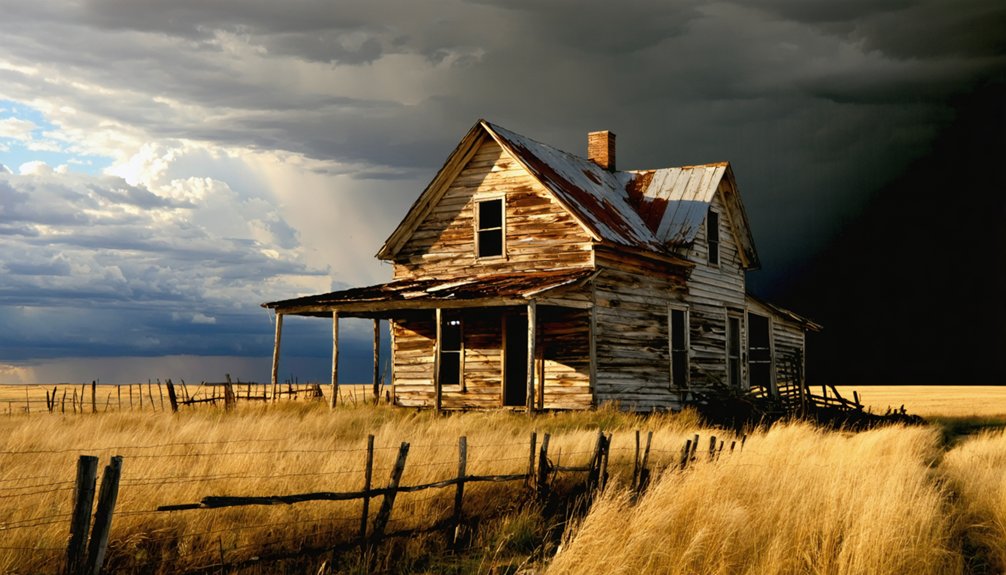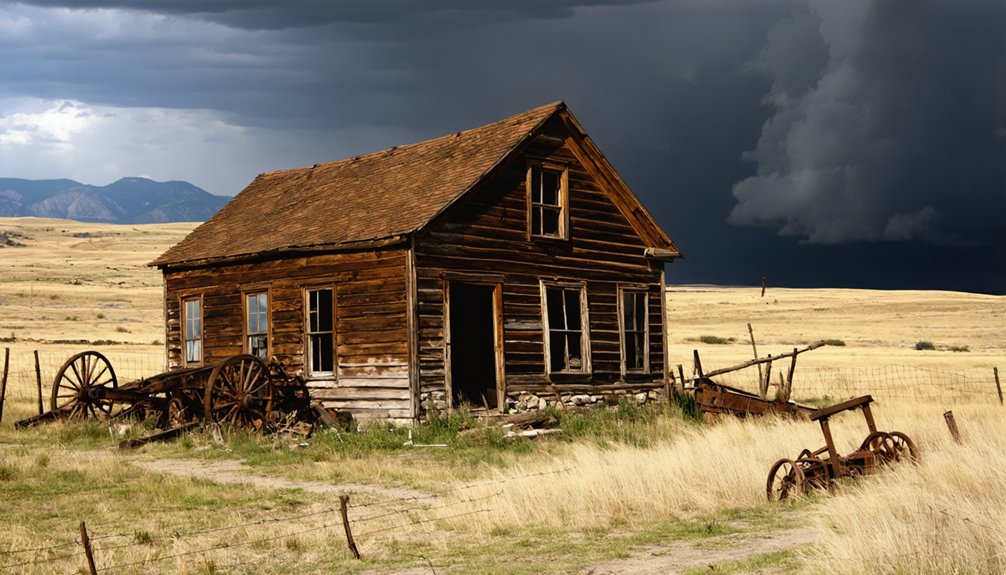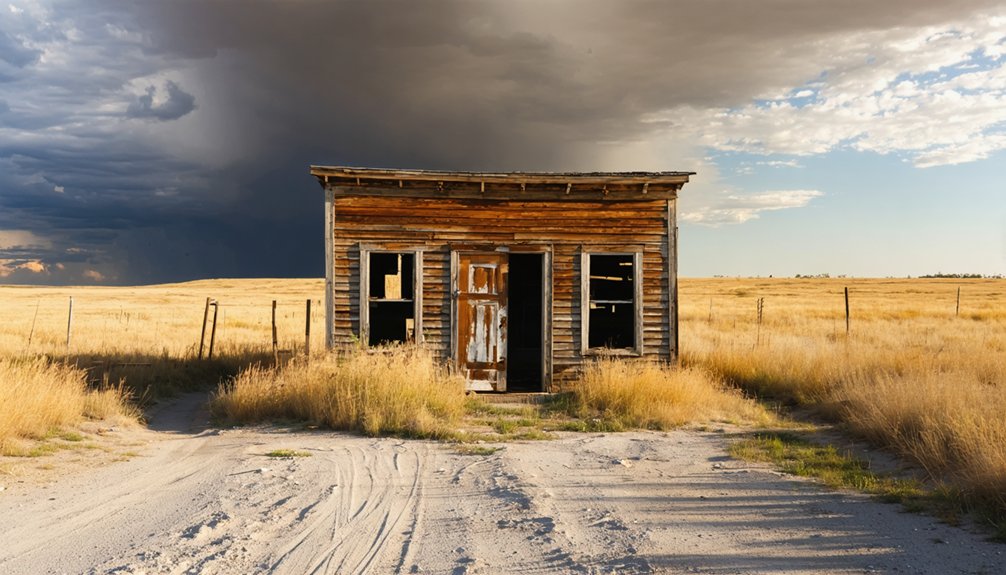
To road trip to Cascade, South Dakota, drive south from Hot Springs on SD 87 for about 8 miles through Alabough Canyon. You’ll reach a resort town frozen in 1888, where mineral springs still pour 2,000 gallons of warm water per minute and a restored bank building anchors the ruins. Visit spring through fall for the best access. There’s far more to this canyon’s story than first glance reveals.
Key Takeaways
- Cascade lies 8 miles south of Hot Springs via SD 87, passing through scenic Alabough Canyon on a 2WD-accessible road.
- Founded in 1888 across 36 city blocks, Cascade was built around mineral springs producing 2,000 gallons of warm water per minute.
- A railroad diversion killed the town’s growth; today, a restored bank building and banker’s home are the most notable surviving structures.
- Visit spring through fall for best road access, with summer offering warm mornings and autumn providing cooler temperatures and fewer crowds.
- Cascade pairs well with 600-plus other Black Hills ghost towns, creating a comprehensive road trip through regional railroad and mining history.
What Made Cascade, South Dakota a Ghost Town?
When Cascade’s founders laid out 36 city blocks in 1888, they were betting everything on two things: a railroad that never came and a mineral spring that gushed 2,000 gallons of warm water per minute. They envisioned a four-story, hundred-room hotel drawing health-seekers to those mineral springs, with the Burlington & Missouri River Railroad delivering them straight to the canyon’s edge.
But high right-of-way prices triggered a railroad diversion, rerouting the line away from Cascade entirely. Without that connection, the spa economy collapsed before it could breathe.
What’s Left to See at Cascade Today?
Cascade’s collapse left the canyon largely empty, but not entirely. A few survivors cling to the hillside, and they’re worth tracking down.
The restored bank building stands as the most prominent piece of historical architecture still holding its ground — a quiet monument to Cascade’s outsized ambitions.
The banker’s home remains standing too, offering another glimpse into the resort era’s confident, ill-fated beginnings.
The mineral springs that launched the whole experiment are still part of the landscape, flowing through the canyon as if indifferent to everything that rose and fell around them.
The Cascade Club and its bowling alley are long gone, and the grand hotel’s stones now live inside Hot Springs buildings.
What remains feels honest — stripped down, rugged, and worth every mile you drove to find it.
When Should You Visit Cascade?
Timing your visit to Cascade takes some thought, because winter snow can turn the canyon roads into a genuine obstacle rather than a scenic backdrop. Although Canyon earns its quiet beauty honestly, frozen conditions don’t favor exploration or historical preservation efforts on fragile surviving structures like the restored bank building.
Spring through fall gives you the freedom to move through the site on your own terms. Summer runs warm and humid, so mornings offer the clearest air and sharpest light for taking in the Victorian stonework.
Seasonal weather in autumn softens the canyon with cooler temperatures and fewer crowds, making it arguably the best window for a focused visit. Arrive ready to explore independently — Cascade rewards the curious, not the casual.
How Do You Get to Cascade From Hot Springs?
Getting to Cascade from Hot Springs couldn’t be simpler — head south on SD 87 for about 8 miles and you’ll drop into Alabough Canyon, where the ghost town quietly waits. The drive itself sets the mood, threading through southern Black Hills terrain that once promised railroad wealth and mineral spring glory.
Eight miles south of Hot Springs on SD 87, Alabough Canyon swallows you whole — and Cascade waits at the bottom.
Keep your eyes open for:
- The restored bank building, one of the few surviving examples of historical architecture from Cascade’s ambitious 1888 resort era
- The canyon creek, running near where that legendary mineral spring once gushed 2,000 gallons of warm water per minute
- SD 87 roadside context, since the route remains 2WD-accessible, making this an easy, spontaneous detour
You won’t need a guide — just the open road and curiosity.
Nearby Black Hills Ghost Towns to Pair With Cascade
Once you’ve soaked in Cascade’s quiet canyon atmosphere, the Black Hills open up with over 600 ghost towns worth chasing — and several sit close enough to fold into a single day’s route.
Railroad impact shaped Cascade’s fate, but mining history drove the collapse of towns scattered deeper into the Hills. Explore the former silver and gold camps that boomed violently and died just as fast, leaving stone foundations and rusted machinery behind.
Each stop tells a different story — some towns died when ore ran dry, others when rail lines shifted. Pair Cascade with two or three of these sites and you’ll build a route that captures the full arc of Black Hills ambition, failure, and the raw freedom of wide-open western roads.
Frequently Asked Questions
Is There an Admission Fee or Permit Required to Visit Cascade?
You don’t need an admission fee or permit to explore Cascade’s historical landmarks. You’re free to roam, soak in the canyon’s haunting atmosphere, and seize photography opportunities of this forgotten resort’s surviving remnants.
Are Pets Allowed When Exploring the Cascade Ghost Town Area?
No confirmed pet regulations restrict your four-legged companions here, but you’ll want to keep them leashed due to potential wildlife encounters roaming Alabough Canyon’s wild, historically rich terrain—respect the land these forgotten resort dreamers once called home.
Can You Camp Overnight Near Cascade in Alabough Canyon?
The knowledge doesn’t confirm overnight camping in Alabough Canyon, so you’ll want to verify local camping regulations before pitching a tent. Stay alert for wildlife encounters, and embrace the freedom of sleeping near this hauntingly beautiful, history-soaked canyon.
Is Cascade, South Dakota on Any Official Historic Preservation Registry?
The knowledge doesn’t confirm Cascade’s official registry status, but you’ll find its surviving structures reflect real preservation efforts. Explore those historic landmarks yourself — they’re waiting in Alabough Canyon, quietly holding Cascade’s forgotten resort-town story.
Are Guided Tours of Cascade Available Through Local Organizations?
You won’t find a single guided tour on earth covering Cascade’s historical landmarks, but you can freely explore its hauntingly beautiful canyon solo, discovering incredible photography opportunities while charting your own adventurous path through this forgotten resort’s story.
References
- https://watsonparkerphd.com/2021/01/21/cascade-sd/
- https://www.sdpb.org/rural-life-and-history/2023-08-21/some-black-hills-ghost-towns-and-their-origins
- https://www.powderhouselodge.com/black-hills-attractions/fun-attractions/ghost-towns-of-western-south-dakota/
- https://www.ghosttowns.com/states/sd/cascadesprings.html
- https://www.sdhspress.com/journal/south-dakota-history-2-2/some-black-hills-ghost-towns-and-their-origins/vol-02-no-2-some-black-hills-ghost-towns-and-their-origins.pdf
- https://en.wikipedia.org/wiki/List_of_ghost_towns_in_South_Dakota
- https://kids.kiddle.co/List_of_ghost_towns_in_South_Dakota