To plan your ghost town road trip to Wirt, Oklahoma, head three miles west of Healdton into Carter County’s quiet oil country. You’ll find a weathered Baptist church, scattered houses, and the last living landmark — a feed store run by Donald and Claudia Duke. Wirt started as a tent camp called Ragtown, boomed with oil, then slowly faded into silence. It’s still accessible by regular car, and there’s far more history waiting just ahead.
Key Takeaways
- Wirt is located three miles west of Healdton, Oklahoma, accessible via level 2 roads suitable for standard 2WD vehicles.
- Visit the Wirt feed store, operated by the Dukes, for firsthand stories and an authentic ghost town atmosphere.
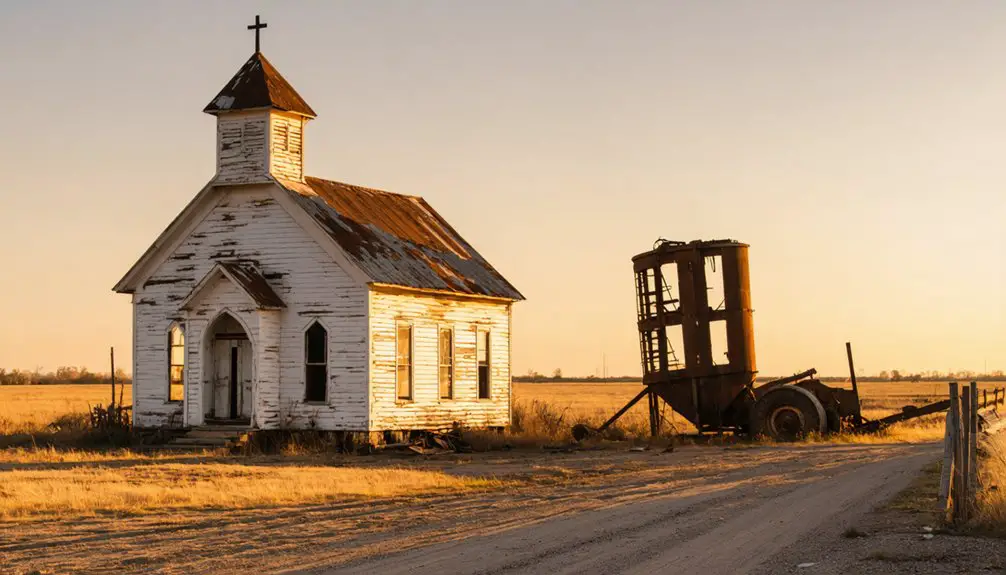
- Explore remaining landmarks including scattered houses and a weathered abandoned Baptist church at the town’s edge.
- For summer visits, bring water, sunscreen, and a wide-brimmed hat; early morning arrivals help avoid peak heat.
- Extend your trip by visiting the Healdton Oil Museum, three miles east, for regional oil boom history and artifacts.
Why Wirt Became One of Oklahoma’s Oil Boom Ghost Towns
When the oil boom hit Carter County, Wirt wasn’t even a real town yet — just a scattering of tents that earned it the unglamorous nickname “Ragtown.” Workers poured in after Wirt Franklin drilled the first local well, and almost overnight, the community transformed into a full-fledged oil camp with a school, a bank, a movie theater, and enough bustle to support two grocery stores and two churches.
But that freedom to build something from nothing came with a price. Fires swept through repeatedly, and when the oil dried up, so did the people.
Today, local legends replace the crowds, and the few remaining historic landmarks whisper what the boom once promised. Wirt rose fast, burned hard, and faded quietly — the classic arc of Oklahoma’s oil-era ghost towns.
How Wirt Went From Oil Boom to Ghost Town
Wirt’s story didn’t end with a single dramatic collapse — it unraveled gradually, pulled apart by forces that oil towns across Oklahoma knew all too well. When petroleum production slowed, families packed up and moved on, leaving behind the historical architecture that once buzzed with daily life.
Fires swept through more than once, erasing storefronts, homes, and gathering places that local legends still whisper about today. The school, the theater, the bank — gone.
What the flames didn’t take, economic abandonment did. You can almost feel the weight of that loss walking through what remains.
Wirt didn’t surrender overnight; it faded year by year, fire by fire, until only the feed store, a few houses, and a silent Baptist church were left standing.
What’s Left to See in Wirt Today
When you arrive in Wirt today, you’ll find only quiet fragments of what was once a bustling oil boom community. The feed store, still operated by Donald and Claudia Duke, stands as the town’s sole active structure.
While a handful of houses and an abandoned Baptist church round out the remaining landmarks. Walking these grounds, you can almost hear the echoes of the roughnecks, families, and merchants who once made Wirt thrive.
The Last Standing Feed Store
Though nearly everything has been swallowed by time and fire, the feed store still stands in Wirt — and it’s very much alive. Stop in and meet Donald and Claudia Duke, the kind of people who carry a town’s memory on their shoulders.
Here’s what makes this stop worth your detour:
- Living history — Donald and Claudia share firsthand stories no historical signage ever could.
- Authentic atmosphere — You’re stepping into Wirt’s last functioning heartbeat.
- Local cuisine tips — Ask the Dukes where locals eat nearby.
- Human connection — In ghost town travel, real conversations beat empty ruins every time.
You didn’t come this far just to drive past. Pull over, walk in, and let Wirt speak through the people still keeping it alive.
Remaining Houses Still Standing
Beyond the feed store’s living walls, a few houses still stand scattered across Wirt’s quiet landscape — silent witnesses to the families who once filled this town during its oil-soaked peak.
As you walk among them, you’ll feel the weight of local legends that speak of roughnecks, dreamers, and the overnight fortunes that petroleum promised.
These structures won’t match the vintage photographs you might uncover in county archives, but they’ll stir something in you — a recognition that real lives unfolded here.
You’re standing where children played and families weathered both boom and fire.
Nobody’s preserving these walls for you; they’re simply holding on.
Explore them while they still stand, because Wirt’s remaining houses won’t wait forever.
The Abandoned Baptist Church
Standing quietly at the edge of Wirt’s emptiness, the abandoned Baptist church is the last structure that hints at a community once organized enough to gather, worship, and believe in its own future. Its historical architecture whispers local legends of oil workers seeking something beyond petroleum wealth.
When you visit, notice:
- The church’s weathered exterior, shaped by decades of Oklahoma heat
- Structural details reflecting early 20th-century rural craftsmanship
- The silence that replaces hymns once sung during boom-era Sundays
- How nature steadily reclaims what the congregation left behind
You won’t find services or open doors, but you’ll find something rarer — a raw, unfiltered connection to lives once fully lived here. Bring your camera and let the stillness speak.
Who Are Donald and Claudia Duke at the Wirt Feed Store?
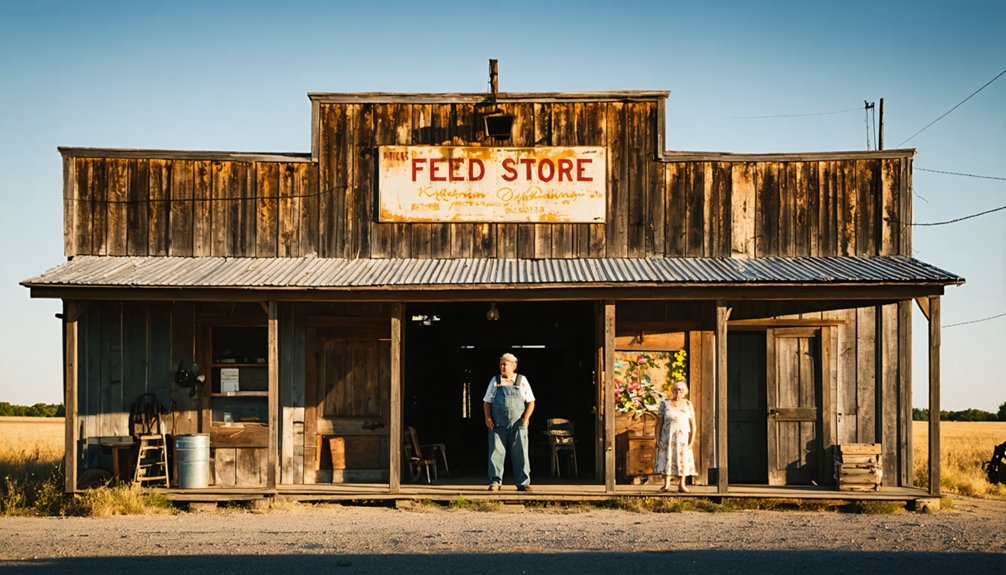
When you pull up to the last remaining active structure in Wirt, you’ll find Donald and Claudia Duke keeping the feed store alive amid the quiet ruins of what was once a roaring oil boom town.
They’re more than shopkeepers — they’re living keepers of local folklore, holding onto community stories that most ghost towns lose forever once the last resident leaves.
Stop in and talk with them. You’ll walk away understanding Wirt not just as a dot on a map, but as a place where real families worked, struggled, and survived fires, oil busts, and economic collapse.
The Dukes represent exactly what draws free-spirited road trippers to ghost towns — that rare, unfiltered human connection to history that no museum can fully replicate.
How to Get to Wirt From Healdton
After you’ve soaked in the Dukes’ stories, getting to Wirt from Healdton is invigoratingly straightforward — just head three miles west and you’re there. Your standard 2WD vehicle handles the roads easily, leaving you free to focus on the journey itself.
Follow these four simple steps:
- Start in downtown Healdton heading westbound
- Drive approximately three miles along the main road
- Watch for the feed store — your landmark arrival point
- Park and explore the remaining historical architecture on foot
You’ll immediately sense local legends hanging in the air around the standing houses and the silent Baptist church. This short drive connects you directly to an oil boom past that once roared with life, now preserved in quiet, stubborn fragments worth every mile.
Can You Drive a Regular Car to Wirt?
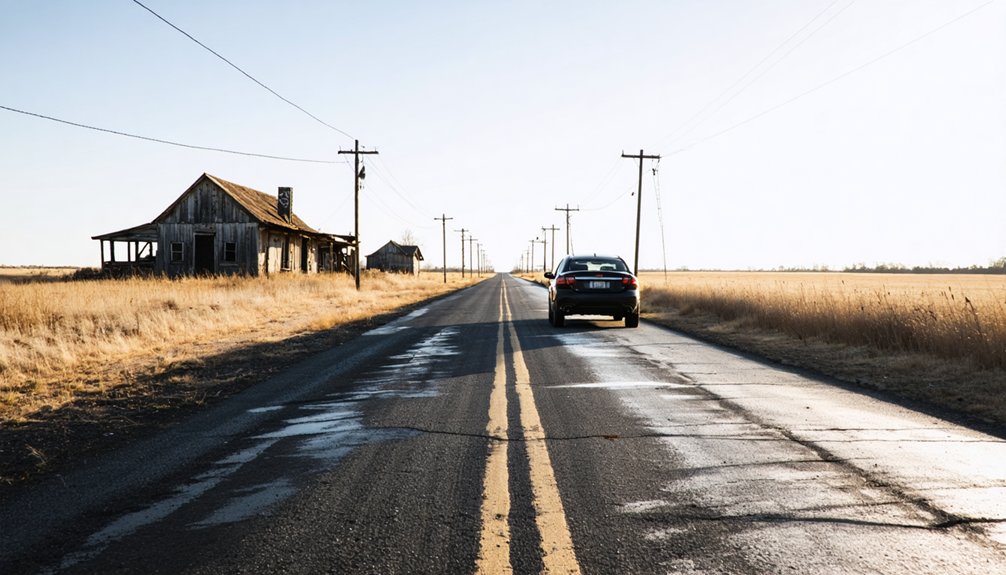
Good news greets every traveler heading to Wirt: you don’t need a rugged 4WD truck or specialized vehicle to make the journey. The roads into this former oil boom town carry a grid classification of level 2, meaning your regular 2WD car handles them comfortably.
You’ll roll in freely, chasing historical artifacts and local legends without logistical barriers slowing you down. Once a roaring petroleum community buzzing with workers living in tents they called Ragtown, Wirt now rests quietly under Oklahoma’s wide sky.
Your standard vehicle gets you close enough to feel that nostalgic weight — the feed store, the silent Baptist church, the few remaining houses. Pack water for the heat, load up the car, and drive straight into history.
When to Visit Wirt for the Best Experience
Wirt welcomes visitors year-round, so no single season locks you out of the experience. Each visit carries its own mood, shaped by the ghost town’s historical anecdotes and local legends.
- Spring – Mild temperatures make exploring the remaining houses and the silent Baptist church comfortable.
- Summer – Expect intense heat, so bring water; the feed store’s shade offers relief while Donald and Claudia Duke share stories.
- Fall – Cooler air sets a naturally nostalgic tone perfect for reflecting on Wirt’s oil boom past.
- Winter – Crisp, quiet days strip the landscape bare, letting the town’s skeletal remains speak loudly.
You’re free to roam whenever the road calls. Just respect the heat, pack accordingly, and let Wirt’s layered history unfold around you.
How to Prepare for Wirt’s Heat Before You Go
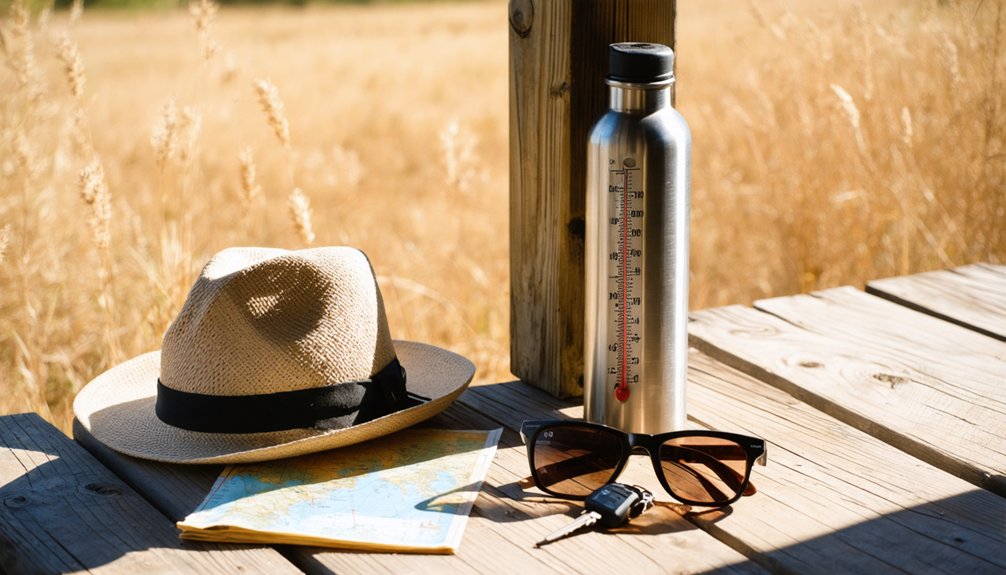
Packing smart separates a memorable ghost town visit from a miserable one. Wirt’s hot climate hits hard, especially when you’re walking open ground where a bustling oil boom town once stood. Climate preparedness isn’t optional here — it’s your ticket to actually enjoying what remains.
Bring plenty of water, more than you think you’ll need. Layer on sunscreen before you step out, and wear a wide-brimmed hat for consistent sun protection against Oklahoma’s unrelenting sky. Light, breathable clothing keeps you moving freely through the remnants of this forgotten community.
Visit during early morning hours to beat peak heat if you’re traveling in summer. The past deserves your full attention, and you can’t give it that when you’re overheated and rushing back to your vehicle.
Healdton and Carter County Stops Near Wirt
Just three miles east of Wirt, Healdton offers you a rewarding stop at its Oil Museum, where the same petroleum boom that built and broke Wirt comes alive through artifacts and photographs.
You’ll find Carter County’s backroads worth exploring slowly, as the landscape still carries the quiet weight of a once-frenzied oil frontier.
Round out your visit by wandering Healdton’s small community, where local stops connect you to the living history that ghost towns like Wirt can only partially tell.
Healdton Oil Museum Visit
Since you’re already in the area, the Healdton Oil Museum is a natural next stop that puts Wirt’s boom-and-bust story into vivid regional context. Its art deco architecture alone signals that petroleum once meant serious money here. Expect to walk away with a richer appreciation for what Wirt lived and lost.
Here’s what you’ll discover inside:
- Drilling equipment from the early boom era
- Photographs documenting the chaotic, tent-city beginnings resembling Wirt’s own Ragtown days
- Local legends surrounding wildcatters who struck it rich overnight
- Maps tracing how oil fields reshaped Carter County’s entire landscape
The museum connects the dots between ambition, geology, and ghost towns. After visiting, Wirt’s abandoned streets hit differently — you’ll feel the weight of what that petroleum rush truly meant.
Carter County Scenic Routes
Carter County unfolds like a slow-burn story once you leave Wirt’s quiet remnants behind, and the roads threading through Healdton reward anyone willing to linger. You’re only three miles east, so you won’t lose much time swinging through town before pressing deeper into the county.
Follow the back roads where local legends still echo across oil-stained landscapes — tales of wildcatters, boom fortunes, and communities that rose and vanished within a generation.
Historical artifacts tucked inside regional stops remind you that Carter County‘s petroleum past shaped everything you’re driving through.
Let the landscape speak. These aren’t just scenic routes; they’re open-air timelines connecting ghost town silence to living history. You came for freedom, and Carter County’s unhurried roads deliver exactly that.
Nearby Healdton Community Attractions
Three miles east of Wirt’s quiet remnants, Healdton carries a living pulse that the oil boom never fully abandoned. You’ll find local legends woven into every corner, and preservation efforts keep that history breathing. Make Healdton part of your route:
- Healdton Oil Museum – Dig into the petroleum past that built and broke towns like Wirt.
- Historic Downtown Storefronts – Walk streets that once supplied boom-town workers with everything they needed.
- Local Diners – Grab a meal where residents still swap stories rooted in Carter County’s wild decades.
- Community Parks – Breathe open air and appreciate the freedom this landscape quietly offers.
Healdton rewards the curious traveler who understands that ghost towns don’t exist in isolation—living communities surround them.
Frequently Asked Questions
What Was Wirt’s Original Name Before It Was Officially Renamed?
Before the official rename, Wirt’s original name was Ragtown — a raw, telling local legend born when workers lived in tents. You’ll find this historical landmark’s story remarkably evocative, with over 100 oil families once calling it home.
When Did Wirt’s Post Office First Open for Community Mail Services?
Wirt’s post office first opened on December 12, 1914, marking a milestone in historical postal services and community development. You’d have witnessed a thriving town finding its voice, connecting free-spirited souls through letters during the oil boom’s exciting, fleeting days.
What Was the Name of the School That Operated During Wirt’s Peak?
You’ll find that Dundee was the school that once shaped young minds during Wirt’s peak. It’s a cherished piece of ghost town history, woven into local legends that’ll stir your soul with nostalgic, untamed wonder.
How Many Grocery Stores Operated in Wirt During Its Oil Boom?
Two thriving stores traded during Wirt’s historic oil boom, feeding families who’d flocked to this bustling boomtown. Now you’ll find ghost town attractions that’ll evoke nostalgia for those glorious, gone-too-soon days of freedom and frontier prosperity.
Who Was Wirt Franklin, and What Role Did He Play Locally?
You’ll find Wirt Franklin’s legacy woven into local legends — he drilled the first well here, sparking an oil boom that built historical landmarks and gave this free-spirited community its unforgettable, hardworking name.
References
- https://www.ghosttowns.com/states/ok/wirt.html
- https://en.wikipedia.org/wiki/Wirt
- https://www.travelok.com/articles/oklahomaghosttowns