You’ll find Maine’s most enchanting ghost towns along remote ATV trails, including Riceville in Hancock County—a mill town abandoned after a 1910 fire—and Askwith, a lost railroad settlement from the 1890s. The Aroostook Valley Trail features historic railroad stops with unexplained phenomena, while Kennebec Valley Trail preserves eight miles of railroad history. You’ll need current Maine ATV registration, helmets, and backcountry gear for safe exploration. These hidden settlements offer incredible insights into Maine’s forgotten communities and industrial past.
Key Takeaways
- Riceville in Hancock County offers ATV access to a mill town abandoned in 1910 after fire destroyed the community.
- Askwith features remnants of a railroad settlement accessible via ATV along the abandoned Bangor & Aroostook Railroad route.
- Aroostook Valley Trail provides 28 miles of ATV access to multiple ghost town sites from Maine’s logging era.
- The Forks Region contains scattered logging camp remnants including Lake Moxie Station accessible through backcountry ATV trails.
- Current Maine ATV registration, helmets, and proper permits are required for legal access to ghost town locations.
Riceville: Hidden Mill Town in Hancock County
Deep in the wilderness of Hancock County, Riceville sits frozen in time along the banks of Buffalo Stream, where crumbling cellar holes and weathered foundations tell the story of a once-thriving mill town that vanished over a century ago.
Deep in Hancock County’s wilderness, Riceville’s crumbling foundations whisper tales of a vanished mill town along Buffalo Stream’s banks.
You’ll discover Riceville history stretching back to 1879, when F. Shaw and Brothers established their bark extraction works before Buzzell and Rice transformed it into a full tannery operation.
Tannery operations processed buffalo hides for New England’s booming shoe industry until a devastating fire ended everything in 1906. The township became completely abandoned by 1910 as residents departed following the industrial collapse.
At its peak in 1890, the community supported a population of 130 or more residents who lived in homes scattered throughout the settlement.
Now you can explore this ghost town on private logging land, where hunters and adventurers search among the ruins.
Exercise caution maneuvering overgrown terrain and respect property boundaries while uncovering remnants of homes, the mill, and other structures.
Askwith (Tarrantine): Lost Railroad Settlement
You’ll find Askwith’s remnants along the abandoned Bangor & Aroostook Railroad corridor between Rockwood and Greenville, where the old rail bed now serves as your ATV highway into Maine’s forgotten past.
The converted trail leads you directly through this lost settlement that once bustled with railroad workers and lumber operations before the tracks fell silent and the town vanished into the wilderness. This community thrived on timber depletion until resources became scarce by the mid-1890s, forcing residents to abandon their homes and businesses.
Navigate carefully through the overgrown sections where decaying infrastructure emerges from the forest like ghosts of Maine’s industrial era. The settlement served as a crucial railroad stop that connected the remote logging operations to markets throughout New England.
Railroad History and Abandonment
Between the towns of Rockwood and Greenville in Piscataquis County, you’ll discover the vanished settlement of Askwith, later renamed Tarratine—a ghost town that’s disappeared so completely from modern maps that most Maine residents have never heard its name.
The Bangor & Aroostook Railroad brought life to this logging community in 1895, establishing an essential stop that connected timber operations to distant markets.
Railroad expansion transformed the wilderness into a thriving settlement complete with train station and post office. The area’s abundant timber resources originally attracted settlers seeking to capitalize on the region’s rich natural wealth. Sophisticated conveyor systems were later developed to efficiently move logs from railroad cars into waterways for transport to mills.
However, settlement decline arrived swiftly when:
- Timber resources became depleted by the mid-1890s
- Nearby mining towns drew away remaining population
- The post office closed in 1895, marking abandonment’s beginning
Today, you’ll find the old railway converted into an ATV trail, offering adventurous riders access to explore this forgotten piece of Maine’s industrial heritage.
ATV Access Routes
Reaching Askwith’s ghostly remains requires traversing the converted railroad bed that now serves as your primary ATV route through Piscataquis County’s dense wilderness.
You’ll navigate deep into Maine’s least populated region, following the former Bangor & Aroostook Railroad corridor that cuts through thick forest canopy. Your exploration techniques should include GPS navigation since traditional maps won’t show this abandoned settlement’s location near modern Tarratine, Maine 04478.
Trail mapping becomes essential as you wind through overgrown pathways where locomotives once thundered. The converted rail bed provides stable footing for your ATV, but expect narrow passages and fallen timber obstacles.
You’ll know you’ve reached your destination when the decayed train station emerges from the forest shadows, offering tangible proof of this forgotten community’s railroad heritage.
Aroostook Valley Trail Ghost Sites
You’ll discover remnants of historic railroad stops scattered along the 28-mile Aroostook Valley Trail, where abandoned settlements like Riceville once thrived before economic collapse left only shadows and legends.
The gravel trail demands proper emergency preparedness as you venture into remote backcountry sections that wind through deep woods and along the Aroostook River. The trail’s uneven gravel surface makes navigation particularly challenging as you explore these forgotten outposts.
Your ATV journey follows the original 1910 railroad bed, connecting modern towns while passing through areas where ghost hunters have reported unexplained phenomena and overgrown paths that seem to appear overnight. The region’s history includes Route 2A nearby, once a main transport route for truckers before being replaced by I-95, adding to the area’s collection of abandoned pathways through Maine’s wilderness.
Historic Railroad Stop Remnants
While the Aroostook Valley Railroad once carried timber and agricultural goods across northern Maine’s wilderness, today its abandoned right-of-way reveals haunting remnants of forgotten settlements that thrived during the region’s logging heyday.
You’ll discover these compelling ghost sites along the trail:
- Askwith Remnants – Foundation stones and rusted machinery marking where loggers once lived north of Greenville.
- Davidson Ruins – Crumbling sawmill structures and a former clothespin factory hidden deep in Stacyville’s forests.
- Railroad Infrastructure – Abandoned bridges, telegraph poles, and station platforms scattered throughout the corridor.
These sites offer incredible exploration opportunities, but you’ll need proper navigation equipment since wilderness conditions can change rapidly. Many of these communities dissolved when timber companies acquired the land for profit, leaving behind only traces of their former existence. The Bangor & Aroostook eventually absorbed smaller regional railways, consolidating control over these remote transportation networks.
The trail’s multi-use access makes ATV exploration feasible while preserving these historic railroad stops that witnessed northern Maine’s boom-and-bust cycles.
Backcountry Trail Access Requirements
Before you can explore these remote ghost sites along the Aroostook Valley Trail, you’ll need to navigate Maine’s complex ATV access requirements that govern this pristine backcountry corridor.
Your machine must carry current Maine ATV registration and display proper numbers for this state-owned multi-use rail trail. Dual sport motorcycles need ATV registration specifically for backcountry access here.
You’ll find dedicated parking at the northern endpoint in New Sweden via Westmanland Road. Always yield to hikers and bicyclists sharing this corridor.
Check trail conditions before venturing out—mud season closures shut down motorized access when saturated soils threaten trail integrity. Construction zones remain completely off-limits.
Pack trail maps, wear protective gear, and prepare for challenging backcountry segments where these forgotten settlements await discovery.
Aroostook River Route Features
Following the abandoned Aroostook Valley Railroad bed for 28.8 miles, this crushed stone trail cuts through some of northern Maine’s most haunting backcountry between Presque Isle and New Sweden.
You’ll discover terrain that ranges from open potato fields to dense forests where ghost stories flourish.
The Aroostook River meandering alongside offers scenic views while you navigate varying landscapes:
- Remote forest sections requiring backcountry emergency preparation despite nearby amenities
- Historic railroad crossings where diesel trains once hauled potatoes until 1996
- Connected trail networks linking thousands of miles of ATV routes
Your ATV handles the gravel surface easily year-round, but stay alert in deeper woods where legends speak of watching trees and haunted winds along this former lumber baron’s empire.
Kennebec Valley Trail Historic Remnants
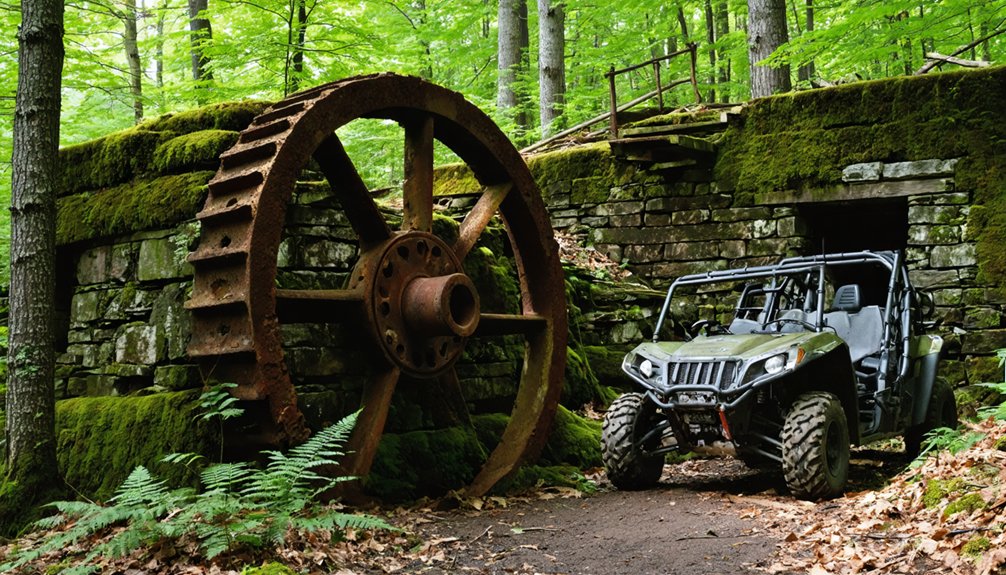
As you navigate the Kennebec Valley Trail‘s eight-mile stretch, you’re riding on preserved pieces of Maine’s railroad history that once connected thriving communities across this scenic region.
These historic trails maintain their original rail bed solidity, giving you stable ground beneath your ATV while you explore remnants of former rail lines that shaped the Kennebec Valley’s development.
The abandoned rail infrastructure you’re traversing represents more than just recreation—it’s your gateway to discovering backcountry areas where ghost towns may lie hidden through interconnected trail networks.
You’ll find well-marked access points connecting communities like Embden, Solon, and Bingham, where these repurposed railroad beds now offer you unrestricted access to over 200 miles of Upper Kennebec Valley wilderness extending toward the Canadian border.
The Forks Region Abandoned Settlements
Deep within Somerset County‘s vast forestlands, The Forks region reveals scattered remnants of Maine’s logging empire where ATV trails now wind through settlements that once bustled with timber workers and railroad crews.
You’ll discover abandoned settlements where the Somerset Railroad once carried timber through remote crossroads that served as jumping-off points for northern logging camps.
When exploring these ghost town folklore sites, you’ll encounter:
- Lake Moxie Station remnants – former Victorian logging town foundations
- Overgrown railroad grades – now perfect ATV corridors through wilderness
- Timber camp clearings – where loggers once lived during harsh winters
Today’s outdoor enthusiasts follow these historic routes between Skowhegan and the Quebec border.
You’ll ride where trains once hauled Maine’s timber wealth, experiencing authentic wilderness freedom while respecting private property and staying alert for changing trail conditions in this rugged backcountry terrain.
Bangor and Aroostook Trail Ghost Towns
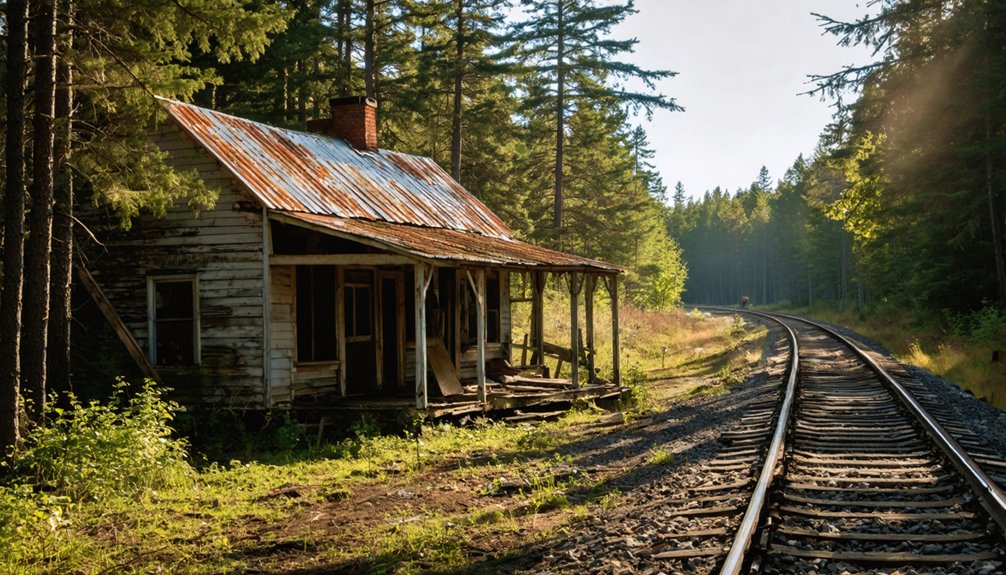
Stretching 62 miles through Aroostook County’s wilderness, the legendary Bangor and Aroostook Trail opens remote corridors to Maine’s most haunting abandoned settlements where entire communities vanished alongside the railroad that once sustained them.
Sixty-two miles of wilderness trail unveiling Maine’s most mysterious ghost towns where entire communities disappeared with their abandoned railroad.
You’ll discover Askwith, a forgotten logging settlement turned ghost town between Rockwood and Greenville, accessible through ATV trails that wind past crumbling foundations and overgrown rail beds.
The trail’s multi-use designation lets you explore year-round on ATVs, connecting Van Buren through Mapleton, Washburn, Stockholm, and Caribou.
Ghost hunting enthusiasts frequent these northern stretches where timber and ice towns experienced dramatic booms and busts.
Navigate carefully through Haynesville Woods, where Route 2A earned its deadly reputation.
These wilderness corridors reveal Maine’s shifting economy while offering unparalleled access to haunted history.
Planning Your Ghost Town ATV Adventure
How do you transform your ghost town fascination into a safe, memorable ATV expedition through Maine’s wilderness? Proper planning guarantees you’ll discover abandoned settlements while respecting Maine’s rugged terrain and trail maintenance requirements.
Essential Planning Steps:
- Secure proper registration through local ATV clubs or Maine’s program, guaranteeing legal access to remote ghost town routes like Riceville in Hancock County.
- Choose ideal timing during fall season for spectacular scenery and ideal riding conditions through forested paths leading to forgotten settlements.
- Pack backcountry gear for overnight risks on remote 28-mile stretches where cell service disappears and local legends come alive.
You’ll need helmets, appropriate safety equipment, and respect for noise regulations on multi-use paths.
Connect with local clubs for detailed maps showing ghost town access points, and don’t forget non-ethanol fuel for extended wilderness exploration.
Essential Gear for Backcountry Exploration
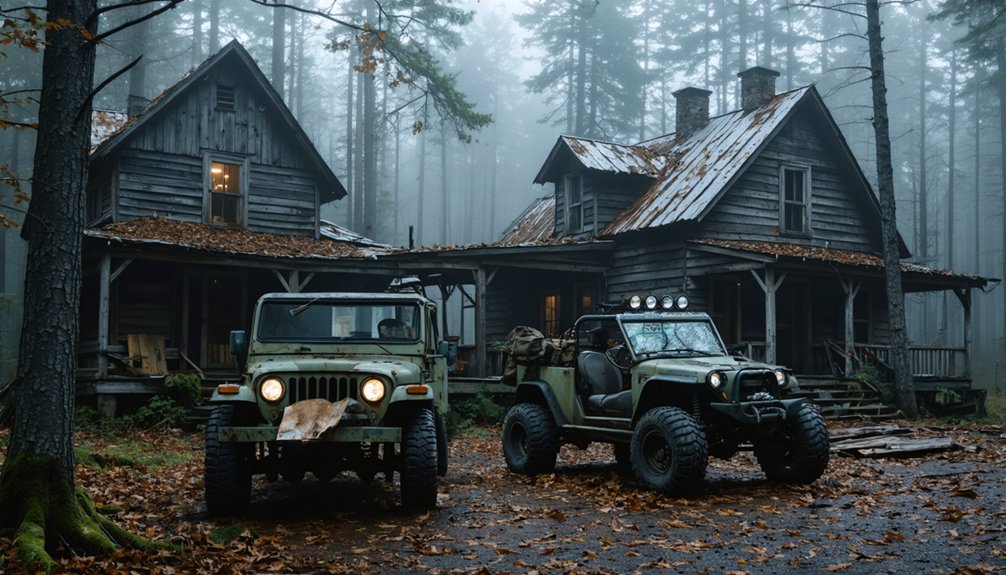
Five essential gear categories separate successful backcountry ghost town explorers from those who turn back at the first sign of trouble.
Your protective equipment starts with DOT-approved helmets and eye protection against flying debris on overgrown trails. Gear recommendations include long-sleeved shirts, riding pants with padding, and sturdy over-the-ankle boots for traversing rocky terrain around abandoned settlements.
You’ll need off-road gloves with knuckle padding and hydration backpacks for extended exploration sessions.
Essential ATV maintenance tips emphasize carrying tool kits with tire repair plugs, portable jump boxes, and spare belts to handle breakdowns miles from civilization.
First-aid kits, flashlights, and tow ropes complete your emergency arsenal for true backcountry freedom.
Before you fire up your ATV and head toward Maine’s forgotten settlements, understanding proper trail navigation and safety protocols will determine whether your ghost town adventure becomes an unforgettable exploration or a dangerous ordeal.
Follow these essential navigation strategies:
- Stay on marked trails with green and white signs while carrying GPS devices and paper maps as backup navigation tools.
- Operate at prudent speeds based on trail conditions, driving right and yielding to other traffic.
- Respect trail etiquette by avoiding closed sections and obtaining landowner permission for private land access.
You’ll need protective gear including long pants, boots, gloves, and eye protection.
Never drink and ride, and always register your ATV to support trail maintenance.
Carry extra water and rain gear for Maine’s unpredictable weather conditions.
Frequently Asked Questions
Are There Any Ghost Towns in Maine With Original Buildings Still Standing?
Despite common misconceptions, you’ll discover original structures with remarkable historical significance throughout Maine’s ghost towns. Explore Riceville’s church ruins, Davidson’s factory remains, and Madrid’s mining buildings—but prioritize safety while adventuring through these atmospheric remnants.
What Permits or Permissions Are Needed to Explore Private Ghost Town Sites?
You’ll need written landowner permission for private property exploration guidelines before venturing onto ghost town sites. Respect boundaries, obtain proper documentation, and prioritize safety while discovering Maine’s abandoned settlements responsibly.
Can You Camp Overnight Near Ghost Town Locations During ATV Trips?
You can camp overnight near ghost towns with proper camping regulations compliance. Secure overnight permits for designated areas like Swan Island or book trail-accessible cabins. Always verify seasonal restrictions and follow Leave No Trace principles for responsible exploration.
Are There Guided ATV Tours Available for Maine Ghost Town Exploration?
Guided ghost town tours aren’t specifically available, but you’ll find local guides through Ride Moosehead who can customize backcountry adventures to historic sites like Riceville’s ruins with proper safety equipment and expertise.
What’s the Best Time of Year to Visit Ghost Towns by ATV?
Fall’s your best season for ghost town ATV adventures. You’ll experience perfect weather conditions with crisp air, stunning foliage, and firm trails. The haunted atmosphere intensifies while avoiding summer crowds and spring mud restrictions.
References
- https://www.northernoutdoors.com/maine/atv-trails/
- https://www.mooseriverlookout.com/post/ghost-towns-in-maine-9-haunted-places-to-explore-this-fall-2025-guide
- https://travelmaine.com/outdoor-recreation/land/maine-atv-trails-tours/
- https://thumperfab.com/blogs/the-atv-utv-blog-with-thumper-fab/roar-into-excitement-discovering-maines-hidden-atv-gems
- https://www.maine.gov/dacf/parks/trail_activities/atv/atv-trails.shtml
- https://www.visitaroostook.com/post/top-six-atv-destinations-in-aroostook
- https://uk.hotels.com/go/usa/ghost-towns-maine
- https://untamedmainer.com/awesome-maine-atv-destinations-attractions/
- https://z1073.com/5-maine-ghost-towns/
- http://abandonmentofmaine.weebly.com/riceville-maine.html