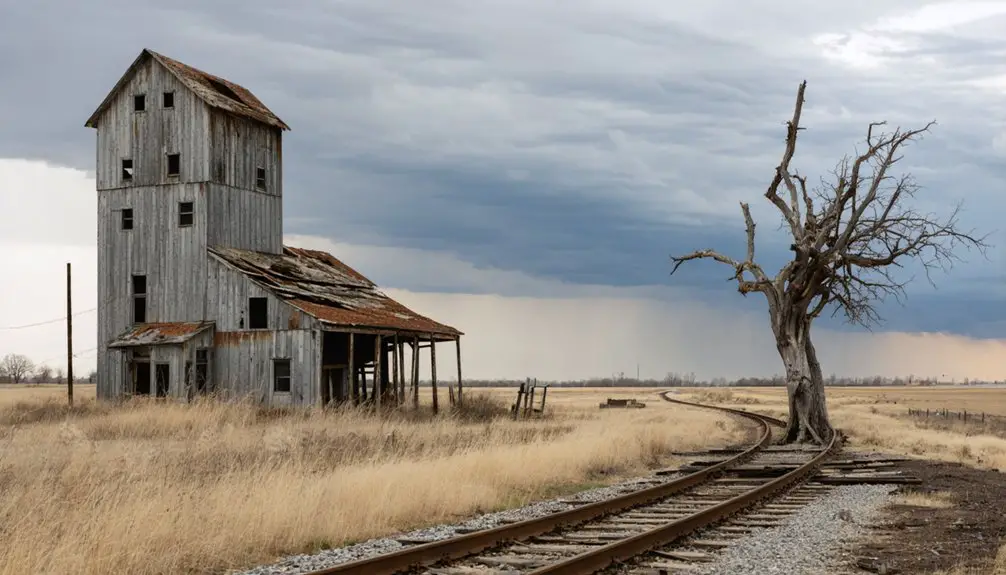
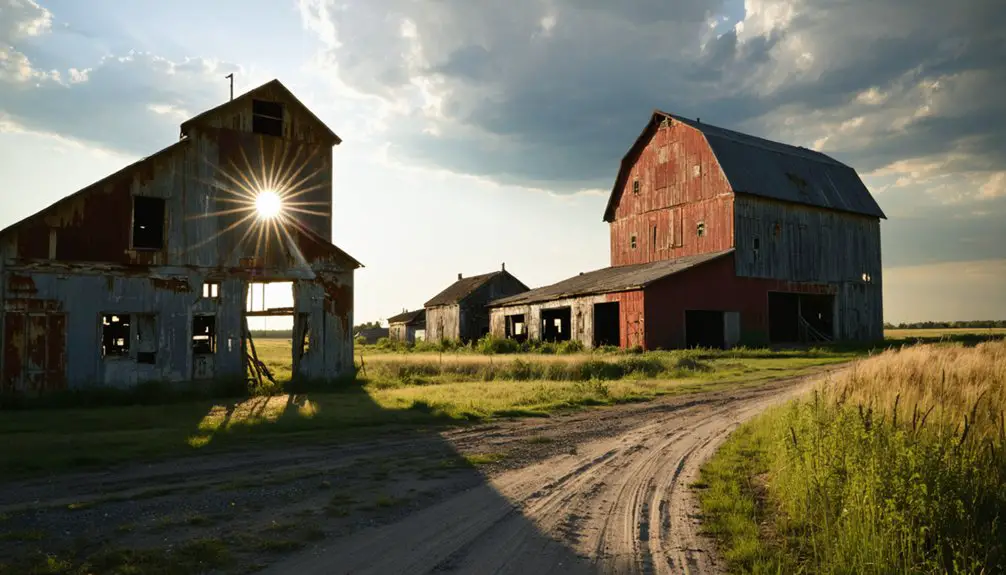
You’ll discover Minnesota’s most accessible ghost towns by following the historic Soo Line Trail System, where abandoned logging and mining settlements like McGrath, Lawler, and Swatara await exploration just off well-maintained ATV corridors. These remote locations offer concrete remnants of old post offices, railroad infrastructure, and logging camp foundations that tell stories of Minnesota’s industrial past. The 100-mile trail network connects multiple ghost towns through repurposed rail corridors, providing thrilling rides through Superior National Forest while uncovering hidden historical treasures around every bend.
Key Takeaways
- McGrath, Lawler, McGregor, Palisade, and Swatara offer ATV access to historic logging and railroad ghost towns.
- The 100-mile Soo Line Trail System connects multiple abandoned towns with interpretive signage marking historical sites.
- Lawler provides modern amenities and connects to Northwoods ATV Trail System via County Roads 16 and 13.
- McGregor features three access routes to Big Sandy Lake’s railroad heritage and wildlife management areas.
- ATV season runs April through October on designated trails with required safety gear and environmental regulations.
McGrath: Historic Logging Town Along Highway 65
Two historic ghost towns await your ATV exploration near McGrath, a former logging hub that’s anchored Minnesota’s Highway 65 corridor since 1907.
You’ll discover Bloemendal just 1.5 miles from Highway 65 on County Road 2, where concrete slabs mark what once housed a 60-foot log home post office and store.
Silver Star offers another ghost town exploration opportunity, where a McGrath banker once provided cheap land to veterans. Coordinates place this mysterious site at 46.39°N, 93.6°W, complete with rumors of a buried locomotive waiting for discovery.
McGrath’s logging history comes alive during the White Pine Logging and Threshing Show each Labor Day weekend, where you’ll witness authentic demonstrations at historic logging camps that once produced railroad ties and posts. The original Highway 65 extended to McGrath in 1934 as part of a major route expansion that connected this remote logging community to the broader Minnesota highway system. The highway was paved from Minneapolis to just north of McGrath by 1940, making this historic logging area more accessible to visitors.
Lawler: Remote Settlement With Modern Amenities
You’ll discover Lawler’s unique character when you pull into this remote settlement nestled in Aitkin County’s Automba Township, where Jackson’s Hole provides essential food and fuel services in what remains of the old town site.
Your ATV adventure begins with easy access via County Roads 16 and 13, positioning you perfectly along the Soo Line Trail and the backbone of the extensive Northwoods ATV Trail System.
The settlement maintains its ghost town atmosphere while offering modern conveniences that make it an ideal base for exploring the surrounding 16 miles of North and South Lawler Loop trails. As you traverse these scenic trails, you’ll experience the diverse land and forest types that characterize Northern Minnesota’s wilderness landscape. The converted rail grade design ensures excellent drainage, keeping your route dry even during wet spring conditions when other trails might be muddy.
Jackson’s Hole Services
While most ghost towns leave you searching for basic necessities, Lawler stands apart as a remote settlement that’s maintained essential modern infrastructure despite its isolated location.
You’ll find this unique destination nestled between Route 6 and Tomahawk Street, where commercial and residential properties still operate under carefully managed conditions.
Jackson’s Hole offers specialized services that cater to adventurous visitors exploring Minnesota’s backcountry.
The settlement’s proximity to rail-trails creates excellent connectivity for off-road enthusiasts, though you won’t find dedicated ATV amenities here.
Instead, you’ll discover a fascinating blend of environmental monitoring systems and restricted-use facilities that showcase modern engineering solutions in remote locations.
The local attractions include ongoing remedial operations and unique infrastructure that’s been carefully maintained since the 1995 environmental restoration efforts. This remote location has become a valuable resource for community support initiatives, demonstrating how isolated settlements can still serve important social functions beyond their historical significance.
Trail Access Routes
Deep in Minnesota’s Iron Range, Lawler beckons ATV enthusiasts through a network of repurposed rail corridors and forest roads that wind through Superior National Forest‘s remote backcountry.
You’ll navigate old Great Northern and Soo Line railways that’ve been transformed into rugged off-road passages, connecting with logging feeder lines from the Ely area.
Route planning becomes essential here—these paths demand high-clearance vehicles due to gravel surfaces and seasonal washouts.
The Arrowhead State Trail offers legal segments nearby, but you’ll want to map your approach carefully through forest service roads.
Trail safety requires checking current DNR status before departing, as seasonal closures run October through May. Federal agencies maintain Joint Operation Centers for coordinated border operations, though this remote Minnesota wilderness operates under different jurisdictional oversight. Military installations often implement environmental guidelines for wilderness training areas that may overlap with recreational zones.
Cell coverage remains spotty, so download offline maps and inform others of your intended route through this authentic ghost town territory.
McGregor: Railroad Heritage Near Big Sandy Lake
You’ll find McGregor’s abandoned railroad infrastructure scattered around Big Sandy Lake in north central Minnesota, where grain transport operations once thrived before the 1874 bridge construction ended the ferry system.
Your ATV can navigate the old rail corridors that connected this former commercial hub to the broader Minnesota Central Railroad network.
The trails here offer direct access to preserved locomotive replicas and railroad heritage sites that showcase the region’s transportation history from the early 1900s. At its peak in the 1870s, this area supported a bustling population of over 5,500 residents who depended on the shipping industry.
The railroad construction here paralleled developments across the Midwest, where westward expansion prompted major debates about transportation methods for connecting isolated communities to growing commercial centers.
Historic Railroad Town Origins
Although McGregor sits along Iowa’s Mississippi River bluffs rather than within Minnesota’s borders, this historic railroad town‘s legacy directly connects to your ATV adventures near Big Sandy Lake through the rail networks that once carried Minnesota’s grain harvest.
Alexander MacGregor, descendant of legendary Scotsman Rob Roy MacGregor, established his ferry operation in 1837 when the Milwaukee & Mississippi Railroad reached Prairie du Chien. This timing created the perfect storm for railroad expansion and grain transport dominance.
McGregor’s strategic importance stemmed from three key developments:
- Ferry Operations – Railroad cars crossed the Mississippi via ferry until 1874.
- Regional Hub Status – Grain flowed from Iowa and Minnesota through McGregor to eastern markets.
- Network Connections – Will W. Cargill’s facilities linked Iowa railroads to Minnesota’s expanding system.
The construction boom attracted companies like Foley Brothers Construction Company, which laid over 25,000 miles of railroad track across the U.S., Canada, and Saudi Arabia, fundamentally shaping the transportation infrastructure that connected remote areas like Big Sandy Lake to major markets.
You’ll discover how these transport corridors shaped the wilderness you now explore.
Big Sandy Lake Access
Three distinct access routes connect you to Big Sandy Lake‘s railroad heritage, where McGregor’s transportation legacy intersects with Minnesota’s pristine wilderness.
You’ll find the former railroad station site along the north shore, where Northern Pacific’s 1898 passenger depot once served logging operations. The 1895 dam construction created today’s scenic reservoir system that you can explore via ATV trails winding through Savanna State Forest lands.
Your adventure leads through Big Sandy Lake Wildlife Management Area, where original railroad grades provide natural pathways.
The Sandy River Crossing area offers multiple entry points from Turner Township, giving you freedom to choose your route. You’ll discover remnants of the transportation network that supported Minnesota’s logging boom while experiencing untouched wilderness that’s remained largely unchanged since those pioneering days.
Trail Connections and Amenities
Beyond exploring Big Sandy Lake‘s historic railroad grades, your ATV adventure gains deeper context at the Northern Minnesota Railroad Heritage Association, positioned strategically along the Paul Bunyan Byway just south of Crosslake.
This 3,500-square-foot facility transforms your ghost town access experience by connecting past and present through authentic railroad heritage displays.
the history of Minden, Alabama ghost town is rich with stories of resilience and community spirit, once bustling with life and now a shadow of its former self. Exploring this site offers a unique glimpse into the past, where remnants of the old railway still echo the journeys of those who traveled through. Visitors can immerse themselves in the tales that shaped the town, creating a connection to the history and culture that defined it.
Essential trail amenities include:
- Interactive Education Center – Operating model layouts in multiple scales showcase the logging and mining operations that created these abandoned settlements.
- Outdoor Photo Opportunities – 1/10 scale William Crooks steam engine replica provides perfect backdrop for documenting your expedition.
- Research Library – Historical archives and interpretive displays reveal untold stories of northern Minnesota’s vanished communities.
Open Saturdays 10 am to 2 pm, you’ll discover how railroads birthed—and ultimately abandoned—the ghost towns you’re exploring.
Palisade: Mississippi River Community With Rail Bridge Trail
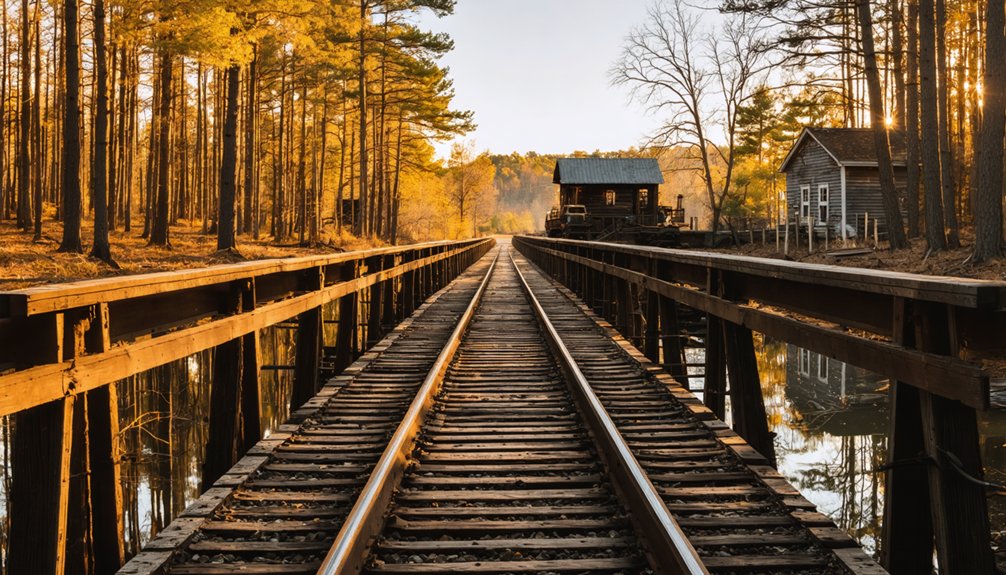
Nestled along the Mississippi River’s headwaters region in Aitkin County, Palisade offers ATV enthusiasts a compelling blend of river history and accessible trail riding through Minnesota’s northern wilderness.
You’ll discover a community that’s evolved from its 1910 post office origins and 1922 incorporation into today’s quiet riverside settlement, named after the dramatic cliffs flanking the Mississippi.
The Rail Bridge Trail serves as your primary ATV route, following historic rail lines while delivering spectacular river views.
You can explore old roads like Grouse Street and access the former Wold Ferry site from 1908-1934 on the west riverbank.
Palisade history unfolds as you navigate these ATV routes through the protected Mississippi Headwaters corridor, where glacial River Warren carved the dramatic valley you’ll ride through today.
Swatara: Small Town Adventure in ATV-Friendly Territory
Moving inland from the Mississippi River’s scenic corridor, you’ll find Swatara tucked away in Minnesota’s ATV-friendly backcountry, where logging roads and abandoned rail grades create an explorer’s playground through one of the state’s most historically fascinating communities.
Swatara history reveals a classic boom-and-bust logging town that peaked in the 1910s with schools, stores, and railroad service.
But what makes this destination truly unique is the MXC controversy of the early 1970s, when planners proposed building a futuristic city of 250,000 residents under a geodesic dome.
Your adventure highlights include:
- Exploring old Soo Line Railroad grades on established ATV trails
- Visiting the former general store site where locals once fought massive development
- Riding through timber country that nearly became Minnesota’s experimental utopia
Accessing the Soo Line Trail System
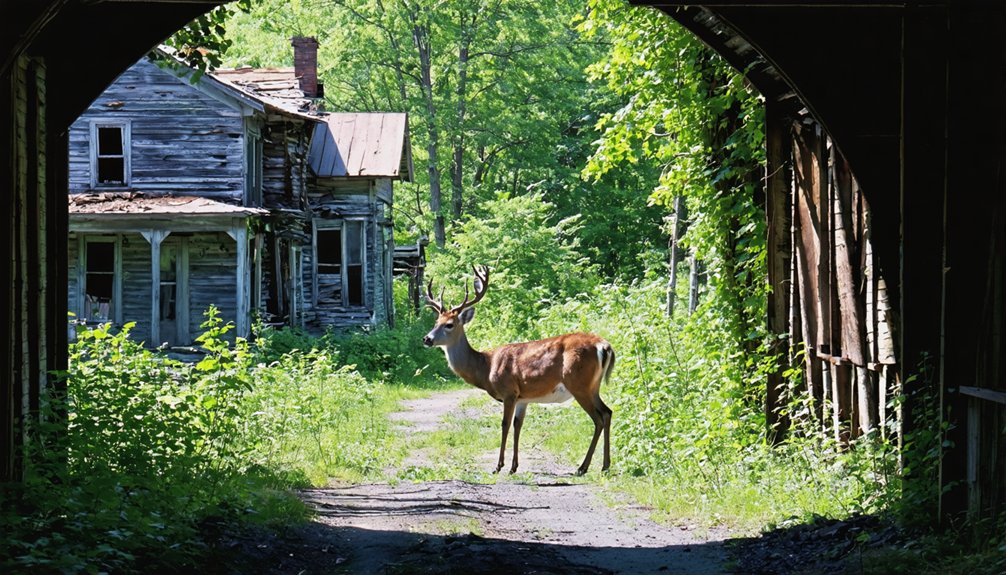
When you’re ready to explore Minnesota’s ghost towns by ATV, the Soo Line Trail System serves as your 100-mile gateway into abandoned railroad history that’s been transformed into prime riding territory since the original railway retired in 1961.
You’ll find multiple access points including McGregor at Highway 65 and Palisade along the Mississippi River, where historic town sites like Bain and Shovel Lake await discovery with interpretive signage marking their stories.
The system’s trail maintenance is handled by dedicated local clubs and county crews who’ve designed over 200 miles of environmentally conscious pathways.
Their environmental impact remains minimal through careful planning on public lands. You’ll ride rough dirt and gravel surfaces perfect for ATVs, with seasons running April through October for maximum freedom to explore forgotten settlements.
Blind Lake Loop and Connector Trails
Beyond the main Soo Line corridor, you’ll discover the Blind Lake Loop‘s 15-mile circuit that serves as your launching pad into some of Minnesota’s most secluded ghost town territory.
This ATV Experience connects you to over 400 miles of interconnected trails, giving you unlimited freedom to explore abandoned settlements scattered throughout Aitkin County’s wilderness.
The Blind Lake Connector adds another 20 miles, linking directly to the Soo Line near Swatara and opening access to forgotten communities:
- North Section: 8.3 miles through dense hardwood forests where old homesteads hide
- Willow River Bridge: Strategic crossing point near former logging camps
- South Section: 10-mile stretch connecting to Hill City’s ghost town network
You’ll find shelter at Blind Lake and picnic areas along the Connector, perfect for planning your next ghost town expedition.
Essential Services and Camping Options
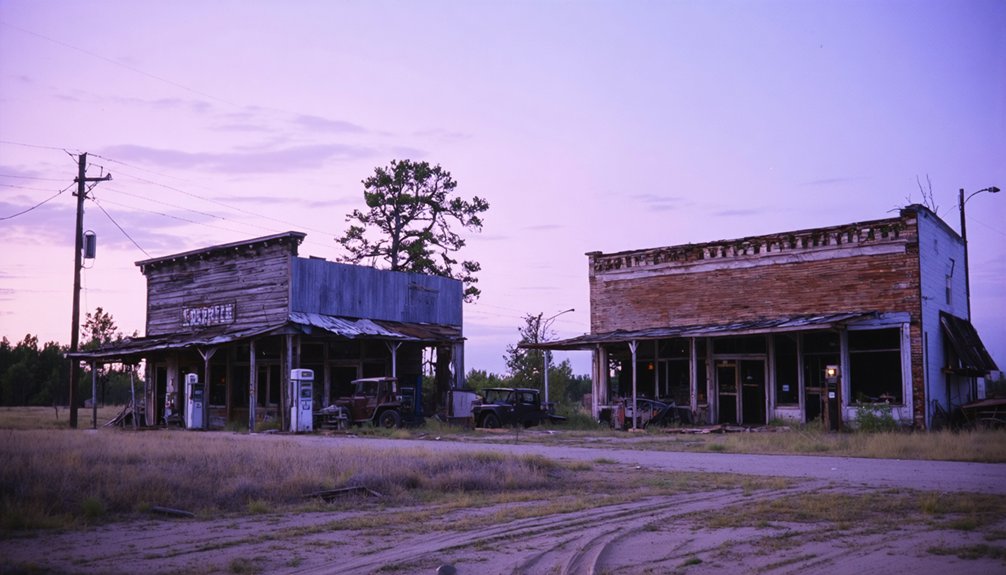
Your ghost town expeditions require strategic planning around fuel stops and overnight accommodations scattered throughout Minnesota’s ATV trail network.
McGrath’s old logging town atmosphere welcomes riders with essential fuel stations and supplies along the Soo Line Trail.
You’ll discover Jackson’s Hole in Lawler provides hearty meals near the historic loops, while McGregor delivers complete services including lodging at the Highway 65 junction.
Pack your camping gear for Palisade’s Berglund Park, offering showers and full facilities right on the trail.
Hill City’s municipal campground near Hill Lake gives you convenient access to Quadna Mountain Resort’s amenities.
Jacobson’s riverside location provides camper cabins along the Mississippi, while Chisholm’s direct trail access makes restocking effortless during your 25-mile wilderness stretches.
Planning Your Ghost Town ATV Adventure
Before you fire up your ATV and head into Minnesota’s wilderness to explore forgotten settlements, you’ll need to navigate the state’s registration requirements and safety regulations.
Your adventure starts with proper preparation:
Your adventure starts with proper preparation and understanding Minnesota’s ATV requirements before exploring remote wilderness areas.
- Register your ATV with Minnesota DNR – All ATVs require registration at $66, even for private property exploration.
- Obtain safety certification – Riders born after July 1, 1987 must carry approved ATV Safety Certificates on public lands.
- Check local ordinances – Counties have varying rules for road access and trail permissions.
Don’t forget essential gear: DOT-approved helmets for under-18 riders, eye protection, and trail maps.
Non-residents need a $30 trail pass for stays under 30 days.
Research your route beforehand, verifying which trails connect to ghost town locations and respecting private property boundaries for an unforgettable backcountry experience.
Frequently Asked Questions
What ATV Safety Equipment Is Required When Riding Minnesota’s Ghost Town Trails?
Picture yourself traversing rugged paths to forgotten settlements—you’ll need DOT-certified helmets, goggles, long sleeves, pants, gloves, and over-ankle boots for ATV safety while exploring Minnesota’s maintained ghost town trails.
Are There Guided ATV Tours Available for the Historic Ghost Towns?
You’ll find limited guided ATV tours specifically for Minnesota’s ghost towns, though operators like Timber Ghost Tours offer wilderness adventures. Most historical significance exploration requires self-guided rides to these remote, abandoned settlements.
Can You Ride ATVS Year-Round or Only During Specific Seasons?
Ready for year-round adventure? You can enjoy year round riding on most trails, but seasonal regulations restrict ditch riding April-August in agricultural zones and limit deer season access on state lands.
What Permits or Licenses Do I Need for ATV Riding in Minnesota?
You’ll need DNR registration for your ATV ($68.50 new, $66 renewal) and a safety certificate if born after 1987. Check Minnesota trail maps for specific areas requiring additional trail passes.
Are There Age Restrictions for ATV Riders on These Trail Systems?
Yes, Minnesota’s trail systems have strict ATV age restrictions for riders. You’ll need safety certificates if you’re under 16, adult supervision for ages 12-15, and helmet requirements keep younger adventurers protected.
References
- https://billhansenrealty.com/four-outstanding-atv-and-ohv-trails-in-northern-minnesota/
- https://www.polaris.com/en-us/off-road/articles/recreation/atv-sxs-utv-trails-mn/
- https://www.co.aitkin.mn.us/departments/atv/
- https://www.trailsinnquadna.com/atv-trail-adventures
- https://www.dnr.state.mn.us/state_parks/virtual_tour/iron_range/dialup.html
- https://www.exploreminnesota.com/profile/soo-line-north/5108
- https://www.miesoutlandsaukcentre.com/blog/where-to-off-road-in-minnesota–2203
- https://thumperfab.com/blogs/the-atv-utv-blog-with-thumper-fab/what-are-the-top-atv-trails-in-minnesota
- https://deadpioneer.com/routes/US65/index.htm
- https://en.wikipedia.org/wiki/Minnesota_State_Highway_65