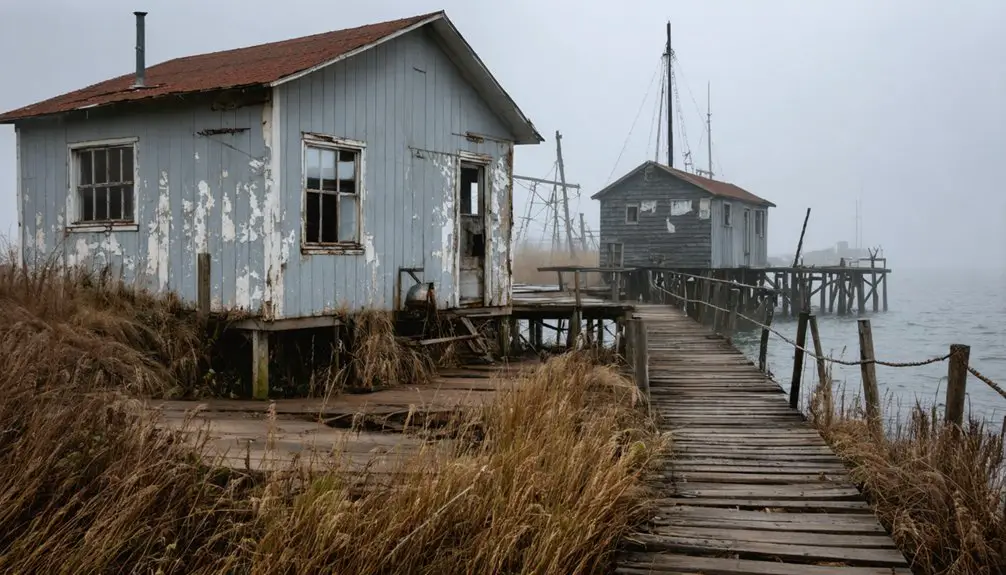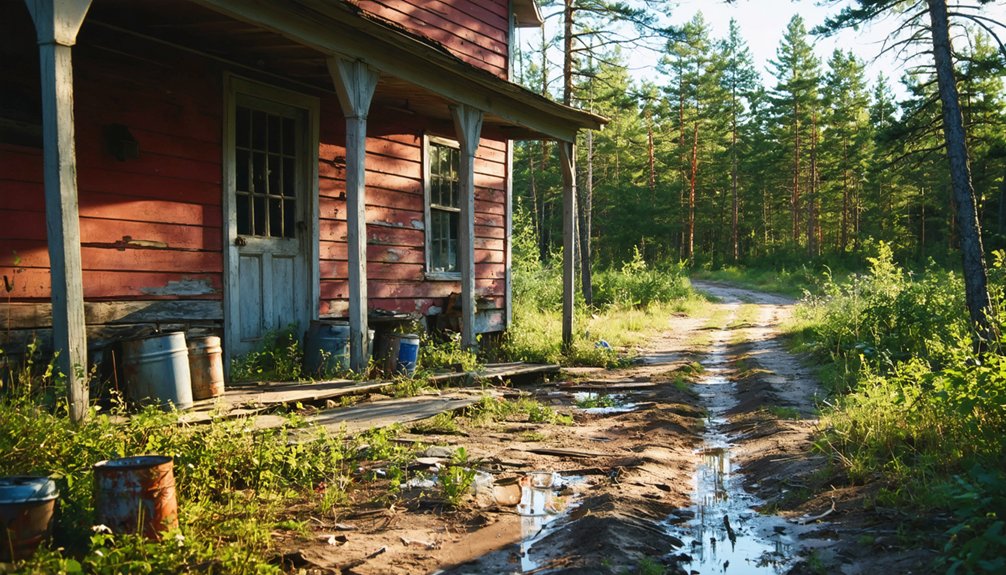
You’ll find Wisconsin’s most compelling ghost towns along designated ATV trails that follow abandoned railway corridors and historic logging routes. The 74-mile Tuscobia State Trail connects multiple abandoned settlements from the logging era collapse, while Iron County’s backcountry trails lead to mining ghost towns like Montreal. Black River State Forest and Flambeau River systems offer access to crumbling homestead foundations and logging camp ruins safely accessible via marked ATV routes. Explore these haunting destinations where detailed trail maps reveal hidden historical treasures.
Key Takeaways
- Tuscobia State Trail provides ATV access to multiple ghost towns along a 74-mile former railway corridor through northern Wisconsin.
- Flambeau and Georgetown trail systems offer ATV routes to abandoned logging camp ruins with preserved archaeological artifacts from 1880s-1939.
- Iron County’s backcountry ATV trails reach ghost mining settlements including Montreal and accessible Plummer Mine ruins from early 1900s operations.
- Western Wisconsin county ATV routes follow abandoned rail grades to ghost sites like Diamond Bluff and Rochester Flats foundations.
- Black River State Forest designated ATV trails wind through homestead clearings with crumbling foundations and abandoned rail transportation corridors.
Tuscobia State Trail Ghost Town Destinations
When you fire up your ATV and head onto Wisconsin’s Tuscobia State Trail, you’re following the original Chicago, St. Paul, Minneapolis & Omaha Railway alignment that shaped settlements from 1899-1914.
When you fire up your ATV on the Tuscobia Trail, you’re riding through Wisconsin’s forgotten railway history from 1899-1914.
This 74-mile corridor offers unmatched access to ghost towns that vanished when logging economies collapsed in the 1940s-1960s. Your Tuscobia Trail history adventure begins at Winter Railroad Depot, a restored 1905 station serving as your interpretive basecamp.
Abandoned depot explorations reveal foundation remnants and platform traces between Park Falls and Rice Lake. You’ll discover former town lots, lane patterns, and building footprints directly accessible from the maintained trail. The trail passes through the Flambeau River State Forest, adding scenic wilderness to your ghost town exploration.
Small cemeteries and property markers mark where communities once thrived. The compacted gravel surface handles ATVs year-round, with multiple trailheads providing staging areas and services for extended ghost-hunting expeditions. Your route connects seven small communities across Barron, Washburn, Sawyer, and Price counties.
Northwoods Logging Camp Ruins Along Flambeau and Georgetown Trails
As you venture beyond the railway corridors into Wisconsin’s deep Northwoods, the Flambeau and Georgetown trail systems reveal access to a different chapter of abandonment—the massive logging camps that housed 150-300 workers during the state’s timber boom from the 1880s through 1939.
You’ll discover earthen berms marking rotted bunkhouse foundations, best spotted from aerial perspectives but accessible via ATV.
Archaeological preservation efforts protect these sites where garbage dumps and outhouse areas yield the richest logging camp artifacts from daily camp life. These camps housed workers from diverse ethnicities and cultures, creating unique social dynamics that can only be understood through archaeological investigation. The Flambeau Trail follows historic river routes used for log transport, while Georgetown Trails traverse cutover land now integrated into forest reserves.
Exercise caution around unstable foundations and respect these fragile historical sites that document Wisconsin’s transformation from wilderness to modern landscape. The lumber industry’s growth followed the land cession by the Menominee Nation in 1836, opening vast timber resources to commercial exploitation.
Iron County and Bayfield County Abandoned Mining Settlements
While the Northwoods logging camps tell one story of Wisconsin’s resource extraction, Iron County’s abandoned mining settlements reveal a more recent chapter of boom and bust that you can explore via ATV on former rail corridors now returned to county ownership.
You’ll find ghost towns like Montreal, where company housing and stores once served thousands before the 1962 mine closure. The Plummer Mine site on the Gogebic Range offers accessible ruins from its 1905-1932 operation.
In addition to these historical sites, you can explore abandoned communities in Alaska’s waters, remnants of a once-thriving fishing industry. These ghostly enclaves tell stories of resilience and change as nature gradually reclaims what was lost. Each structure and artifact serves as a poignant reminder of the lives that were intertwined with the sea.
Near Mercer and Butternut, old taconite processing facilities stand abandoned in forested settings. The mine closures between 1962 and 1980 led to over 2,000 residents leaving Iron County, creating a landscape where mining infrastructure remains frozen in time. Today, only 10% of graduates stay in the area, continuing the pattern of youth exodus that began with the mining industry’s decline. Unlike Iron County’s rich mining heritage, Bayfield County lacks significant historical mining districts, so focus your exploration on Iron County’s backcountry trails where mining infrastructure remains visible.
Western Wisconsin River Valley Ghost Sites via County ATV Routes
Beyond the mining districts of northern Wisconsin, western Wisconsin’s river valleys hide numerous ghost towns accessible through county ATV route systems that follow abandoned rail grades and historic river roads.
You’ll discover Diamond Bluff ruins along Mississippi River bluff lines, where 19th-century sawmill sites and river landings crumbled after commerce shifted to rail transport. Pierce County’s Rochester Flats foundations sit on terrace benches reachable via county ATV connectors off scenic routes.
Buffalo County offers multiple lost hamlet sites near the Chippewa-Mississippi confluence, including Johnson’s Landing with exposed timber remains.
La Crosse County’s Medary Township reveals early settlement cellar holes along township roads. Many of these forgotten communities are accessible through county forestland that spans thousands of acres across the region. The region’s Driftless terrain creates unique landscapes of rolling hills and deep valleys that once supported these forgotten communities.
Always verify current ATV permissions on county maps before exploring these historical sites, as regulations change seasonally.
Black River State Forest Homestead Clearings and Rail Corridor Remains
Deep within Jackson County’s Black River State Forest, designated ATV trails wind through haunting homestead clearings and abandoned rail corridors that tell the dark story of western Wisconsin’s post-logging collapse.
These forgotten trails reveal the haunting remnants of shattered immigrant dreams and economic devastation that consumed western Wisconsin’s wilderness.
You’ll navigate overgrown paths where German, Norwegian, and Swedish immigrants once struggled through the 1890s economic depression, diphtheria epidemics, and brutal isolation that forced families to abandon their dreams.
The homestead history reveals itself through crumbling foundations and clearings where desperate settlers sometimes burned their own structures. Local records show that by 1900, 1 in 472 residents was certified as insane due to the overwhelming hardships.
Follow the rail remnants along former lumber transportation routes—rusted ties and grading still visible beneath forest growth. The mine closures and lumber industry collapse between 1890 and 1910 left entire communities stranded without economic lifelines.
These ATV-accessible corridors showcase the 1911 flood damage that sealed the infrastructure’s fate.
You’re exploring authentic ghost sites where wilderness has reclaimed failed prosperity, offering freedom to discover Wisconsin’s forgotten tragedies firsthand.
Frequently Asked Questions
What ATV Registration and Trail Pass Fees Are Required for Wisconsin Ghost Town Visits?
You’ll need $30 public registration for two years to access Wisconsin’s ghost towns via trails. The registration process guarantees ATV safety compliance. Nonresidents pay $35 annually. Private registration won’t grant trail access.
Can I Bring Metal Detectors to Search for Artifacts at Ghost Town Sites?
You can’t legally bring metal detectors to most ghost town sites due to strict metal detecting regulations protecting ghost town preservation on public lands, with fines reaching $10,000 for violations.
Are Camping Facilities Available Near Atv-Accessible Ghost Towns for Overnight Trips?
Like finding treasure at trail’s end, you’ll discover excellent campground amenities near ghost town routes. Ojibwa Park Campsites, Smith Lake County Park, and Pecatonica River Trails Park offer overnight stays with nearby attractions perfectly positioned.
What’s the Best Time of Year to Visit Ghost Towns by ATV?
Late fall offers ideal conditions with stunning fall foliage and firm trail surfaces after summer events wind down. You’ll enjoy cooler temperatures, fewer crowds, and excellent visibility for exploring Wisconsin’s remote ghost towns safely.
Do I Need Special Insurance Coverage for ATV Ghost Town Exploration in Wisconsin?
Wisconsin doesn’t mandate special insurance requirements for off-road ATV use, but you’ll want liability coverage for ATV safety. Check if ghost town areas cross private property—that’s where coverage gaps hurt most.
References
- https://www.travelwisconsin.com/article/atv-utv/must-experience-wisconsin-atv-trails
- https://rotokap.com/explore-the-best-utv-destinations-in-wisconsin/
- https://haywardlakes.com/trails/atv-utv/trail-information/
- https://www.anythingwisconsin.com/atvtrails.htm
- https://grantcounty.org/tourism/outdoor-activities/atv-trails/
- https://www.parkfalls.com/atv-utv/
- https://northwestwisconsin.com/late-fall-atving-northwest-wisconsin/
- https://www.treadworld.com/wisconsin-atv-guide/
- https://www.travelwisconsin.com/atv-utv/tuscobia-state-trail-204068
- https://dnr.wisconsin.gov/topic/parks/tuscobia