Rhode Island’s strict ATV regulations make direct ghost town access nearly impossible, as most abandoned sites like Hanton City sit within state management areas where motorized vehicles are banned. You’ll need to park your ATV at designated boundaries and hike the final stretches to explore these historical ruins. Private landowner permission is essential for any off-road exploration, and alternatives like Center Trail or George Washington State Park offer limited riding opportunities miles from actual ghost towns. Proper planning reveals hidden workarounds.
Key Takeaways
- Rhode Island’s strict ATV regulations prohibit operation on public roads and most state management areas, severely limiting ghost town access.
- Hanton City ghost town requires hiking access due to trail restrictions, with legal parking needed near RI Route 7.
- Private landowner permission is essential for ATV access to most historical ruins and ghost town sites.
- Alternative routes include Center Trail’s 5-mile stretch and George Washington State Park’s 8-mile loop near historical areas.
- DOT-compliant helmets, low speeds, and designated trail adherence are mandatory for responsible ghost town exploration.
Understanding ATV Regulations for Rhode Island Ghost Towns
Before you load up your ATV and head out to explore Rhode Island’s abandoned settlements, you’ll need to understand the state’s strict off-road regulations that can make or break your ghost town expedition.
Rhode Island’s ATV legality prohibits these machines on all public roadways—there’s no registration that’ll get you street-legal status. You’re also locked out of state management areas where ATVs face complete bans due to environmental concerns from these 400-1,000-pound vehicles.
Your best bet involves private land access or waiting for developments from 2021’s Senate Bill 525, which proposed ATV access on designated public trails. Consider that low-speed vehicles now offer an alternative option for exploring ghost towns on public roads with speed limits of 35 mph or less, though these electric four-wheeled vehicles are limited to 20-25 mph maximum speeds. Most states that do allow street-legal ATVs mandate automobile insurance for legal operation, which highlights another regulatory hurdle.
Trail management remains tight, with closures possible without notice for fire danger or wildlife protection. Register through the RIO system and gear up with required safety equipment before venturing out.
You’ll face significant trail restrictions when attempting ATV access to Hanton City’s wooded ruins in Smithfield.
The thick vegetation and respect required for the nearby Lydia Ann Road graveyard mean you’ll need to scout alternative parking spots and prepare for a hiking approach with your metal detector and exploration gear.
Check local ATV trail maps for legal routes that connect near RI Route 7, then plan your final approach on foot through the dense forest cover. The asphalt pavement remnants along the Hanton City Trail indicate this was once a more accessible route before the community’s abandonment. Look for the stone foundations of original buildings, as wooden structures have long since rotted away, leaving mainly these stone remnants scattered throughout the wooded area.
Current Trail Access Rules
When you’re planning an ATV expedition to Hanton City, Rhode Island’s strict statewide prohibitions create significant barriers that’ll force you to rethink your approach entirely.
Current trail access rules fundamentally eliminate legal ATV operation in state parks and management areas where this ghost town sits, as RIDEM bans 400- to 1,000-pound vehicles due to ecological damage concerns.
Your options remain severely limited under these ATV regulations:
- Designated trails only – Legal operation requires DEM-approved routes, which don’t exist near Hanton City.
- Private property access – You’ll need landowner permission to reach the ruins legally.
- Alternative transportation – Consider hiking or mountain biking to explore this forgotten settlement.
Rhode Island’s coastal regulations also restrict vehicles from driving in vegetated areas on barrier beaches, further limiting off-road vehicle access throughout the state’s protected natural areas. GLT properties specifically prohibit motorized vehicles including ATVs and dirt bikes except for emergency and maintenance purposes.
Nearby ATV Route Options
Three viable ATV routes circle Hanton City’s restricted perimeter, offering riders legal alternatives to explore this ghost town’s vicinity without breaking Rhode Island’s strict access regulations.
Your best route planning starts with the Center Trail‘s 5-mile stretch through state forest, demanding 4×4 capability for rocky terrain and stream crossings.
You’ll connect to unmarked paths skirting the ghost town boundaries without illegal entry.
George Washington State Park’s 8-mile loop keeps you 2 miles from Hanton City via Cold Spring Drive extension, with 200-foot elevation changes testing your navigation skills.
Olney Keach Road delivers 3 miles of legal riding to strategic viewpoints.
Access to these trails may require membership agreements with local riding clubs due to restrictions based on agreements with local authorities.
Riders must maintain speed limits of 20 miles per hour unless otherwise posted to comply with Rhode Island’s Department of Environmental Management guidelines.
Effective trail mapping using onX Offroad app reveals 25 miles of rideable terrain within a 5-mile radius, combining fire roads and legal connectors for maximum exploration freedom.
Parking and Hiking Alternatives
Since Rhode Island’s stringent ATV regulations block motorized access to Hanton City, you’ll need strategic parking spots that position you for successful hiking approaches to this elusive ghost town.
Parking challenges demand careful planning around Rhode Island’s restrictive vehicle policies. Consider these tactical approaches:
- Private property agreements – Negotiate parking access with local landowners near potential trail entry points.
- Public road shoulders – Park legally on wider shoulders outside prohibited zones, ensuring you’re not blocking traffic flow.
- State management area boundaries – Utilize designated parking at area perimeters before shifting to foot travel.
Once you’ve secured parking, hiking trails become your primary access method. Management areas permit non-motorized travel outside hunting hours, giving you freedom to explore on foot. Rhode Island’s lack of public OHV areas means all motorized recreation must occur on private land or through out-of-state registration workarounds. Remember that ATVs must be registered with DEM to legally operate anywhere within the state’s boundaries.
Pack lightweight gear and prepare for extended approaches through Rhode Island’s protected wilderness areas.
Rocky Point Amusement Park: Private Property Considerations
The ghost of Rocky Point Amusement Park presents a complex web of property rights that’ll stop your ATV expedition before it starts.
While this legendary site holds tremendous historical significance dating back to the Stafford sisters’ 1726 ownership, today’s property ownership situation creates serious barriers for riders.
Since the park’s 1995 closure, you’re facing restricted access across 82 acres now managed by Rhode Island’s Department of Environmental Management.
The former amusement grounds transformed from Captain Winslow’s shore dinner destination to Byron Sprague’s grand hotel complex, but current state park regulations prohibit ATV access entirely.
You’ll encounter legal complications if you attempt unauthorized entry onto these protected wetlands, beaches, and woodlands.
Trespassing charges aren’t worth the ride.
Fort Wetherill: Working Around Public Access Limitations

Although Fort Wetherill State Park‘s 61.5 acres of granite cliffs and historic ruins beckon adventure seekers, you’ll hit a hard wall when it comes to ATV access.
RIDEM’s shoreline access guidelines explicitly ban motorized vehicles throughout the park, prioritizing environmental preservation over trail freedom.
Your best workarounds involve ditching the quad for these alternatives:
- Mountain biking routes – Navigate designated trails legally while still covering ground fast
- Hiking access – Use DEM/CRMC walking paths for shoreline access from parking areas
- Boat launches – Combine water access with land exploration, avoiding prohibited zones entirely
The park supports scuba diving year-round and offers boat ramps, making water-based approaches viable.
You’ll need permits for organized groups, but solo exploration remains first-come, first-serve outside reservation periods.
Essential ATV Equipment for Ghost Town Exploration
You’ll need the right gear to safely explore Rhode Island’s forgotten settlements, especially when trails lead through overgrown terrain and isolated areas.
Your equipment setup should prioritize three critical areas: protective safety gear that shields you from hazards, reliable navigation tools that keep you oriented in unfamiliar territory, and recovery equipment that gets you unstuck when things go wrong.
Pack smart and thorough—these ghost towns aren’t serviced by roadside assistance, so your gear becomes your lifeline on remote trails.
Safety Gear Essentials
Five critical gear categories separate prepared ghost town explorers from weekend riders hoping for the best. Your safety gear transforms risky abandoned site navigation into controlled adventure.
DOT-compliant helmets reduce fatality risk by 42%, while VESC-8 goggles shield against flying debris that sunglasses can’t stop. Protective clothing with long sleeves and pants prevents abrasions from overgrown vegetation surrounding forgotten settlements.
Essential protective equipment includes:
- Over-ankle boots with shin guards – prevents crushing injuries on unstable terrain
- Padded gloves with cut-resistant materials – maintains grip while protecting from sharp metal fragments
- Chest protectors and back protection – absorbs impact since ATVs lack seatbelts
Breathable, moisture-wicking fabrics keep you comfortable during extended exploration sessions. Proper gear fitting guarantees maximum protection without compromising mobility through collapsed structures and overgrown pathways.
When cell towers disappear behind canyon walls and familiar landmarks fade into desert haze, your navigation equipment becomes the difference between epic discovery and dangerous detour.
Download offline maps using onX Offroad or Gaia GPS before departing—cell service vanishes immediately beyond tourist zones. These apps provide trail difficulty ratings, waypoints, and public land boundaries vital for ghost town exploration.
Your navigation techniques should include pre-loaded GPS coordinates and physical backup maps from visitor centers.
Don’t rely on park office maps; they omit essential off-road details. Communication strategies center on hand signals for group rides and Leave No Trace protocols.
Queue your routes beforehand, download waypoints, and master trail etiquette. Your freedom depends on preparation, not improvisation.
Recovery Equipment Basics
Because mechanical failures and challenging terrain define ghost town exploration, your recovery equipment transforms potential disasters into minor inconveniences.
Rhode Island’s abandoned settlements often hide treacherous mud holes and technical obstacles that’ll test your ATV’s limits.
Your essential recovery arsenal includes:
- Winch systems – Electric winches with durable cables provide 3,000+ pound pulling power for self-recovery from mud bogs and steep inclines.
- Tow ropes and straps – Heavy-duty recovery straps enable group assistance while tire straps help reseat beads during emergencies.
- Comprehensive tool kits – Pack tire repair plugs, 12-volt air compressor, jumper cables, and spare brake components.
Master different winch types and recovery techniques before venturing into remote areas.
Your preparation guarantees freedom to explore forgotten places without depending on outside rescue.
Safety Protocols for Off-Road Historical Site Visits
Although Rhode Island’s ghost towns offer thrilling glimpses into forgotten history, you’ll need rock-solid safety protocols to explore these remote sites without incident. Don your DOT-compliant helmet, eye protection, long sleeves, pants, gloves, and over-ankle boots before venturing into these forgotten settlements.
Proper safety gear and protocols are essential before exploring Rhode Island’s remote ghost towns and their forgotten historical sites.
Keep speeds low near historical areas to minimize impact and respect these fragile sites. Stay on designated trails for environmental protection—spinning tires damage ecosystems and erodes precious historical foundations.
Carry emergency gear including tow ropes, flashlights, and maps since cell service often fails in remote locations. Ride with others and inform someone of your planned route through these isolated areas.
Use tall visibility flags on your ATV and perform thorough pre-ride safety gear inspections. These protocols guarantee you’ll return safely from your historical adventures.
Legal Requirements and Permit Guidelines
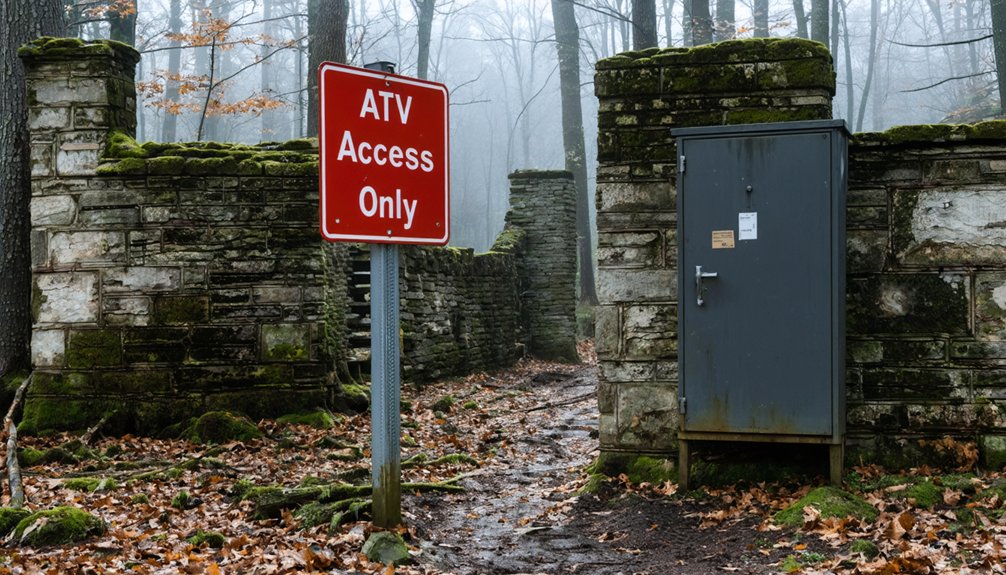
Before you fire up your ATV for ghost town exploration, you’ll face Rhode Island’s strict legal landscape that severely limits where you can ride. Understanding your legal obligations means recognizing that most state management areas ban ATVs entirely, crushing dreams of unrestricted exploration.
Your permit requirements and legal options include:
- Designated Trail Access – Limited to specific areas like Big River Reservoir Acquisition Area and Wickaboxet Management Area in Kent County.
- Seasonal Restrictions – Complete prohibition during shotgun deer hunting hours and certain wildlife protection periods.
- Municipal Compliance – Local ordinances add layers of restrictions with escalating fines from $100-$500.
Environmental Police actively patrol these areas, and violations carry serious penalties.
Trail closures happen without notice due to fire danger or erosion, making legal riding increasingly challenging for freedom-seeking adventurers.
Best Practices for Responsible Ghost Town Tourism
Once you’ve secured your legal riding permits and identified accessible areas, your adventure takes on greater meaning when you adopt responsible exploration practices that protect these historical sites for future riders.
Pack out everything you bring—trash, gear, food containers—leaving zero trace of your visit. Stick to established ATV trails to prevent erosion damage around fragile structures. Never remove artifacts or disturb historical remnants you discover.
Sustainable tourism starts with your choices: use reusable water bottles, support local businesses for supplies, and respect any cultural significance these abandoned settlements hold.
Community involvement means patronizing nearby shops and guided tours when available. Keep noise levels respectful, avoid overcrowding popular ghost towns, and follow all posted guidelines to guarantee these fascinating pieces of Rhode Island’s past remain accessible for generations of freedom-seeking riders.
Frequently Asked Questions
What Time of Year Offers the Best Weather Conditions for ATV Ghost Town Exploration?
Summer’s your golden window while winter locks trails under snow. You’ll find the best seasons deliver perfect weather conditions—warm 70s, minimal rain, and clear visibility for traversing those forgotten settlements without gear-heavy preparations.
Are There Guided ATV Tours Available for Rhode Island’s Historical Ghost Town Sites?
No guided tours exist for Rhode Island’s ghost towns. You’ll need to navigate Hanton City and other historical sites independently, bringing your own maps and gear for historical insights during self-directed exploration adventures.
Which Ghost Towns Have the Most Interesting Artifacts Still Visible to ATV Visitors?
You’ll find Hanton City’s artifact types most rewarding—foundation stones, metal fragments, and quarry markings pack serious historical significance. However, you’ll need hiking boots since ATV access isn’t available on these overgrown trails.
How Long Does a Typical ATV Ghost Town Exploration Trip Take to Complete?
Like Odysseus’s wandering journey, your ATV ghost town adventure typically spans 3-4 hours complete. Pack extra fuel, GPS coordinates, and trail maps. Trip duration varies with terrain difficulty, but smart exploration tips include starting early for maximum discovery time.
What Backup Transportation Options Exist if ATV Mechanical Problems Occur During Exploration?
You’ve got solid backup options when your ATV breaks down mid-exploration. Call specialized towing services like Town Line Towing for immediate roadside assistance, or contact Grasso’s for reliable long-distance recovery across Rhode Island’s remote terrain.
References
- https://newenglandwithlove.com/ghost-towns-in-rhode-island/
- https://www.alpsroads.net/www/ri/hanton/
- https://www.youtube.com/watch?v=kpy7zlXYrAU
- https://en.wikipedia.org/wiki/Hanton_City
- https://www.youtube.com/shorts/n9qmg4V7Gtc
- https://weird-island.simplecast.com/episodes/57-ghost-town-hanton-city-ky53imy0
- https://whatsupnewp.com/2023/06/new-law-will-allow-low-speed-vehicles-on-rhode-island-roads/
- https://worldpopulationreview.com/state-rankings/atv-street-legal-states
- https://www.cpsc.gov/s3fs-public/pdfs/blk_pdf_RhodeIslandLaw.pdf
- https://dem.ri.gov/about-us/dem-offices/boating-registration-licenses/rhode-island-outdoors