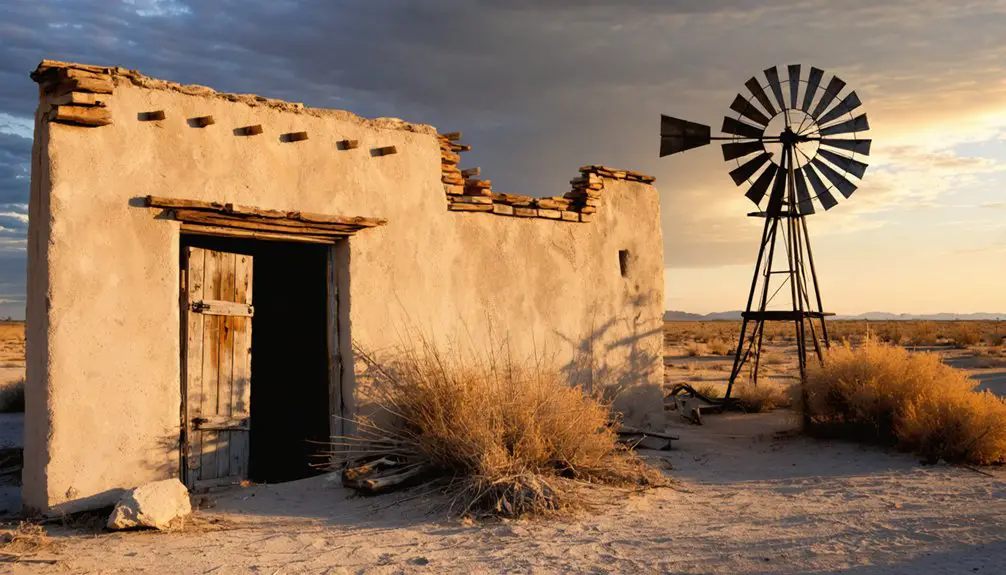
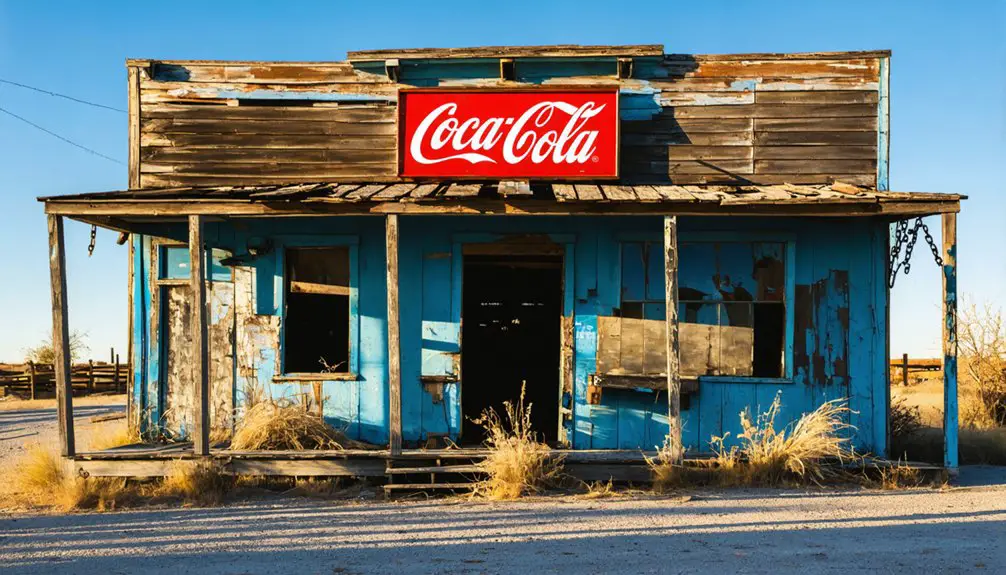
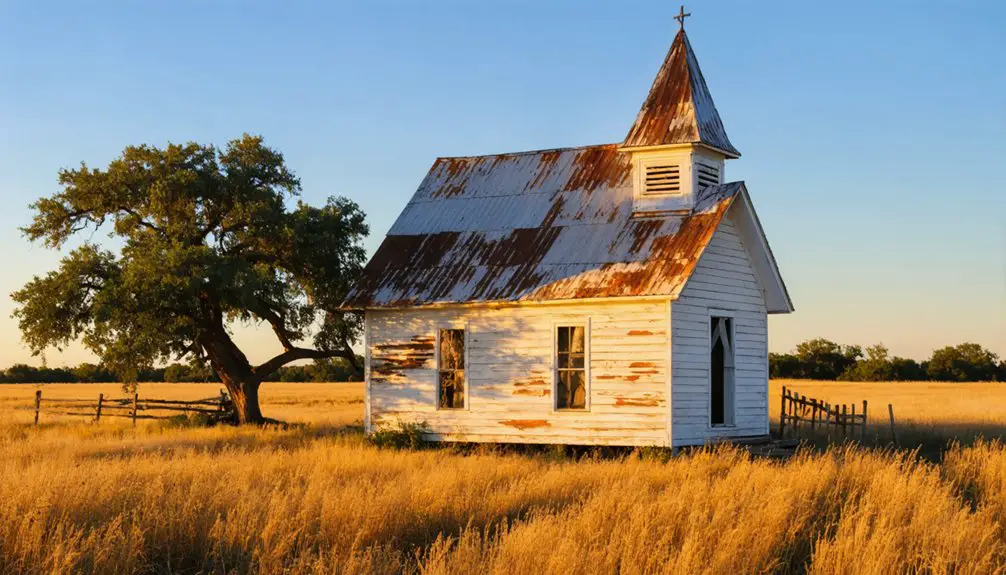
Texas harbors dozens of haunting ghost towns where you’ll find crumbling limestone foundations, rusted mining equipment, and weathered cemetery headstones marking forgotten communities. You can explore Belle Plain’s abandoned college ruins, Terlingua’s mercury mining remnants that once supplied 40% of America’s output, or Thurber’s coal town relics where 10,000 residents once lived. From hurricane-destroyed Matagorda beneath the bay to railroad-bypassed Helena, these settlements reveal how natural disasters, economic collapse, and progress transformed thriving communities into atmospheric ruins that preserve Texas’s lost chapters.
Key Takeaways
- Belle Plain became a ghost town after drought and railroad bypass reduced its population from 1,000 to just four families by 1897.
- Terlingua’s haunting ruins include abandoned mining structures and limestone homes with toxic mercury contamination from its mining boom years.
- Matagorda’s submerged ruins beneath the bay serve as an underwater cemetery for over 2,000 souls lost to hurricanes and Civil War devastation.
- Abandoned cemeteries like Collinsworth Cemetery for smallpox victims and Davis Cemetery for massacre casualties outlasted their vanished communities.
- Thurber’s crumbling foundations and skeletal structures remain from Texas’s largest coal town that once housed 10,000 immigrant miners.
Belle Plain: The College Town That Time Forgot
When you drive through the rolling hills of Callahan County today, you’ll find it hard to imagine that one of West Texas’s most promising settlements once thrived just six miles southeast of Baird.
Belle Plain’s historic significance stems from its remarkable rise and fall between 1876 and the early 1900s. Established on state land, it quickly became Callahan County’s seat with nearly 1,000 residents by 1878.
Belle Plain College made this ghost town unique—one of West Texas’s first higher education institutions featuring twelve grand pianos and a magnificent three-story stone building. The college boasted the largest music conservatory between Fort Worth and El Paso, attracting students from across the region.
The 1886-1887 drought sealed the town’s fate when the railroad bypassed it for Baird. By 1897, only four families remained in what had once been a thriving community.
Today, you’ll discover haunting architectural remnants: the college’s native stone walls and dean’s home still stand as weathered monuments to frontier ambition.
Hagerman: From Farming Community to Forgotten Settlement
Although Lake Texoma‘s waters now cover most of its original townsite, Hagerman’s story represents one of Texas’s most dramatic ghost town endings—a community deliberately abandoned before federal flooding.
You’ll find Hagerman history begins in the 1870s when settlers established “Steedman” in north-central Grayson County. The farming community peaked around 1910 with 250 residents after the Missouri, Kansas and Texas Railroad arrived, prompting the name change to honor railroad attorney James Hagerman.
Cotton agriculture and railroad commerce sustained the town until the 1930s brought economic decline. When Denison Dam’s construction threatened complete inundation, residents evacuated by 1943. These drowned settlements offer visitors unique opportunities for historical photography when water levels drop sufficiently.
Today, you can explore ghostly remnants at the surviving church and cemetery when Lake Texoma’s waters recede, revealing foundation stones from this drowned settlement. The area transformed into Hagerman Wildlife Refuge in 1946, now serving as a popular birding destination where visitors can observe nature reclaiming this former community.
Terlingua: Where Mercury Miners Once Struck It Rich
You’ll find Terlingua’s story began when cinnabar ore deposits drew prospectors to this remote Big Bend region before 1900, leading Howard E. Perry to establish the Chisos Mining Company in 1903.
During the boom years of 1910-1920, you would’ve encountered up to 2,000 residents—mostly Mexican immigrants—living in simple limestone homes while working dangerous mercury extraction operations that made this district one of America’s top producers. Workers crossed the river at Lajitas gateway to reach the mines, with many laborers coming from the San Carlos-Ojinaga region.
The Chisos Mining Company operated continuously for 40 years starting in 1903, becoming the major producer in the region with 39,094 flasks of mercury.
Today, you can explore the haunting ruins of company buildings and mining infrastructure that remain as silent testimony to a once-thriving community that vanished after the mines closed in the 1940s.
Mercury Mining Origins
Deep in the rugged Trans-Pecos region of far West Texas, cinnabar deposits that would transform a remote desert landscape into one of America’s premier mercury-producing districts first caught prospectors’ attention during late 19th-century mapping expeditions.
You’ll find that small-scale workings began in the 1890s, but real development didn’t start until Howard E. Perry established the Chisos Mining Company in 1903 after discovering high-grade cinnabar on land he’d acquired as debt payment.
The geological setting proved ideal—cinnabar hosted in limestone veins and replacement deposits throughout the Terlingua District. Perry constructed a grand mansion overlooking the bustling mining operations below, symbolizing the wealth and ambition that drove the mercury boom.
When World War I erupted, mercury demand for detonators and munitions skyrocketed, while European supply disruptions made Terlingua strategically essential to America’s war effort. The mercury was shipped globally in cast-iron flasks via railroad, highlighting the mine’s crucial role in the wartime economy.
Peak Population Era
By 1913, Terlingua’s population had swelled to over 1,000 residents as World War I‘s insatiable demand for mercury transformed this remote desert outpost into one of America’s most productive mining camps.
You’d find a bustling community complete with commissary, hotel, company doctor, telephone service, water supply, and daily mail delivery. The mining prosperity brought unprecedented growth, with Brewster County’s population doubling from 2,356 to 5,220 between 1900 and 1910.
However, community segregation defined the town’s layout. Mexican workers lived east of the company store while Anglo residents occupied the western side. The Chisos Mining Company had become the dominant force in the region, establishing itself as the largest mercury producer in the area.
Howard Perry’s imposing mansion, built in 1906 and expanded in 1911, overlooked the entire camp from its commanding position, symbolizing the stark social divisions that characterized this mercury boom town. By 1922, Terlingua’s mines were contributing an impressive 40% of U.S. output for quicksilver production.
Haunting Ruins Today
When you venture into Terlingua’s haunting ruins today, you’ll discover the skeletal remains of what was once Texas’s most productive mercury mining operation.
The ghost town occupies remnants of the 1903 Chisos Mining Company structures, where stacked limestone homes built by Mexican miners using adobe mortar still stand against the Big Bend landscape.
You’ll find abandoned surface buildings, miner homes, and management structures scattered across this desolate terrain, eight miles from the park border.
These crumbling walls hold haunting echoes of forgotten lives cut short by mercury poisoning within five years of employment.
The western district reveals calcite vein outcrops and rare mercury minerals like terlinguaite, tangible reminders of an industry that ceased production in 1973, leaving behind only toxic legacies and weathered stone.
Indianola: The Port City Destroyed by Nature’s Fury
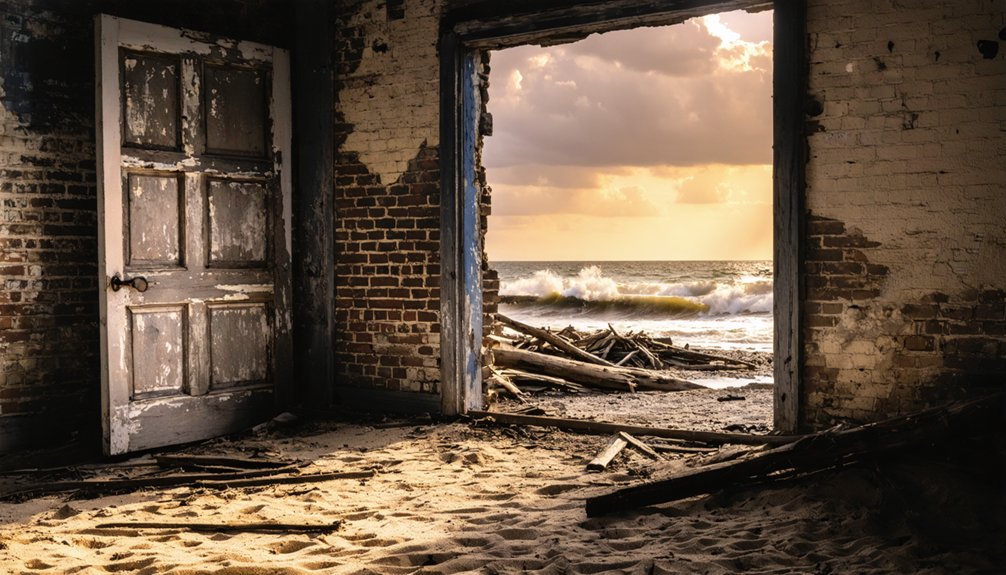
Along the shores of Matagorda Bay, Indianola once stood as Texas’s second-largest port, earning the prestigious title “Queen City of the West” through its thriving deep-water commerce that rivaled even Galveston’s bustling trade.
You’d have witnessed massive immigrant influx flooding through its docks, with over 5,000 residents calling this prosperous county seat home by 1875.
The Civil War brought devastation when Union gunboats bombarded and occupied the strategic port twice between 1862-1864.
Nature delivered the final blow through two catastrophic hurricanes. The 1875 storm’s 110 mph winds killed 270-400 people, while 1886’s 150 mph hurricane left only two buildings standing.
You’ll find nothing today except submerged ruins beneath Matagorda Bay, where over 2,000 souls rest in an underwater cemetery.
Thurber: Texas Coal Capital Lost to History
Deep beneath the rolling hills of Erath County, the Johnson brothers struck black gold in 1886 when they discovered rich bituminous coal deposits on their 2,303-acre tract.
You’ll find Thurber’s remarkable transformation from empty prairie to Texas’s largest coal town happened almost overnight. The Texas & Pacific Coal Company built everything—housing, stores, schools—creating a classic company town that peaked at 10,000 residents by 1920.
Thurber history reveals a fascinating melting pot where Italian, Polish, Irish, and British immigrants worked the mines alongside Mexican and German settlers.
Six nationalities united underground in Thurber’s coal mines, creating an unprecedented multicultural workforce in 1800s Texas.
This mining legacy established Texas’s first 100-percent union town after successful United Mine Workers organization.
However, railroads’ conversion from coal to oil after 1910 sealed Thurber’s fate, transforming this industrial powerhouse into today’s ghost town.
Helena: The Courthouse Town Bypassed by Progress
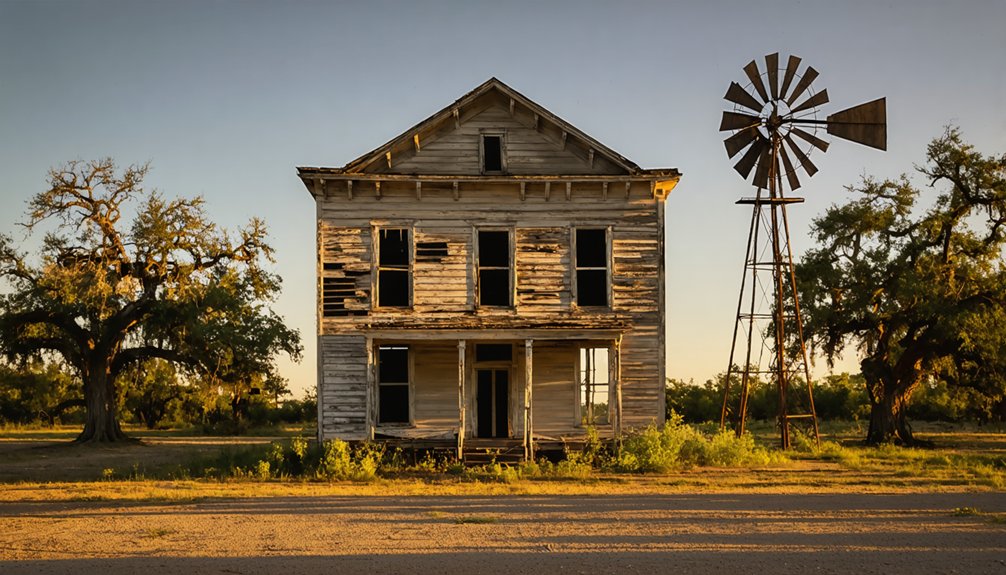
Freight wagons rumbled along the historic San Antonio-Goliad route when Thomas Ruckman and Dr. Lewis Sumpter Owings founded Helena in 1852 on the site of Mexican trading post Álamita.
This courthouse history reveals a town that peaked at 300 residents before railroad bypass sealed its fate.
Helena’s decline teaches hard lessons about progress:
- Railroad bypass (1886) – San Antonio & Arkansas Pass Railway routed around town, killing freight revenue
- County seat loss (1894) – Karnes City captured administrative power, draining Helena’s purpose
- Local violence – Feuds earned the nickname “toughest little town in Texas”
- Institutional collapse – School closed 1945, post office shuttered 1956
Local legends include unique “Helena duels” where fighters tied hands together with 4-inch knives.
Today’s preserved courthouse stands as proof of frontier ambition.
Abandoned Cemeteries and Their Haunting Stories
Weathered headstones emerge from tangled mesquite and prickly pear across Texas, marking final resting places that outlasted the communities they once served.
You’ll discover ghostly echoes of the past at Terlingua Cemetery, where quicksilver miners rest beneath desert stars alongside the abandoned ghost town. In Plano, Collinsworth Cemetery’s modest markers tell of smallpox victims, while Davis Cemetery in Leander holds Webster Massacre casualties in mass graves.
Spring’s displaced cemeteries showcase forgotten legacies interrupted by highway construction, their remaining markers now surrounded by shopping centers.
Asphalt and progress swallow sacred ground, leaving weathered tombstones marooned among strip malls and concrete where communities once flourished.
Hidden in East Texas pines, Samuel Calhoun Cemetery surrenders to nature’s reclaim, its frontier family stones disappearing beneath overgrown brush.
These burial grounds preserve Texas’s untamed history when death came swiftly and communities vanished overnight.
Exploring Texas Ghost Towns: What Remains Today
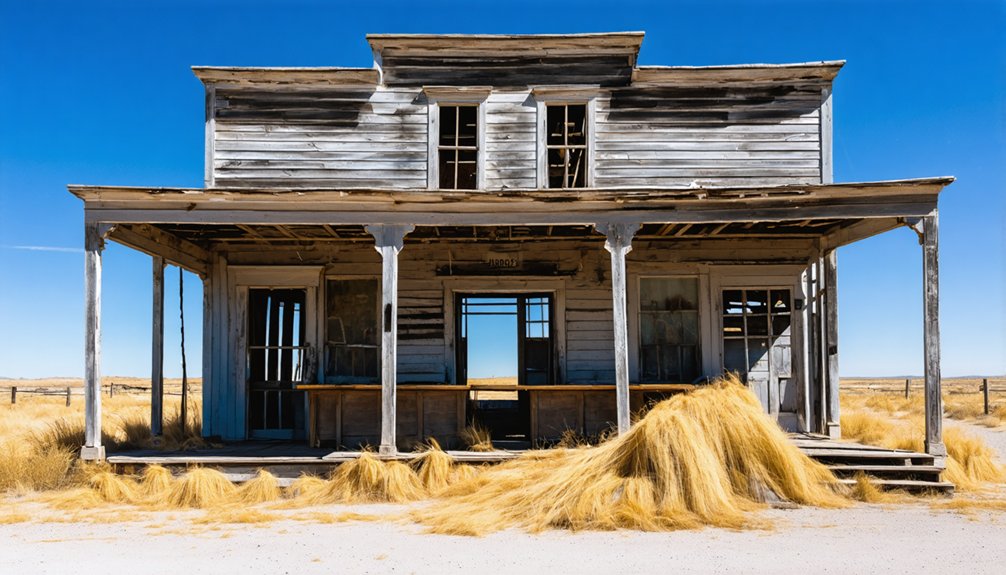
Crumbling foundations and skeletal structures punctuate Texas landscapes where bustling communities once thrived, their abandoned remnants telling stories of economic collapse and changing times.
You’ll discover architectural remnants that survived railroad rerouting, mining collapses, and natural disasters across the state. These ghostly legends emerged from boom-bust cycles that left entire towns empty when single industries failed.
Today’s visible remains include:
- Public buildings – Courthouses, schools, and Masonic lodges stand as preserved landmarks in Helena and Terlingua.
- Industrial structures – Mine shafts, processing plants, and Thurber’s distinctive red brick ruins mark former operations.
- Transportation traces – Abandoned rail lines, old highways, and relic gas stations document past connectivity.
- Commercial artifacts – Storefronts, hotel ruins, and vintage signage survive throughout these forgotten settlements.
You can explore many sites independently, though ownership challenges complicate preservation efforts.
Frequently Asked Questions
Are There Any Reported Paranormal Activities or Ghost Sightings in These Towns?
You’ll encounter extensive ghost sightings across these Texas locations. At Jefferson’s Grove, you can witness furniture moving independently during paranormal investigations. Goatmans Bridge offers screaming sounds, while Terlingua provides disembodied voices and unexplained lights nightly.
What Safety Precautions Should Visitors Take When Exploring These Abandoned Locations?
You’ll need sturdy boots, flashlights, and first-aid supplies as safety gear. Share your location with emergency contacts before exploring. Watch for unstable structures, snakes, and rough terrain that’s claimed several explorers over decades.
Do Any of These Ghost Towns Offer Guided Tours or Visitor Centers?
Like scattered breadcrumbs leading through dark woods, visitor centers are scarce among Texas ghost towns. You’ll find ghost tours available in Terlingua through Tripadvisor, while most locations offer only self-guided exploration of historical structures.
Which Texas Ghost Towns Are Considered the Most Photogenic for Photography?
You’ll find Terlingua’s adobe ruins against Big Bend’s dramatic rock formations most photogenic, while Shafter’s stone buildings and rustic landscapes create haunting desert compositions. The Grove’s historic architecture amid cedar trees offers exceptional woodland shots.
Are There Entrance Fees or Restrictions for Accessing These Historic Sites?
Most Texas ghost towns offer completely free access with zero entrance regulations. You’ll find Shafter, Terlingua, J. Lorraine, and Indianola don’t charge access fees, though respect private property boundaries and wear sturdy shoes.
References
- https://texashighways.com/travel-news/four-texas-ghost-towns/
- https://www.southernthing.com/ruins-in-texas-2640914879.html
- https://www.amysatticss.com/ghost-towns/
- https://www.hipcamp.com/journal/camping/texas-ghost-towns/
- https://www.county.org/county-magazine-articles/summer-2025/ghost-towns
- https://mix931fm.com/texas-ghost-towns-history/
- https://www.texasescapes.com/TOWNS/Texas_ghost_towns.htm
- https://www.youtube.com/watch?v=6u47HvHWZXM
- https://authentictexas.com/texas-ghost-towns/
- https://fridaycemeterysociety.wordpress.com/2012/09/17/the-ghost-town-of-belle-plain-texas/