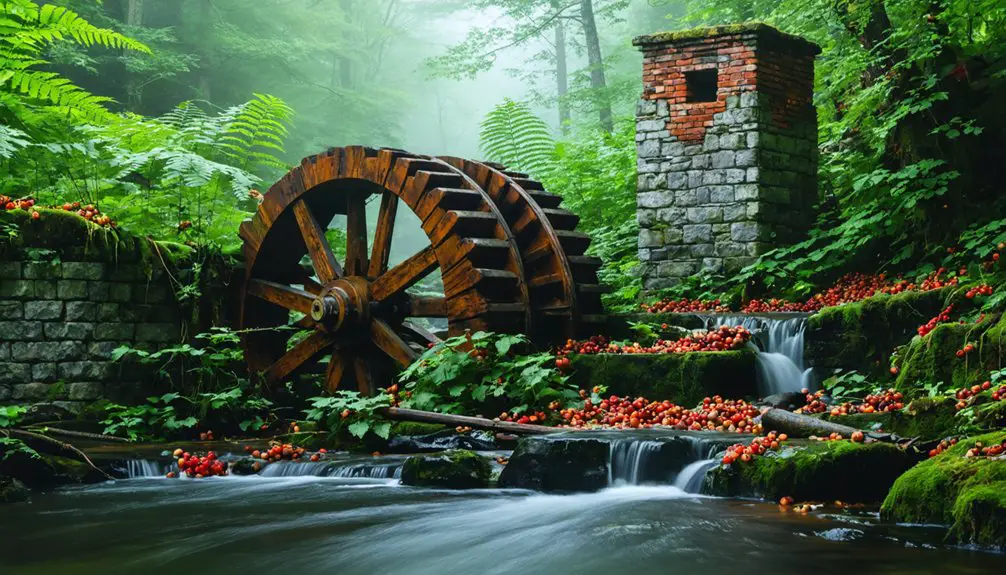
You’ll find Rhode Island’s “ghost towns” are actually preserved historic mill villages hosting vibrant annual events rather than abandoned settlements. Forestdale Mill Village celebrates its National Register status with heritage festivals, while Old Shannock Village offers walking tours commemorating its 1815–1858 industrial complex through Richmond Historical Society presentations. Stillwater Historic District features guided architectural tours, cultural performances, and international cuisine celebrations, and Lime Rock Quarry Village hosts festivals with multicultural demonstrations honoring its limestone extraction heritage. The extensive guide below reveals specific dates, locations, and authentic historical contexts.
Key Takeaways
- Forestdale Mill Village, a National Register Historic District, hosts heritage celebrations with tours of 19th-century textile mills and worker housing.
- Old Shannock Village organizes annual walking tours and presentations by Richmond Historical Society highlighting 1815–1858 industrial heritage.
- Stillwater Historic District in Smithfield offers heritage festivals with cultural performances, architectural tours, face painting, and international cuisine.
- Lime Rock Quarry Village celebrates industrial legacy through annual festivals, exhibits, and multicultural demonstrations of limestone extraction history.
- October ghost walks and paranormal investigations occur at various historic sites, including cemetery tours and Paine House overnight investigations.
Understanding Rhode Island’s Historical Settlement Patterns and Abandoned Communities
Rhode Island’s ghost towns emerged from a convergence of colonial ambition and economic fragility that left scattered stone foundations across the state’s forests and coastlines. You’ll find settlements like Hanton City, established by families including the Paines and Shippees after King Philip’s War, possibly compensated with land grants for military service.
These communities peaked during the 1730s as farming hamlets of tanners and bootmakers before succumbing to economic decline by the early 1800s. The quarry’s closure and replacement by machine-driven shoe factories eliminated traditional livelihoods that sustained these rural settlements. Migration patterns accelerated when new highways diverted commerce, forcing residents to abandon cellar holes and stone walls.
The 1938 hurricane obliterated coastal Napatree Point entirely. Some historians theorize that Loyalist families established isolated enclaves during the Revolution, seeking refuge from Patriot persecution in places like Smithfield’s remote settlements. Today’s archaeological remnants—defunct dams, overgrown cemeteries, mill foundations—document how transportation shifts and natural disasters reshaped human geography across this compact state.
Fosterdale Mill Village and Its Summer Heritage Celebrations
You’ll find Forestdale Mill Village positioned above the Branch River in North Smithfield, where water-powered industrial operations began in 1821 with Newton Darling’s scythe manufactory before expanding to include a substantial cotton mill constructed in 1860.
The village experienced its economic zenith during the latter half of the nineteenth century under paternalistic management, though its prosperity subsequently declined.
The original public school and railroad station no longer remain standing.
While preservation documentation emphasizes the site’s architectural significance within National Register contexts, historical records contain no evidence of annual summer heritage celebrations or contemporary festival activities at this former mill village. In nearby Foster, the Hopkins Falls Historic District features Curtis Hall, a circa 1830 structure that served as both tavern and social space, exemplifying the community gathering places common to nineteenth-century Rhode Island mill villages. Foster itself incorporated in 1781, separating from Scituate and developing a landscape characterized by rural industries such as the Rams Tail Woolen Mill that operated until 1850.
Historic Mill Village Origins
Nestled above the Branch River in North Smithfield’s section of the Blackstone Valley, Forestdale Mill Village emerged as a dual-industry settlement when Newton Darling acquired water rights in 1821 to establish a scythe manufactory. This early industrial enterprise dominated local production until 1860, when Mansfield and Lamb constructed a four-storey cotton mill featuring distinctive brick-pier construction and copper roof ornamentation.
The mill architecture reflected paternalistic management principles that fostered genuine community prosperity throughout the village’s nineteenth-century heyday.
The adjacent Hopkins Mill District strengthened this manufacturing corridor with grist- and sawmills dating to the 1700s. Jonathan Hopkins’s original settlement established autonomous economic foundations that subsequent owners—including Esquire William Potter—maintained.
You’ll find architectural remnants including the 1720 Hopkins-Potter House and 1869-71 Greek Revival church, all preserved within the 1984 National Register designation.
Annual Heritage Festival Activities
While Forestdale Mill Village’s industrial structures now stand largely abandoned, the broader Blackstone Valley preserves its manufacturing heritage through annual commemorations that transform former mill sites into cultural gathering spaces.
You’ll find Slater Mill in Pawtucket hosting the Labor & Ethnic Heritage Festival along the Blackstone River, where admission-free access invites exploration of traditional practices. The celebration features festival crafts at dedicated stations and cultural performances representing Rhode Island’s immigrant communities—from Irish step dancing to Filipino rhythms.
Local food vendors serve authentic cuisine while heritage organizations display historical artifacts that document the mill workers’ diverse origins. The 46th Annual Heritage Festival at WaterFire Arts Center brings together 44 performance groups celebrating the state’s cultural identities through music, dance, and traditional food from vendors like Cultro PVD and Eat Village Greek. These gatherings reclaim industrial spaces as community assets, demonstrating how abandoned sites retain civic value through programming that honors the laborers who once powered Rhode Island’s textile economy. Nearby, Hope Artiste Village in Pawtucket continues this tradition of adaptive reuse by hosting an International Market every Saturday, showcasing global flavors and traditions that reflect Rhode Island’s diverse cultural heritage.
Preservation Efforts and Tours
Though industrial decline has dimmed Forestdale Mill Village’s prosperity, its designation as a National Register Historic District by the Rhode Island Historical Preservation Commission guarantees that its 19th-century layout and architectural integrity remain documented and protected.
You’ll find preservation efforts focused on structures from both the scythe and cotton mill eras, resisting urban renewal pressures that threaten similar mill villages.
The four-storey brick-pier cotton mill with its copper-adorned roof stands alongside the enlarged scythe factory, representing architectural restoration priorities.
While you won’t find organized tours, you can access the site independently near North Smithfield’s Blackstone Valley center.
Preservation RI’s online PDFs provide detailed references for self-guided exploration, allowing you to experience these vernacular buildings that have defined Rhode Island’s mill village character for over a century. Unlike Forestdale, the Ramtail Factory ruins in Foster represent Rhode Island’s only officially haunted site, having earned this designation in the state’s 1885 census.
Carbuncle Pond Village Seasonal Gatherings and Reunions
Despite persistent local folklore suggesting otherwise, no verifiable evidence supports the existence of seasonal gatherings or reunions at a purported “Carbuncle Pond Village” in Coventry, Rhode Island.
Historical records confirm the 31-acre pond sits within Nicholas Farm Wildlife Management Area, established through Federal Aid to Wildlife funding, but document no abandoned settlement warranting ghost town designation.
You’ll find the area’s contemporary community activity centers exclusively on local fishing traditions, particularly April and October trout stockings attracting Rhode Island’s 175,000 recreational anglers.
Wildlife conservation initiatives, including pitch pine-scrub oak barrens restoration beginning in 2017, define the management area’s purpose.
The location serves as accessible habitat for fishing and hunting rather than commemorative gatherings.
No Rhode Island events calendars, historical societies, or municipal records reference Carbuncle Pond Village reunions or seasonal commemorations.
While the state hosts authentic autumn events including harvest festivals and pumpkin picking at documented locations, Carbuncle Pond remains dedicated to wildlife management rather than seasonal celebrations. Genuine community gatherings occur at established venues like the Washington County Fair in Richmond, which celebrates agricultural traditions with livestock shows and live entertainment.
Old Shannock Village Annual Historic Commemorations
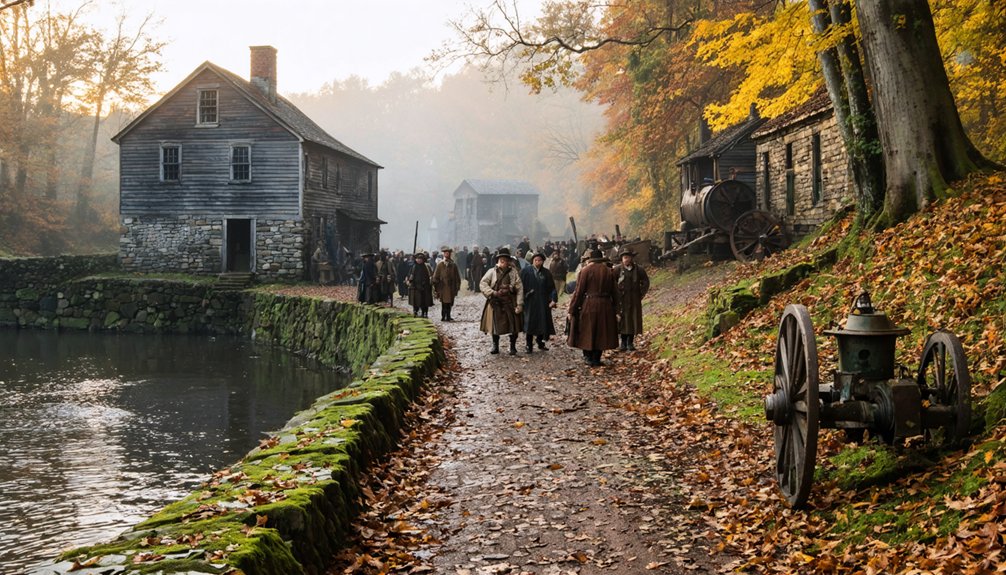
You’ll find Old Shannock Village preserves its 18th-century mill settlement origins through carefully documented annual commemorations, most particularly the October walking tours organized by the Richmond Historical Society.
These events feature archivally-grounded presentations on the upper and lower falls’ industrial complexes, where saw, grist, and woolen mills operated from pre-1815 through the railroad expansion era of 1837-1858.
The village’s World Fish Migration Day celebrations and heritage trail programs further contextualize Shannock’s position within the Pawcatuck River watershed’s Narragansett cultural landscape and colonial manufacturing economy.
Richmond’s annual Washington County Fair on Richmond Townhouse Road showcases the region’s agricultural heritage while drawing visitors to explore the surrounding historic settlements and river valleys that once powered the area’s mill economy.
Colonial Mill Settlement Heritage
When Roger Williams negotiated settlement rights from Narragansett sachems in 1635, he established the foundation for what would become South Kingstown’s colonial mill settlement at Old Shannock Village. You’ll discover this site’s evolution from plantation economy to industrial center reflects New England’s complex heritage.
The region reported the highest percentage of enslaved people in New England’s first census, with black and Indian slaves laboring on prosperous dairy and livestock operations connected to maritime trade.
The settlement’s colonial architecture and industrial legacy includes:
- Richard Smith’s 1640 trading post at Cocumscussoc (Smith’s Castle)
- Early 1812 stone textile mills like the Butterfly Mill and Moffett Mill
- Great Road infrastructure connecting limestone quarries to Providence exports
This autonomous community thrived through Triangle Trade involvement until mid-eighteenth century.
Annual Remembrance Day Gathering
The Shannock Historic District preserves its industrial heritage through annual commemorative events that connect visitors to two centuries of mill village history. You’ll discover authentic remnants of Rhode Island’s manufacturing past along the Pawcatuck River, where ruined mills and restored Greek Revival duplexes tell stories of economic transformation.
Ghost town legends permeate the winding roads past abandoned industrial complexes, while ancient artifacts from the 1710-11 Shannock Purchase reveal pre-colonial Indigenous origins. These gatherings celebrate the district’s National Register listing since 1983, allowing you to explore picturesque mill worker housing, imposing Victorian structures, and deteriorating factory buildings that once dominated the local economy.
The commemorations honor independent craftsmen and laborers who shaped this quintessential nineteenth-century Rhode Island settlement before suburban development erased similar rural landscapes.
Stillwater Historic District Community Events
Nestled within Smithfield’s post-industrial landscape, Stillwater Historic District transforms its 19th-century mill village remnants into venues for annual heritage celebrations that counter the area’s ghost town trajectory. As part of Blackstone River Valley National Historical Park, the district hosts September festivities that blend industrial preservation with cultural exchange through local craft workshops and culinary tasting events.
Your experience includes:
- International Heritage Day – Parade featuring flags from 30+ countries with multicultural performances, traditional fashion shows, and dancers representing Rhode Island’s diverse communities
- Architectural walking tours – Guided explorations of textile mill structures, worker housing, and dam infrastructure dating to the 1600s
- Family engagement zones – Free admission activities including face painting, arts programming, and food trucks serving authentic international cuisine
These gatherings revitalize abandoned industrial spaces while maintaining mill village architectural integrity.
Rocky Hill School District Preservation Activities
Moving eastward from Smithfield’s industrial mill villages, East Greenwich’s Rocky Hill School occupies 85 acres of waterfront property where preservation extends beyond architectural structures to encompass active wetland restoration and environmental stewardship. You’ll find school preservation efforts manifested through an NRCS partnership protecting 22 acres of salt marsh via Wetland Reserve Easement, restoring salt water marshes at the Potowomut River’s mouth.
Environmental education operates as functional preservation methodology—grades 4-5 students conduct 90+ annual field trips integrating historical and ecological study, while Middle School participants track invasive species proliferation.
Upper School requirements mandate 40 documented community service hours before graduation. The campus functions simultaneously as educational facility and active conservation laboratory, where students monitor designated areas along the Potowomut River Estuary and Narragansett Bay, transforming environmental observation into sustained preservation practice.
Lime Rock Quarry Village Heritage Days
Since the late 1660s, limestone quarrying transformed Lincoln’s Lime Rock village into a specialized industrial settlement where Gregory Dexter’s initial operations at the Moshassuck River’s headwaters established extractive practices that would span three centuries across Providence County.
Gregory Dexter’s 1660s limestone operations at Moshassuck River headwaters launched three centuries of transformative quarrying across Providence County’s industrial landscape.
The lime quarry operations at Conklin and surrounding sites supported colonial economies through mortar production while farmers supplemented incomes through land leasing and direct extraction.
Today’s heritage celebration connects this industrial past to Rhode Island’s broader cultural identity:
- Annual Heritage Day Festival features Blackstone Historical Society exhibits showcasing Vincent Bernsaconi’s Lime Rock quarry paintings.
- September 17 gatherings at WaterFire Arts Center display multicultural demonstrations alongside limestone industry documentation.
- Free admission events incorporate traditional crafts paralleling historical barrel-making and charcoal-burning demonstrations.
You’ll discover authentic connections between extraction economies and contemporary cultural preservation initiatives.
Hopkins Mill Village Annual Memorial Services
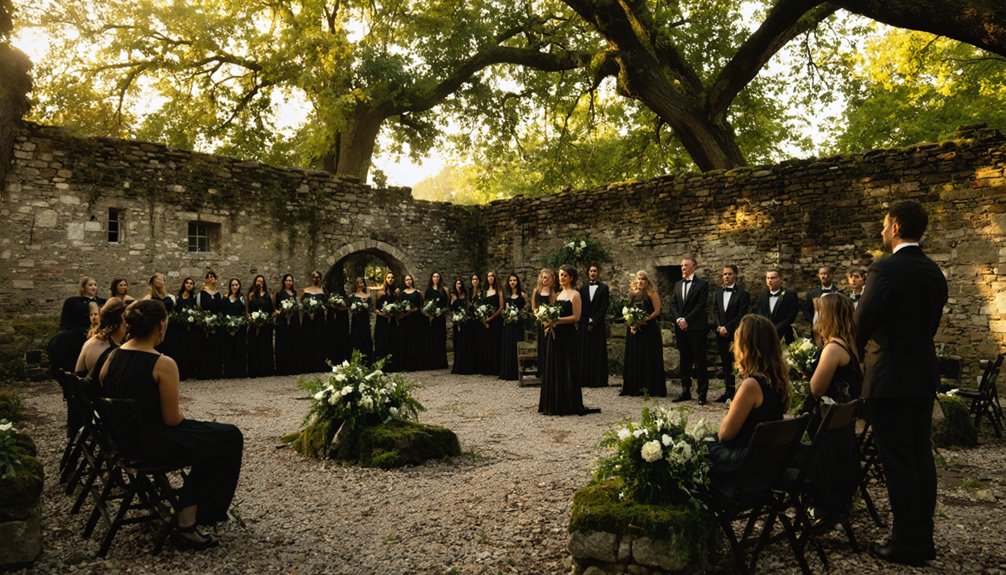
While Lime Rock’s heritage celebrations emphasize industrial extraction’s cultural legacy, Foster’s Hopkins Mill Village commemorates its vanished community through solemn memorial observances that honor settlers whose graves occupy the hillside above Hopkins Mill Pond.
You’ll discover William Potter’s burial site during these annual services, where local legends intertwine with documented history along the National Register-listed district.
The ghost stories surrounding Hopkins Mill Pond—particularly sightings of a spectral figure near the water—add atmospheric depth to commemorations that recognize the Rice and Hopkins families who established mills here from the 1720s onward.
Archaeological site RI-1679 provides tangible evidence of this settlement, while restored waterwheels and granite dam remnants along Roaring Brook offer physical testimony to the community that thrived here until the early twentieth century.
Planning Your Visit to Rhode Island’s Historic Settlement Events
When coordinating attendance at Rhode Island’s ghost town commemorations and paranormal heritage events, you’ll need to distinguish between year-round offerings and seasonal programming that concentrates heavily in October’s final weeks. Strategic planning guarantees access to both haunted house experiences and authentic paranormal investigation opportunities.
Essential scheduling considerations:
- Cemetery access windows: Island Cemetery tours operate exclusively October 11th and 25th at 10:00 AM.
- The Life After Life performance runs November 1st-2nd with limited 1:00 PM and 3:30 PM showings.
- Investigation timing: Paine House paranormal investigation events require 7:00 PM to midnight availability with RISEUP Paranormal team.
- Festival duration: Wicked WEEKs spans two full weeks in Wickford Village, offering multiple entry points for harbor lights, witch paddles, and historic walking tours.
Year-round ghost walks through Providence and Newport provide flexibility beyond October’s concentrated programming.
Frequently Asked Questions
Are Pets Allowed at Rhode Island Ghost Town Annual Events?
Like shadowy companions vanishing at dawn, pet policies remain unmentioned across Rhode Island’s ghost town events. You’ll find no explicit animal restrictions documented, though you should contact Providence Ghost Tour (844-757-5657) or Newport organizers directly for definitive guidance.
What Accommodations Are Available Near Abandoned Settlement Event Locations?
You’ll find historical lodging like The Vanderbilt near Belcourt Castle and Graduate Providence by North Burial Ground. However, camping options aren’t documented near these urban venues—traditional hotels, inns, and B&Bs dominate accommodation choices statewide.
Can Visitors Explore Ghost Town Buildings Outside of Scheduled Events?
You can’t explore ghost town buildings outside scheduled events. Historical preservation restrictions limit access, but you’ll find volunteer opportunities through organizations like RI Historical Society, letting you engage directly with these sites during authorized programs and restoration projects.
Are Photography Permits Required for Commercial Shoots at These Historic Sites?
You’ll need to slide into their DMs first. Photography permits for commercial filming aren’t explicitly documented in available records for these historic sites, so you must contact each property directly to confirm their specific authorization requirements and restrictions.
Do Ghost Town Events Operate During Winter Months or Poor Weather?
Ghost tours don’t operate during winter months based on available documentation. You’ll find most events concentrate in October without weather preparedness protocols. Winter accessibility remains undocumented, though indoor venues like Belcourt Castle could theoretically continue hosting paranormal experiences year-round.
References
- https://www.rihs.org/all-hallows-evenings/
- https://www.rihauntedhouses.com/rhode-island-paranormal-events.aspx
- https://www.discovernewport.org/blog/post/spooky-season/
- https://whatsupnewp.com/2025/10/from-harvest-festivals-to-haunted-mansions-newports-fall-calendar-is-packed-with-events/
- https://www.southcountyri.com/blog/post/halloween-in-south-countythrills-chills-and-family-fun/
- https://www.riconvention.com/events/detail/2026-ghost-town-showdown
- http://www.westernrihistory.org/events/
- https://www.visitrhodeisland.com/things-to-do/trip-ideas-getaways/itineraries-trip-ideas/boos-brews/
- https://www.blockislandinfo.com/listing/block-island-ghost-tours/314/
- https://www.youtube.com/watch?v=kpy7zlXYrAU