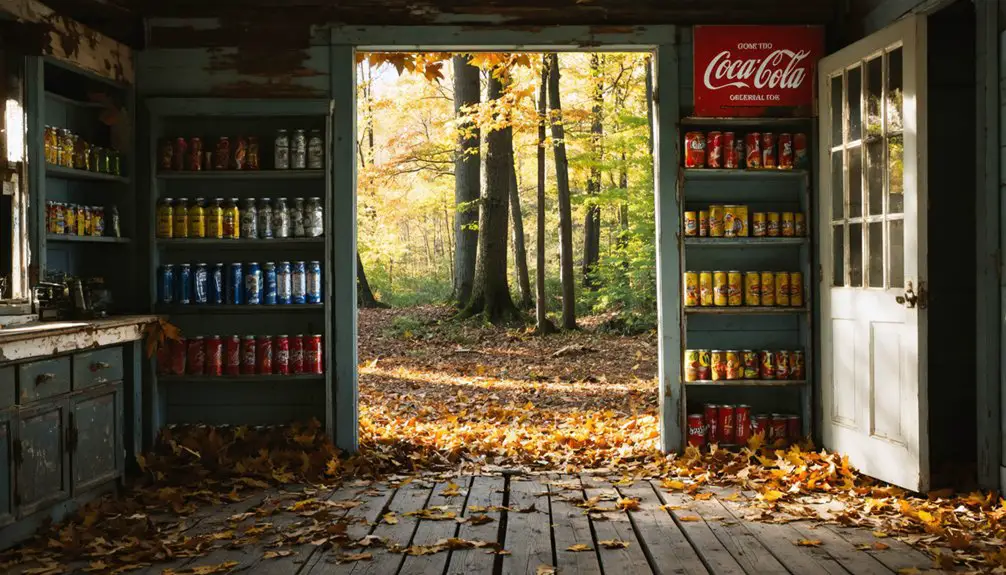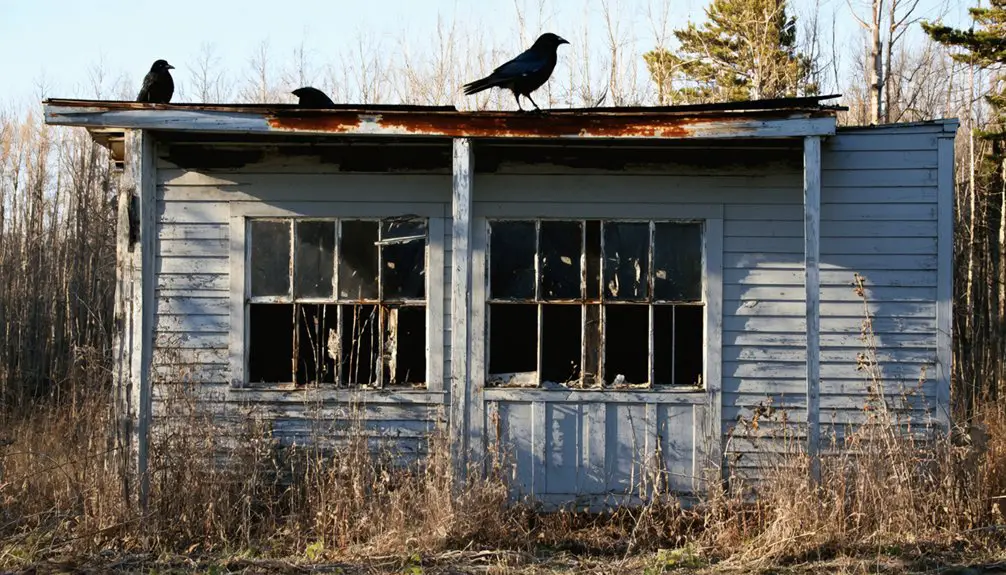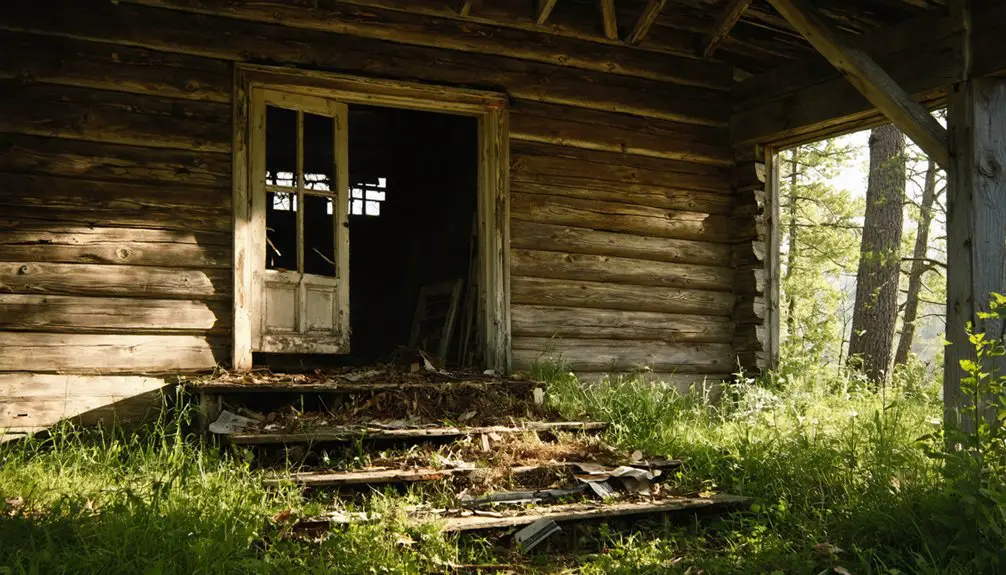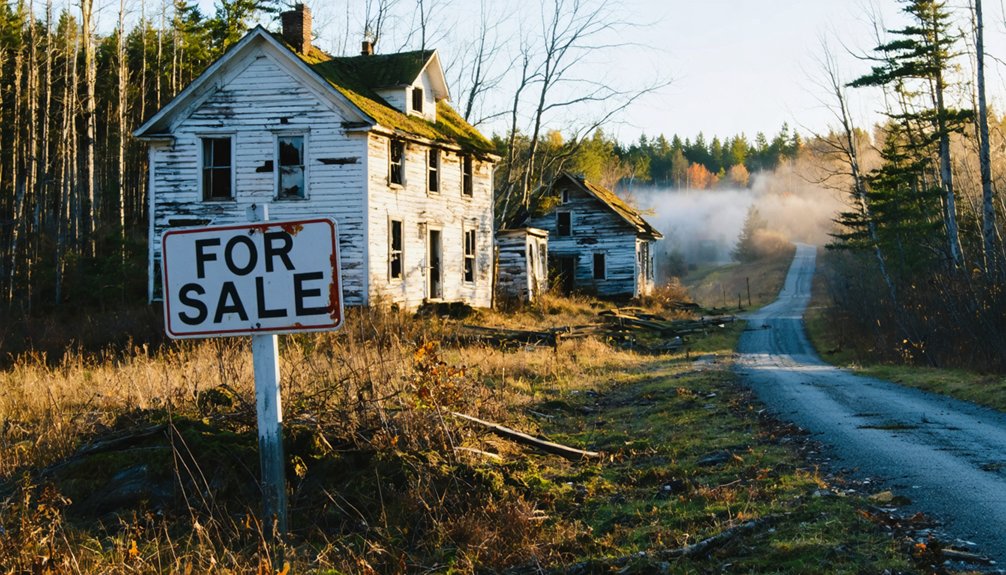
You’ll find Tuthill Village in Pittston, Maine—a 42-acre preserved settlement with 21-25 historic structures listed at $5.5 million. This isn’t your typical distressed property; it’s a functional village featuring an 1825 Greek Revival home, restored church, and revenue-generating buildings. Beyond Tuthill, Maine offers abandoned Victorian homes and schoolhouses starting around $52,000, appealing to preservation-minded buyers seeking authentic early American architecture. These properties range from single deteriorating structures to complete settlements with significant acreage, each presenting unique restoration challenges and investment possibilities worth exploring further.
Key Takeaways
- Tuthill Village in Pittston, Maine features 21-25 historic structures on 42 acres, listed at $5.5 million with seven residential units.
- The property includes an 1825 Greek Revival home, restored church, general store, and Federal-style homes dating to 1789.
- Pricing reflects premium value at $262,000 per structure and $110,000 per acre versus Maine’s distressed property average of $24,866 per acre.
- Investment opportunities include heritage tourism, event hosting, residential leasing, film production connections, and niche agriculture across multiple buildings.
- Abandoned Maine properties start at $52,000, featuring Victorian architecture and schoolhouses requiring restoration through specialized preservation platforms.
Tuthill Village: A Complete 40-Acre Town in Pittston
Perched on a hilltop overlooking the Kennebec River, Tuthill Village spans approximately 42 acres in Pittston, Maine, and represents one of the state’s most unusual real estate offerings.
This 42-acre hilltop village overlooking Maine’s Kennebec River stands as one of the state’s most extraordinary properties available today.
You’ll find between 21-25 structures here, assembled by Kenneth E. Tuttle starting in 1967. He relocated 18th- and 19th-century buildings to create this purposeful village at 1090 Pittston School Street.
The property’s unique architecture includes a restored 1825 Greek Revival home alongside various period buildings that showcase the historical significance of early American construction.
Currently listed at $5.5 million, the village contains seven residential units spread across its hilltop terrain.
Tuttle’s vision materialized through systematic acquisition of historic structures until his death in 2002, leaving behind this complete village that’s now available for purchase. The compound includes two antiques shops that were part of his successful dealing business.
The grounds feature mature apple trees and landscaping that create a picturesque setting for the collection of antique buildings.
What You Get When You Buy an Entire Village
When you purchase Tuthill Village, you’re acquiring 50 acres containing 25 structures that form a functional settlement.
The property includes residential houses, storage barns, multi-car garages, and a restored 1825 church that anchors the village center.
This infrastructure gives you immediate operational buildings rather than raw land requiring development from scratch. Top-rated local real estate agents can provide expertise on unique properties like these and assist with understanding the complexities of purchasing an entire village.
The estate was created by Ken Tuttle, an avid antique collector who envisioned building his own antique village.
Buildings and Infrastructure Included
Tuthill Village delivers a turnkey town experience across its 40 to 50 acres, offering buyers 21 to 25 buildings that form a complete village infrastructure.
You’ll find Federal-style homes dating to 1789, complete with original architectural details and white picket fences arranged in a compound layout. The town infrastructure includes essential commercial spaces like a general store and hardware store, plus detached duplex units and barn structures.
A three-car garage serves multiple functions, while workshop spaces offer conversion potential. The property also features a church, adding to the comprehensive village amenities. Every component needed for an operational town exists here—minus the population.
Antiques dealer Kenneth Tuttle’s building preservation efforts focused on maintaining early American architectural integrity throughout the property, creating authentic period features that distinguish this $5.5 million offering from typical distressed properties. The main colonial residence spans 3,011 square feet with 8 bedrooms and 5 bathrooms, providing substantial living quarters for the property owner.
Land Acreage and Features
Beyond the historic structures themselves, these Maine ghost town properties encompass substantial land parcels that vary dramatically in scale and price per acre.
Tuthill Village in Pittston commands $137,500 per acre for its 40-50 acre Federal-style compound—a premium reflecting its preserved buildings and infrastructure.
In contrast, Hersey’s 115-acre timberland tract delivers exceptional acreage value at just $1,478 per acre, featuring 900 feet of highway frontage plus 3,200 feet on Mill Brook with native trout fishing.
The land features include rolling terrain at 760-820 feet elevation, mountain views, and strong Monarda-Burnham soils supporting forestry or recreation. The property has not undergone timber harvesting in over 20 years, allowing regenerating poplar, spruce fir, and hardwoods like maple and yellow birch to establish dense forest cover.
Mixed hardwood-softwood forests, multiple building sites, and year-round paved access amplify your off-grid development potential across these northern Maine properties. Maine’s historic properties average 135 days on market, giving buyers time to thoroughly evaluate these unique village acquisitions.
Pricing Breakdown: $5.5 Million for 21 Historic Buildings
At $5.5 million for 21 historic buildings, you’re looking at an average cost of approximately $262,000 per structure—a figure that demands scrutiny against comparable Maine property values.
This calculation becomes more compelling when you factor in the 42.5 to 50 acres of land, potentially dropping the per-building investment to under $200,000 when land value is separated.
Whether this represents fair market value or speculative pricing hinges on restoration costs, rental income potential, and the property’s viability as a commercial venture in rural Pittston. The listing reflects broader market trends showing growing interest in alternative real estate investments and the appeal of owning abandoned properties with historical significance.
Ownership in such contexts often revolves less around immediate development and more around preservation and stewardship, similar to how buyers of former industrial sites transition properties from their original use to new purposes while maintaining historical character.
Cost Per Building Analysis
When analyzing the $5.5 million price tag for this Pittston property, the mathematics reveal an average cost of $261,905 per building across the 21 historic structures.
However, this cost valuation doesn’t reflect equal value distribution—you’re getting diverse building types ranging from the restored 1825 church centerpiece to residential houses, storage barns, and multi-car garages.
The per-acre breakdown adds another perspective: approximately $110,000 for each of the 50 acres.
Compare this to Maine’s distressed property average of $24,866 per acre, and you’ll see the premium you’re paying for historical authenticity.
While Maine’s typical distressed properties list around $252,660, this bundled village commands considerably more due to its rare, intact historic character rather than individual structure quality alone.
Comparable Maine Property Values
Understanding market context transforms how you view the $5.5 million asking price for Pittston’s ghost town.
You’re looking at roughly $262,000 per building—significantly above Augusta’s $279,000 average home value, yet competitive when considering historical significance and land included.
Comparable Maine property reveals stark contrasts.
Portland commands $574,000 per residence, while Bangor averages $275,000. The ghost town’s per-structure cost falls between these markets, offering unique investment potential that standard residential properties can’t match.
Traditional starter homes in Augusta’s $200,000-$300,000 range provide no historical significance or development flexibility.
You’re purchasing income-generating possibilities through vacation rentals projected at 8-12% annual appreciation—outpacing residential growth.
With coastal inventory remaining limited and remote workers driving demand, this unconventional Maine property presents opportunities unavailable in conventional markets.
Investment Return Potential
Breaking down the $5.5 million investment reveals multiple revenue pathways beyond simple property appreciation.
Your market analysis should examine Monson, Maine’s transformation—a $10 million arts and agriculture cluster that revitalized the state’s poorest county. Similar investment strategies converted historic structures into artist residences and commercial spaces, generating sustainable returns.
You’ll find precedent in Maine’s brownfields program, which catalyzed $3.62 billion in follow-on development from initial cleanup investments.
The 21 buildings at $262,000 each offer phased deployment flexibility—you’re not locked into single-use scenarios. Successful ghost town revivals demonstrate that tourism, recreation, and niche agriculture create diversified income streams.
The restored 1825 church alone positions you for event revenue, while 50 acres support expansion as market conditions evolve.
How Tuthill Compares to Other Distressed Properties in Maine
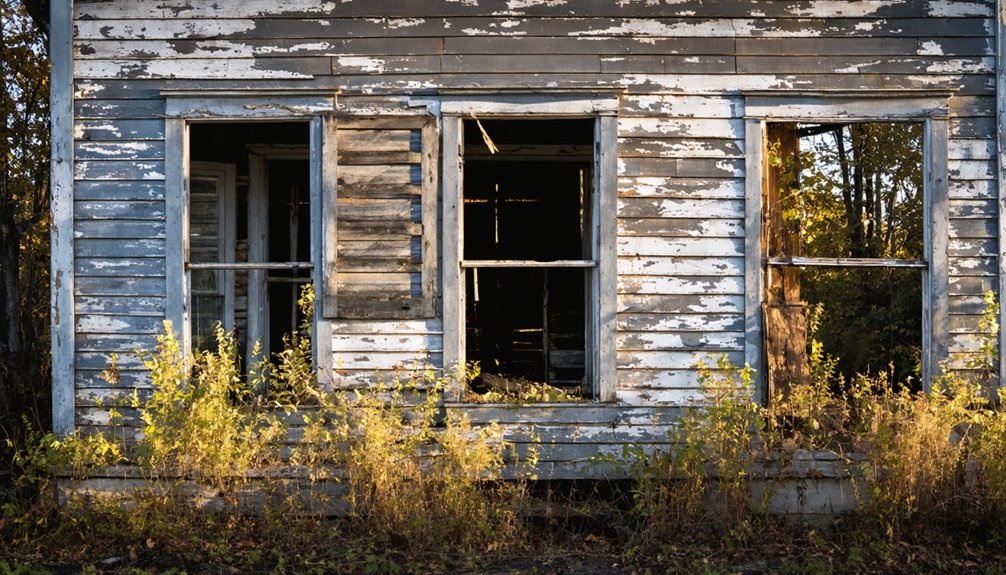
While most distressed properties in Maine hover below $100,000 and consist of single deteriorating structures, Tuthill’s $5.5 million asking price positions it in an entirely different market category.
This Tuthill comparison reveals you’re examining a 42.5-acre village with 25 structures versus typical abandoned single-family homes requiring complete rehabilitation.
Unlike standard Maine properties where you’d face extensive restoration costs on vacant shells, Tuthill offers maintained infrastructure including a restored 1825 church and multiple revenue-generating buildings.
You’re investing in preserved heritage architecture rather than acquiring deteriorating assets.
The property’s multi-structure portfolio demands institutional or commercial-scale capital, eliminating typical distressed-property buyers.
While traditional ghost towns attract individual homebuyers seeking affordable entry points, Tuthill targets investors pursuing operational villages with mixed-use development potential and established community infrastructure.
Abandoned Victorian Homes and Schoolhouses Under $100K
Beyond institutional-scale investments like Tuthill, Maine’s distressed property market offers accessible entry points for individual buyers seeking historic architecture.
Maine’s distressed property market provides accessible alternatives to institutional investments for individual buyers pursuing historic architectural preservation opportunities.
You’ll find abandoned properties starting at $52,000 in rural areas, with Victorian architecture showcasing ornate woodwork, steep gable roofs, and grand turrets from pre-1900 construction.
Sangerville features an abandoned Victorian residence previously seized by the town, while converted 1800s schoolhouses present unconventional residential opportunities.
Portland’s West End and coastal communities like Boothbay Harbor maintain Victorian inventories, though rural locations offer the lowest price points.
What makes these properties compelling:
- Original craftsmanship and period-specific details preserve architectural heritage
- Rural Maine locations provide escape from restrictive urban regulations
- Sub-$100K entry enables property ownership without conventional financing constraints
Specialized platforms catalog historic homes under $50,000, connecting you directly with preservation opportunities requiring sweat equity rather than institutional capital.
The National Trend of Towns Listed For Sale
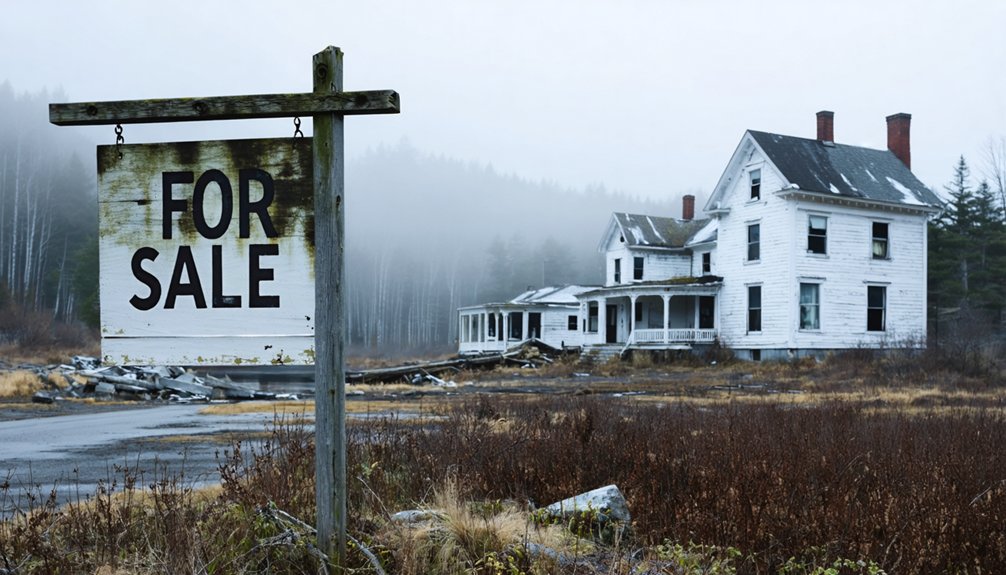
You’ll find dozens of ghost towns listed across the United States, spanning from former mining settlements in the Rocky Mountains to abandoned desert enclaves in the Southwest.
Properties range from Swett, South Dakota’s six-building complex at $250,000 to sprawling villages like Bridgeville, California, which sold for $1.3 million in 2023.
The market has expanded beyond traditional mining camps to include textile villages, film sets, and entire communities with multiple structures awaiting redevelopment.
Dozens of Towns Available
Ghost towns across America have become surprisingly viable real estate investments, with at least ten properties currently listed from California to South Dakota.
You’ll find entire communities available for purchase, ranging from abandoned mining settlements to desert enclaves. These properties present unique opportunities for ghost town tourism and community revitalization beyond traditional real estate markets.
The scope includes:
- Bridgeville, California – A complete town where you can establish your own vision without bureaucratic constraints.
- Villa De La Mina, Texas – A sprawling opportunity for those seeking autonomy in remote locations.
- Swett, South Dakota – Another viable option for independent-minded investors.
From Henry River Mill Village to various Maine properties, these listings represent more than real estate—they’re blank canvases for entrepreneurial ventures, event spaces, or residential developments free from conventional restrictions.
From Mining Settlements Westward
While opportunities span the continent, mining settlements dominate the western ghost town market with distinctive investment profiles shaped by their industrial heritage.
You’ll find Cerro Gordo’s 380 acres four hours north of Los Angeles commanding $1.4 million, while Texas’s Lajitas sprawls across 62 acres at $1.8 million with abandoned structures showcasing authentic mining history.
California’s Bridgeville offers more accessible entry at $1.2 million.
Desert enclaves like Nipton, founded in 1905, attract buyers seeking ghost town tourism potential with existing infrastructure including hotels that once hosted Golden Era movie stars.
However, Picher’s toxic abandonment in Oklahoma demonstrates critical due diligence requirements—environmental hazards from mining operations can render properties uninhabitable.
These acquisitions aren’t for casual buyers; they demand serious commitment and thorough investigation.
Maine’s Abandoned Mining Settlements and Historic Enclaves
Maine’s abandoned settlements tell a story of boom-and-bust cycles driven by extractive industries that once promised prosperity but ultimately left behind ghost towns scattered across the state’s rural landscape.
Madrid’s 19th-century mining heritage remains visible through accessible old mines and weathered town buildings. You’ll find Davidson’s logging machinery rusting among forest regrowth, while Hurricane Island stands as a symbol of rapid economic collapse—residents evacuated within days after the quarry company’s 1915 bankruptcy.
These ghost towns represent unique investment opportunities for those seeking tangible connections to America’s industrial past:
- Stone foundations at Freeman mark where self-sufficient farming families built their dreams before urban migration emptied the settlement.
- Riceville’s mill complexes showcase the waterpower infrastructure that once drove regional commerce.
- Old cemeteries preserve the stories of pioneers who risked everything for economic independence.
Investment Potential: Distressed Properties With Acreage
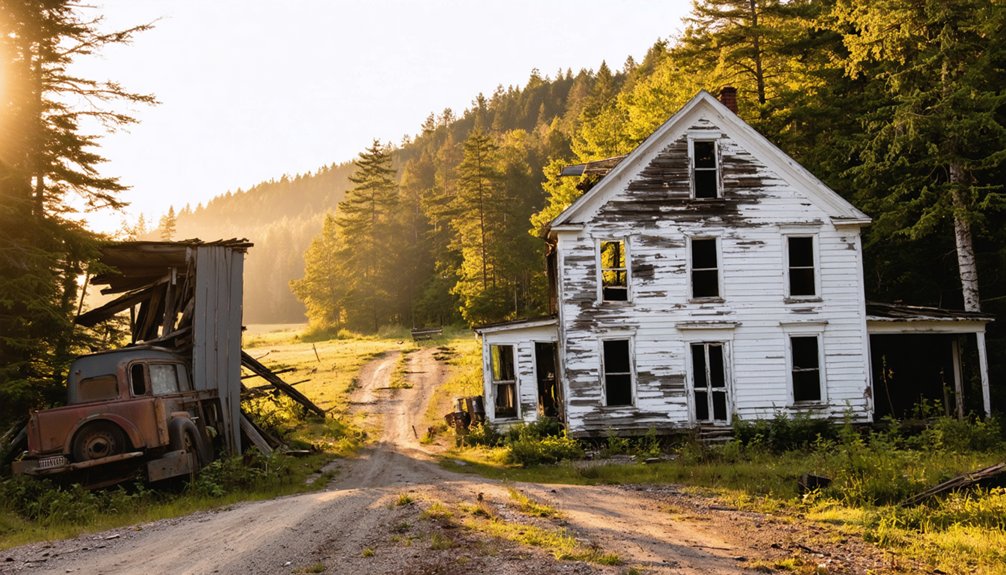
Twenty-one to twenty-five structures spread across 42.5 acres at Tut Hill in Pittston create a per-building acquisition cost between $130,000 and $260,000—a pricing model that fundamentally changes the economics of property investment when compared to traditional real estate.
You’re purchasing operational flexibility alongside physical assets. The restored 1825 church, multi-family structures, and storage facilities provide immediate diversification potential without additional land acquisition costs.
Investment incentives emerge through adaptive reuse strategies that traditional properties can’t accommodate at comparable price points.
Tourism potential mirrors patterns established at Henry River Mill Village, where film production connections generate year-round visitor interest.
You control enough acreage and structures to develop multiple revenue streams simultaneously—heritage tourism, event hosting, residential leasing, or commercial operations—while maintaining significant undeveloped land for future expansion or preservation.
Preserving Unique Americana Through Historic Property Purchases
When you acquire Kenneth Tuttle’s Tuthill Village at $5.5 million, you’re purchasing architectural custody rather than conventional real estate. This 21-25 structure compound represents tangible cultural heritage—restored 1825 church, weathered farmhouses, and antique barns preserving 19th-century town planning without government restrictions.
Your historical preservation options extend beyond Tuthill:
- 1800s schoolhouses under $50K offering entry-level restoration projects
- 30-acre abandoned farms at $49,900 combining land independence with heritage structures
- Bank-owned distressed properties averaging $252,660 providing negotiation leverage for serious preservationists
CBS documents dozens of available American towns, from Maine villages to Rocky Mountain ghost settlements. These aren’t just properties—they’re cultural time capsules requiring committed stewardship.
You’ll find opportunities through specialized sites cataloging endangered structures, though town-sized acquisitions demand substantial resources and unwavering dedication to maintaining authentic Americana.
Finding the Right Buyer for Town-Sized Acquisitions
Selling an entire town requires matching your property with buyers who view abandoned communities as opportunities rather than liabilities. Understanding buyer motivations separates successful transactions from stagnant listings.
Eccentric collectors seek properties accommodating 30+ vehicle showrooms, while film production companies pursue photogenic backdrops for commercial shoots. Preservationists target authentic 1825 churches and Greek Revival structures worth restoring.
Market trends show wealthy individuals converting entire villages into private estates, treating communities as single-owner compounds. Investors analyze subdivision potential, though zoning restrictions on properties with ponds and apple trees limit development options.
Recent sales demonstrate viable demand—Frontier Town in Montana sold in early 2025, while Tut Hill’s $5.5 million asking price reflects premium positioning for 42.5 acres with 21 structures.
Your marketing strategy should emphasize romanticized history and built-in tourism potential.
Frequently Asked Questions
What Are the Annual Property Taxes for Tuthill Village?
You’ll face uncertainty on Tuthill Village’s exact property tax assessment since specific rates aren’t publicly disclosed. However, comparable Kennebec County properties suggest annual obligations between $50,000-$80,000 based on the $5.5 million valuation.
Can Individual Buildings Be Purchased Separately or Only as Complete Village?
You can’t make individual building purchases at Tuthill Village. The family’s selling everything together as one complete package, marketing the estate exclusively as an integrated compound requiring village renovations rather than piecemeal acquisition.
What Utilities Are Currently Connected to the Tuthill Village Properties?
You’ll find utility infrastructure hiding beneath your “authentic” 1840s village—electricity, water, and sewage secretly powering nine residential structures, commercial buildings, and 35,388 square feet. These village amenities prove even ghost towns need modern conveniences.
Are There Zoning Restrictions on Commercial Development in Tuthill Village?
You’ll need to verify local zoning laws and commercial permits with Maine authorities, as Tuthill Village’s abandoned status means current restrictions aren’t publicly documented. Research shoreland regulations and development standards before purchasing.
What Financing Options Exist for Multi-Million Dollar Historic Property Purchases?
You’ll find tax credit syndication enabling private investors to partner on large-scale projects, while CEI Boulos provides equity investment for downtown revitalization. Consider crowdfunding platforms alongside traditional construction loans exceeding $1 million for qualified historic properties.
References
- https://www.youtube.com/watch?v=PMV4cjyukaQ
- https://www.landsearch.com/distressed/maine
- https://www.bangordailynews.com/2025/01/23/business/abandoned-victorian-home-for-sale-rural-maine-52000-joam40zk0w/
- https://oldhousesunder50k.com/category/maine/
- https://www.ajc.com/life/private-quarters/for-55-million-you-can-own-an-entire-town-in-maine/BUCUY2KJLZFILB4F7FE7V4RDX4/
- https://www.oldhousedreams.com/state/maine/
- https://tuthill.onepageproperties.com
- https://www.youtube.com/watch?v=GFvXP6soV_Y
- https://www.realtor.com/news/unique-homes/antique-village-for-sale-in-maine/
- https://downeast.com/home-and-garden/tuthill-pittston-maine/