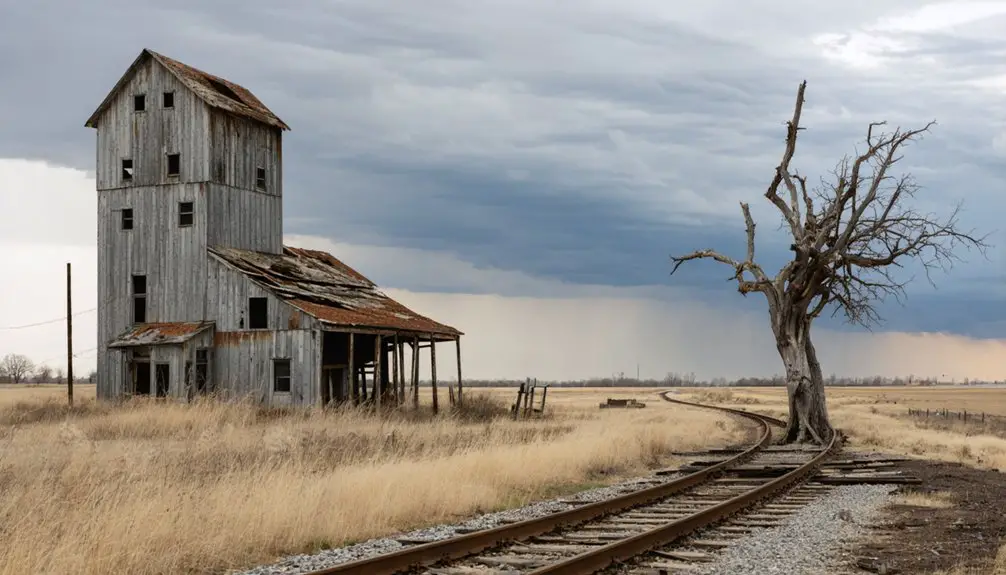
You can purchase Finland Air Force Base, a complete Cold War ghost town with 43 abandoned homes sprawling across 101 acres of Lookout Mountain, for $800,000. Established in 1951 as part of America’s first radar surveillance network, this former military installation includes mid-century homes with 3- to 4-bedroom layouts, remnants of infrastructure, and even a curling rink. The site’s historical significance and functional infrastructure present unique redevelopment opportunities, though you’ll need to navigate legal considerations and structural assessments to understand what transforming this authentic piece of Minnesota’s military heritage truly entails.
Key Takeaways
- Finland Air Force Base, featuring 43 abandoned homes on 101 acres, is currently listed for $800,000 with functional infrastructure.
- The property includes mid-century 3- to 4-bedroom homes with single-stall garages in varying states of decay and deterioration.
- Buyers must conduct detailed title searches, zoning analyses, and structural inspections before purchasing abandoned military or community sites.
- Financial considerations extend beyond purchase price, including potential back taxes, liens, and costs for rehabilitation and infrastructure repairs.
- Historic preservation ordinances may restrict property alterations, and adverse possession laws could affect ownership stability of ghost town properties.
Finland Air Force Base: Cold War Relic Meets Investment Opportunity
In November 1951, the 756th Aircraft Control and Warning Squadron powered up their AN/CPS-5 radar atop Lookout Mountain, transforming a remote Minnesota peak into site LP-69—one of twenty-eight stations in America’s first permanent radar surveillance network.
For nearly three decades, this $5 million installation scanned a 250-mile radius for Soviet threats penetrating from Canada. The Cold War sentinel featured twenty-six military buildings, underground facilities, and entertainment amenities that sustained personnel in isolation.
The station joined the Semi Automatic Ground Environment system in 1959, feeding radar data to the SAGE Direction Center at Duluth Air Force Station for computerized threat analysis.
After closure in 1980, the base became a cautionary tale—a failed tourist resort, then religious retreat, now contaminated Superfund site. Yet squadron reunions drawing hundreds of veterans prove its historical significance.
The abandoned radar base’s failed commercial ventures couldn’t erase what hundreds of returning veterans already knew—history demands preservation, not profit.
The investment potential lies not in development fantasies, but in its authentic preservation as America’s defensive heritage against totalitarian threats. The property spans over 100 acres atop Lookout Mountain, surrounded by Superior National Forest.
What You Get: 43 Abandoned Homes on 101 Acres
You’ll acquire 43 single-family homes scattered across 101 acres of Lookout Mountain terrain, each featuring 3- to 4-bedroom layouts with single-stall garages connected by paved streets and functioning utilities.
The structures present a spectrum of decay—some boast recently replaced roofs while others display peeling lead paint, water damage, and vandalism ranging from spray-painted walls to shattered windows.
Though stripped interiors and broken glass mark many buildings, the majority retain intact roofs, suggesting you’re not starting from complete ruin. The property includes 26 military buildings that once supported 350 personnel and their families during the base’s operational years.
This unincorporated community near Lake Superior’s shores saw its population dwindle as Cold War tensions eased and the nearby airbase shuttered operations.
Structures and Property Details
This 101-acre property listing stands apart from typical real estate offerings—it packages 43 abandoned homes as a single acquisition opportunity, representing one of Minnesota’s most substantial ghost town parcels available for purchase.
The property history traces Minnesota’s cyclical boom-and-bust patterns, where entire communities emerged around industrial operations only to vanish when economic conditions shifted. Each structure carries architectural significance reflecting the utilitarian designs favored during the state’s mining and industrial expansion.
You’ll find remnants beyond just housing—foundations, street grids, and infrastructure elements that reveal how completely these settlements were planned. The natural reclamation creates a distinctive blend of original architecture and overgrown vegetation throughout the acreage.
Unlike preserved sites maintained by historical societies, this property offers unrestricted access to authentic abandonment, free from institutional oversight or developmental restrictions that typically constrain ghost town exploration. Many original ghost towns supported post offices, hotels, and schools before their decline, establishing complete cultural identities that nearby residents still recognize today.
Vandalism and Current Condition
Years of exposure have transformed these 43 structures into documents of decay.
You’ll find 3-4 bedroom homes with single-stall garages scattered across 101 acres, each bearing distinct marks of vandalism impact. Graffiti covers walls where families once gathered. Broken windows frame overgrown landscapes. Doors hang from rusted hinges.
The Cold War airbase closure triggered decades of community neglect. What began as orderly abandonment descended into opportunistic destruction.
Drill holes and damaged building walls tell stories of scavengers and trespassers. Some structures exist as mere shambles, while others maintain moderate disrepair—testaments to their original construction quality. Unlike many Minnesota ghost towns where only fields remain today, these structures still stand despite their deterioration. The Banning ghost town, located within what is now Banning State Park, once thrived with a peak population of 300 before abandonment.
Named dirt streets still guide you through this faded settlement, though warning signs caution against entering structurally compromised buildings.
The site remains listed for sale despite its deteriorated condition.
Taconite Harbor: The Town That Disappeared
In 1957, Erie Mining Company transformed a stretch of Lake Superior shoreline into Taconite Harbor, trucking in 22 prefabricated homes that workers assembled in approximately two hours each along two streets running between Highway 61 and the lake.
This purpose-built settlement housed workers shipping 10 to 11 million tons of taconite pellets annually to Detroit’s automobile plants and eastern steel mills. The community resilience of approximately 21 families created a vibrant town complete with schools, sports teams, and gathering spaces.
The industrial legacy collapsed when 1980s economic downturns devastated taconite demand:
- 1982 layoffs reduced workforce to 100 employees
- Environmental issues intensified with taconite dust pollution
- 1986 eviction notices forced families to relocate
- Residents purchased homes for $1 with removal requirement
- Final departure occurred June 1988
You’ll find nothing remains today except memory. The Cross River Heritage Center in nearby Schroeder now celebrates Taconite Harbor’s history with reunions and exhibits for future generations. A Safe Harbor and small outdoor museum now stand along the Lake Superior shoreline where the town once thrived.
Minnesota’s Legacy of Abandoned Communities
Minnesota’s abandoned communities tell a story that extends beyond the iron mines and railroad bypasses you’ve encountered so far.
The state’s ghost towns also emerged from the collapse of logging operations in the early 1900s, when timber companies stripped the northern forests and moved on, leaving company towns with no economic foundation.
Later, during the 1960s and 1970s, Cold War military installations like the Nike missile sites and Strategic Air Command bases closed across the state, transforming once-bustling support communities into silent remnants of American defense strategy.
Mining and Logging Decline
As iron ore thundered down the Vermilion Range in 1884 and flooded from the Mesabi’s open pits by 1892, Minnesota’s northern wilderness transformed into a network of bustling extraction communities that would vanish as swiftly as they appeared.
You’ll find these ghost towns marked key economic shifts:
- Elcor’s mining decline struck sharply in the 1950s, emptying entire neighborhoods.
- Lothrop’s logging collapse followed timber depletion, abandoning 2,000 residents.
- Leonidas dwindled from 34 company homes to 70 people by 1990.
- Rice Lake and Sawbill Landing disappeared when operations moved on.
- Clear Grit vanished completely after the logging boom ended.
The 1920s timber depletion closed Cloquet mills permanently.
Meanwhile, Hibbing’s “North Forty” relocated in 1919 for mine expansion.
Today, hundreds of these extraction-dependent settlements await discovery.
Cold War Base Closures
When Kennedy’s defense planners surveyed America’s northern tier in 1961, they transformed Duluth into a missile defense nerve center—complete with a SAGE building coordinating intercepts, a Bomarc missile base bristling with surface-to-air interceptors, and radar installations at Finland, Minnesota scanning for Soviet bombers crossing the Canadian border.
The region even competed for a Minuteman support facility that would’ve replaced declining iron ore revenues—tonnage had collapsed from 49 million to 18 million tons since 1953.
But strategic reassessment eliminated Northeast Minnesota from consideration. The rejection triggered cascading closures: Two Harbors railroad shops shuttered on “Black Friday” (January 18, 1963), followed by the Bomarc base deactivation.
This military history left empty concrete bunkers and abandoned radar towers across the landscape, compounding the economic impact of mining decline.
From Military Housing to Modern Development Dreams
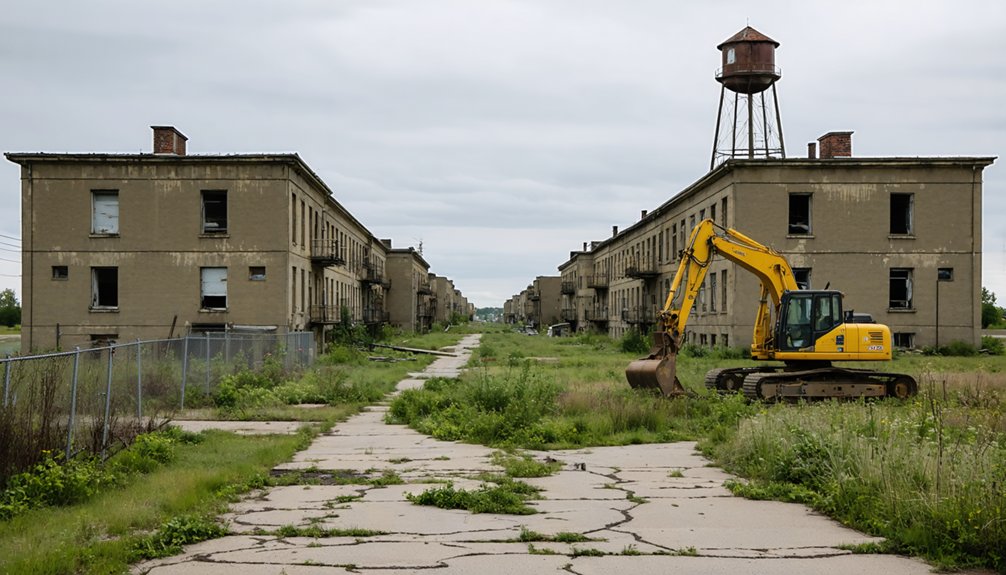
Perched atop Lookout Mountain in 1951, Finland Air Force Station emerged from a $5 million construction effort designed to scan Canadian skies for Soviet threats during the Cold War‘s tensest years.
The sprawling 101-acre complex housed 350 soldiers in 44 residences, complete with underground curling rinks and ski tows. When technological obsolescence shuttered operations in 1980, developers saw opportunity where the military saw abandonment.
Today’s $800,000 asking price includes:
- 43 mid-century homes with 3-4 bedrooms each
- Functional paved streets and utility infrastructure
- Panoramic Lake Superior views
- Working septic systems with tested wells
- Power and sewer lines ready for activation
Previous restoration attempts failed, but the site’s bones remain solid.
Creative redevelopment strategies and bold community vision could transform this Cold War relic into something extraordinary.
Exploring the Ruins: What Visitors Can Expect
While Finland Air Force Station represents a preservation opportunity waiting for the right visionary, Minnesota’s other abandoned settlements tell a different story—one written in crumbling foundations and forest reclamation.
Minnesota’s abandoned places speak through weathered ruins and returning wilderness, each telling stories of communities consumed by progress and time.
You’ll find Chippewa City easiest to access, sitting just outside Grand Marais as an empty clearing where buildings once stood. North Hibbing’s remnants offer eerie ghostly encounters beside the open pit that consumed the original town.
At Elcor, inhabited until 1956, you’ll glimpse authentic Mesabi Iron Range history through remaining structures. The 2011 Pagami Creek Fire paradoxically revealed Forest Center’s foundations by clearing decades of overgrowth.
Mineral Center’s renovated cemetery welcomes visitors seeking historical significance, while Forestville’s ruins mark where railroad progress bypassed a community. Each site offers tangible connection to Minnesota’s abandoned past.
The Reality of Buying a Ghost Town

The romance of owning an abandoned Minnesota settlement collides with harsh legal and financial realities the moment you begin serious inquiries.
Legal considerations demand detailed title searches revealing ownership chains dating back to territorial days, zoning analyses confirming permitted uses, and environmental assessments uncovering mining-era contaminants.
Financial implications extend beyond purchase prices at tax auctions or foreclosure sales.
Essential acquisition steps include:
- Securing pre-approval financing accounting for rehabilitation value
- Budgeting for back taxes, liens, and title insurance
- Conducting structural inspections revealing concealed damage
- Steering through historic preservation ordinances limiting alterations
- Understanding state adverse possession laws requiring continuous occupation
You’ll face extensive renovation costs transforming dilapidated structures into habitable spaces, with Minnesota’s harsh winters accelerating deterioration.
Freedom comes through thorough preparation, not romantic assumptions.
Frequently Asked Questions
What Are the Property Taxes on Abandoned Ghost Town Properties in Minnesota?
You’ll find property valuation determines your tax burden on abandoned ghost town parcels at Minnesota’s standard 1.05% rate, though securing tax incentives requires proving active restoration efforts or agricultural use qualifying for reduced classifications.
Are There Zoning Restrictions Preventing Commercial Development of Former Military Bases?
Yes, you’ll face zoning laws restricting commercial development near military installations. AICUZ zones impose height limits, noise controls, and density restrictions. Clear zones prohibit most uses, while accident-potential zones severely limit commercial activity for safety.
What Insurance Requirements Exist for Purchasing Properties With Contamination History?
You’ll need environmental assessments documenting contamination history, pollution liability insurance covering past releases, and compliance with Minnesota’s disclosure laws. Standard policies won’t protect you—specialized environmental coverage shields against inherited contamination liability.
Can Individual Homes Be Purchased Separately or Only as Complete Package?
You’ll find Finland’s 43 homes sold exclusively as package deals, not individual property sales. No platform lists separate residences—the entire 101-acre Cold War-era base targets investors seeking complete redevelopment opportunities, preserving your autonomy through wholesale acquisition.
What Utility Infrastructure Remains Functional at These Abandoned Town Sites?
You’ll find minimal utility access at these sites—Taconite Harbor retains some harbor infrastructure, but infrastructure maintenance ceased decades ago across all locations. Dorothy, Vicksburg, and Pomme de Terre lack functional water, sewer, or electrical systems entirely.
References
- https://kxrb.com/what-happened-to-this-minnesota-ghost-town-will-shock-you/
- https://www.realtor.com/news/unique-homes/101-acre-retired-air-base-with-ghost-town-vibes-in-finland-mn-available-for-800k/
- https://thievesriver.com/blogs/articles/ghost-towns-in-minnesota
- https://www.cascadevacationrentals.com/6953/taconite-harbor-a-ghost-town/
- https://bringmethenews.com/minnesota-lifestyle/southern-mn-ghost-town-signs-are-up-for-auction-this-weekend
- https://www.youtube.com/watch?v=Cs3_lqh5ErQ
- https://mix108.com/a-minnesota-ghost-town-could-be-yours-for-under-1-million/
- https://1037theloon.com/got-800k-you-can-own-a-creepy-minnesota-ghost-town/
- https://www.onlyinyourstate.com/state-pride/minnesota/abandoned-airbase-mn
- https://en.wikipedia.org/wiki/Finland_Air_Force_Station