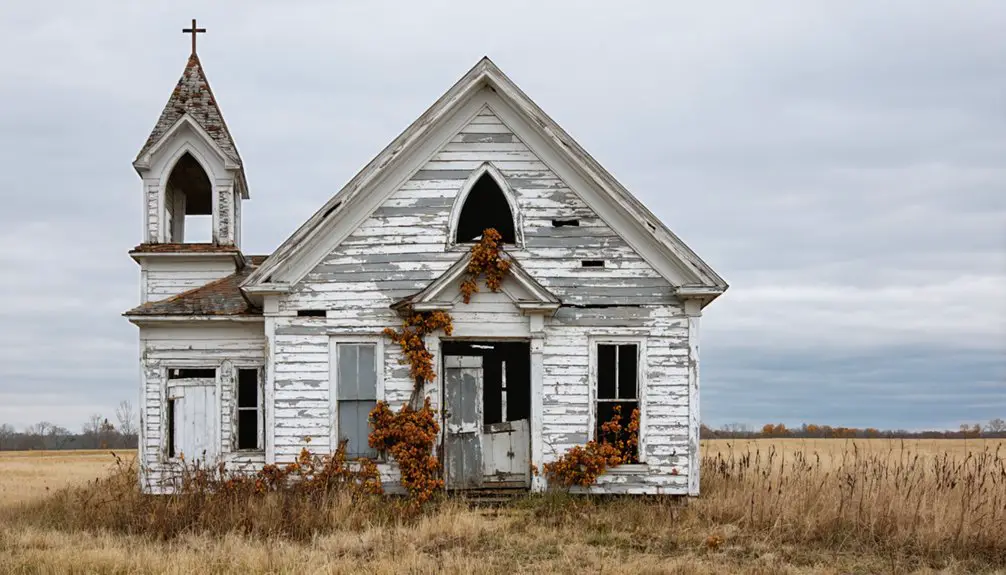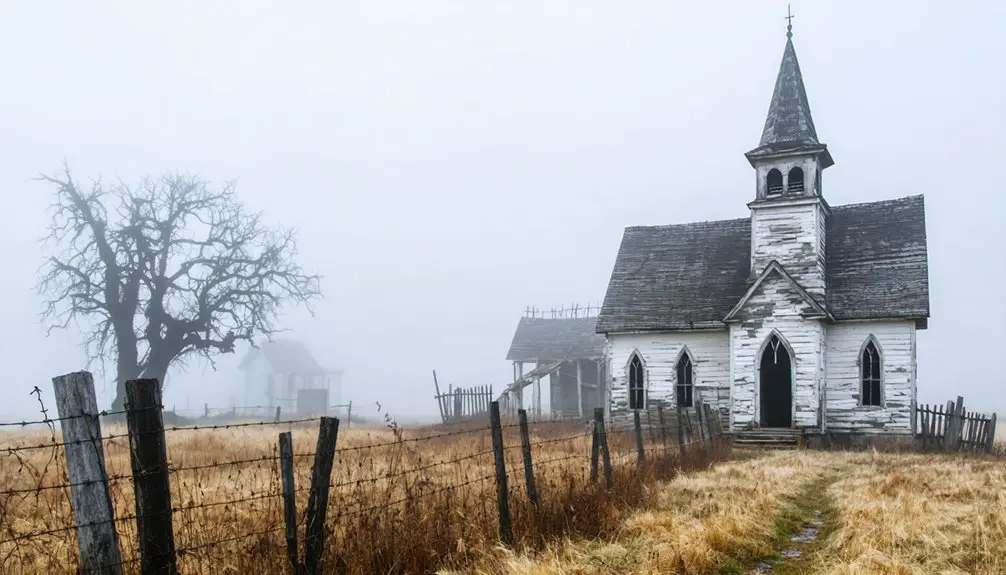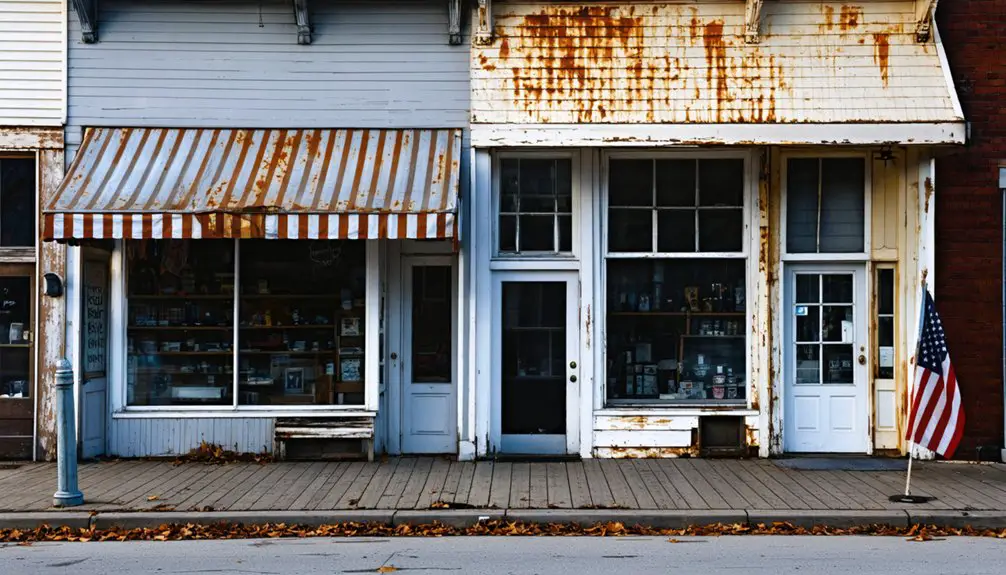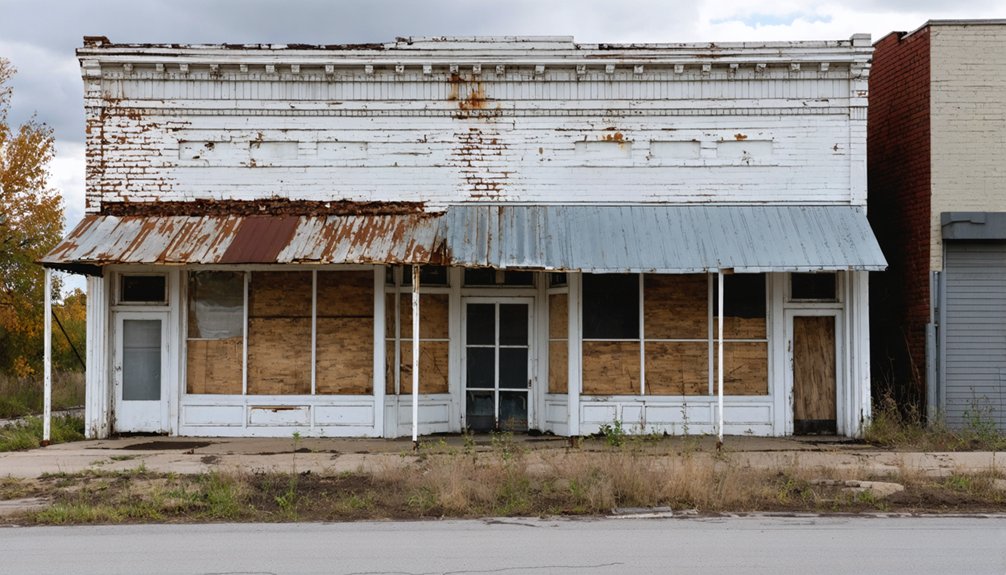
You can purchase complete abandoned settlements in Missouri for under $385,000, with properties representing distinct chapters in the state’s transportation and pioneer history. Arlington, a former Route 66 destination three miles west of Rolla, sits on 500 acres and includes original buildings from its 1867 founding. Near Warsaw, developers constructed an authentic pioneer village using 1800s lumber based on historical architectural drawings. More than 20 such properties await buyers who understand these sites’ preservation potential, infrastructure challenges, and their role in documenting Missouri’s settlement patterns.
Key Takeaways
- Missouri has over 20 abandoned properties currently listed for sale, representing the state’s settlement and transportation history.
- Arlington, a former Route 66 town near Rolla, is listed for $385,000 with campground, general store, and houses.
- Most abandoned Missouri properties have median values below $100,000, making them accessible investment opportunities.
- Available listings include historic structures like Joplin’s Union Depot and Vernon County Jail across the state.
- International buyers increasingly target these distressed properties for boutique hotels and heritage tourism development.
Arlington: A Complete Route 66 Town on 500 Acres
Three miles west of Rolla, Arlington occupies a rare position in Missouri’s landscape: a complete Route 66 town frozen at the moment Interstate 44 rendered it obsolete.
You’ll discover Arlington history etched into brick storefronts, deteriorating motel foundations, and crumbling resort remnants along a dead-end stretch of the original 1926 alignment. Established in 1867, this settlement thrived as Thomas Harrison’s riverside trading post before exploding into a Route 66 destination where Stony Dell Resort’s spring-fed pool welcomed travelers and servicemen alike.
The 1965 interstate construction severed Arlington’s lifeline, transforming it into accessible ruins that preserve authentic Route 66 nostalgia. Arlington’s last business closed in 2008, marking the final chapter of commercial activity in this once-bustling community. The town’s final decline culminated when Arlington’s post office closed in 1958, erasing its last official municipal function. With permanent residents numbering in single digits, this 500-acre ghost town offers you tangible evidence of America’s abandoned roadside dreams.
Warsaw’s Hand-Crafted Replica Pioneer Settlement
While Route 66’s abandonment created Arlington’s accidental preservation, the Shipman family deliberately engineered their own ghost town near Warsaw through decades of methodical construction.
Starting in the 1960s, Marion Shipman, his parents Con and Hazel, and brother Ross assembled an entire pioneer village on their 20-acre Missouri property using authentic 1800s lumber they’d acquired.
Their replica craftsmanship transformed period timber into hand-built structures based on Marion’s architectural drawings. The systematic approach mirrored early American settlement patterns, where townships were surveyed before development could proceed.
This dedication to pioneer heritage created something rare: a privately constructed settlement that captures frontier-era authenticity through original materials rather than modern reproductions. The area’s connection to frontier history runs deep, with Warsaw itself officially incorporated in 1843 during the height of westward expansion.
You’ll find this abandoned theme park listed at $295,000—a complete turn-key opportunity for anyone seeking to resurrect a hand-crafted piece of Missouri’s frontier past near Warsaw’s historic 1843 settlement.
What International Buyers Are Teaching Us About Ghost Town Sales
International investment patterns reveal strategic thinking: boutique hotel conversions, heritage tourism infrastructure, event venues capitalizing on authenticity you can’t manufacture elsewhere.
These buyers negotiate aggressively on distressed properties, viewing infrastructure decay as solvable rather than prohibitive. Their willingness to absorb maintenance burdens on large acreages demonstrates long-term commitment to preservation-as-profit.
You’re witnessing a fundamental revaluation: what appears abandoned locally registers globally as opportunity waiting for vision. Similar transformations occurred with Craco’s filming locations, where the Italian ghost town’s deteriorated structures attracted major motion picture productions, converting abandonment into commercial asset. Properties located within reasonable distance from major cities like St. Louis and Kansas City offer investors the dual advantage of accessibility and isolation that ghost town conversions require.
Beyond Missouri: Comparing Western Ghost Town Opportunities
Missouri’s ghost town market exists within a broader Western landscape where prices and preservation challenges vary dramatically by region.
You’ll find ghost town investments ranging from Texas’s $100,000 Lobo to California’s multi-million-dollar sites, each demanding different historical preservation approaches.
Texas properties like Villa de la Mina’s 62 acres showcase fortress-style mining architecture, while Nevada’s concentrated ghost towns reflect late 1800s silver operations.
Montana’s Frontier Town blends authentic Old West structures with modern tourist amenities, demonstrating adaptive reuse strategies.
You’re maneuvering over 4,500 abandoned American towns, where legal and infrastructure issues test your commitment to preservation.
California’s Cerro Gordo and South Dakota’s Swett represent opposite scales of restoration ambition, yet both honor frontier-era authenticity while adapting to contemporary ownership realities.
Lobo’s previous German owners utilized the 10-acre property for festivals and performances before maintenance costs became too burdensome.
Bridgeville, California’s 83-acre property demonstrates the unpredictable resale market, having changed hands multiple times since its first eBay sale in 2002.
More Than 20 Abandoned Properties Available Across the State
Across Missouri’s landscape, you’ll discover more than 20 documented abandoned properties currently on the market, each representing distinct chapters in the state’s settlement and transportation history.
Missouri’s 20+ abandoned properties tell stories of settlement, railroads, and westward expansion waiting to be preserved.
Abandoned Missouri maintains thorough state listings featuring structures like Joplin’s Union Depot and Vernon County Jail, alongside numerous lesser-known sites. These properties span railroad towns, courthouses, and commercial buildings that witnessed Missouri’s evolution from frontier territory to modern state.
You’ll find opportunities ranging from Route 66 landmarks to riverside settlements, with the Abandoned Atlas Books site archiving detailed documentation. Most properties carry median values below $100,000, offering accessible entry points for preservation-minded buyers. Arlington, a Phelps County railroad town, is currently listed for $385,000 including a campground, general store, 11-room hotel, five houses, and 500 acres. Interest in ghost towns is growing among international buyers, mirroring recent high-profile acquisitions of similar properties across the American West.
Each listing preserves tangible connections to Missouri’s pioneering spirit, railroad expansion, and westward migration routes that shaped American independence.
Frequently Asked Questions
What Are the Typical Zoning Restrictions for Ghost Town Properties in Missouri?
You’ll find zoning laws typically regulate building dimensions, setbacks, and land use based on district classifications. Counties control structure alterations and historical preservation, while you’re free to adapt uses conforming to agricultural or residential designations protecting property values.
How Do Property Taxes Work for Abandoned Towns Versus Active Communities?
Property taxes apply uniformly regardless of occupancy—you’ll find no tax exemptions for abandonment. However, property valuation differs dramatically: abandoned areas like ZIP 63113 show $60,400 median values versus active communities’ $249,400, considerably reducing your tax burden.
What Financing Options Exist for Purchasing an Entire Town?
You’ll find standard mortgage lending, private investors willing to back preservation projects, or crowdfunding options through heritage-focused platforms. Seller financing sometimes emerges when owners prioritize stewardship over profit, enabling unconventional ownership arrangements.
Are There Historical Preservation Requirements When Buying These Properties?
Like guardians protecting ancient stories, you’ll face requirements if properties hold historical significance. Buildings over 50 years old may qualify for National Register listing, releasing preservation grants while requiring you to follow Secretary of Interior Standards.
What Utilities and Infrastructure Costs Should Buyers Expect to Restore?
You’ll need to restore water access and energy sources, potentially costing millions for treatment systems and distribution lines. Expect infrastructure investments for roads, drainage, and utilities, though CDBG funding requires matching contributions from you.
References
- https://patch.com/missouri/affton/bp–ghost-towns-for-sale
- https://www.realtor.com/news/unique-homes/replica-pioneer-town-for-sale-missouri/
- https://www.youtube.com/watch?v=Xrht4eEms6o
- https://www.riverfronttimes.com/real-life-oregon-trail-town-for-sale-in-missouri-photos/
- https://abandonedmo.com/status/for-sale/
- https://www.rliland.com/missouri/Resources/Find-a-Property
- https://www.onlyinyourstate.com/state-pride/missouri/vacant-ghost-town-arlington-rural-mo
- https://www.legendsofamerica.com/arlington-road-missouri/
- https://www.theroute-66.com/arlington.html
- https://www.youtube.com/watch?v=Ltjal3lrHJQ