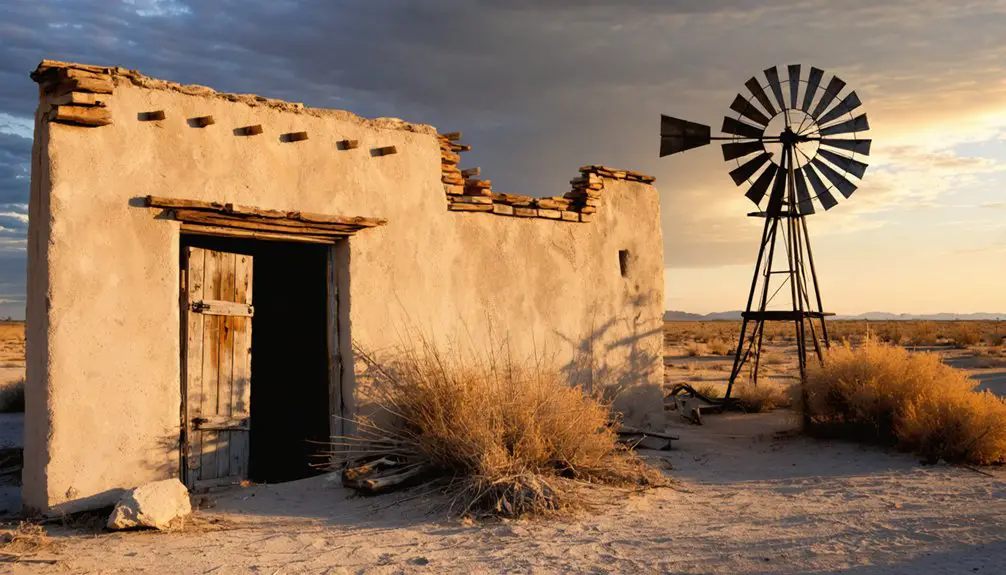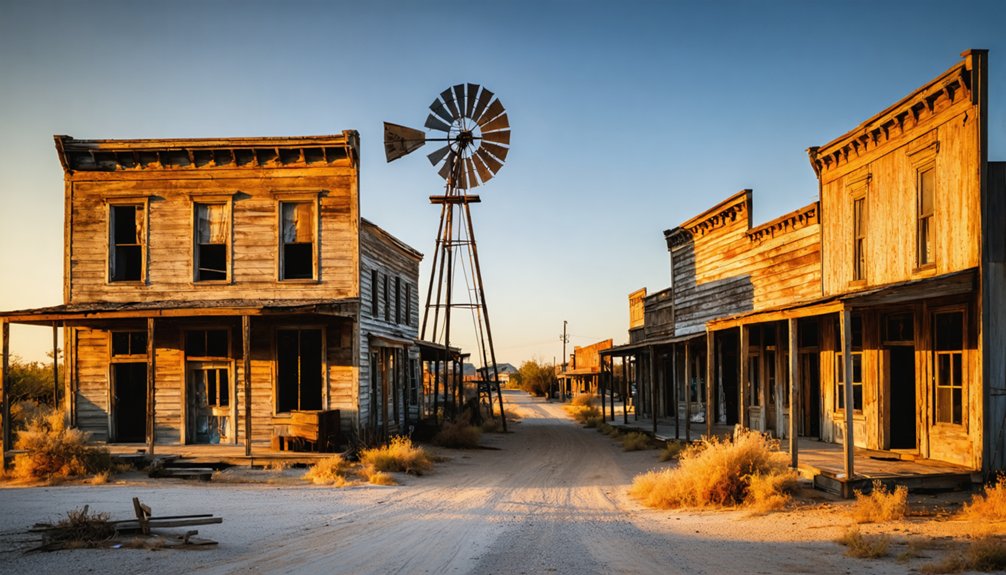
You’ll find several authentic Texas ghost towns currently on the market, with prices starting around $100,000 for complete historic communities. Notable properties include Villa De La Mina near Big Bend, featuring original mining infrastructure, and the Lobo community between Van Horn and Valentine, which transformed into an artist residency hub. Texas’s 500+ ghost towns create competitive opportunities for investors seeking unconventional properties with historical significance. Below, you’ll discover specific listings, market dynamics, and essential considerations before making your purchase.
Key Takeaways
- Texas has over 500 ghost towns, with properties available for purchase starting around $100,000 in competitive markets.
- Lobo Community offers a culturally-enriched desert property for $100,000, featuring former gas station, motel, and artist residency facilities.
- Villa De La Mina is a historic mining settlement near Big Bend with roofless structures and versatile event hosting capabilities.
- Buyers must assess renovation costs, water rights, back taxes, and maintenance burdens beyond the initial purchase price.
- Investment potential varies by location and historical significance, with opportunities for creative development or short-term rentals.
Villa De La Mina: Historic Mining Settlement Near Big Bend
Villa de La Mina represents a rare investment opportunity in West Texas’s storied mining heritage, positioned on the western edge of Terlingua near the Big Bend region’s dramatic landscapes.
A singular chance to own authenticated frontier history where West Texas’s mining legacy meets Big Bend’s untamed wilderness.
This early 1900s cinnabar mining settlement produced mercury until market decline forced abandonment, leaving roofless structures and primitive rock buildings that embody authentic historic preservation.
You’ll find management housing and mining infrastructure spread across private acreage, approximately ten minutes from Lajitas runway.
The property’s hosted prestigious events like the CASI Chili Championships, demonstrating its versatility beyond mining heritage appreciation.
The settlement’s labyrinth of mining shafts and caverns, carved by workers following veins of cinnabar ore over a century ago, adds geological intrigue to the property’s historical significance.
The area benefits from proximity to the Rio Grande’s outdoor recreation, where kayaking and adventure tourism have enhanced the region’s appeal to nature enthusiasts and visitors.
Currently listed through realtor Steve Dyer, these ruins offer you freedom to develop a unique venture—whether historical tourism, event hosting, or preservation project—in one of Texas’s most scenic and historically significant locations.
Lobo: Artist-Owned Community Between Van Horn and Valentine
For $100,000, you’ll acquire 10 acres of culturally-enriched desert property located off Highway 90, positioned 12 miles south of Van Horn and 24 miles west of Valentine.
Lobo’s transformation from abandoned settlement to artist residency hub demonstrates proven community revival potential. German owners spent 22 years hosting film festivals, music performances, and collaborative art installations that drew 75+ attendees. The town’s decline began when the aquifer was pumped dry in the 1980s, leading to complete abandonment by 1991.
Existing infrastructure includes a former gas station, motel, grocery store, and generator-powered barn venue. The property originally thrived as a water refill station for steam locomotives in the 1880s before later becoming a cotton farming hub.
The sellers won’t entertain offers from parties seeking only water rights or grazing land—they’re hunting buyers with authentic vision for continuing Lobo’s cultural legacy.
This isn’t speculative land banking; it’s an operational creative compound ready for someone who values independence and cultural programming over conventional development returns.
Boeing 727 Desert Retreat: Aviation-Themed Property in Remote West Texas
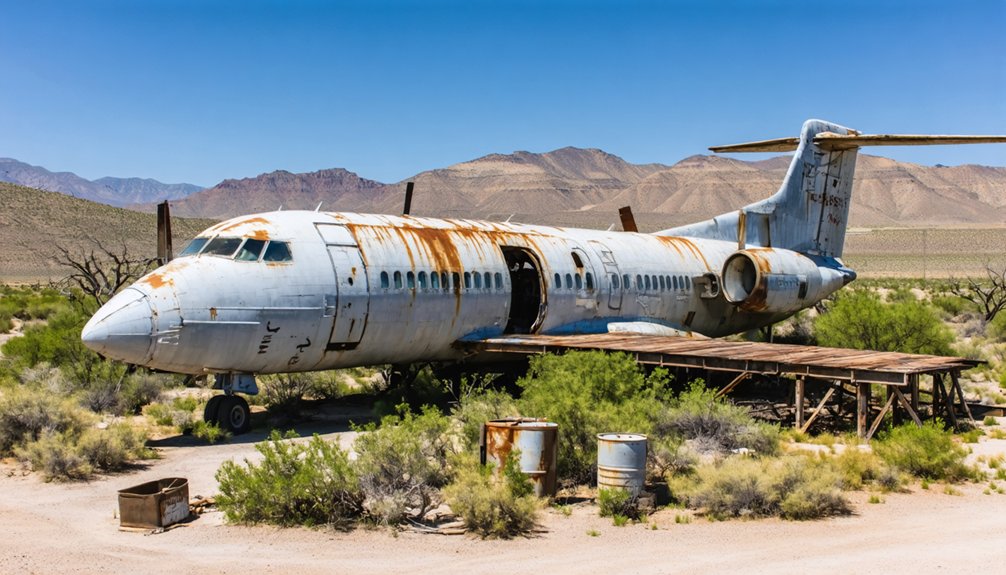
This $2.95 million aviation-themed compound transforms 80 acres of Terlingua desert into a turnkey short-term rental operation that’s already generating income 15 minutes from Big Bend National Park’s entrance.
You’ll acquire a 3,040-square-foot home featuring 40 feet of an authentic Boeing 727 with working cockpit instruments, flight simulator, and original cabin seating converted into sleeping quarters for 11 guests.
The aviation aesthetics extend throughout—Southwest Airlines recliner seats furnish your home theater, while illuminated taxiway lights guide visitors up your driveway.
Aviation touches meet Texas desert—vintage airline seats and runway lights transform functional spaces into immersive experiences for guests seeking extraordinary stays.
Desert architecture combines with modern infrastructure: solar power, fiber internet, and radiant floor heating operate off-grid.
The 7,320-square-foot main estate, 1,906-square-foot barn, detached workshop, and three-car garage complete this income-producing compound that’s been welcoming paying guests since 2022. Outdoor amenities include a fire pit and BBQ grill for desert evenings under West Texas skies. Guests can explore 500 feet of elevation across the property’s mountain or connect to a network of private ranch roads for extended desert adventures.
Understanding the Texas Ghost Town Real Estate Market
While Texas’s housing boom created headlines nationwide, a contrasting reality has transformed dozens of communities into buyer opportunities priced at fractions of conventional real estate values.
Seventy-five counties lost population between 2022 and 2023, with real estate trends showing new subdivisions facing months of unsold inventory and price reductions exceeding 40%.
You’ll find ghost town history repeating itself in markets where investor properties sit vacant and days on market stretch beyond 95 days.
Rural counties experience 7% annual population declines while builders struggle with 30-50% permit overhangs.
Short-term rental occupancy rates plummeted below 50%, forcing sellers to offer closing cost assistance and steep discounts.
The high plains region saw 27 counties with significant population declines, with some towns losing hundreds of residents.
West Texas offers extreme examples like Lobo, an abandoned farm town selling for $100,000 complete with former motel, grocery store, and functioning well on 10 acres.
This creates unprecedented acquisition opportunities for buyers seeking freedom from conventional housing markets.
What to Consider Before Purchasing an Abandoned Texas Town
Acquiring an abandoned Texas town demands financial scrutiny that extends beyond the headline purchase price. While Lobo’s $100,000 tag sits $226,000 below Texas’s median home price, you’ll face renovation costs from decades of wind damage and structural deterioration.
Property valuation requires analyzing surrounding land values, water rights worth, and potential resale figures against your total investment. Professional inspections of wells, pools, and building foundations reveal hidden expenses that previous owners couldn’t sustain.
Hidden costs lurk beneath abandoned properties—comprehensive inspections prevent inheriting the financial burdens that defeated previous owners.
Investigate unpaid back taxes through county records—they’ll impact your acquisition timeline and costs. Your creative vision matters here. Sellers prioritize buyers committed to revitalization over passive investors seeking grazing land.
Calculate maintenance burdens, infrastructure upgrades, and development potential before committing. Working with a real estate agent familiar with abandoned properties provides access to unlisted opportunities and helps navigate complex rural transactions. Texas’s approximately 500 ghost towns represent the highest concentration in the nation, creating a competitive resale market if your plans don’t materialize. This investment delivers freedom through ownership, not guaranteed returns. Exploring affordable ghost towns in Texas can uncover hidden gems where your creativity can flourish. Each town has its unique charm and history, offering opportunities for renovation and revitalization. As you consider your options, be sure to evaluate the local market trends to maximize your investment potential.
Frequently Asked Questions
Are Utilities Like Electricity and Internet Available in Texas Ghost Towns?
You’ll typically face limited utility availability in Texas ghost towns, with most lacking electricity and water infrastructure. Internet access is especially challenging, requiring substantial investment to extend power lines and modern connectivity to these remote properties.
What Are Typical Property Tax Rates for Ghost Town Properties in Texas?
Your telegraph-era ghost town property’ll face Texas’s 1.74% average rate, though remote locations often carry lower property value assessments. You’ll benefit from available tax exemptions like homestead protection, potentially slashing your investment’s annual burden.
Can Ghost Town Properties Be Financed Through Traditional Mortgage Lenders?
Traditional mortgage options won’t work for ghost town financing since most lenders reject these high-risk properties. You’ll need alternative funding like hard money loans, private investors, or personal capital to secure your investment freedom.
Are There Building Code Requirements When Renovating Structures in Ghost Towns?
Yes, you’ll need renovation permits and must comply with Texas Minimum Construction Standards. If you’re pursuing historical preservation, expect additional regulations. These requirements protect your investment while ensuring properties meet safety standards for future occupancy.
What Mineral Rights Are Included With Ghost Town Property Purchases?
Like a treasure map with missing pieces, mineral ownership typically isn’t included—Texas ghost town property rights rarely transfer mineral estates. You’ll need separate verification through county records to determine what subsurface assets you’re actually acquiring.
References
- https://www.10news.com/ghost-towns-sale-us/
- https://www.youtube.com/watch?v=foZ2kp8qN8c
- https://secretdallas.com/texas-town-lobo-for-sale/
- https://www.youtube.com/watch?v=Q8x29dlPoA0
- https://www.realtor.com/news/unique-homes/ghost-town-house-boeing-aircraft-texas-sale/
- https://www.mysanantonio.com/realestate/article/5-for-Friday-the-13th-Spooky-Ghost-Towns-for-Sale-17716649.php
- https://www.mrt.com/news/article/historic-terlingua-property-18433423.php
- https://www.beaumontenterprise.com/realestate/article/spooky-spots-here-s-the-chilling-chance-to-buy-18458812.php
- https://www.youtube.com/watch?v=fnk7SotJgq4
- https://www.expressnews.com/news/local/article/Decades-after-the-mines-played-out-old-Terlingua-13213023.php