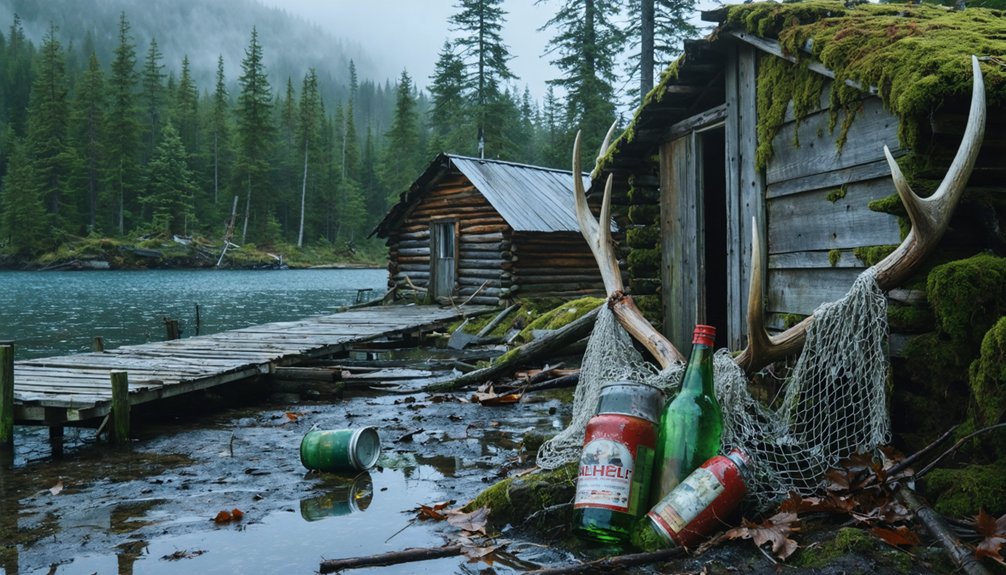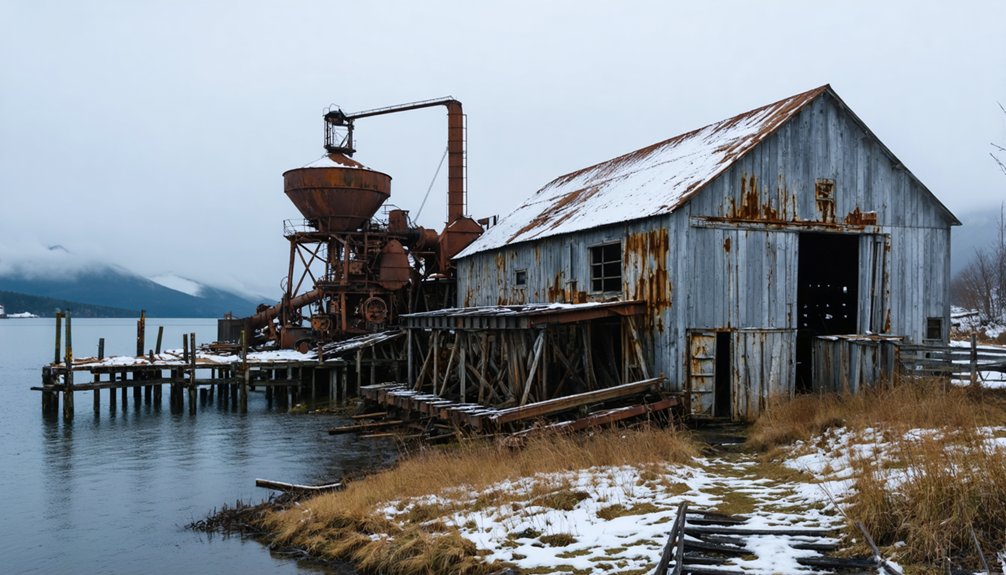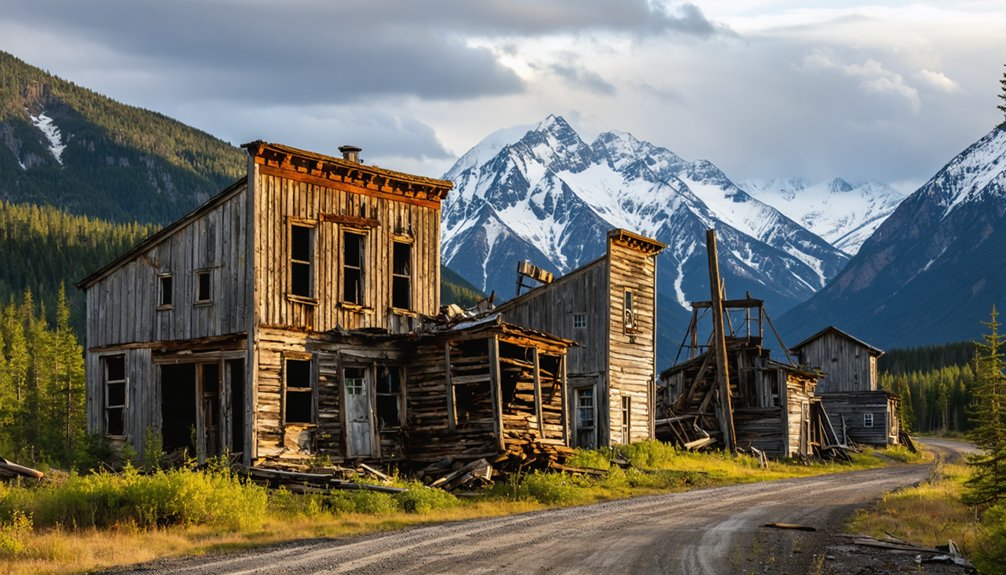
You’ll find Alaska’s most fascinating ghost towns scattered across its vast wilderness, from Kennicott’s 14-story copper mill within Wrangell-St. Elias National Park to the submerged ruins of Treadwell’s gold mines near Juneau. Explore Dyea’s avalanche-scarred Klondike gateway, where 40,000 prospectors once passed through, or venture to remote Three Saints Bay, Russia’s 1784 colonial outpost accessible only by floatplane. Fort Egbert’s telegraph station and mysterious Portlock’s cannery ruins offer equally compelling histories, each site revealing the boom-and-bust cycles that shaped frontier Alaska through preserved machinery, foundations, and untold stories.
Key Takeaways
- Kennicott Copper Mine features a 14-story mill and company town within Wrangell-St. Elias National Park, abandoned since 1938.
- Treadwell Gold Mine near Juneau operated until 1917, with visible ruins including collapsed shafts and the “Glory Hole” pit.
- Dyea, a Klondike Gold Rush port, peaked at 3,500 residents before declining when Skagway became the primary gateway.
- Three Saints Bay on Kodiak Island preserves Alaska’s first Russian settlement from 1784, accessible by float plane or boat.
- Fort Egbert in Eagle served as a telegraph hub and supply depot, with five original structures still standing.
Kennicott: Alaska’s Copper Mining Marvel
On a sweltering July 4th in 1900, prospectors scrambled up the rocky slopes of Kennicott Valley, following whispers from Ahtna Tribe stories about green-stained cliffs near the glacier. What they discovered changed Alaska forever—70 percent pure chalcocite, the richest copper deposit ever found.
You’ll find the remnants of this empire remarkably intact. The 14-story mill building still dominates the landscape, its mining architecture frozen in time since workers abandoned it overnight in 1938. Walk through the ammonia leaching plant, where innovative copper extraction methods once processed $200 million worth of ore. The 196-mile railroad to Cordova transported the processed copper to waiting steamships bound for the lower 48 states.
The company town’s hospital, general store, and machine shop remain exactly as workers left them—tools on benches, ledgers on desks. The one-room schoolhouse served both miners’ children and immigrant workers learning English. It’s industrial archaeology at its finest, preserved within Wrangell-St. Elias National Park.
Treadwell Ruins: Juneau’s Industrial Past
Just across the Gastineau Channel from downtown Juneau, you’ll find the overgrown foundations of what was once the world’s largest hard rock gold mine.
Between 1882 and 1917, Treadwell’s four mines employed nearly a thousand workers who extracted over 3.3 million ounces of gold—and enjoyed luxuries like the territory’s first swimming pool in this remote company town.
Today, moss-covered machinery and gaping mine shafts emerge from the forest floor along a network of trails, offering you a haunting glimpse into Alaska’s industrial might before disaster struck. In 1917, cracks appeared in buildings and water leaked into the mine before an alarm at 11:30 p.m. prompted the evacuation of 350 miners, who escaped just before seawater explosively flooded the tunnels and collapsed the swimming pool, club, and surrounding structures—miraculously with no fatalities. You can explore these remnants via the Treadwell Mine Historic Trail, which winds through the ruins and rusted machinery that preserve the region’s mining heritage.
Mining Town Glory Days
When Pierre Joseph Erussard sold his lode claim to John Treadwell on September 13, 1881, neither man could have imagined the industrial colossus that would rise from Douglas Island’s rocky shores.
By 1915, you’d witness 2,000 workers operating 960 stamps across four interconnected mines, processing 5,000 tons of ore daily in round-the-clock operations.
The complex pioneered revolutionary mining technology—hydroelectric power replaced steam, driving hoists and mills with Alaska’s abundant waterpower.
Underground tunnels snaked 45 miles beneath Gastineau Channel, reaching depths of 2,300 feet.
This wasn’t just economic development; it was alchemy on an industrial scale.
Over 35 years, Treadwell extracted 3 million troy ounces of gold worth $66 million, becoming the world’s largest hard rock gold mine and transforming Juneau from wilderness outpost into Alaska’s economic powerhouse.
The mines operated continuously every day of the year, shutting down only on July 4 and Christmas until disaster struck in 1917.
Warning signs emerged in February 1917 when active ground movement was recorded, followed by cracks appearing in April along a fault line that intersected the underground workings.
Alaska’s First Swimming Pool
The wealth flowing from those 960 stamps funded something unprecedented in early 1900s Alaska: a natatorium complex that would’ve impressed visitors in San Francisco or Seattle.
Around 1912, Treadwell constructed a multi-story building featuring tiled freshwater and saltwater pools in the basement—heated water pumped directly from Gastineau Channel using mining techniques adapted for recreation.
You’ll find it remarkable that this historic architecture housed more than just pools: a dance floor, gymnasium, and roller skating rink occupied upper levels.
For workers without indoor plumbing, attendants distributed towels and soap at individual bathtubs.
The entire facility cost just 50 cents monthly, deducted from wages.
The Treadwell Company also built the Clubhouse, featuring bowling alleys, a library, pool tables, and a barbershop for minimal fees.
Today, interpretive signs along Sandy Beach’s trails help you imagine miners soaking away underground labor in Alaska’s first true swimming pool. Nearby stands the restored Pump House from 1914, which once lifted 2,700 gallons per minute from the channel for milling operations and fire protection.
Exploring the Abandoned Ruins
Walking Sandy Beach’s forested trail today, you’ll encounter rust-stained concrete foundations jutting through moss and devil’s club—the skeletal remains of what was once the world’s largest gold mining operation. The iconic saltwater pump stands sentinel over collapsed mine shafts where 3 million tons of seawater rushed in during that catastrophic 1917 cave-in.
Steel gears, building ruins, and the infamous “Glory Hole” pit tell stories of nearly 1,000 miners who once extracted $67 million in gold from these tunnels. The mines operated with remarkable consistency, pausing only twice annually—on Christmas Day and the Fourth of July—before the disaster that flooded the complex. At their peak, the operations employed over 2,000 workers who lived in the adjacent towns of Douglas and Treadwell, whose populations once exceeded Juneau itself.
Modern tourism here feels unexpectedly ungoverned—you’re free to wander interpretive trails without crowds or admission fees. The Treadwell Historical Society‘s cultural preservation efforts maintain just enough signage to orient you, letting the haunting industrial wreckage speak for itself through a century of silence.
Dyea: Gateway to the Klondike Gold Rush
The ghostly silence of Dyea today belies the chaos of April 3, 1898, when the Palm Sunday Avalanche roared down Chilkoot Pass, burying dozens of gold seekers under tons of snow in the deadliest single event of the Klondike Gold Rush.
You’ll notice how nature and competition conspired against this once-thriving port—while avalanches and forest fires scarred the landscape, the White Pass railroad’s arrival in rival Skagway offered prospectors an easier route north.
Palm Sunday Avalanche Tragedy
On Palm Sunday morning in 1898, warm sunshine broke through the storm clouds above Chilkoot Pass, creating a deadly illusion of safety that would claim at least 65 lives by day’s end.
Despite warnings from experienced Tlingit packers who refused to climb, thousands of gold-seekers ignored avalanche safety protocols and pressed forward.
The main slide buried ten acres under 30-50 feet of snow between Sheep Camp and the Scales.
You’ll find the Slide Cemetery among Dyea’s historical landmarks today—a stark reminder that nature doesn’t negotiate.
Frantic stampeders dug frantically for survivors while telephone lines carried news of the catastrophe.
Colonel Anderson’s soldiers prepared the ground for unclaimed bodies as the Klondike’s deadliest disaster concluded.
Skagway’s Rise, Dyea’s Fall
Before Skagway became the undisputed gateway to Yukon gold, Dyea stood as its equal—a thriving port where thousands of stampeders disembarked onto mudflats with their year’s worth of supplies.
You’ll discover Dyea’s boom exploded in fall 1897, transforming tidal flats into a five-by-eight-block downtown. The town peaked at 3,500 residents while 40,000 gold rush prospectors streamed through that first brutal winter.
Their hearts were set on Klondike riches.
Three factors sealed Dyea’s fate:
- Skagway’s superior deep-water harbor eliminated mudflat struggles
- The White Pass railroad chose Skagway’s route over Chilkoot’s punishing grade
- Trade routes shifted permanently when the gold rush ended
Three Saints Bay: Russia’s First American Colony
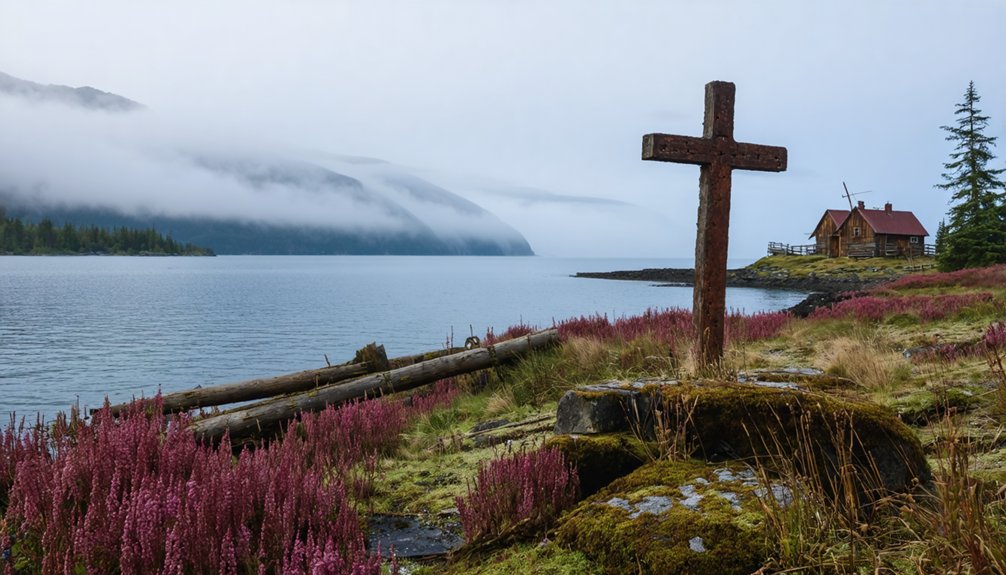
Deep within the protected waters of Kodiak Island’s eastern coast lies what remains of Russia’s bold first attempt at permanent colonization in Alaska.
Founded in 1784 by Grigory Shelikhov, Three Saints Bay served as Russia’s first permanent settlement until nature intervened. The 1788 earthquake and tsunami destroyed the fort, forcing relocation to present-day Kodiak by 1792.
You’ll find cultural relics scattered across the abandoned site—rectangular depressions marking former structures, cemetery plots, and evidence of earlier Sugpiaq occupation dating to 100 BCE.
Today’s Old Harbor community continues traditional fishing practices nearby. Access requires float plane or boat, but exploring this National Historic Landmark rewards you with tangible connections to Alaska’s Russian colonial past and indigenous resilience.
Fort Egbert: Eagle’s Military Mining Outpost
- Telegraph hub connecting interior Alaska to the lower 48 states
- Supply depot preventing miner starvation during harsh winters
- Judicial center where Judge Wickersham administered frontier justice
Captain Farnsworth’s leadership transformed the post into nearly 40 buildings by 1906.
Today, five original structures stand as demonstration to those who sought order—and opportunity—in Alaska’s untamed interior.
Portlock: The Vanished Cannery Town
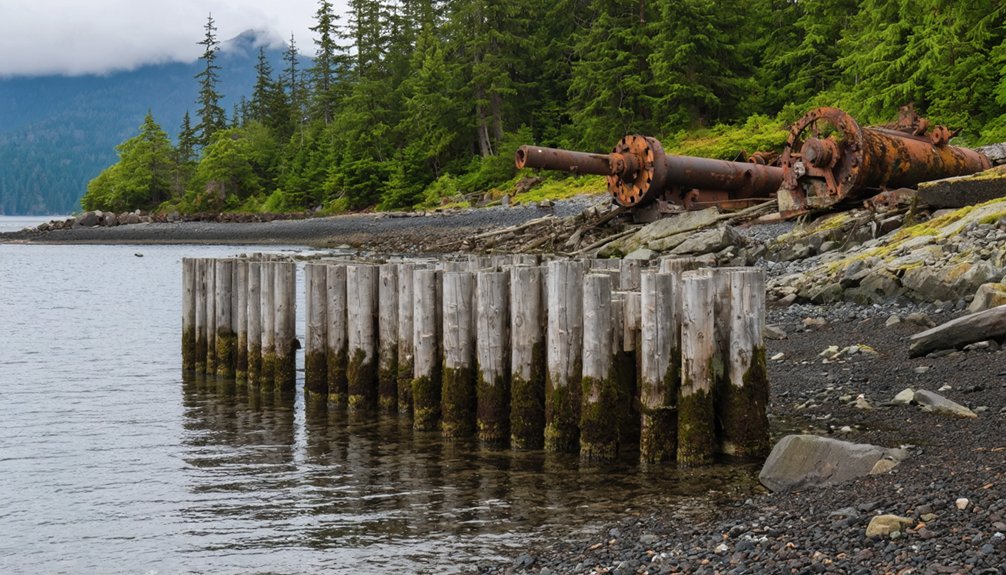
The shoreline of Alaska’s Kenai Peninsula once echoed with cannery whistles and fishermen’s calls, but Portlock tells a darker story than most abandoned settlements. Founded around 1900, this fishing village thrived until something drove every resident away by 1950.
Local folklore speaks of the “Nantiinaq”—a creature that allegedly terrorized workers, ripped trees from the ground, and left a trail of unexplained deaths. Ghost stories include the 1931 death of logger Andrew Kamluck and multiple mysterious disappearances that spooked even the hardiest frontiersmen.
You’ll find scattered ruins: rusted cannery equipment, crumbling house pilings, and an old mine tunnel. The isolation’s palpable—exactly what you’d expect from a place abandoned not for economics, but fear itself.
Planning Your Ghost Town Adventure
Before you load your backpack and set off into Alaska’s wilderness, you’ll need to match your ghost town choices to your comfort level and transportation options.
Exploring the ghost towns in southern Alaska can offer a unique glimpse into the state’s history and the lives of those who once inhabited these now-abandoned places. Consider the accessibility of each site, as some may require a boat or small plane for travel, while others are reachable by hiking trails. Make sure to research your destination beforehand to truly appreciate the stories that these hauntingly beautiful towns have to tell.
The ghost towns of Alaska’s history are not just relics; they are a testament to the harsh realities and dreams of the past. From former mining hubs to once-thriving trade centers, each site has its own narrative waiting to be uncovered. As you wander through the remnants, you’ll find echoes of the people who endeavored to carve out a life in these remote landscapes.
Essential Planning Steps:
- Research accessibility – Sites like Treadwell offer maintained trails with parking, while reaching Unga requires traversing the Aleutian Islands.
- Check seasonal windows – The Alaska Railroad’s Hurricane Turn runs Thursday-Sunday summers only, and winter conditions make most settlements impassable.
- Assess hazards – Coastal areas carry earthquake risks like Chenega’s 1964 destruction, while Pilgrim Hot Springs features unstable, sinking ground.
Contact the National Park Service (907-554-1105) for current conditions. Grab USGS maps showing abandoned infrastructure locations. Listen to local folklore about why residents fled – those stories reveal genuine dangers you’ll face exploring these freedom-soaked landscapes.
Preservation Efforts and Historical Significance
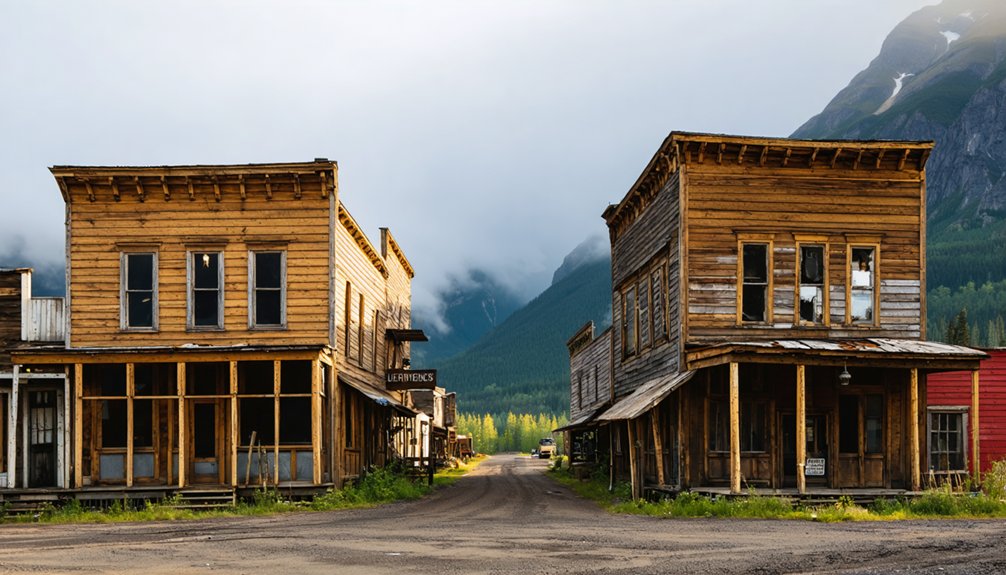
Scattered across Alaska’s wilderness, crumbling structures fight a losing battle against creeping moss and buckling permafrost—yet some ghost towns refuse to disappear entirely. You’ll find Kennicott’s 14-story red mill standing defiantly above its glacier, where preservation techniques maintain “arrested decay”—stabilizing structures without erasing time’s fingerprints.
The National Park Service acquired this copper mining camp in 1998, transforming J.P. Morgan’s abandoned syndicate into accessible heritage tourism.
At Cripple Creek, restoration returned natural water flow after 85 years, reviving salmon habitat where mining wastewater once dominated.
These sites preserve more than buildings—they capture Alaska’s boom-and-bust soul, those “lost decades” when abandonment seemed inevitable.
You’re walking through America’s industrial legacy, where preservation honors pioneering grit without sanitizing harsh realities.
Frequently Asked Questions
Are Ghost Town Tours in Alaska Safe for Children and Families?
Ghost town tours are generally safe for families if you’re prepared. You’ll encounter haunted legends and local legends that might spook younger kids, but stick with reputable group tours in tourist areas and you’ll experience Alaska’s eerie history safely.
Exploring abandoned sites in Alaska can provide a unique glimpse into the state’s past, showcasing the remnants of once-thriving communities. Many of these locations hold fascinating stories of survival and hardship, and guided tours can help you uncover their mysteries. As you venture through these ghostly landscapes, be sure to take in the stunning natural beauty that surrounds them.
Visiting abandoned towns in Alaska also offers a chance to witness the resilient nature of communities that once flourished in harsh conditions. From dilapidated buildings to remnants of old mining equipment, each site tells a story of the people who called these places home. Engaging with local historians during your visit can deepen your understanding of the challenges they faced and the legacies they left behind.
What Is the Best Time of Year to Visit Alaska’s Ghost Towns?
You’ll find June through early August ideal for exploring Alaska’s ghost towns—historical preservation efforts shine when snow melts, extreme weather subsides, and you’re free to roam Independence Mine’s sun-warmed buildings under endless twilight skies.
winter adventures in Alaskan ghost towns offer a unique glimpse into the past, where echoes of miners and pioneers linger in the crisp air. As you traverse these deserted streets, the stunning backdrop of rugged mountains and expansive tundra creates a hauntingly beautiful setting. Each step reveals stories waiting to be uncovered, making it a thrilling experience for history enthusiasts and nature lovers alike.
Do I Need Special Permits to Explore Abandoned Buildings in Alaska?
You don’t need special permits for casual exploration, but you’ll face legal restrictions on private property. Always seek permission from owners to respect historical preservation efforts while avoiding trespassing charges and unsafe structures containing hazards.
Can I Camp Overnight Near Any of These Ghost Town Sites?
You can camp near most ghost towns following camping regulations on public lands, but you’ll need permits for certain areas. Prioritize wilderness safety by staying 200 feet from water, packing out trash, and respecting seasonal closures near wildlife habitats.
Are Guided Tours Available or Must I Explore These Locations Independently?
You’re in luck—guided adventure awaits at most sites! Professional tours open mill buildings and guarantee historic preservation while sharing spine-tingling tales. However, some locations like Treadwell welcome independent exploration with maps, giving you freedom to roam.
References
- https://thealaskafrontier.com/ghost-towns-in-alaska/
- https://live.laborstats.alaska.gov/sites/default/files/trends/may24art2_0.pdf
- https://www.alaska.org/detail/kennicott-mine-ghost-town-walking-tour
- https://www.youtube.com/watch?v=Cz0IGc2Uy0E
- https://en.wikipedia.org/wiki/Portlock
- https://groundtruthalaska.org/articles/Kennecott-Copper-Mine/
- https://www.ultimathulelodge.com/blog/169452
- https://www.kennicottlodge.com/about-the-area/kennicott-national-historic-landmark/
- https://www.nationalparkstraveler.org/2023/10/kennecott-mines-national-historic-landmark-toxic-site
- https://npshistory.com/publications/habs-haer-hals/haer-kennecott.pdf