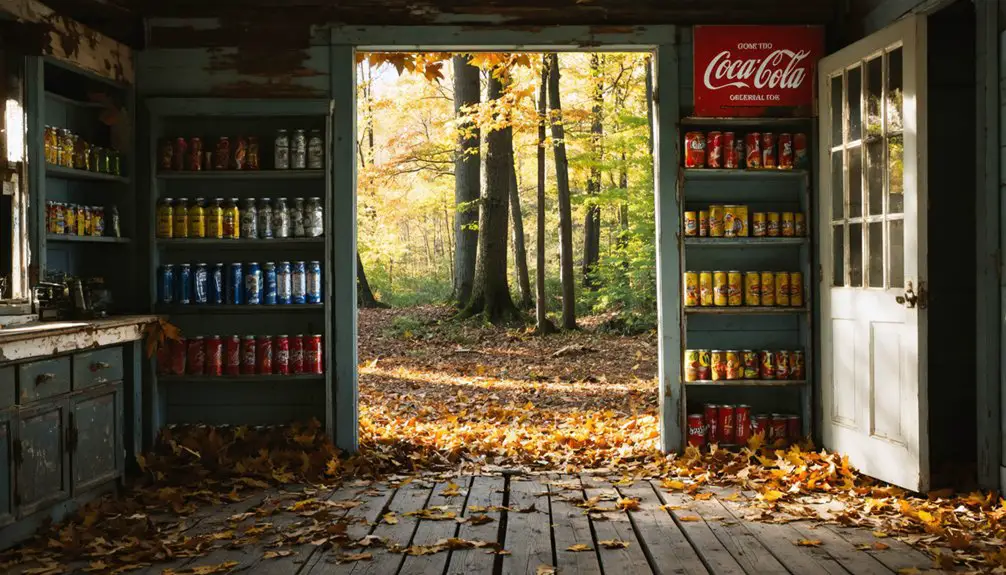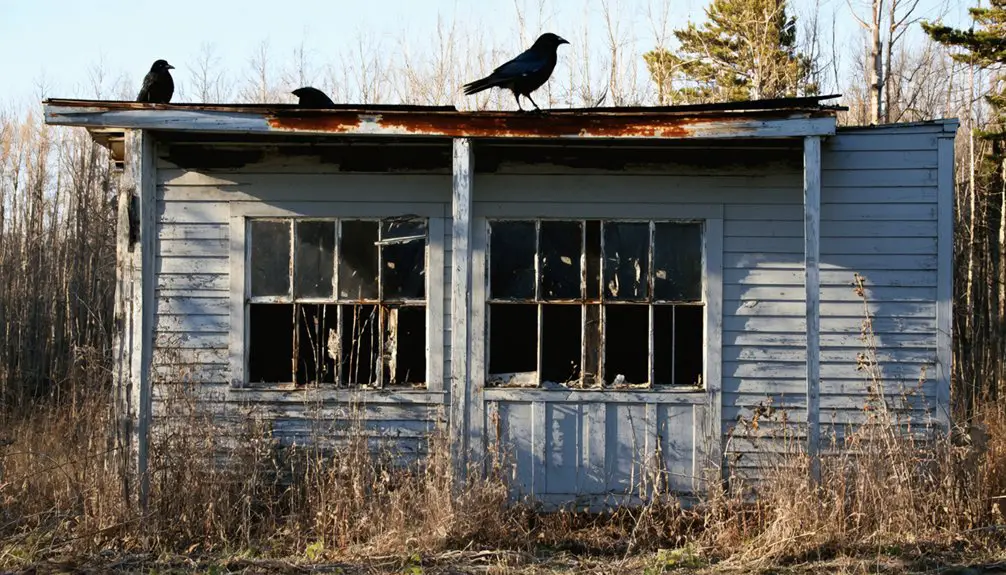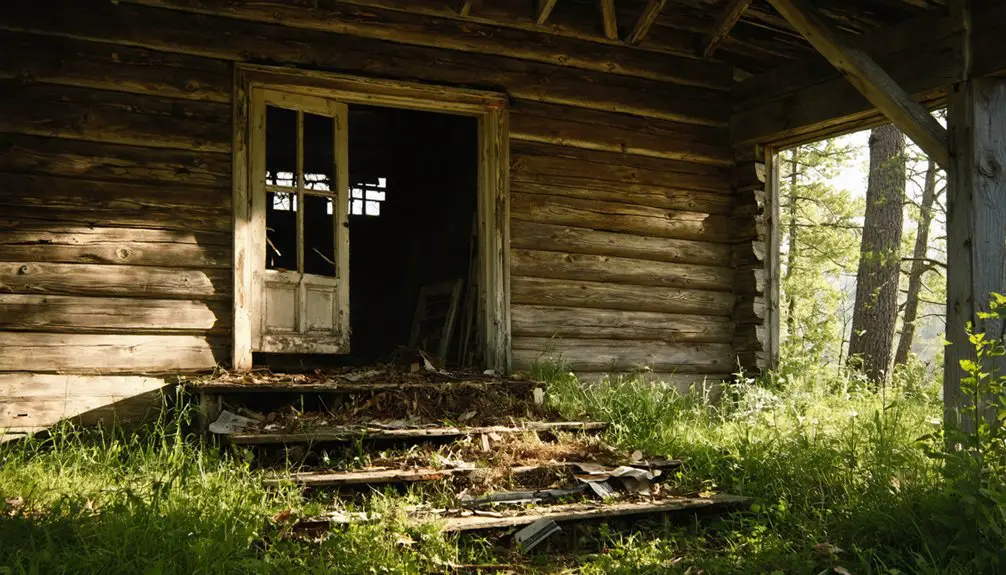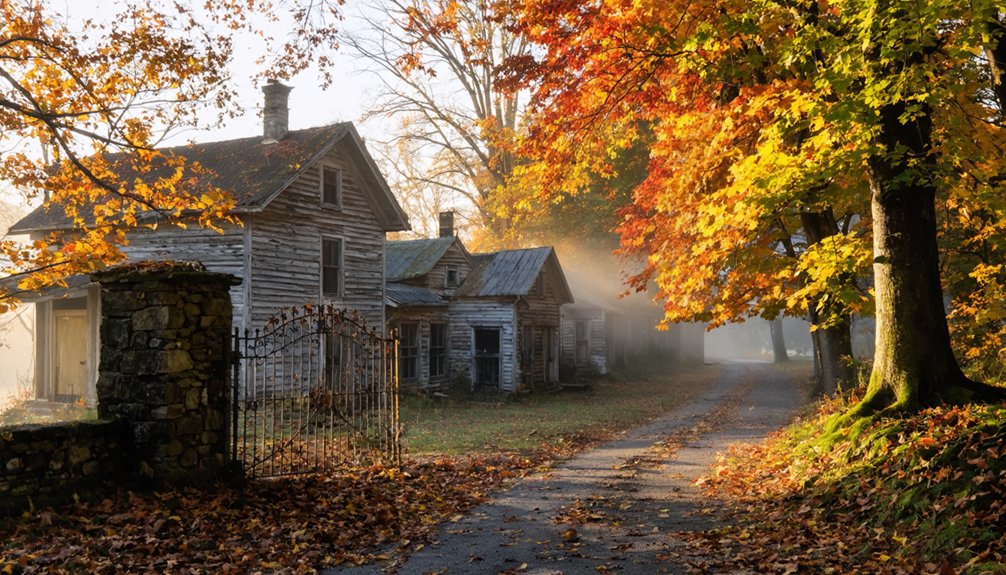
You’ll find Maine’s most haunting ghost towns cloaked in fall’s brilliant foliage, from Flagstaff Lake’s submerged villages that resurface when water levels drop, to Bucksport’s cursed monuments and ancient burial grounds. Explore Swan Island’s abandoned Perkins Township, where 1750s buildings stand frozen in time, or visit Skowhegan’s paranormally-active Strand theater. The twin ruins of Freeman and Madrid reveal stone foundations and weathered cemeteries among crimson maples, while each location holds deeper stories waiting beyond its crumbling thresholds.
Key Takeaways
- Flagstaff Lake’s submerged villages become visible during low water levels, with logging roads providing access to explore remnants of flooded communities.
- Bucksport offers witch legends, cursed monuments, and cemetery sites that blend paranormal folklore with authentic historical intrigue for fall visitors.
- Swan Island’s Perkins Township features 1750s buildings and abandoned structures, requiring reservations for fall visits to this protected wildlife area.
- Skowhegan’s haunted Strand theater and Lake George park provide paranormal experiences alongside typical ghost town exploration opportunities during autumn.
- Freeman and Madrid twin villages showcase stone foundations, weathered cemeteries, and mining ruins enhanced by Maine’s vibrant fall foliage backdrop.
Flagstaff: Maine’s Sunken Settlement Beneath the Lake
Beneath the dark waters of Flagstaff Lake lies a vanished world—Maine’s own Atlantis, where homes, mills, and a century of memories rest in silent stillness.
You’ll find this 20-square-mile reservoir hiding the sunken villages of Flagstaff and Dead River, flooded in 1950 when Central Maine Power dammed the river for hydroelectric generation.
When water levels drop, you can glimpse foundations and roads emerging like ghosts.
Visit during fall when brilliant foliage frames the lake’s edges, and you’re paddling above historical landmarks that once thrived—Myles Standish’s mills, the schoolhouse, homes where 300 residents celebrated their final Fourth of July in 1949. The villages had united during Old Home Days with parades, music, and fireworks before their planned destruction. The Dead River Area Historical Society preserves the memory of this lost community through photographs and documentation of the town’s dramatic transformation.
The logging roads circling these waters offer you freedom to explore where communities vanished beneath progress’s tide.
Bucksport: Where Witch Legends and Burial Grounds Collide
Three centuries of whispered curses hang over Bucksport’s weathered gravestones, where Colonel Jonathan Buck’s monument bears an indelible stain no scrubbing can erase. The witch legend tells of a condemned woman who vowed to mark his grave—and there it remains, a leg-shaped shadow that reappears after every cleaning attempt. You’ll spot it from Main Road without stopping.
But darker histories lurk beneath. The town’s paper mill rose atop a Red Paint People burial ground, where ancient settlers rested 6,000 years before Buck arrived. Early colonists disturbed these sacred sites, extracting red ochre for their doorways.
Sarah Ware’s unsolved 1898 murder and headless phantoms near relocated Silver Lake cemetery complete Maine’s most haunted town—where freedom meant bloodshed, and the dead refuse silence. Buck founded Bucksport in 1762 with his sloop Sally, establishing the settlement that would later become notorious for paranormal folklore. Buck’s grandchildren erected the monument in 1852, decades before the mysterious stain would draw spectators and transform the grave into an enduring tourist attraction.
Perkins Township: Swan Island’s Abandoned Paranormal Hotspot
Where Kennebec River currents divide Richmond from Dresden, Swan Island’s abandoned settlement rises from the water like a 6,000-year-old secret the living can’t quite forget.
You’ll discover Perkins Township—a mid-19th century town that dissolved in 1918 when too few men remained to fill its offices.
These abandoned settlements tell stories through weathered buildings dating to the 1750s, where the Tubbs-Reed House stands sentinel over a community that vanished after the Great Depression crushed its ice-harvesting and shipbuilding economy.
The historic preservation here reveals what freedom’s price looks like when industries fail:
- Empty schoolhouse walls that once echoed with children’s voices now hold only river wind
- Overgrown cemetery stones marking families who watched prosperity crumble
- Ferry landings connecting nowhere, their purpose erased by decades of silence
The island’s human story stretches back at least 9,000 years, with archaeological evidence on Swan Island revealing the Abenaki people’s deep connection to this land long before colonial settlement.
The Steve Powell Wildlife Management Area now protects the entire 1,500-acre township, where the Maine Department of Inland Fisheries and Wildlife maintains trails through landscapes that witnessed both indigenous and colonial histories.
You’ll need reservations to visit this state-managed ghost town each fall.
Skowhegan: Historic Theater and Lakeside Hauntings
While Swan Island’s ghosts whisper through empty homesteads, Skowhegan’s spirits refuse to stay silent in places still crowded with the living.
At Spotlight Cinemas at The Strand, a woman who died in the building’s apartment in 1978 reportedly stalks the 1929 theater. Theater hauntings here aren’t subtle—workers have been shocked by unplugged power tools, watched mops relocate themselves, and discovered handprints smeared across the movie screen. One employee fled after being paralyzed by the angry presence.
A male spirit claims the balcony, while shadowy figures hurl ceiling pieces into sets. The theater’s dark reputation earned it a spot on Travel Channel’s “Most Terrifying Places in America”, where the show explored its deadly history and lingering spirits. Despite the chilling reports, management typically downplays the hauntings, choosing not to market the venue as a paranormal destination.
Beyond downtown, Lake George Regional Park’s west side pulses with eerie activity. These ghost legends have crowned Skowhegan Maine’s most haunted town—where paranormal encounters happen among ticket-buyers and beachgoers, not ruins.
Freeman and Madrid: Twin Deserted Villages Reclaimed by Nature
Deep in Franklin County’s wilderness, two forgotten villages tell parallel stories of boom and bust. Freeman, incorporated in 1808, and Madrid, a 19th-century mining hub, thrived before economic decline claimed them both.
Today, autumn foliage frames their haunting remains—stone foundations, weathered cemeteries, and abandoned mine shafts reclaimed by forest. Freeman’s population peaked at 838 in 1840 before declining steadily through the decades.
You’ll discover freedom in exploring these unguarded sites where nature’s taken control:
- Crumbling gravestones emerge through fallen leaves, marking settlers who never imagined their towns would vanish
- Mine entrances yawn dark against brilliant fall colors, silent witnesses to boom-time dreams
- Foundations stand sentinel beneath maple canopies, their stories preserved only in historical preservation records and whispered legends
Navigate both villages in one day, experiencing Maine’s raw history without crowds or restrictions. Freeman was originally established to resettle victims of the devastating 18th-century Portland fire during the American Revolution, giving the town’s founding a tragic yet hopeful origin story.
Frequently Asked Questions
What Is the Best Time in Fall to Visit Maine’s Ghost Towns?
You’ll find early-to-mid October perfect for exploring Maine’s abandoned sites. Seasonal foliage peaks then, painting crumbling structures in fiery hues while historical preservation efforts remain visible before winter. Crowds thin, giving you unrestricted access to these hauntingly beautiful locations.
Are These Ghost Towns Safe to Explore With Children?
Yes, they’re safe for kids! You’ll find family-friendly festivals and supervised activities at most locations. While haunted legends add excitement, basic safety precautions apply—stick to maintained paths, supervise young explorers, and respect seasonal access guidelines.
Do I Need Special Permits to Visit Abandoned Sites in Maine?
You won’t need permits for state parks like Gay City, but you’ll face trespassing laws on private property like Evergreen Ski Resort. Always verify ownership first—respecting boundaries protects your freedom to explore legally accessible abandoned sites.
What Should I Pack for a Ghost Town Exploration Trip?
Pack sturdy boots, gloves, and flashlights for your “time-capsule adventures.” Historical preservation ethics matter—take only photographs. Master photography tips: capture autumn light filtering through broken windows. Bring water, first-aid supplies, and offline maps. You’ll explore Maine’s forgotten places safely and respectfully.
Are Guided Tours Available for Maine’s Haunted Locations?
Yes, you’ll find guided tours through Maine’s haunted legends in Bar Harbor, Boothbay Harbor, and Portland. Tour agencies like American Ghost Walks lead you through cobblestone streets and fog-shrouded shores, revealing chilling tales where history bleeds into darkness.
As you delve deeper into the eerie atmosphere, consider exploring the abandoned towns in Maine that dot the landscape. Each site tells a story of its own, from ghostly inhabitants to the remnants of lives once lived. These desolate locations offer a haunting glimpse into the past, perfect for those seeking adventure and a touch of the supernatural.
As you wander through these ghost towns in Maine’s fall colors, you’ll be captivated by the vibrant hues that contrast with the eerie silence. The rustling leaves provide a symphony of whispers that accompany the shadows of the past, inviting you to uncover the secrets hidden within crumbling structures. With every step, the haunting beauty of these abandoned places deepens, offering not just a visual feast, but a true connection to the stories that lie beneath the surface.
References
- https://www.americanghostwalks.com/halloween-in-camden-maine
- https://www.hotels.com/go/usa/ghost-towns-maine
- https://www.mainehauntedhouses.com/fall-attractions/
- https://www.halloweennewengland.com/events/ghostport-bucksport-me
- https://greyhavens.com/haunted-places-in-maine/
- https://www.youtube.com/watch?v=iX5zjixvUTo
- https://www.bangordailynews.com/2024/10/05/state/state-culture/7-supposedly-haunted-maine-places-joam40zk0w/
- https://www.onlyinyourstate.com/nature/maine/lost-city-flagstaff-lake-me
- https://darkdowneast.com/flagstafflake/
- https://www.mainesnorthwesternmountains.com/things-to-do/sight-seeing-scenic-drives/the-valley-below