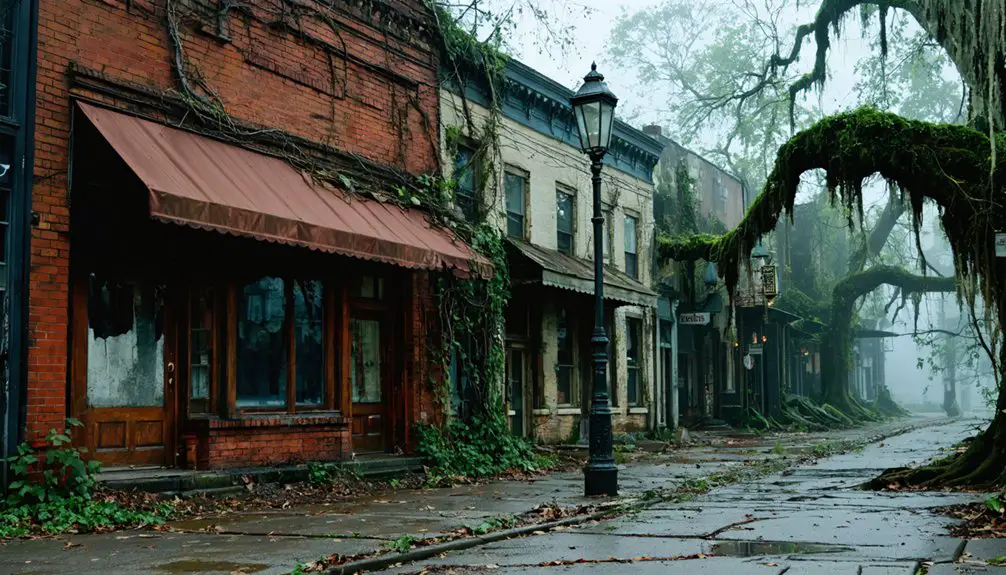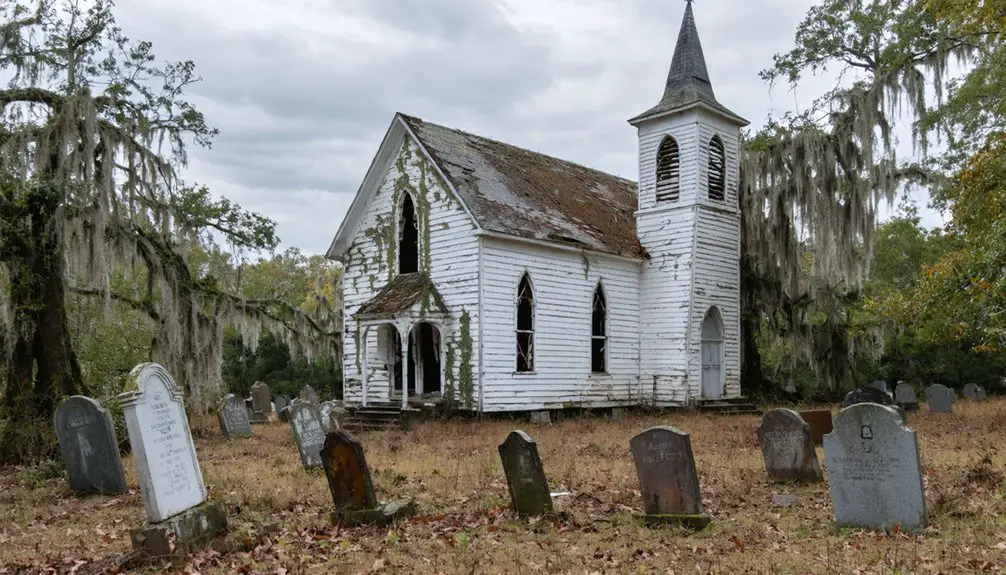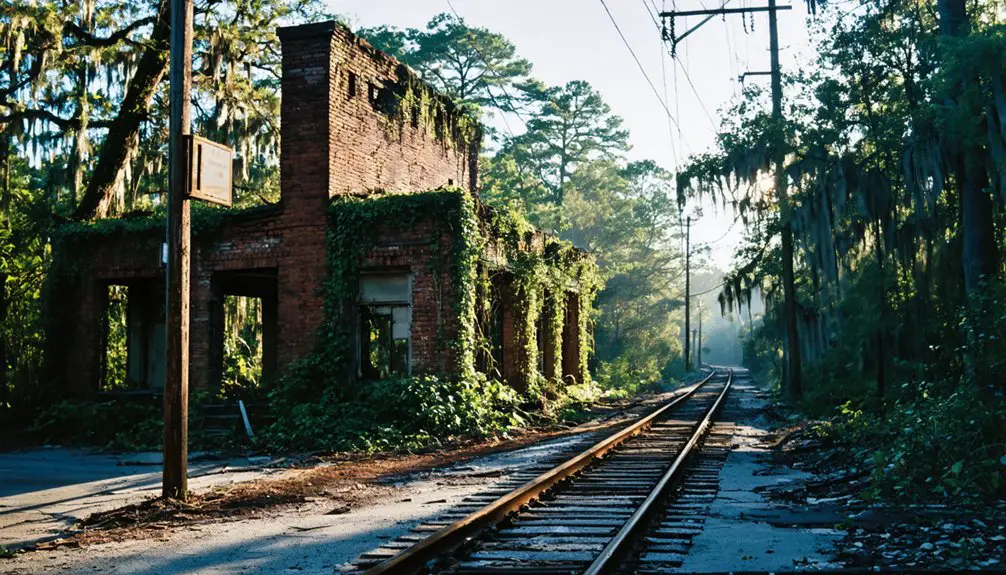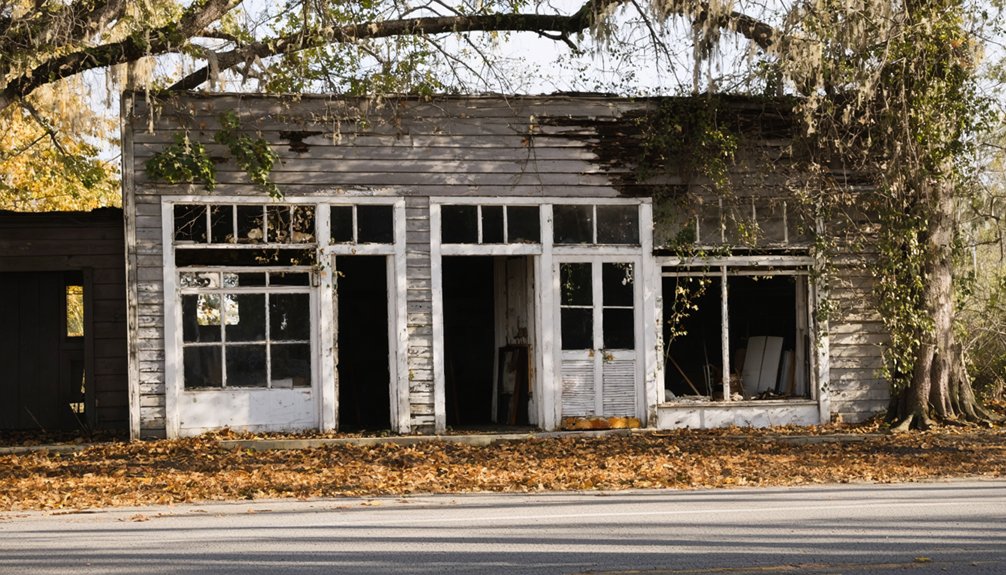
You’ll discover South Carolina’s haunting past among autumn’s golden tapestry at the Carhartt Mansion Ruins, where ivy-draped foundations whisper of gilded-age grandeur, and the Colonial Iron Mine’s revolutionary-era pits now rest beneath Lake Wylie’s surface. The Lando School’s Italian Renaissance brick walls glow amber in October light, while Stumphouse Tunnel’s 1,617-foot granite passage maintains its eternal 50-degree chill despite the fall warmth outside. These forgotten places reveal themselves most beautifully when rust-colored leaves frame crumbling chimneys and abandoned dreams, with deeper stories awaiting those who venture beyond the surface.
Key Takeaways
- Carhartt Mansion Ruins in Rock Hill features ivy-covered foundations and collapsed chimneys from the 1909 estate on 200 acres.
- Lando School near Lando showcases Italian Renaissance Revival architecture with red brick walls, built in 1905 for mill workers’ children.
- Stumphouse Tunnel near Walhalla offers a 1,617-foot granite passage carved in 1856, maintained at constant 50-degree temperatures year-round.
- Fall foliage enhances visibility of Colonial Iron Mine pits at Nanny’s Mountain, with rust and gold leaves highlighting historic scars.
- October’s cooler weather and vibrant leaves create ideal conditions for exploring ruins; wear sturdy boots and bring flashlights.
Carhartt Mansion Ruins in Rock Hill
Deep in the woods outside Rock Hill, stone walls rise from the forest floor like broken teeth, all that remains of a once-grand estate built by the founder of America’s most iconic workwear brand. Hamilton Carhartt constructed this riverside mansion around 1909, complete with an electric plant and sprawling farmland.
You’ll find collapsed chimneys, ivy-strangled foundations, and ceramic fragments clinging to crumbling walls—abandoned structures that whisper of Gilded Age ambitions cut short by economic collapse. The mansion once featured imported Italian green tiles and floor-to-ceiling windows that showcased its opulent design. The property changed hands repeatedly before dismantlement in the 1950s sealed its fate. The estate once included a 200-acre working farm that raised high-quality horses and angora goats.
Now these haunted legends draw adventurers along mountain bike trails to the bluff’s edge, where stone pillars frame views of the Catawba River and strawberry fields stretching beyond.
Colonial Iron Mine in York
You’ll find yourself walking the same mountain trails where enslaved workers once extracted iron ore that became cannons and ammunition for Patriots defending Charleston during the Revolution.
The mine pits at Nanny’s Mountain still scar the earth—deep, shadowy wounds that remind you how this remote York County site helped forge the outcome of the American Revolution between 1760 and 1820.
If you’re planning to explore these historic operations, autumn offers the best conditions: cooler temperatures for the 1.8-mile trail and brilliant foliage that frames your views of Lake Wylie and the distant silhouette of Kings Mountain. The original Hill’s Ironworks site now lies submerged beneath Lake Wylie’s waters, hidden since 1904 when dam construction flooded the valley where the furnaces once stood.
Before its military role, the mine supplied household items to early settlers during the pre-Revolutionary War colonial period.
Revolutionary War Material Supply
When you trace the Revolutionary War’s industrial backbone through South Carolina’s backcountry, you’ll find yourself at the edge of Allison Creek, where William Hill and Isaac Hayne transformed raw wilderness into a weapons forge that would arm Charleston’s defenders. Their ironworks became the Patriots’ lifeline—two furnaces blazing day and night, producing 106 tons of cannons, ammunition, and swivel guns that defied British control.
The iron supply flowed from Nanny’s Mountain Mine, where a two-mile deposit of superior ore fueled this wartime industry. You’re standing where liberty was literally forged, where hammer strikes on glowing metal echoed defiance.
When Captain Huck’s cavalry burned it all in 1780, they understood what you’ll discover here: this wasn’t just a mill—it was the heartbeat of resistance, the spark that kept freedom’s flame alive.
Historic Mining Operations Explored
Before William Hill ever hammered iron into cannon shot for Charleston’s ramparts, he walked the ridgeline of Nanny’s Mountain in 1762, kicking aside red clay to expose what lay beneath—a two-mile vein of superior-grade iron ore that would make him the arsenal of the Revolution.
You’ll find these ancient artifacts of independence along the 1.8-mile trail at Nanny’s Mountain Historical Park:
- Underground tunnels carved by 100 enslaved workers in the first quarter-mile
- Open pit mines where ore once fed two water-powered blast furnaces
- Charcoal burn sites from hardwood forests that fueled the forges
- Education center explaining how bellows and waterwheels transformed raw stone into rebellion
- Scenic overlook toward Lake Wylie’s depths, where Hill’s rebuilt ironworks sleeps submerged since 1904
The operation relied entirely on waterpower from nearby streams until droughts in the 1840s forced ironmasters across the Piedmont to install steam engines as backup.
At the summit, the trail splits into two distinct paths—one leading to the education center, the other to a picnic area and overlook where visitors can contemplate the industrial legacy below.
Fall Season Exploration Tips
As October’s first cool front sweeps across York County’s piedmont, the hardwood canopy at Nanny’s Mountain ignites into rust and gold—the same colors that glowed in William Hill’s furnaces two centuries ago.
You’ll find leaf peeping here rewards the intrepid, with Carolina’s autumn palette framing colonial mine pits like nature’s own industrial sculpture. Post-leaf-drop reveals the hillside scars better than summer’s green veil ever could.
Pack layers—mornings bite sharp, afternoons breathe warm. Trail safety demands sturdy boots and watchful eyes; these open pits don’t forgive distraction. Visit during drier fall months when packed earth grips your soles instead of sucking at them.
The short trail from Liberty Hill Road grants you access without bureaucratic hassle—just you, history’s wounds, and freedom to wander responsibly.
Lando School Near Lando
Rising three stories above the quiet remnants of Lando, the abandoned schoolhouse commands attention like a weathered sentinel over a vanished world. Built in 1905 for mill workers’ children, this Italian Renaissance Revival structure tells the story of a textile empire that once employed 2,000 souls.
The school architecture reveals exceptional craftsmanship:
- Pressed metal shingles crown an L-shaped hipped roof
- Belt coursing and corbelling accent red brick walls
- Three-story interior housed an auditorium with balcony seating
- Concrete foundation supports a rectangular footprint
- Boarded windows now protect decaying classrooms
This community history monument earned National Register status in 2009.
The building’s original construction featured bricks made on-site and stucco sourced directly from the nearby creek. You’ll find it at Schoolhouse Road’s end—viewable but off-limits.
The Lando Museum nearby preserves memories of this ghost town’s glory days. The school closed in 1955, marking the beginning of Lando’s long decline into abandonment.
Musgrove Mill and the Spirit of Mary Musgrove
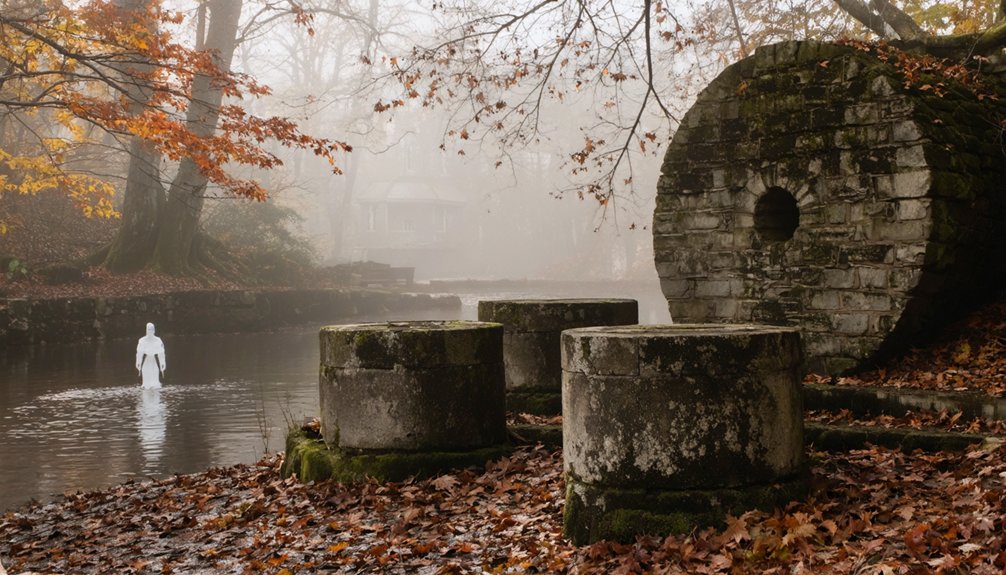
While brick schoolhouses chronicle Lando’s industrial past, South Carolina’s ghost stories often whisper through older battlegrounds where blood once stained the soil.
You’ll find Mary Musgrove’s memorial at Musgrove Mill State Historic Site, where this legendary heroine supposedly warned Patriots of approaching Loyalists in 1780. Whether truth or folklore, her spirit haunts the gristmill ruins—stone steps and brick piles marking where the Musgrove family once lived.
The Patriots’ stunning ambush victory here sparked hope during America’s darkest revolutionary hours. Today, historic preservation maintains 380 acres along the Enoree River, where you can walk battlefield trails and imagine Overmountain Men emerging from the woods.
Visit the center Friday through Sunday, then explore the British Camp Trail. You’re walking ground where ordinary colonists fought extraordinary odds for independence.
Stumphouse Tunnel and Issaqueena Falls in Walhalla
Deep in the Blue Ridge Mountains northwest of Walhalla, you’ll discover South Carolina’s most ambitious failure—a 1,617-foot tunnel carved into granite by Irish immigrants who dreamed of connecting Charleston’s port to Cincinnati’s markets.
What you’ll experience:
- Constant 50-degree darkness where Clemson once aged America’s first Southern blue cheese
- Hand-drilled walls bearing chisel marks from twelve-hour shifts, seven days weekly
- Tunnel exploration revealing 1856 engineering ambitions that consumed one million state dollars
- Historical preservation of a settlement housing 1,500 workers before Civil War economics crushed their dreams
- Issaqueena Falls’ thundering cascade minutes away, nature reclaiming what commerce abandoned
The tunnel’s perpetual coolness offers respite from summer heat—step inside where desperation, dynamite, and determination left their permanent mark in mountain stone.
Planning Your Fall Ghost Town Adventure
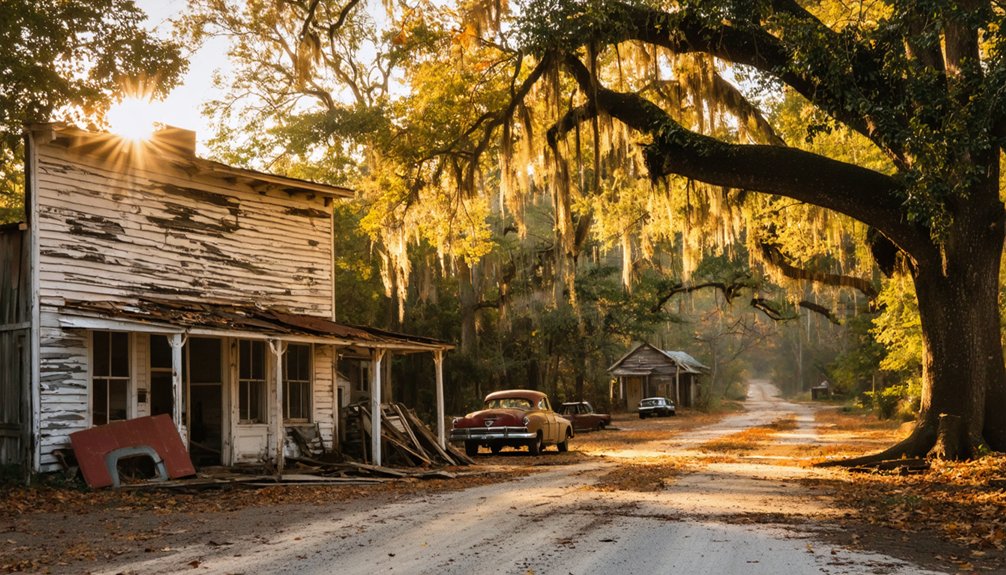
Autumn transforms South Carolina’s forgotten places into something magical—crisp air sharpens the details of crumbling chimneys while rust-colored leaves blanket abandoned foundations. You’ll need more than curiosity to explore these remote sanctuaries of decay.
As you navigate through these eerie landscapes, you may find yourself exploring south carolina ghost towns that tell stories of their once-thriving past. Each deserted street and weathered façade invites you to imagine the lives that once filled these spaces with vibrancy. With a sense of adventure, you might uncover the beautiful decay that makes these hidden gems all the more captivating.
Pack your four-wheel drive with essentials: sturdy boots for traversing unstable floors, flashlights for exploring darkened corridors where haunted legends whisper through broken windows. October’s 50-70°F temperatures demand layered clothing as you chase folklore stories through mid-morning mist at Colonial Iron Mine or twilight shadows at Lando School.
Hit weekday roads early when crowds thin and peak foliage ignites the Upstate landscape. Bring companions—cell service vanishes in these remote corridors, and wildlife reclaims what civilization abandoned. Download maps beforehand, fuel up, and embrace the solitude waiting along forgotten highways.
Frequently Asked Questions
Are Ghost Town Visits in South Carolina Safe for Children and Families?
Threading between reality and folklore, you’ll find most South Carolina ghost towns aren’t family-safe. Radioactive contamination, trespassing risks, and inaccessible terrain overshadow historical preservation efforts. Local legends thrive where children shouldn’t wander—these forgotten places demand respect, not exploration.
However, for those daring enough to venture into the unknown, explore abandoned towns in South Carolina can reveal eerie remnants of the past. Each decaying structure tells a story, while the whispering winds seem to echo the lives once vibrant in these now desolate landscapes. Careful research and preparation can mitigate some risks, but it remains essential to approach these sites with caution and reverence.
Do Any Ghost Towns Charge Admission Fees or Require Advance Reservations?
You’ll find most authentic ghost towns don’t charge fees—they’re abandoned, after all. However, tours exploring local legends and historical preservation sites like Charleston’s haunted districts require $22-$41 admission and advance reservations, especially during fall.
What Photography Equipment Works Best for Capturing Abandoned Structures and Fall Foliage?
You’ll capture stunning 61MP detail using Sony’s a7R IV paired with ultra-wide lenses like the 14mm f/1.8 GM. This camera-lens combination transforms weathered structures and vibrant autumn leaves into breathtaking images you’ll treasure forever.
Are Overnight Camping Options Available Near South Carolina Ghost Town Locations?
You’ll find primitive camping amenities near Andersonville on Lake Hartwell and Ferguson Island on Lake Marion, perfect for your outdoor recreation adventures. Dispersed sites in Sumter National Forest let you camp freely while exploring these forgotten places at your own pace.
Which Ghost Towns Offer Guided Tours Versus Self-Exploration Opportunities?
Step into history’s shadows where guided tour benefits illuminate preserved sites like Woodburn House and Beaufort’s haunted streets, while South Carolina State Museum lets you wander freely through darkness, choosing your own spine-tingling path through historical preservation.
References
- https://www.southcarolinahauntedhouses.com/south-carolina-trails.aspx
- https://discoversouthcarolina.com/articles/top-10-south-carolina-halloween-attractions
- https://kiddingaroundgreenville.com/haunted-waterfalls
- https://www.ghostsandgetaways.com/blog-1/fall-foliage-and-ghosts-in-south-carolina
- https://lizzie-borden.com/ghost-tours/beaufort-sc/
- https://www.onlyinyourstate.com/trip-ideas/south-carolina/spookiest-places-day-trip-in-sc
- https://www.youtube.com/watch?v=qzKi_EEGuv4
- https://www.atlasobscura.com/things-to-do/south-carolina/abandoned
- https://packgoats.wordpress.com/2024/06/30/opulent-decay-the-ruins-of-the-carhartt-mansion-in-rock-hill-nc/
- https://sylviesadventures.com/2024/01/04/carhartt-mansion-ruins-sc/