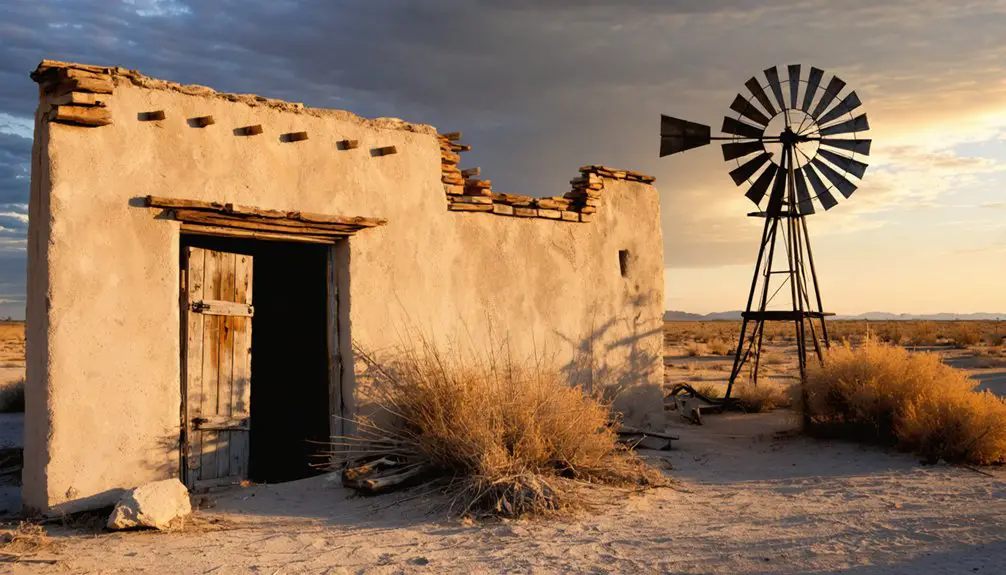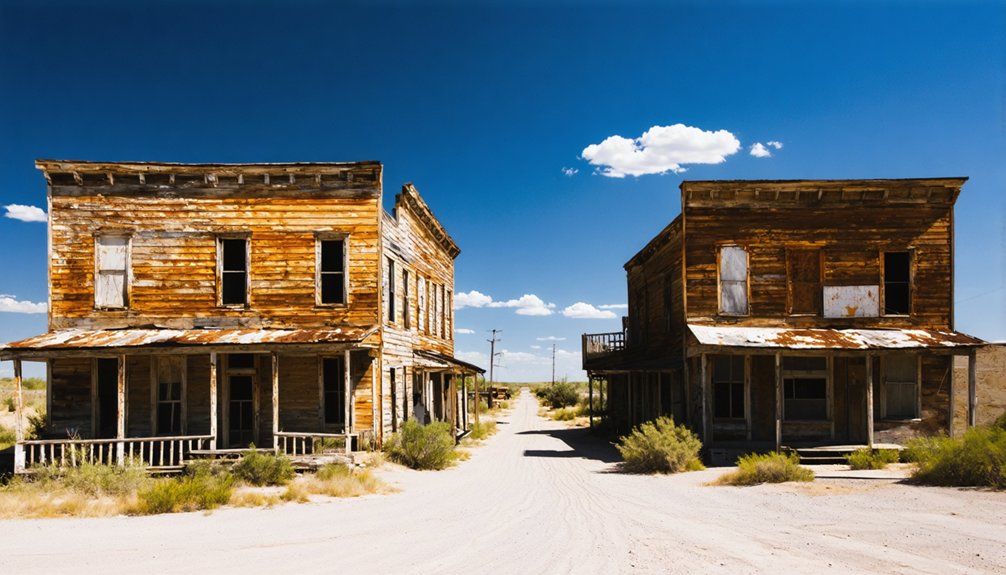
You’ll find Texas ghost towns particularly striking in summer when drought exposes underwater ruins at Indianola and the desert light illuminates Terlingua’s mercury mining relics near Big Bend. Head to Helena for authentic Wild West history, explore Route 66 nostalgia at Glenrio’s border ruins, or visit J. Lorraine’s interactive Western theme park in Manor with shaded bars and weekend entertainment. Remote Lobo offers preserved frontier architecture visible from the highway. Pack snake-proof boots, plenty of water, and sun protection—these sun-scorched settlements reveal their most compelling stories when explored with proper preparation and respect for their boundaries.
Key Takeaways
- Terlingua offers mercury mining ruins, desert scenery near Big Bend, and an annual chili cook-off attracting 10,000 visitors each year.
- J. Lorraine Ghost Town in Manor features 20+ buildings, free entry, interactive activities, live entertainment, and highly-rated onsite dining options.
- Glenrio on the Texas-New Mexico border showcases seventeen abandoned Route 66 structures, including cafes, motels, and vintage gas stations.
- Helena preserves Wild West history with a courthouse, Ruckman House, and Latin Cemetery from its 1852 founding as a frontier settlement.
- Indianola displays coastal ruins along Matagorda Bay, including underwater streets, La Salle’s statue, and a 1859 courthouse shell remnant.
Terlingua: Mining Ruins and Desert Charm Near Big Bend
Deep in the Chihuahuan Desert, where the rusted remnants of mercury mining operations pierce the horizon, Terlingua stands as Texas’s most atmospheric ghost town. You’ll find Howard Perry’s 1906 mansion overlooking abandoned mineshafts and stone foundations that whisper tales of 1,000 souls who once called this place home.
Where mercury once flowed like silver rivers, a thousand desert souls left their bones beneath the unforgiving Chihuahuan sun.
The eco tourism opportunities here blend perfectly with archaeological insights—grab a $1 walking-tour map from the Terlingua Trading Company and explore California Hill’s capped shafts.
Eight miles from Big Bend National Park, you’re positioned for serious desert freedom.
Hit the Starlight Theatre‘s saloon after wandering the picturesque boot hill cemetery at sunset, where Day of the Dead candles flicker among authentic mining-era graves.
November’s chili cook-off draws 10,000 adventurers annually.
The town’s cinnabar deposits, prized by Native Americans for red pigment, attracted Mexican and American prospectors who transformed this remote creek settlement into the nation’s largest mercury producer by the early 1900s. Underground workings stretched over 23 miles beneath the desert floor, where miners hand-dug ore in dangerous conditions before processing it in furnaces that still stand as skeletal landmarks today.
Helena: the Toughest Town on Earth With Authentic History
While Terlingua showcases desert isolation, Helena reveals what happens when civilization turns savage in the Texas brush country. You’ll find this 1852 settlement seventy miles southeast of San Antonio, where Helena history drips with blood-soaked authenticity.
They called it “Toughest Town on Earth”—rightfully so. The infamous “Helena Duel” saw opponents tied wrist-to-wrist with buckskin, fighting with three-inch knives while spectators wagered on outcomes. Cowboys bet on these brutal matches similar to cockfights, adding to the town’s lawless reputation.
Helena violence ultimately killed the town itself when rancher William G. Butler, grief-stricken after his son died in an 1884 saloon brawl, orchestrated the railway’s bypass seven miles away, shouting he’d “kill the town that killed my son.” The town’s decline accelerated when voters made Karnes City the county seat in 1894, stripping Helena of its political significance.
Explore the remaining courthouse, Ruckman house, and Latin Cemetery with its Spanish tombstones—tangible remnants of Texas’s untamed past.
J. Lorraine Ghost Town: Western Theme Park Experience in Manor
Unlike Helena’s dusty authenticity, J. Lorraine feels more like stepping onto a movie set—and that’s exactly what George Richards intended when he built this weekend passion project.
You’ll find actual concessions here, with burgers sizzling at the indoor-outdoor grill while kids navigate the wooden fence maze between Old West facades.
TripAdvisor ranks it as Manor’s top attraction, and summer visitors appreciate the modern restrooms and shaded bar area that make exploring those 20-plus buildings comfortable even in Texas heat. The full-size barns and open spaces create an expansive setting that resembles a classic Western movie scene. Best of all, there’s no entry fee to explore this 15-acre western wonderland that Richards named after his daughter, Jennifer Lorraine.
Modern Amenities and Entertainment
Nestled just off Highway 290 in Manor, J. Lorraine Ghost Town delivers modern amenities wrapped in Wild West nostalgia. You’ll find multiple bars scattered across 20+ authentic buildings, serving what locals call “some of the best burgers in town.”
The entertainment options here go beyond typical tourist traps—challenge your friends to ax throwing competitions, test your skills at horseshoe tournaments, or navigate the sprawling maze between weathered facades.
When you’re ready for something cerebral, tackle “A Scare for the Cure,” a 60-minute puzzle experience that changes annually.
Best of all? Admission’s completely free. Just bring sturdy boots for the rocky terrain, gather your crew, and explore this restaurant-bar hybrid where every building tells a different story. The venue features live entertainment on weekends, creating an authentic Old West atmosphere with music and performances. Vegetarian options like veggie burgers ensure everyone in your group finds something satisfying on the menu. It’s freedom without the price tag.
Movie Screen and Concessions
As you wander past the weathered storefronts and saloon doors, you’ll discover J. Lorraine’s authentic theater space—a genuine nod to vintage film houses where Old West communities once gathered. The screen hosts occasional live entertainment and seasonal events, letting you experience communal viewing the way frontier towns did generations ago.
When hunger strikes between maze runs and ax throwing, hit the concession stand operations scattered throughout the saloon buildings. They’re serving what locals claim are the area’s best burgers, alongside cold drinks that’ll fuel your exploration. Creator George T. Richards built this 15-acre estate as his personal project after retiring from his systems analyst work.
No ticket booths or entry fees mean you’re free to grab food whenever the mood strikes. The rustic bars and restaurant spaces blend seamlessly into the Western aesthetic, making even a simple meal feel like part of your adventure. The site features over 20 historic west period buildings that provide an authentic historical ambiance throughout your visit.
Tripadvisor’s Top-Ranked Attraction
Since its opening, J. Lorraine Ghost Town has claimed the #1 spot among Manor’s attractions on Tripadvisor, earning a stellar 4.7 rating from 18 travelers. You’ll find this recognition well-deserved when exploring its 20 authentic Old West buildings, where urban legends and ghost stories naturally emerge from the rustic atmosphere.
What sets this attraction apart:
- Free admission lets you roam without constraints—no ticket booths blocking your adventure.
- Diverse experiences from ax throwing to theatrical performances keep every visit fresh.
- Year-round events including Scare for a Cure and themed markets ensure there’s always something happening.
You can wander solo, bring your family, or join group gatherings.
The rocky terrain requires sturdy shoes, but ample parking and on-site restrooms make your visit comfortable and spontaneous.
Lobo: Remote Abandoned Town Preserved for Special Events
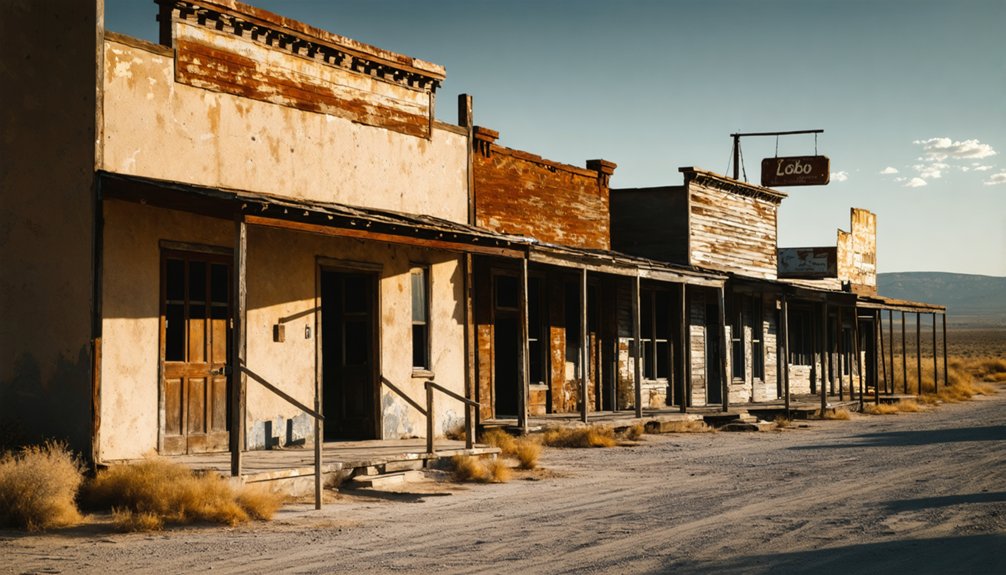
Deep in Culberson County’s sun-scorched terrain, Lobo stands behind a fence like an outdoor museum you can’t quite enter. You’ll spot this 1882 railroad town from the highway, its weathered structures evidence to boom-and-bust cycles that defined West Texas.
German owners have preserved the historic architecture since 2001, transforming abandonment into cultural purpose.
Don’t expect to wander freely—it’s private property. But you can photograph from the pull-off, capturing the essence of a settlement that once competed for county seat status before earthquakes and a plummeting water table sealed its fate.
The local community now experiences Lobo through invite-only events like the Desert Dust Cinema festival. It’s preservation without tourism, a ghost town that respects both past and present boundaries while offering glimpses of frontier resilience.
Indianola Ghost Town: Coastal Ruins and Historical Markers
You’ll find Indianola’s haunting remains scattered along Matagorda Bay, where a 22-foot granite statue of La Salle—shifted half an inch by Hurricane Carla—stands sentinel over what was once Texas’s second-largest port.
The original 15-by-4-block town grid now lies 30 feet underwater, though you can still spot slumping gravestones and a concrete cistern on shore before heading to Port Lavaca’s Calhoun County Museum to see detailed models of the lost piers and courthouse.
This Recorded Texas Historic Landmark from 1963 offers a sobering summer visit where erosion prevents traditional ghost town wandering, but the visible ruins tell the story of two catastrophic hurricanes that erased a city of 5,000 from the map.
Preserved Structures and Monuments
While most ghost towns leave crumbling buildings to explore, Indianola offers something more haunting—a city that the Gulf of Mexico has largely swallowed whole.
You’ll find the original 15-by-four-block town grid now rests underwater, claimed by coastal erosion and catastrophic hurricanes.
The few monuments standing above water tell stories of resilience and destruction:
- La Salle’s 22-foot granite statue marks where the French explorer landed, shifted half-inch off its base by Hurricane Carla—locals swear he’s turning away from the sea.
- The concrete cistern rises as a solitary sentinel among submerged structures.
- Historical markers pinpoint where the 1859 courthouse now sits 300 feet offshore, its shell-and-lime walls having saved lives during both deadly storms.
Summer Exploration Experience
Standing at the edge of Matagorda Bay on a humid July morning, you’ll notice how the shallow waters shimmer over what was once bustling streets where German merchants haggled over Mexican silver prices.
Coastal erosion has claimed the entire town grid—30 feet beneath the surface—making this Texas’s most dramatic underwater ghost town.
Your summer exploration centers on Evergreen Cemetery‘s weathered gravestones and a solitary concrete cistern.
Historical preservation efforts include Port Lavaca’s museum model and La Salle’s 22-foot granite monument nearby.
Bring water shoes for wading where piers once stretched to steamships, and visit at low tide when foundation remnants occasionally surface.
The Public Archeology Laboratory offers guided walks explaining how two catastrophic hurricanes erased Texas’s second-largest port within eleven years, teaching hard lessons about nature’s power.
Historical Significance and Access
Founded in August 1846 as Indian Point, Indianola earned its title as “queen of Texas ghost towns” through sheer historical drama—from processing thousands of European immigrants at its deep-water port to serving as the eastern terminus of the Chihuahua Trail stretching to San Diego.
Two catastrophic hurricanes in 1875 and 1886 erased this 5,000-resident port city entirely.
You’ll discover minimal remains today:
- La Salle statue commemorating French exploration heritage at the windswept site
- Texas Historic Landmark marker #2642 (designated 1963) documenting the town’s extraordinary rise and fall
- Archaeological traces scattered among a small fishing village’s current footprint
Modern tourism remains light here—neglecting preservation has left nature reclaiming most evidence.
You’ll need to bring imagination alongside your coastal exploration gear to appreciate what once rivaled Galveston’s commercial dominance.
Glenrio: Route 66 Roadside Relics on the Border
The wind whispers through Glenrio’s crumbling buildings like it’s sharing secrets from Route 66’s golden age, when this tiny border town buzzed with travelers stopping for gas, coffee, and a stretch between Amarillo and Tucumcari.
Straddling the Texas-New Mexico line at I-40 Exit 0, you’ll discover seventeen abandoned structures frozen in time—the Little Juarez Cafe, a gutted motel, and empty gas stations where tumbleweeds now congregate.
The border crossing created quirky economics: no bars on the Texas side thanks to dry laws, no gas stations in New Mexico due to taxes.
You can still trace the original Route 66 roadbed and spot historic signage pointing nowhere.
Take Exit 0 and walk among the ruins where Steinbeck filmed *The Grapes of Wrath*—freedom never looked so beautifully desolate.
Planning Your Texas Ghost Town Summer Adventure
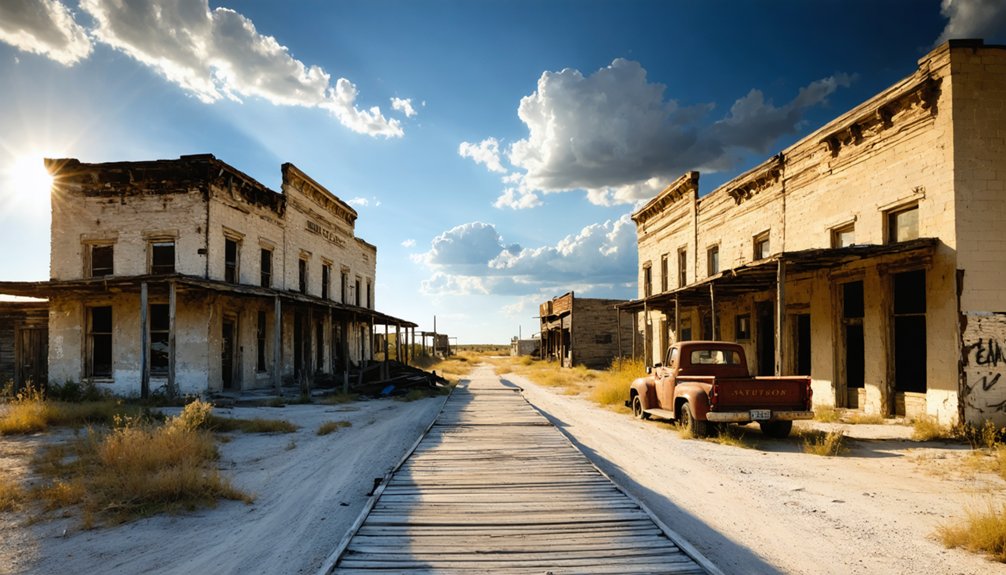
After wandering through Glenrio’s dusty memories, you’ll need a solid game plan before pointing your car toward Texas’s scattered ghost towns. Summer demands strategic thinking—those abandoned streets won’t explore themselves.
Your essential checklist:
- Monitor seasonal water levels at Old Bluffton beneath Lake Buchanan. Drought conditions reveal cracked tombstones and hotel foundations worth the boat tour investment.
- Book Terlingua accommodations early—casitas and yurts near Big Bend fill fast. You’ll want that base camp for sunrise wildlife photography sessions.
- Pack heat survival gear: water reserves, sun protection, and snake-proof boots for Bankersmith’s rattlesnake-inhabited railroad tunnel.
Combining Gruene’s weekend music scene with remote ruins creates the perfect balance.
These 900 scattered settlements reward the prepared wanderer who respects summer’s brutal honesty.
Frequently Asked Questions
Are Texas Ghost Towns Safe to Visit With Children During Summer?
Like stepping into a dusty time capsule, you’ll find most ghost towns safe for exploring. Follow safety tips: bring water, watch for unstable structures, and plan child-friendly activities like treasure hunts. Stay alert and embrace adventure responsibly.
Do I Need Special Permits to Photograph at Texas Ghost Towns?
You’ll need photography permits for ghost towns on private land—always contact owners first. State and national historic sites require professional permits too. Historical preservation rules protect these treasures, but personal snapshots typically don’t need permission.
What Should I Bring for Summer Heat When Visiting Ghost Towns?
Pack insulated water bottles, electrolyte tablets, and cooling towels—your lifeline against Texas’s relentless heat. Don’t forget SPF 50+ sunscreen and wide-brim hats for sun protection. I’ve learned lightweight, moisture-wicking clothes make exploring these forgotten places actually enjoyable.
Are There Guided Tours Available at Texas Ghost Town Sites?
Yes, you’ll find guided tour options at several Texas ghost towns. Granbury and Fort Worth offer professional walking tours with costumed guides, while tour availability varies—some sites like Terlingua provide self-guided exploration for your independent adventure. Exploring historic ghost towns in Texas can be a hauntingly beautiful experience. The remnants of the past tell stories of those who once called these towns home, making each visit a journey through time. With captivating landscapes and the eerie silence that often accompanies these forgotten places, history enthusiasts and adventurers alike will find plenty to explore. exploring ghost towns in texas offers a unique opportunity to capture stunning photographs of abandoned buildings and landscapes that have remained untouched for decades. Each site has its own charm, often accompanied by tales of mystery and intrigue that residents and visitors alike recount. As you wander through these desolate streets, you may feel a connection to the stories that linger in the air, reminding us of the lives once lived in these now-silent communities.
Can I Camp Overnight Near Any of These Ghost Towns?
Yes, you’ll find overnight camping options at Historic Route 66 Ghost Town Farm, Terlingua, and Bankersmith. These sites welcome pet accommodation and offer camping safety through designated areas. You’ll experience true freedom exploring Texas’s haunted landscapes under starlit skies. In addition, haunting stays in Texas ghost towns provide a unique opportunity to immerse yourself in the region’s spooky history, where legends whisper through aged buildings. Each site tells its own story, enticing adventurers and ghost enthusiasts alike to uncover hidden mysteries in the shadows. Prepare for chills and thrills as you wander through these eerie locations, each offering a glimpse into a bygone era filled with untold tales.
References
- https://kfmx.com/visit-one-of-these-old-west-ghost-towns-in-texas-this-summer/
- https://www.southernthing.com/ruins-in-texas-2640914879.html
- https://www.tripadvisor.com/Attractions-g28964-Activities-c47-t14-Texas.html
- https://www.hipcamp.com/journal/camping/texas-ghost-towns/
- https://texashillcountry.com/texas-hill-country-ghost-towns/
- https://cedarbayoumarina.com/four-ghost-towns-under-lake-texoma/
- https://www.youtube.com/watch?v=wNiyICy5wKM
- https://www.legendsofamerica.com/tx-terlingua/
- https://texashighways.com/culture/history/chasing-quicksilver-mercury-mining-history-in-beautiful-big-bend/
- https://www.youtube.com/watch?v=fnk7SotJgq4