You’ll find Virginia’s most atmospheric ghost towns along abandoned railway corridors and storm-battered coastlines. Wash Woods, accessible only by trail through False Cape State Park, showcases homes built from shipwreck lumber and weathered cemetery stones reclaimed by maritime forest. Pamplin’s intact brick storefronts line the High Bridge Trail, while Union Level’s decaying businesses evoke its prosperous railroad past. For nocturnal exploration, Harpers Ferry and Shepherdstown offer guided ghost tours through Civil War-haunted streets. Each location reveals distinct chapters of maritime, industrial, and railroad history preserved in haunting summer landscapes.
Key Takeaways
- Wash Woods at False Cape State Park offers shipwreck artifacts, cemetery ruins, and pristine beaches accessible via bike, tram, or foot.
- Pamplin features intact brick storefronts, abandoned pipe factory ruins, and accessible trails ideal for history buffs and photographers.
- Union Level showcases early 1900s railroad decay with abandoned storefronts and architecture, best visited in late summer months.
- False Cape State Park provides 4,321 acres of maritime forests, wetlands, and wildlife alongside Wash Woods’ historic coastal remnants.
- Access requires hiking or biking as most sites lack vehicle roads, offering authentic ghost town solitude and outdoor recreation.
Wash Woods: A Shipwreck Settlement Frozen in Time
Deep in False Cape State Park, where the Atlantic Ocean meets Virginia’s southernmost shore, lies Wash Woods—a settlement born from catastrophe and claimed by nature.
Founded in the 1850s by yellow fever refugees, this community thrived to 300 residents by 1900, building homes and churches from shipwreck artifacts salvaged along the treacherous Graveyard of the Atlantic.
From shipwreck lumber to sacred spaces—yellow fever survivors built their sanctuary beside the sea that sustained them.
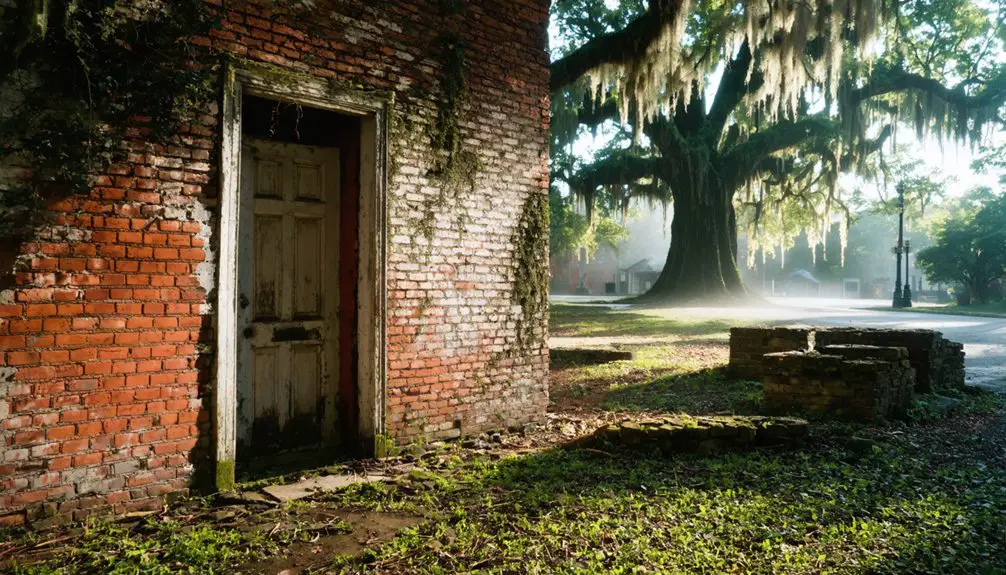
You’ll discover remnants of their resourcefulness: a glass-encased church steeple constructed from the schooner John S. Wood’s cypress lumber, crumbling foundations, and moss-covered cemetery stones.
The 1933 hurricanes delivered the final blow, accelerating coastal erosion that had plagued residents for decades.
Residents worked as fishing, farming, and hunting guides, while many staffed the lifesaving stations that rescued shipwreck survivors from the dangerous waters.
Today, you can hike trail-only access to explore this haunting landscape—no roads ever connected it to civilization.
Rusted boats lie scattered throughout the site, weathered relics slowly being reclaimed by wild vegetation.
It’s solitude preserved, a testament / memorial / tribute to communities who chose isolation over conformity.
Union Level: Where Rails Once Ran Through Mecklenburg County
The Depression struck first, closing businesses through the 1970s.
By 1990, even the post office shuttered.
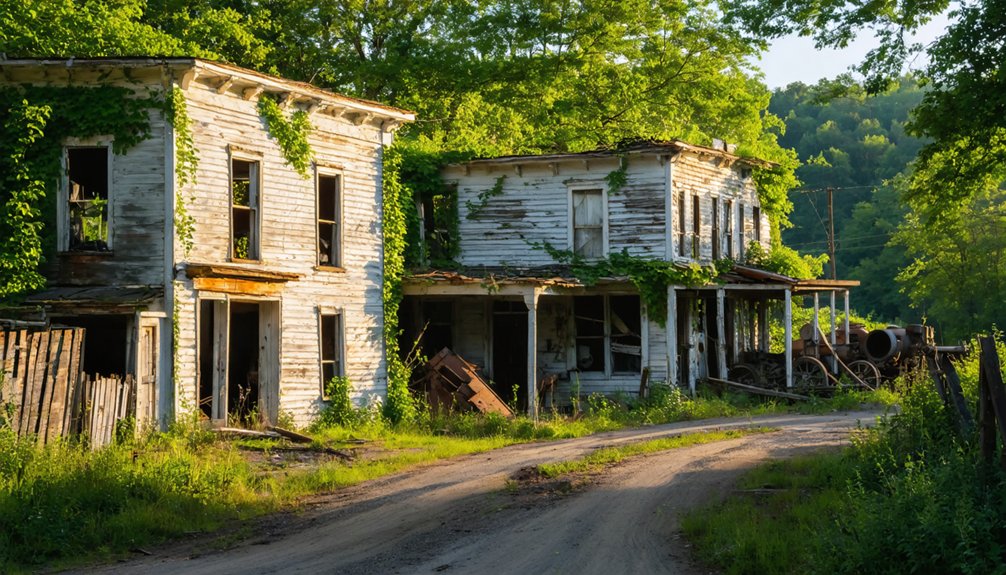
Today’s architectural decay creates hauntingly atmospheric photography opportunities, though you shouldn’t enter the unstable structures.
The Southern Railroad’s arrival in the early 1900s once brought prosperity to this Mecklenburg County settlement, spurring growth that saw over 20 businesses by 1920.
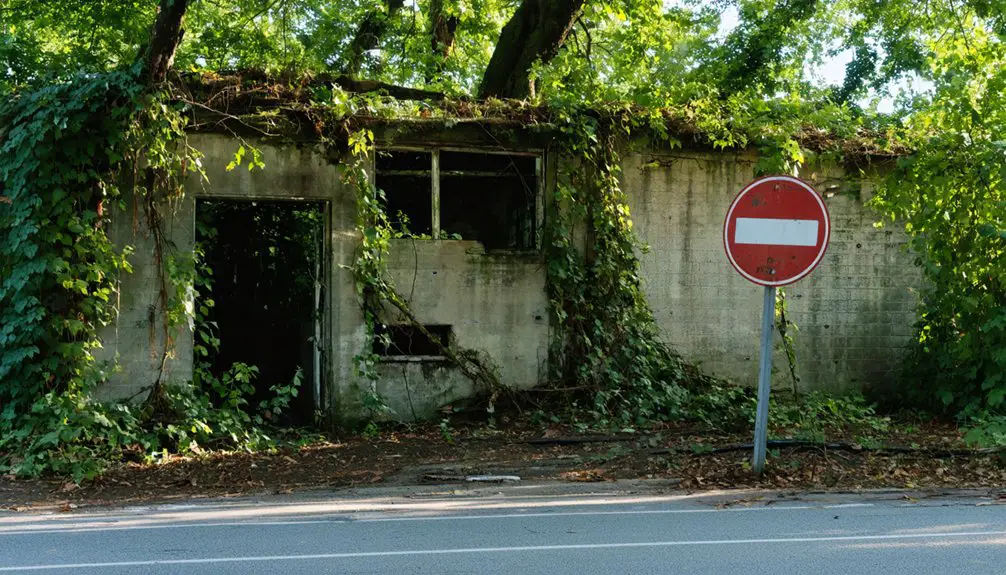
Broken glass and no trespassing signs mark the abandoned storefronts along the highway, warning visitors to explore carefully.
Late summer offers ideal visiting conditions for exploring this transportation corridor ghost town, where rails once carried tobacco and dreams toward distant markets.
As you wander through the remnants of the past, staying in ghost towns of Virginia provides a unique glimpse into a bygone era. The empty streets and decaying buildings tell stories of those who once thrived here, making it a hauntingly beautiful experience. Each town has its own character, inviting travelers to reflect on the passage of time and the changes that shaped these landscapes.
As you embark on adventures to visit abandoned sites in Virginia, you’ll discover hidden treasures away from the bustling crowds. The eerie silence of these locations often amplifies the significance of their history, creating a serene atmosphere perfect for reflection. Each site holds its own mysteries and forgotten tales, waiting for curious explorers to uncover their secrets.
Pamplin: A Fading Railroad Hub Along the High Bridge Trail
Along the High Bridge Trail in Appomattox County, Pamplin’s brick storefronts stand as monuments to a railroad town that thrived for over a century before falling silent. After pipe factories shuttered in 1952 and trains stopped calling, this once-bustling depot became one of Virginia’s most endangered historic sites.
Yet its 19th-century architecture remains remarkably intact. The town’s clay tobacco pipes once reached the hands of Thomas Jefferson and Benjamin Franklin, products of an industry that defined Pamplin from the 1860s until the last factory closed. Ironwork storefronts from manufacturers like Mesker Brothers still display vintage signage, including the rusted awnings of Williams Hardware and Grocery. Today, you’ll find cyclists, photographers, and history enthusiasts drawn to its abandoned Main Street.
Where MiPa’s Table serves as a lone outpost among the architectural ghosts.
Historic Railroad Architecture Remains
Tucked between rolling Virginia hills, Pamplin stands as a monument to railroad ambition and decline. You’ll find railway engineering marvels still standing, particularly the former depot that’s been repurposed as town offices, event space, and library. This architectural preservation keeps railroad heritage alive in tangible ways.
The westernmost trailhead of High Bridge Trail State Park sits just outside town limits, connecting you to the abandoned Pamplin-to-Burkeville route. History buffs, cyclists, and photographers flock here to explore these old rail corridors where passenger trains once thundered through.
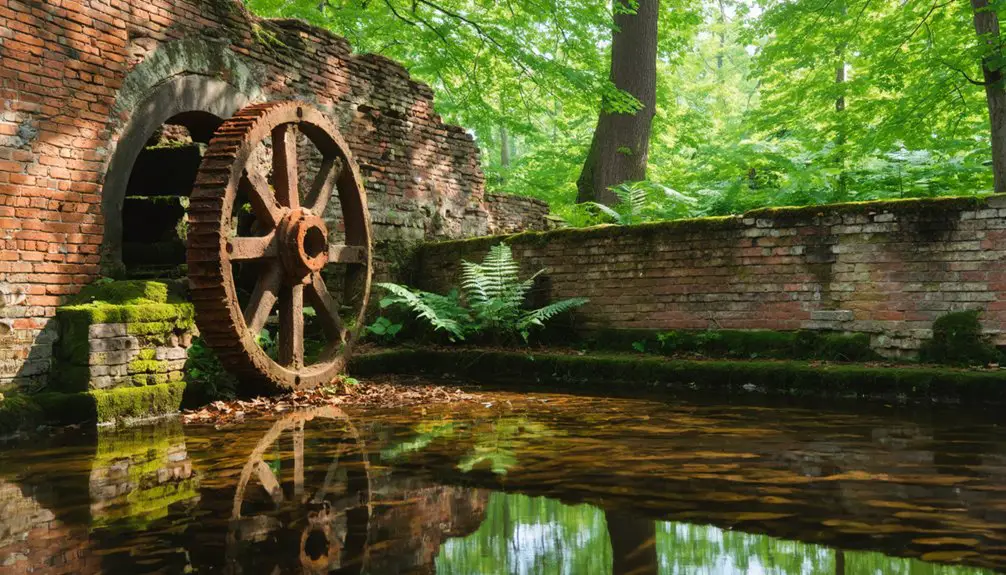
The trail follows the very tracks that birthed Pamplin’s prosperity in 1854, when Nicholas Calvin Pamplin donated land for the South Side Railroad. What remains whispers stories of America’s railroad age. The town’s industrial past also includes the renowned Pamplin Pipe Factory, which once produced up to a million pipes monthly from abundant local clay before closing in 1952. An abandoned clay mine in Pamplin was previously served by the line, closing when cheaper imports made local operations economically unviable.
Endangered Site Preservation Status
Despite its architectural treasures and storied past, Pamplin earned designation as one of Virginia’s most endangered historic sites in 2014. You’ll find preservationists fighting to protect its 19th-century charm before it vanishes completely.
The town’s decline accelerated when the Pamplin Pipe Factory closed and railroad stops disappeared, leaving Main Street abandoned and scattered structures crumbling. That devastating 1909 fire forced brick construction, creating distinctive ironwork storefronts now at risk.
With just 142 residents today, this nearly-forgotten railroad hub needs urgent attention. The endangered status highlights what remains: factory ruins, the renovated depot-turned-library, and abandoned houses telling stories of agricultural heritage and native crafts that once thrived here. Founded by George Pamplin, Sr. in 1845, the community initially prospered with the pipe factory as its economic anchor. Today, visitors exploring the area can stop at MiPa’s Table restaurant, the town’s only dining establishment serving home-style fare on Main Street.
These remnants deserve protection as reminders of Virginia’s industrial freedom and railroad legacy.
Visitors and Activities Today
While preservation efforts continue, Pamplin’s endangered status hasn’t stopped visitors from discovering its haunting beauty.
You’ll find history buffs photographing 19th-century architecture and abandoned Main Street structures, while cyclists arrive via the High Bridge Trail‘s westernmost trailhead just outside town limits.
The renovated train depot now houses a library branch and town offices, offering one of the few visitor amenities in this 142-person village.
You can explore ruins of the old pipe factory, wander timeworn streets that evoke the railroad boomtown era, and capture black-and-white worthy shots of decaying buildings.
Though local cuisine options remain limited, the quiet atmosphere delivers exactly what freedom-seeking roadtrippers crave: an authentic ghost town experience combining outdoor recreation with Virginia’s fading railroad heritage.
Among the most intriguing destinations are the varied ghost towns to explore in Virginia, each offering a glimpse into the past. Visitors can wander through the remnants of old buildings, learning about the lives once lived in these now deserted places. Whether you’re drawn by history or simply the allure of the unknown, these forgotten locales promise a journey filled with discovery.
As you explore the ghost towns in Virginia’s heritage, you’ll uncover stories of resilience and transformation that have shaped the region. Each site tells a unique tale of prosperity and decline, inviting curious minds to reflect on the passage of time. Embrace the chance to connect with the echoes of the past, as you traverse the landscapes where history lingers in every shadow.
Harpers Ferry: Ghost Tours Through Historic Haunted Streets
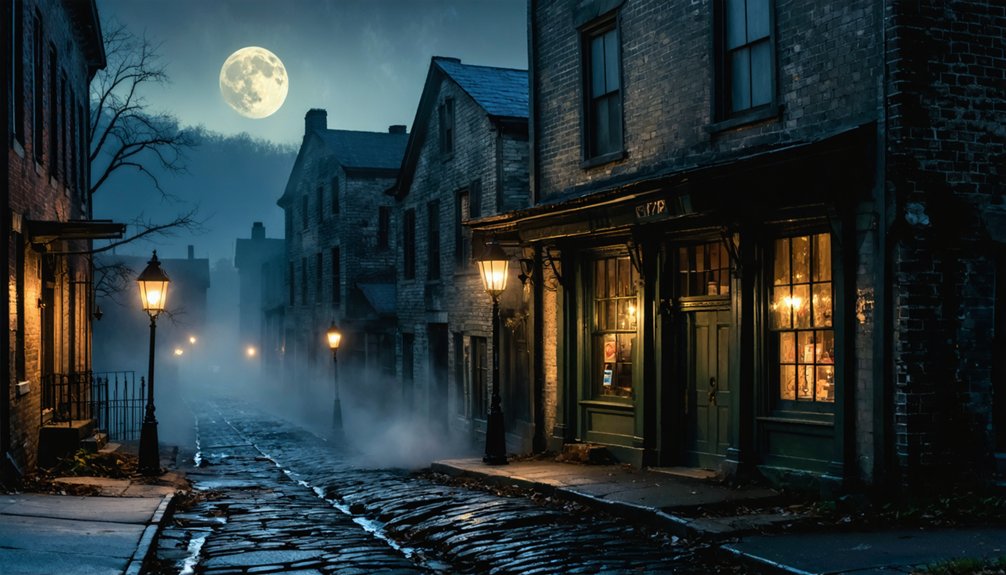
For more than half a century, O’ Be JoyFull Historical Tours has guided visitors through the shadowed streets of Harpers Ferry on America’s oldest and highest-rated ghost tour.
You’ll traverse 14 blocks of Lower Town’s haunted landscape, where Civil War soldiers still crawl toward St. Peter’s rectory and invisible drums echo through Harper Cemetery.
Experience 14 haunted blocks where phantom Civil War soldiers crawl through darkness and ghostly drums resound across Harper Cemetery’s shadowed grounds.
The two-hour walking adventure starts at 8:00 PM from St. Peter’s Roman Catholic Church piazza, revealing spine-tingling tales of John Brown’s raiders, headless spirits, and Screaming Jenny’s burning apparition along the train tracks.
This family-friendly experience welcomes all ages and even your four-legged companions.
Historical reenactments come alive through experienced storytelling, while the atmospheric setting offers exceptional opportunities for nocturnal photography.
Summer tours run Friday through Saturday without reservations required.
Shepherdstown: Candlelit Walks and Ghostly Tales
Just fifteen minutes south along the Potomac River, Shepherdstown beckons with flickering candlelight that illuminates West Virginia’s oldest town and its restless spirits.
Founded in 2013, these two-hour walking tours venture through shadowy streets where German and Irish settlers once walked, and Civil War nurses tended dying soldiers. Your guides share personal ghostly encounters from decades of paranormal experiences, leading you past historic cemeteries where restless spirits linger.
Starting at Lilah Restaurant, you’ll explore haunted legends spanning German Street to High Street, discovering true tales of love, despair, and murder.
Well-behaved dogs can join your nocturnal investigation. Tours conclude at Captain Bender’s Tavern, where you’ll swap stories over refreshments.
At $15 per person, you’re purchasing freedom to explore America’s #8-ranked ghost tour on your own terms—reservations are available year-round.
False Cape State Park: Exploring Wash Woods by Tram and Trail
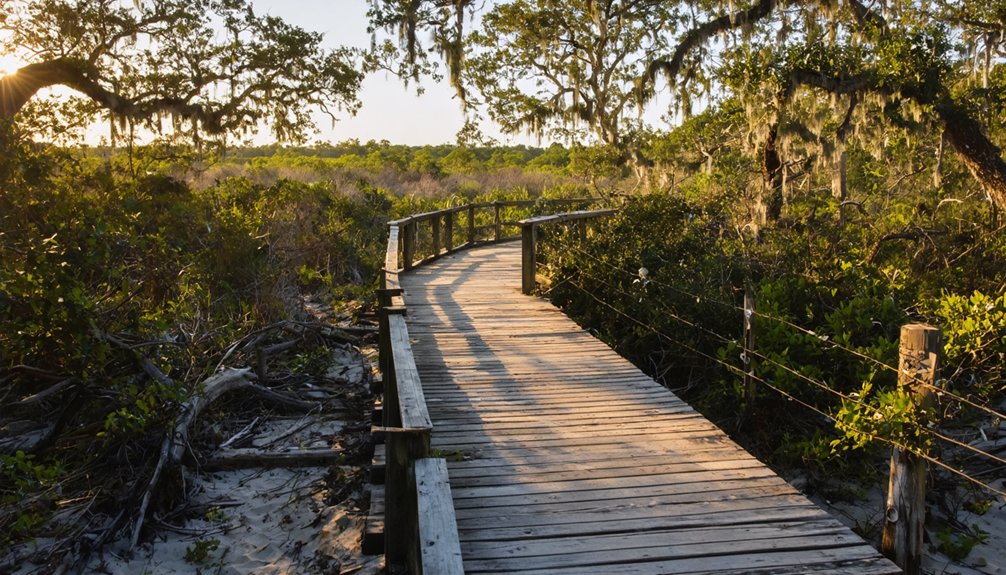
At False Cape State Park, you’ll discover the haunting remains of Wash Woods, an abandoned coastal settlement swallowed by the Atlantic in the 1930s. The Blue Goose Tram whisks you through pristine wilderness to weathered cemetery headstones and church ruins while park rangers recount stories of the 300 souls who once called this isolated peninsula home.
Between Back Bay’s marshlands and six miles of untouched beach, you’ll encounter both the ghostly echoes of a lost community and thriving populations of seabirds, sea turtles, and wild horses roaming where families once fished and farmed.
Wash Woods Historic Remnants
Reaching Wash Woods requires commitment—this ghost settlement on a narrow barrier spit between Back Bay and the Atlantic Ocean remains deliberately inaccessible to vehicles, forcing visitors to arrive by foot, bicycle, or boat.
Your half-mile trek through maritime forest reveals what ocean storms couldn’t claim: a vandalized cypress steeple from the 1895 John S. Woods wreck, standing as evidence to the community’s shipwreck history.
The adjacent cemetery offers a deeper connection—shells mark graves instead of flowers, headstones bearing names of residents who defied this harsh environment until the 1930s.
Cemetery significance extends beyond memorial; it’s proof that three hundred souls once thrived here, staffing the Life Saving Station and building homes from salvaged timber before the relentless Atlantic reclaimed their settlement.
Guided Tours and Access
While Wash Woods’s isolation preserves its haunting authenticity, False Cape State Park‘s Blue Goose Tram removes the barrier between curious visitors and this atmospheric settlement.
Summer departures run June through August, offering four-hour excursions from Virginia Beach into territory where haunted legends and spooky stories outnumber living residents.
Your journey includes:
- Tram transport to False Cape’s visitor center (one-hour ride through wilderness).
- Two-hour exploration window for independent hiking to beaches or southward trails.
- Guided mile-long trek to Wash Woods church and cemetery with ranger interpretation.
- Flexible drop-off options if you’d rather bike or hike back independently.
Reserve through 757-426-7128. The $8 tram fee plus $5 refuge entry grants passage to Virginia’s most remote ghost settlement—no grueling trek required.
Natural Beauty and Wildlife
Beyond Wash Woods’s weathered church and shell-covered graves, False Cape State Park unfolds as a 4,321-acre ecological sanctuary where maritime forests meet coastal wetlands along Virginia’s most pristine barrier spit. You’ll traverse Sand Ridge Trail through forests where Spanish moss drapes overhead, providing habitat for countless bird species.
Maritime ecosystems thrive between Back Bay and the Atlantic, creating exceptional coastal biodiversity—turtles, frogs, crabs, and stingrays populate these waters while unidentified creatures rustle through vegetation.
Six miles of unspoiled white-sand beaches stretch before you, bordered by shifting dunes that maintain this remote shoreline’s wild character. The Marsh Ridge Trail‘s observation deck reveals expansive wetlands where seasonal changes transform the landscape, offering you freedom to witness nature’s raw, uninterrupted rhythms.
Frequently Asked Questions
What Are the Best Months to Visit Virginia Ghost Towns in Summer?
June through August offer you prime conditions—when summer’s golden light illuminates crumbling walls like history’s lantern. You’ll find comfortable temperatures (75-85°F), extended hours for historical preservation sites, and peak foliage revealing local folklore through nature’s atmospheric reclamation.
Are Ghost Town Tours Suitable for Young Children or Families?
Yes, many tours are family-friendly excursions perfect for young children. You’ll discover historical preservation through engaging storytelling rather than scary props. Most welcome kids six and up, blending colonial history with age-appropriate ghost tales your family will enjoy.
Do I Need Special Permits to Photograph Abandoned Buildings in Virginia?
You’ll need legal permissions for commercial photography at historic sites, but personal snapshots are usually fine. Here’s a photography tip: 85% of abandoned structures sit on private property, so always research ownership before exploring these hauntingly beautiful locations.
What Safety Precautions Should I Take When Exploring Abandoned Ghost Towns?
You’ll need thorough hazard identification before entering—check structural integrity, floor stability, and exit routes. Pack emergency preparedness essentials: respirator mask, first-aid kit, flashlight, and charged phone. Never explore alone; bring companions and trust your instincts when danger signals appear.
Can I Camp Overnight Near Any of These Virginia Ghost Towns?
You can camp overnight at Erskine ghost town along New River, where you’ll discover tent platforms amid historical ruins. Practice photography etiquette while exploring, and respect historical preservation by staying on designated trails and avoiding structure damage.
References
- https://www.explore.com/1777590/wash-woods-settlement-hidden-virginia-coast-lost-seaside-community-historic-ghost-town/
- https://wvtourism.com/west-virginia-paranormal-trail/
- https://www.tripadvisor.com/Attraction_Review-g6936610-d16774210-Reviews-Union_Level_Ghost_Town-Mecklenburg_County_Virginia.html
- https://northernvirginiamag.com/67-advantures-ghost-towns-of-virginia/
- https://theforgottensouth.com/union-level-virginia-ghost-town-history/
- https://nvtami.com/2025/01/22/virginia-citys-forgotten-ghost-towns/
- https://abcnews4.com/amazing-america/discover-pamplin-virginia-a-nearly-forgotten-ghost-town-with-stories-still-standing
- https://www.virginia.org/things-to-do/tours/ghosts-and-haunted-tours/
- https://en.wikipedia.org/wiki/Wash_Woods
- https://www.atlasobscura.com/places/wash-woods-settlement