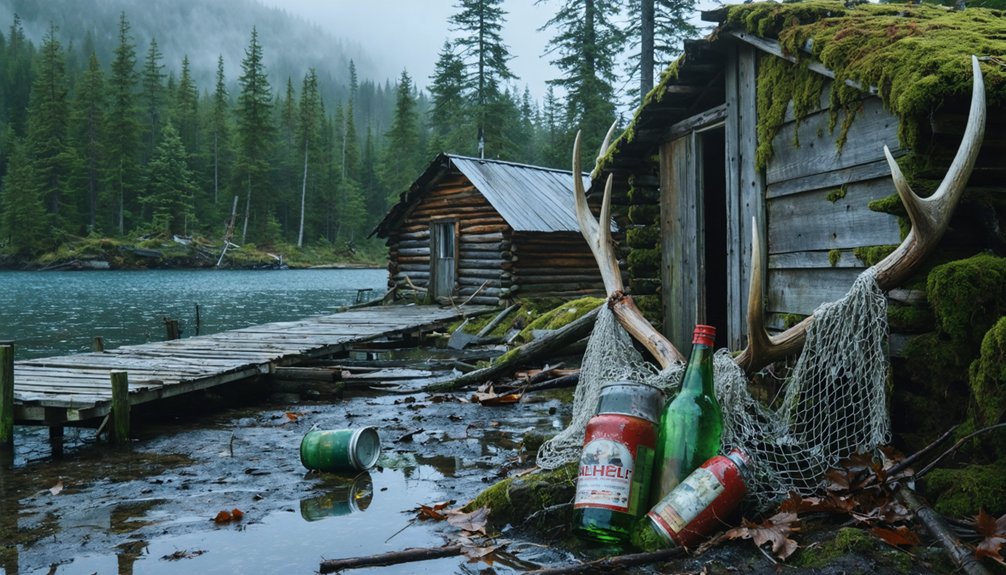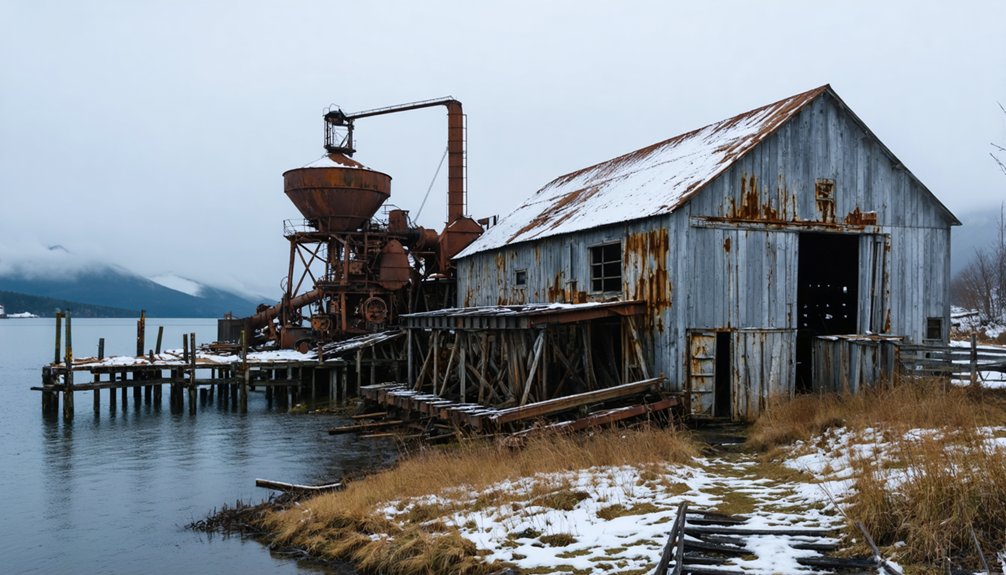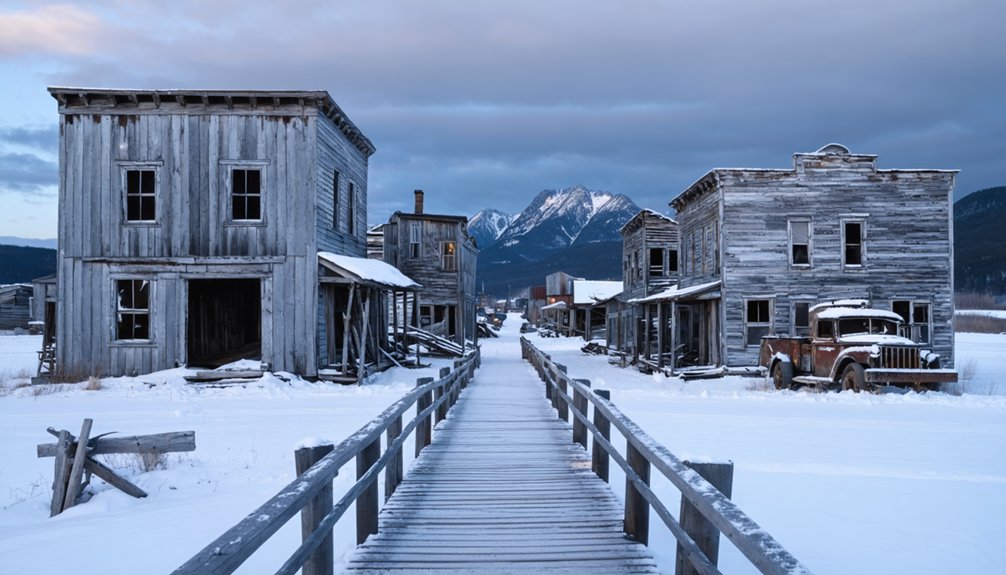
You’ll find Alaska’s most atmospheric ghost towns accessible during winter, though each requires serious preparation. Kennecott near McCarthy showcases a 14-story copper mill frozen since 1938—you’ll need to trek 5 miles on foot or skis to reach it. Closer to civilization, Dyea sits 10 miles north of Skagway with snow-revealed foundations, while Treadwell’s gold mine ruins near Juneau offer easier access. Pack three-layer clothing systems, emergency supplies, and bear-proof food containers since cell service disappears and conditions change rapidly. The following sections detail specific gear requirements and tour options for each location.
Key Takeaways
- Kennecott Ghost Town features a 14-story mill building and preserved machinery, accessible via 5-mile winter trek from McCarthy.
- Dyea Ghost Town near Skagway offers unique winter archaeology as snow reveals structural outlines and preserved Slide Cemetery trails.
- Guided winter tours provide insider access and storytelling, while self-guided options allow flexible exploration using Park Service maps.
- Winter visitors need three-layer clothing systems, emergency supplies, winter tires, and must prepare for avalanche risks and unmaintained roads.
- Most businesses close in winter, leaving sites isolated; specialized snowshoe tours through Moose Pass cost $499 with ghost story experiences.
Dyea Ghost Town: Year-Round Access Near Skagway
Tucked away at the mouth of the Taiya River, just ten miles north of Skagway, Dyea stands as one of Alaska’s most haunting reminders of gold fever’s grip on the Last Frontier. You’ll find minimal visible remains today—floods in the 1940s and 1950s swept away most structures that stampeders once knew. Climate adaptation worked against preservation here; what 8,000 gold-seekers built in 1898 couldn’t withstand decades of harsh winters and spring thaws.
The preservation challenges you’ll encounter make exploration fascinating. Identifying specific ruins demands careful observation, as nature’s reclaimed nearly everything. The Slide Cemetery, where victims of the devastating 1898 Palm Sunday Avalanche rest, marks the only burial ground within the park boundaries. Access the site through Klondike Gold Rush National Historical Park infrastructure, where maintained trails lead you through scattered foundations and overgrown streets. Before the gold rush transformed it into a boomtown, Dyea served as a seasonal fishing camp for the Tlingit people who originally inhabited the area.
Winter’s snow reveals structural outlines summer vegetation conceals, offering unique archaeological perspectives for adventurers seeking untamed historical landscapes.
Kennicott Ghost Town: Copper Mining Legacy in McCarthy
You’ll find Kennicott’s massive 14-story mill building rising like a red fortress against white glaciers. Its weathered timbers are remarkably intact since miners abandoned it overnight in 1938.
Winter transforms this copper mining ghost town into an otherworldly landscape where you can crunch through snow past the powerhouse, machine shop, and bunkhouses on both guided tours and self-guided explorations. The historic buildings are now listed on the National Register of Historic Places, preserving this remarkable piece of Alaska’s mining heritage.
The nearby town of McCarthy served as the leisure destination for miners during their half-day off on Sundays, offering entertainment and a connection to the outside world.
I recommend visiting between January and March when the McCarthy Road becomes passable after freeze-up, though you’ll need studded tires or a local shuttle to navigate the 60-mile route from Chitina.
Historic 14-Story Mill Building
Rising fourteen stories against the Alaskan wilderness, the Kennicott mill building dominates the landscape like a rust-red monument to industrial ambition. You’ll witness massive machinery frozen in time—the same equipment that processed 120 million pounds of copper during 1916’s peak production.
The urban decay here tells a different story than city ruins; this abandonment happened overnight when the final train departed November 10, 1938.
The National Park Service now faces preservation challenges maintaining this exposed structure against brutal winters and wind. The site achieved National Historic Landmark status in 1986, recognizing its significance to American industrial heritage. You can join daily guided tours through the mill’s interior, where conveyor systems and processing equipment remain exactly as workers left them.
The ammonia leaching plant and powerhouse showcase early 20th-century engineering that once generated electricity for an entire mining town. The Kennicott place name appears throughout the region, marking various sites associated with the copper mining operations that defined this remote area.
Winter Access and Conditions
Visiting Kennicott’s towering mill is one thing—actually getting there in winter is another challenge entirely.
You’ll need to ditch your vehicle at McCarthy’s footbridge and commit to a challenging 5-mile journey on foot or with ski equipment. The shuttle services that make summer visits easy completely vanish when snow flies.
Winter access demands serious preparation:
- Bring proper ski equipment and study trail maps before attempting the trek
- Plan for 1.5-hour walks each way between McCarthy and Kennicott
- Arrange luggage transport in advance since you’re hauling everything yourself
Most businesses shut down, leaving you isolated in genuinely harsh conditions.
The remote location’s brutal weather doesn’t accommodate casual visitors—you’ll earn every glimpse of those weathered copper structures standing against Alaska’s unforgiving winter landscape. The historic mine operated from 1911 to 1938, processing copper worth nearly $200 million during its productive years. The McCarthy Road ends at the footbridge, requiring all visitors to cross the river on foot to reach the ghost town beyond.
Guided and Self-Guided Tours
The National Park Service’s acquisition of Kennicott in 1998 transformed this copper mining relic into one of Alaska’s most accessible ghost towns—though “accessible” takes on new meaning when you’re trudging through winter snow.
You’ll find self-guided tours through the 14-story mill building and ammonia leaching plant, where archeological excavations have revealed artifacts left during the 1938 exodus—salt shakers still on tables, half-eaten bread frozen in time.
Unlike urban redevelopment projects that sanitize history, Kennicott preserves its raw abandonment. The machine shop and powerhouse stand as proof to 600,000 tons of copper processed here.
Rangers offer winter tours when conditions permit, but you’re free to explore independently. McCarthy’s restored cafes provide warm refuge between your wanderings through this copper empire’s ghostly remains.
Essential Winter Preparation for Alaska Ghost Town Exploration
You’ll need to layer up for temperatures that can plummet to -40°F, where I learned the hard way during my 9 years in Alaska that cotton kills and wool saves lives.
Before you attempt any winter ghost town visit, assess route conditions carefully—McCarthy Road’s 60 miles of gravel becomes treacherous with ice patches, washouts, and blind corners that’ll test even experienced drivers.
Pack a blizzard bag with extra food, shelter materials, and communication devices, because when whiteout conditions hit these remote areas, you’re on your own until the storm passes. Keep multiple pairs of gloves accessible since they’ll get wet from handling gear and need frequent rotation in subfreezing conditions. Consider joining guided tours led by St. Elias Alpine Guides, who provide special access to building interiors and expert knowledge of safe winter routes through historic sites.
Extreme Cold Clothing Layers
When temperatures plummet to twenty below zero and you’re exploring abandoned mining structures miles from civilization, your clothing system becomes your primary survival tool. You’ll need three distinct layers working together: a moisture-wicking base layer in merino wool or synthetic material, insulating mid-layers like fleece or down sweaters, and a windproof outer shell extending to mid-thigh.
Your layer insulation strategy should include:
- Multiple thin fleece layers instead of one bulky jacket for temperature adjustment
- Smartwool or Patagonia Capilene base layers that maintain moisture management even when you’re sweating during steep climbs
- Gore-Tex shells with adjustable hoods, though they’ll freeze in extreme conditions
Skip cotton entirely—it’ll kill you when wet.
I’ve learned this system keeps you mobile while photographing ice-crusted buildings in subzero winds, allowing quick layer adjustments as you move between exposed ridges and sheltered valleys.
Winter Route Hazard Assessment
Before you load your truck with camera gear and dreams of photographing frozen mining camps, Alaska’s winter roads will test whether you’ve actually prepared or just imagined you have.
Avalanche Risks dominate passes like Atigun, where 40 to 50 paths threaten the Dalton Highway. Transportation crews fire 11-foot avalanche guns to trigger slides before they trap travelers—nature’s reminder that freedom means respecting her power.
Road Surface conditions will punish casual planning. McCarthy Road‘s embedded railroad rails and quicksand-like soft spots destroy undercarriages, while washboarding rattles fillings loose. Bridge decks ice faster than pavement, demanding early braking before you’re committed.
The Denali and Copper River Highways receive zero winter maintenance across their most scenic stretches. Emergency services won’t reach you. That independence you’re seeking? It requires absolute self-reliance.
Blizzard Contingency Planning Required
Surviving road hazards means nothing if weather traps you overnight at a ghost town site forty miles from help. You’ll need backup plans when Gulf of Alaska storms roll in without warning, dropping temperatures to forty below while you’re tracking wildlife or positioning for aurora viewing. Pack fire-starting materials on both your machine and person—I’ve watched fog banks swallow entire valleys in minutes, turning straightforward navigation into survival situations.
Essential blizzard contingencies include:
- Pre-cut kindling and multiple lighters distributed across gear compartments
- Bear-proof containers with three days’ emergency food and water supplies
- Backup communication devices since cell service vanishes in remote sections
Inform someone about your twenty-four-hour timeline. Dense ocean fog doesn’t care about your schedule, and brown bears don’t hibernate completely. Self-reliance isn’t optional here—it’s your ticket home.
Buckner Building in Whittier: The City Under One Roof
Rising from the snow-covered landscape of Whittier like a concrete monolith, the Buckner Building stands as Alaska’s most ambitious experiment in self-contained living. This 1953 Cold War fortress once housed 1,000 soldiers with everything they’d need: bowling alley, theater, hospital, even a jail.
You’ll find yourself drawn to its brutalist architecture, though trespassing’s prohibited—citations and fines await rule-breakers orchestrating asbestos-filled corridors.
The building’s appeal for urban exploration clashes with harsh reality. Water damage, mold, and structural decay have transformed this historical preservation puzzle into a hazardous ruin.
You can admire it from outside, imagining soldiers watching movies or getting haircuts while Alaska’s wilderness raged beyond reinforced walls.
It’s too expensive to renovate, too significant to demolish—a frozen monument to Cold War paranoia.
Fort Egbert Near Eagle: Remote Yukon River Outpost
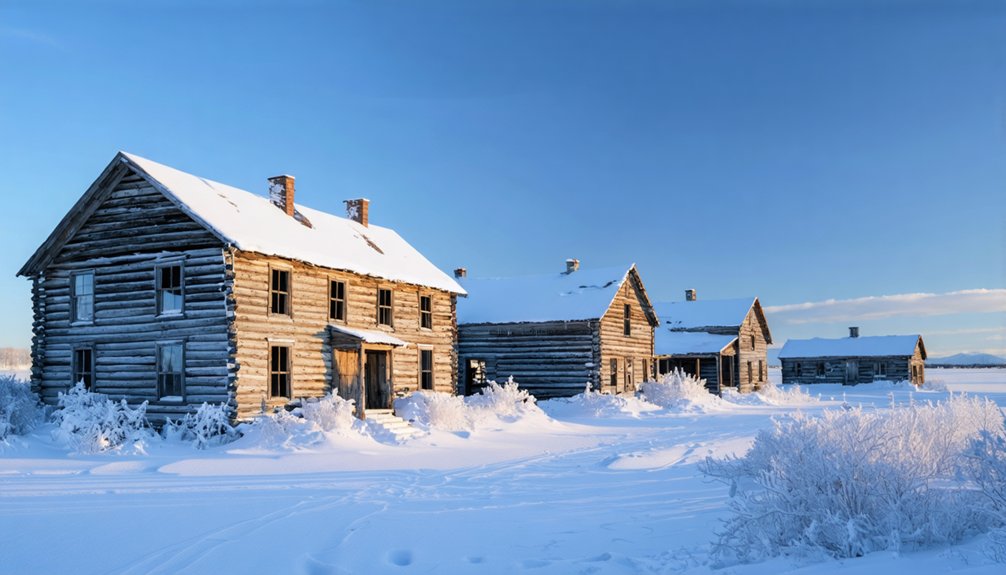
Where Alaska’s wilderness meets the Canadian border, Fort Egbert emerges from the birch and spruce forests along the Yukon River’s south bank—a weathered proof of America’s northern frontier ambitions. Established in 1899 during the Klondike Gold Rush, you’ll discover five original buildings preserved among muskeg lowlands.
These structures are where soldiers once maintained order and operated America’s first northern telegraph station.
What Makes Fort Egbert Worth Your Winter Journey:
- Roald Amundsen announced his Northwest Passage triumph from here in 1905
- Unparalleled winter photography opportunities with frost-laden structures against pristine snowscapes
- Alaska wildlife tracking through surrounding forests where moose and lynx leave fresh prints
You’ll reach this National Historic Landmark via Eagle’s end-of-road location.
Bureau of Land Management restoration efforts let you walk through authentic frontier military life.
Ukivok: Dramatic Cliffside Ruins Near Nome
Forty miles west of Nome, King Island’s 700-foot cliffs punch straight up from the Bering Sea, crowned with the skeletal remains of Ukivok—wooden houses on stilts that cling to near-vertical rock like barnacles frozen in time. The Iñupiat Aseuluk thrived here for centuries, connecting structures with narrow planks lashed into stone, defying gravity and winter gales.
You’ll need a boat from Nome and solid nerves—there’s no flat landing, just steep scrambles up icy rock.
The Bureau of Indian Affairs shuttered the school in 1959, forcing families to move to the mainland and ending a millennium of occupation. From cliffside viewpoints, you’ll spot the white schoolhouse shell and church foundations.
Native preservation efforts continue through King Islander descendants in Nome, who maintain summer visits and cultural traditions despite the village’s 1970s abandonment.
Treadwell Ruins: Accessible Gold Mine Remains Near Juneau
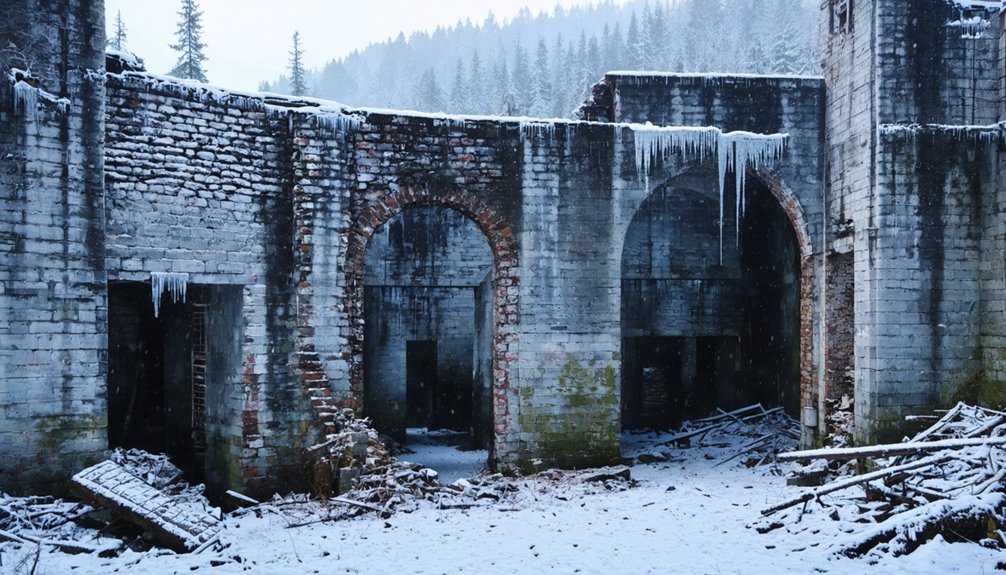
Just three miles from downtown Juneau’s cruise ship docks, the Treadwell complex sprawls across Douglas Island’s coastline like an industrial graveyard—moss-draped brick walls, rusted steel gears the size of truck tires, and concrete foundations half-swallowed by Sitka spruce.
Nature reclaims industrial ambition: brick, steel, and concrete dissolving into moss and forest on Douglas Island’s haunted shore.
Between 1882-1922, this was the world’s largest gold mine, extracting $67 million before collapsing into the sea. On April 22, 1917, a 200-foot saltwater geyser erupted, flooding 45 miles of underground tunnels with 3 million tons of seawater.
What You’ll Find:
- The Glory Hole crater where it all began
- Mining relics including rusted machinery and brick smokestacks
- Beach-accessible wharf pilings and saltwater pump remnants
Forest trails wind through the ruins year-round, though winter’s snow reveals structural outlines you’ll miss in summer’s undergrowth.
Winter Safety Considerations and Equipment Requirements
While Alaska’s ghost towns offer haunting glimpses into frontier history, winter transforms these remote sites into genuine survival challenges. You’ll need winter tires or chains for vehicle traction on ice-covered access roads, where black ice forms without warning. Pack emergency supplies: blankets, food, water, and a shovel for snow removal if you’re stuck.
I’ve learned the hard way that layering with wool or synthetics—never cotton—keeps you warm when exploring abandoned structures. Mittens beat gloves for warmth, and insulated boots with gaiters prevent snow infiltration.
Reduce speed regardless of posted limits, maintain six-second following distances, and keep your headlights on. Wildlife crossings increase dramatically in winter, so stay alert.
Freedom means being prepared, not reckless.
Guided Tours and Self-Exploration Options at Historic Sites
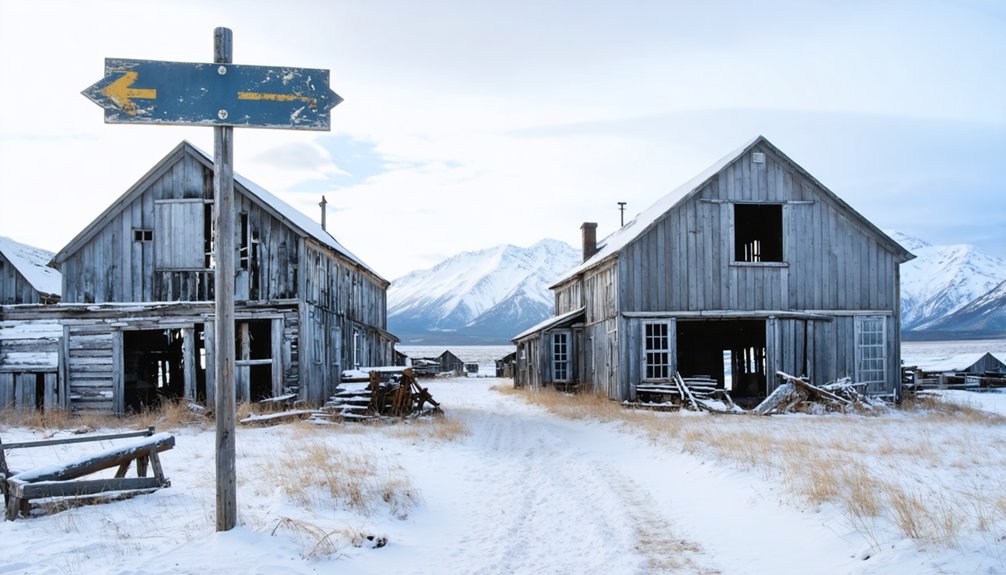
Once you’ve mastered the gear and safety protocols, you’ll face a choice that shapes your entire ghost town experience: joining a guided tour or exploring independently.
The choice between guided exploration and solo adventure fundamentally determines whether you’ll experience ghost towns as silent monuments or living stories.
At Kennecott, you can navigate the National Historic Landmark solo using Park Service maps, or book St. Elias Alpine Guides for exclusive building access. The difference matters—guides unlock doors and share local legends about Alaska Nellie and gold miner Al’s ghost that you’d miss alone.
Your exploration options include:
- Self-guided freedom at Kennecott’s stabilized mill buildings overlooking Kennicott Glacier
- Intimate snowshoe tours through Moose Pass ($499) with winter myths along the Iditarod Trail
- Historical walking tours in Skagway combining women’s gold rush stories with ghost tidbits
Independent exploration offers solitude and flexibility. Guided tours deliver insider access and storytelling that transforms frozen ruins into vivid narratives.
Frequently Asked Questions
What Are the Average Winter Temperatures at Alaska Ghost Town Locations?
Like Jack London’s adventurers, you’ll face brutal -40°F to -66°F temps at abandoned sites. Historical preservation freezes time here, but winter survival tips are essential—you’ll need serious cold-weather gear to explore these remote, freedom-filled frozen relics safely.
Do Any Ghost Towns Offer Indoor Warming Shelters During Winter Visits?
No, Alaska’s ghost towns don’t offer indoor warming shelters or ghost town amenities during winter visits. You’ll need to bring your own cold-weather gear and heating equipment, as abandoned structures lack functional heating systems and aren’t safe for occupancy.
Are Snowmobiles or Dog Sleds Recommended for Accessing Remote Ghost Towns?
Snowmobiles offer speed and independence for reaching roadless sites like Curry, but prioritize snowmobile safety in avalanche zones. Dog sleds excel on historic dog sled terrain like Chilkoot Trail, providing eco-friendly access without fuel dependency concerns.
Which Ghost Towns Have Cell Phone Service for Emergency Communications?
Ironically, “ghost towns” truly live up to their name—you’ll find zero cell service coverage in Alaska’s abandoned settlements. For emergency communication options, you must rely on satellite devices, since cellular infrastructure died long before these towns became ghosts.
Can Visitors Legally Stay Overnight in Abandoned Ghost Town Structures?
You can’t legally stay overnight in abandoned structures due to legal regulations and historical preservation rules. Most ghost towns enforce strict no-trespassing policies. Instead, you’ll find authentic nearby lodges offering wilderness freedom without risking fines or safety hazards.
References
- https://thealaskafrontier.com/ghost-towns-in-alaska/
- https://www.youtube.com/watch?v=TC_KPrhDByY
- https://www.atlasobscura.com/things-to-do/alaska/ghost-towns
- https://motorcyclemojo.com/2015/09/alaska-ghost-towns/
- https://www.alaska.org/detail/kennicott-mine-ghost-town-walking-tour
- https://www.gi.alaska.edu/alaska-science-forum/ghost-towns-scattered-across-alaska-map
- https://en.wikipedia.org/wiki/List_of_ghost_towns_in_Alaska
- https://www.legendsofamerica.com/dyea-alaska/
- https://www.miningnewsnorth.com/story/2021/07/30/northern-mining-history/dyea-alaska-the-lost-sibling-to-skagway/6911.html
- https://postalmuseum.si.edu/gold/skagdyea.html