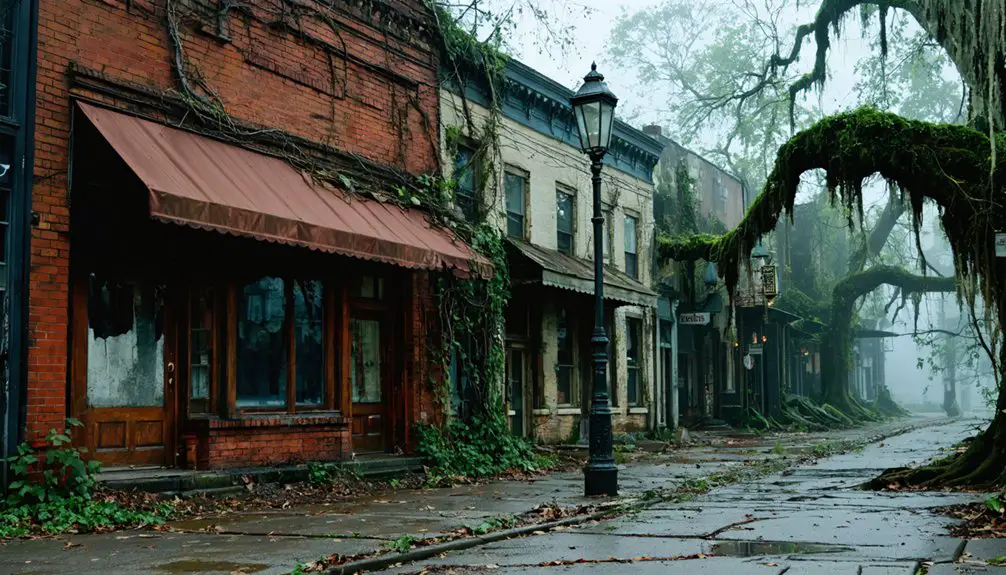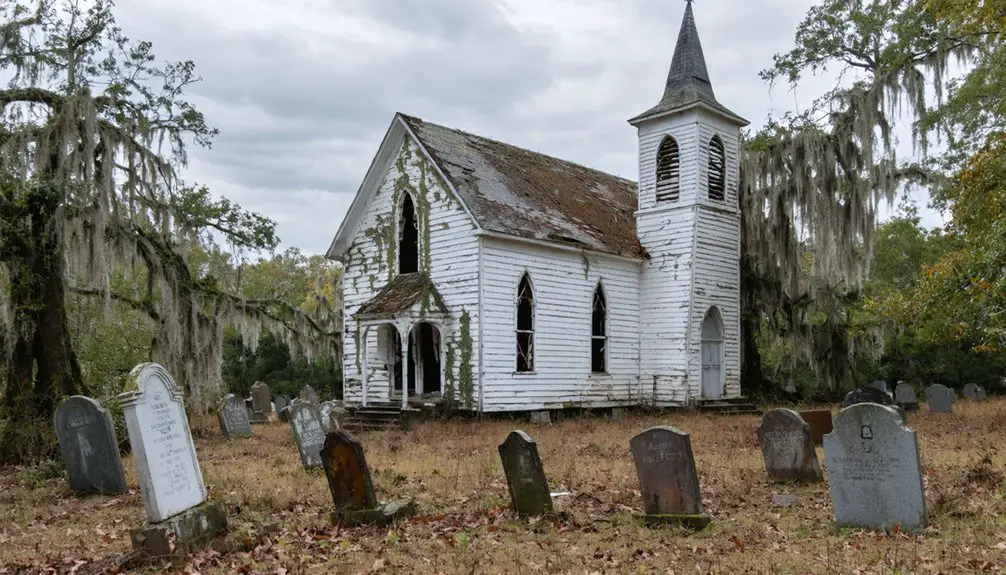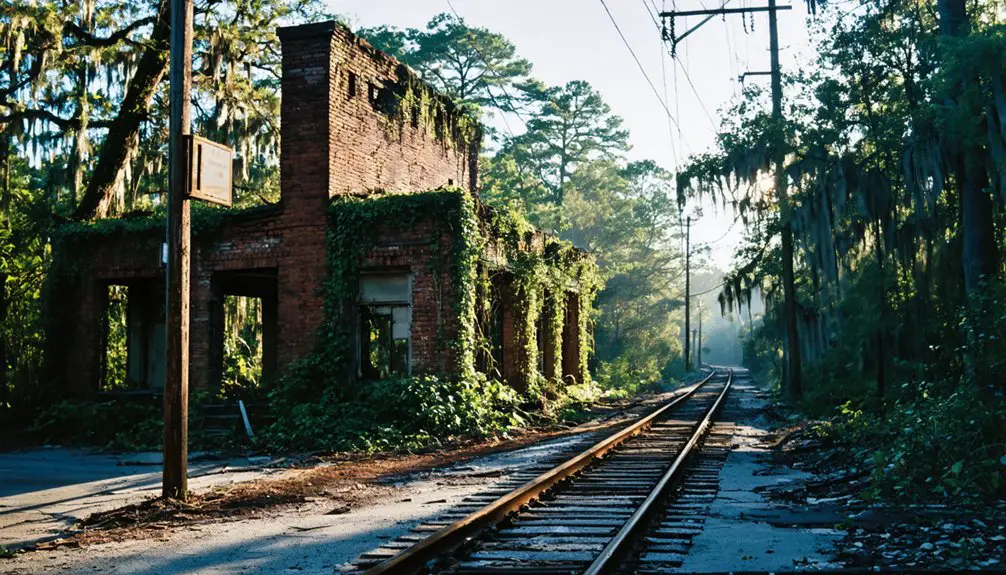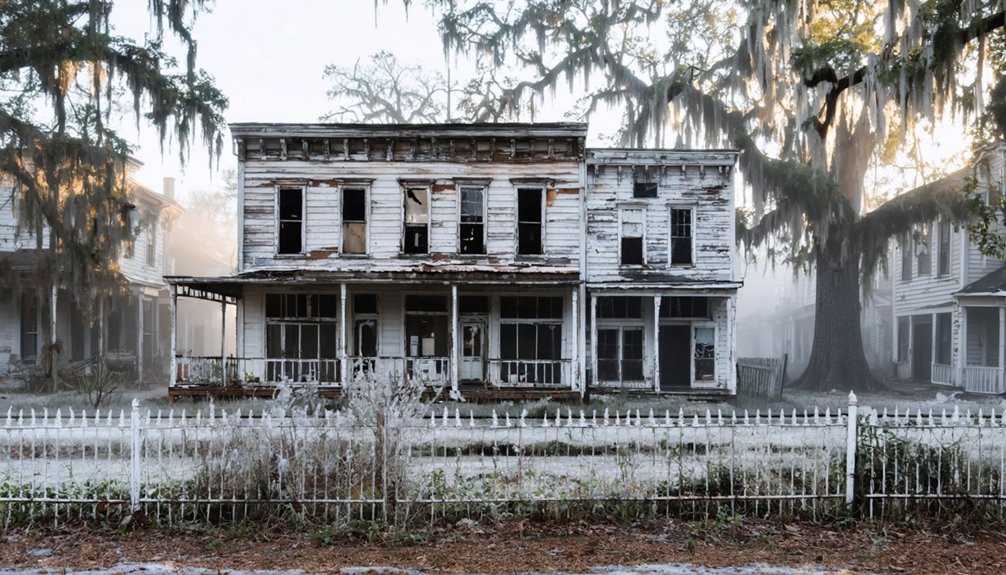
You’ll find South Carolina’s ghost towns particularly haunting in winter, when bare trees expose crumbling tabby walls and forgotten foundations. Colonial Dorchester reveals its 1697 oyster-shell concrete fort along the Ashley River, while Pinckneyville’s brick chimneys stand sentinel over what was once the “Charleston of the Upstate.” Glenn Springs’ mineral resort ruins and the submerged remnants of Pickens Courthouse beneath Lake Keowee tell stories of economic collapse and deliberate flooding. Pack waterproof boots and layered clothing—these remote sites demand preparation, but reward you with atmospheric discoveries best captured during crisp winter mornings when frost highlights every historic detail.
Key Takeaways
- Winter months (December-February) offer ideal conditions with fewer crowds, lower rates, and mild weather for exploring ghost towns.
- Colonial Dorchester features a crumbling tabby fort, visible log wharf at low tide, and 6,500 recovered artifacts.
- Pinckneyville, the “Charleston of the Upstate,” displays remaining chimneys, walls, and brick foundations from its 1791 founding.
- Glenn Springs showcases 23 historic mineral resort structures, mostly ruins, connected to the 1886 Charleston earthquake.
- Prepare with layered clothing, waterproof boots, headlamps, offline maps, and research access restrictions before visiting remote sites.
Colonial Dorchester
Snow rarely falls on the weathered brick tower of St. George’s Anglican Church, but winter’s your best time to explore Colonial Dorchester‘s haunting remains. You’ll walk where Puritan settlers from Massachusetts established South Carolina’s third-largest town in 1697, twenty miles upriver from Charleston.
You’ll trace footsteps of Massachusetts Puritans who carved South Carolina’s third-largest colonial settlement from Ashley River wilderness in 1697.
The crumbling tabby fort, built from oyster-shell concrete, once guarded the powder magazine when Francis Marion commanded this strategic post. At low tide, you can spot the original log wharf emerging from the Ashley River—a remnant of the river commerce that made this place thrive.
Merchants here traded with locals through Native trade networks while shipping rice and indigo downstream. The settlers acquired 4,050 acres from land grants in 1696, establishing their missionary community on this strategic neck between the Ashley River and Dorchester Creek. By 1788, everyone had abandoned these streets.
Now archaeologists have uncovered 6,500 artifacts from just one lot, with 109 more waiting beneath your feet. During winter months, you can visit the indoor lab where researchers analyze pottery sherds, pipe stems, and British military insignia discovered at the site.
Dorchester State Historic Site
Beyond the crumbling church walls, the 325-acre Dorchester State Historic Site sprawls along the Ashley River near Summerville, protecting the archaeological treasures beneath your feet.
You’ll find urban artifacts scattered throughout—pottery shards, brick fragments, and colonial-era tools that tell stories of market days and seasonal migration patterns from the 1700s.
The tabby fort, constructed between 1757-1760, still stands as a testament to French invasion fears during turbulent times.
Winter’s your best window to explore this ghost town twenty miles from Charleston.
The site sits at 300 State Park Road, where excavations since the 1940s have unearthed remnants of the Puritan settlement that thrived nearly a century before Revolutionary War disruptions transformed it into ruins.
During the conflict, the location served as an outpost for both American and British forces at different times.
You’re walking where Francis Marion once commanded, where 350 souls built their American dream.
Modern visitors benefit from regional training programs that help interpret the historical significance of archaeological findings at sites like Dorchester.
Pinckneyville
Where ambition outpaced reality, Pinckneyville crumbles into Union County’s red clay soil near the confluence of the Broad and Pacolet rivers.
Time devoured Pinckney’s upstate dream where two rivers meet, leaving only red clay and the skeleton of abandoned ambition.
Founded in 1791 as the “Charleston of the Upstate,” this ghost town archaeology site reveals preservation challenges that ultimately won. You’ll find a lone chimney standing sentinel in fields, partial walls, and scattered brick foundations—all that remains of Charles Cotesworth Pinckney‘s namesake district seat.
Access requires charting private land and locked gates, though the determined explorer who secures permission discovers authentic ruins: a house foundation ringed by rusty fencing, period-correct brickwork, and Thomas C. Taylor’s grave. The site’s courthouse district lost its prominence after 1870, with only a small population lingering into the 1940s.
Vandalism accelerated time’s work here; restoration funding dried up by the 1980s. Planners borrowed directly from Charleston’s street names when laying out this ambitious settlement, dreaming of urban sophistication in the upcountry wilderness. Today’s reality proves more compelling than tall tales of Confederate gold.
Pickens Courthouse
Beneath Lake Keowee’s winter waters lies a district seat that couldn’t hold its ground. You’ll find Old Pickens Presbyterian Church standing as the sole survivor of what was once Pickens Courthouse—a bustling 1828 town with over 100 residents, shops, and the Keowee Courier newspaper.
When urban redevelopment shifted the county seat in 1868, this river town became expendable. The current courthouse building, completed in 1959, now serves Pickens County at 214 East Main Street. The building features a large portico with four thin columns and a square white cupola with green roof. Duke Energy’s environmental conservation efforts now guard most of the submerged site, but you can still visit the restored 1849 brick church and explore its cemetery containing 200+ graves.
The Historic Old Pickens Foundation maintains access to this haunting remnant where Revolutionary War hero Andrew Pickens’s legacy dissolved into Carolina clay and reservoir waters.
Glenn Springs
How does a Cherokee medicine man’s discovery transform into South Carolina’s answer to Saratoga Springs, only to crumble into weeds and memory? Glenn Springs’ 23 historic structures await your winter exploration, each whispering tales of grandeur and decline.
Twenty-three crumbling monuments to vanished elegance stand waiting—each structure a chapter in Glenn Springs’ dramatic rise from mineral water miracle to forgotten ruins.
Your self-guided tour reveals:
- The mineral spring where Revolutionary soldiers treated ailments—still accessible today.
- Browning Home’s local ghost stories featuring “Willie,” exorcised in 1992.
- 1908 Old Stone Church, perfect for winter landscape photography among bare branches.
John B. Glenn’s $800 investment in 1825 spawned an elegant resort rivaling Saratoga. A railroad connected the inn to nearby Roebuck, enabling guests to reach this healing retreat more easily. The waters gained international recognition, shipped across Europe as promoters touted their medicinal properties.
Fire claimed the hotel in 1941, but the Glenn Springs Preservation Society fights to save what remains. You’ll find a wooden kiosk dispensing brochures, guiding you through calcium-sulfured history where automobiles and economic collapse couldn’t completely erase freedom-seeking visitors’ legacy.
Clementia Mineral Spring
You’ll find Clementia Mineral Spring along Highway 162 in Hollywood, where a natural carbonated spring once bubbled through cracked phosphate marl—a geological gift from the 1886 Charleston earthquake that Colonel Moultrie Clement transformed into a bottled water enterprise.
The one-acre site, though marketed as a restorative mineral water resort in the early 1900s, never evolved beyond a country cottage with outbuildings before legal disputes shuttered the business during the Jazz Age.
Winter’s the ideal season to visit this landlocked ghost town, when bare pines frame the historical marker and you can imagine carriages once rolling up to collect the odorous, effervescent waters that flowed regardless of drought or tide.
Post-Earthquake Resort Development
When Charleston’s foundations stopped trembling in September 1886, entrepreneurs spotted opportunity amid the rubble. Clementia Mineral Spring emerged as optimists claimed the regional uplift had liberated healing waters from deep aquifers.
You’ll find this abandoned resort near the fault junction where earthquake era architecture met Victorian-era wellness dreams.
The seismic activity that destroyed 14,000 chimneys paradoxically created a health tourism boom:
- Mineral baths promised relief from rheumatism using supposedly earthquake-released springs
- Elevated grounds above surrounding swampland offered “safer” building sites
- Charleston refugees sought retreats away from their devastated city
Today’s cracked foundations tell the real story—liquefaction beneath fancy resort dreams. You’re standing where desperation and hope collided, preserved in winter’s stark clarity.
Winter Pine Grove Exploration
The humble roadside marker along Highway 162 barely hints at what’s hidden in the pine grove behind it—a tangle of foundations where Boykin Clement’s country cottage once welcomed visitors seeking miracle cures.
Winter’s bare branches expose crumbling outbuildings that once housed carriages and horses. You’ll find the spring itself still bubbling—that same carbonated water that sparked ancient legends about restorative powers back in 1886.
The site defies typical ghost town folklore stories. Clementia never became the village its promoters envisioned; legal squabbles over access rights killed the business during the Jazz Age.
Yet the spring flows on, unaffected by drought or season. Bring boots for muddy approaches near Log Bridge Creek, and explore before developers discover this forgotten corner of Dungannon Plantation.
Preparing for Winter Ghost Town Exploration
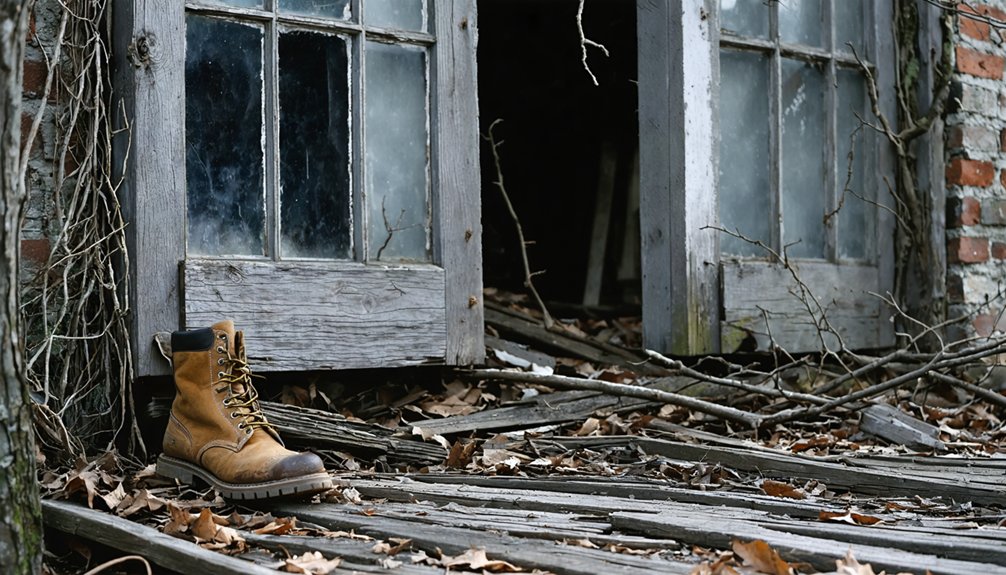
You’ll need layered clothing and waterproof boots when temperatures drop to 30°F at night near places like Glenn Springs—I learned this after shivering through my first upstate ruin exploration in just jeans and sneakers.
Pack a headlamp for dim interiors, extra batteries, and offline maps since cell service vanishes around remote sites like Pinckneyville.
Before you go, research each ghost town’s history and access restrictions; some locations near old Ellenton remain off-limits due to contamination, while water-only towns like Ferguson require boat rentals and tide charts.
Essential Winter Hiking Gear
Before venturing into South Carolina’s abandoned settlements during the coldest months, proper gear preparation can mean the difference between an enriching historical exploration and a dangerous ordeal.
While SC winters aren’t typically extreme, unexpected temperature drops near decaying structures demand smart winter trekking preparation.
Your essential snow gear checklist:
- Layering system – Start with moisture-wicking base layers, add an insulating fleece mid-layer, and top with a waterproof shell that’ll protect you from rain and biting winds.
- Footproof boots – Choose waterproof hiking boots with ankle support; wet feet’ll cut your exploration short fast.
- Navigation tools – Pack a map, compass, and headlamp with extra batteries since ghost towns often lack clear trails.
Don’t forget warm gloves, a wool hat, and trekking poles for stability on uneven, overgrown terrain.
Historical Research Before Visiting
Understanding a ghost town’s backstory transforms your winter visit from simple urban exploration into a profound historical pilgrimage. You’ll discover that Ellenton’s 6,000 displaced residents left behind more than woodland artifacts—they left stories of forced government sales and relocated graveyards.
Research Dorchester’s 1696 founding before you wander its oyster shell tabby walls, visible when winter tides run low. Study Andersonville’s flooding projects to understand why these ghostly isolates exist.
You’re not just photographing decay in Chappells; you’re witnessing freedom lost when 210,000 acres vanished for nuclear facilities.
Dig into primary sources, interview descendants if possible, and map original street layouts. This preparation reveals the human cost behind abandoned structures, making your winter exploration meaningful rather than merely atmospheric.
Best Times to Visit During Winter Months
- January offers rock-bottom hotel rates and completely empty historical sites.
- Tuesday through Thursday guarantees solitude at even popular attractions.
- February balances mild conditions with minimal crowds and better museum access.
You’ll need just a light jacket while documenting architectural details in crystal-clear air. The dry season eliminates weather obstacles, letting you wander floodplains and overgrown streets freely.
December through February provides that sweet spot—comfortable enough for all-day exploration, quiet enough for genuine discovery.
Photography Tips for Abandoned Sites in Cold Weather
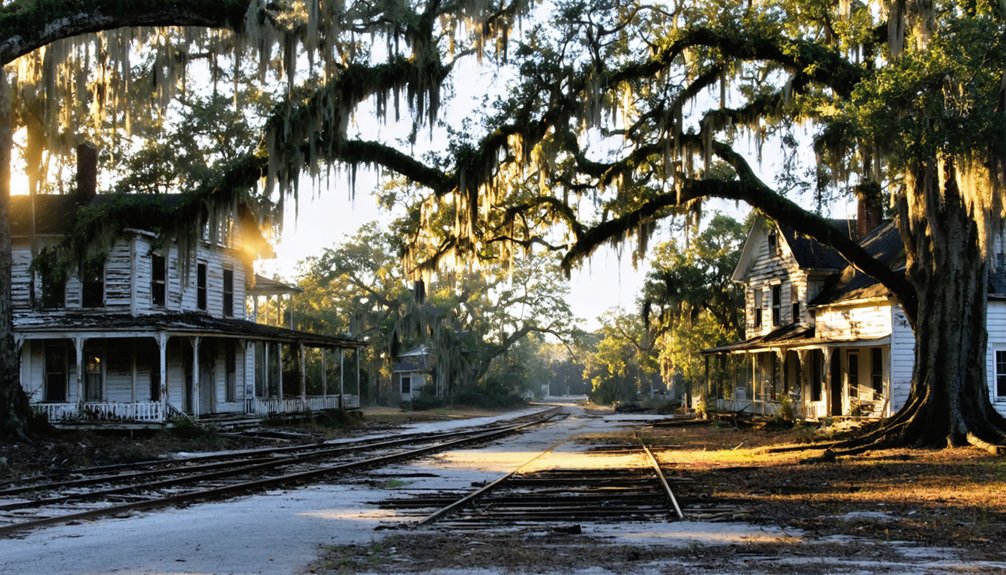
The haunting beauty of South Carolina’s ghost towns reveals itself most dramatically through your camera lens on crisp winter mornings.
You’ll want your tripod—those dim interiors demand long exposures without blur. Push your ISO to 800 and bring LED lights to illuminate forgotten corners where stories linger in peeling wallpaper and collapsed rafters.
Scout locations beforehand to maximize shooting time and avoid frostbite in sub-zero conditions.
Night photography transforms these sites into otherworldly scenes, especially when you experiment with light painting to reveal hidden details.
Frame crumbling structures against winter’s stark landscape, giving subjects breathing room within the wilderness.
Black and white processing enhances that aged, melancholic atmosphere, though don’t dismiss color for capturing rust against fresh snow—the contrast tells its own tale.
Historical Significance of South Carolina’s Abandoned Settlements
When you walk through South Carolina’s ghost towns, you’re stepping onto ground where colonial traders built their first outposts in 1697, long before the Revolutionary War scattered settlers like autumn leaves.
The abandoned depot at Salters still stands where cotton-laden wagons once lined up in the 1850s, its weathered boards holding stories of enslaved laborers and railroad prosperity.
You’ll find that these empty streets reveal three centuries of American history—from British trading posts to Civil War-era boom towns—frozen in the quiet decay of winter.
Colonial Era Settlement Patterns
Long before crumbling foundations and overgrown paths marked South Carolina’s forgotten settlements, ambitious colonizers from Spain, France, and England battled harsh terrain and hostile conditions to stake their claims along this unforgiving coastline.
You’ll discover three distinct settlement waves that shaped ghost towns you can explore today:
- Spanish outposts (1526-1587) like Santa Elena on Parris Island, where native tribes eventually reclaimed the land.
- Failed French Protestant colonies (1562) at Port Royal, abandoned within months.
- English colonial land grants (1670s-1730s) establishing coastal plantations and backcountry buffer settlements.
The 1730s Township Plan deliberately scattered European immigrants across Cherokee territories, creating isolated communities that couldn’t withstand economic shifts, Indian conflicts, or governmental neglect.
These strategic but vulnerable settlements became the ghostly remnants you’ll encounter on winter expeditions through Carolina’s haunting backcountry.
Revolutionary War Impact
As British and American forces clashed across South Carolina’s landscape between 1775 and 1783, thriving settlements transformed into abandoned battlegrounds that you’ll still find preserved beneath winter’s bare canopy.
At Colonial Dorchester, you’ll walk among oyster shell tabby fort walls and a solitary church bell tower—colonial architecture that witnessed the town’s evacuation when independence called.
Fifteen miles from Charleston, this strategic trading post became vulnerable to Revolutionary tactics that forced residents to flee permanently.
Northeast of Mountville, Hammonds Store met a fiercer fate when American soldiers discovered the British encampment and burned the structure after victory.
Winter’s leafless forests now reveal these sites’ defensive positions—redoubts, palisades, and river wharves—where commercial dreams died so liberty could survive.
Economic Decline and Abandonment
The collapse of rice cultivation after the Civil War scattered South Carolina’s Lowcountry planters like chaff across abandoned fields where enslaved labor had once transformed tidal swamps into agricultural gold. You’ll find these ghost settlements shaped by three devastating forces:
- Natural disasters – The 1886 earthquake crumbled infrastructure while repeated floods drowned rice fields, forcing planters like Moultrie Clement toward experimental cattle pasturage.
- Government displacement – Savannah River Plant’s creation uprooted 6,000 residents from 210,000 acres, paying $19 million for land worth $28 million in timber alone.
- Industrial collapse – Tobacco and textile industries vanished, leaving economic wastelands.
Today’s historical preservation efforts protect these sites, though their ecological impact transformed former plantations into wildlife sanctuaries where tenant farmers once struggled against floods that eventually drowned entire communities beneath Lake Marion.
Frequently Asked Questions
Are There Any Ghost Towns Near Charleston Accessible for Day Trips?
You’ll discover amazing abandoned settlements just minutes from Charleston! Colonial Dorchester’s crumbling tabby walls whisper tales of historical preservation, while Clementia Village’s local legends spark curiosity. Both offer freedom to explore mysterious ruins during unforgettable winter day trips.
Which Abandoned Sites Allow Metal Detecting or Artifact Collection Activities?
You’ll find Francis Marion National Forest welcomes metal detecting legally, letting you keep discovered treasures. However, private property access requires written landowner permission first. Most ghost towns need approval, though beach detecting remains your freest option near Charleston.
Do Any Ghost Towns Offer Guided Tours During Winter Months?
No guided ghost town tours operate during South Carolina winters. You’ll explore abandoned sites independently, so follow winter safety tips and bring proper gear for ghost town photography. Most organized ghost tours concentrate in historic districts during fall months only.
Are Camping Facilities Available Near South Carolina’s Abandoned Town Sites?
You’ll find modern camping at Dreher Island State Park near submerged towns, offering lakefront sites with outdoor amenities like electricity and water. Lake Marion’s Hide Away Campground provides primitive access to Ferguson’s ruins through cypress-lined waterways.
What Wildlife Might Visitors Encounter at These Remote Historical Locations?
Like forgotten urban legends come alive, you’ll encounter deer browsing near preserved plantation ruins, wild turkeys in clearings, and winter songbirds. Preservation efforts have created wildlife sanctuaries where nature reclaims humanity’s abandoned spaces freely.
References
- https://uprootedtraveler.com/winter-in-south-carolina/
- https://kiddingaroundgreenville.com/elkmont-ghost-town
- https://www.romanticasheville.com/ghost_town.htm
- https://www.ccpl.org/charleston-time-machine/clementia-mineral-spring-ghost-town-never-was
- http://www.onlyinyourstate.com/south-carolina/haunted-road-trip-sc-ghost-towns
- https://albiongould.com/ghost-towns-to-visit-in-the-states/
- https://wnok.iheart.com/content/2023-10-11-abandoned-south-carolina-town-named-the-creepiest-ghost-town-in-the-state/
- https://www.youtube.com/watch?v=cjOGHlA1gkk
- https://archaeology.org/issues/march-april-2014/off-the-grid/south-carolina-colonial-dorchester/
- https://en.wikipedia.org/wiki/Colonial_Dorchester_State_Historic_Site