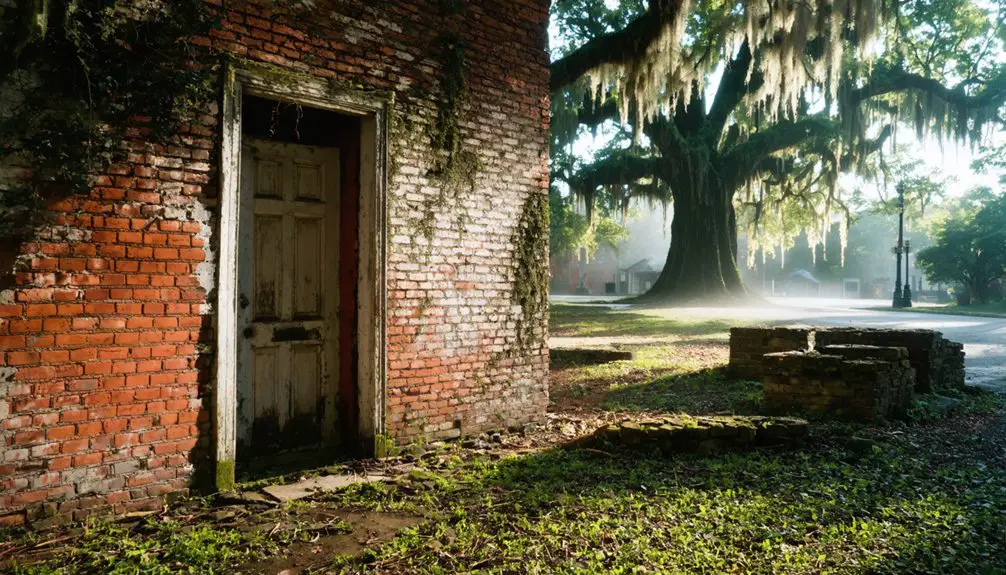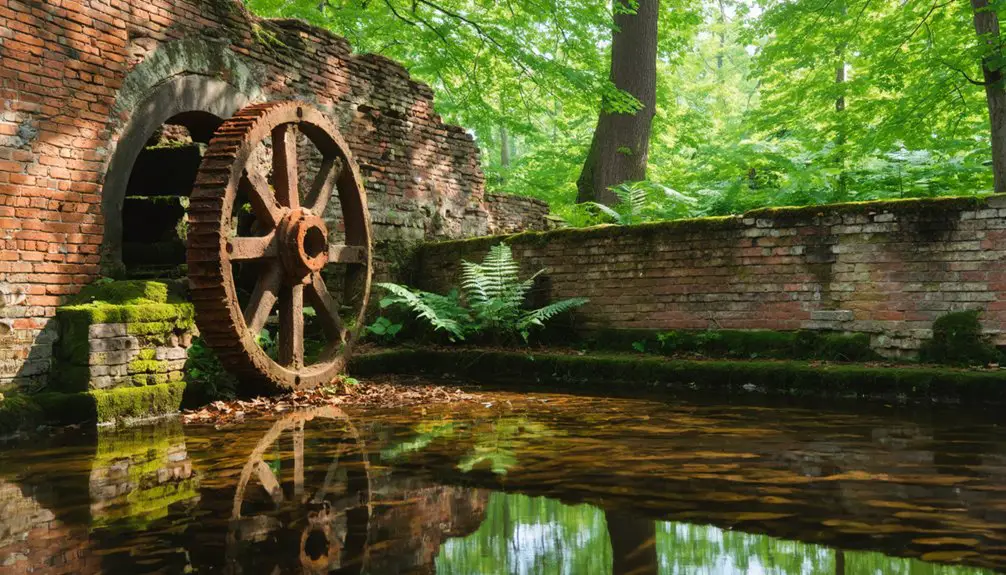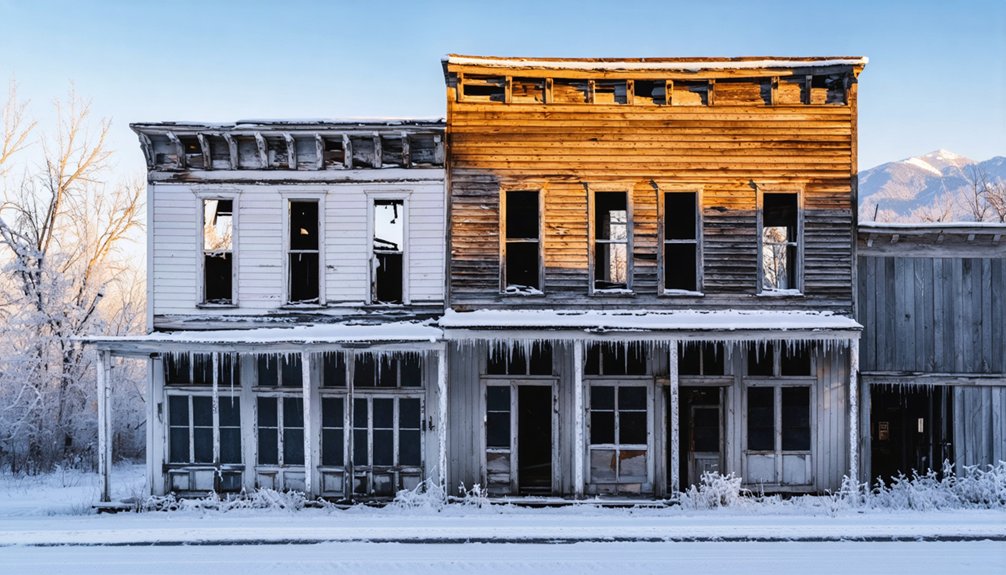
You’ll find Virginia’s most hauntingly beautiful ghost towns transform under winter’s stark touch, with Union Level’s preserved 1920s storefronts and vintage gas pumps standing frozen in time, while Pamplin’s railroad remnants become accessible via the 31-mile High Bridge Trail cutting through leafless landscapes. Monroe rests beneath Smith Mountain Lake’s cold depths, its submerged streets visible when water levels drop. Winter’s bare trees reveal architectural details obscured in warmer months, and maintained trail networks make exploration feasible despite temperatures dipping to 25°F—though proper planning reveals these atmospheric sites’ full historical significance.
Key Takeaways
- Union Level in Mecklenburg County features well-preserved early 20th-century buildings including a bank, stores, and vintage gas pump accessible for exterior photography.
- Pamplin offers railroad heritage sites with a renovated depot and 31-mile High Bridge Trail providing winter views of Appomattox River valley.
- Winter exploration advantages include leafless trees increasing visibility, frozen firm paths, and snow enhancing architectural details of historic ruins.
- Essential winter gear includes waterproof boots and insulated clothing as temperatures reach 25°F with potential 40-inch snowfall in mountain areas.
- Maintained trails like Matildaville Trail and High Bridge Trail provide year-round access to ghost town sites through National Park Service networks.
Pamplin: A Historic Railroad Hub Along the High Bridge Trail
Nestled in the heart of Virginia’s Piedmont region, Pamplin stands as a quiet proof to the railroad era that once drove commerce across the Commonwealth. You’ll discover a town that flourished around the Southside Railroad stop in the 1920s, only to fade when US 460’s bypass and passenger rail’s end left it abandoned. Urban decay marks the landscape, yet preservation efforts have breathed new life into this ghost town through the High Bridge Trail extension.
The 2020 state purchase brought 31-mile trail access directly into downtown, transforming Pamplin into a winter destination for adventurers. You can bike or hike the historic railbed, exploring where Nicholas Pamplin’s 1846 land donation sparked a community that rose, fell, and now rises again. Just 4.5 miles from Farmville, the trail connects to the iconic High Bridge, offering winter hikers sweeping views of the Appomattox River valley below. The renovated train depot now hosts community events throughout the year, from live music performances to outdoor movie screenings.
Monroe: The Submerged Ghost Town of Smith Mountain Lake
Unlike most ghost towns you’ll encounter, Monroe lies beneath 150 feet of Smith Mountain Lake water. Its streets, homes, and bridges have rested there since 1966.
Winter’s lower water levels won’t reveal this drowned settlement—the 1818 town sits too deep in the lake’s main body. Recreational boating now replaces the commerce that once flowed along the Staunton River.
Roads and structures remain entombed in the depths near Vista Pointe, visible only through aerial overlays. These overlays superimpose the lost town’s layout onto today’s thriving lakeside development. Founder Abner Anthony subdivided a 50-acre tract into half-acre lots along streets like Commerce, Spring, and Green in the town’s earliest days.
Before the flooding, workers relocated 1,135 graves from numerous cemeteries across the 20,000-acre basin, some dating back to the 1750s.
Hidden Beneath Lake Waters
Beneath the placid waters of Smith Mountain Lake lies Monroe, a town with ambitions that outlived its existence by more than a century.
When Appalachian Power dammed the Roanoke and Blackwater Rivers in 1963, Monroe sank beneath 150 feet of water, joining roads, bridges, and homesteads in a silent underwater landscape.
The submerged artifacts—tobacco barns, livestock pens, foundations—now form an eerie lake ecology where bass swim through doorways and catfish navigate forgotten streets.
You won’t find the folklore’s promised “underwater city” with intact shops and churches, but aerial overlays reveal Monroe’s street grid ghosting beneath modern recreation.
Old-timers whisper the deepest structures rest at 320 feet, forever beyond reach.
What remains is history’s stubborn refusal to disappear completely, preserved in cold darkness.
Before submersion, 1,354 graves were carefully relocated over three years, sparing families the anguish of ancestors lost to the lake.
The lake’s clear waters and visibility at depths around 60 feet attract divers seeking glimpses of Monroe’s remnants, though heavy boat traffic and underwater forests make exploration treacherous.
Winter Water Level Challenges
When drought grips the Blue Ridge foothills, Smith Mountain Lake surrenders its secrets grudgingly.
You’ll find lake level fluctuations reaching lows unseen in nearly a decade, with precipitation barely reaching one inch since August 2025. These extended drops—persisting three months by early January 2026—create challenges beyond glimpsing submerged history.
You’ll face inaccessible boat ramps where vessels won’t float properly, forcing you to verify conditions before launching.
Winter recreational safety demands heightened awareness as exposed rocks, stumps, and drop-offs lurk beneath shallow waters. Reduce your speed near shorelines, wear life jackets, and avoid treacherous muddy lakebeds where unstable ground threatens.
Local fishing captains have struggled with launches throughout this prolonged low period. Despite these challenges, power generation remains unaffected by the current lake conditions.
Appalachian Power continuously monitors lake levels and safety conditions to support recreational users. Check current levels on the Smith Mountain Project website before planning your ghost town exploration.
Submerged Historical Structures Remain
Beyond the modern hazards of shallow waters and exposed debris lies a more enigmatic mystery—a town that may or may not rest beneath the lake’s surface. Monroe’s existence remains unproven, making it unique among Virginia’s ghost towns.
Local divers and old-timers believe underwater archaeology could reveal the truth in depths reaching 320 feet.
What might lie beneath:
- Foundation stones from homes planned at Anthony’s Ford
- Preserved artifacts from the 1818 settlement near Louse Creek confluence
- Remnants of infrastructure that failed due to tobacco price crashes
The Sunken City Brewery displays alleged Monroe history, though physical traces remain unsearchable. The town mysteriously disappeared from tax rolls by 1869, decades before the lake’s creation, adding to speculation about what actually exists below. The damming on the Roanoke and Blackwater Rivers led to the town’s disappearance around 50 years ago.
While 1,135 graves were relocated in 1960, structural remains—if they exist—stayed submerged, creating Virginia’s most mysterious ghost town legend.
Union Level: A Preserved Window Into Early 20th-Century Virginia
When you step onto Union Level’s quiet country road, you’ll find a remarkably intact early 20th-century village frozen in time—storefronts, a dance hall, a bank, and general stores stand exactly where C.P. Jones and other merchants once conducted their thriving businesses.
The town’s well-preserved buildings offer rare exterior views of authentic rural Virginia architecture, with details like a vintage gas pump still displaying 1970s prices of 35 cents per gallon.
Winter visits provide excellent access for photography and exploration along the modest stretch of road, though you’ll need to admire these fragile structures from outside, as entering poses serious safety risks.
Intact Historical Village Remnants
Along a modest country road in Mecklenburg County, a row of weathered storefronts stands frozen in time, offering visitors an unvarnished glimpse into Virginia’s early 20th-century commercial life.
You’ll discover remarkably intact structures from Union Level’s prosperous 1920s era:
- The Bank of Union Level – architectural testament to the town’s financial prominence
- C.P. Jones Drug Store – preserved pharmacy showcasing early retail design
- Country store with vintage Esso pump – displaying fuel prices around 35 cents per gallon
Modern preservation faces tourism challenges here—structural deterioration prevents interior access, though you’re free to photograph exteriors from public roads.
The dance hall, general stores with second-floor apartments, and Buckhorn Elementary School remain visible monuments to a vanished commercial hub that thrived before the Great Depression and railroad abandonment sealed its fate.
Winter Accessibility Via Trails
Unlike many of Virginia’s ghost towns that require woodland treks to discover, Union Level presents an uncommonly civilized winter exploration opportunity. You’ll find paved roads and clear pathways threading through this preserved company town, eliminating concerns about trail navigation through frozen undergrowth.
The settlement’s grid layout allows you to wander freely between standing structures without following designated routes or consulting maps.
Winter flora—bare dogwoods and skeletal oaks—actually enhances visibility, letting you spot architectural details obscured by summer foliage.
You can explore at your own pace, moving between workers’ homes, the company store, and church without battling muddy trails or steep inclines.
This accessibility makes Union Level ideal for cold-weather visits when traditional ghost town expeditions become challenging or impossible.
Winter Accessibility and Trail Networks in Virginia’s Abandoned Sites
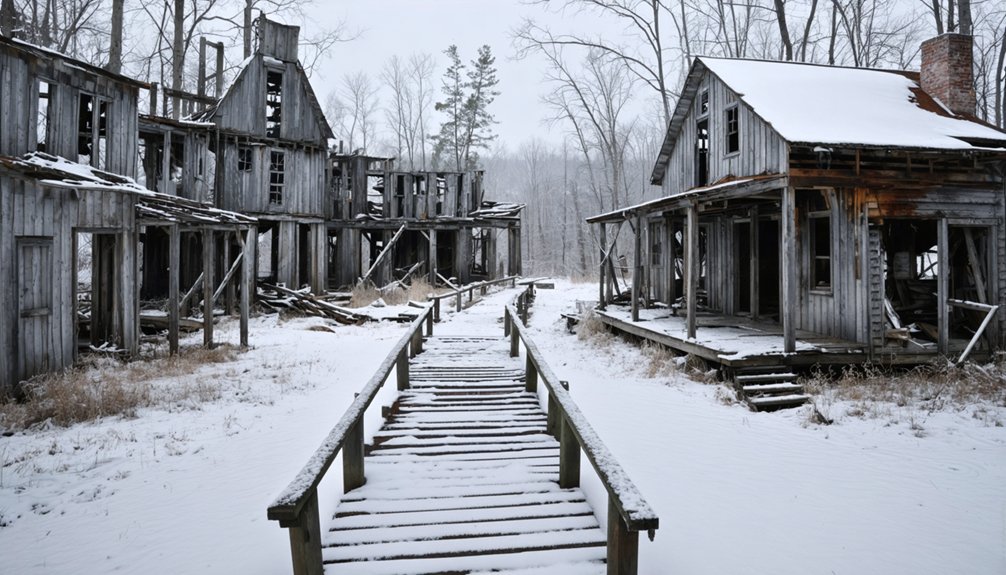
Virginia’s ghost towns become remarkably accessible during winter months, when stripped-bare trees and frozen ground transform overgrown ruins into clear destinations. Trail maintenance through National Park Service and National Forest networks ensures year-round passage.
Winter’s frozen ground and leafless canopy unveil Virginia’s forgotten settlements, turning seasonal limitations into the explorer’s greatest advantage.
Accessibility challenges diminish as frozen paths firm underfoot and bare branches reveal hidden foundations.
Prime Winter Ghost Town Routes:
- Matildaville Trail – 1.7-mile pathway through Great Falls Park delivers direct access to 1785 mining community ruins alongside dramatic Potomac rapids.
- Fenwick Mines Trail – Ridgeline route in Jefferson National Forest maximizes unobstructed views through barren canopy to forgotten settlements.
- High Bridge Trail – Linear path connects you with endangered Pamplin village remnants via straightforward railroad corridor.
Rails-to-trails conversions like Virginia Creeper Trail‘s 34.3 miles and New River Trail‘s 57-mile stretch provide multiple entry points for exploring abandoned sites without summer’s obscuring vegetation.
The Haunting Beauty of Snow-Covered Ruins and Historic Architecture
When winter transforms Virginia’s ghost towns, snow becomes architecture’s most dramatic collaborator. Frosted facades of 19th-century structures gain ethereal dimension as drifts accumulate across weathered boardwalks and seal forgotten doorways.
At Pamplin—designated among Virginia’s most endangered historic sites in 2014—brick buildings and deteriorating wooden frames develop softened outlines beneath white blankets, creating stark contrasts that emphasize every architectural detail.
You’ll find snowy silence amplifying the abandonment, where wind replaces human voices and temperature fluctuations continue their relentless work on exposed materials. These frozen tableaus offer tangible connections to railroad commerce and mining-era economies, their structural remains preserving stories from Virginia’s extractive past.
Winter intensifies the temporal displacement—each snow-draped ruin becomes a portal where historical narratives emerge through partially buried facades and frost-sealed windows.
Planning Your Winter Ghost Town Adventure: Weather and Seasonal Considerations
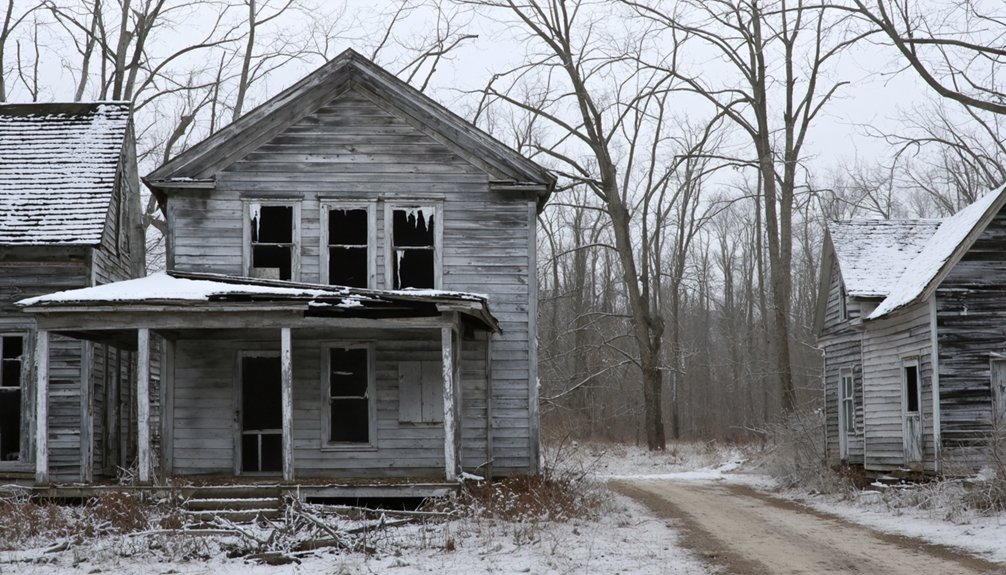
Before you venture into Virginia’s abandoned settlements, understanding winter’s unpredictable temperament becomes essential for survival and discovery.
Virginia’s ghost towns face temperatures plunging to 25°F, with mountainous regions accumulating up to 40 inches of snow. Weather forecasting reveals frequent ice storms and wintry mixes that transform rural routes into treacherous passages, demanding chains or winter tires for exploration.
Your seasonal gear requirements include:
- Waterproof boots and insulated layers to combat sub-15°F wind chills
- Emergency kits with blankets, food, and GPS devices for potential stranding
- Headlamps and first-aid supplies for *orienteering* shortened daylight and icy terrain
Check advisories before departing, as mountain passes close frequently. Sites like Pamplin remain accessible via High Bridge Trail, though snowmobiles may offer alternative routes through western Virginia’s mining districts.
Dining and Amenities Near Virginia’s Historic Abandoned Communities
After traversing frozen paths through Virginia’s forgotten settlements, you’ll find warmth and sustenance in nearby historic establishments that mirror the abandoned communities‘ colonial heritage.
After exploring Virginia’s ghostly colonial ruins, reward yourself with hearty meals at historic taverns that share their abandoned cousins’ storied past.
Williamsburg’s Fat Canary offers fine dining near ghost tour sites, while Gadsby’s Tavern in Old Towne Alexandria serves 18th-century meals in its original tavern setting.
Hunter’s Head Tavern in Upperville, built in the 1790s, features a massive wood fireplace and local cuisine perfect for winter evenings—some claim a Colonial ghost still wanders its halls.
Yorktown’s waterfront eateries provide York River views alongside fresh seafood.
The Wayside Inn in Middletown, operational since 1797, delivers authentic historic ambiance in America’s oldest continuously operating inn.
Each location combines exceptional dining with the same era that birthed Virginia’s now-abandoned settlements.
Frequently Asked Questions
Are There Guided Tours Available for Virginia’s Ghost Towns During Winter?
You’ll find winter ghost tours exploring local legends throughout Virginia’s historic towns like Staunton, Williamsburg, and Yorktown. These candlelit walks blend historical preservation with paranormal storytelling, offering you freedom to experience Virginia’s haunted past year-round.
Can I Camp Overnight Near Any of Virginia’s Abandoned Town Sites?
You’ll find primitive camping near Virginia’s ghost towns like Matildaville through George Washington National Forest sites. Historical preservation limits camping at actual ruins, but nearby Hidden Rocks and Emerald Pond let you explore local legends while embracing backcountry freedom.
What Photography Equipment Works Best in Snowy Ghost Town Conditions?
You’ll need full-frame cameras with spare batteries, sturdy tripods, and protective rain sleeves as essential winter gear. Don’t forget UV filters, lens hoods, and airtight bags among your camera accessories to combat snow, condensation, and freezing temperatures effectively.
Do I Need Special Permits to Explore Virginia’s Ghost Towns?
You’ll need permits only on state-owned ghost towns requiring historical preservation protocols. Over 90% of Virginia’s abandoned settlements sit on private land where local legends thrive freely—though you’ll want landowner permission to avoid trespassing charges while exploring responsibly.
Are Virginia’s Ghost Towns Safe to Visit Alone in Winter?
Visiting alone isn’t recommended—Virginia’s winter storms dump up to 42 inches, stranding you for days. Historical preservation efforts haven’t reached abandoned sites. Local legends warn of isolation risks where drifting snow blocks roads and temperatures plummet dangerously.
References
- https://planyellowstone.com/ghost-towns-historic-spots-that-feel-spookier-in-the-snow
- https://foxbaltimore.com/amazing-america/discover-pamplin-virginia-a-nearly-forgotten-ghost-town-with-stories-still-standing
- https://abcnews4.com/amazing-america/discover-pamplin-virginia-a-nearly-forgotten-ghost-town-with-stories-still-standing
- https://ktul.com/amazing-america/discover-pamplin-virginia-a-nearly-forgotten-ghost-town-with-stories-still-standing
- https://nuttyhiker.com/thurmond-west-virginia/
- http://www.onlyinyourstate.com/virginia/underwater-ghost-town-hiding-in-va
- https://www.virginia.org/listing/union-level-ghost-town/4358/
- https://www.dcr.virginia.gov/state-parks/blog/high-bridge-trail-state-park-completes-extension-into-pamplin
- https://visitfarmville.com/high-bridge/
- https://www.traillink.com/trail-history/high-bridge-trail-state-park/