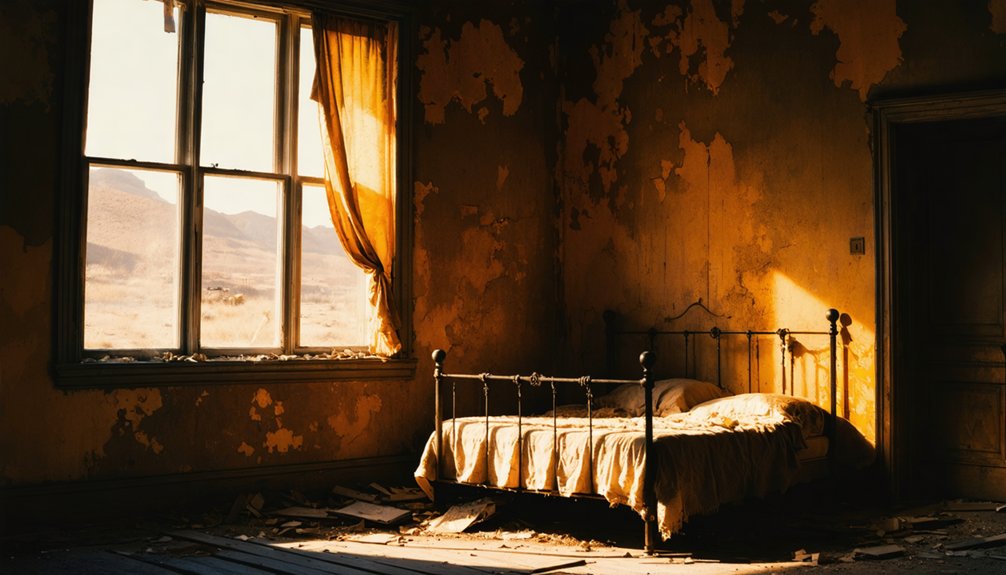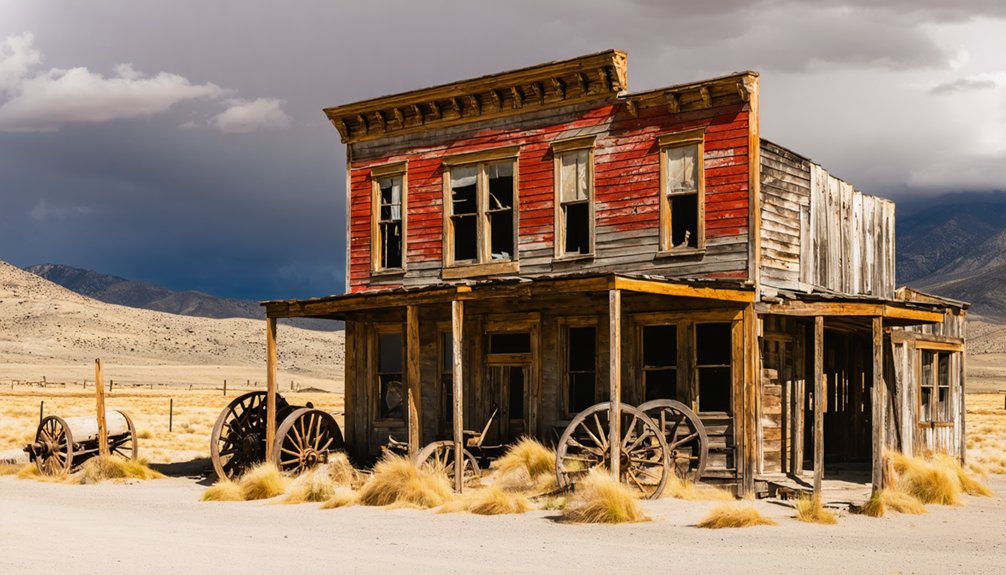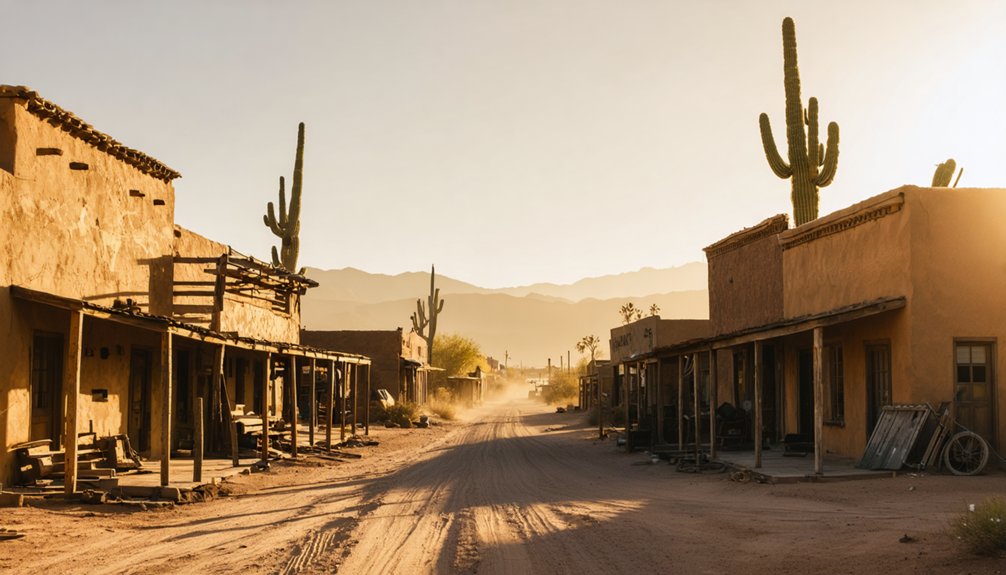
You’ll find Southwest ghost towns like Bannack State Park in Montana offering 50+ preserved structures with filming hours from 8am-9pm summer, while Cerro Gordo perches at 8,500 feet in California’s Inyo Mountains with 11 distinct locations including its bullet-scarred saloon. Bodie State Historic Park requires permits through California State Parks for its 110 weathered 1880s buildings, and Butte’s 10,000 miles of underground tunnels provide authentic industrial backdrops. Each location demands specific commercial filming permits and preservation compliance, with logistics varying from remote desert access to coordinated tunnel shoots beneath historic districts.
Key Takeaways
- Bannack State Park in Montana features over 50 preserved structures used in *The Ballad of Lefty Brown* and commercial productions.
- Virginia City and Nevada City in Montana showcase authentic miners’ cabins; Nevada City appeared in *Little Big Man* with Dustin Hoffman.
- Butte’s underground tunnels and 14 original headframes provided authentic industrial backdrops for *Route 66* episodes and *1923*.
- Cerro Gordo in California offers 11 filming locations including a bullet-scarred saloon near Alabama Hills production corridor.
- Bodie State Historic Park features 110 weathered buildings from the 1880s requiring permits through California State Parks for filming.
Bannack State Park: Where Modern Productions Meet Historic Montana
Since Montana’s first major gold discovery on July 28, 1862, Bannack has evolved from a boom town of over 3,000 prospectors into a National Historic Landmark.
From gold rush frenzy to preserved history, Bannack transformed from a bustling 3,000-person prospector camp into a protected National Historic Landmark.
It now serves film crews seeking authentic Western backdrops. You’ll find over 50 preserved log and frame structures along Main Street at 721 Bannack Rd, Dillon, MT 59725, where filming logistics benefit from minimal set requirements—crews add only furniture and chandeliers to ready-made historical scenes.
The park’s historic preservation standards haven’t deterred productions like *The Ballad of Lefty Brown* or Ghost Town KIA’s SUV commercial.
Park supervisor Roger Kasak confirms crews respect the structures while accessing Montana’s big sky and vast landscapes.
Bill Pullman, who ranches in Montana, brought personal ties to the landscape during his portrayal of the title character in *The Ballad of Lefty Brown*. The western film also utilized Montana’s southwestern landscape through additional locations including Dillon, Ennis, and Virginia City.
You’re working within seasonal hours: summer 8 am-9 pm, winter 8 am-5 pm. The visitor center is open Memorial Day through Labor Day, supporting your production needs.
Virginia City and Nevada City: Twin Ghost Towns of Cinema
Ghost town architecture here includes everything from miners’ cabins to the two-story “Big John” outhouse at Nevada City Hotel—all dating to the 1800s.
Productions benefit from authentic structures relocated from the surrounding “Fourteen Mile City” areas. These preserved historic structures attract visitors seeking glimpses into the 19th-century mining boom era.
You can access both locations via connecting train, making equipment transport straightforward for multi-site shoots. Nevada City served as a filming location for “Little Big Man” starring Dustin Hoffman.
Butte’s Mining Legacy on the Small Screen
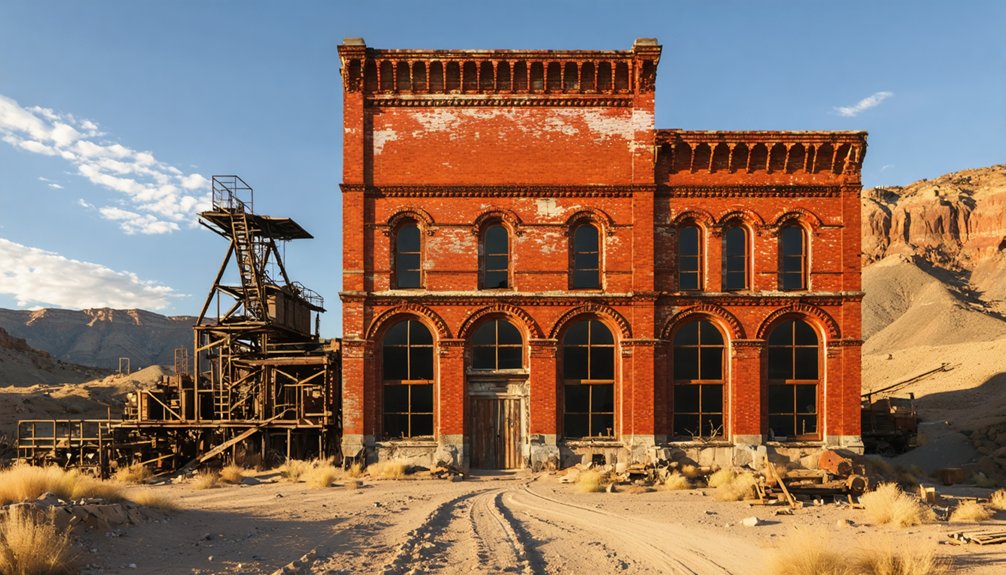
You’ll find Butte’s 10,000 miles of underground mine tunnels and 14 original headframes serving as ready-made sets for productions like *1923* and paranormal investigations such as *Ghosts of Devils Perch*.
Production crews can access specific historic structures—the Butte Water Building at 124 W Granite St doubles as Bozeman Town Hall, while the Sheriff’s Department at 225 North Alaska Street transforms into period law enforcement headquarters.
The town’s architecture remains largely original, reflecting the early 1900s and requiring minimal set dressing for period productions. This allows filmmakers to capture authentic mining-era atmospheres without extensive construction permits or structural modifications. Nearby abandoned mines and ghost towns provide additional scenic backdrops for productions seeking diverse Southwest mining locations.
Underground Tunnels As Sets
Twenty feet beneath Butte’s commercial district, a two-mile network of utility tunnels creates ready-made film sets that’ll transport you straight into Montana’s copper mining era. These catacomb-like passages, tall enough to walk upright, attracted 1923’s production crew seeking authentic period locations.
You’ll need permits from city authorities who’ve maintained these structures since 1906, though tunnel preservation efforts mean some sections require repairs after 130 years. Steam tunnels on East Park Street feature shaft and hoist operations that once connected buildings through underground drifts, providing filmmakers with authentic mechanical infrastructure from the early 1900s.
The Orphan Girl mine at the World Museum of Mining offers accessible underground exploration down to the 100-foot level—your best bet for scouting authentic mining environments. Tour participants descend through dark, confined spaces equipped with helmets and headlamps, experiencing the same conditions faced by historical miners who extracted copper from what was once called the “richest hill on earth.”
Interior shots utilize historic buildings like the 1906 Carpenters Union Hall on Granite Street, where camera crews accessed KMBF radio station spaces, proving Butte’s infrastructure delivers filming flexibility without Hollywood reconstruction costs.
Historic Headframes In Productions
While underground passages provide concealed filming environments, Butte’s fourteen steel headframes command the skyline as Montana’s most recognizable mining monuments—and they’ve anchored productions from 1960s Route 66 episodes to Paramount’s 1923 prequel series. These gallows frames, built to lower miners and equipment into shaft depths, now serve as ready-made backdrops requiring minimal permit negotiations.
Seven structures feature red memorial lighting, enhancing night shoots without additional rigging costs.
Route 66’s “A Month of Sundays” integrated headframes alongside Berkeley Pit operations, establishing Butte’s mining memorials as authentic Western atmosphere. The 1923 production leveraged headframe history throughout Uptown locations, particularly near 1000 George Street installations. Production crews transformed Granite Street storefronts with period-accurate signage and fake snow to recreate historical winter scenes for the series. Director of Photography Jack Marta, a Meaderville native who owned the Lazy F8 ranch in Ruby Valley, brought regional authenticity to the Route 66 production’s depiction of Montana’s mining landscape.
You’ll find these structures honeycomb the district, offering production designers instant visual authenticity without constructing period-accurate sets—a significant budget advantage when capturing Montana’s industrial heritage.
Cerro Gordo: California’s Desert Filming Haven
You’ll find Cerro Gordo’s 337 acres positioned at 8,500 feet elevation in the Inyo Mountains. It offers eleven distinct filming locations that require coordination with private ownership for permits and access.
The preserved structures—including the bullet-scarred saloon, reconstructed church, and vertical shaft house—deliver authentic Western aesthetics within a 45-minute drive from the Alabama Hills’ established production corridor.
Your crew faces logistical challenges with water transport and remote site conditions, but the property’s documented history and cinematic desert backdrop justify the permit negotiations with current owner Brent Underwood.
Eleven Iconic Filming Spots
Since the 1920s, Cerro Gordo and its surrounding desert terrain have served as a canvas for Hollywood’s most ambitious productions, with eleven distinct filming locations scattered across the abandoned mining town and neighboring landmarks.
You’ll find these filming sites strategically positioned across:
- Cerro Gordo Road’s dramatic climbing sequences winding through rugged terrain
- The dried expanse of Owens Lake offering otherworldly backdrops
- Lone Pine’s accessible desert landscapes with mountain vistas
- Alabama Hills’ distinctive rock formations framing action sequences
- The historic mining town’s authentic structures supporting period authenticity
The local community now supports historical preservation through documented tours available on Ghost Town Living’s YouTube channel. You can access these locations independently, though expect challenging windy conditions at 8,000+ feet elevation.
Each site maintains its untouched character, requiring minimal permit coordination for independent exploration while respecting ongoing restoration efforts.
Classic TV Western Hub
Current owner Brent Underwood operates the site for tourism and filming ventures, requiring permit coordination through private channels rather than state film commissions.
The 2020 fire eliminated the American Hotel but preserved essential historic architecture—saloons with original bullet holes, aerial tram segments, and ore buckets.
Remote location means you’re handling logistics independently: generator power, water transport, crew accommodation in Lone Pine.
Alabama Hills Access Point
While Cerro Gordo sits seven miles east of Keeler in the Inyo Mountains, you’ll access this 1865 silver mining settlement through the Alabama Hills corridor near Lone Pine—your staging ground for production logistics.
The route demands careful coordination:
- Yellow Grade Road restrictions: Single-lane sections require vehicle coordination protocols, especially during active reconstruction phases.
- Alabama Hills geology: Weathered granite formations provide natural camera positions overlooking Cerro Gordo’s historic structures.
- Permit requirements: Private ownership since 2018 necessitates direct authorization from current operators before equipment transport.
- Alabama Hills architecture: Natural arches and rock formations create layered depth in establishing shots.
- Construction interference: Heavy equipment movements during American Hotel restoration affect filming schedules.
You’ll find authentic deteriorated buildings, thirty miles of mine corridors, and preserved infrastructure like the Morningstar tram delivering unmatched production value without studio fabrication.
Tremors’ Paradise: Tracking Down Perfection Valley
The fictional town of Perfection, Nevada—where Val and Earl battled underground monsters in the 1990 cult classic *Tremors*—never existed beyond a temporary movie set constructed off Cactus Flats Road near Olancha, California 93545.
Built in two months, the entire town was dismantled after filming wrapped, leaving no abandoned structures standing today. You’ll find only a dirt road and replica “City of Perfection” sign marking the spot.
The actual filming occurred 23 miles north in Lone Pine’s Alabama Hills, where dramatic desert landscapes and striking rock formations doubled for the fictional Nevada valley.
Movie Flat Road and Tuttle Creek Road showcase the iconic boulder scenes.
Visit Lone Pine Film Museum at 701 South Main Street for props, though note Chang’s Market site remains private property with restricted access.
Chloride: New Mexico’s Silver Screen Setting
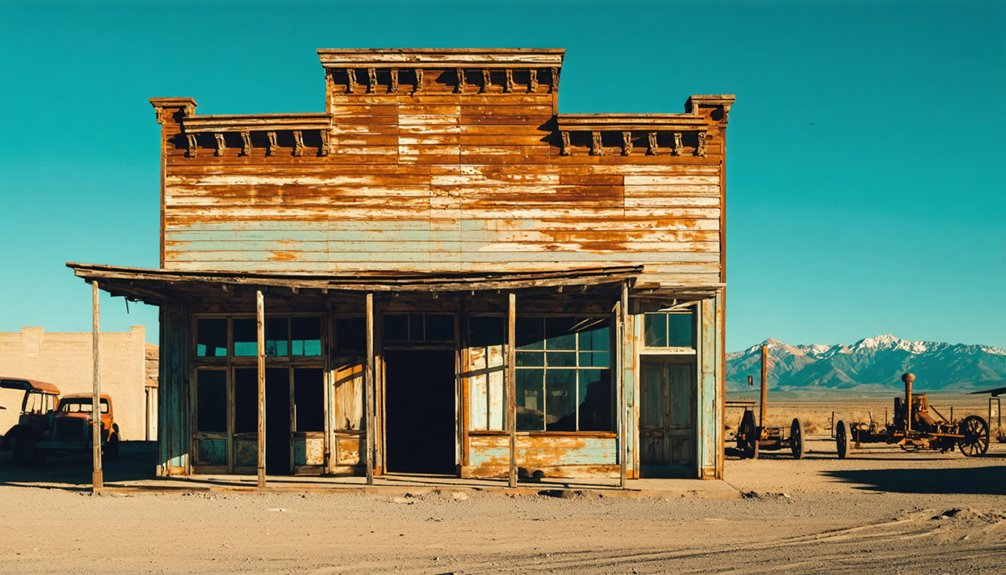
Unlike Perfection’s vanished set, Chloride remains standing as a genuine silver mining town that looks so authentically cinematic, visitors routinely ask if Hollywood built it as a permanent backlot.
Founded in 1880 when silver deposits transformed this Black Range outpost from 3,000 miners into today’s population of 15-20 descendants, the town’s historic preservation maintains its filming-ready appearance.
You’ll find access through Forest Road 226 or Highway 52, two to five miles southwest of Winston.
Key sites include:
- Pioneer Store Museum (10am-4pm daily)
- Monte Cristo Saloon restoration
- 200-year-old Hanging Tree on Wall Street
- Two authentic cemeteries
- St. Cloud mine operations
While no specific productions are documented, the town’s self-guided walking tour and interpretive signs let you explore unrestricted.
Mine tours aren’t currently available, though operations continue at St. Cloud.
Tombstone: The Town Too Tough to Die on Television
From 1957 to 1960, ABC and syndication audiences watched Sheriff Clay Hollister patrol the dusty streets of 1880s Tombstone in what became one of television’s most historically meticulous Westerns.
Sheriff Clay Hollister brought authentic 1880s frontier justice to television screens during the golden age of historically accurate Western programming.
You’ll find “Tombstone Territory” distinguished itself through authentic Wild West recreation—producers researched 1,500 Tombstone Epitaph documents, reproduced the newspaper’s Washington Hand Press from historical drawings, and recreated building facades from period photographs.
Pat Conway’s 6’2″ sheriff and Richard Eastham’s baritone-voiced editor anchored 92 episodes filmed at Gene Autry’s ranch, splitting production between two episodes weekly.
The show’s commitment to historical accuracy extended beyond set dressing to actual archive files spanning 1880-1890, transforming “the town too tough to die” into television’s most document-verified frontier setting—no filming permits required for studio ranch locations.
Bodie: California’s Photogenic Mining Relic
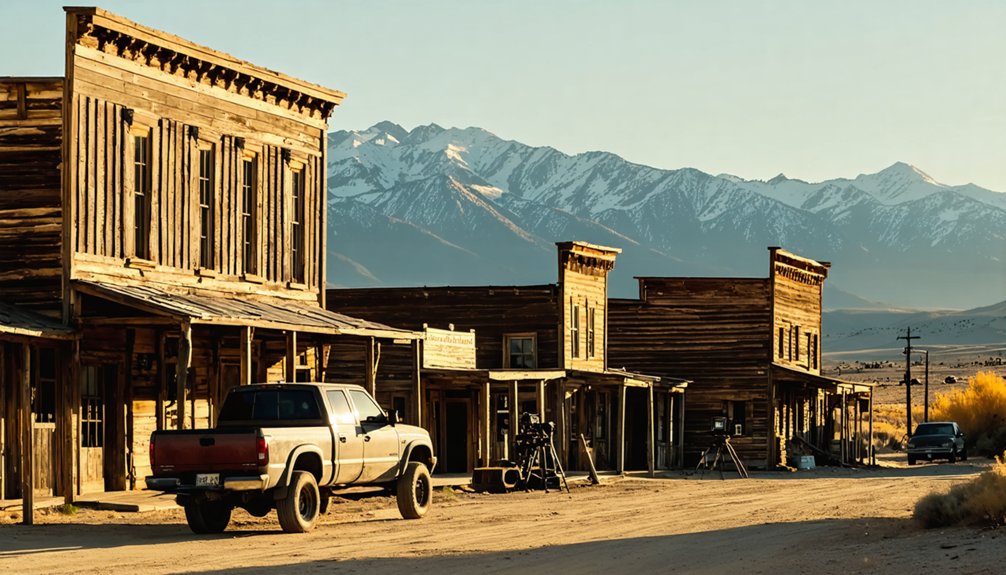
Perched at 8,375 feet in California’s Eastern Sierra, Bodie State Historic Park preserves 110 weathered buildings from an 1880s mining boomtown that once housed 10,000 fortune-seekers across 2,000 structures.
You’ll find California’s official gold rush ghost town maintained in “arrested decay”—interiors still stocked with original goods from Boone Store shelves and Wells Fargo Bank vaults.
Historic preservation regulations require filming permits through California State Parks, but you’ll access authentic Western backdrops:
- Weathered false-front buildings lining dirt streets
- Original gold mining equipment and abandoned shafts
- Miner’s Union Hall with period artifacts
- Chinatown ruins and red light district remnants
- Photogenic decay spanning 65 former saloons
The isolation that devastated Bodie’s population to 120 by 1942 now protects your production’s authenticity—no modern intrusions compromise these eerie, perfectly preserved 1880s streetscapes.
Ruby and Beyond: Arizona’s Desert Film Locations
Arizona’s desert corridor delivers five distinct ghost town filming locations within a 150-mile radius of Phoenix and Tucson, each offering different permit requirements and production amenities.
Among these locations, you’ll find several historic ghost towns in Arizona that transport visitors back in time with their unique charm and rich histories. Exploring these sites not only provides a glimpse into the past but also allows filmmakers to capture the essence of the Old West. With varied landscapes and scenic backdrops, each town presents endless creative opportunities for storytelling.
Arizona’s ghost town circuit concentrates five production-ready locations near Phoenix and Tucson, each with unique filming infrastructure and permitting protocols.
You’ll find Goldfield Ghost Town 40 miles east of Phoenix, where rebuilt structures provide gunfight staging areas and wedding chapel backdrops.
Old Tucson Studios operates as a full-service production facility with standing buildings rather than facades, hosting everything from John Wayne westerns to modern TV series.
Mescal’s 28 authentic structures in Benson require advance film permits but deliver unmatched frontier authenticity across its desert landscape.
Trail Dust Town repurposes 1950s movie sets for accessible filming, while Jerome’s hillside mining structures offer dramatic elevation changes.
Each location maintains distinct permitting processes—commercial productions need separate negotiations beyond standard tourist access.
Frequently Asked Questions
What Permits Are Required to Film at Ghost Town Locations?
You’ll need film permits from BLM for federal lands, local city permits for municipal areas, and private property releases for ghost towns on private land. State highway permits cover road access, while tribal permits apply to reservation locations.
Can Tourists Visit Filming Locations When Productions Are Active?
Like a fortress with raised drawbridge, active film sets restrict tourist access for safety and filming logistics. You’ll find venues close public operations during production shoots, though some locations offer controlled observation areas with proper permits and coordination.
How Do Filmmakers Protect Historic Buildings During Action Scenes?
Filmmakers employ preservation techniques like removable fake facades and temporary structural supports to shield authentic buildings. You’ll find they secure permits requiring non-invasive shoots, using exterior-only filming against preserved structures while staging stunts away from fragile historic architecture.
What Modern Amenities Exist Near Remote Ghost Town Filming Sites?
You’ll strike gold finding vintage architecture paired with modern comforts—restored hotels with haunted legends, art galleries, historic saloons, and quirky shops. Crews access paved roads, camping spots, dining venues, and permit-friendly facilities near filming locations.
Which Ghost Towns Offer Guided Tours of Specific Filming Spots?
You’ll find guided tours at Bannack State Park and Virginia City, where historic preservation meets tour accessibility. Both sites offer structured walks through filming locations, highlighting movie sets and authentic buildings without requiring special permits for standard visitor access.
References
- https://film.southwestmt.com/filmography/
- https://www.youtube.com/watch?v=tZmA_VF6cm8
- https://www.youtube.com/watch?v=qRVelHci92k
- https://www.youtube.com/watch?v=G1cxrDX28r0
- https://www.youtube.com/watch?v=DzlJWdyLdr4
- https://destinationfilmguide.com/film-in-southwest-montana/
- https://www.newmexico.org/places-to-visit/ghost-towns/
- https://www.usawelcome.net/news/explore-ghost-towns-west-usa.htm
- https://www.distinctlymontana.com/ballad-lefty-brown-western-spirit-sidekicks-soul
- https://mtbeyond.com/culture/montana-movies/