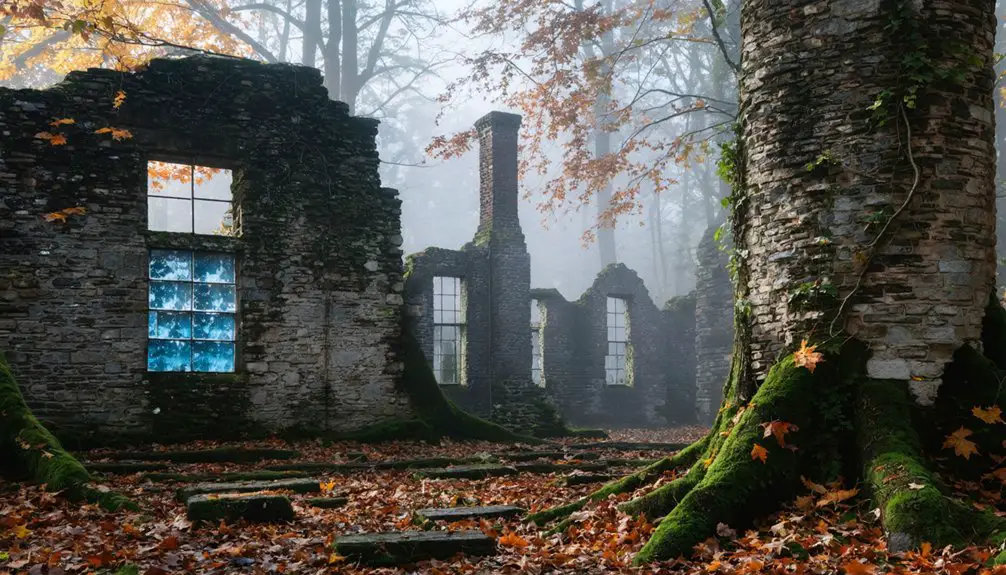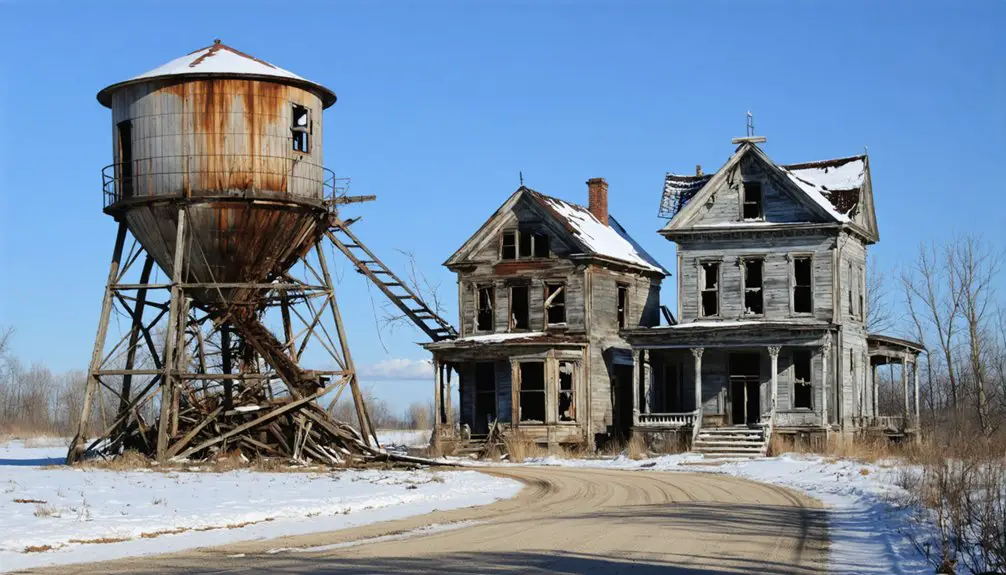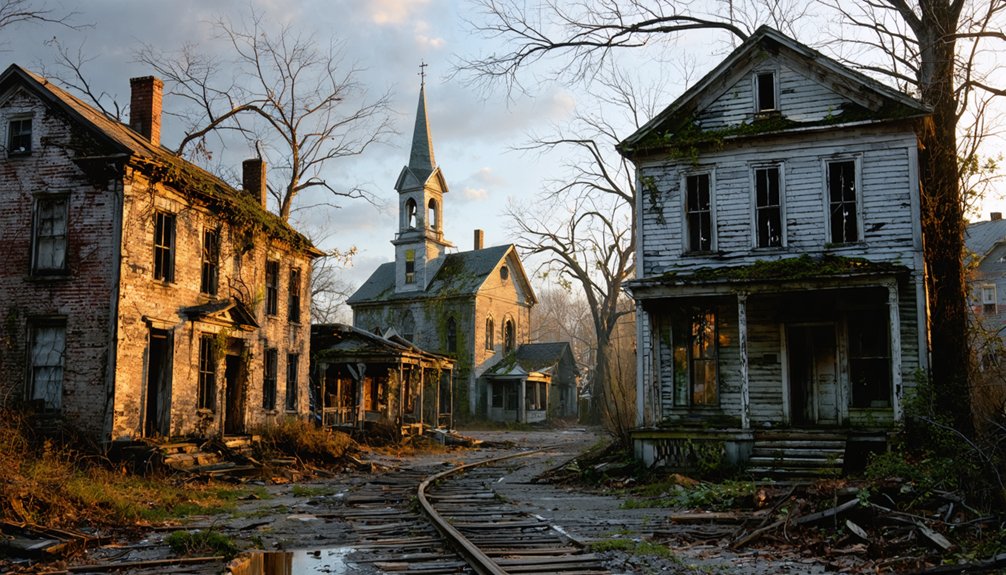
You’ll find Massachusetts’ most film-ready “ghost town” at Medfield State Hospital, where 58 abandoned Queen Anne cottages sprawl across 900 acres just 20 miles southwest of Boston, offering maintained grounds with authentic asylum architecture used in multiple productions since its 2003 closure. While not traditional ghost towns, Menemsha’s weathered fishing village required minimal alteration for *Jaws*, and Salem’s preserved 17th-century structures eliminated set construction for *Hocus Pocus*. The abandoned *Salem* TV series set in Northern Louisiana features styrofoam facades now overtaken by wilderness, though it technically served Massachusetts’ fictional history.
Key Takeaways
- Medfield State Hospital, abandoned in 2003, features 58 Queen Anne-style cottages across 900 acres used as authentic filming locations.
- The hospital’s preserved grounds and Massachusetts’ first mental hospital architecture provide haunting, historically accurate settings for films.
- Salem’s 17th and 18th-century structures served as ready-made film sets for *Hocus Pocus*, reducing construction costs significantly.
- An abandoned *Salem* TV series set in Northern Louisiana shows severe deterioration with collapsed floors and wildlife overrun.
- Massachusetts coastal towns like Edgartown transformed into film locations after institutions closed, maintaining historic buildings for productions.
Menemsha: The Fishing Village That Became Amity Island
Tucked into the western corner of Martha’s Vineyard in Chilmark, Menemsha transformed from a working fishing village into cinematic history when Steven Spielberg chose it as part of fictional Amity Island for his 1974 thriller *Jaws*.
You’ll find fishing traditions still thriving here—weathered boats line the harbor where the Orca met its demise during filming. The production built Quint’s iconic shack at 515 North Road, though zoning laws demanded its immediate demolition after shooting wrapped.
Today, you can walk to that empty lot at the harbor’s inlet, near the General Store. The harbor scenery remains authentic: working docks, fresh catches, and sunset views from the jetty. Visitors can also embark on fishing charters that depart from this historic village port. The Menemsha Channel served as the backdrop for the film’s gripping shark attack boat scene.
What began as a 55-day shoot stretched to 159 days battling ocean conditions, forever cementing this unpretentious port’s place in film history.
Historic Salem’s Transformation for Hocus Pocus
You’ll find Salem’s 17th and 18th-century structures provided ready-made authenticity for *Hocus Pocus*, eliminating the need for elaborate period sets.
The production team filmed exterior shots at Pioneer Village’s colonial buildings, Allison’s 318 Essex Street mansion, and the 1816 Old Town Hall at 32 Derby Square—all within walking distance of each other.
Salem Common doubled as the neighborhood park where Max fumbled Allison’s phone number, while Phillips Elementary’s distinctive roofline framed the memorable green smoke scene from its ceramics kiln. Pioneer Village, built in 1930, stands as America’s first living history museum and offers seasonal tours from June to September. The mansion, now operated by the Peabody Essex Museum, offers exterior views that capture its majestic presence even without the movie’s elaborate decorations.
Authentic Colonial Architecture Choice
When filmmakers selected Salem for Hocus Pocus, they gained access to five distinct colonial-era locations within a compact 1.5-mile radius of downtown.
You’ll find the 1638-established Old Burial Hill Cemetery in Marblehead providing genuine 17th-century gravestone backdrops, while Pioneer Village‘s living history museum delivered America’s first purpose-built colonial recreation at 310 West Avenue.
The Ropes Mansion at 318 Essex Street offered authentic architecture for Allison’s house exterior, just a 10-minute walk from the Old Town Hall party venue.
This colonial preservation strategy meant production crews didn’t need elaborate set construction—Salem’s maintained historical district provided ready-made period authenticity.
Phillips Elementary and the allegedly haunted Town Hall completed the filming circuit, all accessible on foot for location scouts managing tight production schedules. The atmospheric 4 Ocean Ave. house provided scenic ocean views for Max and Dani’s home exterior shots, adding coastal New England authenticity to the production. The production valued Salem’s 1800s architecture throughout downtown locations, which complemented the film’s period aesthetic alongside the earlier colonial structures.
Salem Common Filming Scenes
Today, you can walk this public green space freely, recreating exact shot locations just ten minutes from the school filming site. The filming significance continues through annual *Hocus Pocus* screenings during Haunted Happenings—ironically showing the movie where crews once filmed it. Salem Common, established in 1802, served as the backdrop for scenes featuring Max and Allison, with distinctive features like a yellow tree and fence visible in the film.
Check HauntedHappenings.org for screening dates at this accessible landmark.
Old Town Hall Performance
Standing at 32 Derby Square since 1816, Old Town Hall served as the exterior backdrop for the movie’s most memorable musical sequence—the Halloween party where Bette Midler’s Winifred Sanderson bewitches the entire town with “I Put a Spell on You.”
The building’s distinctive Federal-style architecture and recognizable front entrance frame the scene where Max and Dani’s parents arrive at the celebration, completely unaware that actual witches have crashed the festivities.
Filming logistics positioned this location strategically:
- Exterior shots captured the party arrival sequences
- Interior musical performances filmed at separate studio locations
- Green smoke effects added atmospheric witch presence
- Central downtown position provided easy crew access
You’ll find Salem’s oldest surviving municipal building housing seasonal museum exhibits and Cry Innocent performances.
The venue currently houses the Salem Museum, which hosts special events particularly during the Halloween season. The 10-12 minute walk includes haunted legends surrounding this historic structure, accessible via Essex Street’s main corridor. Beyond film tours, the venue hosts performances seasonally throughout the year, transforming from cinematic landmark to active cultural center.
The Abandoned Salem TV Series Set in the Woods
You’ll find styrofoam-facade buildings lined with brick, including the Sibley Mansion, gallows, jail, and the Divining Rod brothel.
Props remain scattered—wheelbarrows, firewood, wagons—exactly where crews left them in 2016.
Without set preservation efforts, untreated wood has rotted through, floors have collapsed, and wildlife has overtaken alleyways.
Reaching this hidden location requires hiking deep into Northern Louisiana woods.
The entire town was constructed in approximately two months, consisting of 25 buildings designed in 17th-century style.
Drone footage reveals what ground access can’t—a complete town square dissolving back into wilderness.
Medfield State Hospital: An Accessible Abandoned Asylum
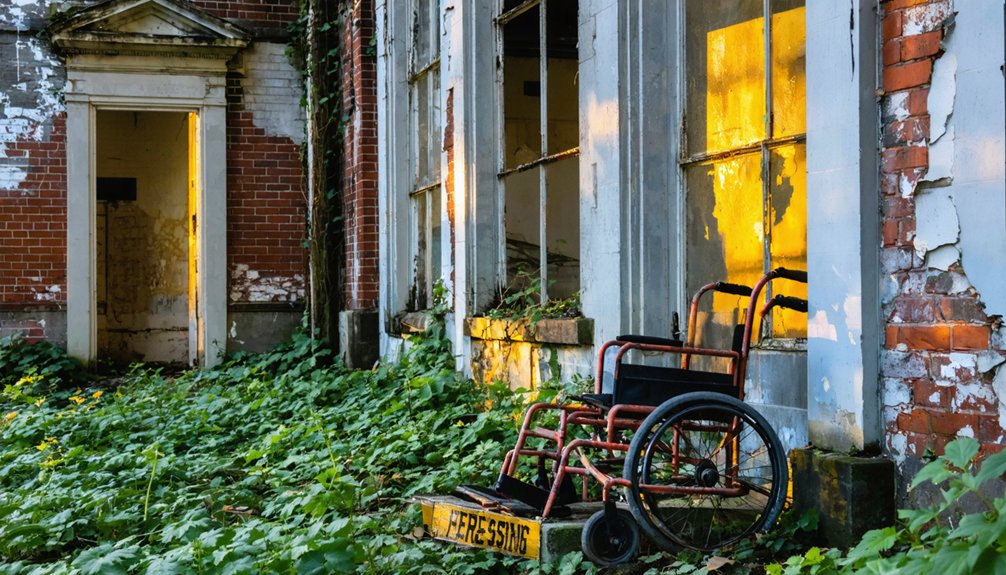
Unlike the remote Salem set deteriorating in Louisiana’s wilderness, Medfield State Hospital sits just 20 miles southwest of Boston off Route 109, accessible via marked parking areas and maintained walking paths. This 58-building complex showcases abandoned architecture spanning 900 acres, where haunting histories echo through Queen Anne-style cottages arranged in mirror-image patterns around a central green.
You’ll find legitimately open grounds where filmmakers have captured asylum atmospheres since the 2003 closure. The cottage plan design—Massachusetts’ first for mental facilities—provides authentic period settings without trespassing.
What makes this location exceptional:
- Peak population exceeded 2,300 patients during the 1940s
- Self-sufficient operations included 1,000 cattle and extensive farming
- 107-year operational history (1896-2003) preserved in deteriorating buildings
- State-maintained access with $500,000 preservation funding
Edgartown’s Double Life as a Hollywood Backdrop
You’ll recognize Edgartown’s brick-lined Main Street and white clapboard harbor buildings from *Jaws* (1975), where Steven Spielberg transformed this Martha’s Vineyard port into the fictional Amity Island.
The town’s 18th-century whaling captains’ homes and working waterfront provided ready-made authenticity for New England coastal scenes—no set construction required.
Unlike actual ghost towns, Edgartown’s historic architecture remains fully inhabited and operational, serving double duty as both a functioning community and a cinematic time capsule.
This authenticity has attracted productions from *Chappaquiddick* (2017) to the *Sabrina* remake.
Transforming Into Amity Island
When Steven Spielberg’s crew descended on Edgartown in 1974, they discovered a town whose colonial architecture and working waterfront needed little embellishment to become the fictional Amity Island.
Unlike European productions requiring medieval castles or underground tunnels, this transformation relied on strategic camera angles and minimal set dressing.
The production company employed clever techniques to convert real locations:
- Main Street’s junction with Water Street became Amity’s commercial center where Brody purchased beach closure materials
- Captain’s homes along Water Street, complete with widow’s walks, portrayed the island’s wealthy estates
- Edgartown National Bank received temporary movie props to enhance period authenticity
- Memorial Wharf provided essential harbor perspectives linking disparate island locations
Eyeline matches seamlessly stitched these separate Edgartown sites into a cohesive fictional community, preserving the town’s whaling-era character while crafting cinematic suspense.
Historic Architecture On Screen
This cinematic authenticity translates to economic freedom—filmmakers avoid constructing artificial New England maritime settings while benefiting from genuine coastal infrastructure.
You can walk Joseph A. Sylvia State Beach at 180 Beach Rd and recognize how authentic locations reduce production overhead.
Edgartown’s architecture works continuously, generating tourism revenue decades after filming wraps, proving preservation delivers ongoing returns.
Joseph Sylvia State Beach: Site of Jaws’ Most Iconic Scene
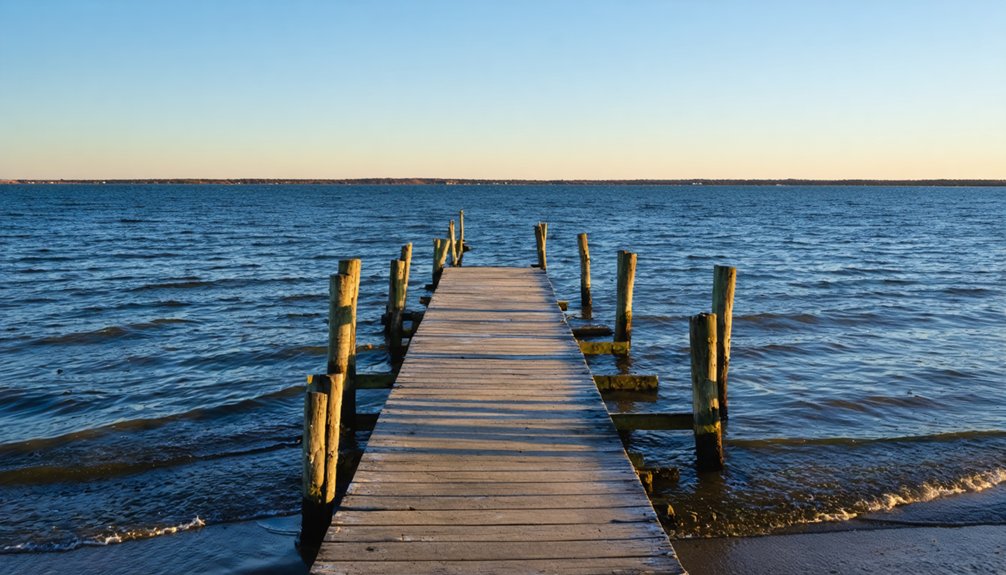
Stretching two miles alongside Beach Road between Oak Bluffs and Edgartown, Joseph Sylvia State Beach served as the backdrop for Jaws’ most terrifying moments. You’ll recognize this barrier beach from Chrissie Watkins’ fatal night swim and young Alex Kintner’s raft attack—scenes that launched film tourism here in 1975.
Joseph Sylvia State Beach: where Chrissie’s midnight swim and Alex Kintner’s last moments transformed a quiet barrier beach into Hollywood’s most haunting shoreline.
The beach remains remarkably unchanged despite ongoing beach conservation challenges with dune erosion:
- Park freely along Beach Road’s two-mile stretch, though handicap spots fill fast
- Cross the American Legion Memorial Bridge where the shark entered Sengekontacket Pond
- Explore the protected inlet for kayaking and clamming
- Walk the same sand where Spielberg filmed on May 2, 1974
You’ll find clear blue water and shell-covered shores—no barriers between you and cinema history, just open coastline where movie magic captured primal fear.
Gloucester and Other Coastal Massachusetts Film Locations
Along Cape Ann’s working waterfront, Gloucester’s authentic fishing docks have anchored Hollywood’s maritime storytelling for decades. You’ll recognize the state fish pier and Harbor locations from CODA’s portrayal of deaf fishing families, while The Perfect Storm captured Gloucester Town Hall, St. Ann’s Church, and the Fisherman’s Memorial along Stacey Boulevard.
The Crow’s Nest bar at 334 Main Street became legendary through false frontage constructed at Harriet Webster Pier.
Beyond harbor renovations, nearby towns preserve their maritime heritage through film. Rockport’s former Steel Derrick Quarry and storm wall near Lanes Cove appeared in CODA, while Bearskin Neck transformed into Sitka, Alaska for The Proposal.
Essex’s Conomo Point housed CODA’s Rossi family cottage, and Manchester-by-the-Sea anchored its namesake film plus The Proposal’s boating sequences, proving Massachusetts’ coastal authenticity attracts filmmakers seeking genuine working waterfronts.
Planning Your Massachusetts Movie Location Road Trip
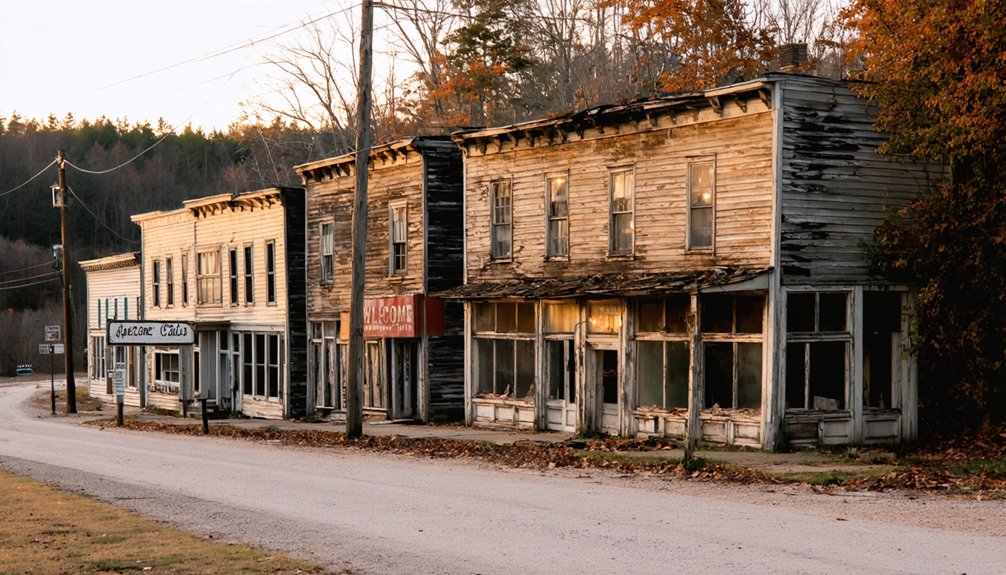
When planning your Massachusetts movie location road trip, Salem serves as your natural home base. With five major Hocus Pocus filming sites clustered within a compact, walkable downtown area.
You’ll discover film location secrets as you navigate from Pioneer Village’s reconstructed Puritan settlement to Ropes Mansion’s garden. Then onward to Old Town Hall where the Sanderson sisters enchanted partygoers.
Featured ghost towns like the abandoned Medfield State Hospital asylum require a separate excursion—explore exterior grounds only for safety.
Essential road trip elements:
- October visits align with Salem’s Haunted Happenings festival
- Allow 28 minutes driving time for Old Burial Hill Cemetery in Marblehead
- Medfield State Hospital permits exterior exploration only
- Walking tours reveal hidden Hocus Pocus spots unchanged since 1993
Pack comfortable shoes for cobblestone streets and prepare for limited Marblehead parking in residential zones.
Frequently Asked Questions
Are Any Actual Ghost Towns in Massachusetts Used for Filming Movies?
No, you won’t find actual ghost towns for filming in Massachusetts due to historical preservation and urban development. Urban exploration enthusiasts discover only abandoned film sets like Salem’s replica village, not genuine permanently deserted settlements with original structures.
What Permits Are Required to Film at Abandoned Locations in Massachusetts?
You’ll need permits from either the Massachusetts Film Office for state-owned abandoned sites or local municipal authorities for town-controlled properties. The film permit process identifies legal filming zones while ensuring you’ve secured private property owner consent beforehand.
Can Visitors Legally Explore the Abandoned Salem TV Set Structures?
Ever wondered if that haunted house facade is truly abandoned? You’re likely trespassing—despite no visible signs, the Salem set remains private property. Urban exploration here risks legal consequences and physical danger from rotted structures, though enforcement appears minimal.
Which Massachusetts Film Locations Are Completely Off-Limits to the Public?
You can’t access the WGN Salem set’s decaying structures due to public safety concerns and their remote forest location. Medfield State Hospital’s buildings are also off-limits, though historic preservation efforts allow you to explore the exterior grounds freely.
Do Abandoned Asylum Buildings Besides Medfield Allow Interior Access for Tours?
You’ll find abandoned asylum tours rarely offer interior access restrictions-free experiences. Massachusetts facilities universally prohibit building entry due to structural hazards, leaving you with exterior-only exploration. Liability concerns trump your curiosity, keeping crumbling interiors permanently sealed.
References
- https://www.worldatlas.com/cities/4-massachusetts-towns-where-famous-movies-were-filmed.html
- https://nhfilmfestival.com/13-movies-you-might-not-know-were-filmed-in-new-england/
- https://wror.com/listicle/13-horror-movie-locations-you-can-actually-visit-one-is-in-massachusetts
- https://www.itineraridicinemaedamerica.com/en/2025/01/27/movies-set-in-boston-tour-of-filming-locations-to-know-before-you-go/
- https://www.youtube.com/watch?v=BZYhbjt0iS8
- https://thetrustees.org/content/discover-filming-locations/
- https://www.atlasobscura.com/things-to-do/massachusetts/film-locations
- https://giggster.com/guide/movie-location/where-was-jaws-filmed
- https://www.mvy.com/jaws-on-marthas-vineyard/
- https://movie-locations.com/movies/j/Jaws.php