You’ll find Texas’s most cinematic ghost towns at J. Lorraine Ghost Town near Manor, which portrayed Humbug’s Gulch in *Fear the Walking Dead*, and 7A Ranch Pioneer Town in Wimberley, where Season 5 was filmed. Big Bend’s Contrabando set, built in 1985, appeared in *Lone Star* before 2008 floods destroyed it. Terlingua’s sandstone mining ruins and Marfa’s stark desert landscapes featured in *Giant* and *No Country for Old Men*. These authentic locations continue attracting filmmakers while preservation efforts depend heavily on cinema-driven tourism revenue.
Key Takeaways
- J. Lorraine Ghost Town near Manor features 20 Western buildings from the 1970s, serving as Humbug’s Gulch in *Fear the Walking Dead*.
- 7A Ranch Pioneer Town in Wimberley provided authentic pioneer structures for Season 5 of *Fear the Walking Dead* exterior shots.
- Contrabando movie set in Big Bend Ranch State Park, built in 1985, housed productions until 2008 flooding destroyed most structures.
- Terlingua Ghost Town offers sandstone mining ruins and authentic Old West atmosphere, attracting filmmakers near Big Bend National Park.
- Marfa transformed from railroad stop to film destination after *Giant* (1955), featuring stark desert landscapes in multiple productions.
J. Lorraine Ghost Town: Fear the Walking Dead’s Humbug’s Gulch
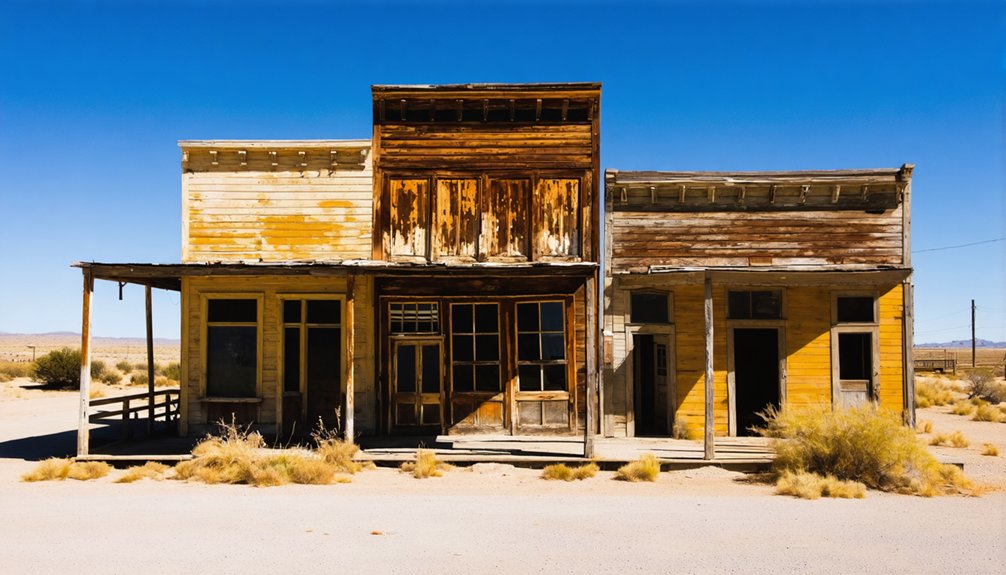
Though the weathered buildings and dusty streets of J. Lorraine Ghost Town near Manor, Texas aren’t historically authentic, they’ve fooled Hollywood cameras. You’ll find this 15-acre attraction at 14219 Littig Road off US 290, where it doubled as Humbug’s Gulch in Fear the Walking Dead.
Creator George T. Richards built these 20 structures—saloons, jail, fort, dance hall—as a retirement project inspired by Disney’s themed lands. Despite its 1970s construction, the filming authenticity comes from Richards’ meticulous attention to Old West aesthetics. Richards, a former system analyst for the Texas Attorney General’s office, poured daily effort into constructing what he envisioned as a “little tiny Disney World.” The property includes full-size barns and open spaces that enhance its resemblance to a classic Western movie set.
You can explore creaking floorboards and weathered facades for free, though haunted legends persist about spirits lingering in reclaimed wood from the original 1900s town. Whether those stories hold truth or Richards fabricated them entirely remains deliciously unclear.
7A Ranch Pioneer Town: Western Authenticity Meets Zombie Apocalypse
Fear the Walking Dead transformed Central Texas locations into post-apocalyptic landscapes during seasons 4-5. These included Round Rock’s Dell Diamond baseball stadium and an Austin-area water park.
These modern facilities joined traditional Old West attractions like J. Lorraine Ghost Town (Humbug’s Gulch). Together, they created the show’s desolate pioneer-era aesthetic.
You’ll find the series uniquely blended Texas’s authentic frontier heritage with contemporary structures reimagined as abandoned zombie-world settlements. The faded signs and quiet roads characteristic of small Texas towns provided genuine backdrops that studios often cannot replicate. Working ranches and weathered main streets offered natural settings that required little set dressing, reducing production costs while enhancing the show’s gritty realism.
Fear the Walking Dead Scenes
Located at 333 Wayside Dr in Wimberley, the 7A Ranch Pioneer Town served as a primary filming location for Season 5 of *Fear the Walking Dead*. It provided an authentic Western backdrop for the show’s zombie apocalypse narrative.
You’ll recognize this ghost town set as “Humbug’s Gulch,” where characters June and John’s storyline unfolded, and Dwight later joined them. The production team capitalized on the site’s genuine pioneer structures and abandoned ranch atmosphere, eliminating needs for extensive set construction.
This approach exemplifies sustainable tourism and historic preservation—maintaining authentic Western buildings while generating revenue through film production.
The show’s production relied on filming exclusively on location, with only one interior set constructed for the SWAT vehicle. The series featured crossovers from The Walking Dead, bringing established characters like Morgan Jones and Dwight into the Texas-based storyline.
Near White Wing Airport and Big Barn Truck Stop, the location anchored Fear’s expanded Central Texas filming cluster.
This cluster is distinct from other ghost town sites like J. Lorraine in Manor or downtown Bartlett’s abandoned streets.
Old West Public Attractions
Beyond its role in post-apocalyptic television, 7A Ranch Pioneer Town operates as a working public attraction where families explore authentic Old West storefronts and participate in themed entertainment throughout the year. You’ll find cultural preservation at the heart of this Wimberley location, where historic architecture maintains Texas frontier authenticity.
The 333 Wayside Drive property offers visitor engagement through interactive pioneer town exploration and outdoor movie screenings. Similarly, J. Lorraine Ghost Town at 14219 Littig Rd in Manor provides comparable western experiences accessible to the public.
Both locations balance their film production duties with year-round tourism, creating immersive historical environments where you can photograph frontier settings and experience pioneer-era atmosphere. These working ghost towns demonstrate how Texas preserves its western heritage while supporting modern entertainment industries.
Contrabando: Big Bend’s Purpose-Built Movie Set
Along the banks of the Rio Grande, 9.5 miles west of Lajitas on Texas State Highway 170, sits Contrabando—a purpose-built movie set constructed in 1985 for the Roy Clark comedy *Uphill All the Way*. You’ll find this filmmaking set design within Big Bend Ranch State Park, where structures like a cantina and church were added to the original adobe building ‘La Casita’ for authentic border town atmosphere.
The set served multiple productions, including John Sayles’ *Lone Star* (1996) and Larry McMurtry’s *Streets of Laredo* miniseries. The cantina featured prominently in *Uphill All the Way* as the location of a dramatic shootout scene. The site also appeared in the TV movie Dead Man’s Walk, another Larry McMurtry adaptation from the *Lonesome Dove* series.
However, September 2008 flooding destroyed most buildings. State officials removed all structures except ‘La Casita’ in 2015 for safety, leaving minimal faux town preservation.
You’ll discover riverside views of Mexico, picnic areas, and one weathered building—worth stopping while traversing FM 170‘s scenic route.
Terlingua Ghost Town: From Mining Ruins to Hollywood Spotlight
When Chicago industrialist Howard Perry discovered cinnabar deposits in the mid-1880s, he transformed a single Mexican village into Texas’s most productive quicksilver operation. By 1903, he’d founded the Chisos Mining Company, establishing infrastructure that included his nine-bedroom mansion, company store, and segregated worker housing.
The mining history peaked during World War I before operations ceased in 1945.
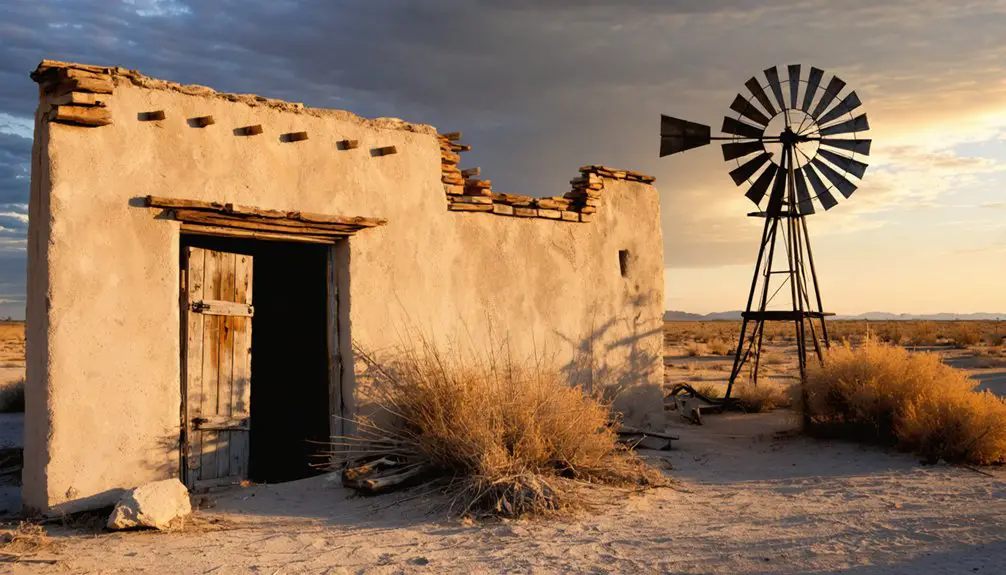
Today, you’ll find 2-3 dozen structures built from flat sandstone stacked without mortar, their thick walls still standing despite decades of abandonment. Wooden door frames still remain within many of the stone walls, offering glimpses into the buildings’ original construction.
Architectural preservation efforts have converted some ruins into galleries and lodgings.
Located eight miles from Big Bend National Park, Terlingua’s authentic mining remnants attract filmmakers seeking genuine Old West settings, while its cemetery hosts annual Day of the Dead celebrations drawing thousands. The town’s revival began in the late 1960s and early 1970s when proximity to the national park sparked renewed tourism interest.
Marfa: Desert Landscapes of Award-Winning Cinema
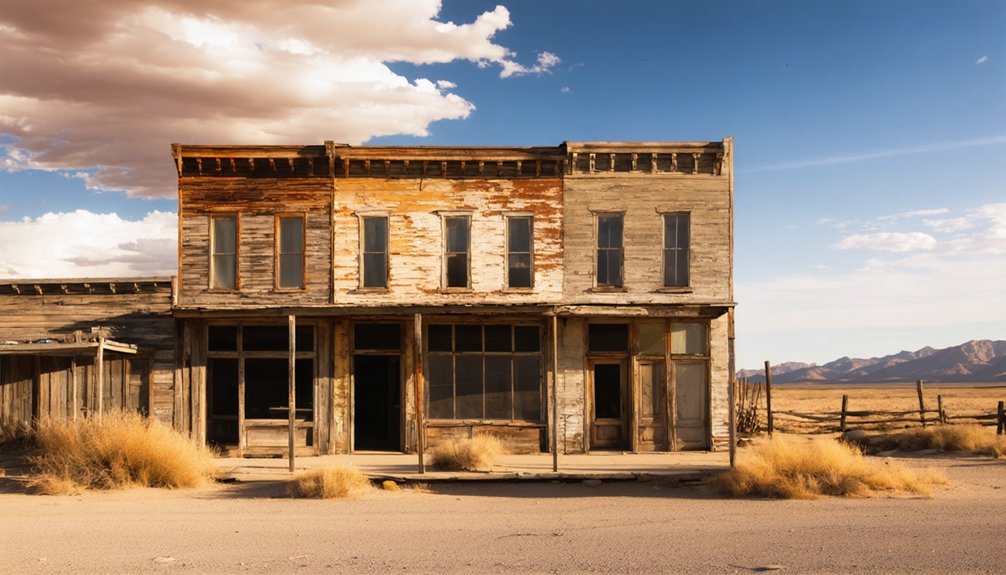
Marfa’s transformation from a dusty railroad stop into a cinematic destination began during summer 1955, when director George Stevens arrived with James Dean, Rock Hudson, and Elizabeth Taylor to film *Giant*. The production constructed an 83-foot-wide Reata Ranch facade 17 miles west of town, burning through 875,000 feet of film—nearly eleven times the typical feature.
You’ll find the ruins on private Ryan Ranch property along US 90 toward Valentine. These ruins are a deteriorating skeleton visible from the highway.
The desert scenery continues attracting filmmakers: the Coen brothers shot *No Country for Old Men* across these high plains in 2007, while *There Will Be Blood* utilized the same stark landscapes.
Marfa’s cinematic history stems from its Trans-Pecos location—bleak desert expanses, excellent West Texas light, and remote isolation that filmmakers seeking authentic Western backdrops can’t resist.
Bastrop: The Birthplace of Texas Horror Film Legacy
While Marfa’s desert vistas drew Hollywood’s golden age elite to West Texas, Bastrop County—150 miles east in the pine-forested Lost Pines region—earned its cinematic reputation through considerably darker material. You’ll find the 1960-era gas station at 1073 Texas 304 Loop, where “The Texas Chainsaw Massacre” filmed its infamous barbecue scenes in 1974.
After decades of abandonment, Ohio transplants Roy and Lisa Rose purchased the property in 2014, completing its Historical Preservation in 2016 with period-accurate pumps and Coca-Cola machines. The site’s Cultural Impact extends beyond horror tourism—pitmaster Ben Hughes serves legitimate brisket to road crews and film pilgrims alike, while four cabins accommodate overnight visitors.
Original actors attended the 2016 reopening, though copyright disputes with franchise owner Vortex, Inc. complicated merchandise operations by 2022.
Preserving Texas Ghost Towns Through Film Tourism
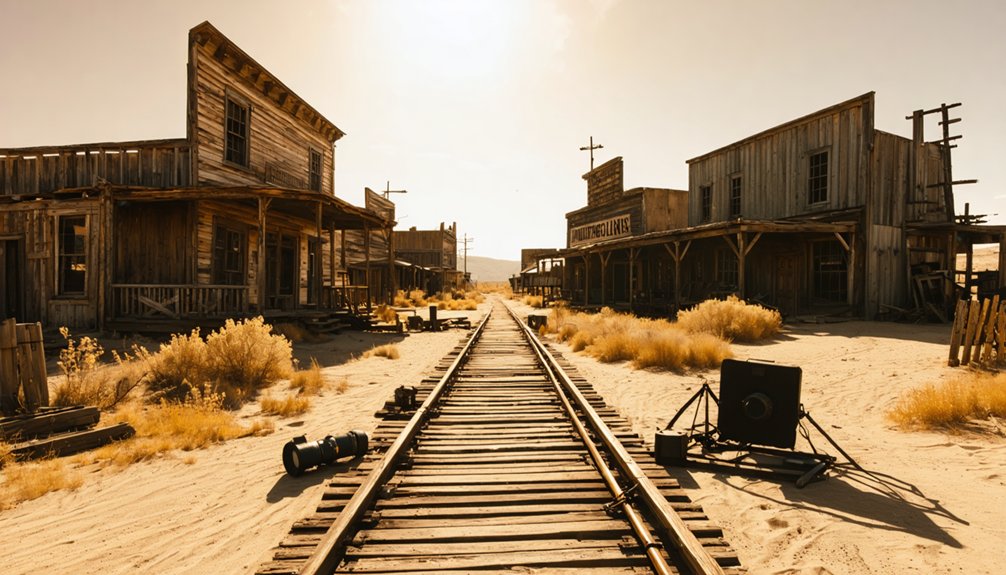
Beyond their atmospheric appeal to filmmakers, Texas ghost towns depend on cinema-driven visitation to justify ongoing maintenance costs and infrastructure investment.
Texas ghost towns survive through film tourism revenue that funds their preservation and upkeep expenses.
You’ll find successful models at the original “Texas Chain Saw Massacre” gas station, now operating as We Slaughter Barbecue museum near Austin, and the relocated farmhouse at Kingsland’s Antlers Inn. These adaptive reuse projects transform cultural heritage sites into revenue-generating attractions.
The Office of the Texas Governor’s self-guided Film Trails provide tourism marketing infrastructure connecting multiple locations across Central and West Texas regions.
However, Alamo Village’s abandonment despite its $3 million listing price reveals sustainability challenges. Film-related tourism requires ongoing production activity and strategic promotion.
Marfa’s hosting of Oscar-winning productions like “No Country for Old Men” demonstrates how continued cinematic relevance maintains visitor interest in remote locations.
Frequently Asked Questions
Can Visitors Explore the Actual Filming Locations at These Ghost Towns?
Yes, you’ll find excellent visitor accessibility at locations like J. Lorraine Ghost Town and Terlingua, where historic preservation efforts welcome exploration. However, some sites like Pilot Point’s bank have restricted access during restoration, requiring you to check availability first.
Do Production Companies Need Special Permits to Film in Texas Ghost Towns?
Yes, you’ll need special permits from state agencies, property owners, or municipalities. Filmmakers must address historical preservation concerns and local community impact through applications, fees, insurance, and site mitigation plans before filming at Texas ghost towns.
How Much Does It Cost to Film at Texas Ghost Town Locations?
Like preserving fading frontier memories, you’ll pay $100-$10,000 daily depending on location scale and historical preservation requirements. Local community impact influences costs—state parks like Contrabando start at $100, while private ranches command premium rates up to $10,000.
Are Guided Tours Available Showing Specific Movie Filming Spots at These Locations?
You won’t find dedicated guided tours at these locations. Instead, you’ll enjoy self-guided exploration at tourist attractions like J. Lorraine Ghost Town and 7A Ranch, where historical preservation meets filming history through public access and family-friendly activities.
What Safety Precautions Exist When Filming in Abandoned Ghost Town Structures?
You’ll find crews conduct thorough hazard assessments before filming, checking structural stability of adobe buildings like Contrabando’s La Casita. Unsafe structures get removed—as happened in 2015—ensuring you’re free to work without collapse risks in desert locations.
References
- https://www.austintexas.org/film-commission/film-tourism-guide/fear-the-walking-dead/
- https://www.islands.com/2038361/texas-towns-might-recognize-movies/
- https://www.visitamarillo.com/blog/post/lights-camera-panhandle-hollywoods-surprising-love-affair-with-the-texas-high-plains/
- https://en.wikipedia.org/wiki/Contrabando
- https://gov.texas.gov/film/trail/terlingua-ghost-town
- https://www.youtube.com/watch?v=xdaNZfDxNIk
- https://talesfromthewayside.com/blog-1/2016/10/23/ir2dpb5t3olgachpohdwy2v1t9l43y
- https://www.youtube.com/watch?v=hnIbdO0mLKk
- https://thetexasbucketlist.com/2019/02/the-texas-bucket-list-j-lorraine-ghost-town-in-manor/
- https://rwethereyetmom.com/ghost-town-manor-tx.html