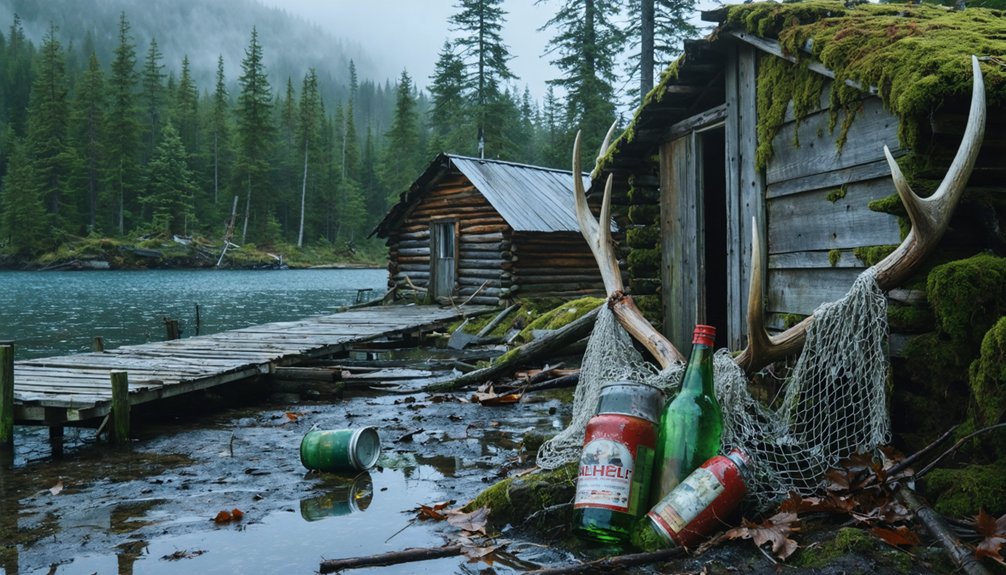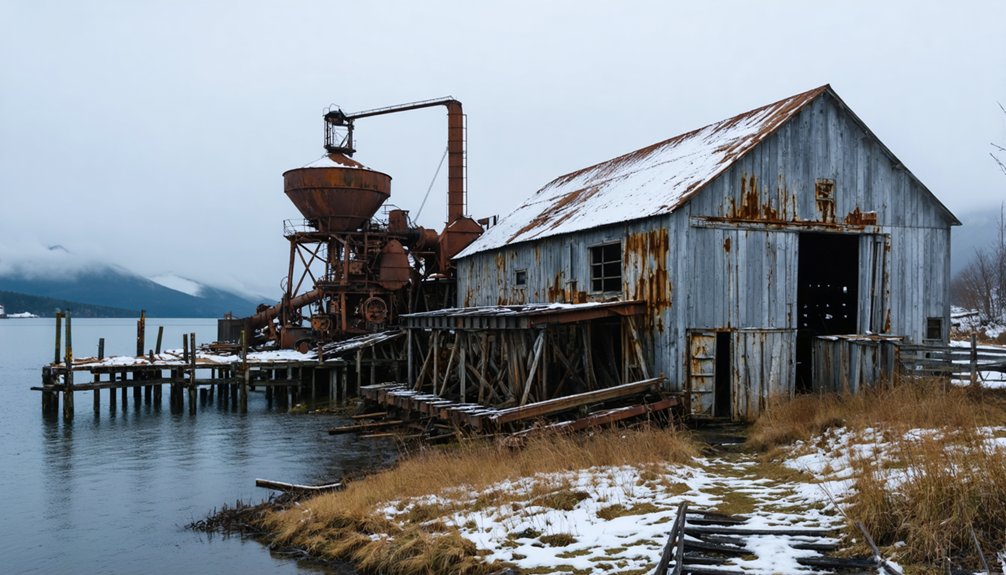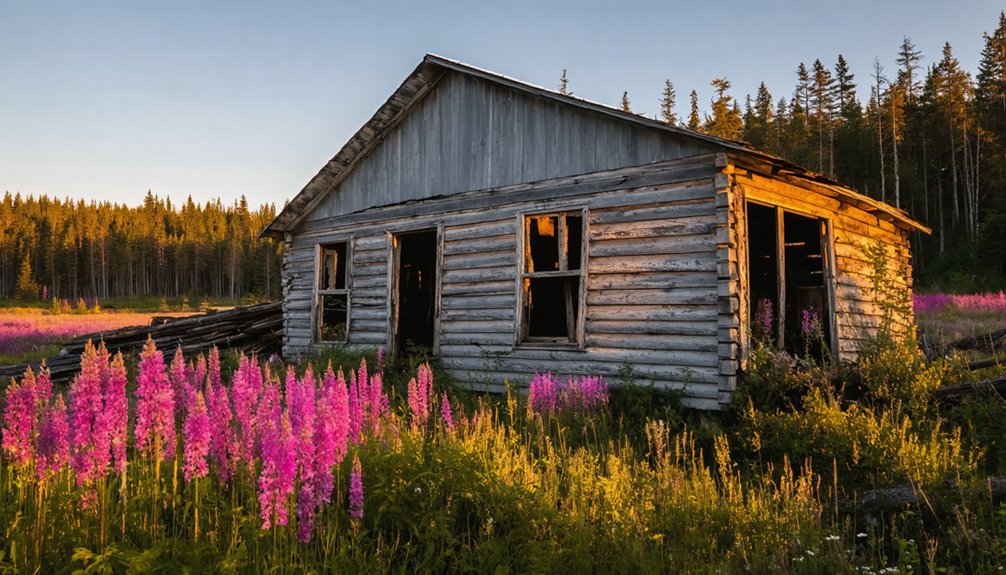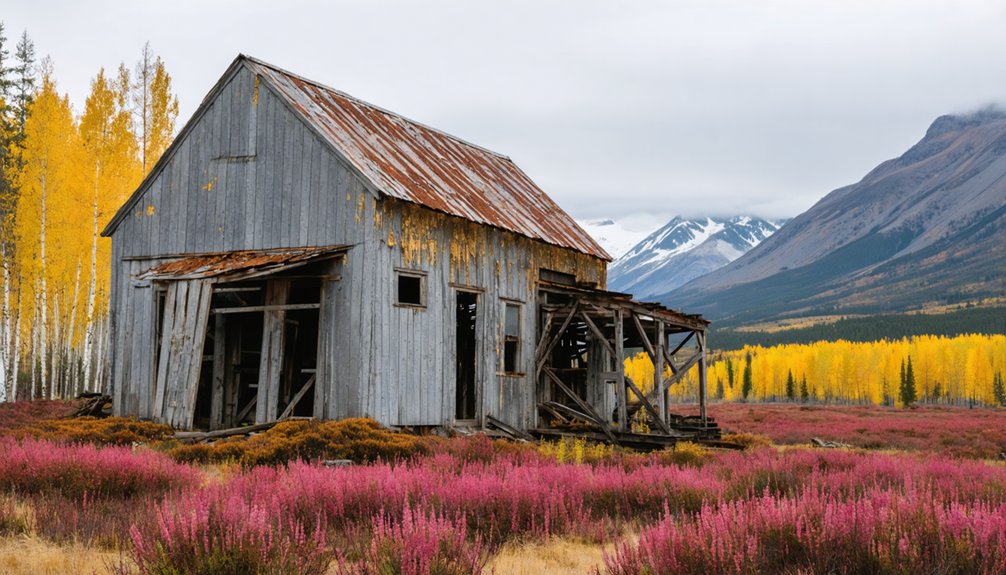
You’ll find Alaska’s most striking ghost town views from late August through September, when golden aspens frame Kennicott’s copper-stained ruins and crimson tundra surrounds abandoned mining camps near Denali. Portage’s earthquake-shattered foundations stand amid ghost forests along the Seward Highway, while Treadwell’s gold rush relics hide beneath vibrant autumn canopies near Juneau. Interior sites peak mid-September; coastal areas like Dyea transform earliest. The six-week season demands precise timing and flexible routes to capture these fleeting moments where wilderness reclaims history.
Key Takeaways
- Kennicott features preserved copper mill ruins amid golden aspens peaking in September, accessible via McCarthy Road’s 60-mile gravel route.
- Treadwell’s gold rush foundations and rusted machinery contrast with coastal fall foliage in late September to early October.
- Dyea offers historic street remnants and Slide Cemetery surrounded by autumn colors, preserving Tlingit cultural heritage and mining history.
- Peak foliage timing varies: late August for tundra, mid-September for interior aspens, early October for coastal valleys and ruins.
- McCarthy Road and Seward Highway provide scenic access to ghost towns with vibrant birch, fireweed, and crimson vegetation displays.
When Alaska’s Fall Colors Paint the Landscape
Alaska’s fall transformation defies expectations, arriving when most of the Lower 48 still swelters in summer heat. You’ll witness peak foliage in northern regions as early as August, with colors cascading southward through September.
Higher elevations ignite first, painting mountainsides in crimson and gold before the transformation descends to valleys below.
Weather shapes this spectacle—droughts accelerate the change by a week, while coastal microclimates create their own timing.
You’ll need flexibility; extreme conditions reshape the schedule without warning.
Plan your route from north to south, starting mid-to-late August to chase the peak. The Seward Highway, designated as a National Scenic Byway, showcases this seasonal transition as it winds past Turnagain Arm’s waters and glaciers. Local on-ground reports provide the most current information as weather influences rapid changes in foliage appearance across the region.
Cultural festivals often coincide with this season, and Alaskan wildlife becomes more active as they prepare for winter, adding another dimension to your foliage adventure through forgotten settlements.
Kennicott: Copper Mine Ruins Among Wrangell-St. Elias Autumn Splendor
Five crimson cottonwoods frame the skeletal remains of a fourteen-story mill building, their fall brilliance stark against weathered red walls that once processed $200 million in copper ore.
You’ll discover Kennicott’s abandoned machinery still frozen in time—chalcocite-stained equipment scattered throughout buildings where 300 workers once extracted 70% pure copper from Alaska’s richest deposits.
The National Park Service’s historic preservation efforts mean you’re free to wander through the concentration mill, peer into the assay office, and explore the company store where miners spent their $5.25 daily wages. Inside the one-room schoolhouse, immigrant miners once gathered to learn English alongside the children of managers and workers.
September transforms this ghost town into a photographer’s paradise when golden aspens backdrop revolutionary mining technology from 1911. The Wrangell-St. Elias wilderness surrounding Kennicott shares its name with several other geographic locations and historical figures throughout Alaska.
Walk these boardwalks imagining the final train‘s 1938 departure, leaving everything behind in stunning mountain wilderness.
Portage: Earthquake-Ravaged Town Framed by Ghost Forest Hues
You’ll discover Portage’s haunting landscape 47 miles south of Anchorage, where the catastrophic 1964 earthquake dropped the ground 6-10 feet and birthed one of Alaska’s most surreal ghost forests.
The skeletal remains of salt-killed trees rise like bleached bones from the tidal marshes, their ashen trunks creating an eerie contrast against autumn’s golden grasses and rust-colored sedges.
Where a thriving community once stood, only crumbling foundations and the spectral forest remain—a testimony to the 4-5 minutes that forever transformed this landscape into an otherworldly display of natural destruction and seasonal beauty.
Before the disaster, travelers stopped here for gas and refreshments, and visitors could even enjoy drinks cooled with ice from nearby Portage Glacier.
This ghost town now serves as a skeletal reminder of what was once a thriving mining community, its ruins standing as a relic of both history and disaster.
1964 Earthquake Destruction Legacy
When the ground beneath Portage plummeted up to ten feet during the 1964 Good Friday Earthquake, it created one of Alaska’s most haunting ghost town landscapes—a settlement swallowed not by abandonment alone, but by the very earth and sea.
The seismic impact lasted nearly five minutes, rupturing 600 miles of fault line and liquefying Portage’s soft soils beneath residents’ feet. Ground liquefaction transformed stable earth into unstable quicksand, dropping the entire town below Cook Inlet’s high-tide mark. Water spouted up to 50 feet from massive cracks as earth blocks shifted and separated.
Salt water rushed in, poisoning tree roots and creating ghostly forests of bleached trunks that still rise from the marshland. The earthquake generated numerous aftershocks, with eleven major aftershocks exceeding magnitude 6.0 occurring on the first day alone. You’ll find skeletal building remains visible from the Seward Highway—weathered monuments to nature’s raw power and humanity’s forced retreat from reclaimed wilderness.
Ghost Forest Fall Colors
Along the Seward Highway at milepost 90, nature’s most unsettling art installation emerges each autumn—a gallery where bleached ghost trees rise like weathered sculptures against a backdrop of blazing fall colors. You’ll witness pale columns standing sentinel in tidal marshes, their bark-stripped trunks contrasting sharply with surrounding quaking aspen yellows and birch oranges.
The 1964 earthquake dropped this ground 6.5 feet, flooding freshwater forests with saltwater at every tide. Now moss covered logs rest among golden willow thickets and red-tipped squashberry shrubs. Black cottonwoods along the waterways shed their yellowish-brown to brown leaves before winter arrives.
Marine sediments slowly claim these monuments while alpine plants paint nearby slopes in purples and crimson. Precise coordinates at latitude 60.662499 and longitude -144.763241 help you pinpoint this exact location for optimal viewing. It’s haunting beauty on your terms—no crowds, no gates, just raw wilderness where destruction became art.
Treadwell: Gold Rush Remnants Along Juneau’s Colorful Trails
You’ll discover concrete foundations and rusting machinery emerging from the forest floor as you hike Treadwell’s 2-3 mile trails south of Douglas. This area was once home to Alaska’s first massive industrial gold operation, which employed over 2,000 people.
The late summer landscape transforms these ghost town ruins into something otherworldly—golden birch leaves catching sunlight above collapsed bunkhouses, fireweed gone to seed around the old natatorium site, and devil’s club turning crimson near sealed mine shafts.
Each weathered remnant tells stories of the world’s largest hard rock gold mine, which extracted 3 million troy ounces before a catastrophic 1917 cave-in. This cave-in sent 3 million tons of seawater flooding through 45 miles of tunnels.
Historic Mining Town Ruins
Hidden beneath a canopy of golden birch and crimson-leafed blueberry bushes, the skeletal remains of Treadwell mine complex emerge like industrial ghosts from Alaska’s most ambitious chapter. You’ll discover relics of the world’s largest ore processing operation scattered across Douglas Island, where 960 stamps once pulverized 5,000 tons daily.
The ruins reveal three distinct zones:
- Massive concrete foundations where 2,000 workers operated mining equipment around the clock.
- Collapsed tunnel entrances marking the 1917 cave-in that swallowed three mines whole.
- The natatorium site where cracks first signaled impending disaster.
Walking these trails, you’re tracing $4 billion worth of extracted gold through autumn’s copper-toned landscape—a monument to unbridled ambition and nature’s ultimate authority over human enterprise.
Late Summer Trail Colors
When late August transforms Douglas Island’s understory into a crimson tapestry, the Treadwell Ditch Trail becomes a 200-yard corridor framed by massive Sitka willows where blueberry leaves ignite in scarlet hues beneath century-old spruce.
You’ll notice vegetation differences immediately—this post-clearcut forest allows sunlight to penetrate deeper, intensifying the autumn display across salmonberries and ferns before they surrender to winter’s approach.
Trail maintenance keeps paths navigable through muddy sections as alder leaves carpet your route toward historic mining foundations.
The 2.3-mile Summer Trail and 6.5-mile Dan Moller Trail offer additional perspectives on this seasonal metamorphosis.
Two-hour walks reveal architectural details emerging from the rainforest, where porcupines browse and deer tracks mark the change from verdant summer to fall’s revealing embrace.
Dyea: Klondike Gateway Surrounded by Tundra Transformation
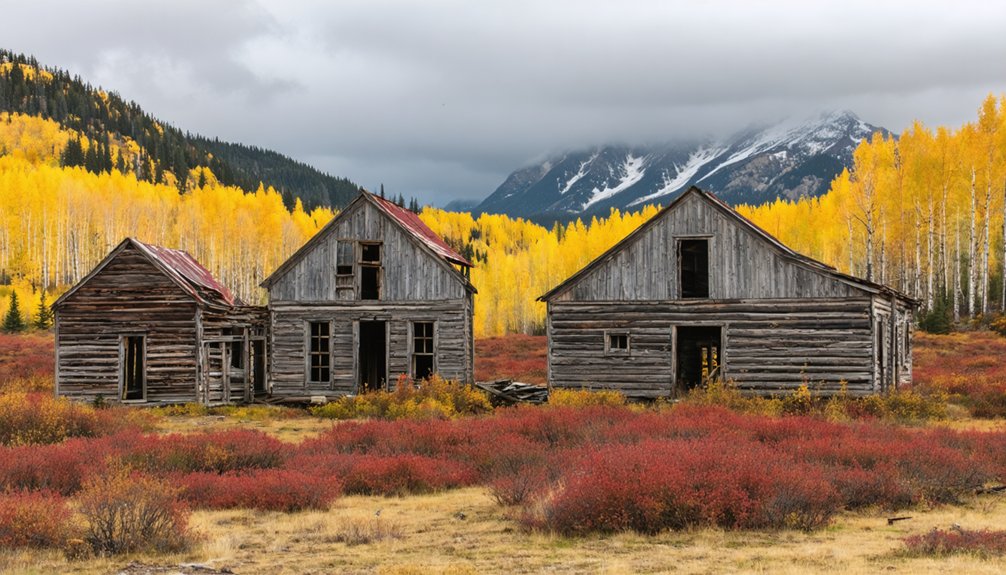
At the confluence of the Taiya River and Taiya Inlet, Dyea’s weathered landscape tells two stories at once—the frenetic boom that saw this Tlingit fishing camp explode into an 8,000-person gateway for Klondike stampeders, and the slow reclamation by wilderness that’s transformed its ghost into something mystical.
Where 8,000 gold-fevered souls once trampled Tlingit fishing grounds, wilderness now writes the final chapter in moss and birch.
You’ll find historical preservation efforts maintaining:
- Slide Cemetery – where 70+ Palm Sunday Avalanche victims rest beneath autumn birches
- Single false-front building – standing amid forest-consumed streets
- Archaeological markers – tracing five-by-eight-block downtown foundations
The cultural heritage here runs deeper than gold fever. That Tlingit name Dayéi“to pack”—still echoes through cottonwoods blazing yellow where 48 hotels once stood.
Nature doesn’t erase history; it reframes it. By 1903, the boom ended. Today’s tundra transformation completes the circle.
Ukivok: Abandoned Stilt Village Near Nome’s Arctic Palette
Forty-five miles west of Nome, wooden skeletons cling to King Island’s 700-foot cliffs like barnacles frozen in time—each stilt house a proof to the Ukivokmiut’s audacious answer to geology that refused to cooperate.
Where autumn’s palette paints mainland tundra in crimson and gold, this vertical ghost town offers stark beauty—driftwood frames anchored by braided walrus hide, defying 45-degree slopes that demanded innovation over comfort.
Inupiat culture thrived here for millennia, transforming impossibility into home.
The “People of the Sea” carved existence from rock and tide, their traditional structures evolving from semi-subterranean shelters to audacious stilt architecture.
You’ll find no conventional fall foliage here—just weathered planks bleached silver by salt spray, creating their own haunting spectrum against basalt cliffs and endless Bering Strait horizons.
Planning Your Ghost Town and Foliage Journey
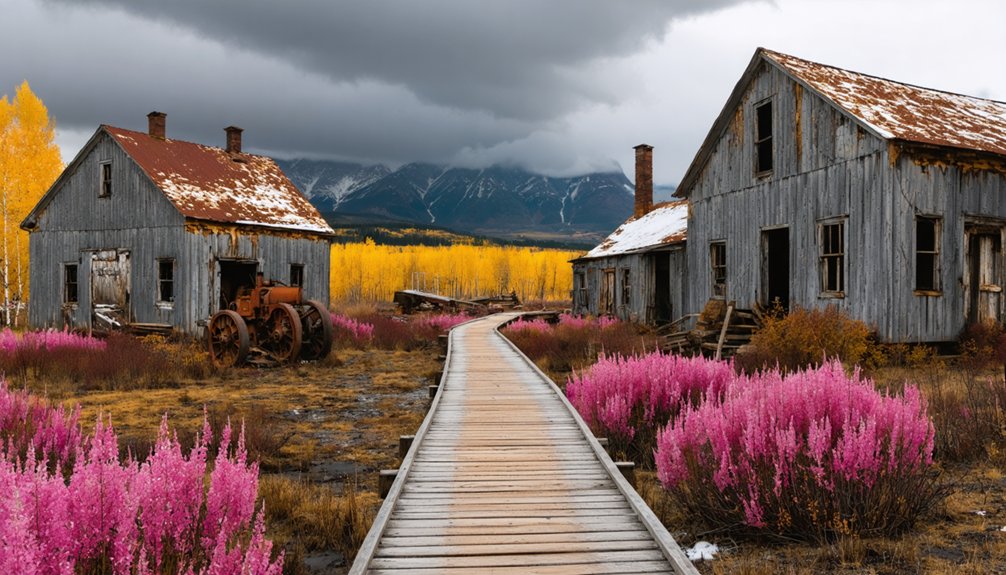
You’ll find Alaska’s ghost towns most rewarding when you align your journey with the state’s compressed fall season—early September delivers golden tundra at higher elevations like Hatcher Pass.
Meanwhile, mid-September through early October illuminates the Kenai Peninsula’s valleys where ruins like Portage stand amid their ghost forests.
Your route choices matter considerably: the Seward Highway connects multiple abandoned sites with accessible pullouts for foliage viewing, whereas reaching Kennicott’s preserved mill buildings requires steering through the remote McCarthy Road and crossing a footbridge.
Weather shifts rapidly as autumn progresses, so you’ll want to secure transportation early and prepare for snow at elevation by late September, especially when traveling Interior routes toward Fort Egbert or Denali’s backcountry.
Timing Your Alaska Trip
Since Alaska’s fall foliage season compresses into a breathtaking six-week window, you’ll need surgical precision when planning your ghost town exploration. Seasonal shifts race across this untamed landscape faster than anywhere in the Lower 48, transforming Alaska flora from green to gold within days.
Your perfect itinerary follows nature’s paintbrush southward:
- Late August (August 28-31): Hit northern ghost towns and Denali when tundra blazes crimson.
- Early September (September 1-3): Chase colors through interior mining camps as aspens peak.
- Mid-September: Finish at southcentral abandoned settlements when coastal valleys ignite.
Monitor weekly foliage reports religiously—weather disruptions shift peaks unexpectedly. Higher elevations transform first, cascading downward week by week. Build flexibility into your route; the freedom to pivot ensures you’ll witness those abandoned structures framed by peak autumn brilliance.
Transportation and Accessibility Options
Alaska’s ghost towns scatter across terrain that laughs at conventional travel plans—perched beyond gravel roads that test your vehicle’s mettle, tucked along coastlines accessible only by boat, or hiding within wilderness that demands genuine backcountry skills.
You’ll need high-clearance vehicles for McCarthy Road’s sixty miles leading to Kennicott, though shuttles exist if your sedan protests.
Portage offers redemption: pull off Seward Highway south of Anchorage and witness ruins sinking into ghost forests without leaving pavement.
Treadwell’s mill remnants wait steps from Juneau’s waterfront trails, while Dyea lurks nine miles from Skagway’s cruise docks—walkable for the determined.
Hatcher Pass demands proper tires but rewards day-trippers from Anchorage.
Railway museums and boat excursions supplement land routes, connecting you to Alaska’s abandoned past through unconventional passages.
Best Photography Conditions for Autumn Ghost Town Visits
The golden hour transforms abandoned structures into haunting silhouettes, and you’ll find nowhere more dramatic for this effect than Alaska’s ghost towns draped in autumn colors. Your camera will capture extraordinary contrasts when morning frost meets September’s amber light across weathered timber and rusted machinery.
Alaska’s ghost towns offer photographers dramatic golden hour silhouettes where September frost and autumn light illuminate weathered ruins.
Optimal shooting conditions include:
- Early morning (6-8 AM) – mist clings to valleys while low-angle sunlight illuminates fall colors.
- Overcast afternoons – diffused light prevents harsh shadows on architectural details during urban exploration.
- Twilight hours – subtle illumination creates ethereal atmospheres around decaying structures.
You’ll need versatility for unexpected wildlife interaction—bears and moose frequently wander these settlements. Pack fast lenses for Alaska’s dim autumn light, and bring weatherproof gear.
September offers peak foliage before snow arrives, giving you freedom to explore before winter closes access.
Combining Scenic Highways With Historic Site Exploration
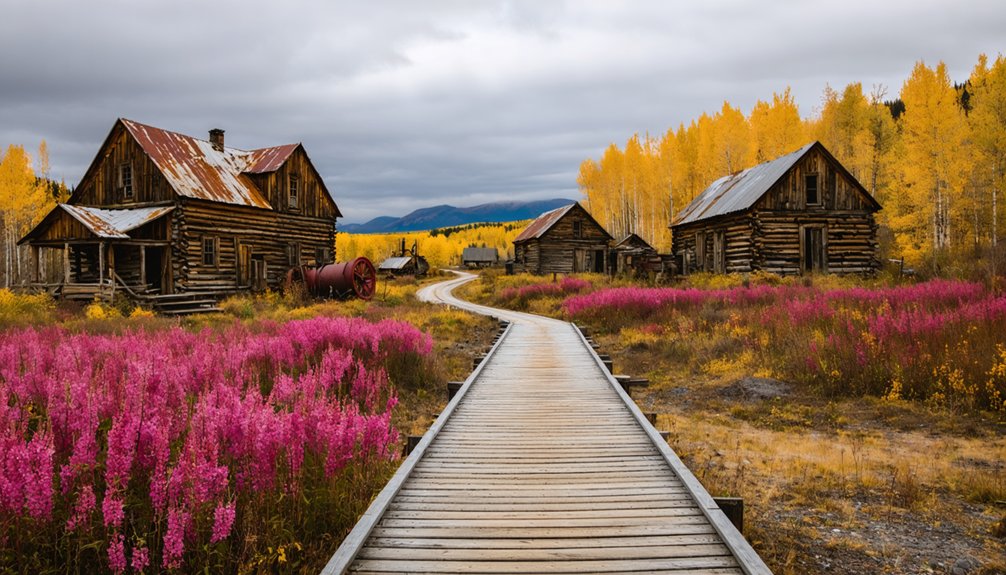
Your best ghost town photographs deserve equally spectacular journeys to reach them, and Alaska’s highways deliver both destination and experience in one unforgettable package. The Seward Highway offers immediate gratification—Portage’s earthquake-shattered foundations emerge roadside as you drive toward the Kenai Peninsula.
For adventure seekers, McCarthy Road’s 60-mile gauntlet of washboards and water crossings tests your mettle before revealing Kennicott’s copper-stained relics. The Denali Highway presents autumn tundra ablaze with crimson bearberry while connecting you to remote mining camps.
Watch for Alaska wildlife—moose, caribou, even grizzlies—grazing along these corridors. After dusty miles exploring ghost towns, you’ll appreciate Chitina’s local cuisine and roadhouse hospitality.
Each highway transforms transportation into exploration, where the journey rivals your destination.
Timing Your Trip for Peak Colors at Each Location
Since Alaska spans nearly 1,200 miles from southeast to interior, you’ll find autumn arriving in waves rather than all at once. Your ghost town adventures require strategic timing to catch nature’s spectacle alongside local folklore and potential wildlife encounters.
Optimal Visitation Windows:
- Interior Sites (Fairbanks, Denali) – Mid-August through early September before leaves fall and wildlife moves lower.
- Wrangell-St. Elias (Kennicott, McCarthy) – Late August to early September, before McCarthy Road becomes impassable.
- Southcentral & Kenai (Portage, Girdwood) – September 5-25 for peak tundra colors along Turnagain Pass.
Higher elevations show colors earlier everywhere. Hatcher Pass transforms by early September, while coastal Dyea near Skagway peaks early September.
Plan interior explorations first, then migrate south through October’s milder temperatures around abandoned Kenai structures.
Frequently Asked Questions
Are There Guided Tours Available for Ghost Towns During Fall Foliage Season?
Yes, you’ll find guided tours at Kennicott Ghost Town year-round, where historical preservation meets stunning photography opportunities. The National Park Service leads explorations through copper mining ruins framed by brilliant fall colors, glaciers, and towering peaks.
What Safety Precautions Should Visitors Take When Exploring Abandoned Structures?
Watch for crumbling floors and unstable beams threatening structural integrity in decay-frozen buildings. You’ll want bear spray ready for wildlife encounters, especially near Kennecott’s glacier corridors. Stay alert—Alaska’s ruins don’t forgive careless wanderers.
Can I Camp Overnight Near Ghost Town Sites in Alaska?
You’ll find “rustic accommodations” challenging—most ghost towns sit on private or restricted land. Seek proper permits for nearby public lands, respecting 14-day limits. Historic lore enriches your stay while photography tips capture autumn’s golden embrace over weathered, freedom-soaked ruins.
Do I Need Special Permits to Visit Remote Ghost Towns?
Most remote ghost towns don’t require special permits—you’re free to explore. However, check wilderness regulations for national park boundaries and permitting procedures if you’re accessing sites through protected lands or staying overnight in backcountry areas.
Are Ghost Town Sites Accessible for Visitors With Mobility Limitations?
Accessibility varies markedly between sites. Kennicott offers National Park Service tours with some accessible pathways, while Portage provides roadside viewing. Remote locations like Dyea lack mobility equipment accommodations, so you’ll need to assess individual capabilities beforehand.
References
- https://www.travelingigloo.com/fall-foliage-visiting-alaska-in-fall/
- https://www.ottsworld.com/blogs/alaska-in-the-fall-where-to-go/
- https://herlifeadventures.com/12-u-s-ghost-towns-perfect-for-autumn-road-trips/
- https://thealaskafrontier.com/ghost-towns-in-alaska/
- https://www.gi.alaska.edu/alaska-science-forum/ghost-towns-scattered-across-alaska-map
- https://www.atlasobscura.com/things-to-do/alaska/ghost-towns
- https://en.wikipedia.org/wiki/List_of_ghost_towns_in_Alaska
- https://www.travelalaska.com/explore-alaska/articles/best-places-to-view-fall-colors-in-alaska
- https://www.youtube.com/watch?v=NsI8bIhJ2pA
- https://alaskantour.com/tours/fall-foliage-august-28-2026/