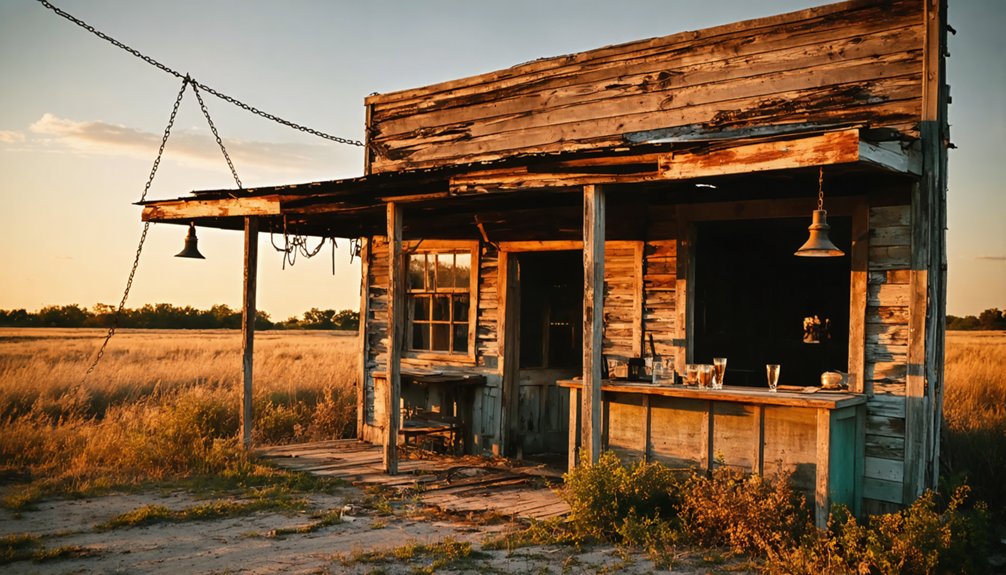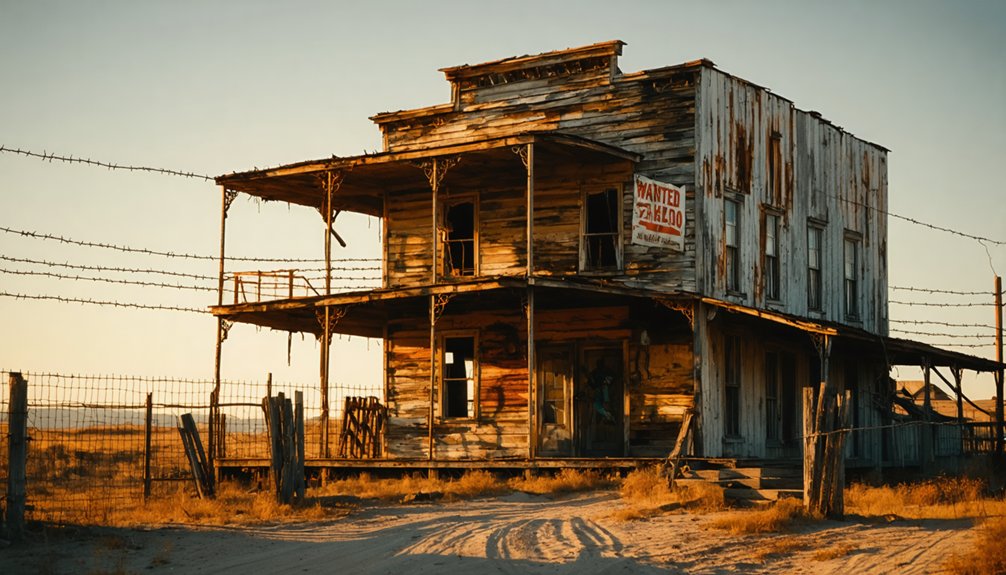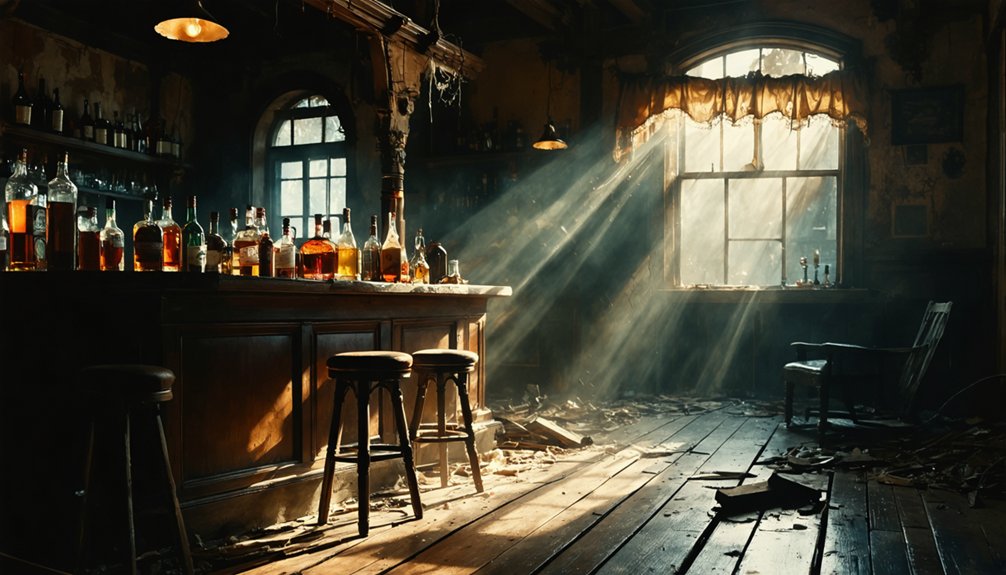
You’ll step back in time when touring Texas’s ghostly saloons in abandoned boomtowns like Terlingua, where mercury miners once gathered, and Helena, infamous for its deadly duels. These weathered establishments tell stories of frontier ambition through their crumbling facades—from Belle Plain’s fierce county seat rivalry to Shafter’s silver-fueled dance halls. Each empty barstool and silent piano offers a tangible connection to the authentic Old West experience.
Key Takeaways
- Terlingua preserves authentic saloon culture that reflects the harsh social life of mercury miners in the late 1800s.
- Helena’s notorious saloons hosted the infamous “Helena Duel” with short-bladed knives, earning its reputation as “The Toughest Town on Earth.”
- Shafter’s vibrant silver mining community centered around saloons and a dance hall serving diverse miners until 1942.
- Ghost town tours offer glimpses into preserved Old West drinking establishments where miners once socialized after dangerous workdays.
- Texas ghost towns like Terlingua, Helena, and Shafter provide authentic glimpses of frontier saloon life during mining booms.
Terlingua: Mercury Mining Hub With Preserved Saloon Culture
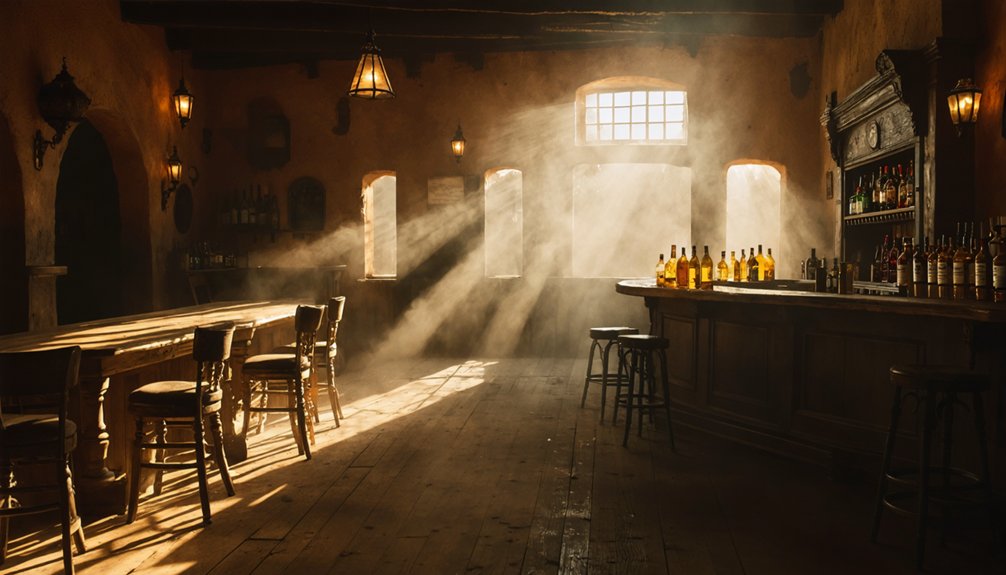
A desolate monument to industrial ambition, Terlingua emerged in the late 1880s as a mercury mining settlement before evolving into a significant production hub.
Howard E. Perry’s Chisos Mining Company transformed primitive hand-sorting operations into an industrial enterprise with the 1908 installation of a Scott Furnace, becoming America’s largest mercury producer.
Visionary industrialist Perry revolutionized mercury extraction, catapulting Chisos to national prominence through technological innovation.
You’ll discover a town once home to 2,000 residents where Mexican immigrants built simple limestone dwellings while extracting cinnabar at great personal cost—mercury poisoning typically appeared within five years.
World War I’s explosive demand drove daily profits to $2,000, but post-war decline ultimately led to bankruptcy.
The town’s name derives from tres lenguas, Spanish for “three tongues,” representing its multicultural heritage at the crossroads of American, Mexican, and indigenous influences.
Terlingua’s preserved saloon culture represents the heart of miners’ social life.
These gathering spaces, where workers sought respite from dangerous conditions, remain as silent witnesses to the boom-and-bust cycle of mercury mining.
The local Terlingua Cemetery serves as a poignant reminder of the hardships faced by mining families, particularly during the devastating 1918-1919 influenza pandemic.
Belle Plain’s Bloody County Seat Rivalry and Abandoned Ruins
When Belle Plain emerged as Callahan County’s first official seat in 1877, few could have predicted the fierce rivalry that would ultimately lead to its abandonment. This once-thriving settlement of 400 residents boasted impressive infrastructure including a courthouse, jail, and the prestigious Belle Plain College with 300 students.
The town’s decline began when the Texas and Pacific Railway bypassed Belle Plain for nearby Baird. This critical transportation decision shifted political power northward, culminating in the 1883 relocation of the county seat. The town was strategically positioned on a plateau near the center of Callahan County, which initially made it an ideal county seat location. Today, Belle Plain exists only as a disambiguation page directing researchers to various interpretations of its history.
The physical dismantling and reconstruction of Belle Plain’s stone jailhouse in Baird symbolized the transfer of authority and accelerated the community’s collapse.
The devastating county seat rivalry, compounded by severe drought in 1887, left Belle Plain virtually deserted by 1897, with only its crumbling college ruins remaining as proof of its ambitious past.
Shafter’s Silver Boom and Dance Hall Heritage

While Belle Plain faded into abandonment, another Texas settlement was striking it rich beneath the earth.
Shafter emerged in the 1880s when San Francisco speculators established the Presidio Mining Company, transforming a modest $20.50-per-ton silver discovery into a lucrative enterprise yielding ore pockets worth $500 per ton.
You’ll find the remnants of what became Texas’s only successful silver mining town, producing over 30 million troy ounces by 1940.
The settlement’s vibrant social life centered around two saloons and a dance hall where miners of diverse backgrounds—Mexican, Black American, and Californian—gathered after shifts in the 100-mile network of tunnels. The mine was a major economic driver, contributing $60,000 monthly to the local economy during its prime years. During its heyday, the town’s population reached an impressive 4,000 residents as workers flocked to the booming silver industry.
Though water challenges and World War II ultimately closed operations in 1942, Shafter’s legacy as the “richest acre in Texas” endures in its quiet ruins.
St. Mary’s of Aransas: The Lost Port Town of Copano Bay
Founded in 1850 along the shores of Copano Bay, St. Mary’s of Aransas rapidly developed into a critical Texas port town. Joseph F. Smith’s 1857 town plan established a thriving hub for lumber, cattle, and construction materials, connecting coastal and inland economies through maritime commerce.
The town’s strategic port history made it both prosperous and vulnerable during the Civil War when:
- Union forces captured and partially burned the settlement
- Maritime infrastructure suffered significant damage
- Essential shipping operations were disrupted
Despite its economic significance and connection to regional transportation networks, St. Mary’s declined after losing county seat status and being bypassed by railway development. The town was officially incorporated into Bayside in 1909, erasing its independent identity. The town was situated near where the Aransas Indians had lived for thousands of years before being replaced by the Copane Indians around 1400 CE.
Devastating hurricanes in the 1880s accelerated its abandonment, transforming this once-bustling port into an archaeological site preserving Texas coastal development history.
Helena’s Deadly Duels and Railroad Revenge
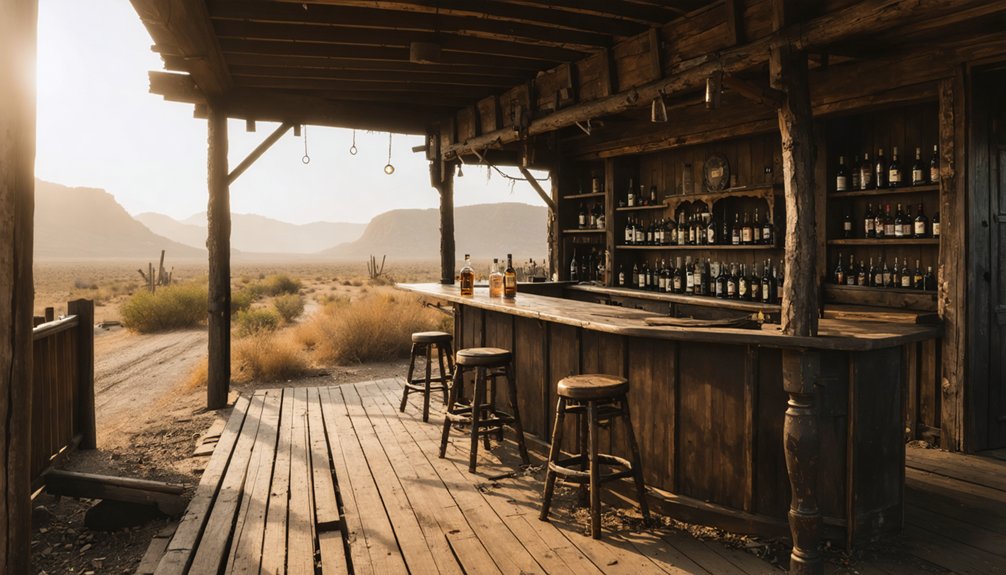
Blood-soaked duels and vengeance define the notorious frontier settlement of Helena, Texas, which earned its reputation as “The Toughest Town on Earth” through institutionalized violence and lawlessness. Located 70 miles southeast of San Antonio, this wild western outpost became infamous for its deadly entertainment.
You’d witness the infamous Helena Duel, where combatants with bound left hands wielded short-bladed knives in brutal contests designed for slow, bleeding deaths rather than quick kills. These duel tactics channeled frontier disputes into ritualized combat while enthralling betting spectators.
The town’s fate changed dramatically when Emmett Butler died from a stray bullet in 1884. His father, Colonel William Butler, executed calculated vengeance motives by convincing the railroad to bypass Helena by seven miles. Before its decline, Helena served as the county seat of the newly formed Kins County, complete with a courthouse and thriving businesses.
This economic sabotage transformed a thriving settlement into today’s ghost town. Now, only ruins and historical markers remain as evidence to how personal revenge destroyed an entire community through strategic isolation.
Frequently Asked Questions
Can Visitors Stay Overnight in Any of These Ghost Towns?
Yes, you can. Over 80% of ghost town visitors seek overnight accommodations for authentic experiences. Terlingua Ghost Town offers private casitas, luxury yurts, and off-grid cabins with modern amenities within walking distance of local attractions.
Are There Guided Tours Available at These Historic Sites?
You’ll find guided ghost tours in Fort Worth, Dallas, Austin, and Galveston, while self-guided options exist in Terlingua. Some locations feature historical reenactments that bring the Old West’s spectral past vividly alive.
What Paranormal Activity Has Been Reported in These Saloons?
Thinking you’d escape the spectral sightings? You’ll encounter footsteps, ghostly figures, moving objects, mysterious sounds, and cold spots—all part of these establishments’ haunted history. Spirits manifest their presence through various sensory disturbances.
When Is the Best Time of Year to Visit?
Fall and spring are your best seasons to visit, offering ideal weather conditions without summer’s extreme heat or winter’s occasional harshness. You’ll enjoy comfortable exploration and enhanced paranormal experiences during these temperate periods.
Are Any Original Artifacts or Period Furniture Still on Display?
You’ll find abundant original artifacts across Texas museums, from Billy the Kid’s personal items to authentic Texas Ranger weapons. Period furniture remains in historic sites like the 131-year-old Buckhorn Saloon and Mission Concepcion’s 18th-century interior.
References
- https://www.dallasites101.com/blog/post/terlingua-texas-ghost-town-guide/
- https://www.hipcamp.com/journal/camping/texas-ghost-towns/
- https://texashighways.com/travel-news/four-texas-ghost-towns/
- https://www.county.org/county-magazine-articles/summer-2025/ghost-towns
- https://www.youtube.com/watch?v=Zd8-gKw-5Hc
- https://texappealmag.com/texas-ghost-towns-explore-haunting-remnants-of-forgotten-cities/
- https://en.wikipedia.org/wiki/List_of_ghost_towns_in_Texas
- https://www.legendsofamerica.com/tx-ghosttowns/
- https://authentictexas.com/texas-ghost-towns/
- https://www.texasescapes.com/TOWNS/Texas-Ghost-Towns-4-West-Texas.htm