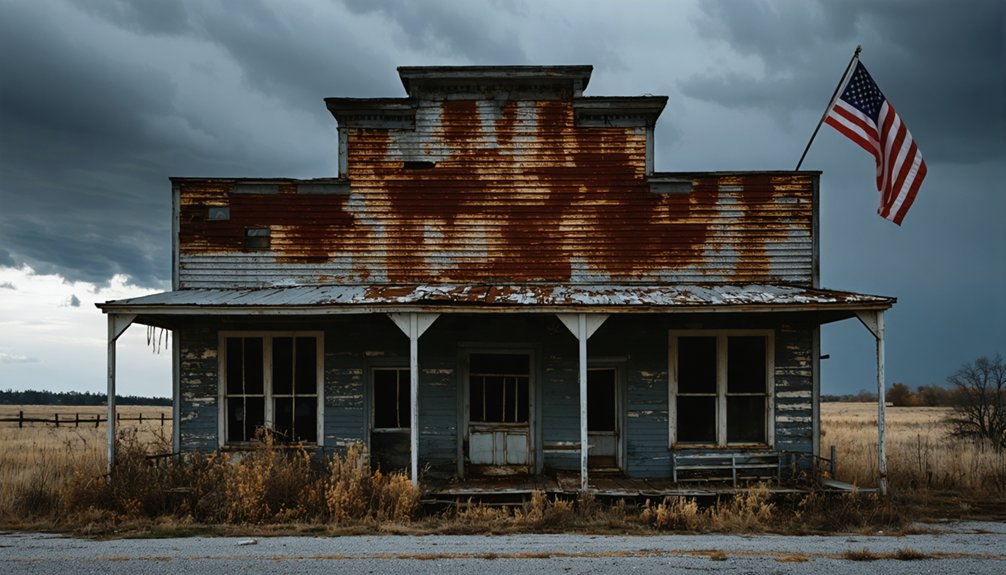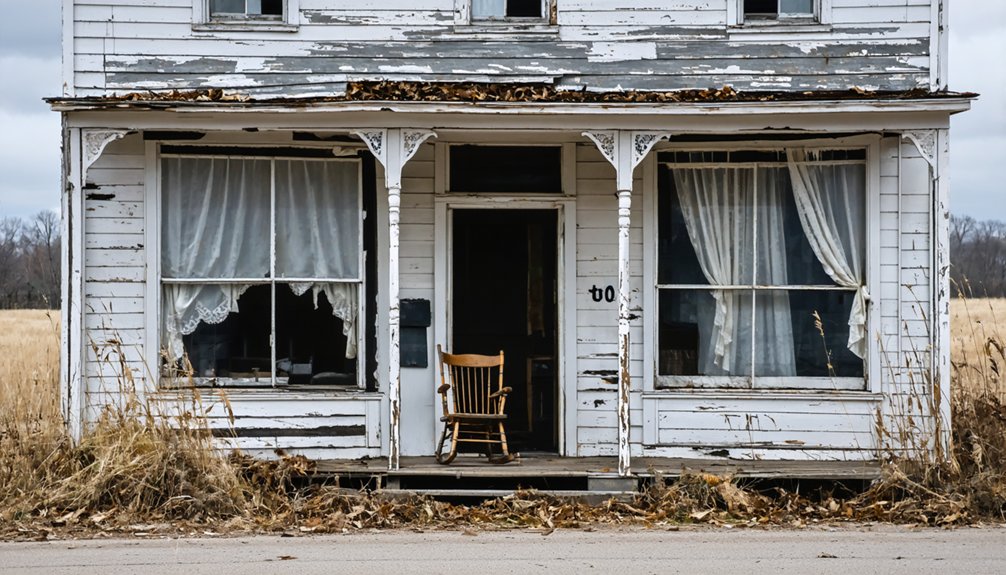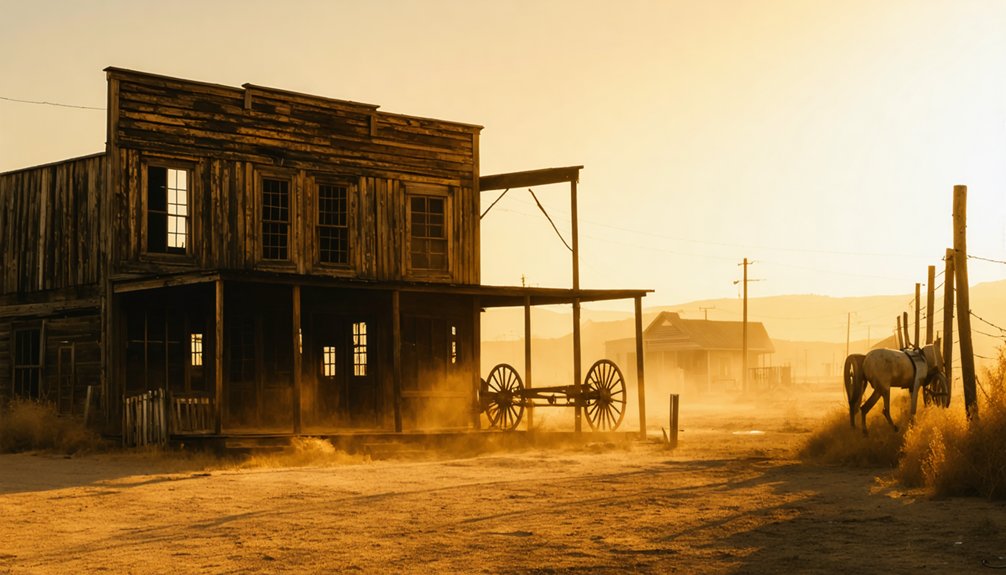
Midwest ghost town tours offer you a glimpse into abandoned mining settlements like those on Michigan’s Keweenaw Peninsula and industrial ruins in Gary, Indiana. You’ll find paranormal investigations at sites with documented hauntings, from the Villisca Axe Murder House to historic cemeteries with over 100 ghost sightings. Seasonal events and walking tours throughout towns like Lake Geneva combine meticulous historical research with atmospheric storytelling. The crumbling foundations and empty streets await your exploration.
Key Takeaways
- Paranormal investigations in abandoned copper towns like Freda and Cliff blend historical exploration with ghost hunting experiences.
- Cornish mining communities transformed into ghost towns offer unique tours that connect immigrant stories with reported supernatural occurrences.
- Overnight stays in historic locations like mining settlements provide visitors with opportunities to conduct their own ghostly investigations.
- Walking tours in Midwest ghost towns emphasize both economic decline narratives and the tragic histories that contribute to paranormal activity.
- Preservation efforts include guided tours with sunset patrol measures to protect historic ghost town grounds while allowing for supernatural exploration.
Legendary Mining Settlements of the Keweenaw Peninsula
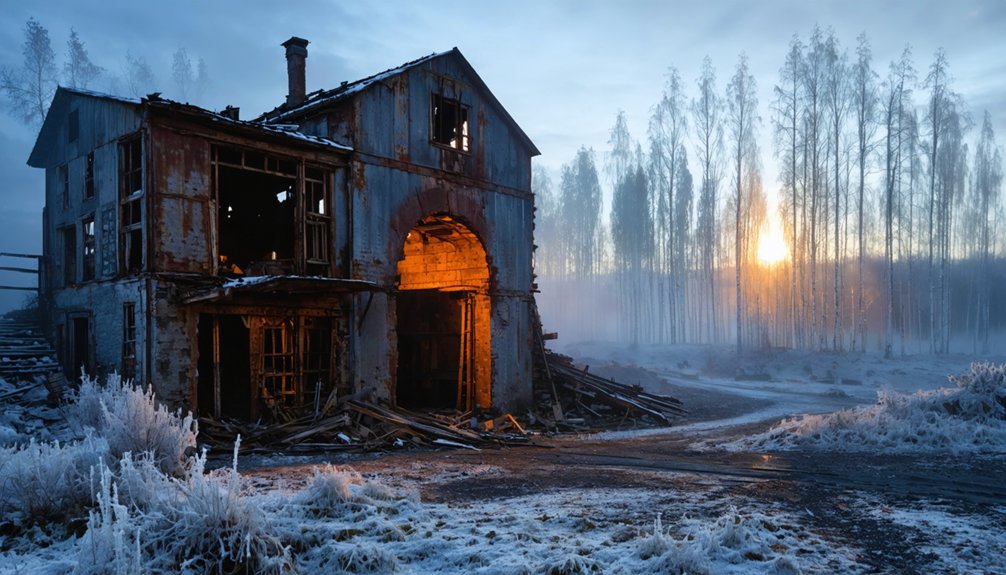
While many ghost towns across America whisper tales of boom-and-bust cycles, the abandoned mining settlements of Michigan’s Keweenaw Peninsula stand apart, rooted in a mineralogical legacy stretching back millennia.
As you wander these historic settlements, you’re treading ground first mined by Indigenous peoples 8,000 years ago. Their shallow “Indian diggings” later guided 19th-century prospectors to copper wealth during America’s first mineral rush of the 1840s.
The Keweenaw’s abandoned mines whisper secrets from ancient hands to industrial fortune-seekers, spanning millennia of copper dreams.
The peninsula’s abandoned communities—Central Mine with its massive copper discoveries, the long-running Quincy operations, and Delaware Mine with its preserved underground workings—tell a complex story of industrial ambition. Central Mine was uniquely successful, becoming profitable from inception unlike most operations in the region. Over the decades, these mining operations extracted more than 12 billion pounds of native copper from the peninsula’s rich deposits.
Cornish immigrants once filled these now-silent streets, their engineering expertise transforming ancient copper deposits into booming communities that flourished, then faded, leaving behind haunting reminders of prosperity’s impermanence.
Paranormal Hotspots and Overnight Experiences
Beyond the abandoned streets of mining towns, the Midwest’s most haunting experiences emerge after dark, when visitors dare to spend the night in locations infamous for paranormal activity.
The Villisca Axe Murder House, site of an unsolved 1912 family massacre, offers overnight stays where guests report children’s voices and moving objects—considered the region’s epicenter for ghostly encounters.
Missouri State Penitentiary provides structured paranormal investigations through its former cells and gas chamber, complete with ghost-hunting classes.
Though Stull Cemetery remains legally inaccessible, its “Gateway to Hell” reputation persists in regional lore. Visitors should be aware that trespassing at this haunted location can result in steep fines of up to $1,000.
For those seeking urban hauntings, historic hotels like Milwaukee’s Pfister provide accommodations where paranormal investigations blend with architectural significance, while Mount Mora Cemetery’s “Voices of the Past” events connect visitors to spectral narratives through carefully researched historical reenactments.
The Great Lakes region offers some of the Midwest’s most compelling paranormal experiences, with Michigan’s lighthouse hauntings drawing investigators from across the country.
Abandoned Structures and Their Tragic Histories
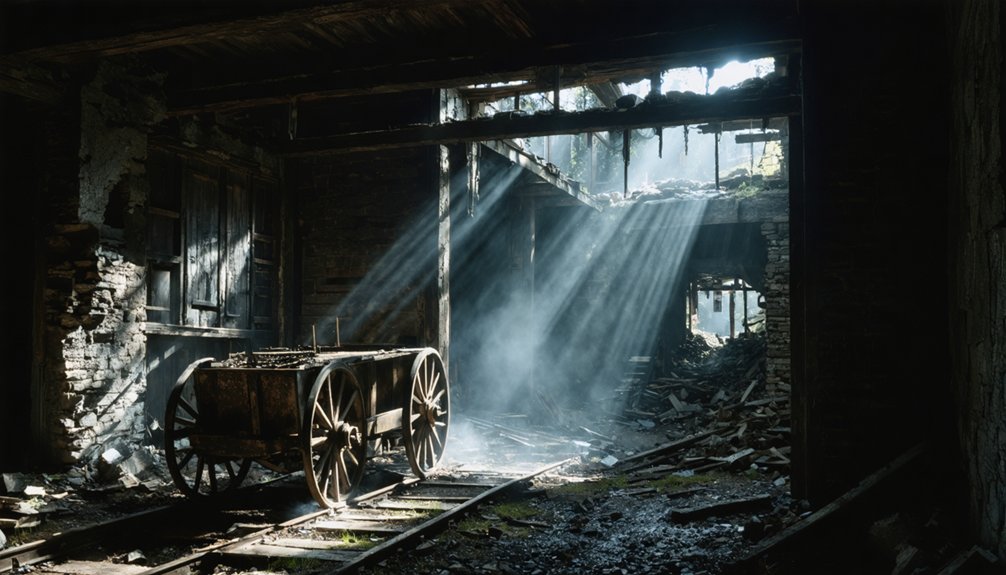
Throughout the Midwest’s ghost town landscape, a haunting array of abandoned structures stands as silent witnesses to the region’s boom-and-bust cycles.
Among these remnants lies a history steeped in mystery, where stories of ghostly experiences in mill towns linger in the air. Locals have shared tales of apparitions and eerie sounds echoing through the empty streets, igniting curiosity among both historians and ghost hunters alike. Each visit to these mill towns unveils a deeper connection to the past, inviting exploration and reflection on lives once lived and lost.
You’ll discover wooden frame houses and mine offices in copper towns like Freda and Cliff, Michigan, where prosperity evaporated when ore deposits dwindled or commodity prices collapsed.
The concrete shells of Gary, Indiana’s steel mills contain haunting memories of thousands of workers who suddenly lost livelihoods when manufacturing declined.
Rusting machinery stands silent, each empty workstation a monument to Gary’s forgotten industrial might.
Along riverbanks, crumbling foundations of water-powered sawmills mark where logging communities thrived until forests were depleted.
These abandoned buildings tell tragic stories of communities shaped by corporate decisions, resource exhaustion, and natural disasters. Many of these towns formed during the late 1800s when industrialization rapidly transformed the Midwest landscape.
In southern Illinois, entire salt-producing towns vanished when cheaper alternatives emerged elsewhere, while in Wisconsin, company towns emptied virtually overnight when lumber operations ceased, leaving only stone remnants of once-vibrant communities.
The abandoned agricultural towns showcase empty grain elevators that once bustled with activity during harvest seasons before farming became unprofitable.
Seasonal Ghost Town Events and Walking Tours
As fall’s chill descends upon the Midwest, abandoned towns transform into centers of paranormal tourism, drawing enthusiasts enthusiastic to experience spectral encounters.
You’ll find the Midwest Haunters Convention in Rosemont showcasing immersive haunted house tours, while MIPARACON offers investigations aboard haunted museum ships.
Walking tours through historic towns like Lake Geneva and Sycamore heighten the sensory experience of these haunted festivals. Cobblestone streets illuminated by candlelight create atmospheric backdrops for spooky storytelling sessions.
Expert-led narratives blend historical tragedy with paranormal phenomena, offering both skeptics and believers intellectual engagement. The popular Friday Night Haunt Tour scheduled for May 2, 2025 will feature the Abandoned Haunted House Complex with three unique, fully-immersive attractions.
These meticulously researched events typically sell out in advance, combining educational seminars with hands-on ghost hunting experiences. Many visitors enhance their experience by joining Strange Escapes paranormal vacations to America’s most haunted locations.
Whether you’re participating in Anoka’s century-old Halloween celebrations or exploring psychic fairs in Davenport, you’ll discover a thriving cultural phenomenon that honors the spectral past.
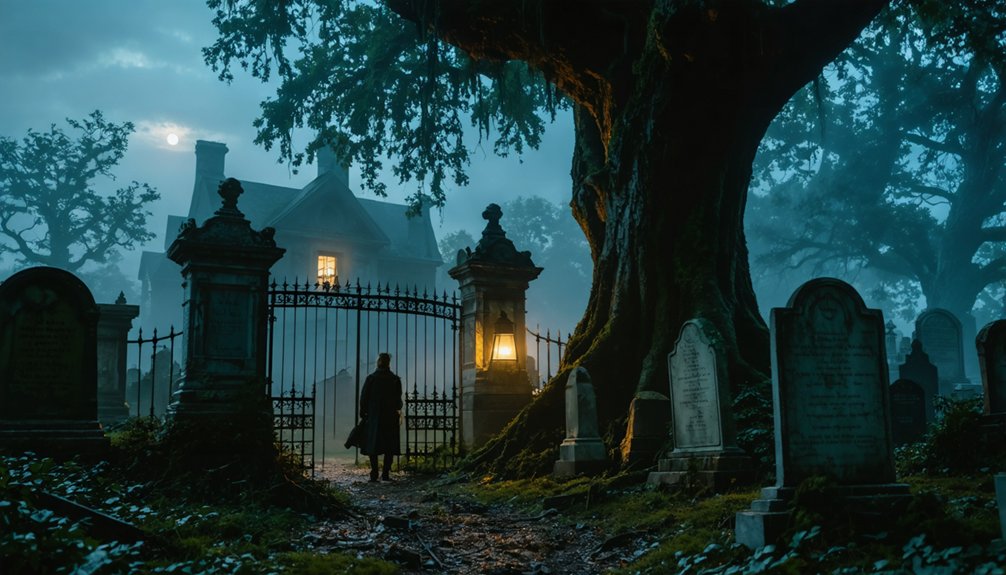
The eerie silence that permeates historic Midwestern cemeteries belies their status as epicenters of paranormal activity, where you’ll encounter some of the region’s most well-documented spectral phenomena.
Step into the stillness where Midwestern graveyards whisper their spectral secrets to those brave enough to listen.
Bachelor’s Grove Cemetery in Midlothian stands preeminent among these haunted grounds with over 100 documented encounters, including the famous “Woman in White” captured on film in 1979.
Your cemetery encounters may include the “Flapper Girl” at Waldheim Cemetery, a spectral figure in 1920s attire who reportedly engages visitors before vanishing among tombstones.
Resurrection Cemetery features the legendary Resurrection Mary who has been seen hitchhiking along Archer Avenue since the 1930s before mysteriously disappearing.
At Alton and Ridge cemeteries, you’ll find similar patterns of ghostly apparitions, unexplained lights, and phantom crowds.
The cemetery became Cook County property in 1976, with patrol measures implemented after sunset to protect the historic grounds from further desecration.
Paranormal investigators attribute increased activity to disturbed burial grounds, particularly at Bachelor’s Grove where 1960s vandalism allegedly agitated resident spirits, creating the perfect confluence of history and supernatural manifestation.
Frequently Asked Questions
What Safety Equipment Should I Bring to Ghost Town Explorations?
You’ll need sturdy boots, protective clothing, respirators, multiple flashlights with spare batteries, first aid kits, offline maps, gloves, and emergency signaling devices—essential safeguards against the forgotten hazards lurking in these weathered remnants.
Are Any Midwest Ghost Towns Accessible for Visitors With Mobility Limitations?
Yes, you’ll find limited accessibility at sites like Ashcroft and Garnet with accessible trails along main thoroughfares. Urban-based ghost tours offer better options, though adaptive equipment remains essential for traversing uneven, historically preserved terrain.
How Do Local Residents Feel About Ghost Tourism in Their Communities?
You’ll find community opinions divided—locals appreciate tourism’s economic impact while harboring concerns about authenticity, infrastructure strain, and commercialization. This tension reflects their struggle between preservation and financial necessity.
Can I Legally Remove Artifacts Found in Abandoned Ghost Towns?
No, you cannot legally remove artifacts. Their preservation is protected under federal and state laws with serious legal implications. Ghost towns aren’t abandoned treasure troves—they’re protected historical records demanding your respect.
What Are the Best Weather Conditions for Capturing Paranormal Phenomena?
You’ll find ideal conditions during temperature shifts, especially cooling after heat. Thunderstorms and high humidity alter weather patterns, potentially enhancing ghostly sightings by creating electromagnetic disturbances that paranormal entities might utilize for manifestation.
References
- https://www.visitkeweenaw.com/blog/post/our-top-7-keweenaw-ghost-towns-to-explore/
- https://www.geotab.com/ghost-towns/
- https://khak.com/creepiest-abandoned-places-midwest-tours/
- https://thetravelingwildflower.com/hauntedplacestovisit/
- https://www.nps.gov/slbe/learn/historyculture/ghosttowns.htm
- https://twifc.substack.com/p/what-are-the-midwests-coolest-ghost
- https://www.atlasobscura.com/lists/abandoned-places-midwest
- https://en.wikipedia.org/wiki/Lists_of_ghost_towns_in_the_United_States
- https://www.youtube.com/watch?v=lfj6aeZEVJY
- https://www.nps.gov/kewe/learn/historyculture/copper-mining-timeline.htm