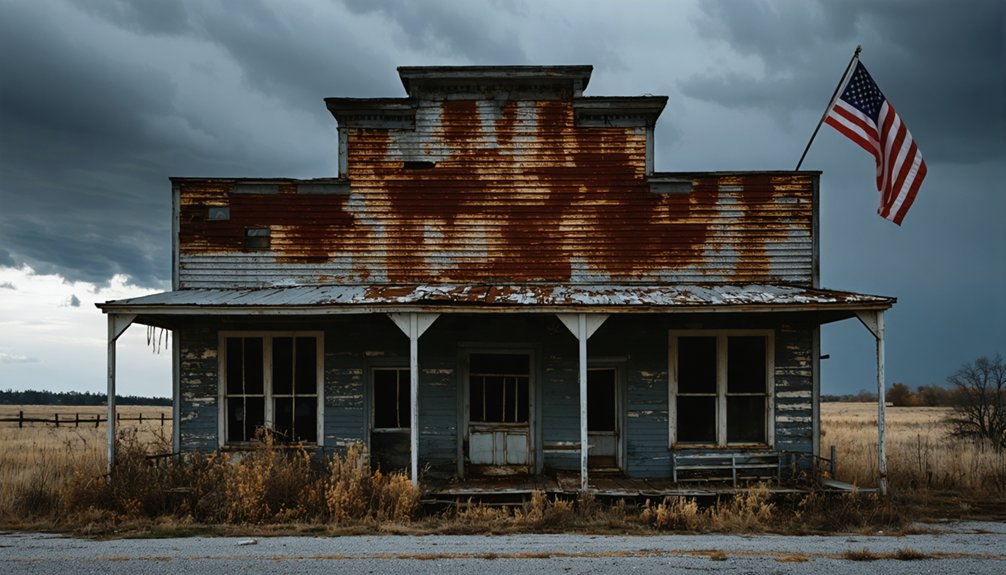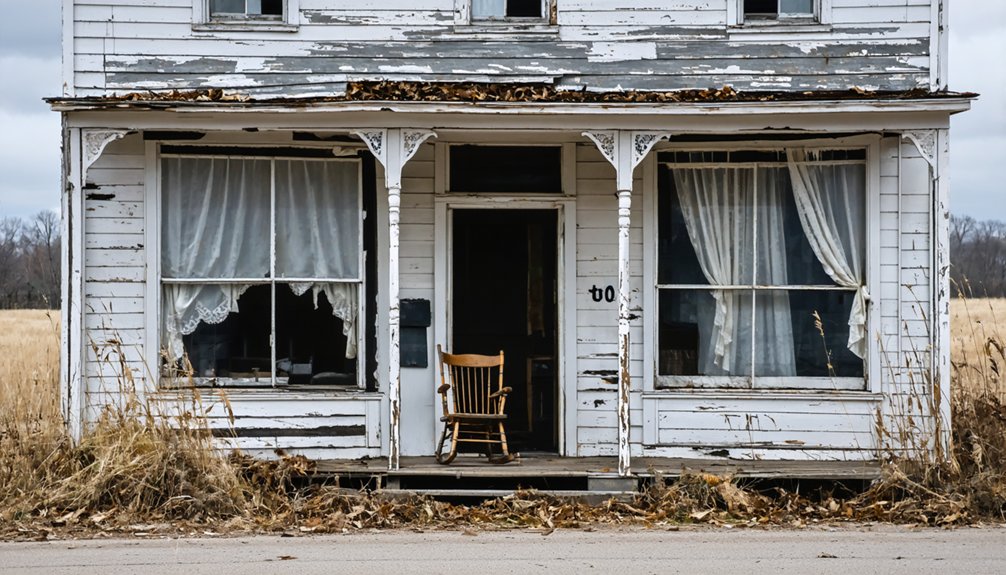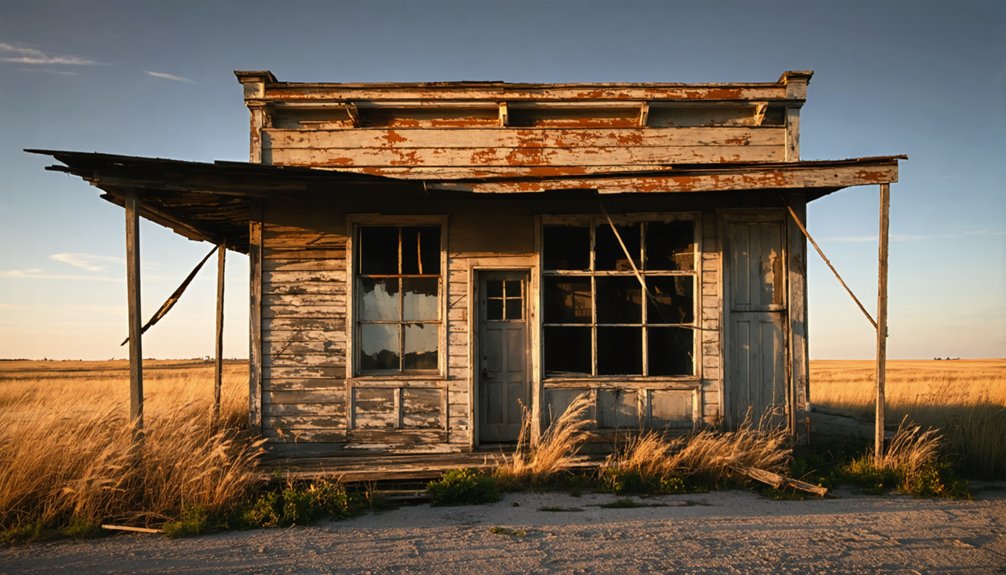
The Midwest harbors seven notoriously haunted locations including Iowa’s Villisca Axe Murder House, Atchison’s Sallie House and McInteer Villa, Minnesota’s West Hills Orphanage with its children’s cemetery, Anoka’s abandoned state hospital, Council Bluffs’ Squirrel Cage Jail, and forgotten mining settlements across Michigan’s Upper Peninsula. You’ll encounter blood-stained history, spectral children, controversial psychiatric practices, and communities that vanished overnight. Each ghostly site offers both paranormal experiences and glimpses into the region’s complex, often tragic past.
Key Takeaways
- Midwestern ghost towns like those along South Dakota’s Highway 44 feature abandoned stone foundations, gravestones, and reported paranormal activity.
- Former mining communities across Michigan’s Keweenaw Peninsula often report hauntings connected to mining disasters and sudden economic collapse.
- The Villisca Axe Murder House in Iowa, site of an unsolved 1912 mass murder, attracts paranormal investigators seeking ghostly encounters.
- Abandoned company towns throughout the industrial Midwest harbor spirits of former residents who perished in workplace accidents.
- Once-thriving settlements disrupted by flooding, disease, and resource depletion now serve as hotspots for paranormal experiences.
The Ghostly Remnants of Villisca: Iowa’s Axe Murder House
Nestled in the unassuming town of Villisca, Iowa, stands a modest frame house that harbors one of the Midwest’s most chilling and notorious unsolved crimes.
On the night of June 9-10, 1912, eight people—the Moore family and two young guests—were brutally murdered with an axe while they slept, their killer never identified.
The house’s historical significance was formally recognized when it joined the National Register of Historic Places in 1998.
Restored to its 1912 condition by the Linn family in the 1990s, you’ll find the layout preserved exactly as it was on that fateful night. The meticulous renovation removed modern additions like enclosed porches to accurately reflect the home’s original appearance.
The Villisca hauntings attract paranormal investigators drawn to its macabre legacy—bloodied beds, covered mirrors, and the lingering mystery of why someone would commit such a methodical atrocity.
Originally built in 1868 as a modern farmhouse for George Loomis, the structure itself is a silent witness to both ordinary family life and extraordinary tragedy.
Atchison’s Dual Hauntings: Sallie House and McInteer Villa
As you travel eastward from Iowa’s notorious Villisca Axe Murder House, another Midwestern town harbors its own pair of terrifying paranormal hotspots.
Atchison, Kansas hosts the infamous Sallie House—once Dr. Finney’s medical office where a young girl allegedly died during surgery—and the imposing McInteer Villa, an 1889 Victorian mansion with a dark history of violent deaths.
Nestled in Atchison, two haunted landmarks await—Sallie House, where a child died in surgery, and McInteer Villa, cloaked in violent tragedy.
At Sallie House, you’ll encounter a potent concentration of activity: physical attacks, spontaneous fires, and objects moving of their own accord.
Electronic equipment frequently malfunctions, and visitors report unexplained scratches on their bodies.
Meanwhile, McInteer Villa offers equally disturbing phenomena, particularly in its basement where mysterious digging sounds emanate and in Goldie’s room, where a former resident’s spirit lingers.
Both locations attract investigators seeking evidence of the otherworldly forces that refuse to rest. The town’s quaint Victorian architecture creates an eerily perfect backdrop for these haunted landmarks.
Exploring ghost towns across the United States reveals stories of the past that linger in the air. Each deserted street and crumbling structure tells a tale of its former inhabitants, etched into the silence that envelops these places. This haunting charm draws many to experience the blend of history and mystery that these locations offer.
According to Lisa Hefner Heitz’s book, Atchison has earned the distinction of being the most haunted town in Kansas, with numerous sites beyond these two primary attractions.
Abandoned Souls: West Hills Orphanage in Owatonna
You’ll find the emotional center of West Hills’ haunting legacy in the children’s cemetery, where 198 former residents lie buried beneath simple markers that echo their institutional lives.
Visitors regularly report encountering spectral children throughout the former orphanage grounds, particularly in Cottage 11 where disembodied voices, unexplained footsteps, and spontaneous temperature drops suggest the continued presence of those who suffered there.
The haunting phenomena intensify near the memorial spaces, where witnesses claim to hear children’s whispers and laughter emanating from empty hallways—remnants of the 10,635 young souls who passed through the institution’s doors between 1886 and 1945.
These paranormal accounts often focus on the self-sufficient campus that once operated its own power plant, farm, and greenhouse to support hundreds of children across sixteen cottages.
Much like the Sallie House in Atchison, visitors report unexplained electronic malfunctions when attempting to record or photograph the cemetery grounds.
Tragic Children’s Graveyard
Hidden among the repurposed buildings of West Hills lies one of Minnesota’s most haunting remnants of institutional tragedy—the children’s cemetery of the former State Public School for Dependent and Neglected Children.
As you walk these solemn grounds, you’ll encounter the final resting place for numerous “State Schoolers” who never found families. Established during the institution’s 59-year operation (1886-1945), this cemetery preserves children’s memories through memorial stones and the Flag Pole Plaza.
The orphanage stories of 10,635 young residents echo across this space, where community efforts have transformed neglect into remembrance. The site has been preserved thanks to the local residents’ vision that turned the abandoned buildings into the Owatonna Arts Center in 1974.
Similar to Forestville, this location offers visitors an immersive look into Minnesota’s preserved history rather than leaving only historical markers.
Today, visitors can experience audio tours narrating personal accounts of those who lived—and died—at the institution. The cemetery stands as both historical documentation and spiritual monument, inviting reflection on the complex intersection of institutional care and childhood suffering.
Whispers From Beyond
While the main buildings of the former Minnesota State Public School for Dependent and Neglected Children now serve as Owatonna’s city offices, the spirits of its troubled past refuse to rest in silence.
As you walk the historic campus where over 10,600 children once lived, you’ll encounter whispers of sorrow emanating from empty corridors and abandoned dormitories.
Staff and visitors regularly report unexplained phenomena—cold spots, ghostly apparitions, and strange noises that seem to be echoes of innocence lost during the institution’s 60-year history.
These paranormal claims aren’t surprising given the documented cases of abuse and neglect that occurred within these walls. The eerie atmosphere resembles the haunting presence felt at the Copper Queen Hotel in Bisbee, where similar ghostly activities have been documented.
The Minnesota State Public School Orphanage Museum now preserves these stories, allowing the departed children’s experiences to transcend time, ensuring their suffering isn’t forgotten. The museum was established through the dedicated efforts of Harvey and Maxine Ronglien, who worked tirelessly to honor the children who once lived there.
Ghostly Child Encounters
The former West Hills Orphanage in Owatonna has earned its reputation as one of the Midwest’s most actively haunted locations through decades of consistent paranormal encounters.
When you visit the site that once housed over 10,600 vulnerable children between 1886 and 1945, you’ll likely experience the unsettling echoes of ghostly laughter resonating through empty corridors.
Cottage 11 stands as the epicenter of paranormal activity, where books fly from shelves and sudden cold spots envelop visitors without warning.
EVP recordings frequently capture childlike voices in vacant areas, particularly near the children’s cemetery where spectral memories seem strongest.
The apparitions of children glimpsed in windows and hallways are thought to be former residents whose difficult lives—marked by separation, loneliness, and sometimes abuse—left spiritual imprints that transcend time.
Anoka: The Halloween Capital’s Haunted Hospital
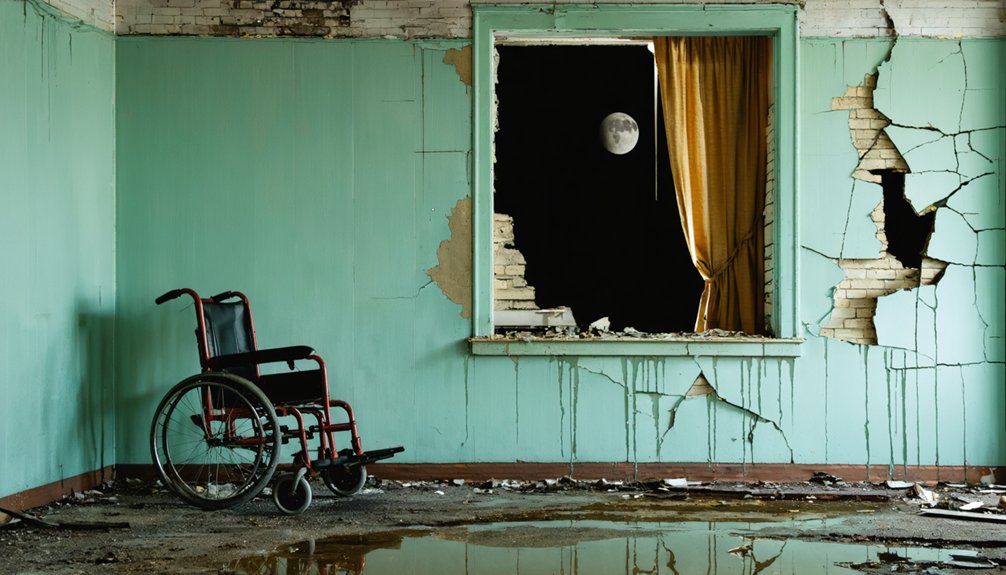
Nestled in Minnesota’s heartland, Anoka State Hospital stands as a haunting reminder of early twentieth-century psychiatric care, where controversial treatments and tragic circumstances have fueled paranormal lore for decades.
When you visit Anoka, the self-proclaimed “Halloween Capital of the World,” you’ll discover the hospital’s haunted history enhances the city’s eerie reputation. The facility, which operated until 1999, harbors extensive underground tunnels where ghost stories abound.
Former patients who endured lobotomies and electroshock therapy reportedly linger in the abandoned corridors.
Anoka embraces this supernatural heritage through popular ghost tours and Halloween festivities that have been running since 1920. The Congressional recognition in 1937 cemented the city’s Halloween legacy, while paranormal tourism continues to support local businesses and connect visitors to the darker chapters of Minnesota’s psychiatric past.
Rotating Terror: Council Bluffs’ Squirrel Cage Jail
Moving from Minnesota’s psychiatric hauntings to Iowa’s innovative incarceration, Council Bluffs houses one of America’s most architecturally unique and spiritually active prison sites.
The Squirrel Cage Jail, constructed in 1885, features a revolutionary three-story rotary design where a 45-ton cylindrical cage of pie-shaped cells rotated around a central axis—allowing one jailer to control the entire facility with a hand crank.
During its 84-year jail history, four deaths occurred within its walls, fueling its reputation as one of Iowa’s most haunted locations.
Since closing in 1969, this National Historic Landmark has welcomed visitors seeking both historical and supernatural encounters.
You’ll find paranormal investigations conducted regularly, with reports of disembodied voices, shadowy figures, and unexplained cold spots.
Featured on shows like Ghost Adventures, the museum now invites you to explore its haunted corridors—perhaps encountering former inmates who never truly left.
Phantom Prairie: Forgotten Settlements of the Heartland
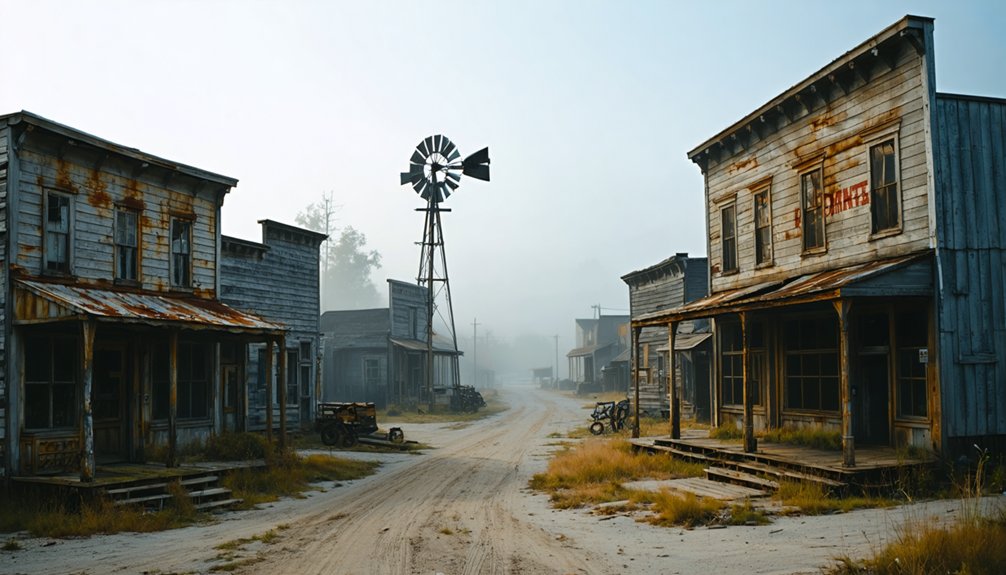
Throughout the vast Midwest prairie landscape, dozens of once-thriving settlements have vanished, leaving behind only stone foundations, weathered gravestones, and persistent spiritual energy.
These forgotten legacies emerged during westward expansion as pioneer families sought farmland and established trade posts along riverbanks and railway lines.
Prairie echoes of bustling communities remain where gristmills, cheese factories, and lumber operations once supported vibrant economies.
The rhythm of life in these phantom settlements often halted abruptly—ravaged by flooding, disease outbreaks, resource depletion, or railroad reroutings.
Irish communities and other ethnic enclaves thrived briefly before succumbing to environmental challenges and economic shifts.
Today, when you wander these abandoned sites along routes like South Dakota’s Highway 44, you’re walking through layers of history where ethnic traditions, industrial ambitions, and natural disasters converged to shape the heartland’s forgotten chapters.
Midwest’s Cursed Mining Towns: Collapsed Dreams and Lingering Spirits
While phantom prairie settlements faded quietly into the grasslands, the Midwest’s mining towns faced more dramatic and often catastrophic ends.
You’ll find these cursed legacies scattered across Michigan’s Keweenaw Peninsula and throughout the industrial heartland, where once-thriving communities collapsed when mineral veins ran dry or economic forces shifted.
The spectral echoes of these abandoned towns reveal their tragic narratives:
- Copper and iron boomtowns that generated wealth surpassing California’s Gold Rush before sudden economic collapse
- Company-built communities that vanished when mineral prices plummeted or ore quality declined
- Mining operations halted during World War II when explosives were diverted to military needs
- Ghost towns marked by derelict mine shafts, abandoned buildings, and forgotten cemeteries
- Tales of mining disasters that perpetuate reputations for supernatural activity and hauntings
Frequently Asked Questions
Are Children Allowed on Overnight Ghost Tours?
While you might hope to include children, most overnight ghost tours have strict age restrictions. You’ll find many locations prohibit kids under 12-13, though family-friendly activities are typically offered during daytime hours instead.
What Paranormal Equipment Can Visitors Bring to Investigations?
You’re welcome to bring personal paranormal equipment including EMF detectors, spirit boxes, digital recorders, and flashlights. Most tour operators encourage your investigative participation while maintaining proper respect for potentially active locations.
Do Any Locations Offer Ghost Hunting Classes?
The Minnesota State Prison, Villisca Axe Murder House, and Ringling House offer 2-3 hour classes where you’ll learn ghost hunting techniques, paranormal investigation ethics, and proper equipment handling during guided explorations.
How Do Weather Conditions Affect Paranormal Activity?
You’ll notice increased paranormal activity during thunderstorms, as electrical energy charges the atmosphere. Temperature fluctuations, especially cold spots, and shifts in atmospheric pressure often indicate ghostly presences during your investigations.
Are There Discounts for Visiting Multiple Haunted Locations?
Like moths to spectral flames, you’ll find abundant savings through group rates at most haunted sites. Package deals frequently bundle multiple locations, especially during Halloween season, satisfying both your wanderlust and wallet simultaneously.
References
- https://www.travelawaits.com/2702819/most-haunted-places-midwest/
- https://www.gothichorrorstories.com/real-ghost-stories/
- https://thetravelingwildflower.com/hauntedplacestovisit/
- https://en.wikipedia.org/wiki/Haunted_Towns
- https://khak.com/creepiest-abandoned-places-midwest-tours/
- https://www.tastingtable.com/694562/scariest-ghost-towns-country/
- https://www.geotab.com/ghost-towns/
- https://www.youtube.com/watch?v=SUsnGxOpcss
- https://www.atlasobscura.com/lists/abandoned-places-midwest
- https://www.youtube.com/watch?v=iNEJyuneSDM