Ghost towns cost anywhere from $3,500 for bare parcels to $22+ million for properties with intact infrastructure. You’ll find entry-level abandoned settlements requiring rehabilitation for a few thousand dollars, mid-range historical properties between $100,000-$1 million, and premium towns exceeding several million when they feature strategic locations or significant heritage. Remember, the advertised price rarely reflects total investment needed—infrastructure restoration typically adds 300-500% to your initial costs. The true value emerges when you understand what lies beneath these forgotten landscapes.
Key Takeaways
- Entry-level ghost towns start at a few thousand dollars, while premium properties can exceed several million dollars.
- Mid-range ghost towns typically cost between $100,000 to $1 million, appealing to tourism developers.
- Location significantly impacts pricing, with properties near thriving infrastructure commanding higher prices.
- Recent sales include Cerro Gordo for $1.4 million and Eagle Mountain for approximately $22.5 million.
- Hidden costs often exceed purchase price by 300-500% for infrastructure restoration, legal fees, and environmental remediation.
The Price Range Spectrum: From Thousands to Millions
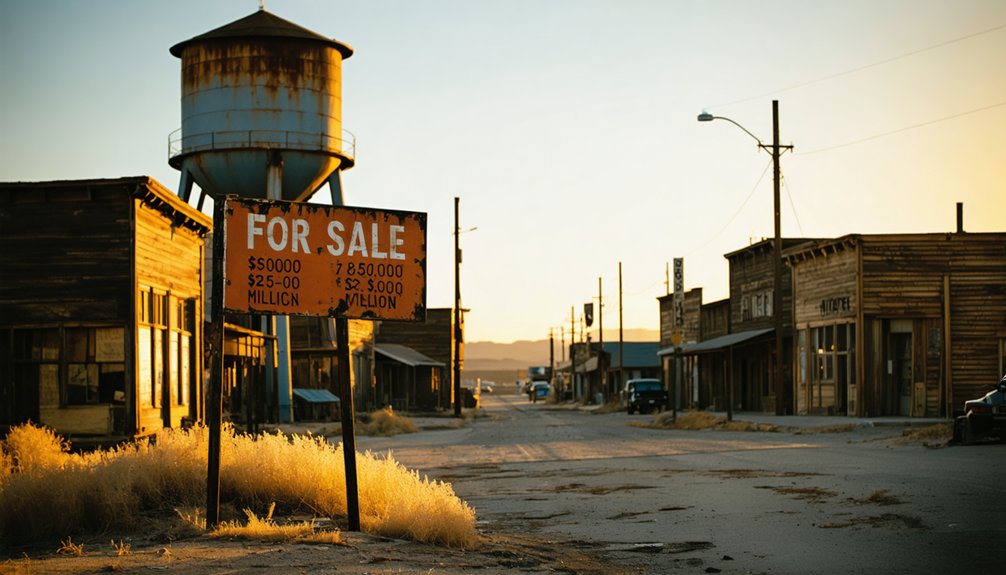
While the concept of ghost towns often evokes images of abandoned settlements frozen in time, their actual purchase prices span a remarkably diverse spectrum that reflects their complex histories and future potential.
You’ll find entry-level ghost towns starting at just a few thousand dollars, though these typically require substantial rehabilitation investment.
Ghost town pricing escalates dramatically based on size, building condition, and historical significance. Mid-range properties with existing structures or modest infrastructure generally cost $100,000 to $1 million, attracting investors interested in tourism development.
The most premium abandoned settlements exceed several million dollars, especially those with preservation-worthy structures or strategic locations. In 1983, a digital version of a ghost town adventure was available for just £5.95 from Virgin Games Ltd.
Market fluctuations affect these properties uniquely, with prices influenced by development potential rather than traditional real estate metrics. Much like the spectrum bands discussed in telecommunications, abandoned ghost towns can sometimes be revitalized with new purposes and technologies.
Beyond purchase costs, you’ll need to budget for taxes, maintenance, and potential environmental remediation.
Regional Price Variations Across American Ghost Towns
Ghost town prices reveal dramatic regional differences across the American landscape, with each area’s unique economic history, geographical features, and development potential shaping market values.
In the Southwest, historic towns like Lajitas, Texas command $1.8 million, while California desert properties start around $99,000. Former mining boom towns often fetch premium prices due to their historical significance and remaining structures.
The Mountain West offers varying opportunities, with Colorado’s 305-acre Lake City listed at $925,000, while Victor’s individual structures sell for just $15,000-$50,000.
Regional characteristics heavily influence pricing: Rust Belt areas offer affordability without the “ghost town” branding, while Northern Plains properties like Swett, South Dakota show remarkable market fluctuations, once dropping from $399,000 to $250,000 before climbing to $1.2 million.
Southern ghost towns typically sell as individual structures rather than entire communities, with values often below $100,000 in areas experiencing population decline. International options extend beyond American borders with abandoned hamlets in Spain starting around $87,800 for properties needing renovation.
What Drives the Value of Abandoned Towns?
Value assessments of abandoned towns follow complex economic principles that extend far beyond simple property calculations.
Location remains the paramount factor – even deteriorated properties near thriving infrastructure command premium prices compared to well-preserved structures in isolated areas.
When examining urban decay patterns, proximity to transportation networks and essential amenities can offset severe structural damage in value determinations.
Economic abandonment causes create the most dramatic price variations. Towns that lost their foundational purpose through resource depletion or industry relocation experience steeper devaluation than those affected by temporary downturns. Tools like HViAB can help identify the hidden value of these abandoned properties by matching them with nearby amenities and resources. Research indicates that a 10% increase in vacancies correlates with a 9.9% increase in fire risks, further affecting property values and insurance costs.
The duration of vacancy intensifies rehabilitation costs exponentially, as weather exposure damages critical systems.
The cascading neighborhood effect further compounds valuation challenges, as each abandoned property diminishes surrounding values, creating a downward spiral that extends beyond physical boundaries into the entire community’s economic health.
Property Types and Their Typical Price Points
Examining specific property listings reveals the remarkable price spectrum in the ghost town market, with offerings ranging from a few thousand dollars to multi-million dollar investments.
At the budget-friendly end, you’ll find parcels like Cedarvale, New Mexico’s three adjoining lots for just $3,500, while mid-range options like Finland Air Force Base in Minnesota ($800,000) offer substantial infrastructure with 43 homes on 101 acres.
Premium property types command impressive price points—Story, Indiana fetched $3.8 million with its 17 acres of functional guesthouses and event spaces.
International options present intriguing alternatives, from Spanish fincas under $90,000 to Swiss outposts at $5 million.
The various property types reflect not just size differences but developmental potential—whether you’re seeking a remote parcel for solitude or a themed ghost town ready for tourism ventures. Towns with historical structures often command higher prices due to their preservation value and potential for authentic tourism experiences. Properties like Cedarvale offer great flexibility with no build limits, making them particularly attractive for long-term development projects.
Case Studies: Notable Ghost Town Purchases and Their Costs
Three remarkable case studies illustrate the diverse investment landscape of ghost town acquisitions across different price tiers.
At the high end, Eagle Mountain in California sold for approximately $22.5 million in 2023 to a mysterious LLC. This 10,000-acre former Kaiser Steel town represents how ghost town history can command premium prices when significant infrastructure remains intact. The abandoned site has been marked by rows of boarded houses and concrete ruins since mining operations ceased in 1983. The property was purchased from Eagle Mountain Acquisition LLC, which was the last remaining Kaiser subsidiary holding the town.
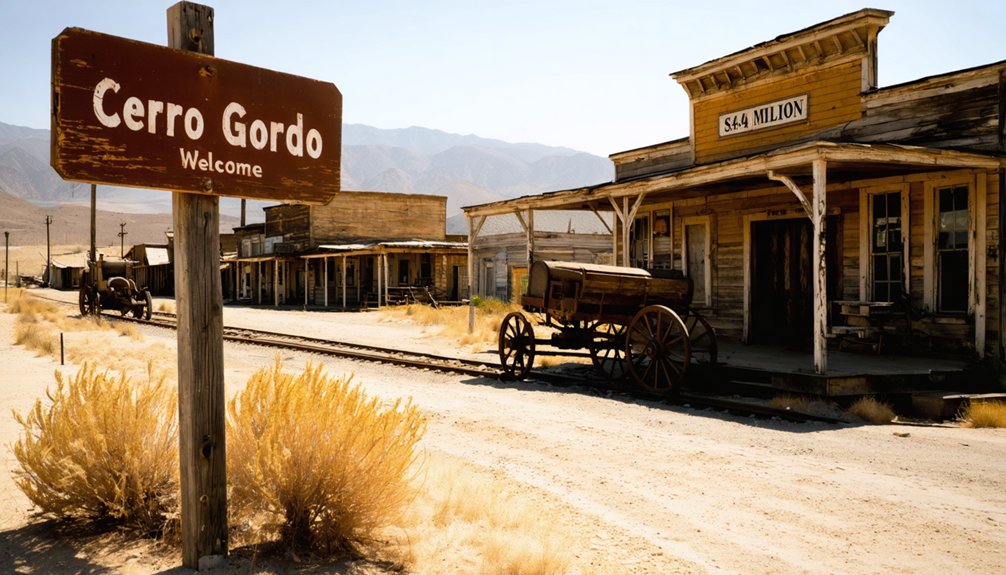
The middle tier is exemplified by Cerro Gordo‘s $1.4 million purchase. Investors acquired this silver mining town with plans for community revival, preserving its heritage while developing tourism potential.
Most ambitious is Malaysia’s Forest City—technically a “ghost city” due to low occupancy rather than abandonment. This multi-billion dollar development on artificial islands demonstrates how corporate investments create modern ghost towns when occupancy fails to match construction pace.
Hidden Expenses Beyond the Purchase Price
While the advertised price tag of a ghost town may seem straightforward, prospective buyers often encounter a labyrinth of hidden costs that can dwarf the initial purchase amount.
The romance of owning a piece of history quickly confronts the reality of extensive infrastructure restoration requirements—deteriorated buildings, non-existent utilities, and inaccessible roads demand significant capital.
Nostalgia meets financial reality when crumbling walls and missing infrastructure devour your restoration budget.
- Legal complexities including title searches, zoning restrictions, and environmental regulations can add tens of thousands in administrative fees
- Historic preservation requirements often mandate specialized materials and techniques that cost 3-5 times more than standard renovations
- Environmental remediation for former mining or industrial sites can reach millions depending on contamination levels
- Ongoing maintenance in remote locations typically costs 30-50% more than comparable properties in populated areas
These financial realities separate dreamers from serious ghost town revitalists who understand the true investment required.
Investment Potential: ROI Considerations for Ghost Town Buyers
While you’ll face significant financial risk renovating dilapidated structures in ghost towns, successful investors have documented transformation costs exceeding initial purchase prices by 300-500%.
Your renovation strategy must balance historical preservation with modern safety requirements, especially when targeting tourism revenue from visitors seeking authentic Western experiences.
Tourism-focused properties like Cerro Gordo demonstrate potential returns through event hosting, guided tours, and accommodation services that capitalize on America’s fascination with frontier history.
Risky Renovation Gambles
Investing in a ghost town’s renovation represents perhaps the ultimate high-stakes property gamble in today’s real estate market.
What begins as a romantic vision quickly transforms into a complex financial labyrinth where your renovation challenges multiply exponentially. Historical structures demand period-appropriate materials while simultaneously requiring modern code compliance—a costly contradiction.
Financial risks escalate when conventional lenders shy away, forcing reliance on hard-money loans with punishing terms.
Your bottomless renovation pit might include:
- Hidden structural issues requiring specialized equipment and expertise
- Environmental remediation costs not visible during initial assessment
- Infrastructure development from scratch—water, electricity, roads
- Compliance upgrades for historical authenticity that clash with modern building codes
Without established income streams during years of renovation, your investment faces a precarious timeline, making ghost towns a freedom-seeker’s paradox—unlimited potential with unquantifiable risk.
Tourism Resurrection Opportunities
Beyond the intimidating renovation challenges lie potentially lucrative tourism opportunities that can transform a ghost town from money pit to profit center.
The dark tourism market, valued at $31.9 billion in 2023, offers promising ROI paths—particularly in the paranormal tourism segment growing at 4.1% annually.
Your success hinges on developing diverse revenue streams through lodging, events, and merchandise while ensuring tourism sustainability through careful resource management.
Strategic investments in authentic experiences and supporting infrastructure can extend visitor stays and boost spending, especially when you connect your property to larger trail networks like those in Pennsylvania generating $1.7 million annually.
For ideal returns, balance heritage preservation with modern amenities, leverage partnerships with local tourism boards, and capitalize on media-driven interest in supernatural destinations that appeals particularly to couples seeking unique experiences.
How Economic Trends Impact Ghost Town Availability and Pricing
As economic headwinds continue battering the Texas real estate market, ghost towns and near-abandoned communities have emerged as unintended investment opportunities across the Lone Star State.
This evolution reflects the dramatic price declines in small towns like Sweetwater, where values plummeted 25% in just three years, creating entry points for ghost town acquisition that would have been unimaginable pre-pandemic.
- Economic migration patterns have accelerated population outflows, transforming once-viable communities into potential ghost towns available at bargain prices.
- Housing affordability paradoxically worsens as cheaper properties correlate with increased town desertion.
- Inventory surges across Texas (up 19.3%) have created a buyer’s market for abandoned properties.
- Small towns experiencing 20-25% value declines represent the first stage of ghost town formation.
Frequently Asked Questions
How Long Does the Typical Ghost Town Purchase Process Take?
Time is money when buying ghost towns. You’ll face a condensed purchase timeline of 7-30 days due to transaction complexities involving rapid financing, hard-money loans, and compressed closing schedules for these freedom-inspiring properties.
Are Foreign Investors Restricted From Buying American Ghost Towns?
No, you’re not restricted. Foreign ownership of American ghost towns faces minimal investment regulations unless national security concerns exist. You’re free to purchase these historic properties with the same rights as domestic investors.
What Zoning Challenges Exist When Repurposing Ghost Town Properties?
Like untangling century-old barbed wire, you’ll face strict zoning regulations when repurposing ghost towns. Property classifications often require conditional use permits, while nonconforming uses and minimum lot sizes restrict your freedom to revitalize these abandoned spaces.
Do Ghost Towns Come With Water Rights or Mineral Rights?
Ghost towns often include water rights and mineral ownership, but you’ll need verification since these valuable assets follow complex ownership patterns that evolved separately from surface rights throughout western settlement history.
Can I Finance a Ghost Town Through Conventional Mortgage Lenders?
Like Icarus flying too close to the sun, you’ll face overwhelming financing challenges with conventional mortgage lenders. They typically won’t offer mortgage options for ghost towns due to appraisal difficulties and unusual property evolution histories.
References
- https://www.youtube.com/watch?v=4LftYW04-CU
- https://www.youtube.com/watch?v=mk8A1n_gv6U
- https://www.youtube.com/watch?v=9NbQToO9gOE
- https://www.proptext.co/p/ghost-towns-real-estate-s-spookiest-investment
- https://www.youtube.com/watch?v=mEjb9dGwgtg
- https://www.youtube.com/watch?v=PM4keUzOP8A
- https://themortgagepoint.com/2024/10/25/americas-new-ghost-towns/
- https://thenationaldigest.com/you-can-now-buy-a-home-in-kansas-ghost-towns-for-the-cost-of-a-car/
- https://www.ezhomesearch.com/blog/towns-for-sale-in-the-usa/
- https://joybird.com/blog/top-ghost-towns-in-america/