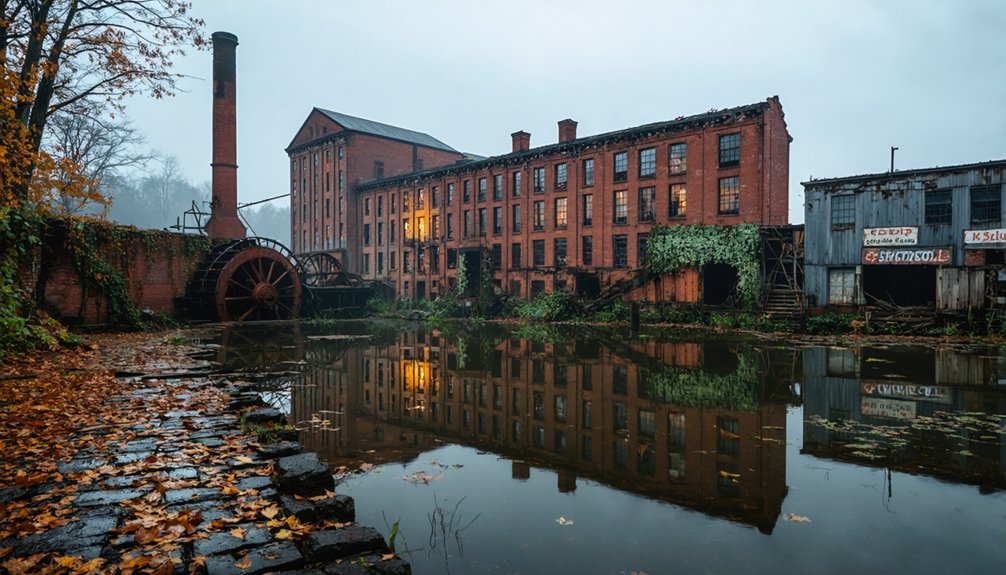
To connect with mill town spirits, visit during waning moon phases and bring simple offerings like honey or grain. Focus on water-powered rooms and worker gathering spaces where energy lingers. Use EMF meters for detection while maintaining respectful silence. Whisper greetings upon arrival and document any unusual sounds, temperature shifts, or sensations you experience. The forgotten souls of America’s industrial past await those who approach with reverence and the right techniques.
Key Takeaways
- Visit water-powered machinery rooms where centuries of grinding created strong emotional resonance and spiritual imprints.
- Offer small libations of cream, honey, or beer near millstones as respectful gifts to mill spirits.
- Align your visits with traditional lunar cycles, avoiding full moons when spiritual energies may be unstable.
- Use EMF meters, digital recorders, and infrared cameras to detect and document potential spirit interactions.
- Whisper respectful greetings upon arrival to acknowledge the mill’s soul and establish a connection with resident entities.
The Historical Significance of Mill Town Spirits
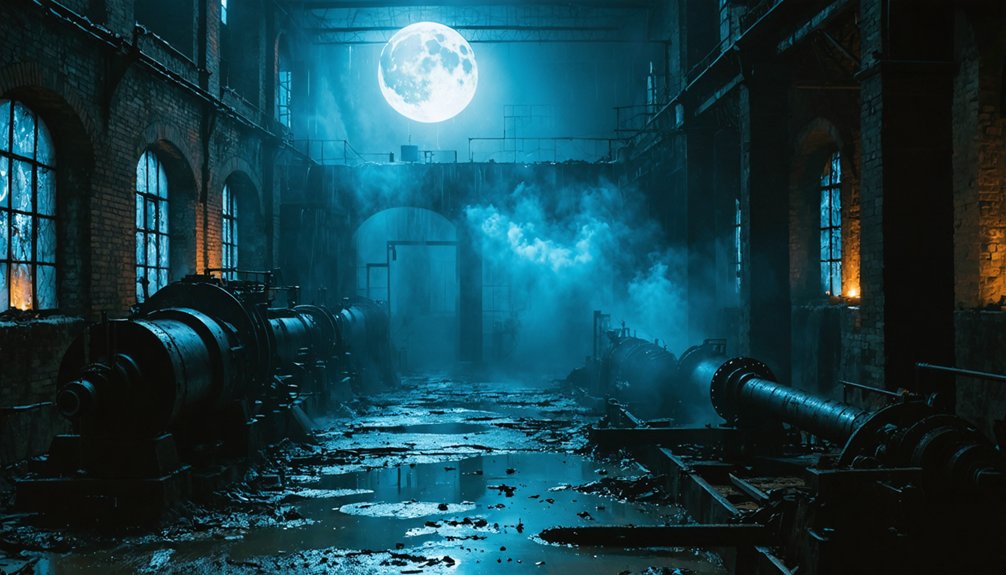
When you walk the grounds of America’s forgotten mill towns, you’re treading upon layers of spiritual history that stretch back centuries before European settlers ever arrived.
The Lenape people established intricate networks along the waterways where mills would later stand, their spiritual connection to these places embedded in the landscape. Their matrilineal clans—Turtle, Turkey, and Wolf—left energetic imprints that remain accessible today. They built natural dwellings called wigwams using materials from the surrounding environment. The rushing waters of Wassaic Creek once powered not only the gristmills and sawmills of settlers but also fueled the spiritual practices of indigenous communities.
What European settlers saw as mere industrial opportunity, indigenous peoples recognized as sacred confluences of water, earth, and sky. The 1737 “Walking Purchase” that displaced native inhabitants didn’t sever these spiritual ties—it merely buried them beneath sawdust and steam.
In places like The Mill at Anselma, indigenous spirits remain present, their energy acknowledged through contemporary ceremonies and trail systems honoring their enduring presence.
Sacred Spaces: Identifying Spiritual Hotspots in Old Mills
Three distinct types of spiritual hotspots exist within America’s abandoned mill complexes, each offering unique potential for paranormal encounters.
First, seek out water-powered machinery rooms where centuries of rhythmic grinding created vibrations absorbed by surrounding structures—these areas possess exceptional emotional resonance.
Second, explore worker gathering spaces like central squares or church foundations where concentrated human experience created energetic imprints in the spiritual geography.
Finally, investigate connecting zones where geological features like Vickery Creek’s three-hundred-foot gorge meet archaeological evidence of ancient habitation.
You’ll find the strongest paranormal activity where these elements converge—particularly in mills along established Indigenous trails or at convergence points of waterways like the Chattahoochee and Farmington Rivers, where millennia of layered human emotion remains accessible. Roswell Manufacturing Company’s ruins are especially active at dusk when many visitors report hearing echoes of mechanical sounds and voices from the mill’s operational past.
Similar phenomena occur at The Old Mill in Pigeon Forge, where the historic grist mill’s two centuries of continuous operation have infused the structure with particularly potent spiritual energy.
Tools and Techniques for Paranormal Investigation
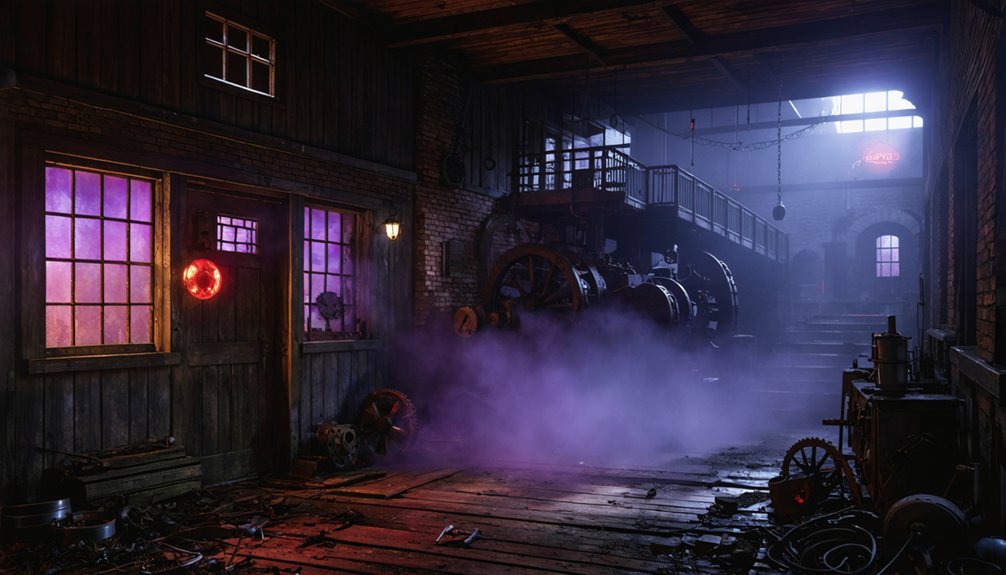
Successful paranormal investigations in historic mill complexes demand five essential categories of equipment to detect, document, and interact with the spectral echoes that linger within these industrial relics.
Start with detection devices like EMF meters and REM pods to identify energy fluctuations where spirits manifest. Environmental monitoring tools, including Kestrel meters and geophones, provide objective data that corroborates your subjective experiences.
For documentation, you’ll need digital recorders, infrared cameras, and timestamped video to capture evidence for later analysis.
When you’re ready for interaction, employ communication techniques using trigger objects like paranormal music boxes and dowsing rods. The Para4ce PMB Paranormal Music Box can alert investigators when spectral objects pass, combining vintage aesthetics with modern technology. Spirit boxes can facilitate real-time conversations with mill workers from beyond. The Estes Method Kit offers a specialized approach by combining a Spirit Box with headphones and blindfold for more controlled communication sessions.
Complete your investigation tools with portable DIY equipment—homemade EMF detectors, notebooks, and weather-resistant cases protect your gear while exploring these sacred industrial spaces.
Respectful Engagement: Rituals and Offerings for Mill Spirits
Four essential rituals form the foundation of respectful engagement with mill spirits, connecting modern paranormal investigators to centuries-old traditions.
When you visit historic mill sites, you’re entering spaces once considered “power stations of the soul.” Honor these energies by timing your investigations with traditional lunar cycles, avoiding full moons when spirits were believed to affect flour quality. Maintain gentle quietness around the mill to facilitate spirit communication.
- Pour small libations of cream, honey or beer near millstones as traditional spirit offerings.
- Bring bundles of corn or grain to place near the mill entrance before beginning your work.
- Whisper respectful greetings to the mill upon arrival, acknowledging its soul.
- Sprinkle a handful of flour in each corner of the mill to establish protective boundaries.
These mill rituals create two-way relationships with the indwelling spirits, inviting communication while maintaining respectful boundaries. Many investigators report better results when they leave small foundation sacrifices as payments to the mill spirits before conducting their work.
Documenting Your Encounters With Mill Town Entities
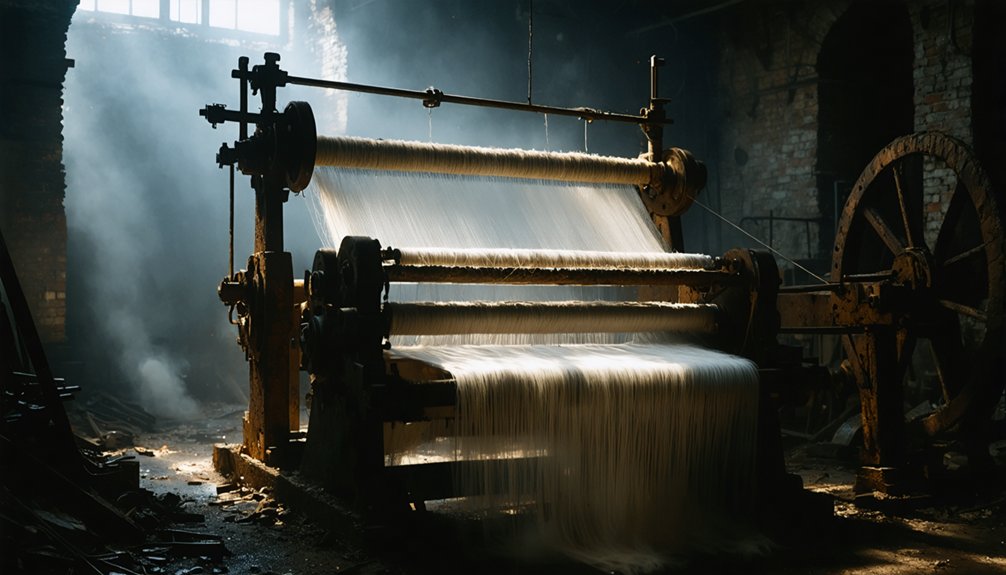
The meticulous documentation of your spiritual encounters in abandoned mill towns serves as the cornerstone of credible paranormal research.
Exploring abandoned towns in the Midwest allows researchers to uncover hidden stories of the past, where every crumbling building whispers secrets. These locations often become hotspots for paranormal activity, drawing enthusiasts eager to capture evidence of the unexplained. Each visit deepens the connection between history and the spiritual realm, making these towns invaluable to those on a quest for truth.
Begin by systematically logging each interaction, recording precise times, locations, and environmental conditions like temperature drops or unusual scents that might indicate a presence.
Capture potential evidence using multiple technologies—digital voice recorders for EVPs, thermal cameras for temperature anomalies, and full-spectrum photography to reveal entities invisible to the naked eye.
Conduct thorough witness interviews, recording testimonies with clear timestamps for later verification.
During analysis, cross-reference your findings across different data points. Did the EMF spike coincide with that whispered voice on your recorder?
Compare timestamps between equipment readings and sensory experiences to build compelling evidence of your mill town connections—transforming fleeting spiritual encounters into documented paranormal incidents.
Always maintain a healthy skepticism when reviewing your collected evidence to distinguish between genuine paranormal phenomena and natural environmental factors.
For optimal results, limit your investigation team to 3 to 6 members which provides sufficient coverage while minimizing disruptions that could scare away spiritual entities.
Community Resources and Guided Experiences
Many seekers of spiritual connection find their journey enhanced through structured community resources that bridge the visible and invisible worlds of mill towns. When you’re ready to deepen your experiences, professional guides versed in local lore can facilitate respectful encounters with resident spirits, providing historical context that enriches your understanding of their presence.
- Faith-based cultural centers offer immersive artisan experiences like traditional pottery and blacksmithing.
- Community workshops teaching colonial crafts create kinetic connections with past energies.
- Self-guided historic residence tours allow intimate sensing of lingering spiritual imprints.
- Themed haunted road trips provide structured itineraries to significant spiritual landmarks.
These resources transform solitary exploration into communal discovery. By participating in guided experiences, you’ll access layers of mill town heritage that might remain hidden to the casual observer, while maintaining the freedom to interpret encounters according to your personal spiritual framework.
Frequently Asked Questions
Can Children Sense Mill Spirits More Easily Than Adults?
Yes, children’s heightened spiritual sensitivity likely helps them detect mill spirits more readily. Your child’s intuition recognizes spirit presence without the skepticism and cognitive barriers that block adults from supernatural encounters.
How Do Seasonal Changes Affect Spirit Activity in Mills?
Spirit activity explodes during the autumn equinox when veils thin dramatically, while spring awakening often quiets them. You’ll notice more apparitions in winter’s stillness and fewer during summer’s bustling warmth.
Are Mill Spirits Attached to Specific Machinery or the Entire Building?
You’ll find mill spirits attached to both. Machinery attachments occur where trauma happened, while building energies capture souls throughout. The entire structure can hold memories, but specific equipment draws stronger presences.
Can Renovating Old Mills Disturb or Drive Away Resident Spirits?
Like disturbing a sleeping bear’s den, your renovation will disrupt spiritual energy in old mills. You’ll see increased activity as spirits react to changes—they’re not driven away, but their environment’s shifting foundations demand acknowledgment.
Do Spirits From Different Cultural Backgrounds Communicate Differently?
Yes, they do. You’ll find spiritual communication varies widely across cultures—Eastern spirits may use subtle signs while Western entities prefer direct contact. These cultural expressions shape how you’ll experience otherworldly encounters.
References
- https://getreidemuehle.com/en/halloween-special-en/the-mystical-world-of-grain-mills-ancient-rituals-and-mysterious-legends/
- https://roswellpulse.com/the-real-history-of-the-roswell-mill-cotton-courage-and-the-ghosts-that-remain/
- https://townline.org/there-is-still-plenty-of-life-and-afterlife-in-the-north-vassalboro-olde-mill/
- https://studyfinds.org/americas-ghost-towns/
- https://wondermyway.com/tag/mill-sites/
- https://www.old-mill.com/history
- https://en.wikipedia.org/wiki/Thorp_Mill
- https://www.thorp.org/restoration
- https://anselmamill.org/historical-insights/indigenous-history-at-the-mill
- https://tenmiledistillery.com/a-brief-history-of-wassaic/