If you’re searching for mining ghost towns in Arkansas, you’ll find Rush, Zinc, and Bonanza tucked into the Ozark Mountains. These zinc-driven communities surged during the late 19th and early 20th centuries, drawing thousands of workers before collapsing almost as fast as they’d risen. Rush remains the most accessible, protected by the National Park Service, while Zinc and Bonanza demand serious navigation. Each site holds archival evidence of Arkansas’s industrial transformation that you won’t want to miss.
Key Takeaways
- Arkansas’s Ozark Mountains experienced a zinc mining boom in the late 19th century, spawning ghost towns like Rush, Zinc, and Bonanza.
- Rush, near Buffalo National River, peaked at 5,000 residents during World War I and features three interpretive trails today.
- The National Park Service maintains Rush as a federally protected site with preserved structures and historical resources.
- Zinc and Bonanza offer rugged, unmediated exploration of mining ruins, sealed shafts, and collapsed infrastructure in remote terrain.
- Visitors should bring sturdy boots, water, and detailed maps, with spring and fall being the optimal visiting seasons.
Arkansas Ghost Towns and the Zinc Mining Boom That Built Them
When zinc transformed the Ozark Mountains of northern Arkansas in the late nineteenth century, it didn’t just reshape the regional economy—it built entire communities from scratch. Towns like Rush, Zinc, and Bonanza emerged directly from underground discoveries, their existence tied entirely to extraction cycles and ore prices.
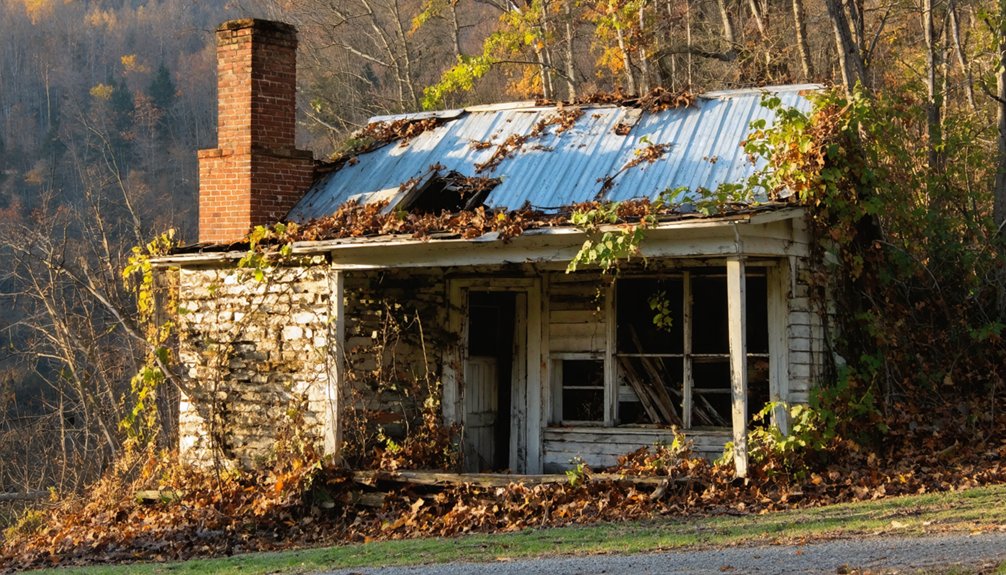
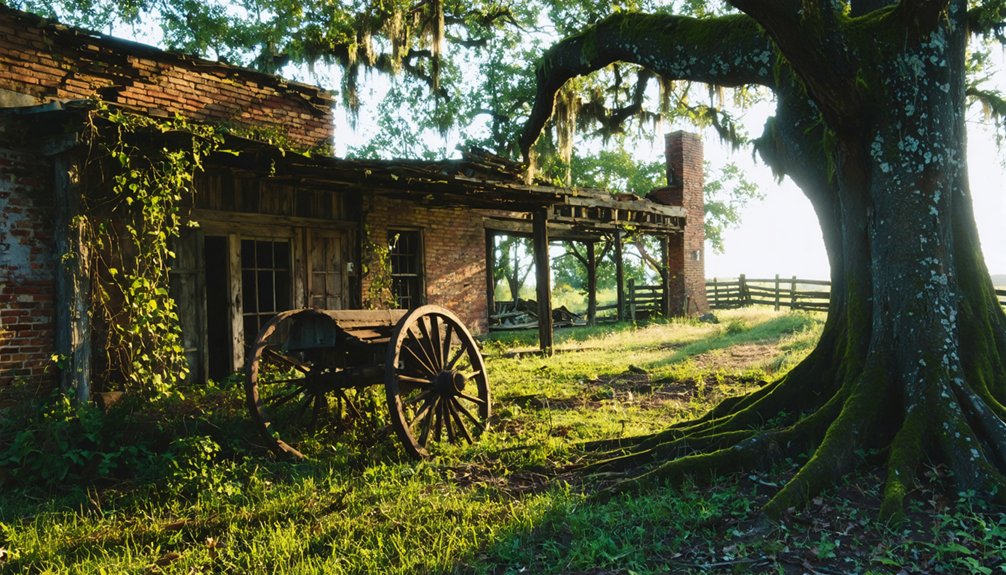
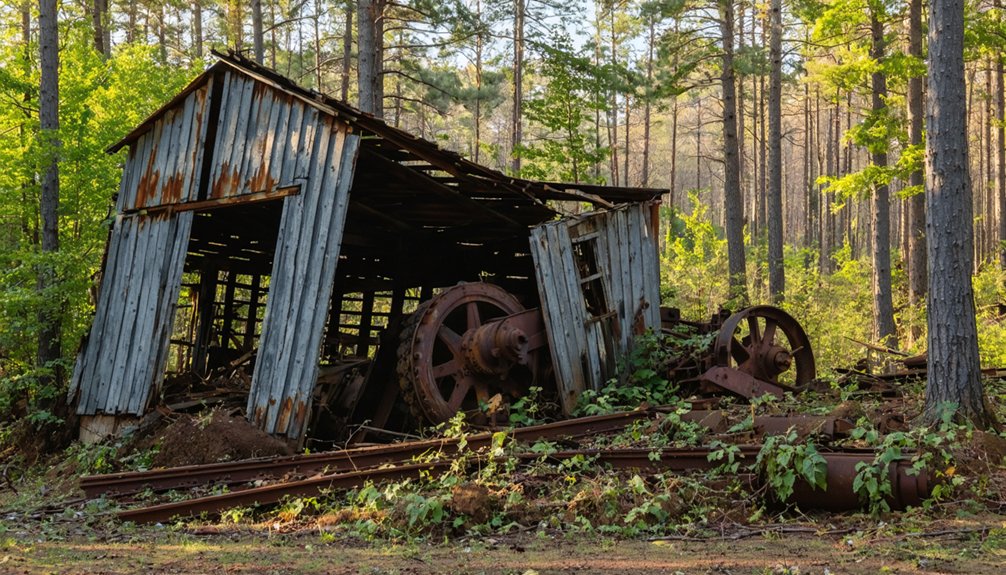
You can trace this zinc history through the physical remnants that still stand today—collapsed cabins, rusted equipment, sealed shafts.
Early miners applied underground mining techniques developed across Missouri’s lead belt, adapting them to Arkansas’s karst geology and zinc-rich creek districts. When World War I spiked demand, populations surged into the thousands.
Miners carried Missouri’s lead belt methods into Arkansas’s karst hollows, then war demand multiplied their numbers overnight.
When prices collapsed afterward, residents left almost overnight. What remains isn’t decay—it’s documentation. These ghost towns are unfiltered records of boom-and-bust economics written directly into the Ozark landscape.
Rush: Arkansas’s Best-Preserved Mining Ghost Town
Rush sits at the end of Marion County Road 6035, tucked against the Buffalo National River in north Arkansas, and it’s the most intact zinc mining ghost town the state has preserved.
Rush history traces back to the 1880s, when prospectors originally sought silver before zinc deposits redirected the entire district’s economic trajectory. By World War I, the population reached between 2,000 and 5,000 residents operating twelve underground mines.
Mining techniques centered on shaft and drift extraction, pulling zinc ore from Ozark limestone formations. You can walk three interpretive trails today — Monte Cristo, Morning Star Loop, and Mine Trail — examining standing structures, smelter ruins, and sealed mine entrances.
The National Park Service maintains these ruins as federally protected resources, meaning you observe them rather than collect from them.
Zinc and Bonanza: The Forgotten Arkansas Ghost Towns Worth Finding
Beyond Rush’s interpretive trails and federal signage, two other Arkansas ghost towns carry the same zinc-and-lead origins without the maintained infrastructure — and they’re worth the effort to locate.
Zinc and Bonanza, both rooted in 1880s zinc history, offer ghost town exploration largely untouched by commercial development or park service curation.
Zinc emerged alongside its namesake mineral deposits, leaving behind rugged ruins and sealed shafts.
Bonanza, equally remote within Ozark terrain, produced brief zinc and lead activity before collapsing into collapsed cabins and rusted equipment.
Neither town draws significant visitor traffic, which means you’ll encounter these sites closer to their original, unmediated condition.
Both are confirmed ghost towns with standing ruins.
You’ll need a map, patience, and willingness to navigate terrain that hasn’t been softened for casual visitors.
What You’ll Actually See at These Three Ghost Town Sites?
Each of the three ghost town sites — Rush, Zinc, and Bonanza — presents a materially distinct encounter, shaped by decades of abandonment, federal oversight levels, and the original scale of extraction activity.
At Rush, you’ll walk interpretive trails past ghostly structures — stores, homes, a smelter — maintained under National Park Service stewardship. Viewing remains from a distance preserves both safety and historical integrity.
Rush’s interpretive trails guide visitors past preserved structures — stores, homes, a smelter — under careful National Park Service stewardship.
At Zinc, you’ll navigate rugged terrain past sealed shafts and collapsed cabins, where mining relics surface with minimal institutional intervention.
Bonanza delivers the rawest experience — remote, uncommercialized, and largely unmediated. Collapsed infrastructure and corroded equipment define the landscape.
Each site rewards deliberate observation over casual tourism, offering you direct contact with Arkansas’s industrial past on its own ungoverned, material terms.
Visiting Rush, Zinc, and Bonanza: Dates, Roads, and What to Bring
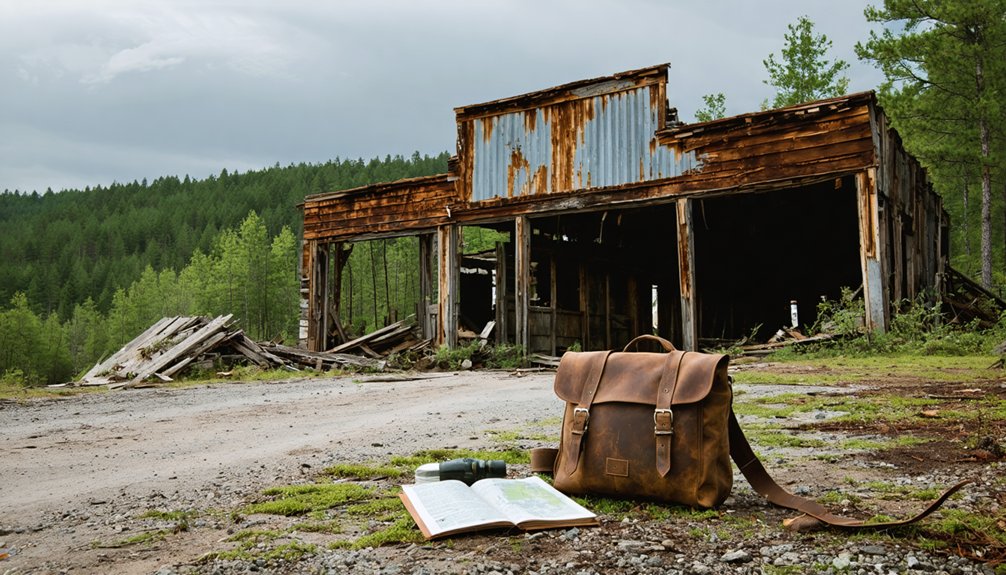
Knowing what awaits you at Rush, Zinc, and Bonanza is only half the preparation — getting there demands equal attention.
Rush Exploration begins on Marion County Road 6035 off Highway 14, where gravel roads lead to parking across from the main structures. Visit year-round, though spring and fall offer the most comfortable conditions.
For Mining History enthusiasts, Zinc and Bonanza require rugged off-road navigation through remote Ozark terrain, so bring a reliable vehicle. Pack sturdy boots, water, and a detailed topographic map since cell service fails in these hollows.
Closed mines on federal land mean you’ll observe rather than enter, so bring binoculars and a camera. Carry insect repellent from late spring through summer.
Respect posted boundaries — preservation protects what commercialization hasn’t already claimed.
Frequently Asked Questions
Can Visitors Legally Collect Mineral Specimens From Rush Mining Sites?
You can’t legally collect mineral specimens at Rush’s federal sites without proper legal permits, as mineral rights belong to the National Park Service. The Philadelphia mine’s private sale may offer alternative collecting opportunities worth researching.
Are There Guided Tours Available at Any of These Ghost Towns?
Like whispers from Arkansas’s mining past, ghost town tours aren’t formally offered, but you’ll find the National Park Service’s interpretive trails at Rush actively guide your understanding of the region’s historical significance independently.
What Wildlife Might Visitors Encounter While Exploring These Remote Sites?
You’ll encounter remarkable wildlife sightings throughout these Ozark sites, reflecting the region’s rich ecological diversity. Expect white-tailed deer, wild turkey, black bears, copperheads, and migratory songbirds thriving undisturbed within Buffalo National River’s federally protected wilderness corridors.
Were Any Famous Historical Figures Associated With These Arkansas Mining Towns?
Like whispers through abandoned shafts, no famous miners are directly tied to these towns. Yet you’ll find historical artifacts hinting at anonymous pioneers whose zinc discoveries shaped Arkansas’s Ozark heritage during the World War I boom.
Did Any Mining Families Leave Descendants Still Living in Marion County Today?
Yes, you’ll find descendants of Rush’s mining families still rooted in Marion County today. They carry the mining legacy forward through family stories, oral histories, and archival records that connect you directly to the region’s zinc-boom ancestry.
References
- http://rockhoundingar.com/rush.php
- https://onlyinark.com/places-and-travel/rush-arkansas-ghost-town/
- https://www.barefoottraveler.com/rush.html
- https://everafterinthewoods.com/forgotten-ghost-towns-in-arkansas-that-are-eerially-scenic/
- https://www.youtube.com/watch?v=ToQlvasj_ow
- https://en.wikipedia.org/wiki/List_of_ghost_towns_in_Arkansas
- https://www.tripadvisor.com/Attraction_Review-g32032-d12579256-Reviews-Rush_Historic_District-Yellville_Arkansas.html
- https://www.axios.com/local/nw-arkansas/2024/01/02/arkansas-ghost-towns-mapped
- https://www.uaex.uada.edu/environment-nature/musings-on-nature-blog/posts/ghost-towns.aspx