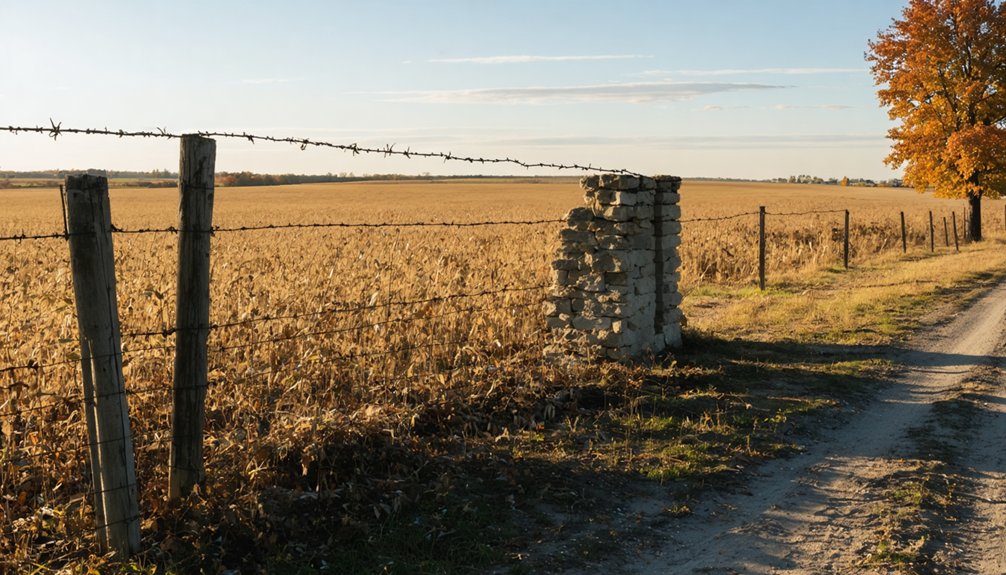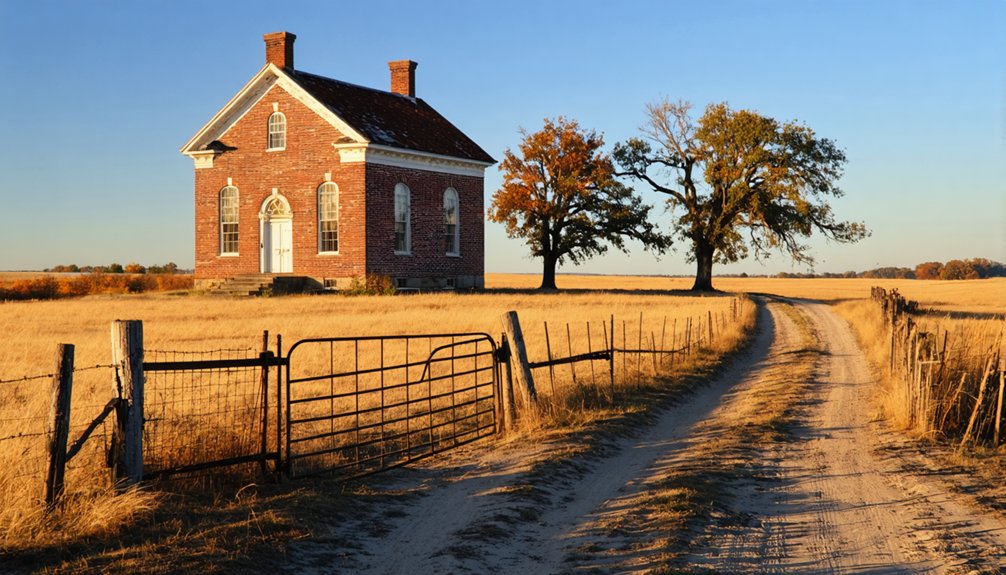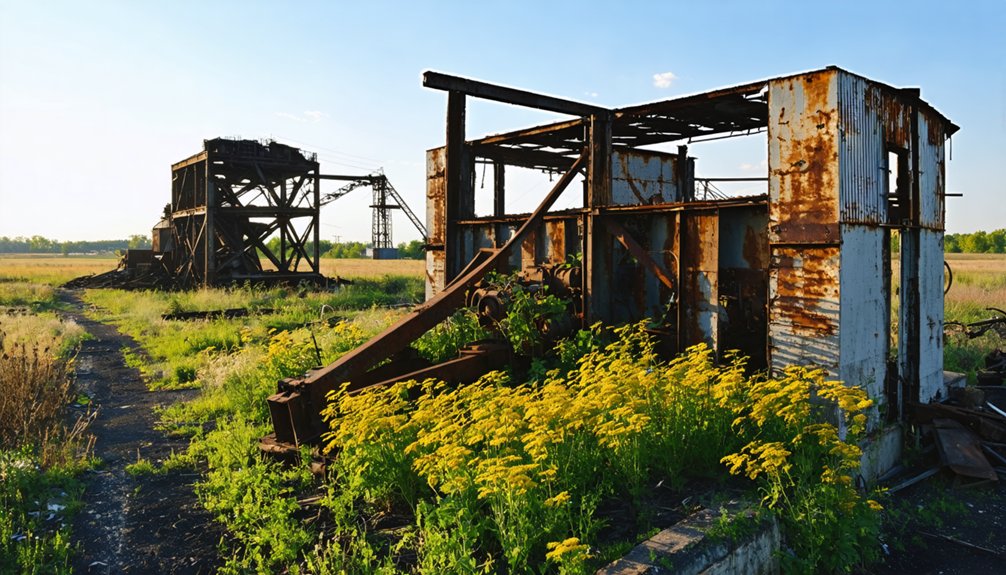
Illinois’s mining ghost towns, like Brownsville and Eldred, emerged overnight when coal companies platted streets, built company houses, and recruited immigrant workers — then collapsed just as fast when the veins ran dry. You’ll find abandoned foundations, overgrown cemeteries, and crumbling storefronts scattered across coal country, each site preserving a compressed history of boom-and-bust economics. If you want to understand what built these communities — and what destroyed them — there’s far more to uncover.
Key Takeaways
- Illinois mining ghost towns like Brownsville and Eldred were built around coal veins and collapsed when resources were depleted.
- Company houses, stores, churches, and schools rapidly appeared following coal discovery, creating tight-knit immigrant communities.
- Italian and Polish immigrants contributed labor and cultural heritage, establishing ethnic neighborhoods and mutual aid networks.
- Economic collapse caused rapid depopulation, with census records documenting drastic population decline and community disintegration.
- Brownsville and Eldred are accessible via public roads, with foundations, cemeteries, and storefronts remaining as historical evidence.
How Coal Mining Built Illinois Towns From Nothing
Coal mining didn’t just support Illinois towns — it created them outright. Wherever miners struck a coal vein, entire communities materialized: company houses lined dirt streets, general stores opened, churches formed, and schools followed. The coal industry didn’t wait for infrastructure — it built it simultaneously with extraction.
You can trace every major development decision back to a single variable: economic impact. When coal prices rose, towns expanded. When veins depleted or markets collapsed, residents left almost overnight. Mine whistles literally regulated daily schedules, signaling when workers started, stopped, and returned home.
These weren’t towns that happened to include mines — they were mines that happened to include towns. That distinction matters when you’re trying to understand why so many of them vanished completely.
Illinois Mining Ghost Towns That Coal Created and Abandoned
When you trace Illinois’s ghost towns back to their origins, you’ll find coal at the center of nearly every story—towns like Brownsville in Jackson County and Eldred in Greene County didn’t grow organically but were conjured into existence by underground veins of coal.
You can still walk through these places and see how completely the industry shaped them: company houses, mine infrastructure, immigrant neighborhoods built by Italian and Polish workers chasing economic opportunity.
Once the veins depleted and the mines closed, the economic logic that built these towns simply vanished, leaving behind scattered foundations, boarded storefronts, and cemeteries filled with young miners as the only reliable evidence they ever thrived.
Coal Towns Rise
Scattered across Illinois, dozens of towns owe their entire existence to coal. When miners struck a viable vein, settlements appeared almost overnight. You’d find company houses lining dirt streets, general stores stocking shelves, and churches filling pews within months of discovery.
Mine whistles dictated daily rhythms, and community bonds formed quickly among workers sharing identical risks and wages. Immigrant families from Italy and Poland arrived throughout Jackson and Greene counties, trading familiar homelands for unfamiliar promise.
Economic resilience depended entirely on one resource. Towns in southern Illinois warranted U.S. government investment during the 1940s, including housing construction and armed mine security, signaling how strategically valuable these operations had become.
Coal didn’t just fuel industry — it built entire worlds from nothing, complete with schools, cemeteries, and shared identity.
Mining Collapse Aftermath
Those same coal veins that built entire worlds could also erase them. When the coal ran out, towns didn’t fade gradually — they collapsed fast. Families packed what they could carry and left. Businesses shuttered. Schools emptied. What remained were foundations, overgrown cemeteries, and silence.
Post mining revitalization rarely followed. Unlike larger industrial cities, these communities lacked diversified economies to absorb the shock. Miners’ skills didn’t transfer easily, and geography isolated them further from emerging opportunities.
Yet community resilience occasionally surfaced. Some residents stayed, preserving what little infrastructure remained. Scattered foundations and boarded storefronts now serve as historical records you can walk through, tangible proof that ordinary people built extraordinary lives — until the resource that gave them everything simply disappeared.
The Miners, Immigrants, and Families Who Called These Ghost Towns Home
When you examine the human foundation of these ghost towns, you find immigrant workers from Italy and Poland who arrived seeking economic opportunity and built tight-knit communities around the mines.
These families shaped the cultural and social fabric of each town, yet their specialized mining skills offered little transferability when coal veins depleted and operations shut down.
You can trace this vulnerability directly through cemetery records, where young miners and children appear with troubling frequency, underscoring the brutal calculus that left families with few options beyond abandonment when the industry collapsed.
Immigrant Workers Shaped Communities
Behind the coal dust and company whistles stood real people—Italian and Polish immigrants who’d crossed oceans seeking economic opportunity, only to plant roots in Illinois mining towns that would eventually vanish beneath overgrown brush and silence.
Their immigrant contributions extended beyond raw labor. They built churches, established ethnic neighborhoods, and transferred Old World craftsmanship into underground extraction work. In Eldred, these families constructed community infrastructure from nothing, transforming a Greene County settlement into a functioning town built for thousands.
Community resilience defined their daily existence. When mines faltered, families adapted through mutual aid networks and shared cultural traditions.
Yet specialized mining skills offered little transferability when operations permanently closed. You can trace their presence today through cemetery records, scattered foundations, and the surnames still etched into crumbling headstones across southern Illinois.
Families Behind The Mines
Mining families didn’t simply follow coal veins into Illinois—they built entire social ecosystems around extraction work, transforming raw settlements into communities with distinct identities.
Italian and Polish immigrants carried cultural heritage across oceans, establishing churches, traditions, and social structures that outlasted the mines themselves.
You’ll find their legacy embedded in cemetery records, where young miners and children appear with alarming frequency—stark evidence of brutal working conditions families endured daily. Mine whistles didn’t just signal shift changes; they synchronized entire households around extraction schedules.
Community resilience emerged from necessity. When coal prices collapsed or veins depleted, families faced impossible choices: abandon everything they’d built or remain in economically hollowed-out towns.
Most left. Those who stayed inherited ghost towns their grandparents had constructed with genuine sacrifice.
Specialized Skills, Limited Options
Miners who extracted coal from Illinois seams developed expertise that had almost no application outside the mines themselves. Their specialized roles — operating drilling equipment, reading underground geological formations, managing ventilation systems — demanded years of experience yet translated poorly into broader labor markets.
When veins depleted and operations shuttered, these workers faced severe employment limitations with few viable alternatives nearby.
Immigrant families from Italy and Poland had relocated specifically chasing mining wages, embedding themselves in communities built entirely around extraction. Once those communities collapsed, relocation became the only rational choice.
Young men left first, followed by entire households. You’d find their departure written plainly in census records: hundreds present one decade, dozens the next.
The specialized knowledge they’d mastered became economically worthless almost overnight, leaving both workers and towns without a future.
Why Coal Vein Depletion and Railroad Decline Doomed These Illinois Towns
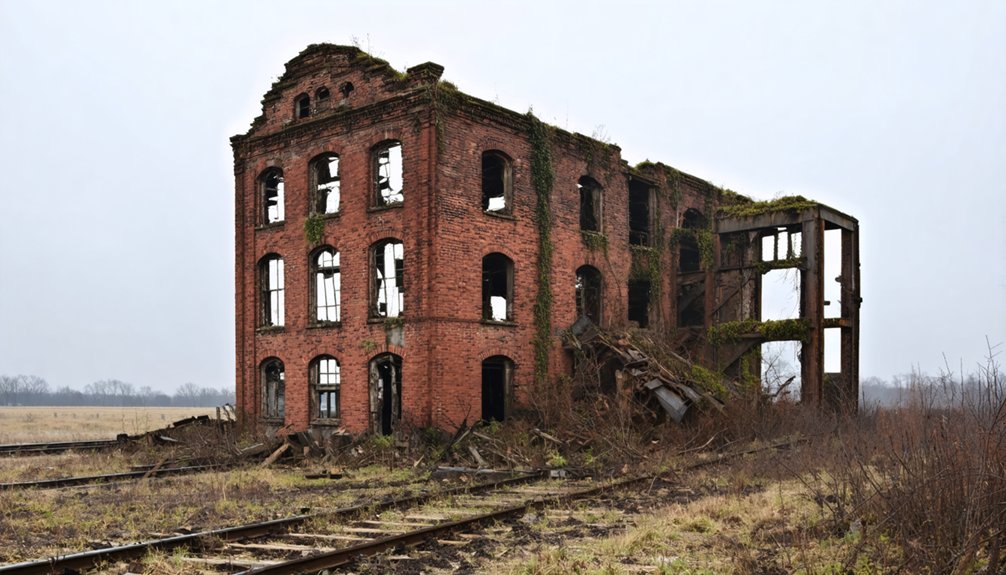
When the coal veins ran dry, Illinois mining towns didn’t just lose their primary industry—they lost the only reason they’d existed in the first place.
Economic resilience required diversification these communities never pursued. Mining heritage became their identity and their trap simultaneously.
Railroad decline compounded the devastation. Towns that survived initial mine closures often depended on rail lines connecting them to broader markets. When those lines disappeared, so did their remaining commercial lifelines.
You can trace this double collapse across Jackson, Greene, and surrounding counties—communities that had no fallback industries, no alternative employers, and no infrastructure beyond what coal demanded.
Families packed what they could carry and left. The pattern repeated itself with grim predictability: resource depletion, economic freefall, abandonment, silence.
Can You Still Visit These Illinois Mining Ghost Towns?
Yes, you can still visit many of these Illinois mining ghost towns, though what you’ll find varies greatly depending on the site.
Some locations offer structured ghost town exploration through maintained cemetery access and marked historical sites. Others require traversing overgrown terrain where scattered foundations and collapsed structures are all that remain.
Brownsville and Eldred sit on accessible public roads, letting you move through them at your own pace without guided restrictions.
Historical preservation efforts vary considerably — some sites retain documented records through local historical societies, while others exist only through cemetery registries and archived photographs.
Before visiting, confirm land ownership, as certain properties remain privately held.
Bring maps, research county records beforehand, and respect posted boundaries. The evidence you’ll uncover rewards careful, methodical exploration.
What Foundations, Cemeteries, and Museums Survive at These Sites?
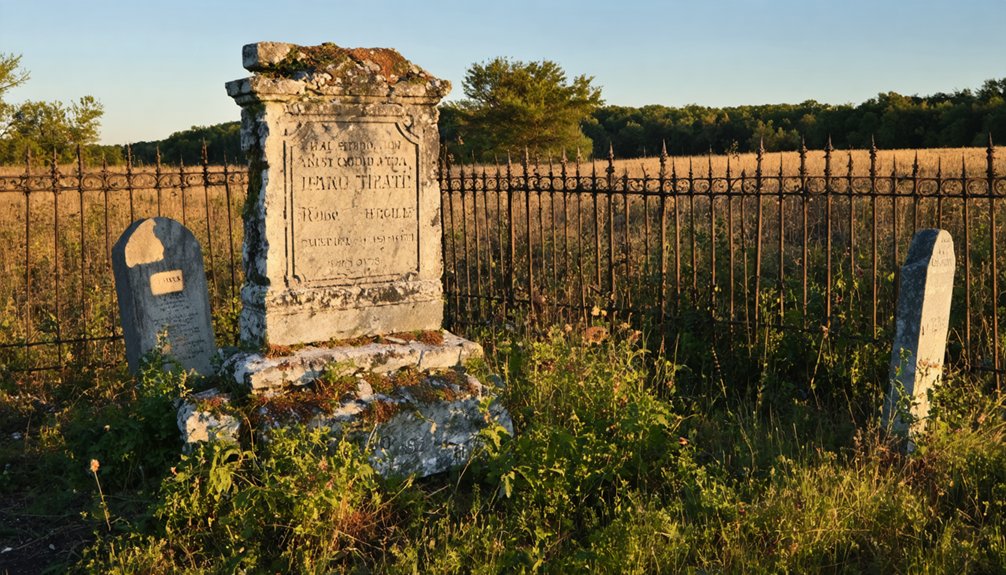
Physical remnants across Illinois mining ghost towns fall into three distinct categories: structural foundations, burial grounds, and institutional archives.
When you explore Brownsville, scattered foundations and overgrown cemeteries represent the primary surviving evidence of peak-era habitation. Cemetery exploration reveals sobering demographic patterns — young miners and children appear frequently in burial records, documenting the brutal realities of extraction labor.
Brownsville’s overgrown cemeteries tell hard truths — young miners and children buried young, casualties of extraction’s relentless toll.
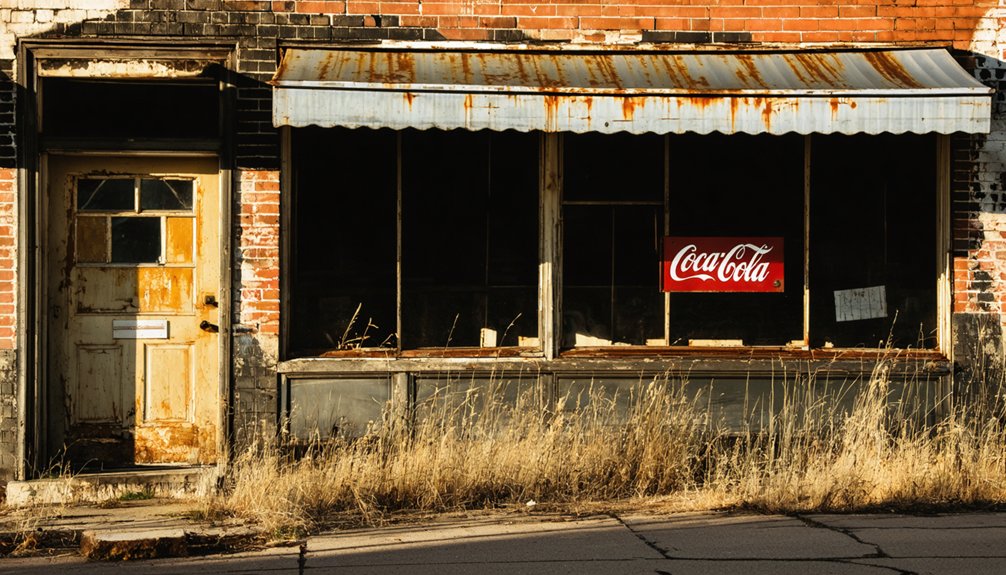
Eldred’s abandoned main street preserves boarded storefronts you can still observe today, while Rosiclare’s American Fluorite Museum formerly housed company records and mining artifacts before closing.
Historical preservation efforts vary dramatically across sites. Some locations maintain accessible cemetery grounds; others have surrendered entirely to vegetation.
You’ll find mine tunnel evidence still visible beneath certain towns, offering verifiable geological documentation of operations that once sustained thousands.
Frequently Asked Questions
Did Any Illinois Mining Towns Successfully Transition to Different Industries?
Few did. You’ll find that limited economic diversification and scarce local entrepreneurship left most Illinois mining towns unable to pivot successfully, making single-industry dependence their fatal flaw and ultimate collapse nearly inevitable.
How Dangerous Were the Working Conditions Inside Illinois Coal Mines?
Imagine descending into darkness daily with minimal protections. You’d face cave-ins, gas explosions, and equipment failures constantly. Mine safety was nearly nonexistent, and historical accidents claimed young miners’ lives, as cemetery records from Illinois towns tragically confirm.
Were Mining Company Owners Held Accountable for Town Abandonments?
Mining companies weren’t held accountable for town abandonments. You’ll find that weak mining regulations and minimal corporate responsibility allowed owners to extract resources, close operations, and abandon communities without legal or financial consequences for displaced residents.
Did Government Assistance Programs Help Displaced Miners Find New Employment?
Like Steinbeck’s Okies, you didn’t find much relief—government assistance rarely provided meaningful job training for displaced miners, and the economic impact of mine closures left your community’s workforce with few viable pathways forward.
How Did Mine Closures Affect the Mental Health of Remaining Residents?
Mine closures devastated your community’s mental well-being, leaving you with grief, isolation, and economic despair. You’d witness community resilience fracture as neighbors departed, making emotional recovery nearly impossible when boarded storefronts and empty streets constantly reinforced your town’s irreversible collapse.
References
- https://everafterinthewoods.com/8-forgotten-ghost-towns-in-illinois-that-are-quietly-fascinating/
- https://www.youtube.com/watch?v=fcV1Ybd2cnA
- https://en.wikipedia.org/wiki/List_of_ghost_towns_in_Illinois
- http://cantontornado36.blogspot.com/2017/04/fulton-county-ghost-towns-part-2.html
- https://drloihjournal.blogspot.com/p/lost-towns-of-illinois-series.html
- https://www.magnumphotos.com/newsroom/economy/peter-van-agtmael-power-down/
- https://www.youtube.com/watch?v=gM3ZIgtFzBk
- https://www.freakyfoottours.com/us/illinois/