Planning a ghost town road trip to High Trestle, Vermont means venturing deep into the Green Mountains to find a forgotten logging and railroad community slowly being swallowed by forest. You’ll navigate backcountry roads from Burlington, picking your way through crumbling foundations, rusted remnants, and overgrown ruins. Fall foliage and late spring are your best windows to visit. Pack sturdy gear, respect posted boundaries, and brace yourself — there’s far more to this eerie destination than first meets the eye.
Key Takeaways
- High Trestle is an abandoned Vermont logging town featuring crumbling foundations, rusted remnants, and eerie paranormal legends attracting urban exploration enthusiasts.
- Travel from Burlington via I-89, Route 2, Route 302 South, Route 110 South, then navigate unmarked forest roads to reach High Trestle.
- Visit during fall foliage (September–October) or late spring (May–June); avoid November–April due to impassable mud and snow conditions.
- Pack sturdy boots, thick gloves, a respirator mask, and offline GPS maps, as cell service is unreliable throughout the area.
- Never explore alone, respect posted trespassing signs, watch for unstable structures, and always carry a first-aid kit for emergencies.
What Is High Trestle, Vermont’s Forgotten Ghost Town?
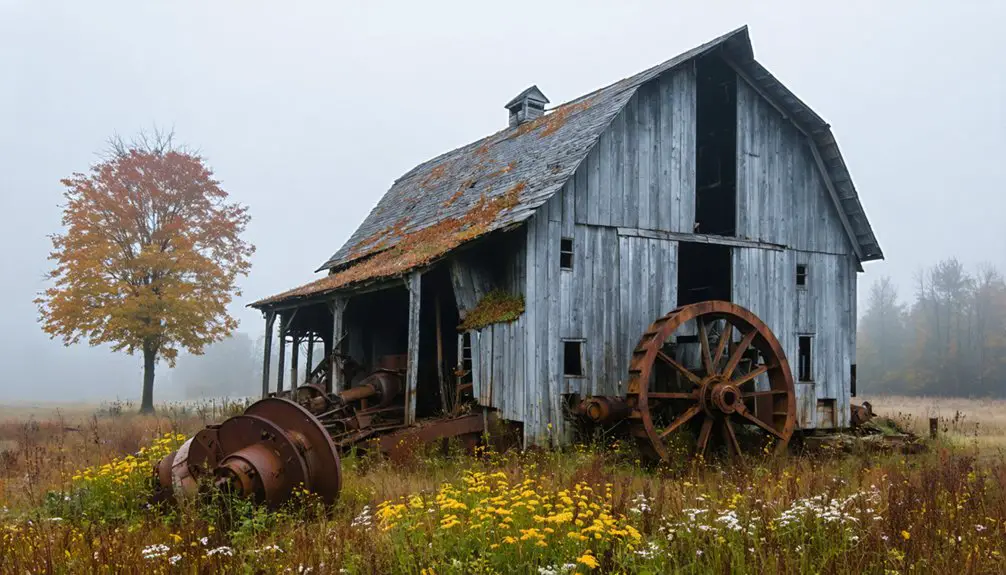
Nestled deep in Vermont’s rugged Green Mountains, High Trestle is a forgotten ghost town that’s slowly being reclaimed by the forest after decades of abandonment.
Once a thriving logging and railroad community, this lost history has largely vanished beneath decades of overgrowth, leaving behind crumbling foundations, rusted remnants, and eerie silence.
You’ll find High Trestle’s story woven into Vermont’s broader industrial past, when timber operations drove entire communities into remote wilderness areas.
When the lumber ran out, so did the people.
Today, urban exploration enthusiasts seek out this hidden relic, drawn by the thrill of discovering what time forgot.
If you crave freedom, adventure, and raw, unfiltered history, High Trestle delivers an experience that no museum or guided tour ever could.
Why High Trestle Was Abandoned: and Never Came Back
When the last timber came down and the sawmills fell silent, High Trestle’s fate was sealed. The abandonment reasons weren’t random — they were devastating and systematic. Understanding this town’s historical significance means confronting what truly killed it:
- Logging industries stripped the surrounding forests bare, eliminating the town’s economic foundation overnight.
- Rail lines rerouted away from High Trestle, severing its only connection to outside markets.
- Harsh Vermont winters accelerated structural deterioration once maintenance crews stopped showing up.
- Residents simply walked away, leaving behind everything they’d built generation after generation.
Nobody rescued High Trestle. No investors came. No government intervened. The land reclaimed what humans abandoned, and the forest swallowed the streets whole.
That’s exactly why you need to see it before nature finishes the job.
Local Legends and Paranormal Stories From High Trestle
The silence High Trestle left behind didn’t stay empty for long — at least, not according to the people who’ve wandered these overgrown streets after dark. Local myths describe flickering lights moving through the tree line, lanterns with no visible source drifting between collapsed foundations.
Flickering lights drift through the tree line here — lanterns with no source, no explanation, no intention of being ignored.
Longtime residents from surrounding towns warn newcomers not to linger near the old mill site at dusk.
Ghostly encounters reported here follow a strange pattern — footsteps on rotting floorboards inside structures that shouldn’t hold weight, whispered voices carried on still air. Some visitors claim their compasses spin without explanation.
Whether you’re a skeptic or a true believer, High Trestle carries an undeniable atmospheric weight. You’ll feel it the moment the tree canopy closes overhead and the road behind you disappears.
How to Get to High Trestle, Vermont
If you’re starting your ghost town adventure from Burlington, you’ll head south on I-89 before picking up Route 2 toward the heart of Vermont’s backcountry.
The nearest major airport is Burlington International, where you can rent a car — because public transportation won’t get you anywhere near this remote destination.
Pack your GPS and a paper map as a backup, since cell service gets unreliable once you push deeper into the rural terrain surrounding High Trestle.
Driving Routes From Burlington
Nestled in the hills of central Vermont, High Trestle sits roughly two hours southeast of Burlington, making it an achievable day trip or a natural starting point for a longer ghost town crawl.
From Burlington, follow these routes to reach this haunting reminder of abandonment reasons and forgotten ghost town history:
- Take I-89 South toward Montpelier, then exit onto Route 2 East.
- Merge onto Route 302 South through Barre, watching the landscape shift from city to wilderness.
- Follow Route 110 South through Washington, where pavement gives way to gravel.
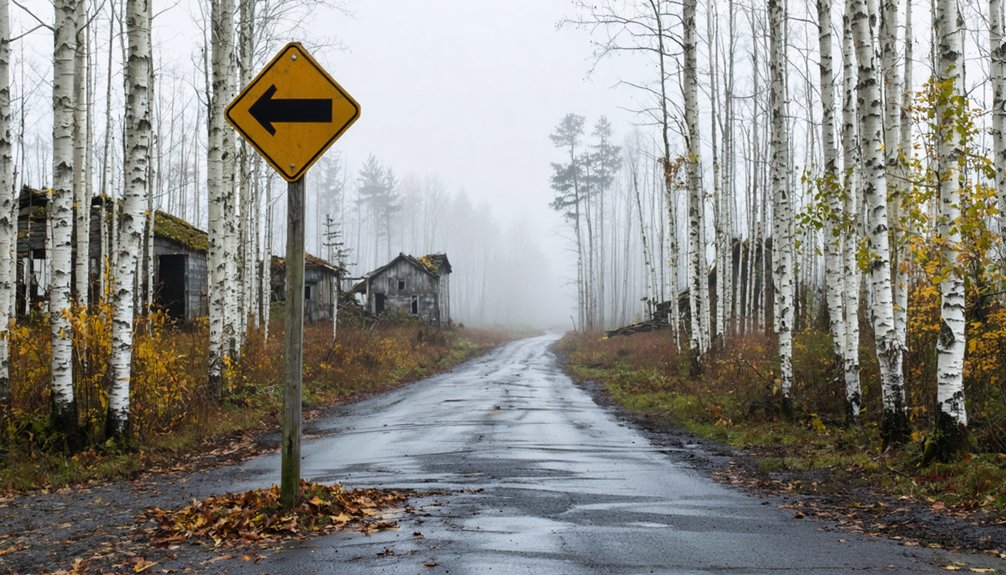
- Turn onto unmarked forest roads leading into High Trestle’s hollow silence.
Pack your maps, charge your phone, and embrace the freedom of chasing Vermont’s forgotten past on your own terms.
Nearest Airport And Transportation
Burlington International Airport (BTV) serves as your closest major gateway to High Trestle, sitting roughly two hours northwest of the ghost town via I-89 South and Route 302.
From BTV, your transport options include renting a car, which gives you the most freedom to explore surrounding areas at your own pace. Rideshare services operate throughout Burlington but become unreliable once you venture into rural Vermont, so a rental is strongly recommended.
Book local accommodations in Montpelier or Barre, both positioned conveniently along your route and offering independent inns and budget-friendly motels.
These towns also serve as solid supply stops before you push deeper into Vermont’s backcountry. If you’re flying in, arrive the evening before to rest and prep your gear for an early morning departure.
Standing Structures, Trails, and Ruins You’ll Find at High Trestle
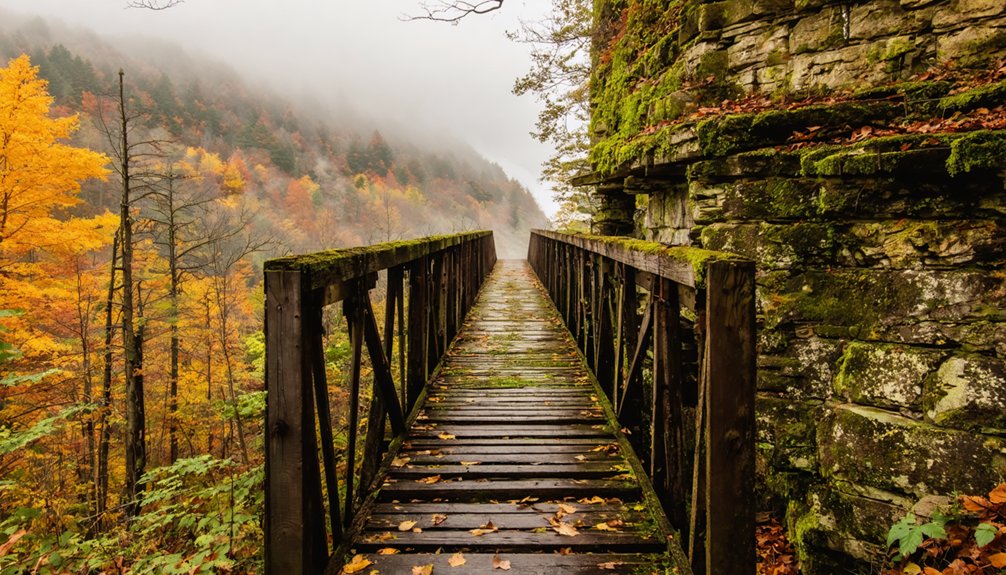
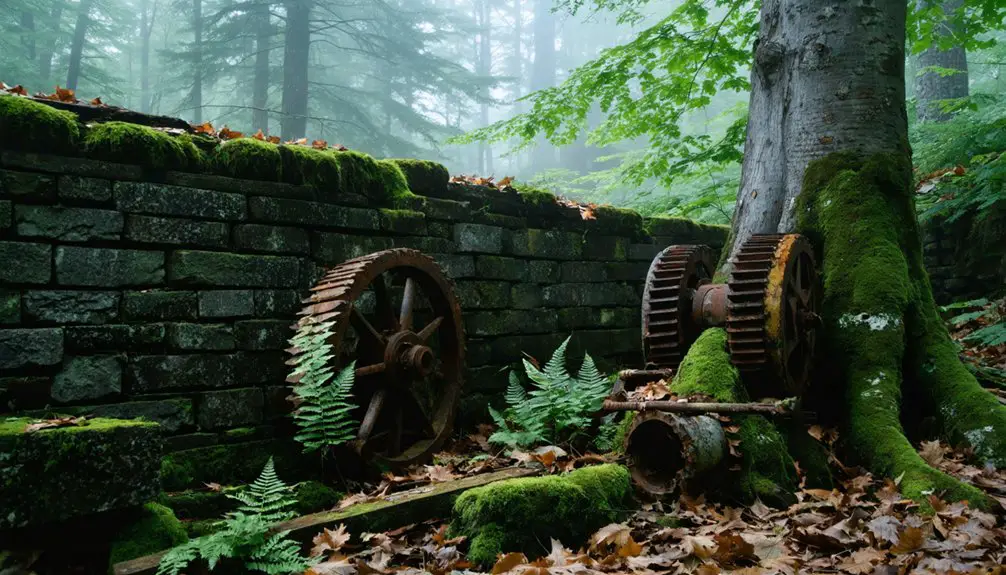
Once you arrive at High Trestle, you’ll find a haunting landscape where crumbling foundations, overgrown cellar holes, and remnants of old structures tell the story of a community long abandoned.
Rugged trails wind through the site, guiding you past these ghostly ruins and offering glimpses of what life once looked like here.
Keep your eyes open as you explore, because the standing structures and scattered remnants reward curious visitors who take the time to look closely.
Notable Standing Structures
Three crumbling stone foundations are among the most striking remnants you’ll encounter at High Trestle. Their moss-covered walls still hinting at the homes and storefronts that once anchored this mountain community.
These abandoned structures carry deep historical significance, connecting you directly to the lives of Vermont’s forgotten settlers.
You’ll find yourself standing before:
- A collapsed mill foundation where workers once powered the local economy.
- A church cellar hole framed by ancient sugar maples.
- A farmstead’s root cellar, still remarkably intact beneath tangled brush.
- Stone walls marking property boundaries that families defended for generations.
Walk slowly through each site. Let the silence speak.
These aren’t just ruins — they’re evidence that real people carved meaningful lives from this unforgiving Vermont wilderness before everything went quiet.
Scenic Trails and Ruins
Winding through the overgrown heart of High Trestle, several trails connect the site’s most compelling ruins, pulling you deeper into the landscape with each step. Hidden pathways branch off the main route, leading you past collapsed foundations, crumbling stone walls, and remnants of structures that once defined daily life here.
You’ll want sturdy boots — the terrain rewards those who push beyond the obvious paths.
Follow the ridgeline east, and you’ll reach scenic overlooks that frame the surrounding wilderness in ways that feel almost cinematic. Weathered timber, rusted ironwork, and moss-covered cellar holes mark your route like natural waypoints.
Each ruin tells a fragment of the town’s story, and the further you explore, the more clearly that story takes shape around you.
When to Visit High Trestle: Foliage, Weather, and Road Access
Timing your visit to High Trestle makes all the difference between a memorable adventure and a frustrating dead end — literally. Vermont’s unpredictable terrain demands smart planning.
Best times to visit:
- Late September–mid-October — Peak foliage photography opportunities paint the hillsides in amber and crimson; trails feel electric with color.
- Late spring (May–June) — Snow recedes, dirt roads reopen, and wildflowers reclaim abandoned foundations.
- Avoid November–April — Mud season and snowpack make remote access roads genuinely impassable, trapping unprepared vehicles.
- Summer weekdays — Fewer crowds, longer daylight, and ideal weather preparation conditions for extended exploration.
Always check Vermont road conditions before departing.
Pack layers regardless of season — elevation shifts happen fast, and the mountain doesn’t negotiate with underprepared travelers.
Where to Stay Near High Trestle, Vermont
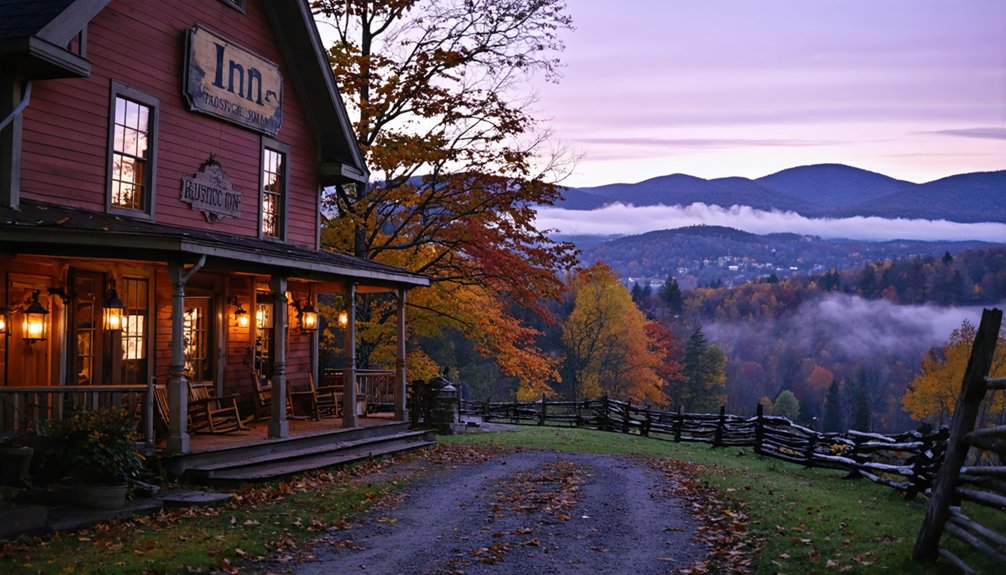
Staying near High Trestle means choosing between rustic solitude and small-town comfort, and both options reward you differently.
If you crave independence, dispersed camping along nearby forest roads lets you wake up inside the wilderness itself. For something more structured, Bennington and Manchester offer solid accommodation options ranging from budget motels to charming bed-and-breakfasts just a short drive away.
Don’t overlook local eateries when you’re planning your stay. Bennington especially delivers diners and taverns where locals actually eat, giving you honest food without tourist markups.
Bennington’s diners and taverns serve honest, local food — no tourist markups, just the real thing.
Stock up on supplies before heading toward High Trestle, since convenience stores thin out quickly once you leave town. Pack a cooler, confirm your campsite rules, and you’ll move through this region entirely on your own terms.
What to Bring Specifically for Exploring High Trestle’s Overgrown Ruins
Before you set foot in High Trestle’s tangle of collapsed structures and encroaching vegetation, gear up with thick gloves, long sleeves, and sturdy boots to protect against rusty metal, thorns, and unstable debris.
You’ll also want a reliable offline mapping app loaded before you arrive, since cell service is spotty and the overgrown paths can disorient even experienced explorers.
Pack a printed topographic map as a backup, marking key landmarks so you can navigate confidently through the ruins without losing your bearings.
Protective Gear Essentials
Exploring High Trestle’s overgrown ruins means pushing through dense brush, scrambling over deteriorating structures, and traversing uneven terrain that can surprise even seasoned urban explorers.
Your protective gear determines whether you leave with incredible memories or regrettable injuries. Pack these safety measures before hitting the road:
- Heavy-duty gloves — rotting wood and rusted metal will shred unprotected hands instantly
- Steel-toed boots — collapsing floorboards and loose stone demand ankle support and impact protection
- Long-sleeved clothing — thorny vegetation and splinter-riddled timber make exposed skin a liability
- Respirator mask — decades-old structures harbor mold spores and disturbed dust that’ll compromise your breathing
Freedom means exploring fearlessly, but smart explorers respect what deteriorating ghost towns can do to unprepared bodies.
Gear up properly.
Navigation And Mapping Tools
Three tools can make or break your navigation through High Trestle’s overgrown ruins: a downloaded offline topographic map, a reliable GPS device, and a physical compass as your failsafe backup. Cell service vanishes quickly once you’re deep inside the tree line, so don’t trust live navigation apps alone.
Before leaving home, load mapping software like Gaia GPS or CalTopo onto your phone and download High Trestle’s surrounding terrain for offline use. Mark key waypoints — trailheads, the old mill foundation, and your vehicle’s location — before you step foot on the property.
Your GPS device tracks your position when your phone battery dies. Your compass works when both fail. Together, these three tools give you the navigational independence to explore confidently without getting swallowed by High Trestle’s dense, disorienting overgrowth.
Trespassing Laws, Trail Hazards, and Safety Rules for High Trestle
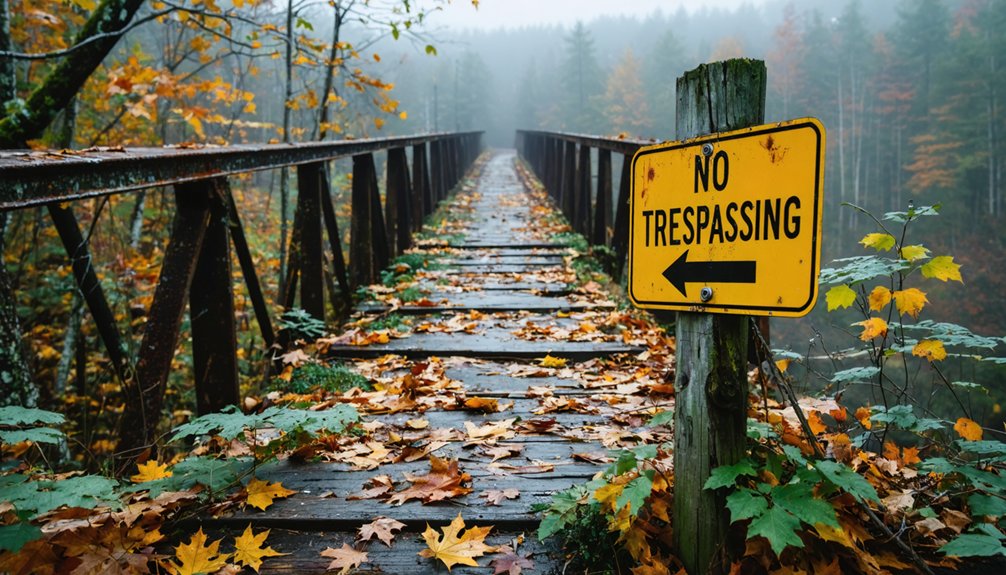
Wandering through ghost towns feels thrilling until you’re facing a trespassing charge or a collapsed bridge underfoot.
Respect these rules before stepping foot on abandoned ground:
- Know trespassing laws — Vermont enforces them strictly; posted “No Trespassing” signs mean prosecution, not suggestions.
- Watch for trail hazards — rotting floorboards, unstable foundations, and rusted metal will injure you without warning.
- Never explore alone — isolation amplifies every risk; bring someone who’ll notice when you don’t return.
- Carry emergency essentials — a first-aid kit, whistle, and fully charged phone aren’t optional when cell coverage disappears.
Your freedom to explore depends entirely on your survival and your respect for boundaries.
Choose wisely.
More Vermont Ghost Towns to Add to Your Route
Glastenbury legends draw researchers, paranormal enthusiasts, and curious wanderers who refuse to accept neat explanations.
Ricker Basin exploration rewards patient hikers willing to read a landscape where nature has quietly buried human ambition.
String these stops together on a single route and you’ll piece together Vermont’s forgotten chapters, one abandoned foundation at a time.
Frequently Asked Questions
Are Guided Ghost Town Tours Available Specifically for High Trestle, Vermont?
Guided tours aren’t confirmed for High Trestle, Vermont, as its existence remains unverified. You’ll uncover ghost stories and local legends more reliably by exploring documented Vermont ghost towns like Glastenbury, where real mysteries await your adventurous spirit.
Has High Trestle, Vermont Ever Been Featured in Documentaries or Films?
You won’t find confirmed documentary highlights or film locations tied to High Trestle, Vermont, as its existence remains unverified. Explore neighboring ghost towns like Glastenbury instead — they’ve captured filmmakers’ attention and offer genuinely haunting, freedom-inspiring adventures.
Can Metal Detecting Be Legally Practiced at High Trestle’s Abandoned Ruins?
Since over 40% of U.S. historical sites restrict treasure hunting, you’ll want to research High Trestle’s metal detecting regulations carefully. Its historical significance means you might need permits before exploring abandoned ruins with your detector.
Are Pets Allowed on Trails Leading Through High Trestle’s Ghost Town?
Since High Trestle, Vermont doesn’t exist as a verified ghost town, you can’t confirm pet regulations or trail etiquette there. Instead, explore Glastenbury’s real trails, where you’ll want to check Vermont’s Green Mountain National Forest rules before bringing your furry companion.
Does High Trestle Have Any Official Historical Preservation or Landmark Status?
High Trestle’s historical significance stretches beyond the stars, but you won’t find any official landmark status confirmed. Preservation efforts remain unclear, so you’re free to explore this mysterious ghost town without bureaucratic boundaries defining your adventure.
References
- https://vermontcountry.com/2023/10/26/the-haunting-of-glastenbury-mountain/
- https://www.youtube.com/watch?v=ScW-H7A8yL8
- https://happyvermont.com/2014/10/23/glastenbury-ghost-town/
- https://www.youtube.com/watch?v=Pdb-1D_Jc8I
- https://www.tripadvisor.com/Attractions-g28966-Activities-c47-t14-Vermont.html
- https://thebridgevt.org/2022/10/ghost-towns-of-new-england/
- https://www.greenmountainclub.org/vermonts-original-rail-to-trail-the-long-trail-and-logging-railroads/